1 free read left. Create a free account for unlimited reading + AI research.
Create free account
The Fundamentals of Hypercasual: Insider Publisher Knowledge
Key insights
6 takeaways- 01Hypercasual success relies on a data-driven development cycle that prioritizes low cost-per-install (CPI) and high player retention through rapid, iterative testing.
- 02The hypercasual model is built on a philosophy of failing early, utilizing short development cycles to quickly pivot based on performance data.
- 03Marketing is as critical as game design, requiring the production of a high volume of diverse video advertisements to test hooks and identify effective messaging.
- 04Developers must implement simple, intuitive mechanics that provide instant gratification to capture a mass-market audience within seconds of interaction.
- 05To minimize user churn and maintain momentum, developers should incorporate features like automatic level progression to reduce friction in the player journey.
- 06Rigorous A/B analysis and real-time engagement metrics are essential for refining core gameplay loops and optimizing the user experience.
Ask AI about this video
Transcript
next up and i won't waste too much time don't worry uh we won't lose any time um but we've got alan uh my former colleague at chalingo coming up as i alluded to earlier talking about the fundamentals of hyper casual and some insider publishing knowledge so uh we've got alan joining us here hi alan how are you you're on mute at the moment but that's because it does that so how are you good to see you again good to see how you doing yeah good thanks yeah yeah it's great to have you here i was there very happy to see that when i saw the panel uh that the track list and i saw your name there so thank you yeah it's a bit of a trip down memory lane really we haven't worked together for a while i know i know it says it's really nice and uh
you're obviously going to be following on obviously i did the fireside with jake on monday which you know everyone in the audience if you haven't seen it you can check it out on the um through the links that we've been sending out and i suppose you're gonna give us even more information about what quality you're doing and delve deeper into some of your insider secrets let me uh share my screen and i'll uh i'll keep it fantastic while alan's getting himself set up i just want to say as always um throw your questions into the q a and uh we'll be back at the end and uh we'll continue our chat and go through some of the questions so can everyone see my can you see the the presentation right perfect okay perfect so i'll be here in the background but uh for now i'll leave it to you well i'll keep it short see if we can get some questions that you have people need um so just a quick kind of um introduction to what the presentation is about it's about the fundamentals of hyper casual along with some kind of insider publishing knowledge um i'm one of the the publishing managers
here at quality and been here for about a year and a half um so just to kind of give you a quick overview quality is the uk's biggest hyper casual games publisher we're probably sitting around number four uh globally um we're not too far away from half a billion downloads so we have some pretty big hits over the past year or so and we have our our kind of our hq here in lemington spa in the uk but we have actually started expanding our teams into bangalore beijing turkey and we've actually just started um exploring in poland as well and uh eastern europe so we're actually close to a hundred team members so we've had a quite a rapid growth over the past 18 months so quality publishing is built on hyper casual development expert expertise we are a hyper casual developer as well as a publisher so we do have that unique take on hyper casual we have huge hits from publishing like rocket sky jetpack jump
overtake along with a few other titles as well that have done really well um we do have the dedicated publishing team here but in reality we are actually supported as well by the entire company so whenever a game comes on board it's like it's part of the the whole quality family and takes the takes presence as well as um the internal games and as you can imagine publishing managers here play countless games we get submissions of games but we also have to kind of keep on top of what kind of the market trends so just in case anyone is unaware or just a quick refresher on what is hyper casual um the lifespan like a commercial lifespan of a hyper casual game is weeks not months it's a case of these uh a smaller kind of short games like with a quick development cycles which usually take days not weeks last months even with years and they are monetized primarily through ads you may find some games that are monetized through maybe reward videos or in-app purchases but
primarily they are through ads um with the fact that these are such um kind of widespread games we do look there has to be like a low cpi meaning there needs to be a mass appeal meaning the artwork is more generic and it means that it's going to appeal to our much larger audience but effectively these games are used to fill little snippets of time during the day when people are kind of waiting in line at uh say they've gone for lunch and they're just waiting for something or they're at the bus stop that kind of thing they need to be within these uh just a little bite-sized sessions um so as you can imagine as a publisher like we play lots and lots of hyper-casual games we do also play casual games just so we can kind of get an understanding of what people are liking at the moment and then that way we can use an informed decision to kind of push forward and figure out what we'd like to design and create so we have a good understanding of what works versus what doesn't so first impressions are actually
crucial um but this is uh working on two fronts so this is gonna be a first press in regards to a video of the game and it could also be a first impression of the game itself so the prototype has been created so one thing we always look for and creates a great first impression is do the is it colorful and have clean graphics is it a case of it's all crisp and clear does it have a clear and satisfying gameplay does it have the introduction of new mechanics and then followed by can you create a good looking video from the game um this is effective this will work towards both a video as well as a game these will these rules kind of apply universally to both as well as the the don'ts which is dark and dull visuals obviously it means that it's hard to understand what the game is actually supposed to be gameplay that is overly complex or unclear is you got to make sure that it's super clear to the people either
watching or playing what the objective is because in reality this will either way or you'll create confusing gameplay videos these videos need to be evident of what the game is within the first couple of seconds but i can come on to that later um so in hyper casual as it's been developing go over the past 12 18 months various different publishers are working in different ways but in kind of the the blanket rule is his speed is of the essence so why is speed of the essence why are you required to develop quickly reason being is you will want to avoid spending too much time on a prototype because the market shifts so quickly trends change so quickly you want to avoid spending too much time on a prototype because you might effectively miss the boat um the idea is to spend a bit of time to create this prototype and work towards something you can test that you can test the cpi cpi being the cost
per install of the the marketing versus how many people download it just in case people need to a bit of a refresher um the idea is to get that into testing as quickly as possible that way you can actually see what your cpi might be and whether you're on the right direction with the game one thing we focus on internally as well is creating a only a handful of levels sometimes it could be one to three levels but we and because you're only creating a few levels you can ensure these gameplay is very very well polished it's visually polished because this is going to lay the foundation and the groundwork of creating a variety of videos when you do a couple levels you can do different themes different colors different mechanics and this is what's going to give you the variety of videos you need but one thing people should understand as well is understanding the depth of gameplay and interaction you want to put in at the start because you don't want to be spending too much time making these games with super heavy gameplay elements
um hyper casual it should be simple but they should be dynamic um so with that being said concentrate on the moments that you have within the game those key moments that need to be visually and emotionally satisfying these are the ones that are going to entice the players to continue playing um for days on end um but understanding why the rush so getting a game into testing as soon as possible will give you a baseline of your metrics whether that is retention cpi or both because in doing so it's going to allow you to make informed decisions these decisions will allow you to understand do i need to actually continue making this project is the cpi too high retention too low because a key fundamental of the way we work a key pillar used by quality is learning to fail early we all know that hyper-casual games not every single one is going to be a success so the best thing that we do is to test
early to see if we're on the right track and if not we do the the unfortunate nature of the high casual beast and we kill it and we move on to something else but the one thing another reason why we talk to developers about getting things done quickly and getting in touch with publishers earlier because it gives you the ability to seek publishers experience gives you the option of seeking advice and kind of the coaching to help bolster the ideas you you've got because every developer out there has got a unique take on the game so this is stuff that we love to hear quality is a publisher offers coaching right from the start so this is something that we uh we prize ourselves on and the concept is for developers to take advantage of this we talk with every developer we give them uh feedback and we give them coaching even if it's just from a game idea through to something that is a lot more well polished so this is something that we advocate to the developers so something a quick insider tip from the design team and they are constantly doing this and
asking themselves these questions every day when making games is when you're making it ask yourself these three questions do i get that little hit of dopamine that little bit of excitement when i complete each level why would i want to play another level and then finally why would i want to come back the next day these are three questions that if you keep asking yourself when you are doing this game development in overtime you will end up creating something that has a much higher retention and has a a really interesting and unique gameplay factor that will make people want to come back and play so making videos is just as important for hyper casual because in reality this ties into a cpi of a game the lower the cpi the better so in essence what does a good video look like a good video has a clear and engaging they say clear
and engaging video and this is the secret because in reality from the video the player needs to the person who is watching video needs to understand what the game is actually entailing it's like what is the game made of what is its core function um and trying to explain that as quickly as you can as clear as you can um it may take some time but this is probably the biggest fundamental of a good video something that we've started that we do internally and i know that other publishers do is understanding when you are creating these various different levels of your prototype one thing we kind of stress is look at what your level 100 may be or a much higher level because in reality this level will start to include a lot of gameplay functions um and this will allow you to do these videos which can show the people watching the videos what your game is going to look like if they were to stick around so if it's a level 100 and they they start playing and go right i know the
concept of if i stick around for 100 levels this is the gameplay i can expect this is there something that you can entice them in with but always with hyper casual is the case of using bright colors always make the game the videos look really attractive really enticing it's really hit home on what makes your game special but in doing so it means you can actually get really creative and you can really go to out-of-the-box thinking so get fun get creative it's something we have an entire team dedicated internally to to see what what works hypercast wall no one has any idea there's no secret form to what makes or what's going to be the most successful video for the campaign but in reality we test hundreds of videos per per game to see if we can find something that works so you can try funny videos jokey videos failing videos these have always worked and resonated
really well with the people that are watching so these are the users that you're after failing videos are a great way of enticing people because they may get even slightly frustrated watching your video of someone failing over and over again and it starts to resonate with them on a mental part with thinking actually i could do much better than that which then leads them into downloading the game and then playing the game which hopefully will then mean to kind of trigger a lower cpr but you can also try different backgrounds you can use like green screens to kind of put images even memes behind it and in reality these can be relevant to the game or completely irrelevant for example you might have a surfing game you could easily do like a surfing picture or like a water picture behind the videos just to kind of accentuate what the game is about but then you could go completely the other way and just have a random image of space so all of these is it's always worth trying because no one knows what this magical combination is going to be for this specific game so
test as many as you can and come up with as many as you can and this is where we can come in and help kind of guide what we feel could work for the game or what might not and help with those testing and something that we do as well internally is exploring snippets of real-life footage at the start of the video say for example you might have a basketball video you might have a really funny clip of a little baby trying to dunk the basketball and the whole thing falling over and then it moves into what your game is of a basketball game so these it's it kind of catches the eye of the user because it's something that's quite funny or it's kind of the kind of interested and kind of intrigued to see what this original video is and what it's going to turn into um but a very very good rule that we use here and it's an inside tip from the creative team is use the five-second rule when creating marketing videos always
ensure something exciting happens within the first three to five seconds this is what's going to grab people's attention breaking it down on an analytic standpoint is you would be very surprised of the percentage of people who watch only the first five seconds to the amount of people who watch 15 seconds to 30 seconds it is a rapid drop so in reality it's you need to grab that user's attention within those first three to five seconds because inevitably they may be scrolling through a social media platform and you only have a couple of seconds to grab their attention so make those videos those first three to five seconds really really exciting to grab their attention for them to go actually you know what this looks quite fun i want to go and play this game so obviously we can move that so that's covering the the video aspect and we can now look at what about the gameplay of the prototypes themselves finding the fun in your ideas is
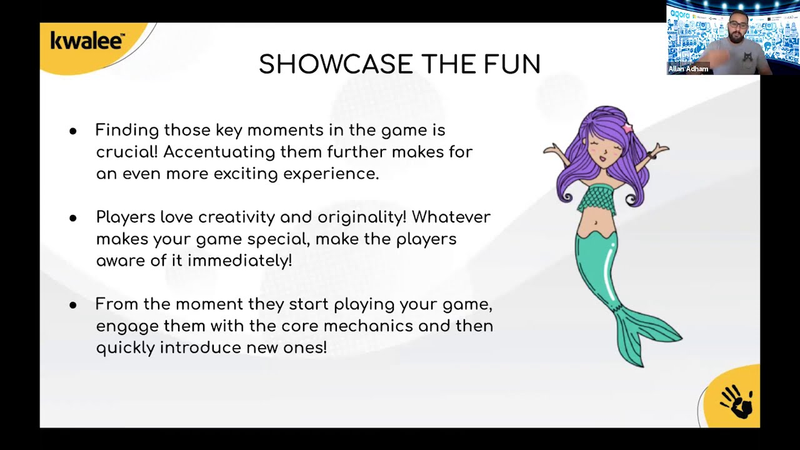
is key with a hyper-casual game so it's understanding what interactions and key choices does the player make in each level and understanding are these decisions actually fun because in reality it's making the game feel intuitive because the get the player needs to feel like they have enough control within the game so they are actually contributing to the gameplay itself if these choices are on a more railroad type esque choices it means that they have a lot less control and it means they are less likely to keep being engaged so in reality it's finding that sweet spot that gives them just enough control within the game to feel that they are contributing to something and actually playing the game themselves over just being moved along from level to level um but again this this big part of finding does the user get that little rush of dopamine that rush of excitement when completing the level or successfully mastering a mechanic a game could have various mechanics in it and obviously you introduce them over
time but once you start to master those mechanics is it one of those mechanics that's intuitive enough that you feel actually you know what i've actually got quite good at something that's a little bit more on the difficult side this is um this is quite uh quite important and a lot of time this is something we took a lot of time with one of our games called bake it it's a case we spent quite a bit of extensive testing internally to make sure that when you are creating the the batter and you are using it around the screen does it feel as though that i'm actually contributing and once i finished was it a satisfying moment so when you find these moments the case of you need to showcase them so finding key moments is a crucial but the idea from here is accentuating them further to make the experience of the game more exciting because in reality you could have found like a really nice mechanic but then the idea is to start building on this mechanic and from doing so from people's game design and obviously understanding what
works and what doesn't is players as well as publishers in other words we all love creativity and originality so whatever makes your game special make the players aware of it immediately this is something that you've been working hard on this is something that you are proud of it's a case of if you've got a really nice key moment in there give it to the player straight away make them known that this is what's going to be the the kind of the core fundamental part of the game because in reality this core mechanic is going to lay that foundation for new mechanics and these don't need to be massive neural mechanics either these can just be small additions into the game that just kind of add layers upon the core mechanic take and bake it again as an example is that the first main key aspect is drawing the shape and allowing it to bake um but then from there you then have the the icing the sprinkles and then the decoration part and these are just all small things that are integrated into game and kind of showcase to the the user
within a couple of levels the idea is that it means that the user thinks that over each couple of levels that a new mechanic is going to be introduced um so just a an insider tip from the game design team um and it's something that when i first started was something that was kind of hammered home to me as well is to understand some good game design is the best way to go about it is play lots and lots of hyper casual games this is one of the best ways to find out what makes the successful game successful i was always told get a piece of paper get a pad get a pen and play lots and lots of games and write out what traits that they have what's making them successful and the more you play them and the more you're writing down do you quickly pick up on what's actually starting to make these games work what's making them successful what's actually keeping the user engaged within these games to continue coming back to play day upon
day so just kind of a a final overview for for people to to take away from the game uh sorry from this presentation um is what publishers want to see more of and kind of things showing these are kind of the key elements of a game when you're thinking about kind of either talking to a publisher or even just designing your own hyper-casual games is are you using bright pastel colors is that game play itself clear is it exciting can it be made into a video that looks great or even just a case of if you were to visually look at the game does it is it clear is it exciting spend a little bit of time understanding what intuitive game designer controls are um the so the ability of keeping people on railroads versus infinity controls finding something that will work for your game one huge thing about quality our massive advocate about is original game ideas and concepts we are we're a studio who
rely on internal teams not even just a design team we have the whole company itself contribute to the the game design and game ideas of the company so the idea is spend time brainstorming new orders original concepts because if when you bring this to the market is something that people haven't seen but the one thing we love as well which kind of ties in with what i've mentioned just previous is this passion for gaming we love games and in reality this is what we love to see from publishers from developers is that they are passionate about their games we understand that these games are their babies this is something they've spent time money effort we love to see the passion you have for your games but just on on the quick flip side just something that publishers want to avoid seeing is the use of dark and dark colors this really takes away a lot from your game it could be an amazing game but if you're not using the correct color palette it's not appealing to the eye avoid using over-complicated
gameplay elements but also avoid it being too monotonous because in realities you want to start introducing these new factors over the over the the kind of levels of the game and avoid over saturated game design it's a case of understanding what's been on the market what is currently on the market what's been before what's been successful what hasn't and just avoid using those over saturated game designs and no gameplay elements because in reality that is going to only have a negative effect because the market has already seen quite a few of them the games that look like that which will have a negative impact on on a cpi at least which makes it kind of an uphill struggle um so i think that's pretty much it from me um sophia feel twitter to pop in and as always if you guys want to get in touch with us we're always happy to chat with developers and kind of talk about the hyper-casual games you're either making or you want to make and we're happy to always kind of give you feedback and our
our creative input yeah great thank you yeah and to reiterate that obviously we've got uh simon and jake coming along to the big indie pitch given that you guys are our season sponsors so uh yeah i'm sure they're looking forward to checking out some of the games that are coming along later so there's some good advice there for uh you know some of the devs will be part of the pitch later but you know you guys take pictures all the time don't you uh from developers coming in yeah i mean the the concept is it's like developers come to us with with ideas for games and such and it's because we've got such an extensive knowledge we've got the publishing side but the internal side and the idea is that because the publishing managers are so on they've got their finger on the pulse with everything that's going on it means that pictures that come through that it would actually give their experience in what could potentially work what doesn't um like myself and jake we've we've done kind of quite we've been quite successful over the past couple of months as well as jack in understanding where the market is going where it's been
and just kind of introducing these new elements to games because as i was mentioning before is we want to just avoid these over-saturated markets because hypercas was so fast-moving it's finding something new as quickly as we can and then effectively getting it out the door as quickly as we can yeah actually before we uh go into the q a uh a question from my side that i think would be interesting to everyone uh which is something that me and jake touched on but didn't quite um go into fully but i thought i could ask you is how often do you guys see something that you know that isn't quite currently working as it is but it has something and you know how to get it there i mean it's an interesting question from my end because obviously the market's shifting so quickly that you surely you have to know that you can not only fix it but fix it fast well it actually does it's quite an interesting concept that we have here because we have the internal design team so we have the ability to move quickly as well as spend some time working on the game it's because we've had games that have been that have been released quite recent that
we received them much earlier in the year but we have spent a lot of time working with this developer working on iterations of the game getting them into testing batches of videos because in reality when we are signing a game where we feel the game has potential it's not only the publishing side they get uh access to it's they start to get access to our actual internal teams as well so we start to bring in like the analytics team who can look at a game figure out is there any sticking points are there any issues any drop-off points the marketing team and creatives they'll make batches of new videos to see if we can bring down the cpi and improve it but one of the key aspects of quality that makes it quite unique is the design team here are so evident wanting to be part of the publishing side is they are so keen to give their feedback on games and these are guys that have been making hit games like jetpack jumps shootout 3d gabriel is our one of the latest designers and his first pitch to quality was off the rails which was a number one hit and these
guys are just so interested and passionate about working with these developers so it doesn't matter if it's a case of we have to do it quickly or kind of a prolonged period of time they're always interested in being part of this process yeah and that's that's great i think you know from the people i know work required that's one of the things that they always say is like how you guys are always there to help them um but diving into some of the questions now we've got um i'll just uh pick some out uh one of the attendees asks um are developers giving more video inputs or uh do you have in-house video teams what are some of the tools to create video variations color background you know that you're using so um obviously the internal team itself have their professional software kits that they use but we use like even as a publishing manager we are able to actually help create some of these marketing videos i've done it plenty of time with dozens of developers and there's stuff like this like hit film is something that we use internally just as the publishing side because it's free and it's easy to explain to a developer this is the kind of software you can use
and it's the interface and everything is so simple i'm not built for video but for me it still works and the idea is that we are able to give guidance on what could make a good video we could take a look at the game say you could try this this this and this you could try alternative color palettes so there's a lot of internal uh so there's a lot of stuff on the publishing scene that will give guidance in making videos they can go away and make those videos and come back for us and we can give them feedback and stuff like that because they don't really take too long because it's okay it's gameplay videos and stuff like that so it's we're able to kind of work with them super uh very very quickly to kind of make these videos so we think actually you know what we think this one could be a really successful yeah fantastic another attendee has asked how important is china and uh tier two and three countries for kwali what are the differences you need in considering these countries well china is it's a completely different app yeah at the moment it's it's a very very separate conversation that china
is expect android itself is a plethora of problems with with all the different platforms and it's just been so fragmented but ios on android it is important it's okay so we are with all of our games we actually localize every the game into at least i think it's a dozen languages and these are spread across across the globe and china is including one of those because it is an up-and-coming it's an up-and-coming market it is growing for hyper casual it used to be dominated by casual games and kind of mid-core games but now it is starting to get kind of more excited about hyper casual games um tier two and tier three countries we do we do kind of test elements of the game out there um because as you can imagine we don't want to be spending in tier one all the time because it becomes a very expensive event so we prefer to just use the tier one uh sorry tier two tier three is kind of like some fundamental and basic testing and then from there we'll then start to
kind of move on to earth the more major regions and tier one regions yeah fantastic another question we've got because we've still got a little bit of time because obviously we ran over on the last talk is um can you please share some examples of how you can or how you acquire improve um you know the intention to play another level or play another day basically long-term retention i suppose yeah so there's a this is actually it's quite an interesting question because it's something that we found um on one of the games we were testing internally that really helped with retaining users and um i can't really go into explain too much what this game was but the element of the game when you finished the game and you come into a new level the game actually automatically starts for you so it actually starts to get the ball rolling so to speak and then the player automatically feels like oh it's actually started i need to play so reality they stopped thinking about the fact that i need to i wanted to quit this game they've they've gone from wanting to quit going oh no
the game has started i need to do it because i don't want to lose my progress or i don't want to fail the level and this is something that has has really helped um but we also do a lot of a b testing as well internally which means that we have this element to try out new things within the game to actually bring see if it actually works with helping retain the users this is something that's really important um because in reality the gameplay itself we can kind of contribute to them and give them advice on what we think could retain users but when they're kind of on board with us we do have these kind of more nitty gritty analytic side and a b testing sites that we can really figure out what is the best way to retain these users and try out different things because not one thing doesn't work for one game that will work for another it's a case we've just got to be constantly testing across this game or multiple games to kind of see what works for each one yeah definitely well uh thank you unfortunately we've run out of time now but uh no thank you so much like really fascinating talking i always love seeing your chats i mean
obviously i'm involved in a lot of them with fireside chats and stuff but i think it's always fascinating and i think it shows quality's passion and i don't i mean that very sincerely actually yeah i mean yeah thank you it's i mean this is the one that we pride ourselves on it's okay so we are passionate about the space that we're in yeah and we want to make sure that people get that idea that we are passionate about their games just as much as we're passionate about our own games it's with the qualities of kind of family businesses it's got a lot of kind of a lot of neat kind of like a tight constructs within the companies this is what we want people to to understand that their game becomes part of this and it becomes as cliche as it sounds becomes part of the quality family yeah exactly yeah and i think that's lovely so i think you know hopefully you've enticed even more developers and and i'm looking forward to seeing some of them at the pitch later on this afternoon all right that's brilliant thank you no thanks and great to see you again i will wait to see you again as well thanks alan all right take care
you
Summary
Hypercasual gaming centers on the rapid development of accessible, mass-market titles designed to generate immediate engagement through intuitive mechanics and vibrant, high-contrast aesthetics. The primary objective for developers is to achieve a low cost-per-install while maximizing player retention, a goal realized through short development cycles and a philosophy of failing early. By prioritizing simple, satisfying gameplay loops that provide instant gratification, creators can effectively capture the attention of a broad audience within seconds of interaction.
Marketing serves as a foundational pillar of this business model, often carrying as much weight as the game design itself. Success depends on the production of a high volume of diverse video advertisements, which are used to test various hooks and visual themes. By analyzing performance data from these creative assets, publishers can identify the most effective messaging to attract users. This data-driven approach extends into the development process, where iterative testing and rigorous A/B analysis allow teams to refine core mechanics and optimize the user experience based on real-time engagement metrics.
To ensure long-term viability, developers must minimize friction within the player journey. Implementing features such as automatic level progression helps maintain momentum and discourages user churn. Because retention strategies are highly title-specific, success is rarely universal; instead, it requires a disciplined commitment to analytics and constant experimentation. By balancing creative intuition with a strict adherence to performance data, developers can navigate the competitive hypercasual landscape and sustain interest in an increasingly crowded market.















Comments