1 free read left. Create a free account for unlimited reading + AI research.
Create free account
What to Look for in a Publishing Partnership
Key insights
7 takeaways- 01A successful publishing partnership requires a clear division of labor where the publisher handles business-heavy tasks like user acquisition, live operations, and data analytics, while the developer retains creative control.
- 02Partnership evaluation must focus on product fit, ensuring the publisher either possesses deep expertise in the game’s specific genre or has a clear strategic interest in expanding into that segment.
- 03Scale assessment is critical, requiring developers to confirm that the publisher’s existing audience, geographic reach, and promotional network align with the game’s target demographic.
- 04Beyond revenue share and minimum guarantees, developers should evaluate the broader value a publisher provides through mentorship, brand positioning, and industry connections.
- 05Developers should prioritize cultural compatibility and shared values over immediate financial incentives, as these factors are the primary determinants of long-term collaboration health.
- 06Due diligence is essential; developers must verify a publisher's track record and business transparency by speaking directly with other studios previously published by that partner.
- 07Contractual agreements should always include clearly defined exit strategies to protect the developer if the partnership fails to meet established expectations.
Ask AI about this video
Transcript
so to kick off the art of publishing track this afternoon we have a panel titled what to look for in a publishing partnership and that will be hosted by anne luong from a mini clip and i think we've got anne coming in as i speak hey there danielle how you doing hey um how are you doing yeah not too bad though it's not too bad good good to kick off this track good right if you're ready to get started i will uh meet for the next 20 minutes and uh let you do your thing okay perfect let me see if this this all works no worries um can you see the presentation danielle yep all good looks fine to me
awesome awesome good stuff perfect okay cool okay well afternoon everyone i'm on i'm head of business development at minikit and to give you a bit of background about myself i've been in the games industry for over 15 years but i've been a game all my life i've started my career as a tester and i've worked with some great companies in sega at ea before finding myself here today another fantastic company minikit ready to give you all a talk on what to look for in a publishing partnership so i'm responsible for the publishing follow up mini clip which basically is finding great games and great developers probably to work with it's a dream job and i'm super super lucky to be in this position my team and i are effectively what we call the tip of the spear when it comes to our publishing activities and we look after the process of content lead generation relationship development constructing the commercial terms and deals negotiating and executing the deals with the legal teams
and handover of the partnership to any other internal teams when ready to do so we'll generally be the first or second phase you'd see at miniclip um hopefully friendly face and would be working with you throughout the whole journey if successful in signing a deal and i would say that our structure and setup like mini clip is very similar to other publishers out there so in this presentation i'm going to give you some more information about miniclip and some of our experiences in publishing minikit develop publish and distribute mobile games to a worldwide audience my target audience is independent developers those with products either in the market currently or coming to market very very soon and are somewhat considering a publishing partnership in one form or another using miniclip as the main example i'll call out some of the things that you may want to think about when evaluating the benefits of publishers such as culture scale product fit capability
and relationships so moving on one big point that we do need to establish is what does a publisher actually do although each publisher is different and has different nuances the main functions of a publisher is to help you grow your game bigger and quicker than you could ever do it yourself a publisher will facilitate support advise and oversee but a publisher isn't here to design your game or make your game but certain publishers will provide that knowledge and insight such as minikit if needed a publisher is generally more focused on the business aspects and more importantly will help to keep the project moving forward discussions with publishers will be there to really help provide support leadership and to sometimes challenge and ask the difficult questions that you may not want to ask of yourself and the project but above all else we want to motivate the publisher will be there in your corner to give you the developer the freedom to make a great game by
removing elements such as financial and resource pressures so moving on let's talk about culture so with any partnership you want to understand where the partner comes from where they are based and do they operate globally for example what are the key functions and where are they located who are the key people and the teams that you would potentially be working with what are the values of the partners that you team up with and what defines their culture at minikit we see culture as the dna of what makes us so successful by daring to be different by being professionally playful trying to be entrepreneur and smart is very important for us but above all else we really want to be modest and authentic we really aim to be straight talking to the point when we discuss any type of opportunities or deals with anyone it's a bit of a cliche but in our kitchen the last time i i went in you know several months ago we had a neon sign with a motto work hard play harder and you know for us that's what mini
clip really really does and we hope that that is portrayed in our efforts to obviously work you know with any developer out there when looking at a publisher see whether the culture is the right fit for you do you foresee any conflicts it's hard to gauge until you actually do it but do you foresee any issues working with you know the publisher at hand it's important to try and understand their motivations behind striking up a partnership and what else they seek to gain for me nuclear we always look at partnerships in the long term we're opportunistic for sure but in five years time if we strike a deal we want to be thinking about a3 or game four investment and even m a so moving on to i guess scale and audience one of the main things a publishing partner should be offering you is promotion to their network the key characteristics to identify are what is the audience like what is the gender mix what is the age profile what
is the geo mix how many players for example are in tier one countries for miniclip as you can see on the slide we have had 16 million peak dau we're currently running 250 million mau which is a very large and engaged audience that not only plays our games in our specialized genres but we've also seen have affinity with another number of other genres as such we have a very large player base to tap into and something that we always aim to leverage in our support for publishing due to the size of the audience we're in a very fortunate position where we can actively cross promote titles part of our review when it comes to striking up a deal we'll consider the affinity that the game has for our audience and our opportunity to bring in players this way we'll typically run several network tests to do this case in point with our most recent publishing title we took it one step further and offered an in-game promotional queue in a ball pool to incentivize players to try out ultimate goal it's important to understand the potential mix of players that a publisher can bring into a game
how much organic traction can they build through their network and their brand what characteristics of the you know what characteristics are there with the audience how effective is their ua capability to boost players into the game what other methods do they have to promote your game these are all questions that you should be asking of a publisher when reviewing any type of deal and one helpful measurement to assess the size and scale of publishers are platforms such as center tower apparently we can certainly back up our claims to scale as we're recognizing industry reports as the sixth largest by download of all games publishers as for the first half of this year and in the sports category we're number one which is awesome and fantastic even within the next three great developers and publishers behind us combined we're still number one which is a really awesome thing for us to be able to promote so for developers of all sports goes out there if you're looking for a publisher the mini clip should certainly be your top choice but equally size isn't everything and if you can find a
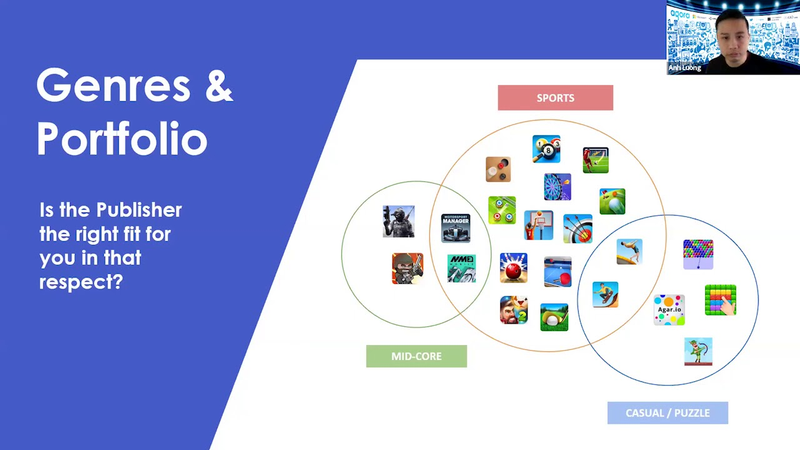
partner that's a good cultural fit that shares the same values that understands the opportunity at hand and the objectives that closely align with yours then that's equally as an important thing to consider so moving on to product fit whilst mini clips core expertise is in casual sports games recently for studio acquisitions we've expanded our portfolio to include more mid core titles in the shooter genre and more puzzle titles in a casual puzzle genre you should look for this type of expertise and fit when considering the best publisher for your game does their portfolio complement your game for example and on the flip side are there gaps in their portfolio which you could help fill where is the opportunity here and as a publisher it's very much our responsibility to recognize whether we can truly help the game be the biggest success it can be minikit's primary focus is online multiplayer sports action and
arcade titles but the majority of us at miniclip are gamers so we have broad interest beyond our genres so sometimes no matter how much we enjoy playing a game that's come our way we may just simply not be the best home for it and therein lies our responsibility to accept that the opportunity maybe just isn't for us but we'll always try and recommend a good home regardless the industry is very small it's a very tight knit and ultimately we want the whole industry to do well so don't get disheartened if we publish a rejection game and i would question the motivations of any publisher if they are keen to sign the deal you can't see any clear strategic fit it's important to understand the risk reward element to if a publisher wants to use your game to break into another segment of the market it's all about finding that great balance next up capability when looking for a publisher think about what they'll be offering in terms of services typically a partner will provide the live operations content updates
server hosting r ua and on the publisher side they will look to provide things such as bi in-game advertising ua marketing cross-promotion service support community support customer support platform support tech support you know and above all else you know a publisher is there you know to help with obviously the financial considerations too our goal very much as a publisher is to have the partner focus solely on what they do great which is to make and sustain an awesome game and also consider from your side what you actually want from the partnership too publishers will generally be open to more involvement in certain areas so long as there's no negative impact but it's always important to clearly draw a line in the sand when it comes to responsibilities so you avoid any confusion in the future but beyond core publishing services think about the expertise that a publisher can bring around call gameplay monetization and meta game for ultimate golf which is our latest third party publishing title
our product and game design team's advice on an additional monetization option which resulted at launch in the highest revenue generator mode and we also led a redesign of the game branding which resulted in improvement of the install rate by 20 27 sorry on the previous brand style these are all areas that you can lean on for your publisher when it comes to supporting those elements of the game and then moving on to relationships and investment so one key area of support for a publisher to really leverage is their relationships and the ability to open up opportunities for the game to get visibility on what we all know are very competitive storefronts for minikit we work hard to ensure our games have the best feature impossible and today the number of times a mini game has been featured on the app store or google play can equate to at least one feature per day since 2011. this is an impressive figure but of
course a lot of work is required to get to that but this is the value of working with with a publisher unfortunately it's not always the case that making a great game will instantly mean you getting the best featuring available sometimes you need that someone such as a publisher to give you that extra little boost to really really stand out case in point using ultimate golf again because it's our most recent release um with a combination of featuring ua support cross promo it really helped us to boost the game to number one in a sports category in over 50 countries including the us and uk at launch from a financial perspective publishers are also there to give you know these games a big shot in the arm you know when it comes to uh investment too and for ultimate golf we backed it with a seven-figure ua budget team which again is an impressive number and certainly something that you know publishers are there for to
assist with but beyond the usual featuring ua cross promo a publisher should also be thinking about how they can expand the reach of the game to find partnerships and audiences beyond the areas of gaming with nbc golf now we recently launched a partnership to cross-pollinate users from the audience we identified some key synergies with the users and players of both apps and launched a concerted effort to capture what we saw as an important demographic into ultimate golf and then to uh to summarize the key areas to consider when working with a publisher number one culture understand what the publisher's philosophy is to business what defines their approach to work on partnerships number two scale does a publisher have a network to leverage if so is it right for your game do they
have the expertise to successfully grow your game what type of mix is the audience made up of number three fit does the publisher's portfolio complement your title or does the title address a gap in their lineup and if you can't find any clear synergies then please do question as to why our publisher may want to sign your title up otherwise it can be easy to get sidetracked with the potential numbers being thrown around number four capability what is the publisher offering in terms of services and what do you actually need from the publisher does the publisher have the knowledge and experience to take on your game do they have a proven track record for example look at how the recent games have been performing to give you a good barometer as to whether or not you think they're suitable for your game and then finally relationships you know i strongly believe that good business is built on good relationships so what can a publisher potentially open up in terms of doors and opportunities how connected are they and are they willing to leverage their connections to your
benefit and above all else can you work with this publisher and do you foresee a good strong relationship in the future if you consider all these above factors together and not in isolation then i'm very confident that you will stand in very good speed to find a great publisher to help you on your journey to success so that's all from me thank you very much for listening and i think we're going to be handing over to uh do a q a q a now danielle if i'm not mistaken yeah we've got a couple of questions coming in um if you're happy to stick around um oliver and the chat has said uh hi what do you typically charge for publishing is it always a share of revenue um that's a good question typically most publishers including minikit will offer a revenue share the revenue share will you know is very much dependent on how much the the publisher you know needs to kind of put in terms of resource and effort behind the game it could be anywhere from kind of you know an 80 20 to 50 50
it really depends uh on on the publisher and obviously how much they want the deal but ultimately you should see it as an open book there's always you know there's always room to negotiate and i would say that if you want to risk your game then most publishers will be open to an mg as well a minimum guarantee okay um so just thinking about um some of the cons i suppose um what are the red flags um developers should be keeping an eye on um i think when it comes to the publisher again one of the key things is just um any previous publishing titles there's nothing stopping you from speaking to the other developers that have worked for that publisher before and in fact most uh publishers would encourage you to speak to developers that they have worked with just to gauge you know as to whether or not um you know that publisher is suitable you know for that particular partnership or your project um that would raise a very flag for me
you know if a publisher wasn't open to you speaking to anyone that they've worked with in the past okay um just leading up from that something i just thought about what are they the biggest mistakes that developers make when uh choosing a publisher or looking for the right um don't just think about the money i know it's a very easy thing to do um but the reason why i haven't really kind of focused on that that key area is ultimately if tea parties want to do a deal they'll find a way to make it work but around that and when you look at the longer term think about what they're offering sometimes it's better to have let's say an upfront investment in time and resource um for kind of i guess the longer term gain when it comes to you know to to the financials and you know if you look at mini clip again it's for us we're not just thinking about the one game and then moving on we're thinking about okay well how can we grow and build this partnership to be successful as it can be and i think that's it is don't you know it's don't get too excited and don't just think about that now think
about what will help in the future and what will help you grow as well um but again i mean if business and and situations dictate that you do need to think about it now then that's not a problem either but if you you know if you're in a position to do think about where you but you can potentially be with this this publisher in the next four or five years okay brilliant um we've got a couple more questions coming in now uh from the audience santi asks what are the key features that you look for in a game to publish it um that's a really good question um i mean at minimum when we look at i say features but i think if we're looking at and reviewing a publishing deal first of all having some type of playable code is always super super important right because once you get hands-on with the game you kind of really get engage whether or not it's it's the right fit off the bat but then beyond that keep your eyes so what's really helpful is if you've won any previous tests prior to reaching out for a partnership deal um that any type of
kpis that you have that you can share as always would be useful and you know from from our perspective you know retention is super important we always look at that kind of 4d 2010 although i appreciate that again the industry moves very very quickly and you know whilst that's a benchmark it's not the de facto figure you know for success but that you know in obviously kind of tandem with again a great pitch you know very kind of buttoned up you know uh pitch deck you know showing kind of ambition for for the long tail and what the roadmap is over the next 12 months at least it's always quite helpful to see where the game is now versus where it's going to be you know in the next 12 months if you were to sign up um but yeah i'd say that you know those are kind of i guess the three kind of main things for us okay um on the back end of that are there any sort of deal breakers that would stop you from considering a developer who are working with a certain one um no not really i think again it's all what it boils down to is appetite
if you're if you're that passionate and you think that you know the the developer and the project has that much potential then we will do what we can there are i guess you know when you look at it um yeah no we'll always try and make it work we're always trying to make it work but there are key things i guess um sometimes um you know we like to try and sign longer term deals so for example we look at kind of at least five-year deals because we know that we can really help to manage the long term for games so a year-long deal probably wouldn't be compelling to us that would potentially might be a deal breaker but it depends on what we could we could do within that year but most certainly we're not really considering or entertaining any deals that are a year a year long for example so i guess in some respects that would be a deal breaker but then there's always exceptions to the rule when it comes to that stuff but beyond that you know i would say that for uh yes most certainly for a you know
a publisher if they're that excited about the game then they'll always try and make it work and you're always trying to find that middle ground so again it's just all down to archetype okay perfect um another question in chat we've got uh how much company things would an indie developer have to take care of if they have a publisher forming one seems to be the most intimidating part of being an indie developer so sorry i didn't catch the first part of the the questions sorry um how much company things would uh would an indie developer have to take care of if they have a publisher right okay that's a good question um i mean it depends for that particular title because you know remember we're talking kind of specific projects so if you have multiple projects that you're managing or multiple games in the market and you choose them to go with a publisher it's a very different scenario but assuming you have one game that you get at all in the market and a publisher takes that on then from our perspective from a mini perspective all we want that developer to focus on is just development
and maintaining and growing that game everything else the publisher will then take on that's what we're here for we're here to take you know the heavy lifting away from from the developer so they just focus on development of the game and improving the game over the long term so i'd say if you're thinking about things like platform relationships you know performance marketing that's something that any publisher would would gladly take on and manage if you're talking about doing your financial books then that's something we probably can't help with and we're probably looking at a slightly different deal but most certainly we would do everything physically possible to take away the board admin as it were so they could just do the the hollywood stuff and and make it amazing um so something else i just thought about um if you're not the most natural fit for a developer using miniclip as an example you say you're primarily sports focused but you do gloss into other genres as well um what sort of things should a
developer prioritize selling to a publisher if it's not the most kind of natural place for them to be um that's a very that's a very good question um it would take a lot of convince and i think it's about the potential of the game and whether or not that developer potentially sees you know an area of opportunity for mini clip in that particular genre or area um to your point you know we see some fantastic games that come through our follow-up process some truly fantastic games but we have to when we take a look at it we you know we look at what we're good at and what we're capable of doing within our genres and sometimes getting in a hardcore rpg as much as we like it on a personal level we're not going to be the right home for that um but if the developer can convince us and say well actually look this is the way that i see it this is how really you can help by identifying the key areas of exploitation are fantastic i'd be surprised if the developer is able to to highlight you know anything kind of specific or
unique but i certainly if they're that keen on working with minikit then i think that passion and that dedication to show that actually mini clip is the perfect part for this or the right you know potentially one of the you know one of the right partners you know will definitely resonate with us but again it's it's you know we have to be quite pragmatic as publishers because again you know we you know most of us are gamers we love gaming and sometimes we can let kind of our heart rule our head um but we need to kind of just really make that that kind of divide because ultimately what makes a great game doesn't always make great business for us okay um we've got another question in chat that just says um what about publishing in other stars like huawei samsung etc appreciate that sort of means what sort of things do you need to think about when um publishing to each storefront um that's a good question um i mean when it comes to that think about the specific nuances think about what type of requirements they have think about the overall opportunity as well
i mean you probably have two two storefronts that generate a very significant portion of your total business um but then obviously for emerging markets you've got some very localized kind of platforms that will help you drive you know some good business for you and some good engagement from from players as well i think when you look at your game look at your geomets look at potentially what markets and what areas to exploit and then really get to understand whether those particular markets and those particular platforms are are useful for you um what i would say is you know is you know there's always should be some type of democratization for gaming and you know for sure being on as many platforms as you can we'll open up your game to so many more players as well um but again think about the work involved in doing that um and versus what the potential return would be if you're talking to those platforms potentially you could secure yourself an mg to really do risk it so i'll go down that route okay cool
um how important is it for developers to do their homework and research everything about the publisher before closing a deal um i'd say it's important um very important but it is a lot of work so what i would recommend is focus on maybe three key publishers that you think would be the best fit for your game and then really kind of work on those and then that gives you you know three good opportunities to impress and and get a deal in place um i think the challenge is though is that uh because there's so many publishers out there there's so many great publishers it can be overwhelming as to you know as to who to pitch to you or what to pitch so what i find when it comes to a lot of developers is that they'll do the same generic pitch and whilst that's fine and sometimes that gets across the message of the game if you really do want to work with a published publisher such as mini clear it's always good to see that people have gone the extra mile to understand as to why we would be a good publisher for your game i think that's a key point i'm gonna in
fact if you're doing your pitch deck at the end just add that in and why you know why many people would be a good publisher i mean we'd probably know hopefully we're looking at the game but we want to see it coming from you that you've given it okay brilliant um we've got another question just sneaking in at the end what should developers do if they realize they made a mistake and the relationship is not working um i generally think having a very open and honest conversation um and if you've already signed a deal um then i would hope that you've negotiated at least some breakfast in your contract um but it depends on the timing as well if things aren't going well then it's likely that the other side will probably have the same feeling as well so an open honest conversation with the publisher to say hey look it's not working we can give it a try and then you know over the next few months and see what happens is probably the best thing to do i think ultimately a relationship has failed if
you have to then use a backstop such as a contract um i'm always pretty confident that you can work things through you know through or basically just the power of having kind of that that kind of empathy and and and you know that relationship um but you know contracts are there to ensure that obligations are met and that there are you know clauses and situations where things aren't working out and hopefully you know both parties can split amicably and then potentially look at future opportunities later down the line okay um yeah i think that's uh all the questions that we've got coming in um so i will wrap that one up there but thank you so much for uh for joining us and sharing that insight with us super super interesting um and i hope you enjoyed the rest of the conference yes thank you very much and thank you everyone for listening
you
Summary
Effective game publishing partnerships are built on a strategic alignment of culture, scale, product fit, capability, and long-term relationship goals. The primary function of a publisher is to accelerate a game’s growth by providing financial support, operational expertise, and marketing infrastructure, allowing developers to focus on core game design and content creation. A successful partnership requires a clear division of responsibilities, where the publisher manages business-heavy tasks such as user acquisition, live operations, data analytics, and platform relations, while the developer maintains creative control.
When evaluating potential partners, developers should prioritize cultural compatibility and shared values, as these factors dictate the long-term health of the collaboration. Scale is equally critical; developers must assess whether a publisher’s existing audience, geographic reach, and promotional network align with their specific game’s target demographic. Furthermore, product fit is essential; a publisher should either possess deep expertise in the game’s genre or demonstrate a clear strategic interest in expanding into that segment. Developers are encouraged to conduct thorough due diligence, including speaking with other studios previously published by the partner, to ensure the publisher has a proven track record and transparent business practices.
The decision-making process should look beyond immediate financial incentives, such as revenue share percentages or minimum guarantees, to consider the broader value a publisher brings in terms of mentorship, brand positioning, and industry connections. A well-structured partnership is characterized by open communication and a shared vision for the game’s lifecycle. Ultimately, developers should approach the selection process by researching a targeted list of publishers, tailoring their pitches to demonstrate why a specific partner is the ideal fit, and ensuring that contractual agreements include clear exit strategies should the relationship fail to meet expectations.















Comments