Mobile reports and market data
Documents
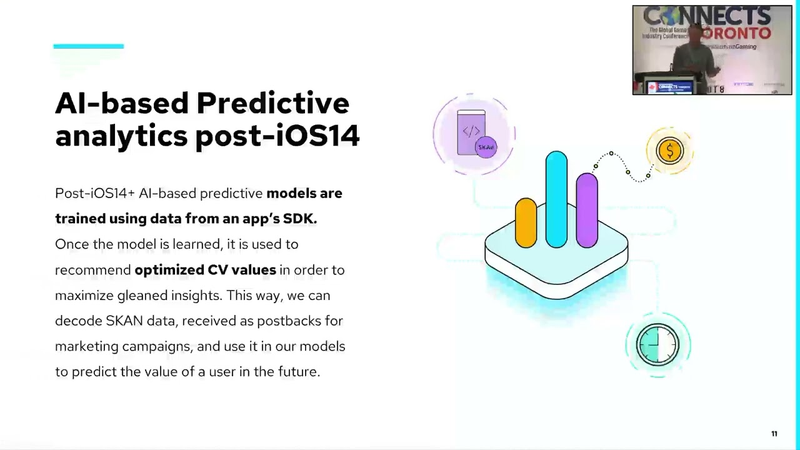
Superstar Session: Calculating LTV Post IDFA: A Need for Predictive Analytics
The mobile marketing industry faces significant measurement challenges following Apple’s iOS 14.5 privacy updates, which restricted access to the Identifier for Advertisers (IDFA).
- The loss of granular user-level data following Apple’s iOS 14.5 update has rendered traditional, direct-attribution LTV calculations ineffective for optimizing marketing budgets.
- Predictive LTV (pLTV) models replace static, blanket-coefficient methods by utilizing in-app behavioral signals—such as onboarding patterns and engagement depth—to estimate future user value.
- Marketers can use pLTV models to generate custom conversion value schemas for Apple’s SKAdNetwork, allowing for the categorization of campaigns by projected profitability despite the lack of deterministic data.

Maximizing IAP Revenue With Pricing Optimization
Pricing optimization serves as a critical, often overlooked component of mobile game monetization, capable of increasing in-app purchase (IAP) revenue by 20% to 40%.
- Implementing a two-tiered pricing strategy—combining global macroeconomic adjustments with personalized promotional pricing—can increase in-app purchase (IAP) revenue by 20% to 40%.
- Global pricing should be calibrated using macroeconomic indicators like GDP, household purchasing power, and smartphone penetration rather than relying on simple currency conversion.
- Pricing adjustments for global markets should be implemented cautiously on a monthly basis to avoid destabilizing the game economy, a strategy proven effective in titles like Harry Potter and various casino games.

Roundtable: Ensuring Game Stability: How To Find, Monitor, & Fix Issues With Firebase Crashlytics
Maintaining game stability is a critical component of mobile game success, as technical performance directly impacts user retention and store ratings.
- Stability is a primary driver of user retention, as 62 percent of users uninstall apps following crashes or freezes, and 42 percent of one-star Google Play reviews cite stability issues.
- Firebase Crashlytics provides automated monitoring for iOS, Android, Unity, and Flutter, using issue grouping to prioritize bugs based on the frequency of occurrences and the number of affected users.
- Developers can use non-fatal event logging and custom keys to record specific game states, such as current levels or modes, to diagnose the root causes of performance issues.
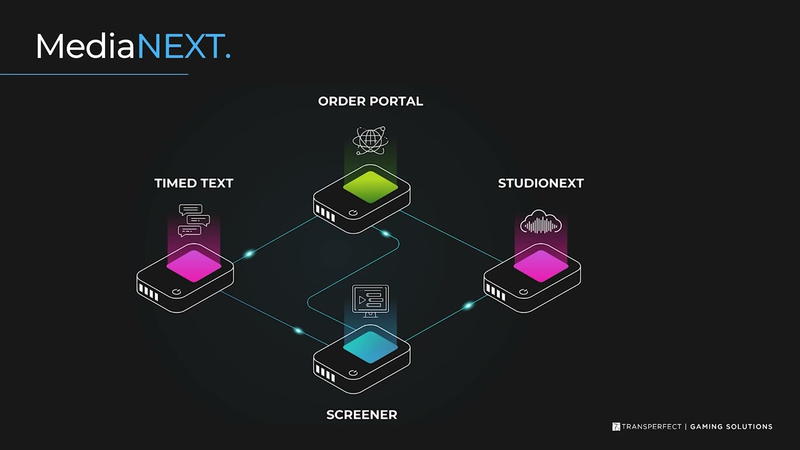
Understanding Media & Media Accessibility Within Mobile Gaming
The mobile gaming industry faces significant challenges in scaling content globally while maintaining high-quality localization and accessibility standards.
- Integrating accessibility features like sign language, live captioning, and descriptive video is a strategic necessity to reach an estimated 200 million individuals with specific accessibility needs.
- Transitioning from traditional studio-based dubbing to cloud-based recording technology can reduce production costs by approximately 40% by eliminating travel, physical space requirements, and complex scheduling.
- Centralized, cloud-native platforms like TransPerfect’s Global Link and Studio Next enable real-time collaboration and secure management of localization workflows across more than 30 languages.

Bombay Play and Hyper Social Games ft. Mr. Oliver Jones
The Indian gaming industry is undergoing a significant transformation, shifting from a focus on rapid, intuition-based development toward a model defined by high-quality, long-term product sustainability.
- The Indian gaming industry is transitioning from intuition-based development to a model defined by high-quality, long-term product sustainability and rigorous, data-driven live-ops experimentation.
- Hyper-social gaming strategies prioritize network effects by embedding social utility directly into core gameplay, effectively turning games into social networks rather than isolated activities.
- Utilizing HTML5 technology and browser-based platforms allows developers to bypass app store friction, significantly reducing user acquisition costs and enabling real-time testing of product-market fit.
A Framework for Valuing Mobile Gaming Studios
This framework for valuing mobile gaming studios provides a structured, bottom-up approach designed for established companies, particularly those navigating a shift from high-growth venture capital environments to more capital-efficient operations.
- Valuation should shift from market-centric multiples to a bottom-up approach based on tangible financial drivers and actual cash-generating potential.
- The primary valuation pillar requires modeling the residual value of existing user cohorts by calculating long-tail revenue assuming all new user acquisition ceases immediately.
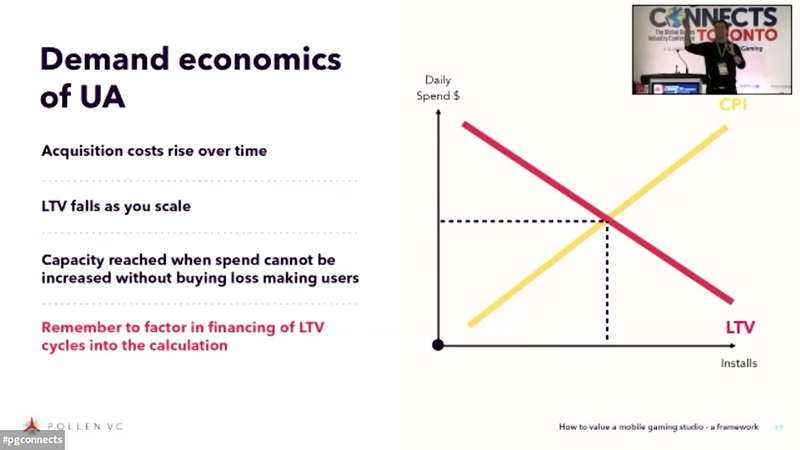
- Studios must evaluate the efficiency of their user acquisition machine by identifying the equilibrium point where acquisition costs intersect with lifetime value (LTV).
Usability Heuristics for Evaluating Arabic Mobile Games
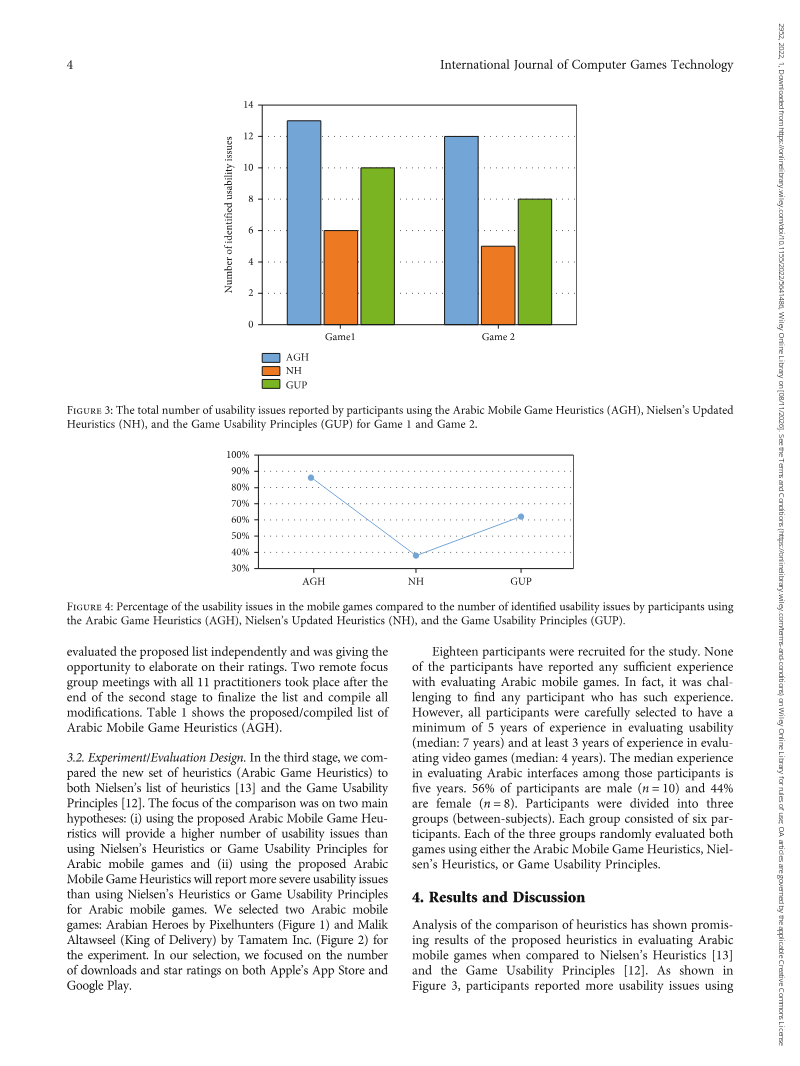
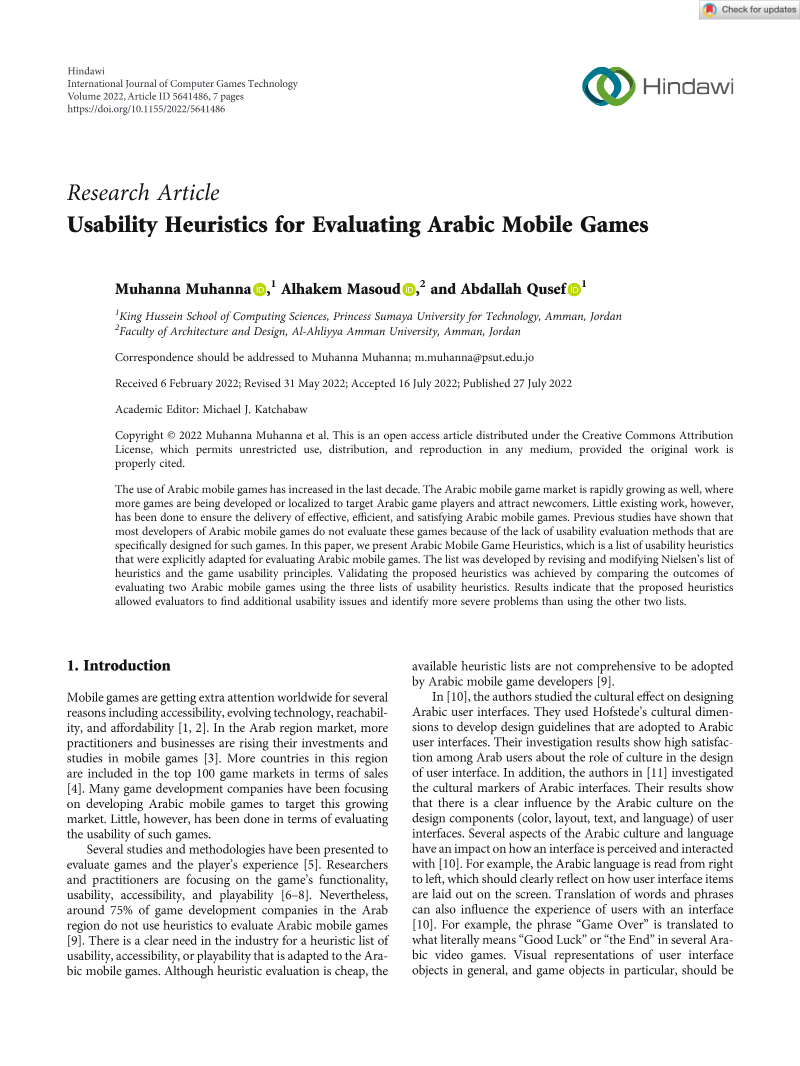
This paper by Muhanna, Masoud and Qusef, published in the International Journal of Computer Games Technology in 2022, presents Arabic Mobile Game Heuristics (AGH), a list of nine usability heuristics adapted for Arabic mobile games.
- Using the proposed AGH list, participants identified 86% of the total usability issues, compared with 38% for Nielsen's Updated Heuristics and 62% for the Game Usability Principles.
- For Game 1, participants reported 13 usability issues with AGH, compared with 6 using Nielsen's Updated Heuristics and 10 using the Game Usability Principles.
- Participants using Nielsen's Updated Heuristics identified no severity level 4 usability issues, whereas all such issues were identified using AGH.

The Art of Not Reinventing the Wheel in 'Wild Rift' Asset Pipeline
Managing the complex asset pipeline for League of Legends: Wild Rift requires a sophisticated approach to oversight as the project scales from a prototype to a global live service.
- To manage the complexity of hundreds of champion skins and their associated animations, effects, and sound assets in 'Wild Rift,' Riot Games developed a custom asset analysis tool to establish a single source of truth for asset dependencies.
- The asset analysis tool was built using Python and designed to be standalone, requiring no Unity installation or project-specific dependencies, which significantly reduced iteration times and increased development flexibility.
- The tool functions by scraping the entire game project and ingesting JSON-based game logic files, utilizing Unity's native prefab and meta file systems to track character configurations and unique asset IDs.
From Clash of Clans to Everdale: Scaling from Solo to Social
The evolution of mobile village-building games necessitates a fundamental shift from solitary, combat-oriented loops toward inherently collaborative, social ecosystems.
- Supercell transitioned from the single-player architecture of Clash of Clans to the social, multi-village model of Everdale by implementing a shared logic state that allowed multiple players to interact with a single, synchronized valley.
- To handle complex social interactions, the team moved away from hard-coded singletons toward a well-defined action object system that encapsulates player actions, validation checks, and rollback logic.
- By allowing objects to declare 'max fast forward ticks' and enabling systems to skip updates for hundreds of ticks, the team reduced server load by 80% to 90% compared to previous architectures.

Garena Free Fire: Secrets to Success and Analyzing The Fall
Garena Free Fire achieved global prominence by pioneering a mobile-first design philosophy tailored specifically for emerging markets in Southeast Asia and Latin America.
- Garena Free Fire achieved global scale by prioritizing mobile-first design, specifically optimizing performance for low-end hardware and limiting match sizes to 50 players to capture underserved markets in Southeast Asia and Latin America.
- The game’s reliance on pay-to-win mechanics, specifically temporary weapon upgrades that provide situational advantages, has become a primary driver of player churn as users seek more balanced alternatives.
- Technical instability caused by aggressive, constant live-ops updates has led to significant player burnout, further exacerbated by market saturation and post-pandemic shifts in consumer behavior.

The 'hyper-financialisation' of play-to-earn with Ben Cousens from Zebedee
Zebedee operates as a fintech service provider that integrates Bitcoin-based payment infrastructure directly into video games.
- Zebedee provides fintech infrastructure that integrates Bitcoin Lightning Network payments into games, enabling real-time, low-cost microtransactions for in-game events.
- The platform currently supports over 20 developers, with 12 titles already live on major app stores across mobile, PC, and console platforms.
- The technology is designed to replace inefficient gray-market economies with a compliant system that allows developers to capture revenue from organic player behavior while reducing fraud.

Open Economies, Social Connectivity & Play - The Metacast by Naavik
Pocket Worlds is actively reshaping the landscape of mobile-first social metaverses by transitioning its flagship platforms, Highrise and Everskies, into a decentralized, community-driven ecosystem.
- Pocket Worlds is decentralizing its flagship platforms, Highrise and Everskies, which currently serve over 24 million users.
- Highrise generates $30 million in annual revenue and supports $100 million in secondary market volume for virtual goods.
- The new Highrise World framework allows third-party brands and communities to build their own branded social spaces, shifting the platform toward a decentralized, Discord-like ecosystem.
Writers
Games and companies
Games