Mobile reports and market data
Documents
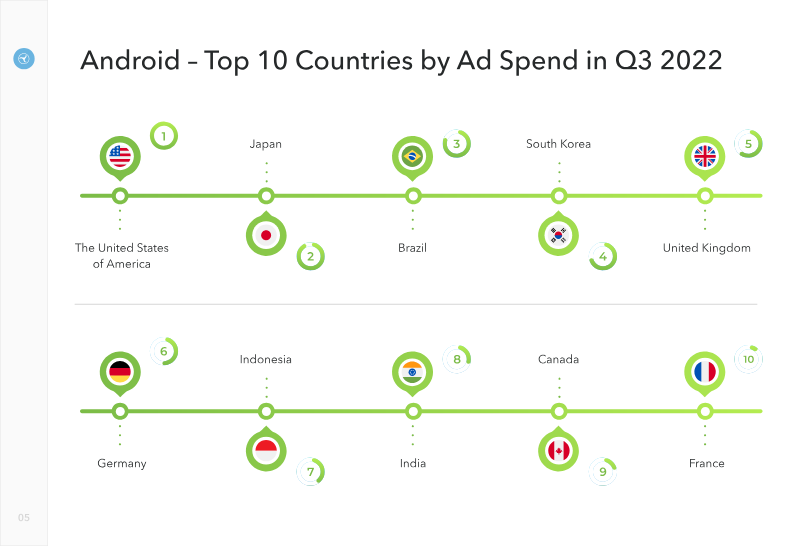
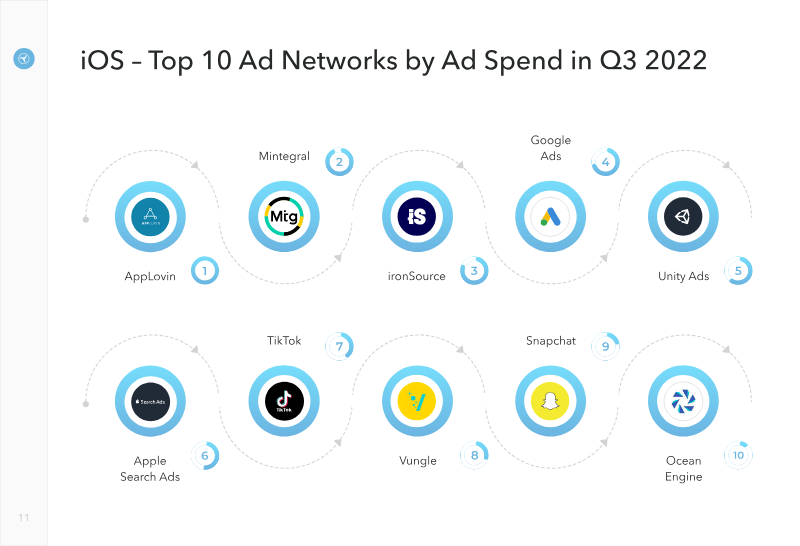
Hyper-Casual Benchmark Report Q3 2022
Hyper-casual mobile game advertising and engagement benchmarks for Q3 2022 (data collected July 1 to September 25, 2022) combine ad spend and cost-per-install figures from Tenjin with retention data from GameAnalytics.
- Hyper-casual revenue remains primarily driven by high-volume user acquisition paired with optimized ad mediation to maximize value during short player lifecycles.
- Market leadership among ad networks is defined by the ability to deliver massive scale at low costs per install while integrating seamlessly with attribution partners.
- Successful publishers are mitigating the impact of privacy-driven attribution changes by utilizing sophisticated data analytics to balance ad spend across diverse networks.
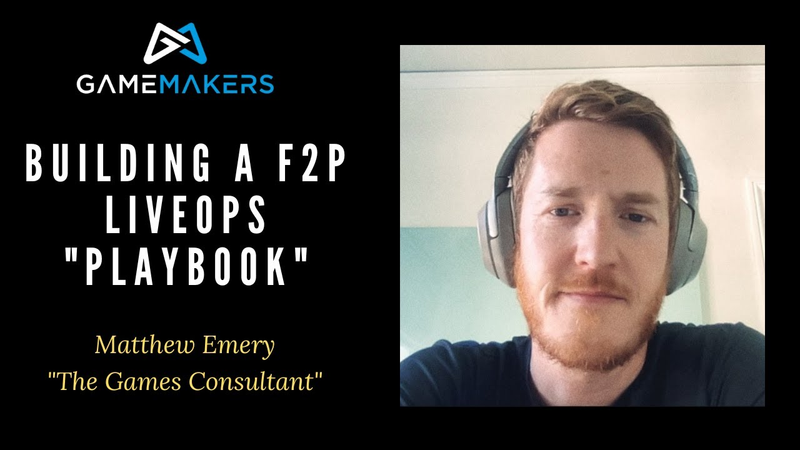
Building a F2P Liveops Playbook | ft. The Games Consultant Matt Emery
Live operations in the free-to-play sector function as a critical mechanism for balancing long-term player engagement with the continuous optimization of key performance indicators.
- Prioritize live operations initiatives based on a strict ROI-first methodology, focusing development resources exclusively on activities that maximize lifetime value (LTV) relative to implementation costs.
- Implement a repeatable operational loop that moves from strategic prioritization to production and rigorous multivariate split testing to ensure continuous KPI optimization.
- Avoid reliance on static industry benchmarks by building internal data vaults and utilizing pattern matching to identify specific opportunities for improvement within your unique player base.
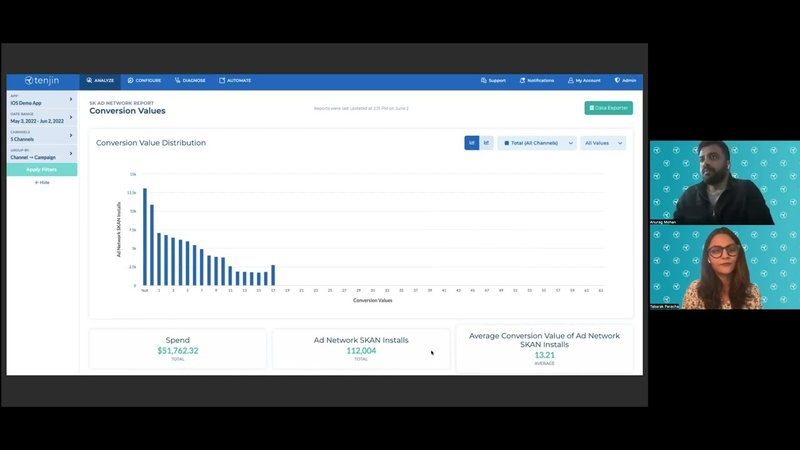
SKAdNetwork Reporting in Tenjin (Dashboard Included)
Apple’s SKAdNetwork serves as a critical privacy-centric attribution framework for mobile user acquisition following recent industry-wide shifts in data tracking.
- Tenjin provides a centralized dashboard to ingest and analyze privacy-centric SKAdNetwork data for iOS 15 attribution.
- The platform enables side-by-side comparison of install data reported directly by ad networks via API versus data reported by Apple to verify data integrity.
- Integrated reporting supports major ad networks including AppLovin, Facebook, Google Ads, and IronSource.
SKAdNetwork 4.0: Everything mobile advertisers need to know
The introduction of SKAdNetwork 4.0 represents a significant evolution in Apple’s privacy-centric mobile attribution framework.
- SKAdNetwork 4.0 replaces single conversion values with a tiered system that provides fine-grained data in the first 48 hours and coarse-grained data (high, medium, or low) for subsequent time windows.
- The update introduces cohorted reporting and support for multiple conversions, designed to improve the measurement of user lifetime value (LTV) while adhering to Apple's privacy standards.
- SKAdNetwork 4.0 expands measurement capabilities by introducing potential support for web-to-app attribution, facilitating cross-platform tracking.

Will Dislyte Be Lilith's Next Big Mobile Gaming Hit? | Deconstruction ft. Game Experts
Lilith Games has established a significant presence in the mobile RPG market with Dislyte, a title that demonstrates the studio’s ability to succeed without relying on established external intellectual property.
- Lilith Games successfully launched Dislyte as an original IP, achieving initial revenue figures that outperformed established competitors like Marvel Strike Force.
- Dislyte has transitioned into a stable performance phase, currently generating approximately $1 million in net weekly revenue.
- The game’s market differentiation is driven by a unique modern aesthetic, high-quality production values, and an innovative user interface that balances monetization with player progression.

Structure of Networked Action Games | Saturday School #3
The presentation outlines the fundamental architecture required for building responsive, deterministic networked action games.
- Treat game logic as a deterministic simulation function where the current state and player input produce a new state, ensuring consistency by decoupling the simulation loop from the rendering loop.
- Implement a fixed-tick system for physics calculations instead of variable frame rates to maintain a synchronized frame of reference across all clients and the server.
- Use integer-based ticks for state updates to prevent the synchronization discrepancies and floating-point errors common in network-based physics simulations.

A New Theory for Game Design Psychology - The Metacast by Naavik
Successful game development hinges on a rigorous culture of iterative prototyping, where teams must be willing to abandon failing projects to uncover the core magic of a title.
- Successful game development requires a rigorous iterative culture where teams prioritize bold, structural changes over incremental adjustments to ensure core mechanics remain compelling.
- A project’s potential is best validated by a three-gate framework: internal team enthusiasm, target audience engagement, and long-term commercial scalability.
- Developers should use their own off-hours engagement with a project as a primary indicator of its potential for success.

Finding Success with a Sex-Positive Game Hook Up
The premium mobile title Hook Up serves as a case study for the viability of sex-positive, narrative-driven games within the indie market.
- The premium mobile game Hook Up achieved the number one spot on the iOS paid charts by targeting niche audiences through viral TikTok campaigns and Pride Month promotions.
- The game’s success demonstrates that mature, sex-positive narrative content can outperform sanitized, mass-market alternatives despite initial publisher skepticism regarding its premium pricing model.
- The core gameplay mechanic—drafting and curating messages to reflect internal filters—successfully monetized the tension between intimacy and digital isolation.

Basics of F2P Game Economy Design | Saturday School #2
Successful free-to-play economy design hinges on the delicate equilibrium between player progression, content pacing, and monetization.
- Designers must ensure monetization enhances player skill and strategy rather than replacing it, as transactional barriers that bypass gameplay loops are primary drivers of user churn.
- Effective economy design requires mapping player activities to time investment to establish fair value and price elasticity, facilitating a smooth transition from linear PvE to complex social and competitive systems.
- To prevent infinite power creep and maintain game integrity, developers should utilize intransitive balancing and additive utility rather than relying on linear power scaling.

Unity’s Love Triangle & Blizzard’s Breakup - The Metacast by Naavik
The global gaming industry is currently defined by a strategic pivot toward platform-based infrastructure and the consolidation of development tools.
- The gaming industry is shifting from proprietary, siloed development toward platform-agnostic, third-party infrastructure that serves both gaming and non-gaming sectors.
- Unity rejected an acquisition bid from AppLovin to pursue a merger with IronSource, prioritizing operational autonomy and cloud infrastructure integration with Microsoft Azure.
- Major publishers are increasingly canceling high-cost, cross-cultural co-development projects, such as Blizzard’s terminated mobile collaboration with NetEase, to favor leaner, faster-to-market mobile titles.

UA Apocalypse or New Era of Hope? | Jon Lau, Steve Palley, Warren Woodward
The mobile gaming industry is currently navigating a fundamental transition from an era of algorithm-dependent, performance-based growth to a more disciplined, holistic strategy.
- The mobile gaming industry is shifting from algorithm-dependent, performance-based growth to a disciplined model focused on long-term cohort health and strategic profitability.
- The deprecation of IDFA and reduced investor appetite for unprofitable scaling have rendered previous automated UA optimization strategies unsustainable.
- Successful growth now requires integrating UA with product design, community building, and brand identity to ensure the initial creative hook matches the actual in-game experience.
Narrative Breadcrumbs: Guiding the Player Experience with Live Events
The integration of narrative into live-service mobile games serves as a powerful tool for increasing player engagement, retention, and monetization.
- Integrate narrative as a core structural component rather than superficial flavor text to increase player engagement, retention, and monetization in live-service mobile games.
- Utilize a 'breadcrumb' narrative strategy to guide players through an ongoing, evolving journey instead of a static story with a definitive conclusion.
- Apply the 'context, characters, and conflict' framework to embed narrative directly into gameplay mechanics and event structures.
Writers
Games and companies
Games