1 free read left. Create a free account for unlimited reading + AI research.
Create free account
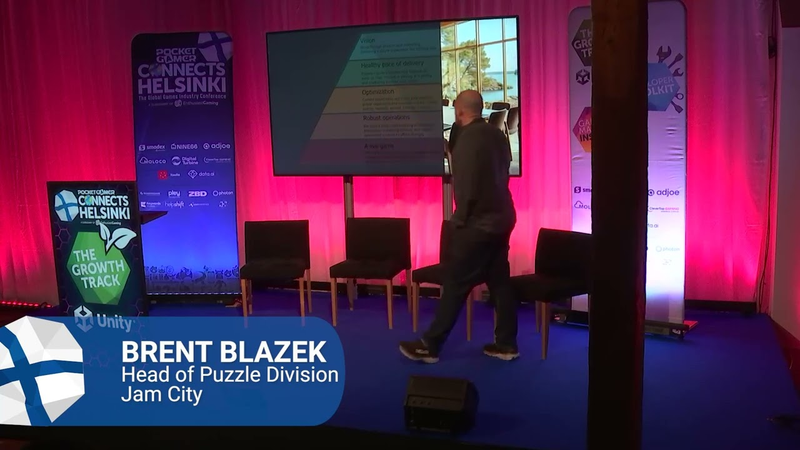
Reignite Your Strategy - Brent Blazek, Jam City.
Key insights
6 takeaways- 0158% of top mobile publishers still rely on the same flagship titles they managed five years ago, making long-term retention of these assets critical to business health.
- 02Attempting high-level strategic 'swings' while the core product remains unstable or poorly understood is a primary cause of failure in mature mobile titles.
- 03Only 21% of mobile games achieve year-over-year revenue growth, highlighting the difficulty of sustaining performance in mature titles.
- 04The hierarchy framework serves as an alignment tool to demonstrate that immediate operational maintenance is a prerequisite for, rather than a distraction from, long-term growth.
- 05A hierarchy of needs framework should be used to prioritize game development, starting with technical stability and crash resolution before moving to optimization or long-term vision.
- 06Teams must distinguish between 'satisfaction requirements'—the operational tasks needed for stability—and 'ambitions' to prevent premature investment in high-level strategic changes.
Ask AI about this video
Transcript
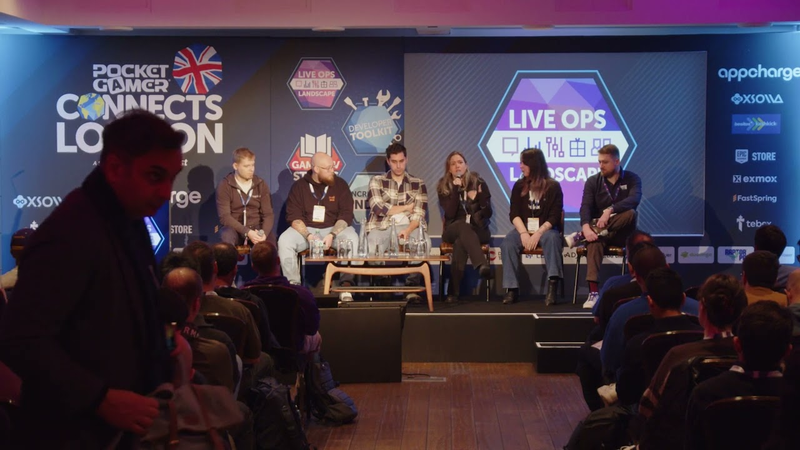
[Music] [Applause] [Music] so next up if we're ready we've got uh Brent blazik from Jam City uh with a talk reignite your strategy a practical guide for setting up a mature for setting up mature games for renewed growth okay uh thank you everybody um so I hope you're all having a good conference so far um I know that I found a lot of amazing tips and tactics so far in the first day and I'm sure there will be tons today as well I'm also confident that if you take all your notes from this conference home to your team
it's going to be more than you could possibly do in your current road map and if you add everything that you already knew you needed to do and all the ideas the rest of your team has it's probably more than you can do in an entire lifetime so I'm in this talk not going to add another tactic onto that pile I'm going to try to add a little bit to an approach you can take with your strategy that's helped me specifically with the Dilemma of mature titles looking for New Growth so some context settings um looking at the market today what I found is that of the top mobile Publishers 50 mobile Publishers 58% of them have the same top title as 5 years ago 96% of them have that top title still somewhere in their top five so the titles now that you have today are overwhelmingly likely to be crucial to your business business in 5
years however as we know 2022 was difficult for the overall gaming Market but the gaming Market is now increasing again however looking year-over-year at Revenue only 21% of mobile games seem to have been able to increase Revenue year-over year so it's overwhelmingly likely that your titles now are going to be crucial to your business for 5 years but it's also overwhelmingly unlikely that without a specific sound strategy that exceeds the market that you're actually going to increase revenue of those titles year-over-year so a little bit about me uh I've been in the game industry for a while I was previously at King and now joined JM City about 15 months ago I've worked in products in all stages of life cycle but for the last 5 to six years I've been specializing in growing mature titles that have already uh reached sort of an equilibrium or even managed decline that we then want to accelerate into growth um at uh Jam City I joined taking over
the puzzle division uh where I managed 12 titles the largest with of which is Cookie Jam and we've managed now in Cookie Jam to be part of that 21% increasing Revenue 10% year-over-year and prior to that at King we're also able to accomplish this uh on several titles namely when I was the head of product for Candy Crush Soda so taking you back to sort of an Insight that I had about five years ago um we were a new leadership team on a title and we knew the title was uh in a rough state it had already been live and was declining and we were dealing with this unique problem of trying to set a new vision so we had an offsite and we were excited and we were a new group of people and we thought we were going to go there and really figure out the next 5 years but the room was more or less empty for more or less the whole day
and the reason is that we woke up that morning to a massive alerts that the game was crashing people couldn't pay in the game we were bleeding money so we had to deal with that problem and I had this Moment of clarity of the absurdity of that as I looked out at the beautiful Swedish archipelago and thought about all the money our company was spending on this Vision workshop and we couldn't even talk about what our vision should be because the game wasn't even live so looking at the concept of vision specifically for a mature title we know it's critical for growth to have a new vision that's taking you somewhere in 5 years but we also know it's very difficult to prioritize dealing with this problem I drew inspiration from maslov's hierarchy of needs which is uh for those unfamiliar psychological Concepts I was familiar with this from like leadership training things like that very briefly if you're not familiar it's one of the underpinnings I believe of psychological safety it's essentially saying that you want to get somewhere of being the best person you can possibly be but there's
no way you can be motivated if certain requirements are not met so you can imagine if you're talking to someone about taking on new leadership roles but they literally don't have food that's an absurd discussion to have right so that this is very interesting from a leadership perspective uh leading individuals but the Insight that I had is that it's also very interesting uh looking at this lens as an organization not the individuals but the organization itself so you need to Define what a vision is for you but let's say generically for a game it's something like you want breakthrough player experience you want breakthrough marketing but you can't do that and one of the reasons why you might not even be able to prioritize talking about it is that your company is dependent on your game hitting its quarterly targets and you don't know if your road map is going to do that so a healthy pace of delivery is necessary for unlocking the investments
in the vision how are you going to take a big swing if you feel insecure about the core business and by deliver also just to note I mean impact like maybe you're delivering a lot of stuff but is it actually having the effect that you need okay so you're going to do that you say great we'll set up Q4 we'll figure that out then we can focus on our vision but then you find maybe you can't do that because your game is not optimized many people might think this is backwards they think well you deliver something in the optimize it but if you've been working in a mature title for a while you've probably run into the problem of taking on a bet that you thought was Secure maybe you went to a conference and heard about a market example there was a Surefire bet and it didn't have the effect that you thought it would and it might be because your game is just out of control your economy is out of control or there's something about your game that's different than the market examples and you don't have a baseline that you can actually build on so how are you going to even prioritize
setting your Q4 road map if you don't have a level of confidence that your bets are going to do what they need to do okay so you think great we'll optimize but oh gosh we can't even prioritize that or maybe even prioritize the discussion about it because we don't even know what to optimize so I call this level robust operations do you have a clear understanding of the player experience in the first place do you have the tools to make those assessments and then do you also have the tools to affect change if you need to so even if you know what to do is it just as big of a road map item to make those changes as a huge player facing bet so do you have robust operations if you don't how are you going to optimize the game if you don't even know what to optimize in the first place do you on the marketing side even understand your kpis your return on investment do you truly understand the fundamentals of why something has an effect that it does
okay robust operations cool that must be the bottom no maybe your game's not even live and here I'll make the point you shouldn't think of these just as binary deliverables like you're either delivering things or you're not your game is either live or it's not the point of this model is to think about your satisfaction requirements so going back to the original hierarchy of needs for an individual you don't need to live in a mansion before you can focus on being really successful in your career it just can't be a problem for you same thing here is the game live enough meaning are your crash rates way higher than you think they should be which is prohibiting you from ever prioritizing anything above it because why would you ever do anything except fix this fundamental problem likewise you should think about satisfaction requirements as not doing more than is necessary for the satisfaction requirement you might have
an idea that your game should have the lowest crash rate of any game in the history of games that's awesome but that goal is probably not the absence of that goal is probably not preventing you from doing the rest of the hierarchy so going back to the Swedish arabello this is where we were we thought we were there to talk about a new vision but we fundamentally couldn't focus on anything except for the live game now this didn't happen all the time this was a pretty unique problem but over time what we discovered was that it was very difficult to prioritize the vision it was difficult to prioritize deciding what to do and it was difficult to prioritize making the investment necessary to get there and over time in hindsight once we actually did achieve growth and reflected on how we got there and what changed not just in the game but in our strategy and our mindset this is one of the big conclusions I think we came to or that I personally came to is that we need to work through through this hierarchy in order to unlock
investment so this is where you want to get this is an abstract concept I'll try to uh help you with like concretely applying it so one of the first things you're going to do is diagnose and set goals one of the most important parts of a strategy is the diagnosis a really fundamental understanding of what you should be doing in the first place and what the effect is going to be so you can use this to help you with that this isn't the totality of Str this is a narrow sliver in it but I think it's an interesting sort of perspective specifically for live games so for each level of the hierarchy you're going to go through and you're going to diagnose the current state of your game you're going to be radically honest with yourself and with stakeholders you're going to involve a lot of people you're going to be as comprehensive as possible as comprehensive as possible with uh perspectives and with data turn everything over from as many angles as you can
and then once you get to this diagnosis then you need to decide what good looks like and you're going to more or less have two sort of ends of a spectrum here you're going to have the satisfaction requirement what do you need to do to stop being blocked by this level of hierarchy but as you're doing this you're probably also going to have a lot of Ambitions you're going to have a lot of things that come up that would be great they are good ideas they're just not relevant to this specific question of Are We being blocked from our vision but you're going to note them so you're going to have this overview from the lens of what's really fundamentally important to unlock investment in your already live title I think this is a different aspect ratio than what it was on my computer uh okay so you're going to take these you're going to have a set of satisfaction requirements in these different categories and then you're basically going to prioritize from from bottom to top now as you probably all know in
reality you don't always execute exactly according to prioritization maybe you have technical dependencies you have teams that can work in parallel but your guiding principle of how you're making prioritization decisions is going to be unlock the top layers by fixing the satisfaction requirements of the bottom layers okay so and remember these are not the best possible States you're going to have discussions about well what is the best player experience we can possibly achieve that's a great discussion to have but you're also going to park those as a separate category which earlier I called Ambitions so what do you do with them you have all these things well your Ambitions become interesting because the prioritization isn't relevant in the same way because for example going back to really the fundamental thing with crash rates how are you going to refactor the game let's say to have the lowest crash rates in the industry if you don't know if you're even going to hit your quarterly targets that's a big investment it's not a
satisfaction requirement they go into your vision is the way you deal with them it's a vision statement to have the lowest crash rates in the industry it's a vision statement to have ai making the most optimized space then I would also argue that you're going to continuously iterate because you're go jeez this is really bad you're going to iterate uh through the hierarchy because as you develop new statements you're going to have to ask the question well what's blocking us so you'll come up with a new satisfaction requirement for optimization and then you're going to ask the question what's blocking us lower in the hierarchy then I would argue that you should also exercise ruthless prioritization items should either be part of the vision like they really deserve to be your fiveyear North Star or they are they satisfy conditions of Prior levels they're necessary for unlocking the next level or they should be
discarded okay so then after completing this exercise you're going to have guiding principles on balancing immediate business needs and your future Vision you're going to have a plan for unlocking investment in Your Vision you're going to have a way of communicating the why of these priorities and plans sorry I think I think morph transitions work the same way on the version of PowerPoint that they're running as it does on my computer uh and you're going to have coherent actions balancing your immediate business needs and vision investment and these together are going to be an underpinning not your whole strategy not the end all be all but a slice that is specifically relevant to how do you set and prioritize Vision while also needing to support your business because you're managing the live title which is fundamental to your business health and then also
specifically on the why of these priorities I think many of you who have been working in live titles probably have at some point gotten the feedback from your teams about their dissatisfaction that you're not prioritizing your vision even though it feels like every decision you're making is relevant and um Justified this is a great tool for explaining to your team that we all want to get to the vision we all have this same vision and we all need to work as a team to unlock that Vision it's not a discrepancy between the leadership vision and the operational core but it's something we all need to work on so thank you any [Applause] questions yeah do we we got a question I think have we got a microphone well do you have any concrete uh
examples of executing this to a real product because our our company is in a really like relevant like a relevant example to your talk we have old games they are doing okay we want to them to be doing much better we've been trying these kind of Brain Trust things for them but the problem always is that the game team kind of does their own thing and maybe they don't have an internal motivation to do any of this so how do you how do you get from A to B in that sense uh sure um that's an amazing question uh and I think it's very fundamental to strategy um it's probably complimentary to this and maybe not an aspect of it I I would argue but okay so a concrete example uh is I think uh both in the case of coming into uh Jam City in the portfolio there specifically Cookie Jam which was the largest title I manage and previously um uh previously
soda I think one of the fundamental questions that you probably need to answer it sounds like in your situation is whether you actually want to strike it growth uh because one of the realizations uh we also had which is in addition to this model but is also interesting is that when it really comes down to it you can Pro depending on what kind of title it is you can probably keep a title live with like five employees like if it's literally just live like you just need the servers not to blow up and maybe you need a couple people for some like core consent so then the question I would maybe put to you in your uh in your leadership team is do you fundamentally believe that whatever incremental let's say headcount above the absolute minimum is what you want to do is it actually going to uh be a good return on investment versus working on something else so you know in portfolio management let's say from Jam City uh we have a lot of amazing games they have really good like
operating margins uh but we're really uh focusing on and prioritizing the top three at least in my portfolio there's several games being prioritized in Jam City but uh like Cookie Jam uh Panda Pop and Genies that was the dec strategic decision like these are the games that we're going to continue to drive growth from we believe that they're going to be amazing in 10 years and we're deciding to focus on those so when you're talking about motivation um I would say maybe one of the fundamental questions is do you have a hypothesis with conviction behind it that it's the right thing to do in the first place um I feel like your question is probably another hour talk but I hope that helps yeah thank you do we have any other questions got time for one or two more qu quiet bunch here today definitely those pies still have an effect uh but cool all right then thanks very much for the talk really appreciate
it give Round of Applause thank you very [Applause] much
Summary
The primary challenge for mobile game publishers is sustaining growth in mature titles, which remain critical to long-term business health despite the difficulty of achieving year-over-year revenue increases. While 58% of top mobile publishers rely on the same flagship title they held five years ago, only 21% of mobile games successfully grow revenue year-over-year. To address this, a strategic framework modeled after Maslow’s hierarchy of needs can be applied to prioritize operational stability and unlock investment for long-term vision.
The proposed methodology involves categorizing game development needs into a hierarchy that begins with fundamental stability, such as addressing technical crashes and ensuring the game is live. Once basic operational health is established, the focus shifts to optimization—understanding player behavior and key performance indicators—before finally addressing the long-term vision. This approach prevents teams from attempting high-level strategic "swings" while the core product remains unstable or poorly understood. By diagnosing the current state of a title and separating "satisfaction requirements" (necessary for stability) from "ambitions" (long-term vision), teams can ruthlessly prioritize actions that unlock growth.
This strategy serves as a communication tool to align teams, demonstrating that immediate operational tasks are not distractions from the vision, but rather prerequisites for achieving it. By systematically clearing lower-level hurdles, organizations can create the necessary confidence and resources to pursue breakthrough player experiences. Ultimately, this framework helps leadership balance immediate business requirements with future growth, ensuring that mature titles remain viable and competitive in an evolving market.