1 free read left. Create a free account for unlimited reading + AI research.
Create free account
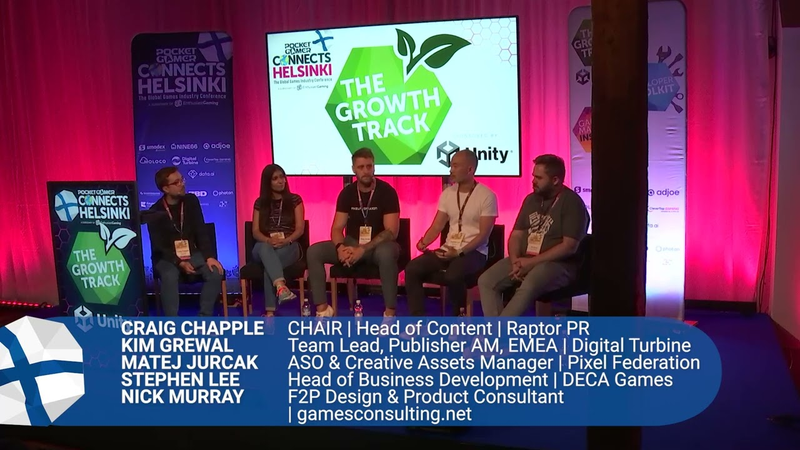
Panel: Beyond Acquisition: Lessons for Better Player Retention.
Key insights
7 takeaways- 01Long-term retention requires balancing structured progression with 'breathing room' to prevent player burnout and churn caused by relentless content treadmills.
- 02Social and guild-based events should be designed to provide meaningful engagement rather than creating excessive pressure on the player base.
- 03Monetization must prioritize non-intrusive models like season passes over aggressive mechanics or value-inflating economies to maintain player trust and long-term reputation.
- 04Publishers must hold ad networks accountable for quality to prevent promotional experiences from alienating users or driving them toward competitors.
- 05Marketing creatives must accurately reflect the actual gameplay experience to protect app store ratings and ensure positive player sentiment.
- 06Artificial intelligence and machine learning should be utilized to personalize player journeys and optimize game economies for specific user segments.
- 07Developers must analyze player cohorts beyond the Day 1 experience to prioritize organic growth over simple acquisition metrics.
Ask AI about this video
Transcript
The next talk is um lessons for better player retention, which will actually be moderated by myself. Uh but we have some expert panelists uh also taking the stage. So, uh yeah. If we're all ready, then uh yeah, please make your way up. So, yeah, let's get started. So, uh yeah, thank you uh for attending this panel uh lessons for better player retention. Uh you probably won't be able to see me, so I'll stand up for a minute. But, uh the um so, my name is Craig Chapple. I'm uh head of content at Raptor PR. I'm also like a freelance analyst, consultant, writer. I used to work for PocketGamer.biz,
uh Alice at Settle Tower, etc. Uh but, that's about me. I'm not that interesting. We've got our expert panelists here. So, I was wondering if you could all introduce yourselves. So, yeah, we'll start with you. Okay. I'm Kim. Uh I'm a team lead in the monetization account management team in London for Digital Turbine. Um we do everything from preloads, uh working with OEMs and carriers, uh user acquisition through um monetization that covers exchange, uh our exchange uh offer wall product, and our mediation product as well. Hey, my name is Mati. I work as a ASO lead at Pixel Federation. We do free-to-play mobile games. I do work as a business development person as well, which is kind of weird combination, but seems to be working for us. I do touch on the retention topic in a way of uh promoting live ops event and basically, yeah, promoting live ops event and a promotion content in Google Play. So, I can offer that kind of perspective to you guys. Hi everyone, I'm Stephen Lee. I'm head
of business development at Deca Games. We are known as a live ops publisher. We are the free-to-play mobile division of the Embracer Group. We help studios to take care of their games to make sure that they have a lot of longevity. So I've been in the industry for well over 13 years. I also advise companies and nonprofits in the games industry. Very happy to be here today. Hey, I'm Nick. I work as a freelance consultant. I focus on the areas of design, monetization, and game economies. So I work a lot with helping improve particularly retention and monetization KPIs for a lot of businesses. And I've been in the industry 14 years. So plus one. We're all competing for veterans in the games industry. Right, so I I guess my my first question was kind of kind of set the scene. So it seems like live ops mobile games is kind of gradually been perfected. With forever games, there's loads to
say, but like Candy Crush for example, kind of continuing to engage and retain millions and millions of players. So firstly, I guess you know, what are some of the best practices that keep players coming back after just the first day? You know, what makes them turn kind of straight away? I can Yeah, for example, for our games, what keeps the players coming back will be Yeah, basically the agenda that we work with is the daily rewards for the logins that would be like the basics. And we try to keep the rewards gradu- basically to be gradually increasing with each day players log in. So this is the one simple way how we secure people are actually coming in. Yeah, we're making sure that they are rewarded properly basically for each login. That would be one. Yeah, I mean, I think not rewards, but also progression structures really help. So, obviously a lot depends on the depth of your game. In a hyper-casual game, it
doesn't really work, but anything that is kind of casual and above, if you have objectives that on day one you've, you know, or on day zero rather, you've made a bit of a dent in, you can come back on day one, complete those, receive more rewards, get a better feeling of like achievement and progression throughout these things. That tends to help a lot as well. Are there any kind of sort of events that are pretty big thing for retention, keep players coming back? Are there any particular type of events that actually keep players coming back? And then what's kind of the ideal cadence of these? I'm sure it also depends on the genre, so if you have any specific insights as well, that'd be really really interesting. I don't know Stephen, if you got any. Yeah, I think it, as you said, it depends a lot on the genre. I think recently, just from playing more games in the market, it feels like there's more overlapping long-term events that, you know, will have sort of a competitive leaderboard aspect that overlap with your daily or weekly events.
So, it sort of keeps you in, ideally, over a longer time period. Um, we find that, I think, more casual games, obviously the the retention is a little bit lower, the events cadence is a little bit faster, I would say. Right. Um, but it also really depends on This is something that doesn't necessarily need to be set in stone. So, for some of our games, uh, one of our oldest games is a game called DragonVale, which is, uh, I think, 12, 13 years old now. And we have constantly changed the cadence of events because uh, our community has said to us, like, "Wow, okay, like, this is too much. We need a break." So, we've kind of moved, and it's been a little bit fluid over time. Um, and so, for example, you spend a lot of time decorating and collecting, um, and they want some time after these events, after they've been chasing things, to like take the time to set up and design, um, you know, their world, right? So, um, yeah, it really depends, but most important for our from our perspective, that's worked really well for us is listening to the community, because if
they're like, "Hey, this is like we're going way too hard, we need to throttle back a little bit, we'll we'll do that." So, it doesn't need to be like set in stone in terms of the number of days. I I think as well from from our side with the ad experience, um, seasonality can also play a lot of a lot into this, um, in terms of events. So, if there's a Halloween if Halloween's coming up, if Easter's coming up, Christmas, publishers can and developers can adapt their app, um, accordingly to the to the seasonality aspect. As I'd also add to that, um, in terms of preloads and and on-device, um, aspects and gaining new devices and gaining new users, that seasonality time, school holidays, Easter holidays is a really good time to acquire new users, and and that's the time to retain them. Yeah. So, yeah. Sorry, go ahead. Oh, yeah. I was I was going to going to say we do have a train simulation games. So, for example, to be specific, what we seen what we noticed that is working for us
is, uh, the audience that we target the, uh, game for is usually male, 35 plus. And, uh, the and obviously US. And, uh, what resonates the most with these people is, uh, some sort of real life events like for example, to be even more specific, it's when it comes to construction and rebuilding something. This is something that strikes with the targeted audience very very well, and we can see definitely huge spikes when it comes to, uh, well, not retention, but more like monetization. And, we can see definitely to see the communities engage in those as well. Yeah. I mean, I just wanted to come back to the the point on like event cadence, um, which I think is really important for particularly kind of more mid-core hardcore games. So, in the past I've worked with a lot of mid-core role-playing games where you have heavy social component as well of guilds or clubs. And, you know, guild wars or raid bosses, these kind of activities are very common. Um they're firstly a great way to retain because you build the social pressure of needing to perform in order to not get
kicked out of your guild, show that you're actually a an active participant. But, it is important to actually spread these out a bit. Like, you can't run, you know, necessarily a guild war every week. Because these tend to be like focal point events, you need to give people time to breathe afterwards. If they feel like they're in a constant treadmill of, "Okay, I've got this big social event and then I've got another one in the same week and then like a few days later there's another one starting." Though you might be giving a lot of rewards and stuff, like that's great, but you're probably also going to be requiring a lot of preparation from your players, a lot of coordination. And, I mean, given the practicalities of how people live, like you don't have time to just be running this like playing this game as your job, basically. So, yeah, it's important to spread these things out enough. It's actually when you got like a major event, is actually kind of building it up and hyping it up for quite some time actually an important aspect. I see it
quite a lot with well, many games, but I like Dragon Ball Z Dokkan Battle I think is a really always been a really good example of doing that. But, yeah, like is building it up part of it? Is that Yeah, for sure. And there's a lot of monetization potential in the build-up as well. Because, you know, you can really talk about how great this event is going to be and like you need to give space for people to get excited about it. If you just say, "Hey, there's an event starting in an hour." Like, there's not really much build-up, there's not much anticipation for it. No one's ready. No one's actually ready for the event that you're doing. They might not turn up. Um but, I guess just one last kind of question on events there really is you know, do you actually have to do events if you're going to run a serious, successful mobile game with live ops, you know, you're you're doing lots of updates, lots and lots of content. Do you need to be doing events? Is that kind of where I guess most of your monetization will come from and and your retention will? It depends on the game. So, there's certain games that are single player, maybe action games. You might not need it if the game is compelling enough and they're just busy
plowing through the game. I don't think that events are absolutely necessary, but anything I think involving players in a guild, as Nick mentioned, or or social aspect, I think it's, you know, if you're not implementing events, you're definitely not optimizing for the potential engagement of your players. So, um yeah, that would be my my choice. So, uh I guess are there any common mistakes you see developers make when trying to retain players, putting in some sort of retention mechanics or again with events? Or mistakes that just then make players churn? I know, like Stephen, you your whole business is about live ops. Like, are there common mistakes that you've seen that you then have to rectify? Oh, yeah, we make mistakes. Uh we try not to make them very often, but um things happen, right? So, in particular, when we take over a game from the original team, there's a learning curve and sometimes, you know, we're trying we're coming in with a lot of energy and trying new things and not all of those things will hit, right? So, um
yeah, mistakes are made and I think the key for us is um the community knows when they're playing one of our games that the changes that we're making are coming from a good place. So, we're we're taking care of them. This is something that we think they would enjoy. Um not everything works out, so we've actually tried made some mistakes and they've been very vocal in in saying, "This sucks. We hate it." And that's also okay, right? And we in some cases we've rolled the rolled things back. In other cases, they've kind of like warmed to our ideas over time. So, it's not the end of the world to make a mistake. You just need to make sure that you don't alienate or piss off your players or betray that trust where they're like, "This was just a money grab from you guys." for example, and we're done with you, right? So, um there's a difference to, you know, your intention when you're making it making a mistake versus, you know, just doing one by accident, right? Let's say. Yeah, yeah. So, I guess always make sure you keep your reputation intact so that players will
just, I guess, not come back. That's right. Yeah, yeah. From the ad perspective as well, um so that the whole experience from start to finish with an ad is super important, I think, when it comes to churn. Um and along with the ad experience is more of the ad content and the ad quality. Um what kind of ads are you showing to your users? Um are they brand ads, for example? Are you expanding the diversity? Are you Or are you showing um competitor ads and then persuading your users to churn away and and go to a go to another competitor? Um you know, at the end of the day, publishers have access to all of this data. They can use tools. They um many of the mediation partners, for example, have their own um ad quality tools or ad experience tools. So, um there's Safety Kai, there's Zoomla, um DT we have our own in-house one. Um and I think it's really important for publishers to utilize this data and see what is what they users are seeing from start to finish. So, from the from the ad get-go um until the end
of the end card. Um and what kind of experience they're having it having. Are they having to click 15,000 times to find an X button, for example? We've all been there. Um and you know, what do they want? Do they want the high CPMs or do they want the revenue? Um and do they want to retain their users? Yeah, I mean, I guess I think there are Yeah, there are a lot of different areas where you can kick your players or like nudge your players out of your game inadvertently. Um there are like three that I would kind of consider further. So, one is economy. Um like a game's economy at some point will have a life of its own if it lives long enough. So, I've played and worked on a lot of games where you know, you start out, you've designed an economy that you think is going to work well. At some point, you maybe introduce something through a patch, through a content update that subverts what your players are used to. Maybe the things that they were trading as part of that economy have suddenly lost you know, 50% of their value. And
that's a very easy way of, you know, pissing off your players. Um another thing is understanding the things that your audience actually wants to be doing in your game. Um like why do they play? Understanding the motivation and continuing to appeal to that through live operations. Again, I've seen different games where, for example, in a mid-core game, you've tried to introduce a like a more casual kind of puzzly game as like a live event, and it just is a total flop. It doesn't appeal to the player base. That's not what they're there for. Um and then the last thing I would say about it is also content. So, quite often you'll start a game and you'll have a like a kind of content road map almost. Like this is what we expect our players to to unlock as they go. And usually when you design this, it might be on like an exponential curve. So, you have like people unlocking content regularly earlier on, and then it spaces out further apart. It takes you longer to unlock um like the higher tier armor or
the higher tier guns, whatever. Um but quite often that curve remains exponential. And your targets, like things that you actually want to unlock, just keep moving further and further away with every bit of progress you make. It's better if you consider that actually, much like your leveling curve, you should actually just flatline this at the end. So, basically, if unlocking one piece of gear is going to take you 6 hours, don't make the next piece take 12 hours, make it take 6 hours again. Like, find a good cadence for people to actually be feeling progress through their character, through their player power. Yeah, I don't know. Do you have any Well, I can only agree. The one thing that I hate in games is that when I work for something, it will just like you mentioned for 6 hours and I know that I have to grind even longer to get something else. It's um the example of a player that would churn at that point. So, we try to make this uh very very Basically, we try
to mitigate it as much as possible. And yeah. Just to make make make sure that players actually feel rewarded for their for the grind, for the farming, for the whatever. Yeah. Yeah, that that's actually good kind of My next question was kind of this interesting chat with someone that was playing like a mid-core game and they were they were playing the probably playing it for like a couple of years. But they actually got to a point where the monetization ended up becoming just continued getting quite aggressive and so encouraging them to invest more and more and more, but they were already a paying player. But that actually made them churn. So, is that an issue you see like that? How do you really balance it? Is it about kind of not making things take as long or a longer and longer and longer? Like, how do you balance the need for retention with monetization? I think it's all about finding the right balance. Um obviously, there are lots of pubs out there who are reliant on IAP. There are some that are reliant on ads and having the aggressive ad formats coming in.
Um you can balance it out with having, say, an offer wall that will reward your users, even your paying users or your non-paying users, um with rewards to keep them in the game. You can do events to keep users um you know, retain them with within the game itself. Um and then there was another point that I was going to make, but I've forgotten it, so I might have to come back. I think a lot depends on also like the priority of your game at any given moment, right? Like there are some uh games where you you understand that you actually you want to kind of keep that monetization uh like cap increasing regularly. Um there are others where if you want your game to survive and be like a really kind of community-driven thing over several years, maybe it makes sense to design your economy in such a way that actually like yes, you know, you may get further in the game, but your spending doesn't
necessarily increase. Yeah. Like actually design for like a spending amount for your different tiers of spender every month. I do actually remember it. So with even within IAP packages, you can also create custom packages for your for your users. So I know that say in hyper-casual or even some of the casual games now, they have these skip it formats where users can purchase tokens and then they can use them to to skip ads. So that's also an alternative if they're finding them too aggressive, there is also always that option that they can have this skip skip format as well. Yeah, interesting. Yeah, we have not really implemented the idea just yet, but this is something we are currently discussing within the company to make players get another currency that would could be used for our skipping ads, for example. Uh so I have a I've got a few questions
on ads actually. But I'll fit one more in just before then, which is I want to talk about the season pass model since you know, I I guess past few years that's what everyone's kind of been talking about, but is this still has this still become one of the best ways to kind of keep players engaged and monetize them like and how difficult is it to implement a season pass effectively? Um I can tell you that it's working super great for me. I mean whenever I see a season I see a season pass I just buy it for all the games that I play. And uh yes, I mean the implementation of uh to of a season pass into our games was a huge success in a way. I mean uh we've been able to monetize those people and reward them at the same time so they feel like they're not just uh purchasing another gem pack for example like the premium currency but they are both motivated to keep on playing and I they yeah I think the meta motivation in a way like they already spent money on it and they want to just basically get something that it's um that that is there to get. Yeah, I'd say it's still very very relevant thing.
And I see that in a lot of games still. Yeah, I think this the mentality of season passes or VIP kind of stuff has changed over time if I think you know in the early days of free-to-play mobile definitely not. People were not willing to do this but I think we've gotten really good over the years with coming up with compelling packages, right? And actually I never used to pay for anything but now for certain games I'll be like okay cool like I have a look at what the what you get and if it's compelling enough happy to pay it and um I think part of it is also because we work in the games industry so I'm always happy to support guys that are doing a good job with their games. Right. Right. Right. But uh yeah for sure it's it's much more accepted now and it makes a lot of sense. Yeah. I think there can still be risks with it though, right? Like because season pass I think works really well for games which particularly have like a competitive elements. Um so you look at like Apex Legends, Call of Duty, those kind of things. Um Dota as well.
Like where you are having cosmetics that people probably wouldn't spend you know 20 bucks on one skin, they might spend 20 bucks on a season pass to get a bunch of different ones. Um otherwise, I think season passes can be can be risky cuz they can otherwise feel a bit flat. Like it's easy to have a season pass that also doesn't feel satisfying. Um the only other thing I would say as well is like we know that like if you are going to be a spender you are probably going to spend within the first few days of your A season pass is a commitment to play usually for 2 weeks to a month. So I don't think it's the best way of converting players because I think you can give more value up front without necessarily needing all the play time to support it. Um but if your economy is deep enough to manage both, then I think it yeah, as you say, it still really works nicely as a as a simultaneous retaining plus monetizing mechanism.
I think strangely it's monetization now, but I think if I remember right, the stuff that came out in the uh the Epic case was that uh the back obviously battle pass was great, but actually they made most of their money not through the battle pass, through the store. But it's the battle pass that kind of actually engages everyone and keeps them playing, so. I mean, it's got a kind of great sunk cost feeling as well, right? Like even if you're a free player, if you've played it enough, at some point it just it feels like it makes sense to purchase it cuz you're going to get all these rewards that you've already unlocked. Yeah. It's an easy sell. So so kind of going to ads and we we we kind of covered this, but more to say. So you know, obviously over the years ads have become increasingly important part of monetization in mobile game for quite a long time now. But what strategies can be employed to so that they keep players engaged with the game and don't make them churn. Like so they're not like there's not annoying ads like involved. So game Yeah. Yeah, well um well going back to what I said earlier is in terms of the quality of
them themselves. We find that brand ads um, obviously don't tend to turn out the users. Yeah. Um, it's more for attention metrics. It's more for getting the the brand out there. Um, along with that, I guess that's quite topical at the moment is uh, is is having personalized ads. Um, and so Google uh, recently announced um, that unless you were if you were working with them in terms of demand, um, you would need to have a Google certified CMP, which is a consent management platform. Um, and in order for that to be the case, I mean we've been pushing for that for quite a while actually um, from from the Digital Turbine perspective. There's a lot of brand out there that they want to know where their ads are serving to. They're spending all these budgets, but are they compliant? Um, what kind of data can we get in terms of um, demographic data? Um, and that's really important to be passing back through this through through the consent management platform. Um, which yes, it's it's another annoying um, aspect I guess for the user
at the at app open. Um, but at the end of the day you're rewarding your users by giving them these personalized ad experiences um, that then encourage them to be retained within the game and then they won't turn out. Yeah, I would actually advise caution when it comes to ads. Um, a lot of the games that are in our portfolio, when they first launched, we did not show any ads whatsoever. Um, it just wasn't as accepted as it is today and we've been slowly changing that. So, um, for certain games we're showing ads for non-payers and and if it feels like a lot, they let us know, but um, we're able to dial it back, right? Um, for other game we have one or two games in our portfolio that are primarily ad monetized. And we have a little bit more leeway now and and we're able to optimize um, the performance of those ads, but I I would say personally as a player, I'm very likely to churn if the ads that are being shown are really annoying. Um, like super long, really hard to get out of. You're looking we're waiting for
the X button. Can't skip it or that kind of thing. And so I think like publishers need to be careful about showing ads and not pissing off their players. Cuz if I'm like, hey, this these guys aren't even paying attention. Like there are certain games where the ad unit comes up. There's no way to get out of it. Or come or it somehow stays on top of the screen and you're trying to play the game again. It's just lazy and sloppy and And I'm gone if that happens. So Wasn't that the case for the Ironsource? For which one? For for Ironsource? Like Yeah, I think so. Yeah. Yeah. Yeah, I hated it. Yeah. Yeah, I think that's exactly where publishers like if they are going to have ads in the game, they need to hold their networks accountable for what they're showing. And then back to also what I said earlier in terms of utilizing the tools. Seeing whether what kind of advertisers are serving in to begin with. And then also just re-watching the ads as well. Or if they're able to get this information from their users, screenshots they always help. I mean
there have been multiple examples of you know, even the content themselves of the of the ads, which is very ironic because a lot of the time this comes from the user acquisition teams. So they're trying to gain users. Yeah. Whereas at the same time you've got the publishers complaining and it's almost like you guys need to talk to one another. Because you know, there has to be some give and take from from the user acquisition side who are creating these kinds of ads or doing things with the X buttons and trying to raise that CTR and raise the raise the raise the awareness within the within the ad itself and drive the install. But that doesn't always align with what the publishers are after when it comes to CPMs and revenue. There are definitely occasions where I just cannot find the X button. Yeah. I'd sit there like I just can't see it. is. Or the mute button as well, right? Or the mute button. Yeah, yeah. Well, I have that on my phone anyway. Um so, actually uh
I had a question about so you kind of mentioned about the user acquisition part. So, but how how can creative user acquisition campaigns impact retention and churn in your game? So, what I'm actually thinking is when you put an ad out and then someone downloads like that's nothing to do with the gameplay perhaps or it's loads to do with it. And then they download it and play it, like how does their engagement with that ad then affect kind of their engagement and retention with the game if that makes sense? Well, well, from from our standpoint um exactly everything that I that I said I'm not I I won't repeat myself, but it can also have an impact on the um App Store reviews. So, if a user sees an ad, um you know, they will then click on it. They'll go to the App Store. They'll They'll read the ratings. That will obviously whether whether a user will ultimately also download. I think there's a there's a um panel or survey that was done about 80%
of users actually read App Store reviews before they tend to download the app. Right. Um so, yeah, you want to try and reduce that down and that's where the balance between what you're showing in terms of the quality and the of the of the user acquisition creative that's being shown to not have that bad user review uh in the App Store cuz as a developer, you know, you've spent all this time, effort, energy, money um investing into this game and then you're going to lose the user at that opportunity where they're about to install from the App Store um and they've read a review that says, you know, they had a bad experience within the game. Yeah, we experimented with the with fake ads lately and then we've been able actually find like guest creative which got us through the summer like it was uh were amazing and it had I mean the idea it was for train game again and the idea was just like creating a fake bottle neck that you don't encounter within the game but I mean the actual train station was displayed. For some reason it resonated very well
with the audience like but the LTV curve was very very different. I mean the retention literally plummeted but the potential players and the players who actually were converted to payers within couple days. So we seen like a short term success but then in long term like the retention literally suffered heavily heavily. Yeah. Yeah. It's interesting to see that then some of those fake cars they just become the mini games. Yeah. Perhaps to avoid certain regulatory regulatory bodies. I won't name names. But so kind of moving on we hear a lot about uh I don't want to lose connection really but we hear a lot about AI machine learning but are you able to use these tools or or something else to kind of create more personalized experiences for players but we kind of touched upon this earlier and find better ways better ways to engage and retain them. So if so how? Like you know you could do it with like I guess store offers as an example but maybe there are other ways. So I think there is there is obviously a lot of work going into like having
machine learning models that help better optimize your economy or help as you say better personalize the experience for your players and that can be anything basically any numbered variable like within your economy pricing within levels difficulty like you can you can have machine learning models to do this. I mean realistically at the start you're not going to have this you're going to have your kind of best guess in place or good benchmarks from a competing product. But like this obviously if you can make it work should improve retention because it's a more personalized experience. I will say like, beyond casual kind of more puzzle type games, I'm yet to see it work effectively. Right. Yeah, I think it's coming. As a gamer, I can totally imagine, you know, in the future just being able to, you know, a game ramping up the difficulty where it's like this is a super challenging
experience that I can like, if I really focus, I can you know, come out with a victory and that'll be super satisfying and I'm going to keep going, right? Um I could see that being a pretty compelling use of AI to keep players coming back. Yeah. Uh we were actually playing with the idea uh of customizing the first time user experience by as much as possible even to to that point that we were willing to change the uh beginning of the game, for example, based on the region where the player plays. And uh if it makes like if it makes if So, it makes sense for the Japanese players, for example, to be to culturalize the content pretty much. And uh we were not able to crack it just yet, but I think um with the help of AI, uh I think we're going to go that way. It would make uh I mean, it would make so much sense. Yeah. Um so, I guess uh I've got like a couple of questions, but I I I'll So, what are some of the What are some benchmarks uh for attention that developers should be aiming for? I know
that's probably quite a wild question depending on the your goals and that, but do you have any kind of benchmarks? Um for us, it's mostly just the industry standards, but we never hit those. Usually, it's way lower, and somehow we just seem to make it work. I mean, could be better, but what can you do? I get this question a lot when we're evaluating which games to acquire or take over. Yeah. And yeah, like you said, industry benchmarks work, but it also depends on the situation. So, for example, um we acquired a game from Finland a a years ago where the retention was relatively low. Uh but despite that, it actually had figured out how to have really strong organic, so the top of the funnel was always super healthy. So, um there's no absolute benchmarks. It depends on the genre and the situation. So, the fact that that game had really strong organics and still does gave us a lot more confidence in in doing the deal that you know, the audience would remain healthy, right? So, um it really depends
on on the game and on the situation. I would also encourage you to to look deeper than like day one and beyond because part of the challenge of a retention funnel is that it's a funnel, right? So, like if you have a crappy day one, then your day 30 is also going to look bad. So, just one thing you can do is actually remove day zero from like from your uh cohort. You basically say 100% of users start on day one, and then see how the curve looks. That way you're actually going to be looking at the kind of long-term viability of your game without the noise of players who just come in, check it out, decide it's not for them, and leave again. I think benchmarks do change all the time exactly as you're saying like depends on the genre, but also it depends on the geo. Um at least from the ad LTV side of things. Um and I think given uh some of the news that came out yesterday in the industry, um with with Unity, um I think that that's really going to change the
benchmarks of the genre of like where where that leaves hyper-casual, um where that leaves a move into hybrid casual, which is now becoming a thing. Yeah. Um and I I think these these kind of benchmarks when it comes to the ad LTV is really going to going to start to change because you know, if you if you're going to get charged for every install, how much are you going to then spend on the user acquisition to acquire the user? Is it one going to outbalance the other? And that's where the importance of like now is the time to be retaining your users. These users that you've got now are the ones that you need to retain. Um and and I think the benchmarks when it comes to that that ad LTV is going to be super important. So, utilize the different ad formats that are available um whether it be um you know, interstitial rewarded video um to reward your users that you won't necessarily want to pay in IAP um to look into offer walls, look into in-game, look into audio um and try
and retain those users as much as possible. Yeah. I think that's a really great point because it's much more valuable it's a much bigger loss of value to lose a player than to acquire a new one, right? Because if you're doing well in UA, you're still losing most of them after 30 days. So, um yeah, there I think retention is critical. Yeah, that I guess that news also combined with ad track tracking transparency privacy changes which making things challenging. Um so, uh I I do have some other questions, but I wanted to open up to the audience. Uh does anyone have a question that they would uh like to ask? We've got a few minutes left. We've answered all of your questions already on stage. Oh, we do have one. Oh, we have a we have a couple of questions. I'm just blind. Any Any advice for UA managers launching their first game? I'd say
try to go for the best possible retention day one, but don't be scared if it's not meeting the industry standard you can still make it work, but yeah. Keep that in mind, uh but don't be afraid to make the bit more aggressive move in that direction. Okay. Yeah, we have another Yeah. Thank you for the talk. Uh, bit of an open question. How do you make a good season pass that is both monetizable and engaging for the players? Um, I would start with upfront value. So, um, like I think it's important that if a player commits to purchasing a season pass, the very first thing they receive is a cool reward. I think, uh, like Apex does this like Apex Legends does this quite
well with giving you like legendary gear the moment you purchase. So, that's the first thing. Second is have some kind of system in place for designing like the cadence of tiers. So, again, like I was talking about earlier with putting things on exponential curves is very tempting because the beginning of the exponential curve you're always unlocking quickly and it's like it's exciting. But, too often I've seen games that leave that exponential when actually you want a more regular cadence at the end. Again, don't keep shifting the goal posts. Help people to unlock stuff regularly. And the other thing I would suggest is to give kind of further value for the duration of the season for early adopters. So, games like Mr. Auto Fire is a good example. You actually receive bonuses to the amount of points like battle pass points you receive by purchasing early. So, that's also a good way of making sure that you're getting people on board earlier and like
feeling the investment that you've made throughout the season. Thank you. Oh, yeah. I think we had another question, did we? Yeah. Uh, yeah. On the on the topic of battle passes so or season passes, um, related to something that Nick, I guess said said earlier uh, that kind of intrigued me. So so you said that that season passes can feel a bit flat. Yeah. Uh, can you elaborate on that, please? Sure. So, I think like I said before in a lot of the genres that you typically get season passes, it tends to be more cosmetic driven. Um, and in those cases, you kind of you have to have a very strong content treadmill behind this in order to produce high-quality content. Otherwise, you end up basically putting out skins with, you know, slight recolors and stuff like that and it
feels very unrewarding. So, really the best season pass is for a game that has sufficient depth of economy where you can actually give like various rewards at like at regular intervals. So, I mean, if we take the example of Mr. Auto Fire, not sure if you played it, but um, you know, they can afford to give away different kind of chests, different cosmetics, different character shards, weapon shards. Like having that variety I think makes it a far more exciting proposition than just skins. Particularly again, like skins and outfits are great, but in for example, come back to Apex Legends, it's a class-based game. You probably only play one or two particular characters. So, you're going to be unlocking a bunch of stuff that you're never really going to use for the other characters. I think that's what I mean when I say it can feel a bit flat or a bit unrewarding if uh, yeah, if you play in that way. And that time for one more if we had another one.
Uh, unless I can't see again, I think that is all the questions that we've got and so that brings us to time. That's pretty that's pretty good. Uh, so a big round of applause to the panel. Thank you so much. Hey.
Summary
Long-term player retention in the modern gaming landscape relies on a strategic balance between structured progression and the prevention of player burnout. Developers must move beyond simple acquisition metrics by prioritizing organic growth and analyzing player cohorts well beyond the initial Day 1 experience. Success is increasingly tied to the implementation of well-paced live operations that align with player feedback, ensuring that social and guild-based events provide meaningful engagement without creating a relentless, demanding treadmill. By offering players necessary breathing room, studios can foster sustainable communities rather than driving churn through excessive content pressure.
Monetization strategies must be carefully calibrated to maintain player trust and protect the game’s long-term reputation. Aggressive, "money grab" mechanics and poorly managed in-game economies that lead to value inflation are significant drivers of player attrition. Instead, developers should favor non-intrusive models like season passes that provide immediate, diverse value and consistent reward cadences. Furthermore, the integrity of the user experience extends to advertising; publishers must hold ad networks accountable for quality to ensure that promotional experiences do not inadvertently alienate users or drive them toward competitors.
Technological integration, particularly the use of artificial intelligence and machine learning, is becoming a cornerstone for personalizing the player journey. These tools allow for the optimization of game economies and the adaptation of content to specific user segments, creating a more tailored experience that resonates with individual motivations. Ultimately, the alignment between marketing creatives and actual gameplay is paramount. Ensuring that the promise made to the player during acquisition matches the reality of the in-game experience is essential for maintaining positive sentiment, protecting app store ratings, and securing the long-term viability of titles across all global markets and genres.