Global reports and market data
Documents
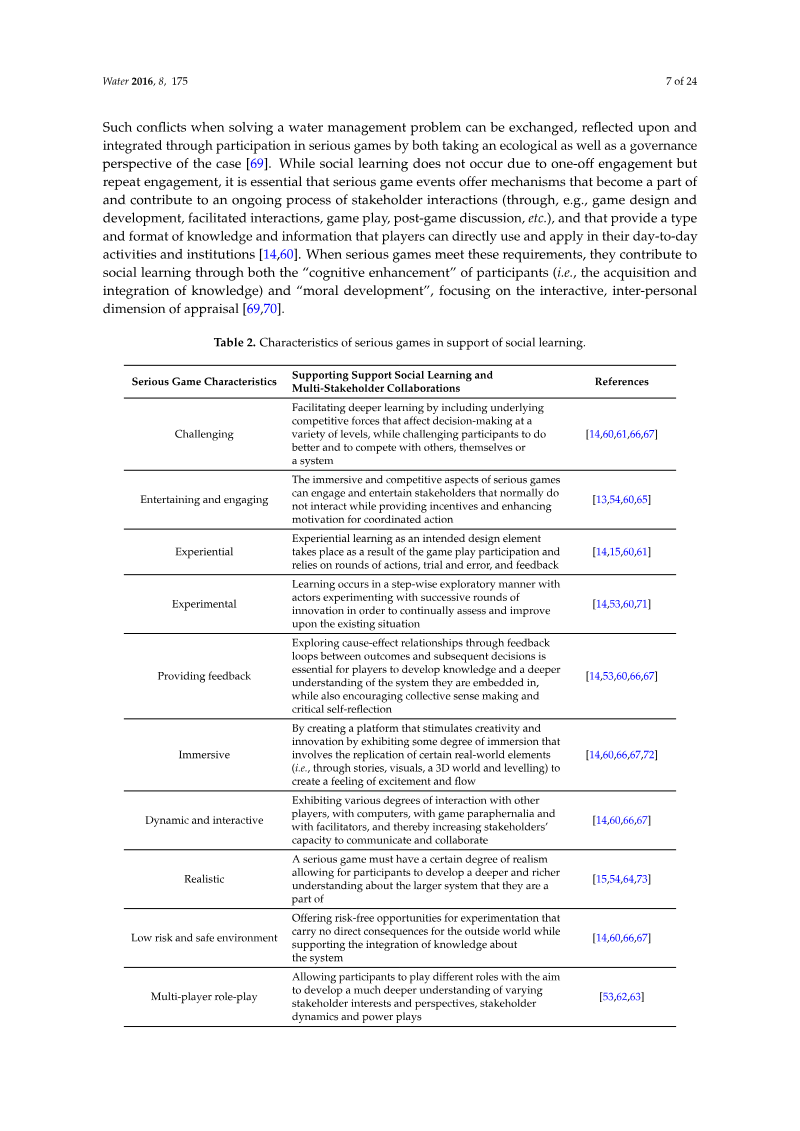
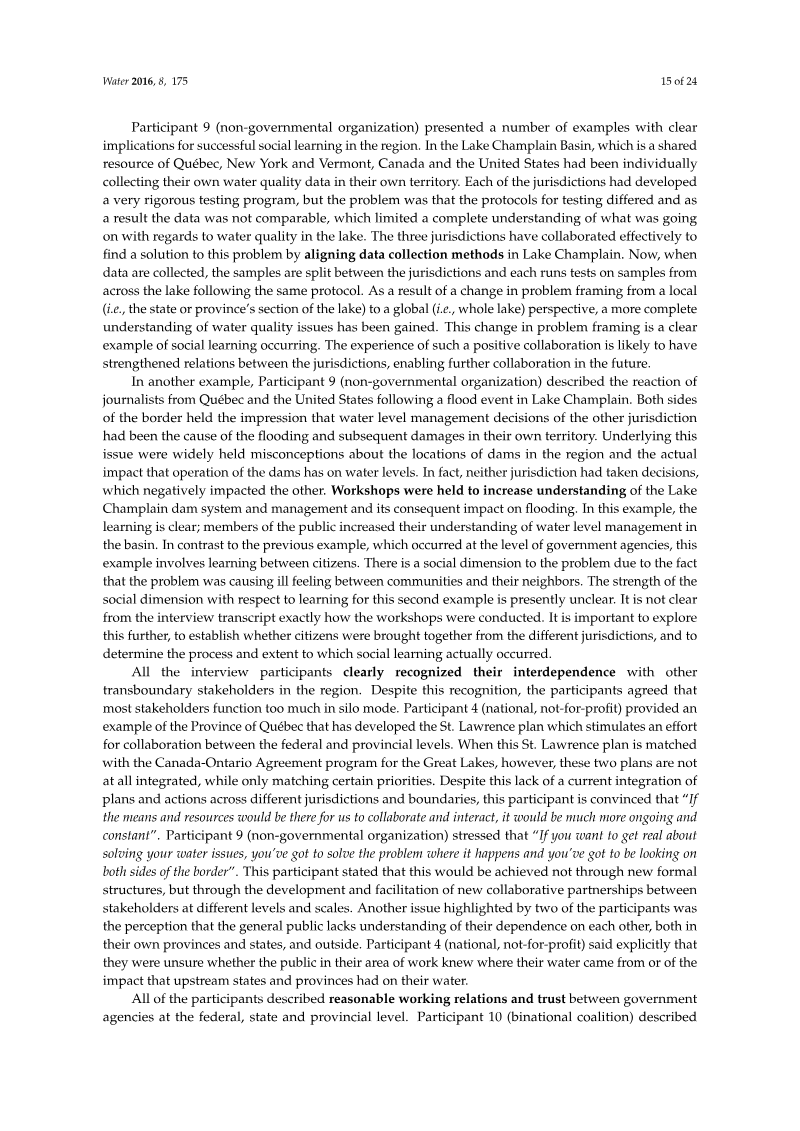
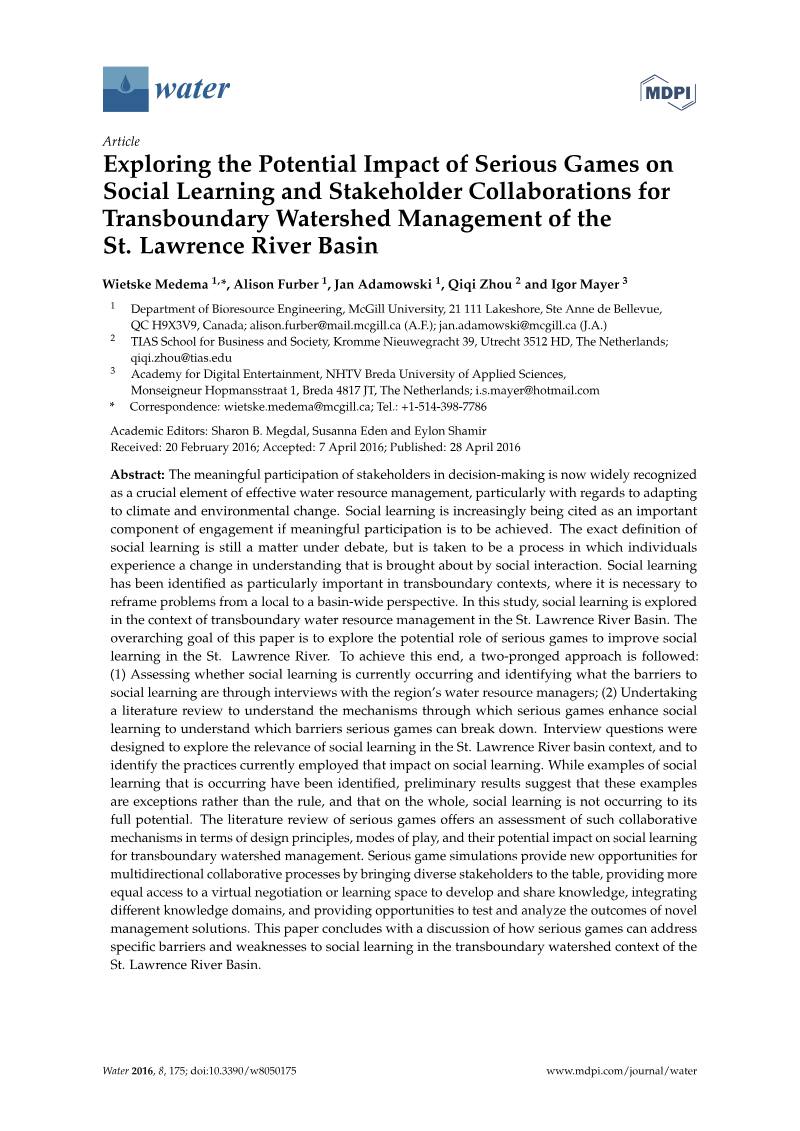
Exploring the Potential Impact of Serious Games on Social Learning and Stakeholder Collaborations for Transboundary Watershed Management of the St. Lawrence River Basin
The document explores the potential of serious games to enhance social learning and stakeholder collaboration in transboundary watershed management, specifically within the St. Lawrence River Basin.
- Social learning in St. Lawrence River Basin transboundary water governance is occurring only in isolated cases rather than as routine practice, and the study proposes serious games (computer simulation combined with role-play) as a bottom-up tool to strengthen it.
- Jurisdictional fragmentation and inconsistent policy are central obstacles, illustrated by the American eel being listed as endangered in Ontario but not in Québec.
- Communication is judged adequate at the federal level but weak between provincial and state agencies, which often operate in silos even where shared Great Lakes Agreement goals apply.

Massively improved discovery on Google Play Store
The Google Play Store has undergone a significant transformation over the past 18 months, evolving from a disorganized repository into a sophisticated platform for mobile game discovery.
- Google Play has shifted from a disorganized repository to an algorithmic, data-driven discovery platform, prioritizing automated personalization over traditional human-led curation.
- The platform now utilizes user download history and genre preferences to create personalized discovery loops that connect players with relevant content from similar publishers.
- A robust pre-registration system allows users to express interest in upcoming titles and receive automated push notifications upon release, a feature currently underutilized on competing platforms.

FTUE: Slither.io
Slither.io represents a modern evolution of the classic snake genre, blending traditional mechanics with the competitive, multiplayer dynamics popularized by Agar.io.
- Slither.io relies on a minimalist, pick-up-and-play design that eschews formal tutorials to drive rapid re-engagement and viral growth.
- The game’s monetization strategy is currently limited to intrusive, non-rewarded video advertisements, which underperforms compared to industry standards favoring opt-in, rewarded formats.
- The title lacks a robust in-app purchase economy, restricting its ability to compete with major industry players that utilize large-scale user acquisition budgets.
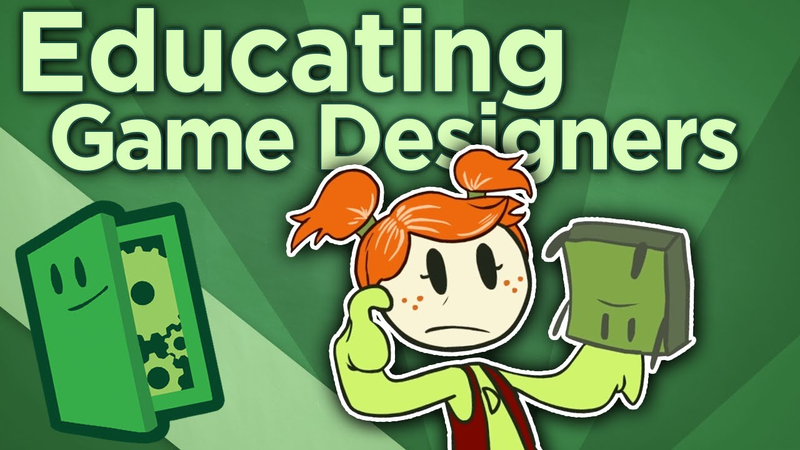
Educating Game Designers - Too Much "Game" at Game Schools - Extra Credits
Current game design education often fails to prepare students for professional environments, leading to a disconnect between academic training and industry requirements.
- Current game design degrees often fail to provide a competitive hiring advantage because they prioritize specific tools and engines that quickly become obsolete.
- Effective game design education should emphasize transferable high-level competencies, such as logical thinking, communication, and project scoping, rather than narrow technical tasks.
- A robust curriculum should be grounded in a liberal arts foundation, specifically philosophy, psychology, and mathematics, to foster critical thinking and rapid information assimilation.

Unlocking Admiral Ackbar in SW: Galaxy of Heroes
Star Wars: Galaxy of Heroes serves as a case study in the mechanics of character progression and player retention within the mobile RPG genre.
- Star Wars: Galaxy of Heroes utilizes a hybrid model of card collection and tactical combat, requiring players to manage teams of five characters through missions.
- Progression is gated by three core systems: collecting character shards for rank-ups, using training droids for leveling, and equipping gear to boost combat attributes.
- The game’s economy forces players to balance limited resources, specifically soft currency (credits) and energy, which creates significant friction in late-stage progression.
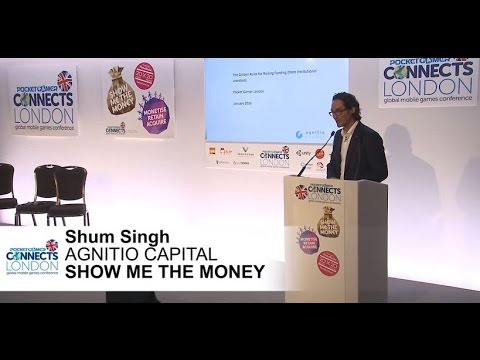
The golden rules for game devs looking to raise institutional funding
Securing institutional funding in the gaming industry requires a strategic shift toward free-to-play mobile models, as the top-grossing charts are dominated by a small number of large, established players.
- Institutional investors prioritize studios with a proven track record in mobile free-to-play development, specifically favoring teams that have previously placed titles on the top 200 grossing lists.
- Studios must appoint a dedicated commercial director to manage the intersection of game development, financial management, user acquisition, and business intelligence to satisfy investor requirements.
- Fundraising success depends on treating game development as a data-driven business, requiring internal expertise in monetization, marketing, and platform relations with Apple and Google.
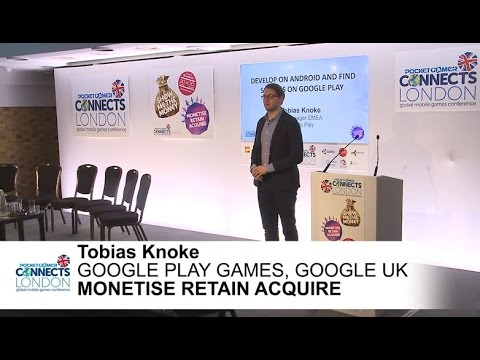
Why you should be using Google Play Games services
Google Play Games services provides a comprehensive suite of tools designed to assist developers throughout the entire game lifecycle, from prototyping and soft launching to full release and post-launch optimization.
- Google Play Games services provides access to a global audience of over one billion active Android devices, with significant growth currently projected in emerging markets.
- Machine learning-based predictive analysis allows developers to identify specific user behavior patterns, such as churn risk or spending propensity, to trigger targeted retention interventions.
- Integrated player analytics tools provide data on in-game economies, enabling developers to balance currency flow and optimize average revenue per daily active user (ARPDAU).

Who were the secret App Store winners of 2015?
The analysis of 2015 App Store performance identifies the market’s "hidden winners" by comparing top-grossing rankings against download rankings.
- Publicly traded companies dominate the mobile gaming market, owning 59% of the top 100 grossing titles in the U.S. iPhone market.
- The most profitable games, termed 'hidden winners,' prioritize high monetization efficiency and player retention over the high download volumes seen in mainstream hits like Clash of Clans.
- Slots and Asian-style RPGs are the primary genres that achieve high grossing rankings despite lower install rates, driven by superior average revenue per daily active user.
Fallout 4's Modular Level Design
Bethesda Game Studios achieves massive, high-quality open-world environments through a systematic, modular approach to level design.
- Bethesda Game Studios utilizes a modular level design workflow where 'footprint' grid systems and standardized snap points allow level designers to assemble complex environments from granular art kits rather than custom-built assets.
- Modular kits require significant upfront investment in overhead, including establishing piece logic, documentation, and ongoing maintenance, but they enable rapid iteration; for example, new architectural variations can be brought online in as little as two weeks.
- The shift toward granular, modular pieces increases object counts significantly—moving from 20 objects in a traditional 'clamshell' kit to 123 objects for the same space—necessitating the use of prefabs (or 'pack-ins') to maintain efficient editor workflows.
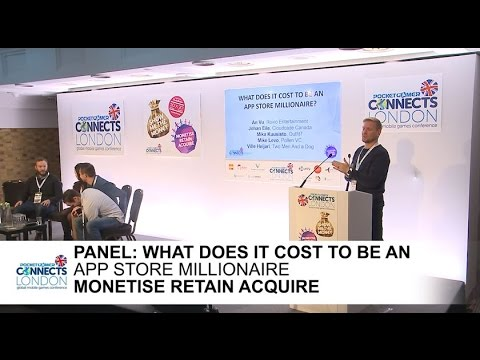
What does it cost to become an App Store millionaire?
Achieving commercial success in the mobile gaming market now requires a sophisticated, capital-intensive approach to user acquisition.
- Reaching the top 25 rankings on major app stores typically requires a capital investment of approximately $200,000 for user acquisition.
- Developers should allocate $5,000 to $10,000 during the soft launch phase to gather statistically significant data on monetization and conversion metrics.
- Data-driven testing on platforms like Facebook is essential for refining demographics and acquisition strategies before committing to high-cost channels like influencer partnerships.

Why your mobile RPG needs pre-registration marketing
Pre-registration marketing serves as a critical strategy for mobile game developers, particularly within the core and RPG segments, to build anticipation and secure a high-quality user base prior to launch.
- Pre-registered users demonstrate significantly higher retention rates compared to both organic users and those acquired through standard incentivized campaigns.
- A case study of an action RPG showed that 4,000 pre-registrations converted into 2,000 installs and $15,000 in revenue during the first week, yielding a 400% return on investment.
- The primary demographic for pre-registration campaigns consists of males aged 18 to 34 who exhibit a high propensity for in-app spending.

Marvel: Avengers Alliance 2 vs Star Wars: Galaxy of Heroes
Marvel: Avengers Alliance 2 and Star Wars: Galaxy of Heroes represent two distinct approaches to the mobile turn-based squad RPG genre, both leveraging major Disney-owned intellectual properties.
- Marvel: Avengers Alliance 2 and Star Wars: Galaxy of Heroes both utilize a three-wave combat structure and character-based progression, yet they target different segments of the mobile RPG market.
- Marvel: Avengers Alliance 2 focuses on tactical depth by requiring manual input for complex class-based mechanics, buffs, and debuffs without an automated combat option.
- Star Wars: Galaxy of Heroes prioritizes accessibility and time-efficiency through a streamlined combat system with fewer ability choices per character.