1 free read left. Create a free account for unlimited reading + AI research.
Create free account
The golden rules for game devs looking to raise institutional funding
Key insights
7 takeaways- 01While European venture capital remains selective, studios should target strategic investors from Asia and the United States to fill funding gaps, particularly within the leading hubs of Finland and the UK.
- 02Studios must appoint a dedicated commercial director to manage the intersection of game development, financial management, user acquisition, and business intelligence to satisfy investor requirements.
- 03Institutional investors prioritize studios with a proven track record in mobile free-to-play development, specifically favoring teams that have previously placed titles on the top 200 grossing lists.
- 04Fundraising success depends on treating game development as a data-driven business, requiring internal expertise in monetization, marketing, and platform relations with Apple and Google.
- 05Networking and referrals are the primary methods for securing investor meetings, as institutional backers rely on these channels to mitigate risk.
- 06Investors demand rigorous administrative preparation; studios must maintain impeccable financial and legal documentation to avoid being disqualified during the due diligence process.
- 07Rather than focusing on valuation, developers should present a clear, granular plan for fund deployment—specifically regarding hiring, infrastructure, and marketing—to demonstrate measurable returns.
Ask AI about this video
Transcript
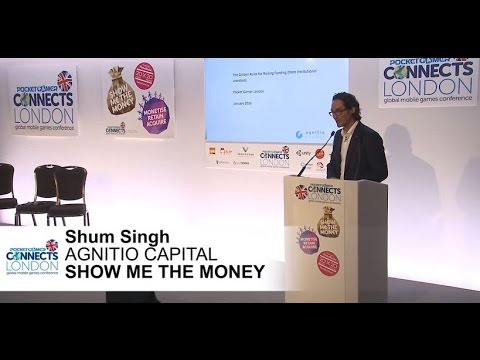
I guess before I get into this presentation which hopefully some of you have seen before so it's not going to be entirely new stuff but this is really focused on institutional investment so it's really raising kind of above millions of euros so I think a lot of the things that probably some of the other speakers have addressed earlier today with respect to angel sort of funding or kind of smaller amounts than you know maybe some of the comments that they made are probably going to be more relevant depending on the size of funding that you're looking to raise so just a little bit about egg nishio I mean we were founded in 2003 here in London we're focused on the gaming sector have been for number of years we are both an adviser that's our principal business so when I say an advisor that means we assist studios and raising series a financing that's in millions of
euros or exiting some of the recent deals we included were a series a investment for social spiel by nexon a seed round of funding for ocean view games in finland by gamevil and then we also sold future games of london which was a leading studio here many of you probably played the title hungry shark evolution we sold that studio to Ubisoft some of our personal investments include social spiel in Vienna hutch games here in London fragment productions in Finland and gunjan games which is a relatively new studio in Brighton so I'm going to probably just talked to a couple of bigger slides on the market I'll try to be fast because this is kind of pretty redundant but everybody knows the market is huge and growing but this is actually a much more pertinent slide is probably unfortunately a little bit small for many of you to see but i think
what what is important about this analysis is that in the yellow bars there's only two paid games in the top 100 grossing games category in the us so what that means and a lot of folks if you're in DS out there and you want to raise institutional financing you know you need to be focused on free to play the majority of these of these titles have been around also for a long time and there's not really a lot of movement particularly as you get higher up in these grossing positions so kind of top 50 and above why choose the US well it's the largest market in the West it's a very diverse one it's it's composed of various different ethnicities and nationalities so it's actually a very good representation of global taste to some extent some of the other studios that I thought would be notable to mention nine percent so nine
titles in that top 100 were developed by Studios based in Finland most of them largely king and a few by minecraft and then obviously Finland fares pretty highly as well mainly due to supercell in rovio and I should there's one title from next games and then Japan as well it's mostly composed of D&D nine a few other large players what is actually a lot more interesting and again I go back to the point I just made is that King and EA have seven titles each in that top 100 grossing list then you have played tikka and Zynga with four titles each and then you have a smaller Elijah not a small but actually a decent handful of studios that have three and two titles so you can see the sort of prevailing dominance of larger players in the top 100 grossing another worrying trend is CPI costs continue to go up why
because the graph that i just showed before indicates that larger players are just going to keep out spending anyone they can it's a market it's a land-grab right now and some market share you know sort of land grabs so the quicker that they can derive more revenue even at even at a loss they're going to do that and it's mainly just a crowd out small players it's it's it's evident that the industry is maturing so I'm just going to summarize really quick more revenue attributed to larger players CPI costs continue to increase that is going to prompt consolidation and you're going to start to see it even from I think really large levels from from transactions like most recently Activision and King and then you're also going to probably see it on the really low level as well but it's in that mid tier level that I think actually where people really need to decide either they're going to sell and when I say mid-tier I'm talking about
studios that are making 20 30 million of revenue are they going to decide to sell to larger strategics or actually become an acquire themselves and buy smaller studios but more importantly then how does this impact smaller studios abilities to raise funding um so this is this is a table of sort of the most recent European games fundraisings pretty much calendar year 2015 so if you look at this list finland again leads the pack with eight fundraisings however closely followed by the UK at seven and and then the next countries Germany with three if you look at Finland I think that most of them are really going to be mobile gaming studios that have raised money on a lot of those people coming from companies such as rovio the UK is kind of a mix of some studios even one
pc studio that's edge case i think it's it's I think it's the only pc deal that occurred last year of note when i say that i'm saying i'm referring to series a kind of threshold and then in germany you have a lot more i would say analytics tracking software platform you a type companies so yeah Finland continues to remain attractive mainly because you have tremendous talent from the likes of supercell and rovio so those are obviously seeding lots of independent studios that are able to then go on and raise series a financing not just from VCS but also from strategic investors UK has tremendous talent as well particularly from the triple-a console side but again it's still sort of transitioning to to mobile free to play and I think that this this this particular country will continue to get stronger in the years to come Germany
has some some really significant analytics platform you a expertise I'm sure some of you know the companies such as Apple ifft and add just that are clear leaders in their respective markets that have raised you know north of 10 million euros each most of the companies again that we're focused on fundraising and in some part of the value chain of either developing launching marketing games and most of the deal sizes were around four million dollars or less although they are a few deals that actually very large deals in fact CCP recently raised a 30 million dollar round probably more pertinent is who's investing well you know you do have nordic focused VC such as Cree and am north zone and Sunstone they continue to invest very actively in Finland and to some extent in Sweden here in the UK you have funds such as initial in murcia
that primarily invest in UK studios however the majority of European VCS do not invest in European games companies and there's a variety of reasons wise they don't but that's a whole other conversation and you know not not really relevant for this discussion but bottom line is there's only really a handful of VCS who invest and that's why you're starting to see in this slide in the red strategics filling that void filling that gap that continues to prevail despite the level of talent and success that has clearly blossomed here in Europe which actually answers that next point so so yeah you're starting to see a lot more strategic investment from the likes of nexon Nettie's gamevil Scully CSUN and I think they're going to continue to be very active in a number of them are here even at this conference
and will be also at MGF they are a few us investors as well who've been active particularly in companies such as seriously upfront ventures they've invested i think on in a number of rounds as well as idg ventures so what are these funds whether they're vc or strategic investors really looking for and I think Shelley in the previous conversation certainly alluded to some of these key attributes and again I'm saying this from the perspective of institutional investment so if you're looking to raise Series A from a real legitimate VC I'm talking millions of euros rather than a couple hundred these are going to be more pertinent to you so the first thing and and and I think it's really goes without saying everybody's going to tell you try to assemble as great of a team as humanly possible I mentioned in the number of the previous slides how competitive of a market it is in there is out there so you know you really need to try to strive to assemble
a really industry-leading talent as quickly as possible I'm sure that's dive into this here so and when I say that it should be really on in all functions of your team so it should be a great executive producer studio head should be an awesome tech lead awesome artists and ideally and I think Shelley also alluded to this in the preview in her talk is a commercial director I can't tell you enough games companies that I meet that have tremendous talent and actually even can can check off all the various functions of having you know world world leading talent but the one area that they continue to suffer in finding or filling that that that role is really commercial director and when I say commercial director I'm talking about somebody who understands your finances so one who understands and can market your business to investors and be that that that commercial liaison and to speak their language I think it's also really really important that you do that
doesn't necessarily have to be at the time of funding but I would say it probably be your number one higher if your if you successfully managed to raise a Series A ideally that team if possible should have mobile free-to-play products previously so having experience in mobile free to play I think was a nice to have I would almost consider it more of a must-have now and ideally you know a top two three hundred grossing title that would even just make your ability to to even start getting into more serious conversations that much more effective track record so again sort of my last point leads into that is is is having that that previous experience of hopefully having launched you know successful titles at a previous studio doesn't matter and that you can really demonstrate that you're going to take those learnings and incorporate them into into your current business and current title and hope to achieve even
better KPIs and then of course having a commercial focus and really sort of understanding what it takes to make a great game I think a lot of game developers can do that successfully I think that ensuring that it generates a significant amount of revenue that that that that is going to be attractive for investors is is is where there's probably some more ambition that needs to be employed understanding you a monetization again it's it's absolutely crucial now it's it's I mean you can certainly partner up with firms but I think it's really really really important to have somebody internally who can who can manage that and again you know there's a that that person can can also obviously be a tied to you know working with Apple and Google and trying to getting try to get featuring on those platforms marketing using social media to drive organic and viral installs
focusing having a clear focus in terms of your demographic audience and what's going to work with them and ensuring that you maintain good ratings of your games and really then supporting further development and figuring out the optimal time on when you're going to release features and updates by working in conjunction with your business intelligence team and feeding that having that immediate feedback loop into your game development and again I think that that last point is really important as investors and this is one reason why I think a lot of investors have shied away from gaming is they support businessmen and not necessarily gamers networking skills I mean you know look a lot of a lot of investors do not know you they they are going to be in the business of saying no rather than yes so you have to find entry points into them ideally it's going to be through existing portfolio companies or people
they've worked with I think that's that's probably the path of least resistance in trying to get access to to VCS or strategic investors find find out people that you know that know them through LinkedIn through through various other sources so so really try to really try to make use of your network as much as possible attend conferences try if you can to to not take no for an answer in a very polite way obviously and and often i know some studios realize what a challenge it is to raise money and so they will actually hire a commercial director specifically designed for that task so something to also consider again this goes back probably to that commercial director as well is is financial competence there's a lot of great studios out there that I've met and I've come close to even investing personally in but you know when it came down to documentation or getting into
due diligence I found it very frustrating because they simply just didn't really have there there there there there there really the financial and legal contractual documentation in place and that really makes investors nervous so I can't emphasize that enough it's one thing to initially have a great game start populating meeting people creating buzz soliciting interest but I think you need to then employ or or invest as much time ensuring that your contractual documentation is in place to ensure that you can kind of get a deal over the finish line that'll really really help your process when you're when you're talking to investors to be on top of your numbers they'll they'll really find that a breath of fresh air also don't really get stuck on valuation I think it's a lot more important to focus on the uses of funds how much money you're going to raise and where you're going to deploy it in terms of additional hires
in terms of capex in terms of back-end infrastructure in terms of of you a in terms of BI I think that the more that you can really hone in and pinpoint on what those uses of funds are going to be how you're going to deploy it and what kind of return you're going to make on it in terms of the projections of your revenue I think that's going to be a lot more appropriate and that'll hopefully align with your investor what could be a suitable valuation up and that's that's it you
Summary
Securing institutional funding in the gaming industry requires a strategic shift toward free-to-play mobile models, as the top-grossing charts are dominated by a small number of large, established players. The market is currently characterized by high customer acquisition costs and a trend toward consolidation, where major studios leverage their scale to crowd out smaller competitors. For independent studios, success in raising Series A financing—typically involving millions of euros—depends on demonstrating both creative talent and rigorous commercial viability.
Investors prioritize teams that possess a proven track record in mobile free-to-play development, ideally with experience on titles that have reached the top 200 grossing lists. A critical, often overlooked requirement is the presence of a dedicated commercial director who can bridge the gap between game development and financial management. This role is essential for navigating investor relations, managing user acquisition, and overseeing business intelligence. Investors are increasingly looking for studios that treat game development as a data-driven business, requiring internal expertise in monetization, marketing, and platform relations with entities like Apple and Google.
The fundraising landscape in Europe is geographically concentrated, with Finland and the United Kingdom leading in deal volume. While traditional venture capital remains selective, strategic investors from Asia and the United States are increasingly filling the funding void. To successfully secure capital, studios must maintain impeccable financial and legal documentation, as institutional investors are often deterred by poor administrative preparation. Rather than fixating on valuation, developers should focus on clearly articulating the specific deployment of funds—such as hiring, infrastructure, and marketing—and demonstrating how these investments will generate measurable returns. Networking remains the most effective path to securing meetings, as investors rely heavily on referrals to mitigate risk.
















Comments