1 free read left. Create a free account for unlimited reading + AI research.
Create free account
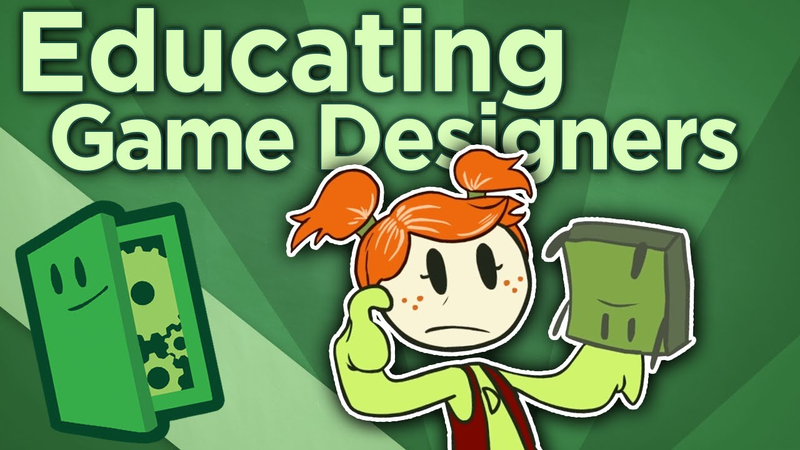
Educating Game Designers - Too Much "Game" at Game Schools - Extra Credits
Key insights
6 takeaways- 01Designers require a broad intellectual background beyond gaming mechanics to effectively research and integrate diverse, non-gaming subjects into their professional work.
- 02Current game design degrees often fail to provide a competitive hiring advantage because they prioritize specific tools and engines that quickly become obsolete.
- 03Effective game design education should emphasize transferable high-level competencies, such as logical thinking, communication, and project scoping, rather than narrow technical tasks.
- 04A robust curriculum should be grounded in a liberal arts foundation, specifically philosophy, psychology, and mathematics, to foster critical thinking and rapid information assimilation.
- 05Programs should replace rote memorization with discussion-based learning and written analysis to improve a student's ability to solve complex, novel problems.
- 06Practical training must involve semester-long, interdisciplinary team projects that force students to apply theoretical concepts while managing real-world scope and constraints.
Ask AI about this video
Transcript
James has a very strange supposition about how to teach game design to somebody who's never done it before and I don't mean teach in the Casual sense I mean like teaching in a formal setting at the University level because as many schools as we have out there offering game design programs most of them are still trying to figure out this problem how do you properly teach game [Music] design James has had so many students come up to him and say my schooling didn't really prepare me for the life I wanted it didn't really prepare me to be a game designer and it's led him to wonder if perhaps we need to take a whole new approach to how we do this more than this though it's also the fact that he's had more and more professionals come up to him lately saying that when hiring for junior positions they don't put any special emphasis on people who have a game design degree because many of the people they've hired from game design programs haven't proven to be better candidates in fact they've often proven to be less adaptable than those with other educational backgrounds overall it's really made him question how we go about educating designers and after putting a lot of thought into to it the strange
hypothesis he's come up with is that we are perhaps teaching too much game at Game schools I know that sounds odd but hear me out we learned long ago that we shouldn't just teach designers tools and software game engines and 3D software a game designer should be able to pick those up on the job every company I've ever worked for has had its own unique scripting language or at least its own crazy additions and modifications to the tools they use so simply learning a piece of software isn't enough because tools change constantly and they're not universally applicable if you've learned Maya but then you find yourself working on a 2d mobile game well Maya's not going to do you much good if you learned unreal 3 a mere half decade ago that knowledge is practically worthless today so much of the industry has moved on to other engines and even those using Unreal now are working with such a radically different version that what one might have actually learned in classes on unreal 3 doesn't have a lot of application today and most schools have realized this they stopped just teaching tools long ago instead they went on to teach courses like level
design and game balancing but here's the thing level design and game balancing are actually just tools as well they aren't fundamentals they aren't the key skills that a designer needs to be a good designer James talked about this at GDC and in preparing to do so he asked many of the professional designers he knew what they really look for in a fellow designer and it basically boiled down to these things first communication you need the ability to express the design to members of all the different departments clearly and concisely ly second collaboration you need to be able to work with people from many different fields and with many different mindsets the ability to take feedback and to really incorporate it in your design third a love of learning you need the ability to be able to pick new things up quickly because different projects will require developing an in-depth knowledge of different things you might have to learn about the flowers of the English Countryside or the weapons of World War II not to mention figuring out the scripting engine and the pipeline and the peculiar quirks of whatever team and Studio you're working with and a designer needs to love doing it to
really do the kind of deep Dives that allow them to add the little touches that really make a project special fourth scope you need to be capable of creating realistic design plans and the willingness to cut even the parts you personally love the most in service of the project as a whole fifth logical thinking you need to be able to build and work with logical systems as that's the foundation of most game systems and scripting languages sixth lateral thinking you need to be able to see problems from A New Perspective and to find answers outside of those that are traditionally used seventh a breadth of knowledge this is the only one on this list that I think is debatable but most designers I know like to see potential applicants have knowledge of things other than just games as this gives them a greater field to draw from when solving design problems which in turn leads to better Solutions and if you look at this list you'll see one commonality none of those things are really game specific skills it doesn't matter if you're coming in as a level designer or a systems designer I'd rather see that you have good communication and collaboration skills a
sense of scope and the ability to learn quickly than to have a level design or system design course on your resume so as utterly baty as it might sound in a world where we only have a very limited number of courses to prepare you to Be an Effective designer I would rather see us cut the game specific courses from game design degrees if it meant us being able to provide a better grounding in the rest of those skills if James had to make a guess he would wager that a well formulated game design course would actually look a lot like this first a hardcore focus on the liberal arts and when I say hardcore I mean challenging to the point where failure is not uncommon it would include a grounding in the philosophy and literature that makes up the Western tradition along with a focus on psychology and Mathematics the variety and volume of the material here would hammer in the ability to rapidly assimilate new materials and the courses would be taught in a discussion format with regular papers to train up communication skills in both the verbal and written medium all wrote tests and quizzes would be abandoned as this education's far more concerned with how the students are using and playing with
the ideas they're exposed to than with their absolute retention of the details they're in Additionally the pillar of mathematics in the course would be strong with at least one math class per semester this encourages logical thinking and gives students the one almost universally applicable design skill next one to two courses in formalized logic would also be a possibility as this also reinforces the logic training and makes the jump to scripting easier for designers who don't have much experience with scripting languages and then anchoring the program each semester would have an underlying Mega course project course that all students must take where they actually make games every semester monthin and month out every month they're there the best way to learn to make games is to make them this course would be given at least twice the credit hours of most courses and students would be expected to spend a fair amount of time outside the class on this course in this course the students would work in teams preferably interdisciplinary teams if the school can support that to create a game that integrates an idea or topic from the other courses this would would build collaboration skills teach scope
and build lateral thinking muscles as the constraint of having to incorporate elements from their core liberal arts courses will force them to rethink traditional game genres or force them out of established genres entirely such a degree would probably preclude large class sizes and would require someone with a fair amount of development experience to Mentor the students in the project course but if that could be achieved it would produce far more adaptable designers that are far better prepared for the industry and far more desirable as potential employees way more so than those that simply have a smattering of game balancing courses to their name anyway I hope that Sparks some ideas thank you for watching and I'll see you next week [Music]
Summary
Current game design education often fails to prepare students for professional environments, leading to a disconnect between academic training and industry requirements. Many hiring managers report that specialized game design degrees offer no competitive advantage, as graduates frequently lack the adaptability and foundational skills necessary for modern development. The core issue is an over-reliance on teaching specific tools, engines, and narrow technical tasks—such as level design or balancing—which become obsolete as technology and industry standards evolve.
Effective game design education should prioritize transferable, high-level competencies over game-specific technical training. Essential professional skills include clear communication, collaborative ability, logical and lateral thinking, realistic project scoping, and a genuine passion for continuous learning. Furthermore, a broad intellectual background is vital, as designers must frequently research diverse, non-gaming subjects to inform their work. A curriculum that focuses exclusively on game mechanics limits a designer’s perspective and hinders their ability to solve complex, novel problems.
A more robust educational model would center on a rigorous liberal arts foundation, emphasizing philosophy, psychology, and mathematics to foster critical thinking and rapid information assimilation. By replacing rote memorization with discussion-based learning and written analysis, programs can better develop a student’s communication and analytical capabilities. This theoretical grounding should be paired with consistent, semester-long project courses where students work in interdisciplinary teams to build games. Integrating academic concepts into these practical projects forces students to apply their knowledge creatively, teaching them to manage scope and adapt to constraints. Ultimately, this approach produces more versatile, adaptable designers who are better equipped to navigate the shifting demands of the professional game industry.


















Comments