1 free read left. Create a free account for unlimited reading + AI research.
Create free account
What does it cost to become an App Store millionaire?
Key insights
6 takeaways- 01Reaching the top 25 rankings on major app stores typically requires a capital investment of approximately $200,000 for user acquisition.
- 02Data-driven testing on platforms like Facebook is essential for refining demographics and acquisition strategies before committing to high-cost channels like influencer partnerships.
- 03Marketing strategies must remain flexible to pivot paid acquisition efforts based on the unpredictable availability of platform features from Apple and Google.
- 04Developers should allocate $5,000 to $10,000 during the soft launch phase to gather statistically significant data on monetization and conversion metrics.
- 05Small teams of four to eight staff members can maintain operational efficiency by outsourcing non-essential functions such as localization and customer support.
- 06High-quality game design is now considered a baseline requirement, with long-term commercial viability dependent on robust marketing strategies or inherent viral mechanics.
Ask AI about this video
Transcript
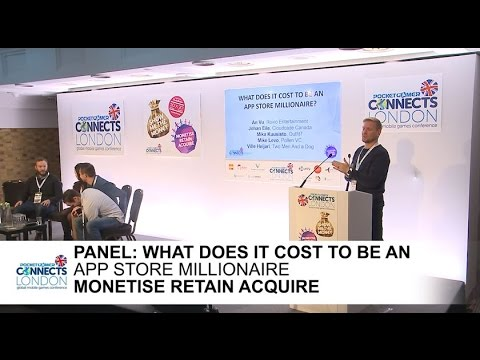
yes so what we're going to discuss on the next panelist is what does it cost you to be an app app store millionaire reason fix you one of the app marketing agency data showed that it it costs you around two hundred thousand dollars to get you into the top 25 on on the App Store and knowing that there is this thousands of apps put there over there daily so you really need to kind of be creative with your marketing and and and look different ways how do you how do you reach for the people and how do you acquire them so this is what we're going to discuss today because there is still room outside of that top top 25 there is a recent study from Poland millionaire index where we really looked into the into the gun group of how nuts there is
actually people who are earning a million dollars from the App Store and it was it was around 2000 developers so it's a it's a big number still but anyway let's kick off and I think I'll join over here and if you just quickly just introduce who you are the company where you are and what you do yes I work as a general manager at too many dogs we developed and published a game called zombie catchers out on iOS 4 for about a year now and and soon to be launched on Android hi my name is ann boo and I am the you a lead at Rovio entertainment so I manage a small team doing you a completely in-house for our portfolio of like casual casual Plus Angry Birds games but lately we're focusing also on
new IPs and new game genre so in the coming year you'll probably see our usual sort of casual games but then you'll see games our mid core deep strategy etc in the past seven years I've been working at various gaming companies doing UA and marketing and in the US and now I'm actually based in Finland so it's nice to be here hey my name is Micah Cousteau and I feel like half of the Finland is up here living there you're hopping and he's from Sweden it's like often one version a Finnish person so I'm the chief revenue officer at outfit seven we have about 3.2 billion dollars and Counting 2015 million monthly actives so my team well I'm looking after like revenues so you know user acquisition retention
extremely important ad revenues also all sort of stuff so yeah looking forward this panel alright so I'm the odd man out here I'm the CEO of a company called cloud Cade we found a cloud Cade in summer of 2014 and in September 2015 we launched our first game called shop heroes so we're about about a couple of months in development of that game and realized that we might have a chance at actually doing pretty well with it so we're today sitting in a spot where we're looking at how far we can grow it and what what we can do do next with it with this game and thank you guys for reminding me on panel okay thank you umm so yeah let's kick off I think first let's go for a little bit on on a budgeting side on so but you would say how much do you usually and what percentage of your of your
marketing budget do you basically allocate into the paid advertising versus the creative advertising or whatever cross marketing what you do so how much do you usually use for the paid advertising or paid acquisition yeah so at Rovio like we have a really really strong brand you know and we have you know marking budget for when we have new games and to support existing games and what we're trying to do now is kind of push our entire marketing budget towards sort of paid performance or you know directly or indirectly so indirectly is you know if we're gonna make it like a really awesome like teaser video or some sort of like really cool event we tried to tie it time it or then use the assets in our paid advertising using the video in UA networks or timing it so that it launched it coincides with you know a big marketing push that we're doing just
to kind of like really maximize the conversion and the and the visibility of our efforts so so a lot of the marketing goes into paid performance okay so I cut out with seven you know obviously also very strong brand or IP short answer is actually very little so I think we're running off to you guys so now it's really beeping just couple of reasons or we actually spent quite heavily of our effort on different cross promotion mechanics mechanism so and also reason for that is that you know we've been launching a lot of apps wind in the very same genre so you have you have your audience which you try to then convert to other stuff we spend enormous effort on on on on working on retention just making sure we get those users you know be active with our games so made you a we've done you know a little bit every
now and then you know sometimes we support new launch a bit but currently we do more or less testing different networks that for testing different you know let's say finding out the quality and and obviously when we are comfortable with with let's say that you know we can we can get the quality out from certain network that we get gonna get let's say return on investment and of course we can you know invest a bit more however we probably going to end up doing a little bit more back you a do the also working towards other genres if you will but still you know and say the effort we spend on daily basis in is really looking into making making sure first of all we get you know users coming back we get you know we then retain them we get to retention you know working on reengagement models etc I'm kind of looking into also or we're thinking of different social influences if you will in terms of paid you a haven't done much but that's that's kind of interesting area also to look into
the perhaps in the future I can guess I can give the small small developers perspective on this so we we've done very very little paid you a to date and we've got about six hundred thousand downloads very few of those are paid what we found when trying to learn to learn this I always say we're really good at making games and we're maybe not that great at publishing because it comes with all these all the side of the things that you need to understand and when we launched chopped heroes starting to spend money on paid you a it was extremely confusing and and also it got expensive really fast as soon as I find a good little pocket of players somebody else found that pocket and starting to outbidding me so we kind of yeah I don't I wasn't fighting anything so we so we kind of we're still entertaining it and we still find good users but it's more of a sniper approach and then going abroad takes a lot of time a lot of resources and we've started to look and
look more into how we can leverage the existing community and how we can sort of target them so one of the things that we're doing right now is it is sort of targeted Twitter by there's some technologies out there that are able to create profiles on Twitter users remove all the bots I didn't even know there were bots on Twitter before we before we do this I don't understand why but so so we're trying to take a little more of a guerilla approach but at the same time at a certain point to get your game take off you need to hit scale and that's probably where we as a small developer not sure yet we're gonna go yeah just a quick comment so we don't really have like any kind of budget examples but but zombie cat shows is one of these cases of how enough to develop a game so so make the best game you can and keep your fingers crossed for Apple from Apple promotion but basically I'm featuring but but it will be done like a whole bunch of different
tests where we mainly mainly tried to trying to figure out like where do we get the best LTV out of out of users using like the the basic stack of off of analytics and tracking and so forth so for us it's been really interesting the games been out for so long on iOS to see like how the word-of-mouth carries over to Android so so how we view it from our customer support contacts and so on is that there's a lot of sort of pent-up demand for for our Android launch now so then it's it's interesting to start spending on Android and at the same time on our iOS and see like how much that sort of carries over to the other platform so then a little bit on on the channels so when you when you go over and you do marketing so is there anything would like to kind of say which marketing channels would you kind of prioritize if you get in your budget so where would you use them so we've done
obviously Facebook I think everybody's kind of Nod and the next thing that we're working on is is I call the mid-level youtubers it doesn't necessarily be YouTube by YouTube happens to be the big big guy and rather than trying to go after let's say the top top players in the space we've sort of found a nice little sweet spot between 500,000 and and 2 million followers and try to create a like a CPI model or or even in some cases we're discussing the idea of like customized content in the game and stuff like that so we can actually go pretty deep in an integration like that why we thought I think that's gonna be a great spot for mobile games going forward so channel strategy it's kind of based on budget so when I was working way back when for like the smaller Indies and we a really small budget I concentrated all of our spend towards like Facebook like everything went towards Facebook it was awesome this was like 2000 2010 2011
when like CPI's were under $1 on Facebook and I think every developer is just like should have just put all of our money on there but as as you kind of go into like the millions of dollars a budget of course you have to diversify your strategy and and go everywhere and then just kind of seeing what works for you but in my experience like right now video is really really big so most of our budget is going towards all the video channels we've tried sort of like the social influencer so like the YouTube search like alternative strategies and at the end of the day it's just about managing your resources and if you kind of have like a small team and you're doing everything in-house you know managing all the work to kind of get a few hundred downloads from youtubers or getting a few hundred downloads from like sort of search ASO it's it's really not not worth it so we
just kind of focused and the ability to kind of spend more money in channels that are able to scale get us thousands or millions of users in in a month or a year so so for us that's the display networks and and video I mean not that much budgets went to us as you guys but very similar ideas here so like you know Facebook proves to be pretty good source for us you know because of the genre I don't know demographics so that's something we kind of I don't know more or less continuously you know spend a little bit video I think it's even gonna get stronger this year so that's definitely something I would also you know put more money but again these social influences and again we haven't really done much so that's something I'd be kind of interested in looking that I know there's I don't know tracking challenges and whatnot but this is
something as as I would kind of depending a little bit on the on the game of course you know what kind of what kind of game you build but I guess currently what we have is some of the older apps which is super big I'm not sure how well they would faith but you know there's something we we obviously need to also find out you have something to add well I guess like since you're here and you're just kind of looking for insights mostly like Indies here I would probably just I guess if you kind of have a smaller budget I would just kind of push it towards Facebook definitely and then the video networks we Facebook is it's really confusing but I think that's really where you're going to get a lot of learnings and I think you should invest some time to learn how it works and then to kind of invest the technology to kind of implement the SDK and get like as much downstream data as you can and then that's where you can kind of take the learnings you get like you say okay what I found it's like my
demographic are mostly you know males this certain age 30 to 45 I thought it was gonna be 18 to 30 I was wrong so then you kind of take that information and then you can kind of go broad into like the video network so display networks or even going to the social influence under network so if you know that your demographic is coming from males 35 plus then you can kind of target a different sort of strategy or negotiation with with the the youtubers instead of going for the wrong demographic so definitely advocate Facebook for learning yeah and I guess you mention our key word here the data and it's super important for you know all the big guys holding this because you you need to be I don't know you need to spend some time and effort on understanding the data you know what does it mean and this is often something I mean you know I used to be a video network before and you know spend a lot of time it's small in this helping them to perhaps understand how the monetize with video but you know obviously you
have a two men in a dock but like you know really obviously understands this but there's a lot of guys you know of course you want to create a gay great game and you want kind of an artist and a developer set but you just need to get comfortable with data if you can't you know then it's just you know just impossible to really figure out what's your target audience you know how you gonna convert wet waking a target and then you know it's just based of money to put any money on anyway yeah I just wanted to add like a like a quick consideration on which channels to use is also like which channels are you earning in so basically like like zombie catchers for example it's a game that that monetize is pretty heavily on video ads so so anything from between forty to sixty percent of the revenue in any given month depending a bit on the region and and what's happening in the game is coming from video ads so then it becomes also a consideration of which networks are you using to to monetize because then potentially you're able to
also negotiate with the networks on on actually getting like some kind of bone structure or some kind of other incentives to feed that revenue back into into advertising and acquiring more users from the network so that's just one one thing to keep in mind give some context on our sort of early YouTube experiments we're doing about three three dollars between three and four dollars for a for a CPV so click per view and the conversion rate is about six percent and that's after three three gameplay sessions so it's pretty cool we're able to actually pay them decent money if they convert and then say you can play around with that model a lot but but that's where we've drawn the line and so far it's been been pretty interesting for us okay thanks then I think next is this because there is there is no different kind of sizes of
companies and and all that so how much do you still consider and how important do you feel is that that when you are launching that you get featured by the Apple or Google is that something that you actively still search or is it something that you feel that okay it comes if it comes it's huge know their market makers they're the ones determining what's going to happen next so without a feature it's really really for what we learned is you got to be patient and you got to got to help yourself in that space a lot too there's a lot of things you can do but it's definite sits it's almost a must in in my opinion at least a decent feature to launch the game then it could take some time to be reef eacher and if I'd look at our own example we're living in the App Store right now which is great so every week something is happening it's not nothing major but something is happening and that's extremely important
for a small company yeah and and for following a game like ours like zombie captures it was basically built for that in mind that you create like sort of weird content that sticks out and you polish it to this degree that it's it's sort of easy to feature that was that was definitely one of the one of the factors and to be honest as this game which has like a relatively lenient monetization and it's especially being designed with the video ads with non-paying non-paying players in mind and and getting featured was just just crucial for this game so so obviously it's it's when you have a small team it's it's definitely a big factor featuring also from our site I mean it's still super important we have to scale to Ghana I don't know cross-promote the hell out of a new app and get it really high but it's it's still you know it's really super important so the challenge is that it kind of comes you kind of have an idea that Everest everything you launch will be features because feature because
we were featured so many times but it's not that easy you know you still need to kind of you know build something really cool you need to work with your relationship your tattoo and still get a bit of a lock as well but featuring still is on on on on on on both of those platforms to pursue per super important for us yeah for my note for this question it just it just says futuring is very important and and it is I think the problem is that like there are like thousands of games being published on Apple and Google every day and the visibility is a challenge for everyone like you make a great game but like how are people going to find it and really the first step is the featuring and and Rovio's really Lucky's that we have a great relationship with with both platforms and they are able to kind of give us the featuring but on a practical note like you know I work with our Key Account Director and and his his his advice is that you know Apple wants to
feature you because you know you create an app or in game that that highlights their their their platform that highlights like you know all the features and and and just kind of like ease-of-use and and the colors and it looks great and on Google you know Google is interested in getting new players into their platform so if you're able to kind of release a game that's really fun that's gonna attract people to like play on Google that's that's really gonna be maybe a way to do that so very very important and absolutely crucial to to an app success and unfortunately it's just not available to everyone and not it's not even guaranteed for us I think we we have to work for it as hard as anybody so when okay when you get to feed something is there any kind of tactics or strategies what do you do immediately if you get it I mean do you go full-frontal also on a paid acquisition at the same time with
the filtering or do you basically it's just enjoy the feed sitting at hey now it goes yeah it's it's there or anything that you could basically emphasis on okay how do you basically are there anything what you can gain traction more from the field well even even for a small studio we had really limited amounts of cash at our disposal when launching launching the game originally in October 2014 and but we when we got featured we did decide to put like some some backing behind and indeed like some some push campaigns where then it's arguable like how much of a sustained effect we got like on the on the chart thing but but I think that that was still like a reasonable thing to try out so for featuring one when we do a game launch I guess what I do is I have a plan a and a plan B so we launch and we get featuring or we launch and we
don't get featuring and then sort of like the budget so we have two budgets like to sort of execution plans kind of based on the featuring so you usually find out you know you're gonna be featured on Thursday so then you find out we didn't get the feature like let's just kind of like steer it towards where we then use a lot of money to kind of boost that the app up and to get visibility to kind of really have a great launch if we get the featuring then we just like okay great like let's just kind of keep it at at a level where the feature and kind of boost our conversion and it really helps our paid efforts and but then we can kind of use that extra money that that the visibility afford it and just kind of carry it out to then sustain the ranking for a bit longer to kind of maximize the value of a valuable featuring yeah I guess I could I could kind of draw this back to the cross promotion if you will I mean yeah sometimes we support the
launch a bit we pay QA sometimes a little bit less some of the reason launches we really did in two months on a page you a but it really kind of determines that the feature really determines our cross promote strategy like which apps to promote on which other apps on which units which place when shall we usually a slot in again another game for cross promoting a game that will be featured or how we even keep that slaughter third-party video network for example to monetize so we gonna try to consider actually try to try to really spend enough effort also for understanding the cross promo as a way you I don't know user acquisition you know similar data are similar kind of you know you know LTV LTV dream model that what should be promoter and the featuring gives us really one one tools one to more to to kind of really you know design on the on what switch slots where which order what to backfill all
these things which I think you know later on when we go more paid Hugh it's kind of a lot of similarities there and I think I'm gonna steal one from you that you won mentioned earlier about confidence on data again going back to data so once you kind of do things in scale you kind of understand okay this is this is that I have I have to trust you know my analytics my my data and I'm just go away so this is often we we try to kind of you know consider that the cross-promote you know in a similar way than you a that we just trust you know this is the source we're gonna get new users for these new app now it's if it's featured we're gonna maybe be this would push a bit more in this market you know it all depends so I guess they're the the shop story part of this for us and then trying to build it into into the story bit is we we weren't ready when when we got the the thursday thursday
called on being featured our and and we kind of knew that and despite not having much confidence in the data we had i knew that our game was not 100% ready for primetime we talked about things like engagement and retention and stuff like i mean we knew we could make better game so although we could not afford to say no we didn't spend almost any money on paid you a on launch we were in iOS 9 launch title and there's obviously for anybody's done this for a while there's obviously some risk involved when being on on a new OS or a new version of a iOS so we knew we knew we had issues so knowing that we still went ahead and we did did a launch and we were very very grateful for that but we did not spend maybe maybe a couple thousand dollars max and trying to get a re feature with the same promise now is super hard so it
was a it was a bit of a risk calculation from our side but but i think we did the right thing by supporting continue to support a good game thank you how we are with the time by the way can we take a few questions from the audience yeah hello so how much would you say that you need to spend during soft loans in order to test your assumptions that you made during production really I can it's not how much you need to spend in that sense it's you need you need enough players to be able to kind of yeah so sorry so so we started building a community much much earlier we started we did things like soft launching on on Facebook before the game was even remotely ready so by the time we were ready to soft
launch in in any kind of importance on your territory already had about 10,000 players and and about I think to 2,000 daily actives so we we had a good idea of what the behavior were but we knew that they were fans and that was what really bothered us with the data we got from our sort of first couple of cohorts and by the time we were ready to sort of soft launch we saw a pretty dramatic drop in all the KPIs that we had so that was probably one of the biggest lessons for us we need a lot more users a lot earlier so what what the price tag for that that would be yes there's the like I would say five to ten thousand dollars and that's not just like okay I spent ten thousand dollars five to ten thousand dollars is so that you can kind of go out there test a lot of different strategies so we're saying put a little bit on Facebook put a little bit in video put a little bit of
like traditional display networks then really kind of target outs just say like we need to get like enough users here to kind of build a cohort also you have to have tracking of course I would say also separated out by countries like the US you know players are going to behave differently from like the French Canadian so the strategy is to kind of maybe get about I really don't know much about sort of like data significance but like have enough players so you can figure out ok it really only works when we advertise in the US or when we advertise in Asia or when we advertise on video in Asia or video in the US or Facebook in Japan or something like that just to kind of study your players how they perform and if you kind of put it all in one channel then that's sort of like like gambling I
guess it's like roulette anyone play that and so so yeah and and it is really tricky and I think yeah you can do a lot of it in soft-launched I would say say again so I'm sort of using Facebook like a Facebook it's a are you talking about like a Facebook canvas game and then well because like I think players behave differently on Facebook on desktop as you do on mobile so if you get like LTV of like $5 on Facebook but then you see that they don't monetize like the unmould and you know that then your your test like your five to ten thousand dollar test is kind of wasted because it's it's not going to help you build out a case for expanding any more question status one yeah how large are your marketing teams
how large are your marketing teams if you can say for us it's me our team our team is like about eight people and then I have like just on focusing on you a I think we have like four so four to eight depending on how you count it so so we we did we did something I guess a little different I have a dedicated community manager we have somebody takes care of user acquisition in all its forms and then we decided to outsource anything that needs scale so a customer service which I also I count all this is user acquisition because they're super important to retain your players so so anything that needed scale or anything that needed the language capabilities we outsource to a company called keywords and they allow us to operate like a like a big company whenever we have any any problems with stuff like that so it's
about three people but I can scale it to in which is great by the way for other languages like non non English or non French we also have a handful of people and and and I think what's what's what's interesting nowadays it's like if you wanted to really pay to you a in scale like spending trillions of money you don't really need to scale the team to be having like twenty people it's rather like you know you know if you could guys and and and and and and but also you know really kind of finding it you a expert in the mortgage actually very very difficult but you know you need handful of good people to really work on different different channels okay okay
yeah say one thing so I guess the the subway system is off no one one thing easily with with with no budget you're you're kind of out of luck you can make a great game you can make a fantastic game it's just not enough anymore yeah I would say I would say just make a very viral game that requires no marketing so you've seen it like flappy bird cross your road I don't know make one of those we're gonna have a game jam in the bar afterwards we'll make money now that is the secret sauce right you know okay hey thank you thank you very much for for coming in man
Summary
Achieving commercial success in the mobile gaming market now requires a sophisticated, capital-intensive approach to user acquisition. Reaching the top 25 rankings on major app stores often necessitates an investment of approximately $200,000, a figure that underscores the competitive barrier to entry. While large-scale studios utilize substantial budgets for performance marketing and video advertising, smaller developers must balance these financial demands by leveraging guerrilla marketing tactics, cross-promotion, and community-driven engagement to scale their reach effectively.
Data-driven decision-making serves as the foundation for sustainable growth. Developers are encouraged to utilize platforms like Facebook to rigorously test demographics and refine acquisition strategies before committing to broader, more expensive channels such as influencer partnerships or video networks. During the soft launch phase, an investment of $5,000 to $10,000 is recommended to gather statistically significant data regarding monetization and conversion metrics. This analytical rigor prevents the inefficient allocation of marketing budgets and ensures that developers possess a clear understanding of their target audience before a global rollout.
Visibility remains heavily influenced by platform features from Apple and Google, though these are never guaranteed. Consequently, marketing strategies must remain flexible, allowing teams to pivot their paid acquisition efforts based on whether a feature is secured. To maintain operational efficiency, small teams of four to eight core staff members can outsource non-essential tasks like localization and customer support. Ultimately, the industry has shifted toward a model where high-quality game design is merely a baseline requirement; long-term viability now depends on the integration of robust marketing strategies or the inclusion of inherent viral mechanics to drive organic growth.
















Comments