Global reports and market data
Documents

FTUE: Transformers Earth Wars
Transformers: Earth Wars is a mobile build-and-battle strategy game developed by Space Ape Games and published by Backflip Studios, a subsidiary of Hasbro.
- Transformers: Earth Wars is a 2016 mobile build-and-battle strategy game developed by Space Ape Games and published by Backflip Studios, a subsidiary of Hasbro.
- The game utilizes a core loop of base building, resource management (alloy and energon), and tactical combat to leverage the Transformers intellectual property.
- Progression is driven by a gacha-style crystal system used to unlock characters with unique roles, alongside leveling mechanics for both the player's headquarters and individual Transformers.

Legacy Play - Thoughts on the Vanilla WoW Server - Extra Credits
The tension between developer control over live-service software and consumer desires for historical preservation is a central conflict in the modern gaming industry.
- The conflict between developer control and historical preservation arises because live-service updates effectively overwrite original versions of games, rendering them inaccessible to consumers.
- Developers prioritize a single, current build to streamline customer support, ensure security, and maintain a unified community, while avoiding the technical burden of managing fragmented codebases.
- High engagement on unofficial legacy servers indicates a significant, untapped market demand for official, developer-sanctioned classic experiences.

FTUE: GodFinger 2
GodFinger 2 serves as a modern reboot of the original 2010 god-game simulation, transitioning the franchise into the contemporary free-to-play mobile market.
- The GodFinger 2 FTUE suffers from a high cognitive load, as the initial ten-minute tutorial introduces complex resource management, structure placement, and follower satisfaction systems simultaneously.
- The game transitions the 2010 original god-game IP into the modern free-to-play mobile market by incorporating standard retention mechanics like push notifications and daily login rewards.
- Core gameplay centers on a 2D simulation loop requiring players to balance resource production, such as bread and chicken feed, against the specific needs and prayers of individual followers.
'Doom:' A Classic Game Postmortem
The development of Doom, initiated in late 1992, represents a pivotal evolution in first-person shooter design, transitioning from the rigid, military-themed architecture of its predecessor, Wolfenstein 3D, toward a more abstract and atmospheric aesthetic.
- Released on December 10, 1993, 'Doom' revolutionized the first-person shooter genre by shifting from the rigid architecture of 'Wolfenstein 3D' to complex, non-orthogonal environments enabled by Binary Space Partitioning trees.
- The development team prioritized high-speed, skill-based gameplay over complex narrative or inventory systems, utilizing NeXT workstations to achieve technical performance that exceeded contemporary hardware limitations.
- The project was defined by a lack of formal pre-production and significant internal creative friction, which led to key personnel changes and the abandonment of external collaborations like a proposed 'Aliens' project.

Integrating Academia - Experimenting for Better Games - Extra Credits
The video game industry currently lacks a symbiotic relationship with academia, a deficiency that hinders long-term innovation and the development of a skilled workforce.
- The game industry lacks a symbiotic relationship with academia, preventing the long-term, experimental research that drives innovation in sectors like pharmaceuticals and robotics.
- Current academic tenure and advancement criteria discourage game development as a scholarly contribution, prioritizing traditional publishing over the practical creation of interactive media.
- Academic institutions must modernize their evaluation standards to recognize game development as a valid form of research, similar to the practical application models used in robotics.

Monetizer: Hungry Shark World
Hungry Shark World, the fifth installment in the long-running franchise, demonstrates a strategic shift toward a more robust free-to-play meta-game layer.
- Hungry Shark World achieved 10 million downloads in its first week and reached the top 50 grossing charts on the US iOS App Store.
- The game employs a hybrid monetization model that combines direct in-app purchases for currency and items with rewarded video advertisements for features like shark revivals.
- A robust meta-game layer—consisting of shark evolution, statistical equipment, and gameplay-assisting pets—is used to drive both long-term retention and monetization.
In Defense of Short Games - Worth Every Dollar - Extra Credits
The gaming industry frequently undervalues short-form titles, often subjecting them to negative reviews and refund requests based solely on their limited playtime.
- The industry-wide reliance on a dollar-per-hour metric to determine game value incentivizes developers to artificially inflate playtime, which often dilutes narrative quality and mechanical integrity.
- Forcing a game to expand from a concise four-hour experience to a fourteen-hour duration frequently compromises the creator's original vision without providing a superior product.
- The consumer habit of returning short games after completion or relying on Let’s Plays creates a hostile financial environment that discourages the development of brief, high-impact titles.
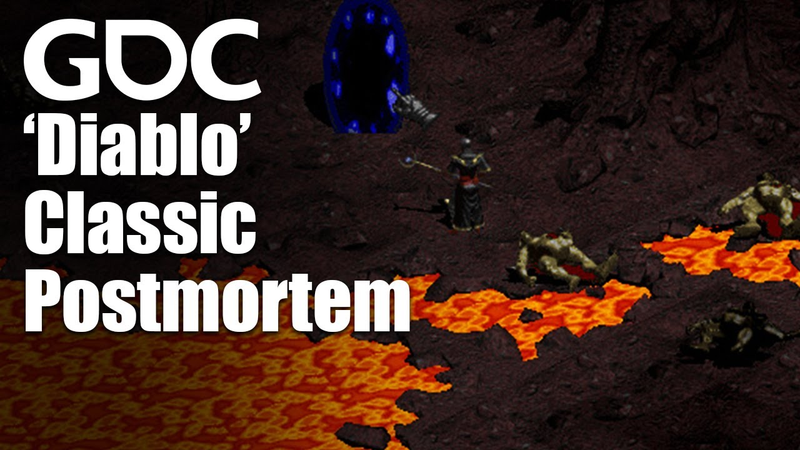
'Diablo': A Classic Game Postmortem
Diablo emerged from a vision to modernize the roguelike genre by blending atmospheric depth with accessible, action-oriented gameplay.
- Diablo's core design underwent a radical shift during development, moving from a turn-based, single-player DOS game to the real-time, multiplayer experience that defined the genre after Blizzard Entertainment insisted on the changes.
- The studio operated with severe financial constraints, signing a contract to develop the game for $300,000, which barely covered the salaries and operational costs for a 15-person team.
- Technical development was highly specialized for the era, with approximately one-eighth of the game's code written in assembly and the project serving as the lead programmer's first experience coding in C.

Rewarded video ads in Angry Birds 2
Rewarded video advertising serves as a critical monetization strategy in free-to-play mobile gaming, specifically within titles like Angry Birds 2.
- Rewarded video ads monetize the 95% to 97% of players who do not engage in direct in-app purchases.
- The model functions by offering players a choice between spending hard currency or watching a promotional video to bypass level failure.
- Developers maintain game economy integrity by implementing scarcity, limiting the number of times a player can use video rewards before requiring hard currency or accepting failure.
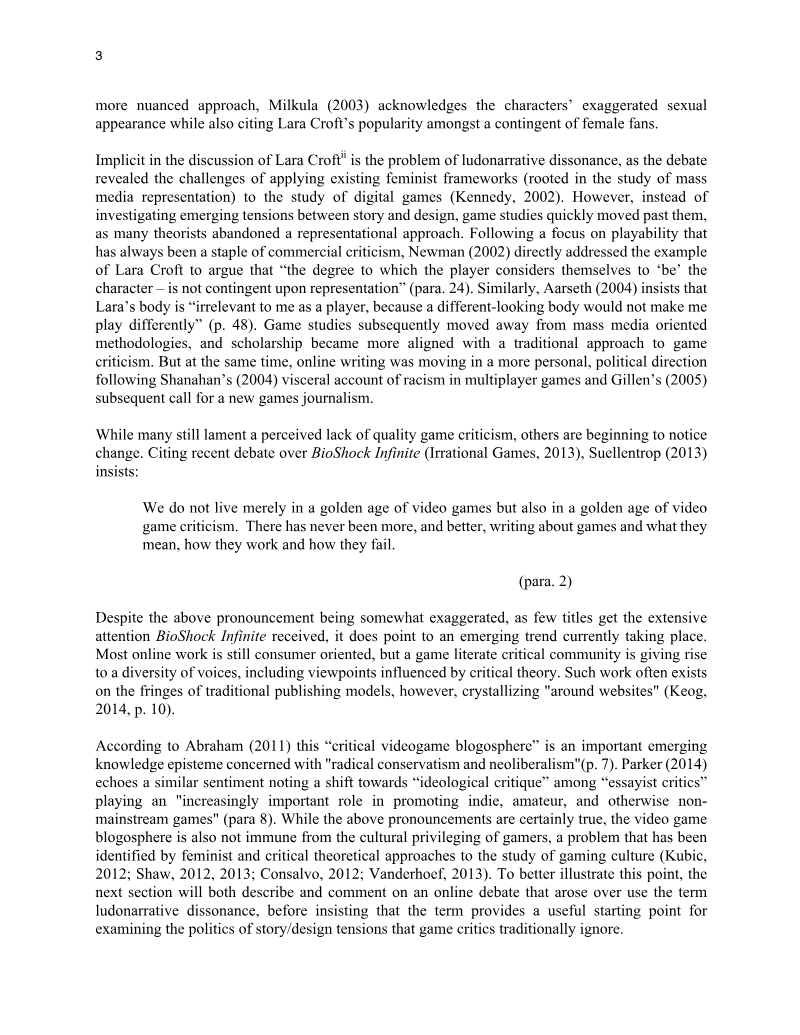
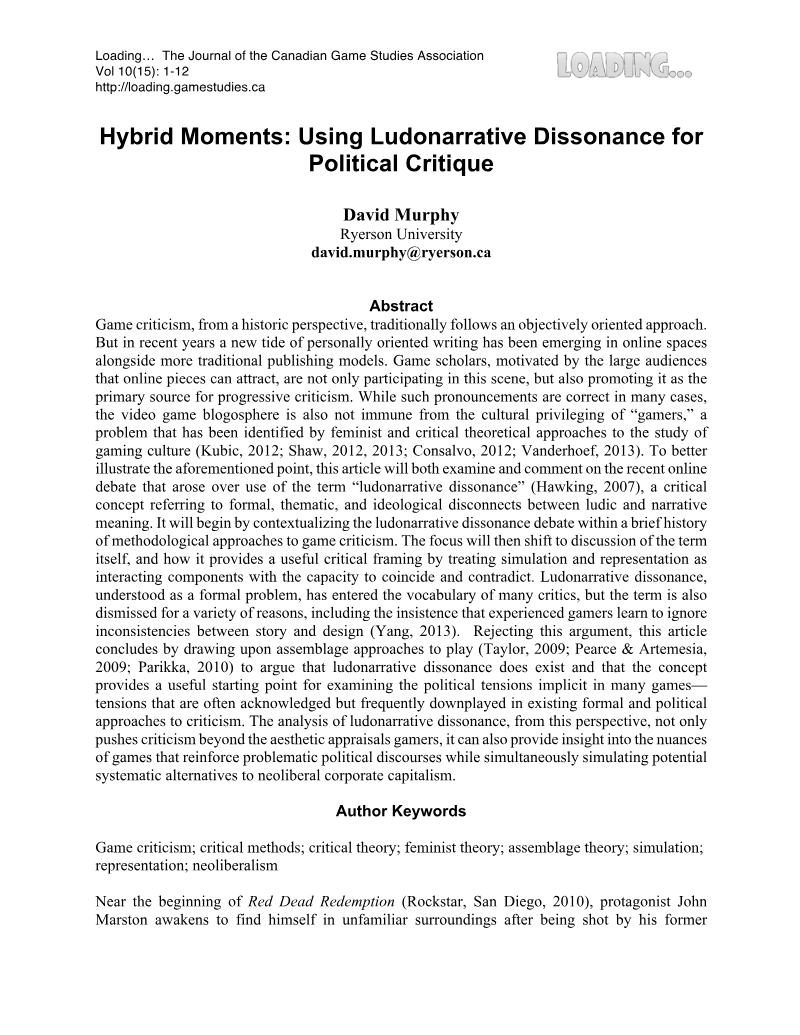
Hybrid Moments: Using Ludonarrative Dissonance for Political Critique
Ludonarrative dissonance functions as a potent analytical lens for uncovering the political tensions embedded within video game design.
- Ludonarrative dissonance should be reclassified from a design flaw into a diagnostic tool for identifying political and ideological tensions within game systems.
- Mechanical actions that contradict narrative messaging serve as a primary indicator of the friction between individual player agency and systemic constraints.
- Analyzing the misalignment between stated moral goals and systemic incentives reveals how games simultaneously reinforce neoliberal ideologies and simulate potential alternatives.
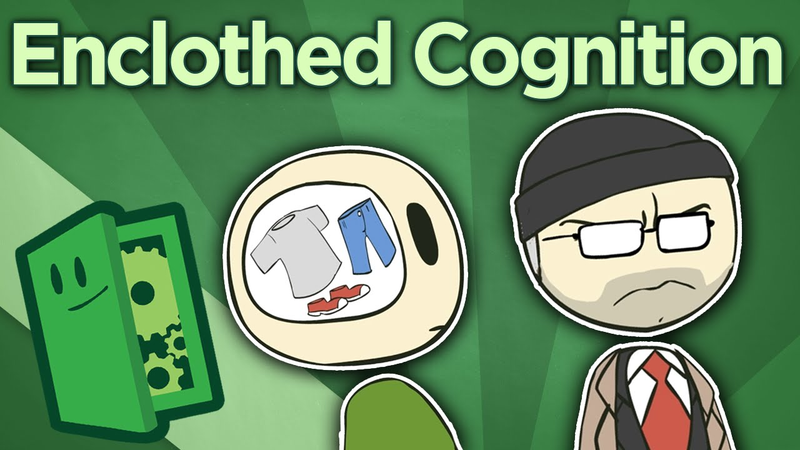
Enclothed Cognition - Do Character Outfits Affect Our Play? - Extra Credits
The concept of enclothed cognition suggests that the clothing an individual wears influences their psychological state and behavioral patterns.
- Character attire functions as a psychological cue that influences player behavior and tactical decision-making, often overriding a character's underlying mechanical statistics.
- The concept of 'enclothed cognition' suggests that players subconsciously adopt playstyles associated with visual tropes, such as utilizing a methodical approach when wearing a ghillie suit or a defensive stance when equipped with heavy armor.
- Cosmetic customization serves as a powerful design tool to guide player behavior and deepen emotional connection, even when changes are purely aesthetic and provide no functional gameplay advantage.
'Magic: the Gathering': 20 Years, 20 Lessons Learned
Effective game design relies on aligning mechanics with human nature rather than attempting to force players into unnatural behaviors.
- Design components for specific audience segments rather than trying to please everyone, as attempting to satisfy every player often results in a product that no one loves.
- Leverage the pre-existing emotional associations players bring to a game—such as established cultural concepts like zombies—to help them understand mechanics faster and deepen engagement.
- Prioritize player agency by providing diverse choices, formats, and paths, because players perceive higher quality in games where they feel a personal connection and sense of ownership.