Global reports and market data
Documents

2018 Global Esports Market Report
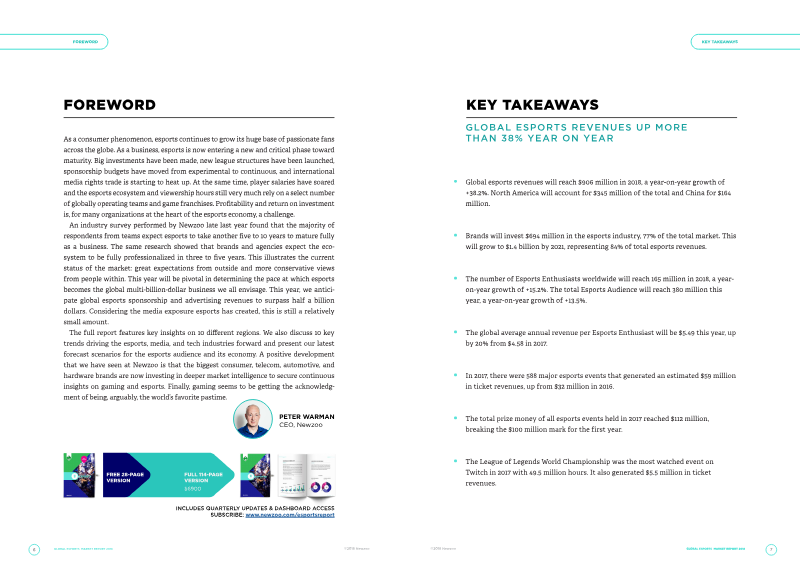
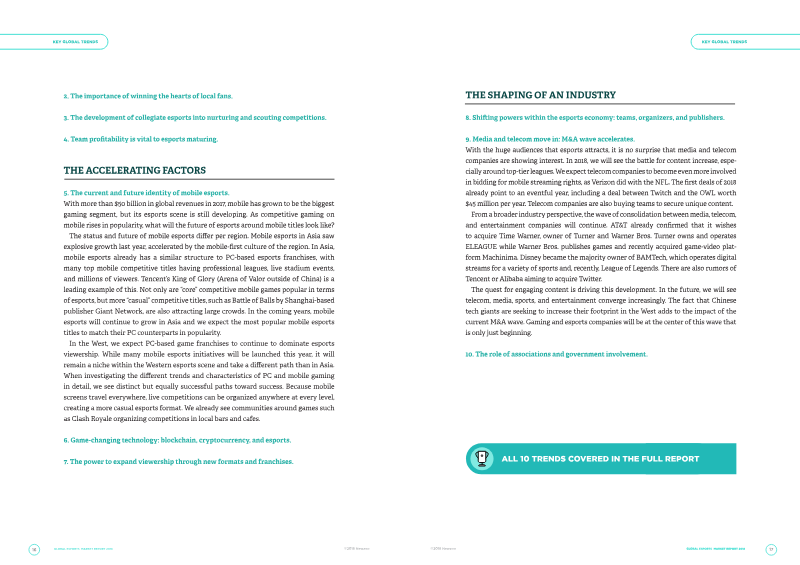
This report provides a comprehensive analysis of the global esports market in 2018, forecasting its growth and identifying key trends.
- Global esports revenue is projected to reach $906 million in 2018, marking a 38.2% year-on-year increase.
- Brands drive 77% of total market revenue, signaling a shift from experimental spending to long-term sponsorship commitments.
- Media rights represent the fastest-growing revenue stream, with a projected compound annual growth rate of 49.8% through 2021.
Mobile Gaming Benchmarks: 2018
The "Mobile Gaming Benchmarks: 2018" document provides a comprehensive analysis of key performance indicators (KPIs) within the mobile gaming industry, drawing insights from over 60,000 games and 3 billion players.
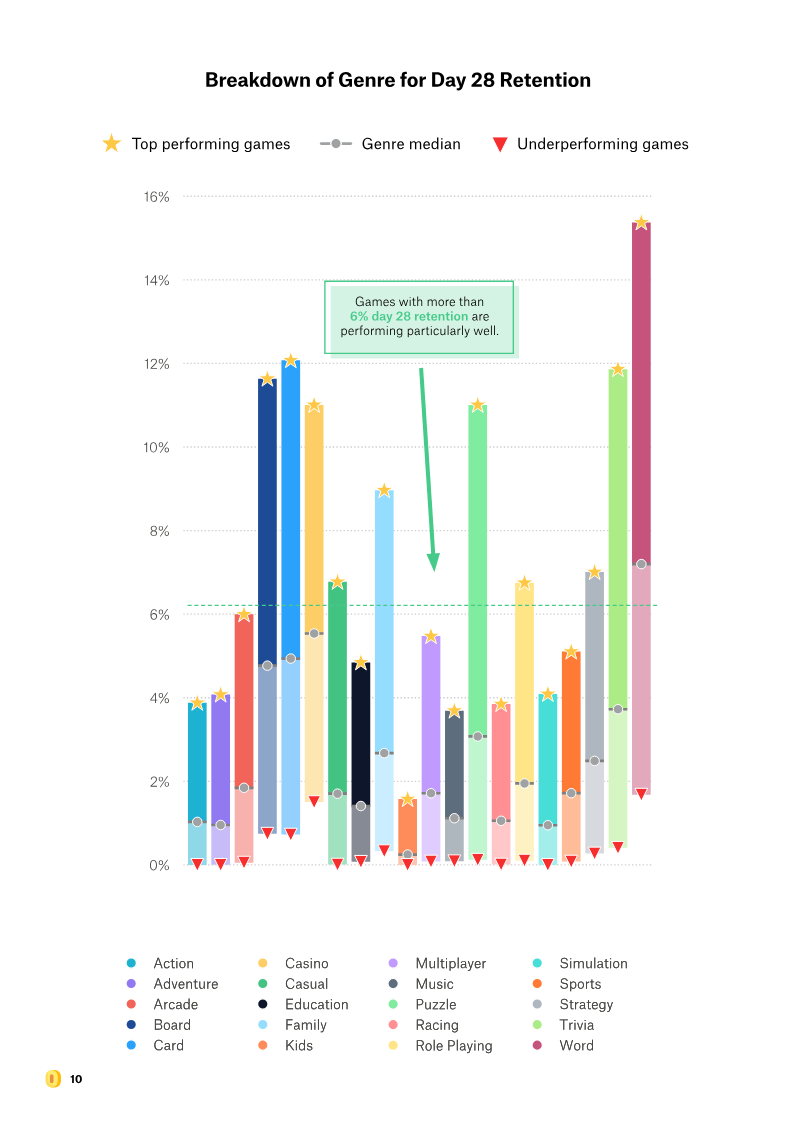
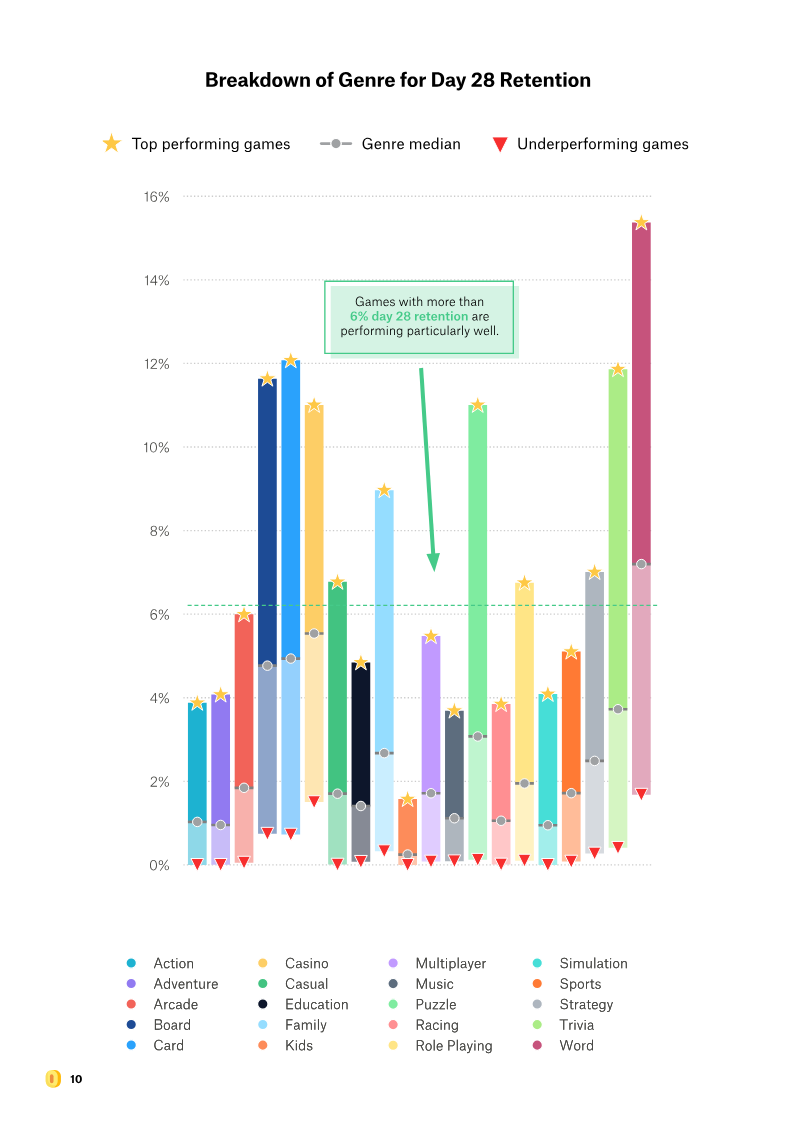
- Top-tier mobile games achieve day-28 retention rates of 6.5–7% during the winter months, significantly outperforming the industry median of 1.5%.
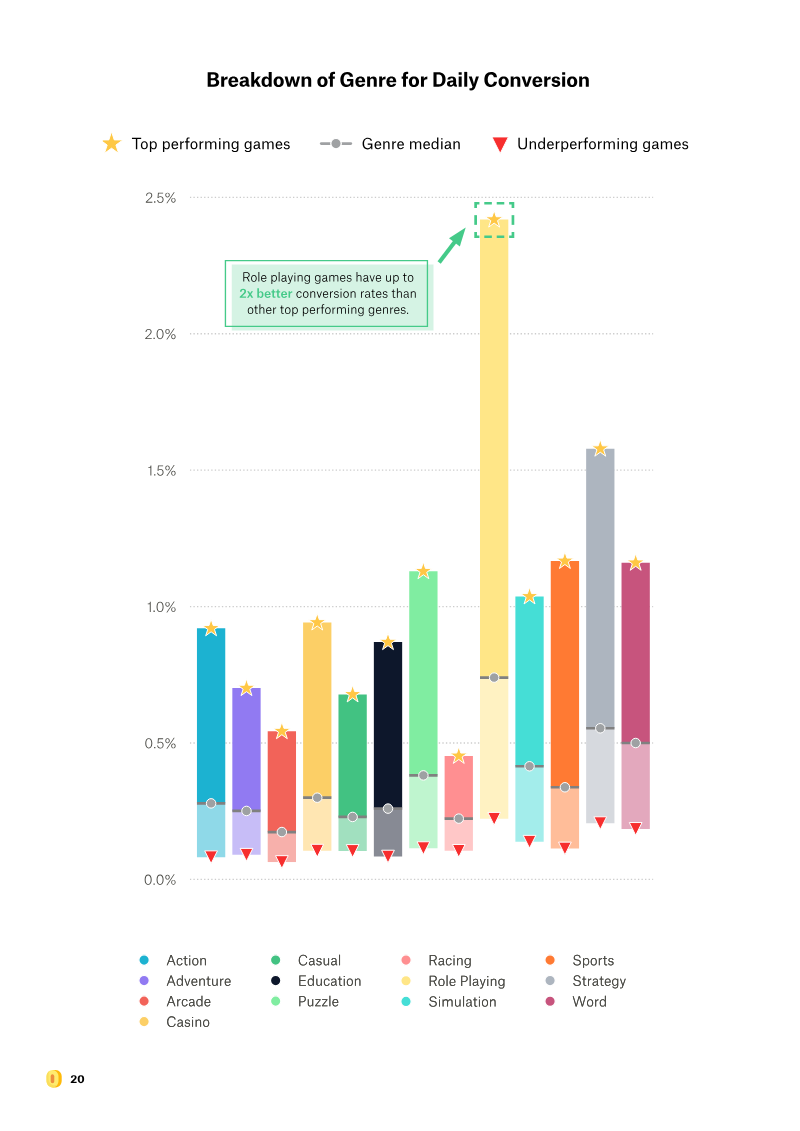
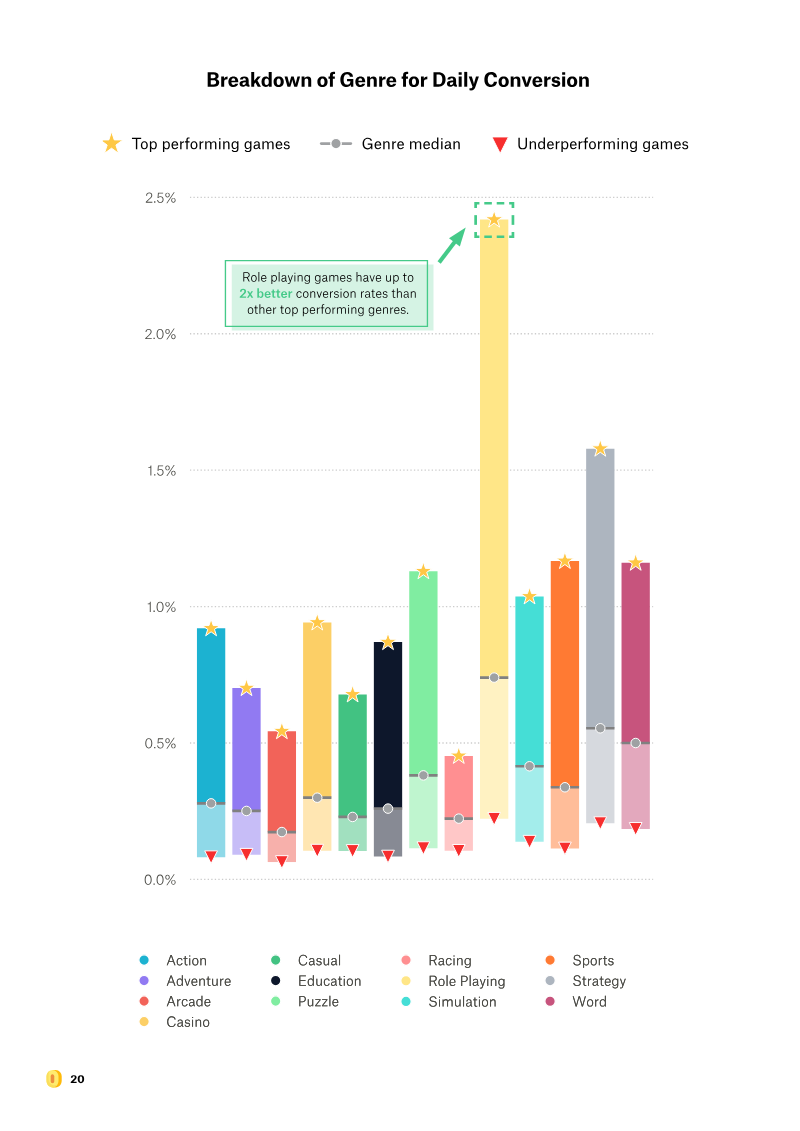
- Role-playing games lead the market in ARPDAU, with top titles generating 6–7 times the revenue of the median performer.
- Strategy games consistently outperform the broader market, achieving double the ARPDAU and conversion rates of average mobile titles.
The Data Behind 10 Years of the iOS App Store – 2018
From July 2010 through December 2017, the iOS App Store recorded more than 170 billion downloads and over $130 billion in consumer spend, with nearly 10,000 apps each generating more than $1 million.
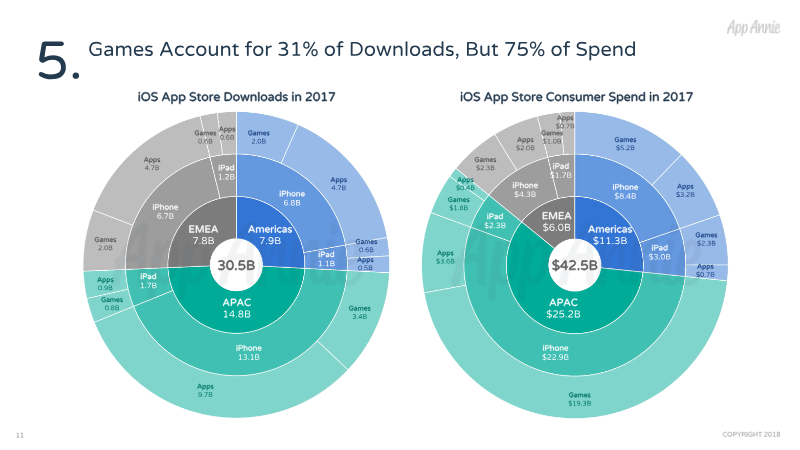
- The gaming sector is the primary economic driver of the iOS App Store, accounting for 75% of total consumer spend despite representing only 31% of total downloads.
- Between 2010 and 2018, the platform generated $130 billion in consumer spend, with revenue growing at a 52% compound annual growth rate compared to a 15% growth rate for downloads.
- The Asia-Pacific region now accounts for nearly 60% of global iOS revenue, with China overtaking the United States in 2016 to become the largest market for both downloads and spending.
A Global Analysis of Mobile Gaming Benchmarks: 2018 Edition
GameAnalytics' 2018 mobile gaming benchmark study establishes performance reference points for developers across retention, engagement, and monetization.
- Top-tier mobile games generate six times more revenue per daily active user than the market median, highlighting a massive performance gap between elite titles and the rest of the industry.
- Elite titles in the 15th percentile achieve Day 1 retention rates exceeding 35%, while industry-wide Day 28 retention struggles to surpass 6%.
- Leading publishers like Voodoo utilize a strict 50% Day 1 retention threshold as a primary filter to identify potential commercial hits early in development.
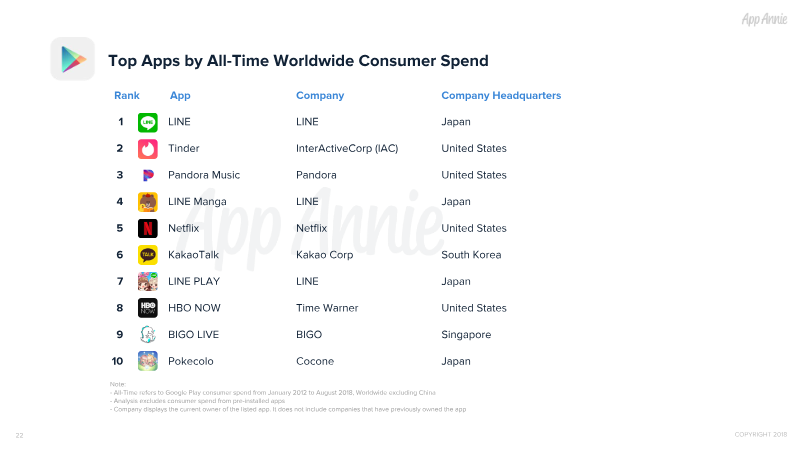
The Data Behind 10 Years of Google Play (2018)
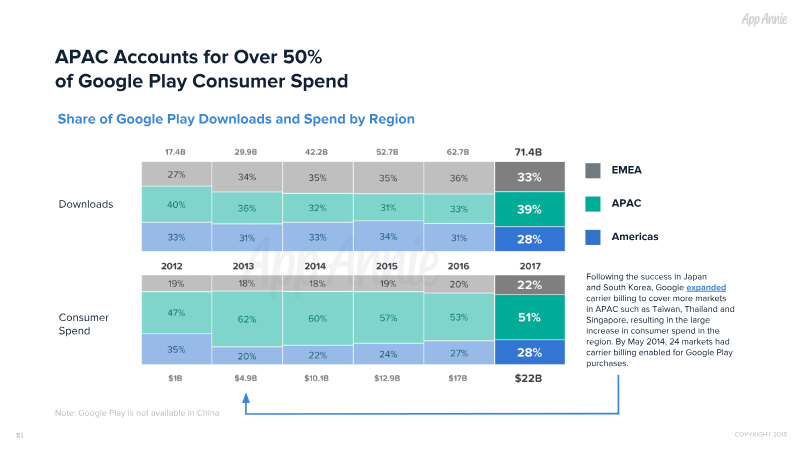
Google Play's first decade of data, covering January 2012 through August 2018, shows a platform that reached nearly 330 billion cumulative downloads and over $85 billion in consumer spend.
- Between 2012 and 2018, the Google Play Store generated over $85 billion in consumer spend across 330 billion total downloads, with more than 5,000 apps surpassing the $1 million revenue milestone.
- Annual consumer spend on Google Play is projected to reach $42 billion by 2022, representing a 90% increase from 2017 levels.
- While India leads in total download volume with 36.9 billion, Japan is the most lucrative market, contributing $25.1 billion in total consumer spend.
Three Statistical Tests Every Game Developer Should Know
Statistical analysis provides a rigorous framework for game developers to make data-driven design decisions, moving beyond subjective opinions to validate changes in game performance and player behavior.
- Statistical significance must be distinguished from practical significance by evaluating confidence intervals to ensure the magnitude of an improvement justifies the development cost.
- The Student’s t-test is the standard tool for comparing continuous, normally distributed data, using independent tests for distinct groups and paired tests to control for individual variance.
- The Mann-Whitney test is the preferred nonparametric alternative for skewed data or ordinal scales like player ratings, as it analyzes medians to prevent outliers from distorting results.

Board Game Design Day: Puzzle Strike: A Design Diary
Puzzle Strike functions as a strategic translation of high-intensity, competitive video game mechanics into a tabletop format.
- Puzzle Strike translates the mechanics of competitive puzzle-fighting games into a tabletop format by prioritizing direct player interaction over the passive, multiplayer solitaire style common in deck-builders.
- The game design utilizes asymmetric character abilities and mechanics inspired by real-time strategy titles like StarCraft to ensure long-term strategic depth and prevent gameplay stagnation.
- Core gameplay revolves around a constant tension between aggressive rushdown tactics and long-term economic development, forcing players to manage risks and resources carefully.
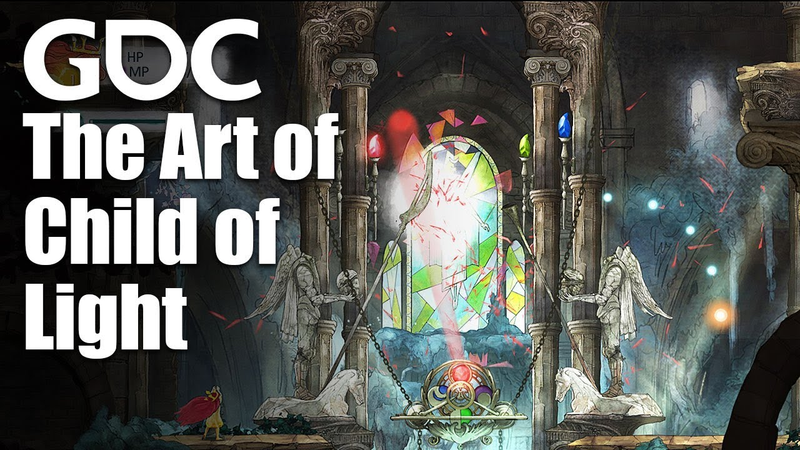
The Art of Child of Light
Child of Light serves as a creative exploration of how traditional fine art influences modern interactive media, specifically aiming to bridge the gap between fairy tale symbolism and Japanese role-playing game mechanics.
- The UbiArt Framework enabled the direct integration of hand-painted watercolor textures into the game engine, allowing the project to function as a playable painting.
- The development team utilized 3D character models projected as 2D films to maintain fluid animation while preserving the integrity of original hand-painted concept art.
- The visual direction was heavily influenced by the Golden Age of illustration, specifically drawing from the works of Arthur Rackham, John Bauer, and Yoshitaka Amano.

Ludomusicology: Approaches to Video Game Music
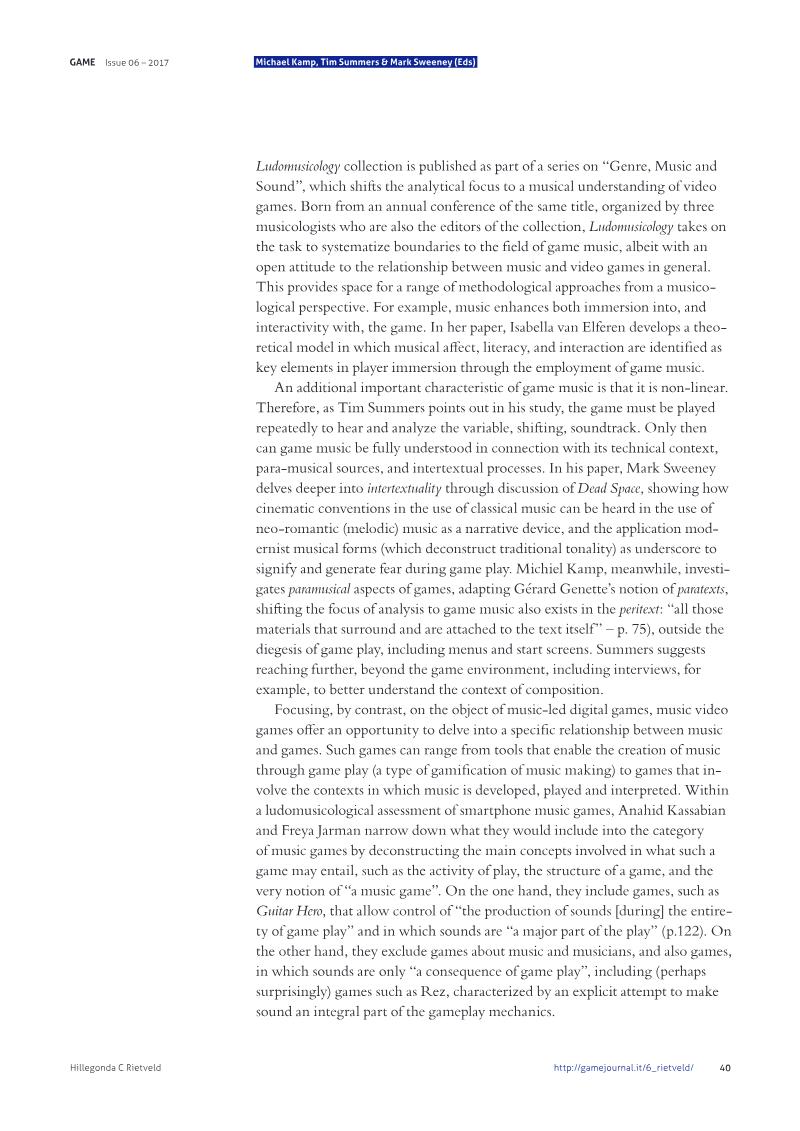
This document provides a critical review of two significant academic collections on video game music: Ludomusicology: Approaches to Video Game Music (Kamp, Summers & Sweeney, 2016) and Music Video Games Performance, Politics and Play (Austin, 2016).
- The review assesses two edited collections marking the growing academic study of video game music: Ludomusicology: Approaches to Video Game Music (eds. Kamp, Summers, and Sweeney) and Music Video Games: Performance, Politics and Play (ed. Michael Austin).
- The author argues that the interactive relationship between audio and visual elements is central to understanding the game experience, situating ludomusicology at the intersection of game studies, musicology, and sound studies.
- Ludomusicology applies musicological methods to games, examining immersion, non-linearity, intertextuality, paratexts, and the classification of music games, including the use of classical and modernist music in Dead Space and menus and start screens as peritexts.

Math for Game Programmers: Understanding Homogeneous Coordinates
This analysis explores the mathematical foundations of homogeneous coordinates in game development, specifically focusing on how they facilitate 3D perspective and coordinate transformations.
- Homogeneous coordinates use a four-dimensional vector system to unify translation and rotation into a single matrix-based framework for efficient spatial manipulation.
- The W component distinguishes between positions and directions: a W value of 1 represents a position subject to translation, while a W value of 0 represents a direction invariant to translation.
- Perspective projection is achieved by storing depth information in the W component, which is then used in a hardware-accelerated 'W-divide' process to scale X, Y, and Z coordinates.
The 2017 Education Soapbox
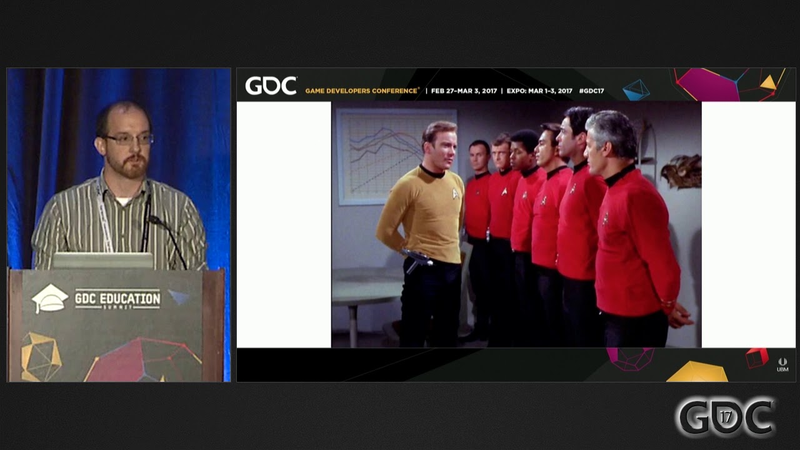
Game education requires a fundamental shift from purely technical training toward a holistic model that prioritizes critical consciousness, artistic expression, and social responsibility.
- Game education must shift from purely technical training to a holistic model that integrates fine arts principles and critical theory to foster artistic expression and social responsibility.
- Curricula should be redesigned to move beyond replicating industry standards, encouraging students to challenge dominant cultural ideologies and the social contexts of their work.
- Professional success in the gaming industry increasingly relies on non-cognitive skills, specifically public presentation and storytelling abilities.
How to leverage branded video to better monetise your game
Mobile gaming represents a massive, underutilized opportunity for brand advertisers, driven by a global audience of 2.2 billion players who spend over 1.15 billion hours per month in-game.
- Mobile gaming reaches a global audience of 2.2 billion players who collectively spend over 1.15 billion hours per month in-game, representing a significant opportunity for brand advertisers.
- Branded video advertising serves as a high-value monetization strategy that increases user lifetime value and generates superior CPMs compared to traditional ad formats.
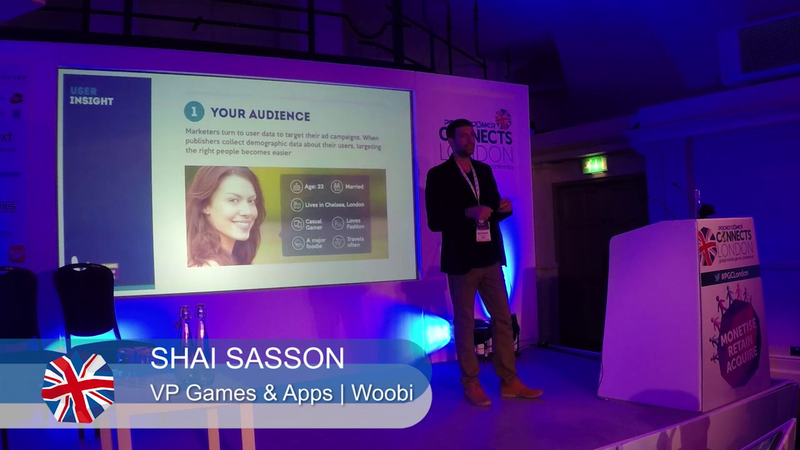
- To attract premium brand partnerships, developers must provide granular audience data, including demographics, hobbies, and behavioral intentions, to support outcome-based metrics like view-through and click-through rates.
Writers
Games and companies
Games