Key insights
6 slides
Market Size
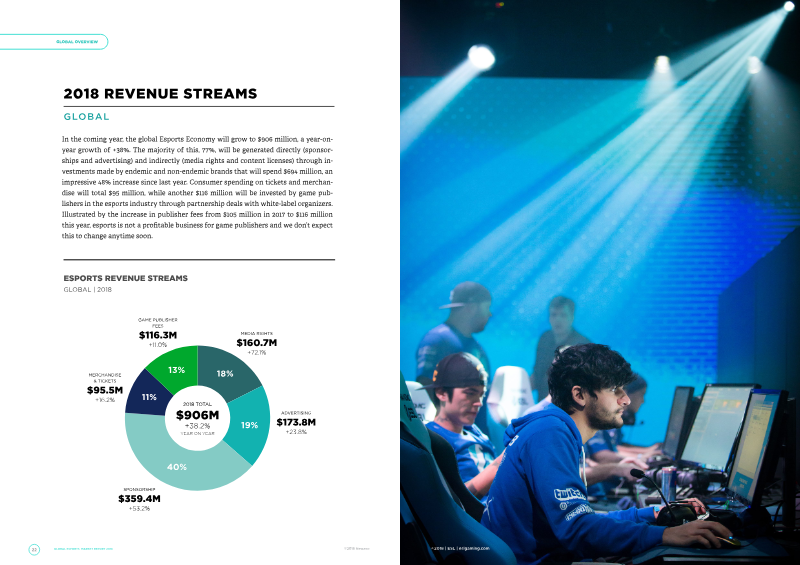
Global esports revenue is projected to reach $906 million in 2018.
This represents a 38.2% year-on-year increase. The industry is transitioning toward a mature, multi-billion-dollar business model.
Audience Reach
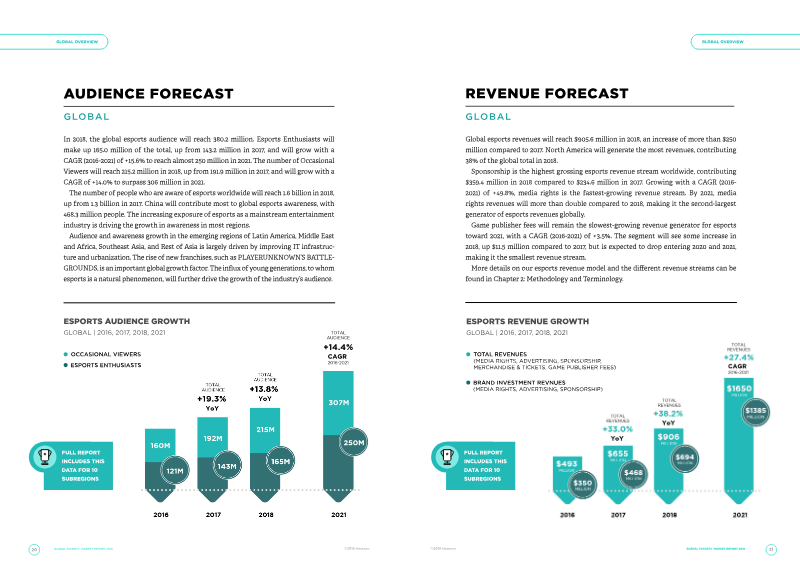
The global esports audience is expected to total 380 million people.
This audience includes 165 million dedicated enthusiasts. The report's audience projections are based on surveys of over 60,000 consumers across 28 countries.
Brand Impact
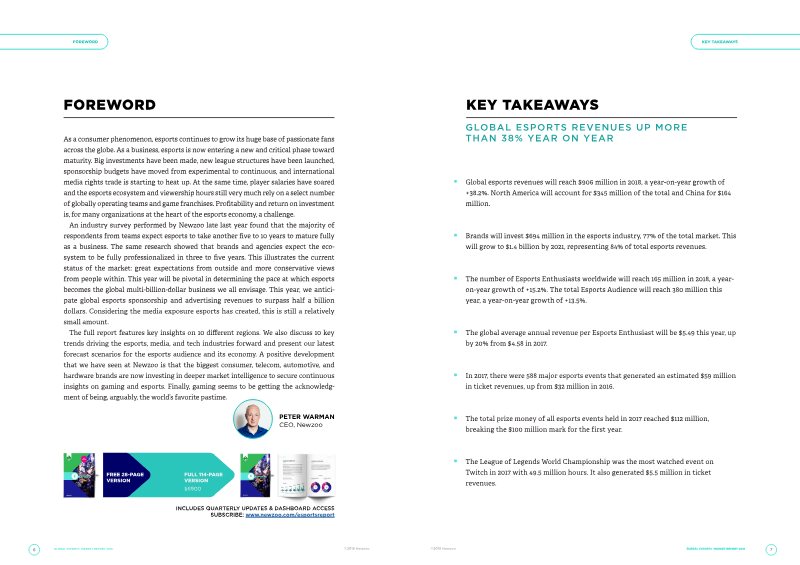
Brands drive 77% of total market revenue in esports.
Brands are the primary drivers of the esports economy.
Like a major sponsor backing a sports team, brands are now making continuous, long-term commitments to esports.
Growth Stream
Media rights represent the fastest-growing revenue stream.
This stream has a projected compound annual growth rate of 49.8% through 2021. Media rights are moving from experimental budgets to continuous commitments.
Structural Change
Franchising models are transforming the esports industry structure.
Leagues like the Overwatch League and the North American League of Legends Championship Series are adopting franchising.

Maturity Timeline
The esports industry is in a professionalization phase.
This phase is expected to require five to ten years to reach full market stability. The industry is transitioning toward a mature business model.
Like a young company scaling up, the esports industry needs time to build robust, stable operations.
1 / 6
Ask AI about this report