Game Development reports and market data
Documents
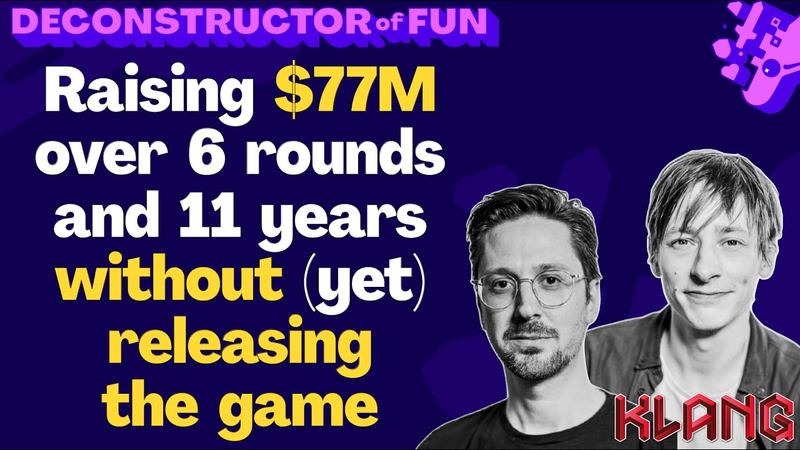
FOMO Capital: Klang Games & The Power of Storytelling in Fundraising
Klang Games demonstrates that securing substantial venture capital in the gaming industry often relies more on the power of a compelling, long-term vision than on immediate, scalable key performance indicators.
- Klang Games secured $77 million in venture capital over 11 years without a flagship title, demonstrating that a compelling, long-term vision can outweigh immediate, scalable KPIs in early-stage fundraising.
- The studio’s fundraising strategy centered on articulating a 'moonshot' project—a complex, AI-driven social simulation—to attract high-profile investors despite the absence of a released product.
- Klang Games de-risked their ambitious technical goals by focusing on core technology capable of simulating 50,000 AI characters, aligning their development with broader industry trends.
Spanish Video Game Industry Report 2024
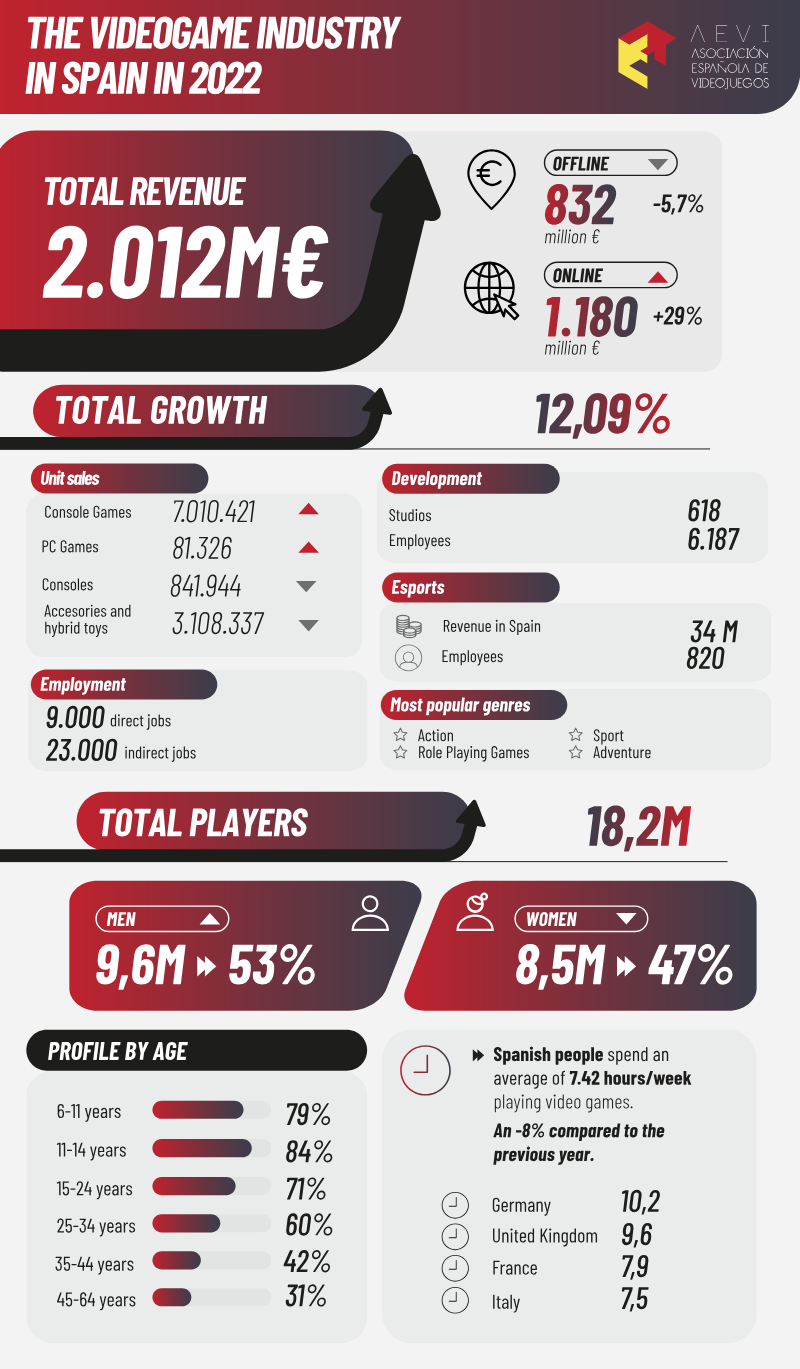
The Spanish video game industry experienced a robust 12.09% total growth in 2024, reaching a total revenue of 2.012 billion euros.
- The Spanish video game industry grew by 12.09% in 2024, reaching a total revenue of 2.012 billion euros.
- Digital transformation is driving market growth, evidenced by a 29% surge in online revenue that offset a 5.7% decline in offline sales.
- The industry supports 618 active development studios and 6,187 direct professionals, with a total economic impact of approximately 32,000 jobs.
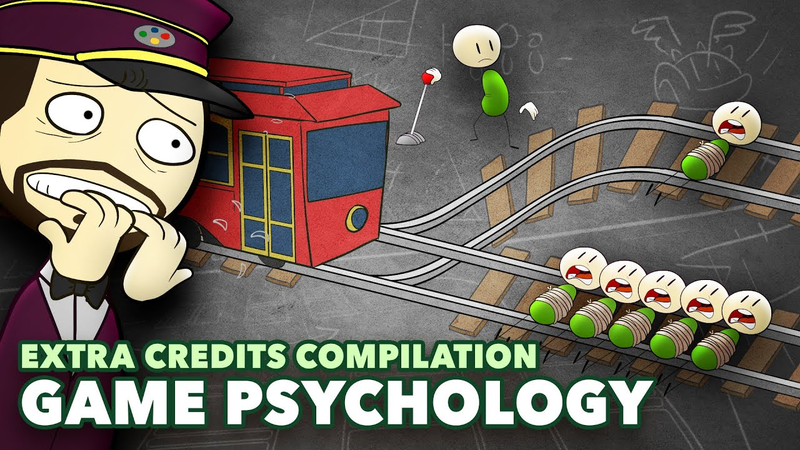
Game Psychology 🧠 | Extra Credits Compilation | Extra Credits Gaming
This analysis explores the intersection of psychological phenomena and game design, illustrating how ethical dilemmas and cognitive biases can be leveraged to create more meaningful, immersive player experiences.
- The Trolley Problem is a foundational ethical thought experiment used in game design to force players into meaningful, morally weighted choices, such as those found in The Walking Dead, Life is Strange, and BioShock.
- The Prisoner's Dilemma demonstrates that when individuals act purely in their own rational self-interest, they often reach a Nash equilibrium that results in a worse collective outcome than if they had cooperated.
- The Bystander Effect, first identified following the 1964 murder of Kitty Genovese, occurs when individuals fail to intervene in emergencies because they mirror the inaction of the crowd or experience a diffusion of responsibility.
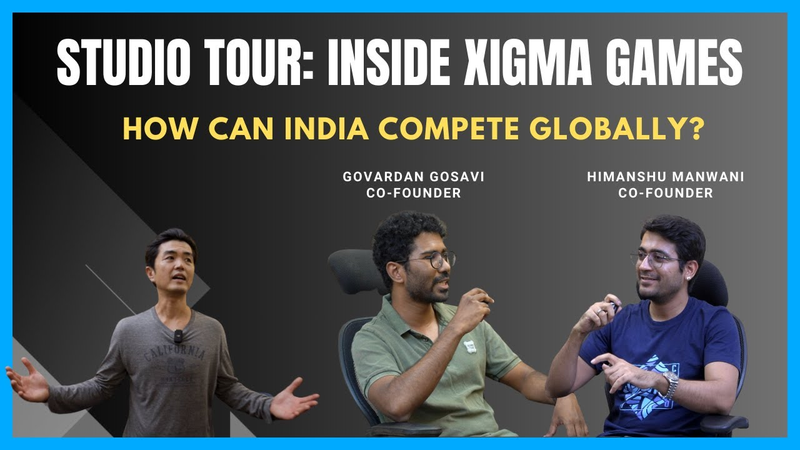
Inside Xigma Games: The Indie Studio Making Waves in Bangalore!
Xigma Games, a Bangalore-based independent studio, provides a case study in the evolution of the Indian game development ecosystem.
- Founded in 2016, Bangalore-based Xigma Games has operated for nine years as a bootstrapped studio, evolving from small-scale premium titles like 'The Bonfire' series to their current large-scale, free-to-play 4X strategy game, 'Metal Haven'.
- The studio maintains a lean, cross-functional team of nine employees, utilizing a product-driven culture that balances creative freedom with sustainable development practices to avoid burnout.
- Xigma Games’ growth trajectory demonstrates a scalable model for Indian indie studios, moving from an initial $10,000 prize-funded start to developing complex, globally competitive mobile strategy titles.

The Business of Cloud and Game Servers
Modern game development relies heavily on sophisticated backend infrastructure to ensure high-performance, low-latency experiences for global player bases.
- Studios optimize long-term profitability by transitioning from variable-cost public cloud providers to hybrid models incorporating bare metal servers once player populations stabilize.
- Server-authoritative architecture is the industry standard for competitive gaming, serving as the primary mechanism for enforcing security and anti-cheat validation.
- Effective backend orchestration relies on abstraction layers to manage complex services like matchmaking and identity management, allowing developers to focus resources on core gameplay.

Quaternions to Homogeneous Points, Lines, and Planes
Reflection composition provides a unified mathematical framework for game development by treating points, lines, and planes as reflections.
- The reflection composition framework replaces traditional vector-based cross-products with dual quaternions and 3D Euclidean plane-based geometric algebra to improve computational efficiency and mathematical consistency.
- Geometric objects are represented as compact data structures that treat points, lines, and planes as reflections, allowing them to function as transforms themselves via the sandwich product.
- The system utilizes a zero-value W component to distinguish between standard vertex positions and points at infinity, providing higher precision for spatial relationships.
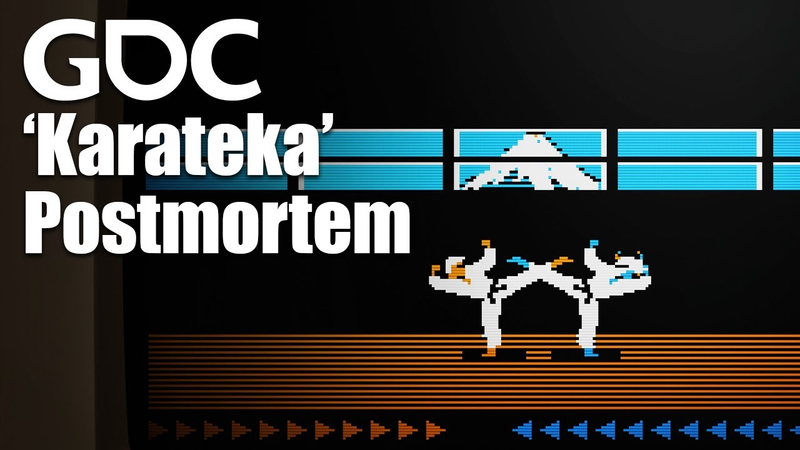
Classic Game Postmortem: 'Karateka'
The development of the 1984 title Karateka represents a pivotal moment in early home computer gaming, marking a transition from rudimentary arcade-style action to cinematic, narrative-driven experiences.
- Jordan Mechner developed the 1984 hit Karateka by combining the large sprite design of the game Swashbuckler with the smooth, fast animation style of Choplifter.
- To achieve fluid character movement on the Apple II, Mechner used a VersaWriter graphics tablet to rotoscope live-action film frames, tracing them manually into the computer.
- Mechner implemented a cinematic 'leitmotif' musical approach, where his father composed distinct themes for the hero and villain to help tell the story through limited audio channels.
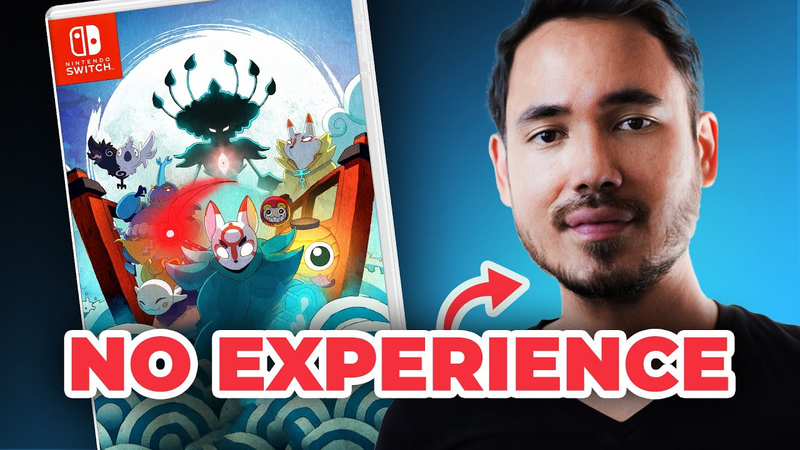
How My Game Made $150,000 With NO EXPERIENCE — Full Time Game Dev Podcast Ep. 012
The independent game development landscape demands a strategic synthesis of creative vision and rigorous business acumen.
- Chris Stair successfully funded the development of his game, Bō: Path of the Teal Lotus, through a combination of a Kickstarter campaign and a subsequent publishing deal with Humble Games.
- The developer emphasizes the importance of a clear, one-sentence 'hook' to define a game's market appeal, using the shorthand 'Hollow Knight but in Japan' to position his project.
- Maintaining a sustainable indie career requires treating game development as a professional identity and managing the psychological challenge of balancing creative focus with personal life.
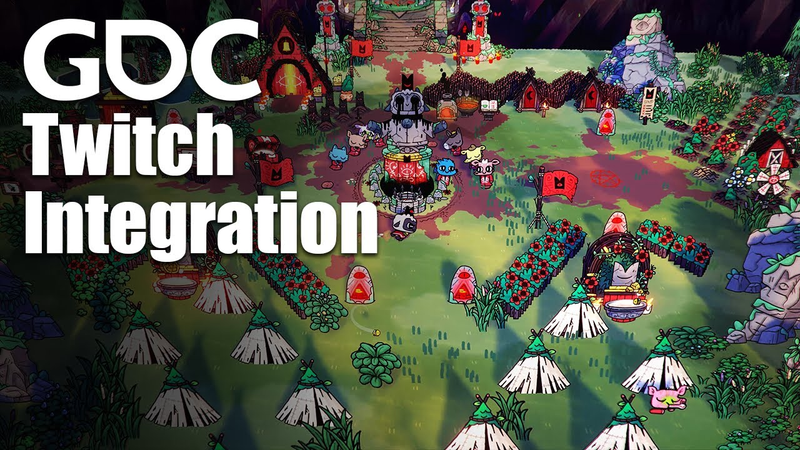
Cult of the Twitch: How 'Cult of the Lamb' Used Twitch Integration to Reach a Massive Audience
Cult of the Lamb serves as a definitive case study in leveraging Twitch integration to transform passive viewership into a collaborative, high-engagement experience.
- Cult of the Lamb’s Twitch integration drove significant engagement, resulting in 14 million unique interactors and over 400,000 viewer-created followers within the first month of launch.
- The integration helped sustain game viewership long after the initial launch hype, with approximately 90% of streamers continuing to utilize the Twitch features.
- Development of the integration was split into two phases: three months for the back-end infrastructure and one month for the in-game implementation, which was completed in parallel with console certification.

Step Into Your Player's Shoes: Making the Most of Team Playtests on 'skate'
The Focus Team Playtesting framework serves as a strategic methodology for mitigating developer bias and the inherent curse of knowledge during the production of Skate.
- Internal team playtesting is a valuable tool for rapid iteration and low-cost feedback, but it does not replace external user testing with the target audience.
- Full Circle (an Electronic Arts studio) utilizes 'focused' team playtests to increase UX awareness and empathy by assigning team members specific player personas, motivations, or pain points to test against.
- To maintain high-quality feedback, teams must minimize friction and cognitive load, as increasing the complexity of tasks or questions during internal tests consistently leads to a decrease in feedback quality.

How to Make Things "POP" with Audio and Color
Establishing a distinct and recognizable game identity requires a unified approach where audio and visual design function as a single, cohesive language.
- Establish a unified game identity by treating audio and visual design as a single, cohesive language rather than separate disciplines.
- Initiate cross-disciplinary collaboration between art and audio teams at the very beginning of the development cycle to prevent asset fragmentation.
- Align thematic palettes and shared creative constraints early to ensure the game stands out in a saturated market.

The Next Era of Modding
The gaming industry is undergoing a fundamental transformation as user-generated content transitions from a hobbyist pursuit into a professionalized, revenue-generating pillar of game development.
- User-generated content is shifting from a hobbyist pursuit to a professionalized, revenue-generating pillar that helps studios mitigate the industry-wide content treadmill.
- Modding is increasingly viewed as a net-positive business strategy that reduces production costs and development timelines compared to traditional AAA expansion models.
- Console ecosystems are the primary drivers of market expansion, accounting for over 65 percent of all mod downloads for major titles.
Writers
Games and companies
Games