Game Development reports and market data
Documents

LiveOps Secrets Revealed: How Top Game Developers Drive Success
Effective LiveOps strategies in mobile gaming rely on three core pillars: the ability to deploy content updates without client-side changes, sophisticated player segmentation, and a robust, data-driven analytics infrastructure.
- Successful LiveOps requires the technical capability to deploy content, events, and shop offers instantly without requiring client updates or server maintenance.
- Player segmentation is essential for personalization; developers should offer targeted discounts or rewards based on individual player history, such as rewarding lapsed spenders or celebrating specific gameplay milestones.
- LiveOps strategy involves balancing revenue-focused offers with retention-focused rewards, using multivariate testing to find the optimal ratio between game difficulty and reward value for different player segments.

Urban Planning in Games
Urban planning in game development serves as the foundational architecture for creating immersive, functional, and navigable digital environments.
- Effective urban planning in games relies on three core spatial elements: streets, buildings, and open spaces like parks or plazas, which provide the essential structure players use to navigate and interpret the environment.
- Game world proportions must be adjusted based on player movement speed; faster traversal requires longer street segments and larger blocks to avoid the frustration of constant, repetitive turns.
- Neighborhoods should be defined by distinct layouts, architectural styles, and unique landmarks to ensure visual diversity and prevent player confusion, as demonstrated by the varied districts in Cyberpunk 2077.

UFOs & Conspiracies with Leo Gonzalez | 361
The discourse surrounding unidentified aerial phenomena and government transparency suggests that modern narratives are frequently shaped by a blend of genuine mystery, institutional disinformation, and speculative fiction.
- Government responses to unidentified aerial phenomena prioritize narrative control over public transparency, which creates a vacuum filled by speculative theories and institutional distrust.
- Historical precedents like Project Blue Book and contemporary events, such as drone incursions over New Jersey infrastructure, demonstrate a consistent pattern of official ambiguity regarding unexplained sightings.
- Media pressure to produce sensational revelations often leads researchers to adopt misinformation, complicating the distinction between legitimate inquiry and creative speculation.

The Story of Crunchyroll, GGWP, and Forge
The evolution of digital media and gaming infrastructure is defined by a shift toward community-centric engagement and the professionalization of niche content.
- Developers are shifting toward direct-to-player infrastructure to bypass platform-controlled 'walled gardens' and own their community relationships.
- AI-driven moderation tools are replacing manual reporting systems to address toxic player behavior and foster healthier digital environments.
- Studios are utilizing no-code, self-serve platforms to implement loyalty programs and quest systems that drive player retention and discovery outside of the game client.
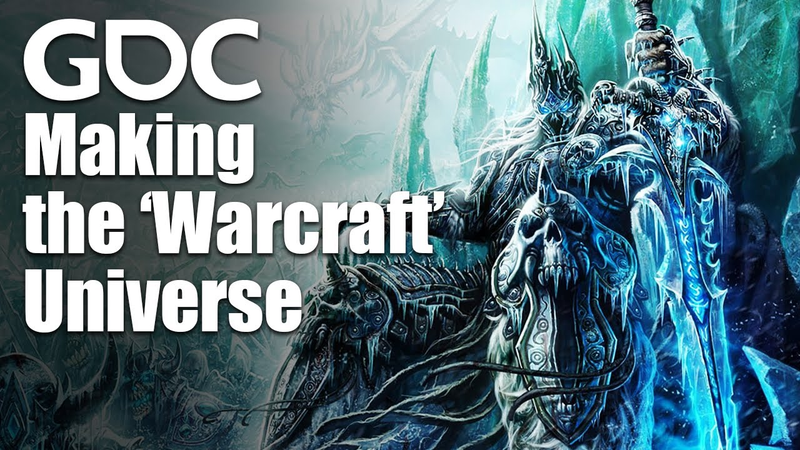
The First 30 Years of 'Warcraft': The Making of a Game Universe
The Warcraft franchise has maintained its status as a cornerstone of the gaming industry for three decades by evolving from a foundational real-time strategy series into a multifaceted, global fantasy ecosystem.
- Blizzard transitioned from being a game developer to a community steward after realizing that the success of BlizzCon was driven by players gathering for each other rather than just for the developers.
- The Warcraft 3 modding community created the Defense of the Ancients (DOTA) mod, which effectively launched the MOBA and Tower Defense genres, demonstrating the power of robust in-game creation tools.
- World of Warcraft achieved record-high subscriber retention during the end of an expansion cycle by adopting mobile-style live service disciplines, such as data-informed content updates and frequent player feedback loops.

NVIDIA RTX Blackwell GPU Architecture: Built for Neural Rendering
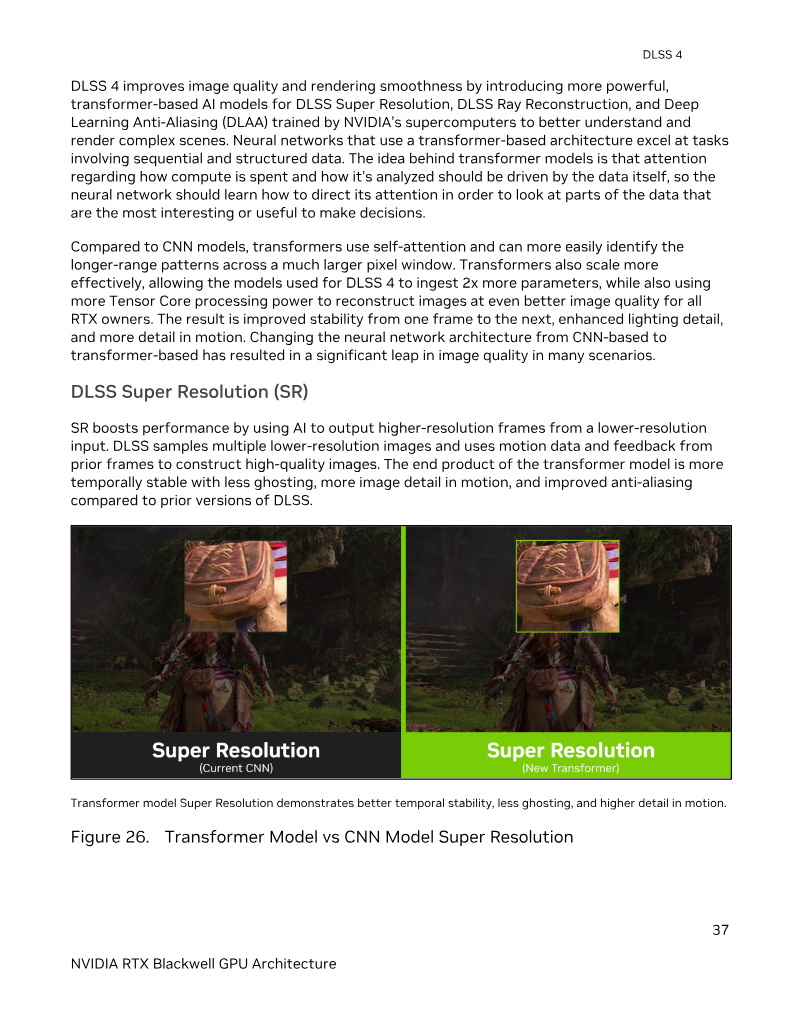
The NVIDIA RTX Blackwell GPU architecture is a hardware design focused on advancing neural rendering, generative AI, and ray tracing capabilities.
- The GeForce RTX 5090, powered by the GB202 GPU, features a 512-bit memory interface and 32 GB of GDDR7 memory, delivering a peak memory bandwidth of 1792 GB/sec.
- Blackwell's fifth-generation Tensor Cores introduce FP4 support, which can double AI throughput while halving the memory requirements.
- The architecture includes a new AI Management Processor based on a RISC-V design to handle GPU context scheduling, reducing reliance on the system CPU.

Slay the Princess: The Pristine Cut with Tony & Abby Howard | 360
Independent game development thrives on sustainable business models that prioritize single-purchase titles over microtransactions or paid downloadable content.
- Indie developers can estimate launch sales by using a rule of thumb of 10% to 20% of their total Steam wishlists for the first week, with similar volume expected again in the first month and the first year.
- Episodic game development requires each installment to function as a self-contained, emotionally satisfying experience that ends on a cliffhanger, rather than just a chapter in a larger book.
- Early Access should be treated as a full product launch; developers must ensure the build has the polish of a complete game because it represents the actual experience customers are paying for.

Finding Success with AI Agents and Content Creators
The integration of user-generated content and artificial intelligence represents a fundamental shift in how developers approach player engagement and studio sustainability.
- Gaining player attention is the primary challenge in modern game development, as the ease of creating games with tools like Unity, Unreal, and AI has led to tens of thousands of annual releases.
- Successful viral games often require a 'content-first' approach where developers prioritize core gameplay and fun before layering in complex systems like User Generated Content (UGC).
- For most traditional game studios, attempting to build a platform-style UGC model is financially risky, as it requires massive technical investment and long payback periods that many companies cannot sustain.



Employment and Career Development of Game Developers: Student Survey 2024
The "Employment and Career Development of Game Developers: Student Survey 2024," conducted by CESA, provides a comprehensive analysis of students' perceptions and aspirations regarding careers in game development.
- Interest in game development careers drops significantly as students age, with many university-level students shifting focus toward engineering or public service.
- Approximately 90 percent of high school students and above recognize game development as a career, yet this high visibility does not translate into long-term pursuit of the profession.
- Roughly 70 percent of students define the game creator role primarily as a programmer, creating a narrow perception that may deter those interested in non-technical creative fields.
Will AI Destroy Indie Game Dev?
The integration of artificial intelligence into the game development industry presents a complex challenge, primarily centered on the distinction between data processing and the act of human creation.
- Current AI models can analyze and replicate existing creative works, but they lack the ability to comprehend the underlying human creative process or the intent of the original creator.
- While AI is effective at generating static assets like still images, it struggles with maintaining long-term continuity and creative coherence in complex projects.
- The creative spark in writing often manifests as a subconscious process that current AI technology cannot replicate because it lacks the lived experiences and biological variables that define human personality.

Pondering Orbs: The Rendering and Art Tools of 'COCOON'
The development of COCOON centers on achieving high-fidelity, dynamic visuals through a custom rendering pipeline designed to overcome the constraints of traditional light mapping.
- Geometric Interactive utilized voxel-based lighting for COCOON to avoid complex parameterization and the need for traditional light map UVs.
- The rendering pipeline uses a rasterizer as a ray tracer by treating the perspective camera as a grid of rays sharing a single origin point.
- To optimize performance for the Nintendo Switch, the team used scissor rectangles and depth pre-passes to cull fragments and draw calls for geometry hidden behind orbs.

Building and Scaling Communities in 2025
In the current gaming landscape, establishing a dedicated community prior to launch has transitioned from a supplementary marketing effort to a fundamental requirement for market survival.
- Building a dedicated community before launch is now a fundamental requirement for market survival rather than a supplementary marketing task.
- Development strategies have shifted from top-down, influencer-led marketing to a bottom-up approach where developers collaborate directly with players to refine gameplay.
- Studios must utilize agentic AI and advanced social listening tools to synthesize massive volumes of unstructured feedback into actionable, data-backed development insights.
Writers
Games and companies
Games