Game Development reports and market data
Documents

Session: Securing The Gaming Ecosystem From Development To Distribution - Jonathan Carvalho.
The gaming industry faces an increasingly complex security landscape, characterized by high-profile intellectual property leaks, sophisticated social engineering, and the proliferation of automated threats.
- Studios must transition from perimeter-based security to a zero-trust architecture to restrict developer and third-party access to only the specific applications required for their roles.
- The gaming industry is increasingly vulnerable to source code leaks and internal environment breaches caused by compromised VPNs, unsecured remote access, and shadow APIs lacking visibility.
- Organizations should leverage global edge networks to gain visibility into traffic patterns, identify unauthorized API endpoints, and automate protections against layer-7 and network-layer DDoS attacks.
Session: How To Supercharge Narrative Design When Building Lasting IP - Bendik Stang.
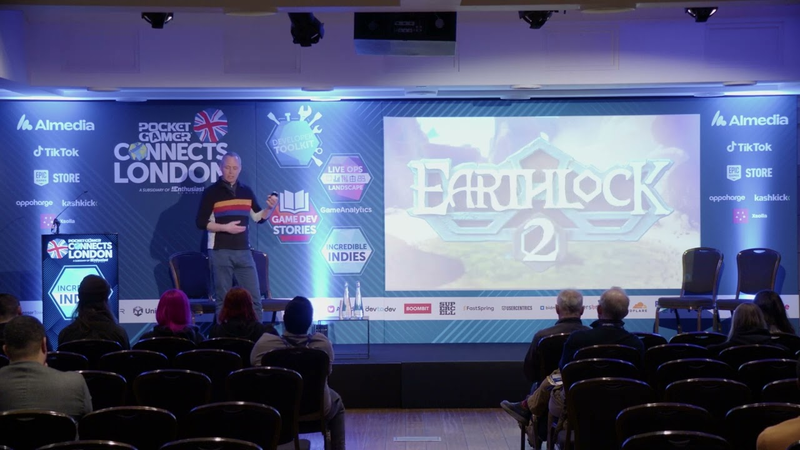
The core challenge in modern narrative design lies in reconciling the player’s desire for agency with the structured, authored storytelling typical of high-quality game experiences.
- To create lasting IP, developers must move beyond static game worlds by building systemic environments that evolve dynamically based on player interaction and simulated ecological or social behaviors.
- Standard game engines are optimized for static environments, requiring developers to design custom engine augmentations if they want the game world to change at runtime.
- Effective narrative design in open worlds can be achieved by destructuring stories into modular components that adapt to the state of a systemic world, ensuring the narrative remains coherent even if specific NPCs are removed or killed by the player.
Session: Accelerating Decision Making From Ideation To Live Ops – A Data-Driven Approach With Game..
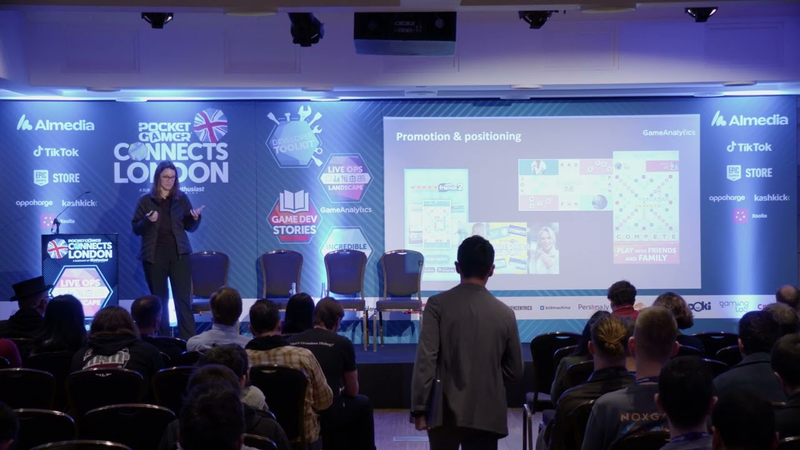
The primary objective of this analysis is to demonstrate how a data-driven framework can accelerate decision-making throughout the game development lifecycle, from initial ideation to long-term live operations.
- Data-driven market validation during the ideation phase helps identify underserved niches by analyzing competitor revenue, download volume, and advertising spend before writing code.
- High-performing titles like 'Words With Friends' and 'Scrabble Go' demonstrate that even in saturated markets, high advertising volume relative to download rates may indicate a reliance on retargeting, suggesting potential opportunities for new entrants.
- Iterative game design requires balancing acquisition, engagement, and monetization metrics while avoiding analysis paralysis; significant A/B tests should be approached with caution due to their potential to fundamentally alter game performance.

Why AI in Gaming has FLOPPED!
The gaming industry is currently failing to leverage artificial intelligence as a transformative force, marking a departure from its historical role as a pioneer of emerging technologies.
- The gaming industry has failed to leverage AI as a transformative force, relegating it to superficial tasks like marketing asset generation and basic level layouts rather than pioneering new gameplay mechanics.
- There is currently no 'AI-first' gaming experience on the market, as current implementations are viewed as tactical optimizations rather than fundamental shifts in game design.
- Venture capital investment in the gaming sector has reached historic lows, indicating that AI has failed to catalyze a new wave of industry growth or attract significant capital.
Session: From Chaos to Clarity: The Journey to Building a Money-Saving BI Tool - Kamil Kufel.
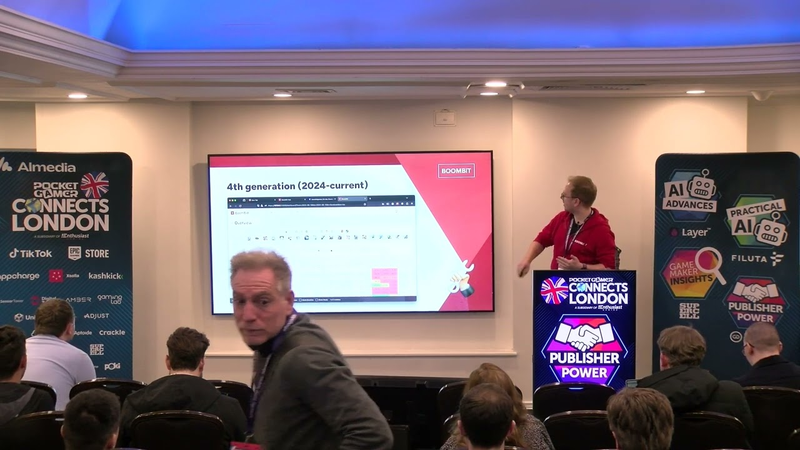
The development of internal business intelligence (BI) tools at Boombit serves as a strategic response to the fragmentation of revenue data across multiple advertising networks, mobile measurement partners (MMPs), and app stores.
- Boombit developed a proprietary BI platform to centralize fragmented data from over 50 advertising networks, MMPs, and app stores, establishing a single source of truth for net revenue.
- The custom BI solution reduced revenue discrepancies to approximately 1% by standardizing cohort calculations and accounting for taxes, store commissions, and network fees.
- The technical stack leverages Python (FastAPI/Celery), React, and Google Cloud Run to enable near-instantaneous data refreshes and automated anomaly detection.

Session: Hay Day – 12 Years Of Growth & Scaling For Longevity - Maya Hofree, Supercell.
Hay Day, a mobile farming simulation game, has maintained a stable and growing player base for over 12 years by adhering to its original design philosophy while scaling its internal operations.
- Supercell maintains Hay Day's longevity by adhering to its original 2012 core pillars: defining the farming genre, leveraging tablet-specific touch mechanics, and avoiding overly complex systems.
- The Hay Day development team has scaled to 50 people by splitting into three autonomous 'sub-cells,' each empowered to make independent decisions within their specific domains to maintain agility.
- Supercell’s organizational model relies on small, independent teams that prioritize long-term player experience over short-term revenue scaling, aiming for games that are played for years and remembered forever.

Session: AI Production for Game Studios – How it's Going And What To Expect In 2025.
The current landscape of game development is undergoing a fundamental shift as generative AI transitions from a novel competitive advantage to an operational necessity.
- Generative AI is shifting from a competitive advantage to an operational necessity, with studios focusing on integrating AI into 2D, 3D, video, and audio production pipelines.
- Enterprise adoption is currently hindered by a lack of security compliance, the rapid pace of model innovation, and the difficulty of integrating AI tools with standard engines like Unity, Unreal, and Blender.
- Studios require enterprise-grade security standards, specifically ISO 27001 and SOC 2 certifications, alongside audit trails and copyright-safe environments to scale AI operations.

How He Sold 500,000+ Copies Of His Games (Oliver Joyce) — Full Time Game Dev Podcast Ep. 036
Achieving commercial success in the independent game industry requires a strategic shift away from chasing fleeting market trends toward cultivating authentic, niche-driven development.
- Diversify income streams—such as YouTube channels, asset sales, or consulting—to mitigate the financial risk of game development and avoid the 'quit your job' trap for early-stage projects.
- Validate market interest early by building a demo or trailer before committing years of development; for example, a poor reception to a trailer with 25,000 views can signal a need to pivot or cancel a project to save time.
- Prioritize core game loops that respect the player's time, as games that offer incremental rewards and avoid tedious mechanics often perform better for time-poor audiences.

Panel: Playing by New Rules – Game Development Under the Digital Markets Act.
The Digital Markets Act represents a pivotal shift in the mobile gaming landscape, aiming to dismantle restrictive distribution barriers and foster a more competitive ecosystem.
- The European Digital Markets Act (DMA) is expected to create a more diverse and competitive ecosystem for game developers by enabling new distribution models and revenue streams, particularly within the mobile platform space.
- Publishers like Team17 and Curve Games are increasingly adopting consultative approaches, helping developers navigate complex monetization strategies and Web Store integrations to maximize the value of their IP.
- The shift toward a more open market allows developers to experiment with cross-play and cross-progression, potentially lowering barriers to entry and enabling mobile strategies for established IP like Team17's 'Hell Let Loose'.

Curated Panel: International Collaboration – Success Comes With a Global Perspective.
International collaboration has become a fundamental necessity for modern game studios seeking to navigate the challenges of escalating production costs and the widening gap between development expenses and traditional pricing models.
- Modern game development requires a distributed model, as the scale of content demands—often requiring thousands of developers for a single title—makes single-location studios unsustainable.
- International collaboration mitigates financial risk by allowing studios to leverage proven, specialized partners rather than maintaining large, expensive internal teams.
- Successful international expansion requires a core group of local, high-level talent to set standards and maintain quality, while outsourcing specific work to global partners.
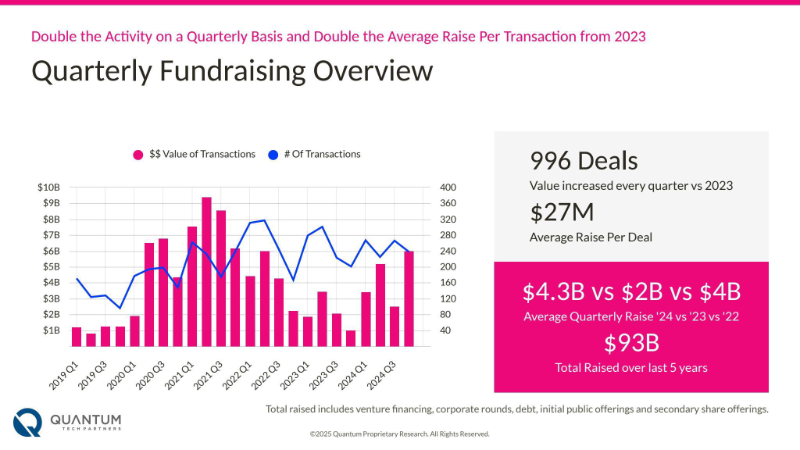

2025 Gaming Industry Report: M&A and Fundraising Update
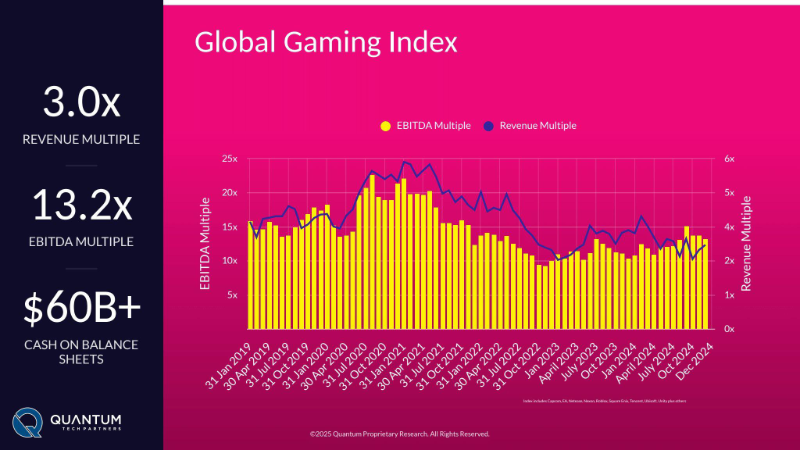
The 2025 Gaming Industry Report provides a comprehensive overview of M&A and fundraising activities within the global gaming sector during 2024, analyzing trends and shifts following a period of unprecedented growth.
- Fundraising reached $17.2 billion in 2024, a 102% year-over-year increase that reflects a trend toward larger, more concentrated capital investments.
- Merger and acquisition activity has stabilized at $11.5 billion, marking a return to pre-pandemic valuation norms following post-2022 market corrections.
- Investor capital is increasingly shifting toward artificial intelligence and Web3 technologies, while the eSports sector faces a 66% decline in funding.

BRILLIANT Advice If You Want To Start Making Indie Games
Transitioning to a full-time career in independent game development requires a strategic approach to production, tool development, and risk management.
- Prioritize the early development of robust, proprietary internal tools like map editors and dialogue systems to automate repetitive tasks and accelerate long-term production.
- Treat every game project as a high-stakes investment by building modular technology that can be salvaged, reskinned, or repurposed if the initial concept fails to gain market traction.
- Focus on the game's 'hook' and aesthetic presentation, as these elements are often more critical to commercial success than the underlying mechanics.
Writers
Games and companies
Games