Transcript
[Music] welcome to the novic gaming podcast where it is our mission to explore the business and future of video games we bring together the industry's brightest Builders investors and thinkers to keep a pulse on current events dissect emerging Trends and games share Lessons Learned and have a great time this podcast is also part of novic growing ecosystem which ranges from free and premium research to Consulting and AD advisory services for more information visit [Music] www.nic.edu overwolf is the guild for in-game creators whether you're a gamer Creator or game studio overwolf is the ultimate destination for integrating ugc in games
for Game Studios overwolf offers curse Forge for Studios a white label solution that lets game makers and Publishers easily integrate mods safely and seamlessly into their games both existing and new at zero cost it's battle tested by triaa Studios and games including Maxis with the Sims 4 Studio wild card with Arc take to interactive and others for creators overwolf is the all-in-one platform that enables creators to build distribute and monetize in-game apps mods and Game servers in 2022 overwolf paid over $160 million to in-game creators proving that they truly value the talents and contributions of The Gaming Community you can check out everything over wolf has to offer at overwolf decom or check out the details in the show notes and with that let's jump into the episode hello what's up everyone and welcome to the novic gaming podcast I'm your host Alex and this is the interview and insight segment in our second show in
our 2025 show slate we'll be talking about one of the most important topics in modern gaming distribution architecting curating and growing your games Community more than ever and following a pattern of a Litany of things politics consumer news Etc people take their thought leadership from Individual evangelists Grassroots supporters or micro influencers brand as is said in marketing speak is hitting below its usual weight and an emphasis on building alongside a group of consumers and actively taking their input in the product development process has become the de facto and default way of building in a game in the modern 2020 gaming era especially as gaming content becomes so saturated having a dedicated fan base pre-launch and sometimes for many many years before launch is basically critical to A Game's ability to survive in the market so today we'll be talking about modern community and engagement strategies in the 2025 gaming Market best practices approaches and how Community Management has changed over the past decade and even more specific
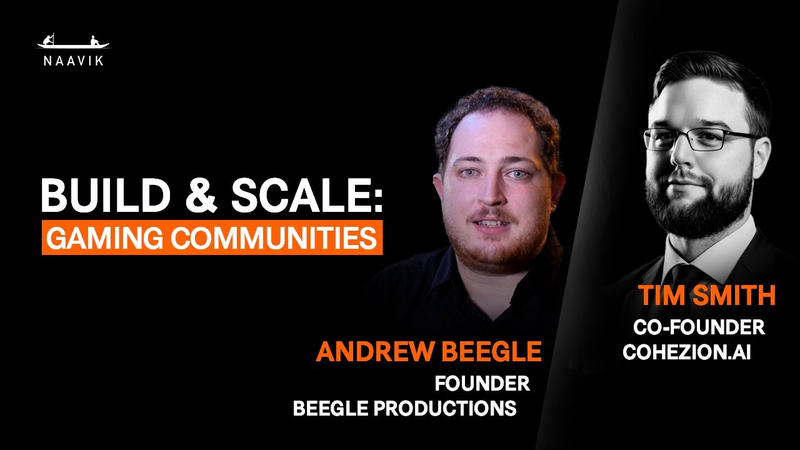
Al how the role of a community manager has changed over time gaming is a young industry but as one of my guests will remind me Community Management even within games is a relatively new discipline um we'll talk about what community managers do and how a community org is set up and with that um it's time to dive in as always I've got some homies joining me on air my first guest is Andrew beagle um Andrew has background at riot in the very early stages of riots Community Management and comms orgs and was a lead Community manager for the na and EU he is currently the founder of ble Productions which offers Community Building Consulting to a variety of Industries not only exclusive to games um it's an awesome to have him on air welcome to the Pod Andrew yeah thanks for having me I'm excited to chat awesome uh and my second guest is Timothy Smith uh co-founder at cohesion aai cohesion is a multifaceted Community Management tool with the primary use case of helping teams manage feedback given through Discord and to understand what the members of that game Discord
Community are truly talking about I'll obviously have Tim tell us a lot more about it in his own words but Tim uh welcome to the Pod yeah nice to be here thank you awesome so it's really good to see you guys again in 2025 um before we start you have to tell me how did you guys ring in the New Year I rung in the new year um taking uh my my four-year-old son and trying to get him to watch fireworks uh while he had 101 fever and wanted to go home so uh we were all sick during the p uh during the New Year's and he was the last one to get it so he was unfortunately under the weather the boast when we were watching the fireworks but we we managed to watch the very beginning and then and then take him home to give him some some medication okay Tim you got anything more optimistic not really you know being a a startup founder I spent my time uh coding away that's about it so all right great great okay much better okay um all
right awesome all right so I gave you guys some minor intros but I'd like for us to take the time for you to introduce yourselves to the audience um Tim I'd love for you to kick us off um tell us a little bit about yourself how you came to found cohesion what cohesion is um take it away yeah I'm Tim Smith I am the technical co-founder and chief product offer for cohesion and some quick background about me I started programming decades ago uh actually started making game mods back in 1997 for games like total Annihilation and Command and Conquer and been addicted to video games ever since about it PR fast forward to 2018 I was playing a very popular game I'm not gonna call it out but I think well you might be able to figure it out and uh I had 200 hours saved in a hardcore run through and the game glitched I lost my character and I went to go report this bug to the studio
and nothing ever came of that it kind of went into a black hole and that left a really sour taste of my mouth and I and I got think about this problem reaching out to context that I had in the gaming world and really understand how Studios work with this data that's coming in from their communities and how they make it actionable and what I uncovered with that is that for the most part is very manual it's very tedious everything's kind of soled across all these different social distribution platforms and in a lot of cases someone like Andrew spends a lot of his time trying to Corral this data so they can make these arguments on behalf of the community in the direction they want to go and there's just not enough hard data there to make that successful and what ends up happening is Studios go to influencers and those become the default for everything instead of hearing the community at home fast forward to 2023 is when we release our first version of cohesion
and we went through many iterations of it but we started taking a more agenic approach to how we solve these problems and that really allowed us to take all this unstructured data that existed and turn it into actual insights for Studios so bug reports Community feedback conversations that were happening just so that they could really understand what these communities at scale wanted and needed and so they could better solve these pain points that existed and as we look to the Future what my vision for cohesion is is more of a the agenic platform for gang Studios and what does that mean that's a very broad term right the the way we're thinking about this is as we look to the next five or 10 years the advances in they are coming rapidly every year we're seeing huge growth but we're also seeing that a lot of these agentic tools are super siloed to focus on very small pieces of this bigger that
exist and they're not tapping into those greater data points that exist so for us we really want to have deep connections with these Studios so that we can pull all this data from bug reports players feedback and suggestions play testing combine all this together so that we can help streamline those work flows and help them deliver higher quality games that their player base enjoys awesome yeah terrific well thank you for the for the intro um and as someone who is uh at least kind of seeing your soft I guess a little bit from the outside um it definitely seems to combine a lot of those things and that you were talking about that are you know siloed often um and kind of unite them in under one Hood um Andrew i' love to pass it to you um tell me a little bit about yourself um and uh how you came to to kind of be involved in community in games yeah sure so I am uh currently gone the entrepreneur route and have uh two companies that I'm working uh that I'm building uh first one is beagle
Productions our DBA is actually called gravity gang um we're a community marketing agency that specializes in uh anything from a community strategy to uh building out a website to setting up a Discord configuration to actually just doing uh you know a web content uh or you know helping uh working with uh creators to create that content for the companies and then the other companies uh is is brand new only been working on a couple months the game studio called mid games uh we haven't even announced ourselves yet we're still stealth uh on LinkedIn and we're building uh browser games web games every every two months uh for web game ecosystems sort of our our approaches more or less uh try something out on the web and see see how it goes and then and then try it out on PC iOS and uh and and Android uh but my background is as you said uh Community Management uh sort of got my start writing about games and doing community management for um Enthusiast mic uh
websites and then uh have the opportunity to jump over into game development and work on games like ion and League of Legends and and pubg and a whole swath of games that you've never heard of because they got cancelled or or sort of died before before the filming of this podcast um but rooted in in my background has always been Community Management um sort of Enthusiast marketing and really sort of it's all highlighted around uh the player awesome great great well I'm really excited to have you specifically and then Tim you know from more from the software side for this conversation today as I think you know it would be great to kind of you unite I think both of your perspectives you know Tim on the side of using software to optimize this and Andrew your Dee rooted um experience in community and I think that's kind of like where I want to start the show you know you know how Community is different today than it was five years ago so Andrew you're at Riot um describe Community Management to me in 2014 2015
which is crazy to say but is a decade ago it is crazy to see I feel like this is a moment where I should be opening up like a Dusty leather bound to and going over the history over the last decade um I guess I'll start with you know one of the most interesting aspects of the community discipline is how widely varied it's practiced from company to company and even really industry to Industry a lot of what I'm going to represent today I think will probably you know be more or less my preferred flavor of Community Management but there's you know there's a bunch of different ways to do it for depending on your industry or or the or the product that you're that you're making and there's probably going to be some people out there who are pulling their hair up because it's just radically different than the way that they've done things and there's no right or wrong way uh unfortunately a lot of the consistency um that has been rooted in the community discipline and like how communities practice is a lot more of some of the rudimentary work namely moderation and things like the facilit a of patch notes and and and content
creation um and over the the past decade the community discipline has more or less evolved uh because of a because of a couple different changes um the death of the forums as as I kind of talk about is the the the first um you know it used to be if you had a game or you know this is mostly I'm gonna represent mostly you know the the the aspect of games you had a game you had official forums and that was like where everyone that was where the developers were so that was where the players were but now it's more uh that that's far less common very very rare in fact it's mostly sort of communities sort of gather around the official subreddit um or an official Discord channel so that's been a major change over the last decade um from you know what had been traditionally practiced I think steam um having become a more of a singular publishing platform uh for for most has been has
been a big change you know it used to be that um I was publishing if I'm publishing a game I'm going to do it officially but then I'm also gonna have it on Steam and and and maybe somewhere else and now a lot of games that publish they only publish on Steam and a lot of those only use you know steam uh uh Community uh tools so you know steam's grown more than seven 7x over the past decade so it steam's really become this monster and learning Steam and and having that become part of your your main tool belt has been really important and then um influencers um going from you know it used to be a group that you would take care with white gloves make sure they're heard take you know have a direct relationship to more of a vital uh part of your game gravity uh game game growth strategy um it's you know it's changed so much over a really short period of time uh going from it used to be sort of something you would do in addition to and now it's it's really important to to to grow a game is to
make sure you've got a robust uh community of creators who who care about the game and want to create content around the game and are you know sort of are in aligned with how the game is evolving yeah we're definitely going to talk a lot about um the influencer strategy and the or the micro Creator or the mini Creator or whatever the words are nowadays um at some point in this episode and I think what you're speaking to is um super similar to I read this piece called like the strange evolution of the sponsored stream it's on a Blog um called push to talk and it was about how the relationship between developers and creators has kind of changed over the past 10 years um yeah and I really like this because I actually kind of remember living it but it was never like I never really kind of thought about it until it was broken down this way and it was kind of like 2014 to 2018 is the era of like random Partnerships like big random stuff um 2019 2023 is like big money lottery ticket era like I pay ninja $1 million and then now in 2024
now 2025 um everything is just like another marketing channel and a lot of the cause and effect relationships have kind of shattered you can't just pay your influencers to play your game and make it appealing anymore that's an old strategy that it's loky no longer working yeah um and so I think you were speaking and alluding to that um but there's even some Nuance within there and um I guess are there any between reactions to that piece you know Tim or um how do you guys see that Evolution I I will just say I haven't read that that specific entry on push to talk but Ryan rigny is a man uh he's I hav worked with him before in the past he uh has a good beat on things so I'm sure it's fascinating it's it's I just bookmarked did something to read after the after the show sweet yeah I I would completely agree with that sentiment if we look at games even you know five years ago the impact that influencers had on game purchases was very significant you know if you had a
favorite streamer or there you know whoever that was playing some game and it looked inticing it was pretty much an instant buy and now what we're seeing at least from my perspective is communities are starting to vote with their wallets more um they they really are looking for games that they resonate with and not just an echo chamber of yeah hey the streamer did it I'm going to go play it because some streamer did it and it you know we're really seeing this with AAA Studios you know they're trying to push so many games out so quickly to hit all these different demographics and they're not really listening to what their communities their bloodline is wanting from them and that's really starting to impact their bottom dollar yeah yeah and Okay so we've been talking about this kind of like from the player perspective um right and I think you over the past decade you described some of the changes we described some of the big shifts but um are there any
differences in attitudes and behaviors that are more um split between two components one being Community the employees that are employed in the community function towards players so not necessarily influencers but towards players um and also community inwards so developers and Community interacting together um have any are there any observed differences in attitudes there than they were maybe five 10 years ago yeah that's a great question I think um I think this is probably best broken up into you know sort of how Community is practiced internally um within within a company within an organization and then externally um what I was first getting started in in Community Management it was a lot more common for Community professionals to be treated like a bit of a burden by like the product team developers product managers Etc um and some someone more or less to
be Taskmaster by marketing and business teams um a lot of that is just most people didn't understand how to utilize Community but I think a lot of that was also um when a community is on fire and you've got one person listening uh to you know what what is actual the actual uh sentimental reality of a community uh that person can be very annoying and representing like ah the world is on fire so um it it used to be um that you know working in communities you'd be like a a bombardment of here are all the things that the community dislike without a you know a clear here are all the things that they love but here are all the things that they dislike and it wasn't until sort of much much later in my career where I was able to successfully get um developers and different people working on the actual game involved in the process and interacting with players directly and taking on a lot of that uh emotional
burden but but also like that sort of being in the contextual soup and understanding you know what what was what players actually wanted it and why they felt it the way that they way that they felt yeah I definitely feel that it's like there's at least to the first point of community outwards towards players it's like a a a bigger and Keener interest to hear what they have to say um versus 10 years ago might have been you happen to be here that's great um but we know what we're building and we don't really care what your opinion is 10 years ago it was really challenging to get a designer to read a community sentiment and feedback report you know that was curated from you know uh opinions in the in the community forums or even take uh seriously the importance of making sure that changes that were made were being documented and explained with context uh I feel like that's a lot more common now that um um I don't know it's just virtue of
seeing that being a a differentiate a key differentiator in games and going okay we need to do that too or just you know the the web is so much more accessible now than it used to be by virtue of everyone's better at it um I don't know what what the big you know the difference is but I certainly feel like it's more common now as a community manager to not necessarily be you know alone in the darkness trying to communicate to the product team what is actually going on and what and what people want and and and more of a you know sort of being a false multiplayer false multiplayer in that exercise by virtue of enabling uh developers to sort of have have better processes for for getting that information or for you know keeping an eye out for tools like cohesion and onboarding those tools and ultimately having better Tools in a tool belt to be able to make those arguments that aren't uh emotion driven but data driven yeah I I think it's really interesting
to to look at what's been going on in the past four years there's really been a huge industry shift uh outside the Triple A games where we are seeing a lot of Studios that are coming out and you know they have it in their their blood Lon we're Community Driven we're thinking about the Community First they're core to our game development we're bringing them in early we want to hear their thoughts how we make this game better some of the students that we're working with you know it was early is like you know pre-alpha like friends and family testing they're leveraging our tool to be able to collect that information so they can make more data driven decisions to appeal to the masses and get their product to Market sooner um and it's been really interesting to watch player perspective as as well um with with part of our system we have these feedback we built in so when you submit a bug report or player feedback you know we keep you in the loop let you know what's going on but the response to that is players have really en enjoyed knowing that hey my
voice is being heard something's being done about this and even even if the studio chooses not to go that route because it doesn't align with their Vision necessarily they have some closure on that thing and they feel like their effort was rewarded just for having that streamline communication piece and I think that's where the whole entire industry is is going because without that it's not going to stick around people don't want to buy games they don't like anymore you know we get a new Call of Duty every year and players are even starting to get tired of that a bit right just because they don't feel Hur it's the same thing they want something new they want something engaging and to feel like they're contributing to those things there's so much that the community has to offer to make games better and appeal to the masses and we want to give Studios those tools to be able to do that to consume that data make it actual and do something useful with it awesome yeah and I think it's so
interesting that you mentioned this is happening so much earlier and earlier and earlier basically in a product's life cycle and I think that brings us to our next topic of building the community you know like how what when and who um and so I have kind of like uh in order to kick this kind of topic off um you know my perception is that one of the most asked questions is how do you balance showing off the game involving the community really really early as you mentioned Tim which a lot of the teams that you working with or doing and the risk that you run by turning people off from the product because it's just not ready to show um or it's unpleasant and it's unfun because that's just the way the game development is and it's not perfect almost all the time um what are the tactics that at least you guys have seen in engaging with that kind of like you know skill and chorous problem yeah so this is really interesting because I've seen kind of the gamut of completely closed doors like we want want to bring in a subset to begin with
of like a huge friends and family um but then on the other hand we have Studios like fantastic pixel castle with Greg Street and they're like hey we're building this awesome game here's some previews about it they have talks on Twitter or on Twitch every other week um and they're doing a lot they keep the community engagement going to stay part of that ecosystem and they are a year or two or more away from the probably further than that Andrew say a lot further than that like to do but they are already bringing that community in and they're getting valuable feedback about these gameplay mechanics and what they should be doing that you know it's really for me it's really exciting to see that you know the community feels like they're they're contributing in a meaningful way but it also helps build a better relationship between the studio and the player base it you know just thinking back to like you know 1997 when I started you got a CD ROM maybe or floppy drive with a a
game good luck that's all you're getting you know and was up for us as the players to kind of build mod communities around that and there was no developer uh integration at all and to be where we're at now it's it's kind of mbing really exciting stuff we're no more we'll tell you when we're done yeah yeah my my my uh hot take on this is uh this is fairly formulaic but like have a thesis for who your audience is while you're building the game the product whatever it is that uh and and then validate that the thesis is correct before you begin going the market um once you understand who your who your audience is um and and you can make some assumptions around the different kind of people who will make up that Community um and it's it's a helpful exercise to do like create like five to eight personas uh that that can be quite helpful once you've done that determine your primary platforms where
you want to grow your community and identify the different bottlenecks that that'll make it more different or difficult for your um target audience to find you and then develop you know content engagement strategies and and and chat chat with players about the things that they care about while you're building the game you know we talked about fantastic pixel castle and just sort of the the long tale of of talking to a building a community for an MMO going to be very different than like a like a card game or you know single player or a co-op game you know every game is different so you need to decide when it makes sense to start to both unveil your game in any capacity um and and then also in invite players in because you know every every game is different and the the development tale and how long you can keep people interested and excited and ultimately telling their friends and and being part of the community is going to be different but once you've determined who your audience is and have a good understanding for what your building how long it's going to take a lot of those
uh a lot of the the what comes into Focus Andrew I think you bring up a good point about keeping them keeping players up to date and stuff and I would say there almost needs to be like a Cadence to that you know going back to FPC the fact that their own schedule every other week they're they're talking about something they're engaging the community they they do a really good job of not letting the community go Ste I think is a good way to put it they they just keep that engagement piece going and you that's how they see Discord on or activity on Discord as H seing activity on all their social platforms is because they keep driving that engagement piece yeah I think but I think that that's interesting I think your point around especially like come up with a thesis for who you think your audience is and there's like a you know similar parallel to that and kind of like product Market fit and startup philosophies you know like in product launch there's the phrase like job to be done but often times like the people that you expect are like not always the
people that show up and people use things in different and novel ways right um and so I'm wondering like from your guys's experiences um can you share a story of a team that um was actually struggling to identify the people that or they basically got a bunch of people that they didn't expect or none of the people that they actually wanted um you know how did they reverse course how did they adjust their Community strategy to to solve for that because I would anticipate that that's probably like a challenge for a lot of teams is that the people that arrive are not the people that they expected or the people that arrive are just not numerically high enough as what you would expect I think more of the second not numerically high enough is probably more of the common common situation I you know people who arrive in your community care about your game if you if you've started to talk about the thing that you're building in the right way uh the people who showed up will genuinely care about the game if you start talking about an MMO and then you build a a card game that's you know
may may or may not be be the case but I think it's more or less common that you just don't have enough enough people coming up you know this is we're in a really interesting time now where there's just so much noise there are so many games coming up every day every week every month it's really hard to capture anyone's attention and so there are a lot of stories that you hear of you know people who have a teams product teams that have been making something for a while and maybe they've even released something and they have a small fledging community and then all of a sudden there's an inflection point uh the story that I think you hear the most often is the Among Us story where you know is out for a while and then uh and they were doing a lot of amazing things they were they were engaged with their Community they were making a fantastic game and then the pandemic hit it was just like the right time right place um you hear a lot of those right place right time and you're already doing the right thing kind kind of stories and then you hear stories like uh cesac the
uh the founder of uh company called proletariat uh they made a game called spellbreak and they've got a really cool story about how they used imager and this was probably I don't know 2008 2019 or 2018 2019 I'm not sure what the year was um but they they used imager to show off how cool their game was visually and how like a a fantastic combo worked really well as a gif and that was actually a a big part of of how they they started to build their Community just just on imager um but then you then you have stories that are like long time ago uh and one one that I guess I would tell is uh a story about a game that some people will remember and many people will people will be hearing about for the first time called City of Heroes uh and it was a a fairly popular MMO sort of in the MMO Valley back in the the mid 2000s before uh world or before World of Warcraft had hit the scene
there were a lot of MMOs following EverQuest um they were all moderately successful uh City of Heroes was one of them after World of Warcraft it sort of had sort of its downhill uh downhill March and after the game director who kind of started the whole project had left the community was more or less in disarray and and and and seeing the departure as a death nail and uh the whole studio you know really wasn't wasn't ch talking with them and then uh they hired a community manager his name's uh Andy bford he he came in and he was able to identify an opportunity to grow uh and regrow a part of that Community there was emerging uh the emergence of of of streaming you know with Ustream was the biggest uh biggest streaming platform at the time this was 208 um and started a weekly web show where he slowly introduced parts of you know different people within the studio
and and and and really took took a a game that was not being updated a whole lot and the updates that were coming out were coming out with patch notes and no real context or real you know promotion behind it to you know creating content around the future and what what the company was doing what the the company's philosophies and what the company believed in and it shipped to this you know this game is going to die soon narrative to one that was very helpful optimist tell your tell your friends old players came back new players came in and it that is a story that I I I like because it it it kind of speaks to you can you can be on it you know sort of the the the downhill uh Death March and come back if you re nurture and take care of the community and treat them like a vital part of the whole experience and the ecosystem so that that's a that's a story I like to tell no that's and that's a great story because I think one of the questions that I was going to ask
you know is what do you guys think is the recipe to building a community in a crowded Market um and I suppose the recipes that there is no recipe and that it has everything to do with your game the community and the time and everything like you mentioned immigr you mentioned a web series streaming show on Ustream um you know I was going to ask even like what sort of Art and assets and videos are necessary right um and I think it sounds like you know I think all of that is kind of like strategically in the moment um but do you think that there are any kind of musthave tactics um if you had to kind of like make a blanket general statement um yeah you just got to be lucky great luck no yeah I think I think the answers are again rooted in an understanding of who your audience is and then coming up with with unique ways to engage them in a way that's going to resonate if you're a startup uh or a company that is without first Revenue generating success you you should also get comfortable and get Del lead is comfortable with taking risks that you can capitalize on viral
moments that happen in the world you know the internet every day is a new opportunity to to Market your way into success um and I mean I am on the camp that like product first if your product's not good if your game is not good if whatever you're is not good doesn't matter how how big you grow because everyone's going to leave anyway but if your product's good and you could tap into a cultural Zeitgeist uh and and seize that moment like you've got a real real chance I think the unfortunate reality is whenever you're making a game a movie nutrition supplement beauty product you know all the all the all the noise that is out there right now it's really hard to stand out and so I don't think I think it's healthy to to sort of shed the fear of of trying different things to stand out and put a lot of shots on goal and then pray for a little bit of luck yeah to be in our understanding your community or your SCP uh is like super important I don't think there's anything else that you could really start with that is going to help you
accelerate without really understanding who your demographic is what type of game You're Building who's going to purchase this all that good stuff because that's going to drive everything that you do and it's funny that you had brought up art earlier me and Andrea actually had a conversation earlier this week and uh we're all um cozy farm games and uh you know we were talking specifically about this this topic here and what I came up with and what we discussed was you know you don't want to make a cozy farm game that is like Photo realistic and to the extremes because that completely misses the mark on what the community is looking for you could that that type of player is not looking for that type of experience and there's a a feeling to that and you know there's other examples of that that they just don't resonate well with the community they don't they don't feel like they belong together and without like I know I'm going get a
lot of backlash out this probably you know artist subjective I get that that spun you can we all have opinions right but there's also a bigger picture here and if you're not able to resonate with FIFA potentially want to play your game it's not going to land the first thing that anyone sees about your game is your art style that is the very first thing that has ever seen about your game and if I see a photo real cozy farm game I'm not sure I'm gonna play it yeah those are some great points I mean I think that that's also like it's soliciting that feedback right immediately like if you bring your game with that art style which is why you do art style resonance tests you find out very quickly that oh you know ages 11 through 14 are not regist are not um resonating with sci-fi or something like that you know this is uh this demographic is doing that better um so we talked I guess a little bit
about um you know kind of the recipe and like what people should do to build your community um and I kind of want to talk about two other two other groups of people um the first being um actually the community manager themselves um how important do you think the individual is um that's representing the game and the studio is you know I think a lot of times sometimes these Community managers grow to be almost micro influencers themselves at to some sort of scale um how important do you think that that is um and especially in today's market you know that being maybe something being different than what was true in 2014 or 2015 yeah ideally um the ideal state for a community manager is to be Not Invisible but definitely not the rock star it used to be where you know the community manager was the Rockstar because they were the one giving the good news and the bad news and all the news in between and I think the best approach now is for for Community people
to identify internal you know team members um that represent different areas of such subject matter expertise and then these are the kind of people that players want to hear from these are designers these are artists these are audio Engineers these are producers these are you know uh league on League of Legends we we would frequently um have have our have our the main lawyer uh the lawyer that we would use uh Lo Logan marges would would come in and sometimes in character as buroff and and talk about the legal side of League of Legends so like players care about your game and they want to hear about it from a lot of different aspects uh so if I I think doing it right uh and this isn't necessarily like if you don't do it this way you fail because there's a whole lot of reasons that could prevent that uh you could just have intolerance for anyone talking with the community except for the community manager and that's that's a top- down you know CEO Le decision but if you've got you know
senior leadership at the very top who are comfortable with uh engagement with the community happening from all levels of the company I think the success state looks like the community manager enabling a lot of different subject matter experts to come and talk with the community about areas of the the of the of the landscape that they can represent that players care about and then of course there's tons of opportunities for community community managers to continue to be involved you can be the host of the of the podcast right you could uh be the the host of the of the show where you're interviewing the lead designer or the the the artist who just made the last uh concept art for the for the new character that's coming out there's a lot of ways for the community manager to continue to be involved as a figurehead but I think it's important to disconnect from the only figure head to a figure head I think that is what success looks like notice I didn't hear you say anything about them representing and chatting with the monetization or the business people um players if players care about it they're
going to let you know and then you're G to have someone to go to awesome Tim any thoughts here from you yeah so kind of a different perspective but but in in an enlightening way I think so today's player can be a bit volatile uh I think is a good way to put it and I think there's a like you should have a good balance with your community management team I think having one single person kind of isolates them they're always public facing and and while it's good to have someone that can kind of take on that more public figure if you will also comes back with a lot of drawbacks you know they're they're prone to being attacked or smear campaigns because they didn't do something that somebody wanted um yeah so I think it's definitely a balance in that because it it it's a good way to help the the community just
have more than one focal point within who's the Community Management who can they talk to within the community and Danger's point about being able to like spread out like like good news bad news whatever it is if you can if you can spread that burden a bit it it makes the community a a little bit less hostile sometimes uh but it also depends on how bad the last your last release was as well got it got it it sounds like maybe it's time for debate if we have time but uh like my my my retort to all this is like you know um these games and I'm representing games here like you know it's like eat sleep and games for for for a lot of people right like they the they're in the top three to five most important things that you spend the most time with uh in in your in your day and your week and your month and so I as a community manager can talk about and represent a design balance change infinitely less articulate or uh insightful than a lead
designer can or or or or an artist can so I think that yes it is risky uh yes it is challenging to weit in especially in a community that is um sort of mixed in terms of of sentiment and health um but I I think it's it's really important to um building trust and really important to the the community understanding and and and resonating and and respecting and and loving you know sort of the the team behind the thing that they love to talk with a bunch of different personalities and I think you can mitigate a lot of the risks and a lot of the downsides to that with uh with good training and good processes and and and identifying the the people who are naturally good at it because like I wasn't I didn't go to college to be a community manager it just so happened that like I I have a I have a I have a gift to be able to to to do this stuff people who are designers artists lawyers accountants they all have the same a lot of them have the same gift
you just need to sort of harness harness it and Foster it and empower the right people to uh to to to weigh in and it's infinitely more valuable than having a sort of a single figure ad running around trying to get answers and represent a bunch of stuff that they don't have any idea about okay well sounds that this is actually a very contentious question and maybe we could do a separate addendum episode where we debate um sounds good but um I want to talk about one more group before we talk a little bit about orgs and Community Management and also talk about scaling um there are some people here that are obviously not the average Gamers first you just describe the eat sleep whomever um and a lot of these people are actually creators themselves um and I think that there's a challenge of you know how early and what time is the right time to bring in a heavy-hitting Creator to your project or at all um and I would think that to a lot of to a lot of creators they would care most about their viewers right not the velers because they if they're trying to build a business are trying to
build a business so as a community manager I might have a very hard time controlling what those people say because those content creators are constantly under kind of abatement from being not not real or disingenuous um but I could also see the challenge of trying to steer between an authentic Creator and also them misrepresenting slash getting things wrong and generally not what I paid for from a Creator um how do you guys see the balance between um bringing on those micro influencers who are theoretically supposed to support the community and their game but also have their own personality their own show and their own goals yeah I think It ultimately depends on what what outcomes you're looking for um if you are looking for early stage feedback uh about a kind of game and you go through the exercise of identifying creators that like these kind of games like I I'll just throw out an extraction game if I'm make an extraction game and I'm early in the process and I go and find you know uh 10 content creators
that I love how they think about the extraction genre I like how they critique the extraction genre and I want to bring them in as sort of a uh a someone who can help make sure and validate some of the decisions that the team has made about our extraction game months or years away from from promoting it I think that looks very different than bringing in a a Creator who's who the outcome you're looking for from that Creator is to sort of hype up a a micro or macro segment of the the larger Gaming Community um so it's I I could probably talked about it for a long time but I think it depends on the outcome that you're looking for and then depending on that outcome uh your your curation um methodologies are going to be very different yeah from my perspective um I have a LoveHate relationship with influencers so I think everyone does
well so the way I look at this is influencers are great for having their their microcosms within their communities they are all very similar in the way they think about the game they're playing and you know it's a good way to get feedback from a community very quickly where this turns into a problem is the over optimization for making your game specifically for influencers or making it where you know the game play doesn't necessarily fit in with the majority of your community anymore because you've tuned it to to go with the you know 80 hours a week that a streamer might play uh I'm I'm gonna call a game out here and I know Andrew you know we'll have another debate here in a second but escape from tarov uh loved this game I was one of the first early adopters paid way too much money
for it and I don't have the time to play that game anymore and we have so many streamers that have come on board and they're able to put hours and hours and hours and you know into the game every week and the BSG team has kind of over optimized the game for those that are able to put in that amount of time so now when I go back and play it it it's not fun for me anymore I don't enjoy don't enjoy the direction the game is necessarily gone they've kind of forgotten about the community as a whole and you know a aim for what seems like to be mostly influencers at this point I would I would say that you know that that's less a result and I I'm not going to speak to escape from tarov and that that whole that whole ball of wax um but generally speaking over optimizing a game for uh based on you know Creator feedback is
there's less uh responsib or less a fault of creators and more more uh I think a failure and in a decision tree that that designers game game developers have have made I think you know we used we used to talk about uh sort of the most popular most loud uh people in our community is the vocal minority and since we're talking about how the game you know the community management and really game ecosystem has has developed and evolved over the last 10 years I think that that is the vocal minority now is yeah still the people who are who are actually you know posting the the two-page thread in a Discord thread in a Discord post um but then also you know creators who are who are talking about the latest patch for an hour and a half uh on a YouTube video or or a stream I think you should absolutely is is as creators or game creators ourselves we should be listening to what um to to the
essence of of the feedback that we're getting but not necessarily make any decisions on The Virtue that this is someone who's very influential with within a community because it doesn't always represent the the the the larger Community sometimes it just represents the person who you know can play a game for a 100 hours but that doesn't mean it's not good feedback it just means you should weigh it against the implications that implementing it or making the change would have against the 90% of the other players who play anywhere from two to five hours a week which is why you need a tool like cohesion to um analyze the Discord sentiment to understand what the masses are really talking about um versus pandering to the um individual ctim I'm doing a good job here good tools and courage courage to to make hard Cho is when the the most prolific Creator is saying that your
game is broken because of X when it may not be the reason you know yeah yeah yeah into sorry oh interrupts uh I do agree like influencers do have a lot of good feedback they are the players that are playing your game hundreds of hours a week it's just finding the balance between the two it is super important yeah yeah um well it sounds like I asked too many contentious questions and so um I I think miscalculated a little bit about how our time management here and so I think we're going to we're going to skip one of our our other topics which was about kind of like the role in the org of Community Management I think uh Loosely summarized Andrew you had talked a little bit about the structures of moderation communities driving marketing operators and SLA and Tool management as well as like social media and content creators um and there's a bunch of stuff going on the community oreg and marketing like PR Etc um but I think what would be more interesting would be just to skip ahead to kind of like scaling communities and how to know whether or not your community is healthy
um you know we just now talked about you know pandering to a specific influencer you know by and to some extent potentially ignoring um you know the majority um but I think you know and Tim this might be a question for you but it's like how what signal should you be looking for especially um in the pre-launch um Arena that to know that your community is healthy you know what activity shows that people are interested in your product and game and not just in each other because I think that's kind of think one of the concerns is that sometimes you get the community together and the people are interested in each other but they may not be interested in the product anymore initially they were led to each other by the product but now they're just shat um so this is a really interesting question because depending on where the game is at and this life cycle is really important to this what we've seen with Studios that are very early in their life cycle that are not doing play tests every every other week they're you know typically longer spans of time what you'll see is when they get ready for a
new play test they'll announce it you'll see revitalization within Discord there's lots of conversation lots of speculation people are super excited about what's coming and then you know after the play test they'll continue talking for you know a few more days and then it'll slowly calm down and you'll see these these Peaks and valleys throughout the early duration and and as you're getting closer to release what you'll start to see is these community members are proactively going out and they are you know posting your game videos or any type of media that you have all over the place they want other people to be involved in this thing that they've enjoyed and and that's what we seen from like the early side of things from the you know we've released a game it it's out what we kind of look for in that realm is a little bit different um and a lot of this has to do with what type of game it is for you
know if you have a game of a service you know you you definitely want to keep them engaged as much as possible keep them you know you know engaged in the game and you want to see those user numbers the same active users over and over again retention is very important and you just want to see like engagement players that come by and might say something once a day that's still a piece of Engagement if you start to see that players are falling off and then they start falling in droves something isn't right there that's kind of a big big virtue and Discord is a really good signifier of that from what I've seen because it is this asynchronous channel for communication with something like Reddit is a bit harder to to monitor in the same way because one is Reddit you know anything can trigger them but two you know it's it's more of a forum where players come and go all the time there's not this asynchronous thought process everything is broken up so those are a few things
that we look at and then I would also say like looking at things like twitch YouTube how many live streamers do you have what you know what's the rampway on those how how quickly are they falling off um you know we've seen some games where every time they release a patch they see a huge spike in numbers and it'll be steady for two or three months and then players start to go off and and then we've seen other games where players are really excited about it they want to come back and you'll see this huge massive Spike but then within a matter of days or weeks if they're lucky you'll see a huge fall off in that game which is you know signaling something's out right here so okay so you kind of addressed those questions from two points pre-launch and kind of postlaunch um and you know some of the kpis that I heard you say that measure long-term Community loyalty are kind of things like you know your classic retention things uh you know retention being literally one of them um
obviously engagement dmau um you know as well as what you said before like the number of people streaming the game active on Twitch and how much content is being made about it um is there any data that is really pertinent to be collected in the pre-launch era um that you think shows that people are interested um or committed so yes and it's actually going to come from the people that are not directly in your community yet and what I mean by this is when you release something like a game trailer you're what you're going to see on on YouTube is people talking about aspects they like about that trailer and things they don't like about that trailer and those things are gonna be very important to your release because if you see a lot of people that are super excited about this feature that was teased out in your trailer you're at least game with that one thing that the community was like oh this is this looks amazing I want to do this and
they get into the game and that gameplay mechanic is far less than they expected it's kind of an immediate Sucker Punch for them you know it's not a great experience you know flips side of that is if you have that information you know which we're building you'll be able to look at that information figure out like hey these players are really excited about this thing we have all these videos across all these different social platforms where people have pull you know cut up these different shorts for it they're talking about X and you know you can start to optimize for those things that players are talking about that way at release you know that there's gonna be some type of resonance that exist yeah I I I I generally agree that the thing that really gets me excited in a pre-launch game is um the number of the percentage of players that are coming back to play in subsequent play tests like like if I invite a 100 players to a play test and 50% of those players come
back the next week with you know an email reminder I'm super excited about that um I I think this is there's there's no like science here but I think if you have an idea for what you want conversion to look like like if you you know acquire a 100 players or or you you you have an impression with 100 add impression with 100 players and you get 20 of them if you're really excited about that then you should be really excited about 20 players coming back to a subsequent play test after having play test game for the first time assuming that these aren't friends and family these are players that you've you know uh sort of acquired even even through a level removed from friends and family to come and play a game they come back a second a third time in a percentage that's not um pitiful that that's something that gets me really excited and and giv me confidence that the game is going to do well yeah okay got it but so in your mind kind of like week over week play test attendance which is you know to some extent some sort of like
self-created form of retention is is indicative to you yeah yeah yeah got it you sorry I just had another idea um I apologize one of the other things I would say is super at least a good signal is if you have players that are already creating fan art oh yeah I know that was crazy like like people that are creating fan art especially like when you're pre-alpha like those players there's something there that they absolutely love and they are going to be the lifeblood of your whole entire Community or guides or fanfiction or anything you know Rel yeah exactly yeah anything that is a sort of associated with the game that is a an amount of you know is a creative effort in order to create that is that is really exciting in early stages got it um and so okay before we move on to our conclusion I got one more question and and and here here um because we're moving up on time but let's just say all those things are actually going really really well you
know you've got your 50% retention week over week um people are engaging people are active right how do you maintain engagement as the community grows without necessarily scaling to more employees um I think you know there's always kind of like this ideal optimization headcount of like you know one ex person to 50 people boarding the bus right um you know how do you guys see companies kind of moving and scaling their actual FTE with the size of their Community I go go ahead go ahead you want to jump in well I was just gonna say uh yeah so Studios will never really be able to keep up with a decent scale of number of employees to X number of users especially if they have a highly successful game one of the studios that we were working with before they launched they had nearly 200,000 members in their Discord a week after launch they were over a million
just exponential growth right and you can't hire enough bodies to to help with that one but then you also have the problem of all this information that they're trying to understand is all asynchronous so they're all working over each other and you can't really collaborate on those data because you're just you're in each other's way so this is where tools become really important in being able to leverage technology to make everyone's jobs easier and to make sure players feel like they are heard there's just so much that communities generate especially when you have a successful game because it's not just one or two people that's creating whatever it is for your game you have hundreds if not thousands of members that are are doing this daily yeah no one's got a crystal ball no one knows if your game is going to go game Busters or um you know grow moderately for the next year or so so tools is a really good way to go about
that in the perfect world you have everyone that you need uh already in place for the growth that you're that you're receiving but 10 times out of 10 9.9 times out of 10 that's not the case uh you're coming a successful games successful products are coming from behind and growing as fast as they can to keep up with demand uh because the the inverse of that is growing too fast not getting the people that you needed to show up to to justify the people that you've hired uh and and then that that that's how layoffs and and and failures happen so tools uh tools tools tools is a a really good way to uh augment how big you should be uh or how how big you would like to be when you have a a hit on your hands got it well that's a perfect um final final statement to move into our conclusion because I've got a couple of conclusionary questions here and one of them is what do you think are
the most important platforms for community building in 2025 um I'd love for you guys to tell me about two to three tools Tim you cannot say cohesion um so outside of yeah you can say cohesion um but Tim you can't say that um what do you basically what's like basically in in a community managers kind of like Batman belt what's absolutely got to be there for you for 2025 so yeah purp I think me and Andrew might have potentially different suggestions here and I think it's okay that's been not at all true so far this entire podcast um no I found this really interesting uh when it comes to the gaming industry as a whole it historically and even true today there have been a lot of purpose-built tools specific for the gaming industry to solve these types of problems so studios are forced to use things that were never designed for that you know zenes for example great customer support platform
does a wonderful job of collecting that information but when you're using that for something like bug reporting it's it's not the right tool it's not it's not purpose built for that you're missing out on a lot of really important information and not to mention that if you you know how do you connect that to your internal pipon how do you get things working through there it's it's a big challenge that exists even outside of just having that software itself and that's only one piece of the puzzle you still have to think about okay how do we listen to all these different social channels how do we collect all this additional data how do we understand our engagement you know they're so disconnected and trying to build those correlations is really complex uh and there's not a really simple way to do it you know someone like Andrew he can't sit around all day and and just try to look at databases to try and figure out how he wants to match people up for specific things he's got 10 other fires to go put out because the latest patch was broken and no one's
happy or you know someone's really excited about something and now Twitter and YouTube are blowing up because people are super excited about this thing so Andrew needs to go figure out like what are the most excited about what can we do with this information how can we leap frog off of this and and continue that growth so gotta get my dopamine somehow all right so your two to three tools two to three tools uh so I've already gotten the past to say cohesion but I'm a right tool right time kind of person so like in the same way that you shouldn't you know onboard syn desk months before you're taking tickets like as it cohesion is great but only you know when you're at a place of active testing um or operating uh a live game as a service I think um generally my answer to what kind of tools you should be incorporate in question is like where are you at in your life cycle uh of the product You're Building or the community that you're You're Building um my answer is going to radically change depending on the question so most of the
things that I talk about right now aren't actually like platforms or tools unless they're very very specific like if you're say Discord I've got you know five to 10 Bots that you just got to have depending on what you're what you're trying to do but my answer is generally more um I think team should be doing things to augment um their capabilities in community by finding Community uh professionals to work with uh their their full-time employees on a fractional basis you know you've got uh people tons of people who have been around the block a bunch of times who have who've done have built the game that you're building or or or built a game at the same scale that you're building and and they've got you know five to five to 10 hours a month to help you out on a contractual basis to help guide your team I think that is a good uh a good solution to bring in because the the lessons that you learn from people who have already learned it the hard way are way cheaper um I'm going to
cheat a little bit and sort of continue to go outside of platforms and say that um educ investing in education for your community people is uh more effective than than than a lot of the a lot of the tools out there or a lot of the tools that I could recommend I guess I should say because you go to like a like a cmx summit uh which happens every year in in California or or any number of the the the different sort of unconferences that exist uh that gather tens of hundreds or or in some cases thousands of community professionals from a bunch of different Industries you're going to learn about a whole lot of different tools and services and tactics and strategies that you would have ever been able to do uh by yourself in your own little vacuum so investing in education and the opportunities for forun Community people to be surrounded by their peers which is still a very it's a discipline that's you know several decades old old now but it's still relatively new compared to most uh
it's a very rare for me to bump into someone who else who has done the thing that I do even in a different industry whereas a marketing professional you're gonna you know go to an airport and you'll meet you know five other marketers um so those opportunities to surround the people that who are leading your your community efforts with other PE like-minded people other peers uh in in in their craft albeit in different Industries is immensely valuable got it all right and real quick I you know editor you can move this um you just to kind of highlight like three tools or concepts that you know I feel like you should use um social listening is is of course important you definitely need to have something to understand what your community is talking about you know understand your engagement in some capacity is Discord consider considered a tool at this point do do we want to consider that tool yeah I definitely having a a Discord and then um oh
what'll be a good third one you I want to I want to default to saying like good bots on Discord but I think you also need to be a to think of the community that exist outside of Discord as well so having something like a n or feature up Vote or something like that where players who are not on Discord can still have a way to to contribute to the development process is super important uh yeah isn't isn't Co doesn't cohesion have a uh like a web API we have a web portal yeah yeah convenient um all right perfect um and then last question um I would love for you guys to tell me what you think the biggest challenge Community orgs will face in 2025 um and both of you could give me a response to wrap us
up the biggest challenges Community orgs will face in 25 it's probably not too too different than 2024 and you know basically all of 2020s so far um find what's that everything's on fire that's always the case uh depending on where you're at but no I mean I think uh there's there's never a shortage of things that you can do uh if you've got you know a a a game that is successful and people are playing there's there's always value left on the table so the more you can do uh the more tools you can incorporate or different processes that you can incorporate to take off some of the more tactical work or or simplify some of the more tactical work so instead of spending 30% of your time on something you're spending 5% of your time on something the more of that that value that's left on the table that you can that you can tackle I mean there have been times in my career where like
I want to spend five hours in the forums reading everything and commenting on things but I just S I spent a 16- hour day trying to catch up on other things that aren't related to that um trying to put together a report that no one's going to read or maybe a couple people read depending on the on the on the the role that I was in um so that you know there's there's I guess the summary is there's never a shortage in things that you could do so figuring out ways to simplify ongoing um uh tasks that are sort of this the same week toe month-to month uh the better I really think communities are becoming a lot more aggressive in understanding what it is that they want and what the experiences are that they are looking for in games and I think that's going to be one of the biggest challenges for Studio is how do you understand your community at scale given the amount of data that
is created across all social platforms and how do you take that data and turn it into something actionable something like YouTube Tik Tock Twitter Rex Discord astronomical amounts of data you know we we see some discords that have north of 100,000 messages a day it it's it's a lot of data and it's really hard to comprehend and manage at scale and those players that feel like they are not heard quickly go to their friends and family and tell them hey I'm not playing this game anymore it's not great it's not the experience I'm looking for because I don't feel like they're able to contribute to those things and they're starting to weaponize their wallets a little bit so I I think that's going to be one of the biggest changes that we see moving forward in the industry as a whole not just this
upcoming year but this is going to be a bigger Improvement across the entire industry all right Alex um unless you like the my previous answer I would like to answer or sort of respond to no know in a in a plus one in a plus one way to what was just just in case you wanted to go with a different you know something that I see a lot I have seen throughout my career is you've got us like a single person going through hundreds or thousands of threads and comments and putting together a report that at the end of the day is prone to human human error and uh subjectiveness and so when you have a tool that you're able to to to funnel all of that through and come up with insights that are less more or less unbiased um I think that that's really helpful one of the one of the biggest challenges that a community person has now and and for a long time
has just been the scale of comments within a passionate Community uh we're not really built to keep to to to read thousands of comments and then have an unbiased um opinion on what the the state of a community is that we then represent the people who are making decisions about a product but technology can do that AI can do that and so finding the right tool to be able to help with that is I think a big challenge to overcome in 2025 awesome yeah I mean I can barely keep up with my family group chat uh too many WhatsApp too many slacks I'm like o you know um but guys this was so awesome um and sounds like honestly like there's so much more to discuss here probably could do like an extra entirely extra addendum um chapter to some of the things we've discussed um but uh you know we're approaching the end of our time here and there's clearly so much to learn from the both of you and it's been so amazing to have you guys share your Journeys to your companies um and share your expertise um so as always thank you guys
for coming on air um Tim and Andrew and to my audience um if you have feedback or ideas please hit me up at Alexander nvic.org [Applause] [Music] subscribe comment or give a five-star review and if you want to reach out or provide feedback shoot us a note at podcast nov. or find us on Twitter and Linkedin plus if you want to learn more about what navic has to offer make sure to check out our website www.nic.edu and advisory Services again that is www. novic . thanks for listening and we'll catch you in the next episode
Auto-generated captions from YouTube — names and numbers may be misheard.

















Comments