Transcript
[Music] welcome to the navic gaming podcast where it is our mission to explore the business and future of video games we bring together the industry's brightest Builders investors and thinkers to keep a pulse on current events dissect emerging Trends and games share Lessons Learned and have a great time this podcast is also part of novic growing ecosystem which ranges from free and premium research to Consulting and AD advisory services for more information visit [Music] www.nic.edu Europe and Asia with its dedicated gaming practice light speeded gaming the firm is investing from over $7 billion in early and growth stage Capital making
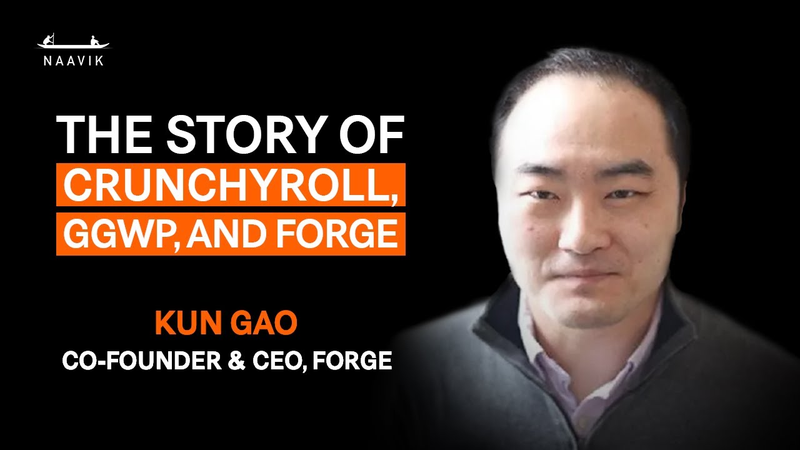
it by far the largest fund focused on gaming and interactive technology Light speed's Team combines deep expertise in gaming with a global multi-stage investment platform and a culture that truly puts Founders first selected Investments include epic games snap and stability AI as well as game designers and producers who led the creation of titles like fortnite Call of Duty League of Legends valerant Starcraft 2 and many more for more information simply go to gaming. lsvp docomo Aaron Bush and today we have a truly exciting guest with a wealth of entrepreneurial wisdom and games industry Insight we can learn from I'm here with gaw who maybe is most well known for previously being the co-founder and CEO of Crunchyroll the leading anime based streaming company now owned by Sony but a few years ago
moved into the games industry where he co-founded and runs not one but now two fascinating startups ggwp an AI powerered game moderation platform and now Forge which helps game teams innovate with loyalty programs so as you can tell has done a lot and so we're going to spend roughly the first half of this episode talking about what he has learned from his previous companies and then in the second half we'll dig into his latest company Forge and explore where all that is headed so with all of that said welcome to the novit gaming podcast thanks for having me it's a pleasure to be here yeah I'm super excited and I think we should begin by setting some context so let's start at the very beginning when did you first know you wanted to be a founder and how did you get started in your entrepreneurial Journey yeah so um I didn't really know at the beginning uh I did my undergrad
at uh Berkeley in computer science and for the last year uh right before I went to grad school I had the uh Good Fortune to have two options for that summer internship one was with VMware pre IPO uh and the other was with this Silicon Valley startup called hot or not and uh if you know Hot or Not back in the day it's basically uh you rate people on a scale 1 to 10 and it was one of the Pioneers in terms of social uh social uh uh Community uh social networking uh virtual items and the like and it just so happened that the founders of hter not were Berkeley eeks alums and also in involved in adaa capu hkn which was the Berkeley eeks Honor Society which I was a part of and so I interviewed there they offer me a internship position for the summer and they said you know what like you always have a chance to go into industry uh maybe just try something a
little different and U I I I took that summer learn how to uh build product Market fit build online community ship product really quickly iterate really quickly basically all the like a crash course in the most valuable things to learn to be uh internet entrepreneur back in in in the day and then um and then I went on in dig grat school and that's when the bug kind of bit me so first year of grad school I you know I was in CMU in computer science and PhD and I just couldn't get that experience out of my head and here I was basically you know diving deep into like academic uh conceptual things and then on the other side was I could be working on products that could reach millions of people and touch touched their lives uh in in a more immediate way and so during grad school I started uh building uh just for fun projects here and there just hacking tooling and uh was fortunate to find a friend uh who was
also from Berkeley and we were kind of in the same predicament uh he went to grad school in uh uiu I I went to grad school in CMU and we were both like okay well we should just hack on things together because this is fun the first thing we built was a a calendar application this was before Google calendars and before the uh applications on on the internet were actually applications and so you had to like refresh your page every time you made a new calendar intri and we used this new technology that just came out called uh Ajax which before that you know people didn't know was what 2.0 but that was the beginning of Web 2.0 and we made one of the first uh calendar applications that you can just create an uh like an event in in in the same way how you would create an on Google Calendar today uh and then the next thing we built was we um built a a friend mapping uh social mapping uh program so we basically created a uh a really simple inter for Google Maps
because they just released their API and uh with Google Maps you you you can't really create a map that easily but we made it so that anyone can claim a map URL and then just share that URL with their friends and then their friends can pile in and add their pins we did it because we were lonely we wanted to see well where all our Berkeley friends went and then uh we shared it with them and then uh for some weird reason like um it just FR really virally uh so we had I don't know like the Harley-Davidson groups of you know Midwest Ohio cre Google Map creating a frapper map on their geoc cities page uh and you know they were sharing it to all their all their friends and then pretty soon we got millions of users were creating maps and adding their pins to this uh and then at that point uh we received uh uh like an interest from VCS as well as from U potential acquirers uh and then we ended up actually selling the company to Maps who was the founder of PayPal and moved out to the Bay Area and that's kind of when I knew that not only you
know was was I um maybe destined to be a an entrepreneur but also that this could actually be a career versus before where it was just like okay we're doing this for fun but you know the career stuff we'll have to figure out no that's a really exciting start uh going from tinkering around to actually being able to sell uh what you were able to to build I can see how that would inspire you to to continue down that that path and uh sadly I've never been a user of of hot or not but that also sounds like a uh like an interesting like like startup experience to kind of get at at that that time um when social media and like that kind of early wave of that coming together was was was starting um so cool thanks for for sharing that that context um I guess next uh crunchy roll was your first big company uh and perhaps the biggest pillar of your
career so far would love to hear the founding story of that how you went from selling that that first company to to Max and you know then turned around and eventually created crunchy roll what happened there yeah so after the acquisition uh we myself and my co-founder we joined Max's company and uh we were working on ways to integrate what we built with social mapping into other uh social and photo experiences that was part of Sly at that time and uh while you know we were doing this in our you know nights and weekends we continue to to Tinker because that was just you know fun and intellectually uh you know stimulating we ended up getting uh essentially the band back together so uh a few of our Berkeley friends uh from our eeks Honor Society uh they were all you know in the Bay Area working at like startups like I don't not and uh we would get together
on weekends and just uh try to think up of cool things that we can just build and test and throw out there in like a few weeks uh so we were we were really just tinkering and and seeing where where where kind of took us so we we we had a lot of different ideas uh some of the things we worked on was like um like a deal search website a domain search website uh all all sorts of different uh uh applications we potentially could just you know launch out there and and pretty quickly try to see if there a traction or not with crunchy roll that one was really interesting because that was really one that we were trying to solve our own our own problem which was every when Thursday we would uh after we get back home from from like work we would want we would want to watch the latest episode of Naruto and Naruto back at then there was no streaming website for for animate so you you couldn't just like go find it you had to uh go to a torrent website you had to download the torrent you have to
wait for the downloads to complete because in the very beginning everyone's trying to Pile in to get the episode so then no one's uploading because no one has the thing everyone's downloading and so it's really slow sometimes you you get a virus you don't even know or the thing gets corrupted and so we're like this is a pretty you know terrible experience and uh at the time one of our um one of our friends uh was uh the founders of YouTube uh they were building and innovating on streaming video online and we thought why why not build a streaming website uh with but but with with anime and it so happened also that be because uh YouTube forced the uh like a 10-minute upload so you couldn't upload anything more than 10 minutes in the very beginning anime epodes were something like 25 minutes so they would get chopped up into three pieces if you upload it to YouTube and so that's like a discovery nightmare because you'll be watching one of three of that episode and then you couldn't find two of three and you're like uh what do I do so for crunch we basically
had to learn and and build a lot of the the tech that was involved with video streaming video delivery at the time because there wasn't really anything can take off the shelf there wasn't a AWS if you will so we were building like the server code the video delivery code uh the Lo logic to replicate video files between hard drives because sometimes the hard drives fail anyway it was it was quite uh a interesting academic challenge but at the end of the day what that got us able to do was solve the problem of delivering video long form video to users and then we uh uploaded like our anime Collections and then we shared it with our friends and then uh pretty soon they they were like sharing with their friends and then pretty soon everyone was uploading their anime Collections and then that over time pretty quickly we were able to grow to um a pretty large audience of users who are uploading their anime collections curating it and then making sure that it
was a good Community experience for every for everyone yeah and for contacts this was 2006 is is that right that's right yeah so this was you know I guess I don't even remember like the exact timing of when Netflix started rolling out their streaming and stuff but this was if anything like right before like any of like the major streaming players were were really getting going too so you really were p nearing what this whole streaming online as a subscription service really is in a lot of ways is that correct I think it was uh maybe a a special time and a special vintage if you will if you look at the uh Successful video platforms that have come out uh YouTube twitch trench roll we were all founded around the same time like 2004 2006 time period so it was at the point where the technology was getting there but also you had had to be a bit of a first mover and and and and
then those were the ones that ended up being successful got it so I imagine that even though you were part of a cohort there was still so much new to figure out right uh there was figuring out the content side which you talked about how it initially started with fan uploads but you had to shift over to a licensing model and working with all of these IP companies which uh I imagine a business like this at the time was also very new for them to to wrap their heads around and figure out how to build a business model where you all uh benefit together you scaled to over a 100 million registered users uh which you know that level of of scale too I'm sure had all sorts of technical implications and uh over your history worked with all sorts of various large stakeholders as well right from the churnin group to you know eventually Sony acquiring the the
um uh most recently and so I'm I'm curious this is a big question and you can you can take this you know any direction you think is most interesting but when you look back like what were some of those largest obstacles you had to overcome at the time whether it was things that you had to innovate from the ground up that didn't exist or like have to figure out how to to work with all these various stakeholders would love to just hear a story or two of what you had to go through and figure out so I I think maybe one of the first ferles we came across was um when as we're growing pretty quickly we realized that we needed Venture venture capital and and and um because video serving was quite extensive back in the day and because there were no VI premium video uh Services there were no video ads you couldn't just make money on video uh so we were asking our audience for donations we're like hey give us a donation and then we'll put a star next
to your name because uh you that's the only way we can thank you but uh now everyone in the community can see that uh whoever donated has a star so they're supporting the community um and we were a to kind of get by for a bit but as we continue to scale we just needed venture capital and uh because it's such a new category when we went to talk to VCS even though we had millions of users they didn't really understand anime as a category I don't know if really anyone had the idea obviously that anime would be as big it is today and so it it was not very straightforward to raise uh Venture Venture Capital so uh we made the rounds uh and I think we were fortunate in that uh one of the VCS that we talked to vrock their partner there at the time they s enough actually had a media background which was quite uh unique for Silicon Valley because most Silicon Valley VCS do not have a like a traditional media background and so he saw something interesting in us he invested and when he invested we basically we knew what we needed to do
which was okay we know we can get the users we know we can deliver on the technology side even though you know it was quite a lot of heavy lifting we were engineers we we we can figure it out we we didn't know how to do how to get licenses uh so we were like okay what do we do and um out of the the the founding team I was maybe um uh fortunate or unfortunate to to draw the lucky or unlucky straw to to go to Japan and and figure out licenses and I didn't know where to start because you know like we we know anime came from Japan but where where in Japan do it come from so we just started uh knocking on doors uh we talked to our friends and asked hey do any of you guys work or know anyone who work in in Japan and kind of just kept going and until we found uh folks who lived in Japan who worked in the media industry in Japan but they they weren't anime people and so we met with them and asked them hey do you know anyone in the anime industry and so we kept doing that until we were able to uh build the network to finally start talking to the
actual licensers of anime and then the challenge became while they were licensed of anime they didn't have the rights to license streaming anime because the concept of a streaming right did not exist back then it wasn't a thing where you you can go to them and say give me the streaming device and they say okay because no one had the streaming device because it wasn't invented uh so they weren't just sit it wasn't like they were sitting on it and so we had to work with them to say well here's how we Define a streaming R it's from you know point A to point B from our servers to our branded uh front end uh like what constitutes streaming uh all all what's so Geo uh geob blocking all those kind of things we have to work through and so we also Pioneer the uh licensing of streaming rights when it comes to when it comes to anime and for aside from the business side I think the biggest cultural hurdle for us was really um making sure that we uh made the proper investment to build those relationship ship long term because if
you if you know business in Japan it's not very transactional you need to be persistent and to basically show that you're going to be part of that industry for a long time because they want Partners were there for a long time and our biggest hurdle in that was when we first showed up they didn't like us they they hated us they were like hey aren't you guys the ones who have that site that people are streaming our our shows on and we're like yeah but uh but then we're like well we want to work with you so like we're here if if he tell us to remove all this stuff we'll remove it but that just means all those bands are going to go to like some other place and they're probably not going to want to work with you uh or they might not you know be willing or whatever but you know we're here and we want to work with you to make this into a real business uh for for you know for for the anime industry and you know the first few meetings were pretty rough like they would uh you know they would not want to meet with us they would like um you know passive aggressively look at us in the meeting
or something like that uh but over time they were like okay these guys aren't going away they keep showing up and so I guess it's either like work with them or they'll never you know they'll never go away and so uh we basically were able to convince them that you know we're going to be good partner long-term partners and that we really cared about uh anime and then uh we wanted to help build build this longterm and so that's how we got our first set of licenses this was in the uh December 200 8 January 2009 and then from there we had this big uh Milestone moment where uh our licensers told us hey like you have a ugc platform today tomorrow it needs to be a premium platform and we don't want our content on a place where there's also ugc content so what are you do about it and so we're like well that means we just have to remove everything and only upload the stuff that we have ises to and so immediately our collection anime went from like a thousand to like 15 uh and then uh we had to basically uh
re convince our community and tell them why we're doing this because this is the path to making anime and and the medium that they love into a real business and uh they were extremely supportive it was fortunate for us that Beyond just the streaming we built a ton of community features things like forums and comments and things like that that really got uh built a very core Community that's very sticky that was there not just to stream the content but also felt like they were participating in this movement of uh being able to bring anime to the rest of the world and so I think those are some of the more notable uh milestones in the ear in the early years no that's a really fascinating story um Ian we could dedicate this entire episode to to crunchy roll too because there's there's so much to dig into here maybe a couple more quick questions and we can uh move on to other games industry things but uh one thing I'm curious about that I've just picked up from our conversation is is that Community like really from from
day one was extremely core to what you built at crunchy roll and you know however you managed it you know it gave you the Goodwill with them so it completely you know changed the business model and and the way that the company operates with with their support any you know key Insight or lesson learn or tactic that you use to you know so successfully Kickstart a community have it be so supportive and you know ultimately stick with you for a long period of time it was a very organic process and it took a long time in terms of trust building I think one of the first things we did was we uh as as soon as we launched the basic video experience we started building a forum and with the Forum we we just put ourselves out there uh we introduced ourselves uh we said hey we're um Shinji uh we're we're the folks who build the site um we we basically want to you know how see you know anime become more popular uh you
we're available any time like let's talk um and then in in anime at least everyone kind of creates like a like a pseudonym um so we just had a lot of uh fans who created pseudonyms for themselves started talking with us started talking with each other and then uh in the beginning when we created a forum one of the really important things was really just to start small right when you when you launch a forum and the community is not that big you don't want to have like a huge Forum with like 50 different threads because every every one just gets lost like which thread do you want to go to you want to make sure that there always feels like there's some activity going on and so we started with like one thread which is like introduce yourself and then we add in more and then every week when we had a major uh prodct update or major change to the to the site we we we talked about it we said hey here's what we changed here's why uh and then tell us what you think and so uh and also we asked a lot of feedback from the community and said hey if you want to see what what features you like or tast like that let us let us know and so over time this was
over like three years we built a lot of uh trust and with the community and uh to the point where at the at at the at the moment when we made the cut over from ugc into complely premium we uh we had like two factions almost one faction was like I'm just here for the streaming like they're removing everything these guys suck I'm out of here and then the other faction was like you have to believe in these guys like you know they like they're they're trying to do something really good for the industry I believe in it I think this a mission worthwhile you don't just leave come back it's going to get keep it getting better from this point on and then they were like basically trying to convince each other or you know other people who are in the middle that okay like this is kind of the thing that you want to you want to you want to keep coming back to because it's only going to get better and so I think the power of community really is something that you have to make a lot of investment and start small and grow over a long period of time uh but but if you do then it's like the most powerful thing in the world I love
it one more question about crunchy roll uh the the business went through a few changes in ownership uh from the chin group owning a controlling stake to Otter Media to that falling under Warner Bros um and then ultimately crunch roll being sold to to Sony um you know I imagine that was you know an interesting experience going uh you know through all of that deal making and also just seeing the way that all of these um these these companies that are you know really well known and respected um in the entertainment World operate um any interesting insights or lessons learned from all of that deal making or just being connected to to all of these well-known businesses sure so uh so you know your media landscape well uh with the with the chernin group that's actually founded by Peter chernin he was the president of uh Fox uh back in the day
and he started turn a group as a new type of media uh company and at that time we were we were looking to uh raise our next round after our our initial Venture round and those primarily for for growth and uh we basically talked to all the media players in the space and we thought okay we really wanted a partner who uh was really really smart um especially about the media side because we were really coming at it from just a product and maybe like a licensing perspective uh we weren't really that worsed in more the traditional media side of the space uh and so we really wanted a strategic partner to uh to you know to work with to grow the business and so that's what when Trin came in and uh after the investment about a year or so later uh the Trin group created a new entity called aotter media and so that was an entity still uh controlled by by the TR group and except they brought on a new
investor one key one very key investor in AT&T and so AT&T was actually a joint partner in OT media so our data day didn't really change other than AT&T uh started helping out with more broad distribution like how do we get cral into Direct TV how do we get cral into uh all of our retail uh installations and things like that I think the the Warner media part was also part of that Contin Continuum I I would say which is as we were looking to continue to grow uh what we realized was that with most media properties especially ones that were looking at like a 360 view of of media it's not just about streaming right if you look at Disney it's the streaming is just one part of it but there's uh theatrical release there's home video or you know DVDs uh there's uh merchandising there's the theme parks and yeah we we we wanted a partner that that would help us across the board with all of that and
with Warner uh it was uh it made a lot of sense because they were uh you know they had Cartoon Network they had DC Comics and and IP and they were already doing crossover between DC and Anime at the time they had home video distribution obviously theatrical distribution and so it worked on a lot of different levels and it also so happened that um Warner and AT&T were going through an acquisition of of Their Own and so that's kind of how all of it came came together um and I think um unfortunately or maybe fortunately uh AT&T I think ended their Venture into media uh a few years later and then they ended up selling and unwinding all of their media assets including Warner and then at that time and then crunch roll which was uh sold to Sony uh but Sony is amazing home for quen because they're very invested long-term in anime and and what I would say is that if you're doing
these kinds of deals or looking for strategic investors or uh potential acquirers make sure that there's real long-term alignment with a company that uh you're you're looking to join first and foremost awesome um really fascinating history there and and again big congrats on um your success with with crunchy roll I wish we had more time to to dig into even more more details there but we got to talk about the games industry um and so you know from crunchy rooll you went on to co-found ggwp uh with Dennis George and Lang and and George has been on our podcast a couple of times and it's always great to chat with him too but for those who don't know maybe you can just quickly tell us what ggwp is and how you just generally went from crunchy rooll to entering the games industry cwp is stands for good game well played and the reason we came up with the name was you know back in the day we you know were playing say Starcraft at the end of the match you
would say GG or ggwp right it's kind of like a like a like a good mannered uh very polite thing to say and the reason we we we had the idea for the company was we uh after after I uh left crun this was in like 2019 uh uh actually I had I wanted to travel the world in 20120 didn't happen because of Co everyone got locked down at home in in March uh and then uh with nothing to do just went online reconnected with friends and we play video games and as you know my myself and our my my co-founders were playing we realized that gaming was you know just as toxic as we remember when we were in college maybe even more so and so we said we should you know figure out why someone isn't doing anything about this so we we talked to our friends in the games industry and learned a lot through that process and and and H conclusion that there was was a solution that wasn't really there which was how do you
Leverage The Power of AI to help make uh make gaining a better and safer uh safer player place for players and at that uh at that point there wasn't really any AI approach to this problem it was all manual if you saw something that's right 2020 if you saw something you report it and then maybe someone customer support might see your your your complaint and then they have to dig through chat logs and see what's going on and then uh this is would be like I don't know a week later and then the person who maybe uh was shouting the obscenity they probably already forgot about the incident uh and so like it's just really really comp complicated to to have humans do it and this is happening millions and millions of times every single day across you know some of the biggest games and uh at that point we were like okay well why don't we we build something in this space where we use AI to create fundamentally a different approach that we think will solve or help solve um solve this problem for the for the industry and so that's kind of how you
know we came about we came about again maybe solving a bit of our own problem which is to to not get not get you know harassed ourselves in in games no I think a lot of people would agree with that problem um so I want to you know zoom out a little bit here uh and just kind of talk about you as an entrepreneur since you you know by this point you had experienced you know founding and and selling a couple businesses you had worked in a couple different Industries how would you how have you evolved as an entrepreneur you know up to that point in time and you know how are you able to kind of immediately Take Lessons Learned From from crunchy roll in your previous work to uh you know go ahead and help make ggwp um a you know more of a success out of the gate I think the lessons here are maybe there there's like ones that are on the on the operations side so with crunch that was my first big company and
we when I left we we had like a few hundred folks uh who were full-time and uh just growing from like a couple of people to hundreds of people like we took a it took a lot a lot of learning uh to basically learn okay how do you grow and manage L lar large teams and so those are all things on the operation side that we you know obviously brought over to G gwp and to forge uh and a lot of that is is just a lot of best practice that you really don't know as a as maybe like a like a Founder without some of that experience uh but what what I would say is that a lot of those things are um best done in advance so for example as you're growing really quickly you don't you want to put in place framework or uh proceed process or uh ways to kind of you know grow scale your business in a way that you know you don't want to play catchup like if you
have those processes in place your life becomes a lot easier uh if you didn't it just becomes a lot harder and it's more difficult to fix so a lot of those would be things around like HR Finance legal operations and things like that and then the other part of it is really just like how how do you operate as as a as an entrepreneur right so I think that really comes down to your in individual uh preference or your individual Instinct if you will my Approach has always been from my background as a as an engineer really and so it's really about problem solving like how do we solve problems uh so for gwp as well as for Forge we're really trying to figure out okay what is this problem that uh someone has and how do we Sol solve it and then uh if it's a big enough problem and it's a good enough solution we think that uh there's going to be a meaningful meaningful like business that comes that comes out of it but a lot of that is just you know iterating quickly learning
taking uh learning from the data uh getting feedback uh and and then just continuing to to to build and to and to innovate got it and uh you know obviously you you weren't the only serial entrepreneur you know as the founder too and so I'm sure the the dam the Dynamics of working with other great people who have kind of figured out their way of operating and you know putting heads together I'm sure helped you guys uh accelerate there too but um has there been anything surprising about building a company in the games industry versus elsewhere in entertainment or compared to the other industries that you've worked on in the past or even just about uh you know ggwp specifically and Forge to you know being more B Toc versus or more B2B versus B Toc right so with uh with quencher roll even though it looks like a b Toc business which it is we are still acting as uh a bit of a middleman almost right
because we have to go convince the licensers why we should uh get their license and why we should be the ones to distribute it and uh it's kind of reversed from from maybe maybe us but in in Japan uh if you're the licenser you're the one that uh you're you're you're the seller but you're the one that has more control if you if you will and so it's actually on the buyer to convince the seller why they should sell to the to the buyer uh so even though we're the ones trowing up with money it's not actually so much about exactly how much money it's also about okay what are you going to do for my property how are you going to distribute it how you going to make sure it gets uh properly taken care of and what are your plans for merchandising and things like that and so uh we in a sense almost did kind of like have a b to B type of approach to our licensers which is like how do we
make sure that they feel uh that they're taken care of and they their uh uh voices heard and and part of that part of that is the economics right but another part of it is also how what are we doing to invest to make uh make their their their properties more more successful long longer term and then once we have the idols then we have to figure out what is the B Toc aspect of it right and that's really more like okay now that we have these titles what is the uh programming strategy like how do we optimize the uh window for a premium versus ads versus for you know free what platforms do we put it on uh what you know uh community experiences do we build uh you know how much we invest in each country versus Mobile versus consoles things things like that and so I would say we we we already had some of that experience uh gaming definitely takes takes it to a cold new level because uh with anime there's Maybe like 20 30 licensers you talk to in games there's like thousands of game
studios so games is extremely um much more longtail uh and you don't ever see anime hits from like a like a onep person Studio because that just doesn't exist you can't make anime with one person but in games you could literally be one person and you can make like a break huge Breakout game that every everyone loves and so uh there's uh a lot of really interesting Dynamic where there's just a lot more sering that comes from the games in the in the street got it and before we talk about Forge um any fun updates or uh anything else you want to add to the conversation about ggwp right now like any uh you know Milestones you've hit recently or new features people can look forward to uh wherever you want to take this just anything our audience might find new and interesting about ggwp we we we definitely have some interesting updates uh I I should probably defer this to
George and Dennis uh for them to uh to to uh to to tell folks about but definitely keep keep your ears uh ears open we're working on some really interesting things okay well let's go ahead and talk about Forge uh which is your your newest company um and I guess to start when when did you start it and what's the big idea here so as we were building gwp we started talking to more and more game studios game developers and game Publishers obviously and uh uh through that process we really learned a lot uh not only about what their challenges are on the moderation toxicity side but also what are their broader challenges overall and uh one of the things that we kept consistently hearing from uh game Partners was that their biggest challenge was how to how to find how to find Gamers how to get Gamers to play to play their games and essenti their challenge is this discovery and
the more we dug into it the more we realize that uh Discovery is essentially uh broken broken for games so you have uh know thousands of new games that launch every year but like last year maybe less than 10% of actual gameplay was for the new games so yeah uh all every every new game La launching is competing with every game not just every new game launching but every game that's the existence for like I don't know the last decade or or or maybe even two decades um and so how do you how do you stand out in in that in that uh really crowded space now the other challenge there is games are uh only sitting behind like a few very select wall Gardens right you have your steams your console platforms your iOS Androids um and that's basically it so how do you how do you stand out in those platforms uh when you have very little influence over for their their algorithm their recommendations even if a player uh
installs and downloads your game and plays your game you might still not be able to communicate with that player that's actively playing in your game you you have no way of communicating with them outside of your game and so uh games are really like I think stuck in a a bit of a hard spot now uh the interesting thing here though and I'll kind of point to analogy is that uh maybe like 10 15 years ago almost every major brand uh didn't have direct to Consumer distribution they were all sitting behind Amazon they were all sitting behind department stores uh but over you know a few short years they basically realized that in order to really Thrive they need their own directed consumer uh distribution they need to be able to talk to their uh customers directly they need to be able to do business with their customers direct directly they need to be able to create uh ways to reward their most loyal uh customers if you will and so today I can't think of really any brand that doesn't have a direct to Consumer
e-commerce destination uh that directly engages with their with their customers it doesn't mean that they're not inside of Amazon they're not inside of like department stores it means that they're doing that in addition uh but now with at least their direct consumer destination they have the ability to much better understand who are their users be able to communicate with them be able to um reward them for their engagement reward them for their purchase reward them for their loyalty etc etc and so we think that that moment is is is going to come for for games as well and in the same way that uh Brands didn't need to build their own e-commerce store from scratch we don't think games need to build their own directed consumer platforms from scratch and so we're at at Forge we're building the underlying uh Plumbing the underlying data uh the underlying um uh CMS and all the functionality that basically allows any game to create
their own direct to player destination uh so that they can create uh gamification they can better understand their players they can reward incentivize their players not just inside of their game but in all the different touch points that that player is engaging with the game outside of the game I like it I mean I think the direction of that vision is spot on just because you see elsewhere in the industry there is a desire to go act and have more direct relationships with consumers I mean you see it increasingly in Discord channels right where many communities are formed there's this enormous wave of you know direct to Consumer uh like payment you know related platforms which you know is just as much for economic reasons as as anything too but uh the idea of building a a fabric that uh kind of connects you know much of these uh direct to player experiences and kind of weaves them into an integrated experience in in one place
uh that's a big idea that that resonates with me uh so maybe we can dig even a little bit deeper here I I really like the idea of the like the Loyalty aspect and helping these these Gamers not just have a place to build relationships but to reward loyalty and provide that incentive for the players to be there and be part of that uh you know that experience could you just share a little bit more about what you envision or or what you've built with these loyalty programs how that works maybe an example here would be really interesting so a lot of games will have uh various touch points across different social gaming uh and Community platforms and uh on each of these platforms maybe they'll have a a Twitter account they'll have a Discord Community they'll have a YouTube page for their game trailers they'll have a uh steam page they'll have uh maybe like a Xbox Pres uh they'll have a web shop but uh there's nothing that ties any of
these things together and so the game doesn't really know uh the same player is on one platform and and what that player is doing on a different platform and it's there's really no way for them to connect the dots and so uh each platform there isn't really that concept of like loyal loyalty to the at least to the game and so how how does the game create that directed consumer experience well uh before Forge they they kind of have to build it right they have to figure out okay how do we uh integrate with social accounts how do we integrate with steam how do we integrate with Discord how do we basically figure out how to get a player to connect all these accounts together and uh how to all the data Plumbing work okay now how do we actually incentivize them uh what is the mechanism for incentivization and so we've made all of that super simple and we've made that essentially self- serve and uh you can do it with no no coding uh so as as an example uh a game can uh
create uh essentially and launch their uh we call that a forge direct page which is essentially a customizable page that is sitting on the game's domain page uh domain name uh that the game can can program um and by programming I mean create quests so for example a game can create a quest that says follow us on socials you get uh 10 points which is customizable you can even customize it it do have be points it could be like cookies or or or whatever um and then uh maybe 20 points if you uh join our Discord Community maybe uh 30 points if you watch our your game trailer maybe uh 50 points if you come back here and check in every day uh maybe 100 points if you make a purchase and now we're able to then uh not only reward players that are uh extremely loyal and active but also we're able to help the game Connect the Dots so that they can see that player across all the different person that's engaging with with w w with with that
game and then with those points the game can then decide okay how do you want to reward those players those points can then be spent uh inside uh like a web shock as a virtual currency to redeem for in-game items uh those points can be um used to maybe join a raffle and and maybe the winner of the raffle gets like a uh autograph t-shirt uh so those are there's a lot of different ways that the points can be spent uh as well and we think that this is really the future of what uh what you know game engagement is going to be about and some of these things actually already exist inside the game a lot of games have daily check-ins they have uh like um gamification for uh inside of their game but games to don't really have this kind of experience outside of their game and in order to go direct to Consumer when the player is not playing the game uh we we think that Games should have this outside of their game experience to continue to engage to player and then to get them to keep uh keep coming back got it uh super
interesting uh could you maybe just share an example or two of like the type of teams that have so far been um you know building on Forge and uh maybe just to you know ground it and uh you you've said a lot about how it works but you know kind of giving an example of you know like what exactly have some of these teams done that that's worked well for them would be cool to hear about yeah uh we've had games that uh that were're able to add through our platform uh like uh 200,000 players to their mobile game we've had games that were able to add over 100,000 Discord uh users to their Community uh and uh games that created uh fairly complex social engagement uh across social platforms that generated like 10 million plus uh Impressions uh or social engagements we had games that were able to uh basically reward players and generate thousands of steam wish uh wish lists um and a lot of these activities are
really compound right so for example if you have a a player who uh maybe gets like five points or 10 points for liking a social post now that player's friend sees their social post and they're like oh what's this game because now it's actually showing up in their friends feed then that really like creates a virality effect around social discovery uh if you create a maybe like a daily uh gameplay or wish listing quest uh and you have a player uh play uh 30 minutes a day plus maybe like wish list the game and you get I don't know hunger points now all their friends on Steam are seeing that their friend is playing the game and wondering oh I should check out that game because my friend is playing and so these uh social effects uh can start compounding and and really help Drive Discovery across all the different platforms that the game uh is is participating in yeah that's awesome and and so it sounds like basically any type of game is going to be a good fit for Forge as long as they're trying to to build a
community of A Sort go direct with players and build an ongoing relationship or are you uh you know focused more like you think mobile games are better or or live service games are better or how do you think about the kind of the type of games that are best fit for what you're building right now I mean we we we've built a platform that can be customized to handle many different different use cases and it really comes down to the type of game each type type of game has uh maybe like a more specific immediate need as well as the broader need of contining to grow their off platform presences uh in the case of mobile games for example uh web shops incredibly invoke uh some of the challenges of the web shop is if you launch a web shop it doesn't mean the player would just immediately show up right like you need to figure out how do you actually drive the player to your web shop uh but you don't want to do it right in the middle of their checkout on iOS because then that breaks the conversion it's actually a worse outcome if you know you just say hey like go go somewhere else as you're checking out
and so with the for lity platform you can start by building essentially uh like a breadcrumbs to get the player to engage with your direct player presence uh via check-ins via socials and then lo and behold there's a webshop component as well and we've uh uh started integrating with some of the popular webshop platforms uh so that you can basically take in all your existing SKS and plug it right in and it'll all work seem ly and the player will get rewarded with additional bonus uh uh like loyalty points for checkout in the uh games direct to direct to Consumer uh touch Point uh with steam uh obviously getting players to be active in Steam uh wish listing writing reviews uh those are are super helpful uh especially as games are thinking about like a like a big launch uh on on steam or participating in uh like I say on on next next best those we you know have some experience around as well um and then finally even the big
games I think uh could benefit from this kind of platform now uh we think that uh this helps the more the Indie Games IND Publishers a lot more because to build all all this functionality you kind of need like a team of I know 10 20 Engineers fulltime just to focus on building all these Integrations which large game companies can support now do they actually go about to it uh it's it's unclear but um they at least have the capability of doing so uh but what we're saying is we want to provide this functionality to basically any game that wants to take advantage uh advantage of it cool and I I'll just pause here to to to ask if anyone is interested in connecting with you guys at Forge or wants to learn more where should they go yeah they can check out our socials or hit us up on you know LinkedIn we're you know pretty
accessible Easy Sounds good um so you know beyond the the details of of Forge itself as a platform and what you're building I I thought it was was awesome how you are building this business with the same co-founders that you work with at ggwp and I sort of even get the sense you know after talking you today about the broader history that you know there's a theme of bringing the band you know back together and and you know working again with people that you already have had success with in in the past which makes a ton of sense but um what's interesting about this case and we've talked about this um a bit uh separately is that you guys are not doing this necessarily backto back you're you're running these two companies at the same time and so you know just as an entrepreneur teaching other Founders here um would love for you to just kind of share like how you've gone about that as a team running to companies at once uh both uh you know from a team Dynamic and then anything
else operationally I I think our audience would be very curious to hear about from an operational perspective what I would say is that even though there may be like overlap in terms of technology or uh certain roles and responsibilities uh it's always my recommendation like best practice to to make sure you segment that as as much as possible possible uh so for example outside of uh the the the founders um we have like very little or almost no no overlap when it comes to like product engineering um and part of it is just a startup needs to run as fast as possible at at their goal and uh you you don't want to ever figure out okay well how am I allocating resources it's always you know this is the team they're going to go for it like let's go for it so even though we're uh running both businesses uh the two companies are completely separate or uh companies or separate
organizations and with the the founders ourselves uh it's really like more like a 1 plus one equals 3 like we uh already have a ton of operational experience and have done this multiple times and so uh we're uh able to be you know disciplined about it in terms of the approach and to make sure that we uh bring uh bring the best of all three of us uh to each of our each our companies uh and so that means sometimes we we we surge or or help with one and sometimes with with the other and a lot of times that's like a like a timing thing uh but at the end of the day uh you also want to make sure that there's like one you know one person responsible or like one ringal neck if you will um uh when it comes to uh accountability gotcha and um similarly to to what I asked about how any Lessons Learned From from crunchy roll helps you with ggwp are there any like obvious
lessons you've learned um as an entrepreneur from ggwp operating in the games industry that are helping you find more success getting off the ground with Forge with a gwp I think a part of my learning has been the games in industry is just incredibly diverse uh it's just so many different developers from all sorts of uh backgrounds uh they're all so passionate about building a game and uh uh we we just want to you know with both companies figure out what is their pain points and really try to help them solve those problems uh and and we believe that if we're able to really solve the pro their problems um then that's where we'll together find success and uh our our belief is Discovery and and helping games find and connect directly with players is uh probably the biggest problem for uh for for games that we're we're working with got it uh um super interesting we're we're coming up on time so we can go ahead and start wrapping up just have
a couple quick wrapup questions for you um obviously today we've talked a lot about your experience your uh your your companies that you're a part of right now but uh I'm curious what else in the games industry are you excited about for 2025 you know whether just you're personally you know excited for for a game or a trend or companies you're watching where's your head at well as a play as a as a player I'm really looking forward to civ7 I've been waiting on that one for for quite a long time uh I still remember playing I don't know like countless hours know sometimes entire nights without without you know waking basically playing you know one more turn and they're realizing oh it's like 7 AM where where did the time go and and that was when you know like you had like a battle cruiser and then you get destroyed by like a whole stack of Spearman or something sometimes because the RNG didn't didn't work out but we looking forward to S7 I think um
definitely really interested to see what happens with GTA uh especially around how they're thinking about pricing if you think about uh pricing for games it hasn't really changed significantly in a long time uh and uh accounting for inflation um I think uh a lot of games want to see if they're going to push the pricing on the premium on the on the premium side uh and then overall I think personally just continuing to be really excited about where the of mobile gaming is headed uh obviously with you know the switch to but also with just the slew of new uh mobile gaming Hardware that's come out uh all the uh new AMD uh uh integrated GPU hardware and and that's really going to unlock I think uh gaming on on on mobile to to kind of prime time sweet all all great answers I'm I'm with you on I think all of that um very excited for many things for for this up coming year um one final question for you um uh we talk a lot about and we see
within our own business the the rising Global cross-section of the games industry and the anime industry um which uh you know has always been a thing in in some parts of the world but seems becoming much more of a global phenomenon today as someone who has built companies on both sides of the the Spectrum there I'm curious if you have any um big picture thoughts or ideas about what we're seeing here that you know helps shine a light on where this might be going uh I I think the success of anime as um is really anime is a is a medium for for for expression and uh the medium is incredibly Rich when it comes to it development uh when it comes to storytelling when it comes to character building when it comes to like World World building and the thing that anime does really well is it travels extremely well globally uh it's probably one of the only things that travels extremely
well as a medium uh uh globally from from Asia um and I think uh we we'll definitely continue to see games continue to lean into that uh meaning that your game may be easier to uh travel more broadly if the art style is more anime like because that's what the global audience has become more used to um and so uh I think that's going to continue and I also think that we'll see more anime becoming adop adapted into into games much more quickly uh and so I definitely see there's a lot more crossover be between the two sweet uh well let's go ahead and wrap up there it's been a real pleasure to to have you on the podcast and to have the opportunity to to get to know you a bit better today and so thank you for coming on and to all of our listeners and all of our viewers also thank you so so much for for tuning in and we'll catch you in the next
episode if you enjoyed today's episode whether on YouTube or your favorite podcast app make sure to like subscribe comment or give a fstar review and if you want to reach out or provide feedback shoot us a note at podcast nov. or find us on Twitter and Linkedin plus if you want to learn more about what novic has to offer make sure to check out our website www.nic.edu for the number one games industry newsletter novic digest or contact us to learn about our wide- ranging Consulting and advisory Services again that is www.nic.edu [Music]
Auto-generated captions from YouTube — names and numbers may be misheard.




















Comments