Game Development reports and market data
Documents

Tencent is a Military Company? | Roundtable News | 359
The global gaming industry is currently navigating a period of profound structural contraction, defined by widespread layoffs, studio closures, and a notable lack of innovation within the traditional AAA production model.
- The global gaming industry has undergone a significant contraction over the past two years, resulting in approximately 20,000 job losses due to the unsustainable costs of the traditional AAA production model.
- Major publishers are increasingly relying on risk-averse strategies, such as remaking established intellectual properties and integrating AI, to offset financial pressures and operational inefficiencies.
- Creative innovation is shifting away from large-scale corporate projects toward the indie sector, which utilizes more efficient development cycles to foster growth.
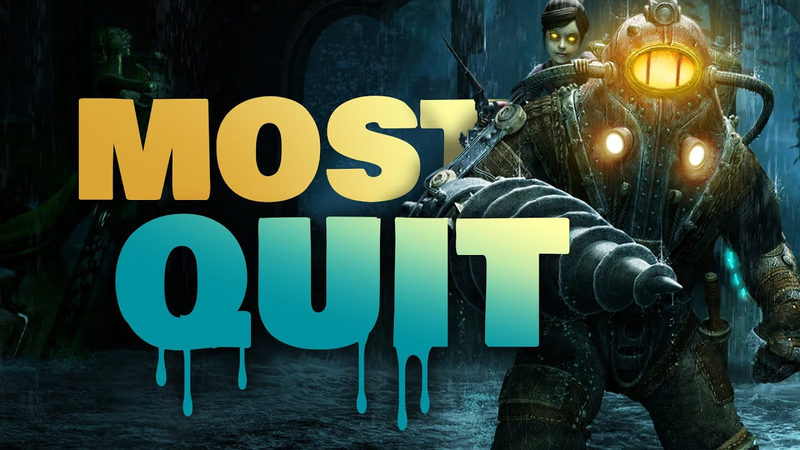
Why Everybody Wants To Make A Game (But Nobody Does)
Game development is characterized as one of the most challenging and high-risk creative endeavors due to its nature as a synthesis of multiple art forms.
- Game development is a high-risk endeavor that requires the simultaneous coordination of narrative, character design, animation, and technical systems, leading to exceptionally high iteration costs.
- The industry functions as a high-stakes gamble where developers must be prepared for the total loss of invested time and capital.
- Budget constraints often force developers to make irreversible creative decisions early in production, limiting the ability to perform full-scale revisions if initial concepts fail.
Screen Ireland Strategic Plan and Economic Impact Report Review
The Screen Ireland Strategic Plan and Economic Impact Report Review examines the Alma Economics research commissioned by Screen Ireland, which was conducted in 2024 and covers 2021 to 2023.
- The audiovisual sector supports 10,450 FTE jobs directly and 15,899 in total, per the Alma Economics study covering 2021 to 2023, with film, TV and animation as the main focus and digital games covered less extensively.
- The wider digital production segment (animation, VFX, post-production, digital games and VR/AR) records 3,026 FTE jobs, €140.9 million in labour compensation and €129.4 million in direct gross value added.
- Publishing and QA is a particularly significant strand, with twelve active companies including Electronic Arts and Activision-Blizzard-King supporting 1,604 FTE jobs, while game development itself accounts for 1,147 FTE jobs, mostly at firms with fewer than five employees.
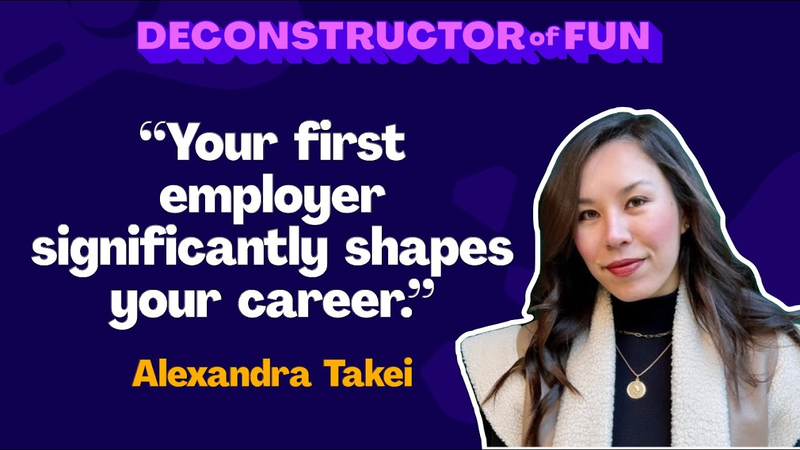
Breaking Barriers: The Journey of a Next-Gen Game Developer Alexandra Takei
Success in the modern gaming industry requires a synthesis of technical operational knowledge, proactive networking, and a willingness to embrace non-traditional career trajectories.
- Success in the modern gaming industry requires bridging the communication gap between creative teams and business stakeholders through shared analytical frameworks and mutual empathy.
- Career advancement is best achieved by prioritizing hands-on experience and 'effective labor hours' over conventional tenure, as demonstrated by Alexandra Takei’s diverse background in film, venture capital, and startup operations.
- Operational excellence in gaming necessitates a deep understanding of financial forensics and project lifecycles to manage the constraints that dictate project sustainability.

Web3 Gaming: What Will 2025 Bring?
The web3 gaming industry enters 2025 transitioning from a period of speculative volatility toward a focus on sustainable development and product quality.
- The web3 gaming funding landscape remains cautious, with 2024 seeing a 17% increase in investment rounds compared to 2023, though total capital remains significantly lower than the 2021-2022 peaks and is characterized by smaller, more conservative bets.
- AAA studios are currently prioritizing risk mitigation by focusing on established IP and smaller, internal studio experiments rather than large-scale web3 integration, waiting for a proven, scalable business model to emerge from smaller developers.
- Off the Grid has emerged as a critical industry benchmark for quality in web3 gaming, though its long-term success remains tied to whether its optional, tokenized economy features actually improve the core gameplay experience.
State of the Game Industry 2025
The 2025 GDC State of the Game Industry survey, conducted with Omdia among more than 3,000 developers (±2% margin of error), portrays a workforce under growing strain even as it slowly diversifies.
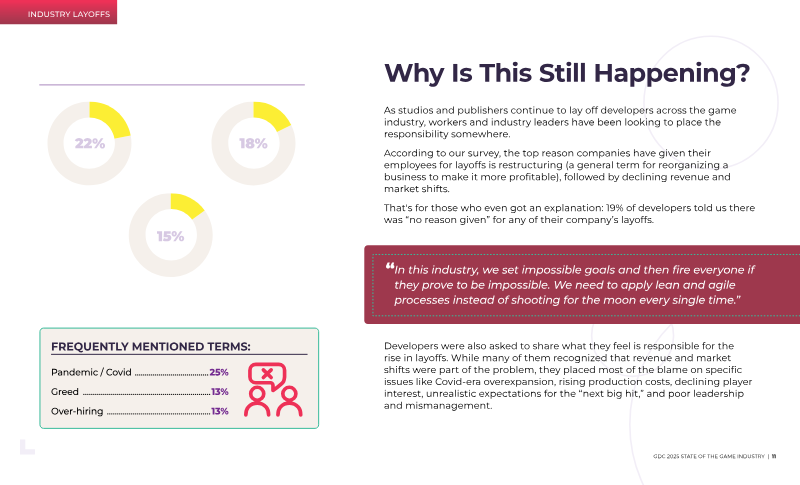
- The industry is experiencing significant instability, with 41% of developers affected by layoffs or studio closures and a shift toward smaller teams, as AAA representation drops to 15% while solo developers rise to 21%.
- Financial access is tightening, forcing 56% of all developers and 82% of independent creators to rely on self-funding due to a scarcity of venture capital and publishing deals.
- Generative AI adoption is cooling; while 52% of developers use the technology, 51% cite ethical concerns regarding IP theft and job displacement, leading 27% of companies to abandon the tools.

Why His Game Has Taken 10 Years To Make (Ken Levine) — Full Time Game Dev Podcast Ep. 034
The decade-long development of the title Judas represents a fundamental shift in creative methodology, moving away from traditional production cycles toward a research-heavy, iterative process.
- Ken Levine’s upcoming game, Judas, has been in development for 10 years, reflecting the extreme time and resource investment required for modern high-end game production.
- The 'Narrative Lego' system is a modular design approach that allows developers to create highly personalized, non-linear player experiences by rearranging story elements rather than relying on a strictly linear script.
- Effective game development requires a willingness to kill features that do not serve the core identity of the project, even if the developer initially believes they are essential.



The Game Development Renaissance
Metaplay's Game Development Renaissance report argues that the industry is emerging from its post-IDFA, post-pandemic slump and entering a period of sustainable, efficiency-led growth.
- The global game development market is projected to reach $190 billion by 2025, with 77% of developers anticipating continued industry growth and reduced workforce instability.
- Studios are shifting toward leaner production models by outsourcing non-core technical infrastructure, with only 6% of developers planning to rely on internal builds by 2025.
- Nearly 50% of developers plan to integrate specialized third-party tools to manage complex requirements like cross-platform synchronization and unified player inventories.

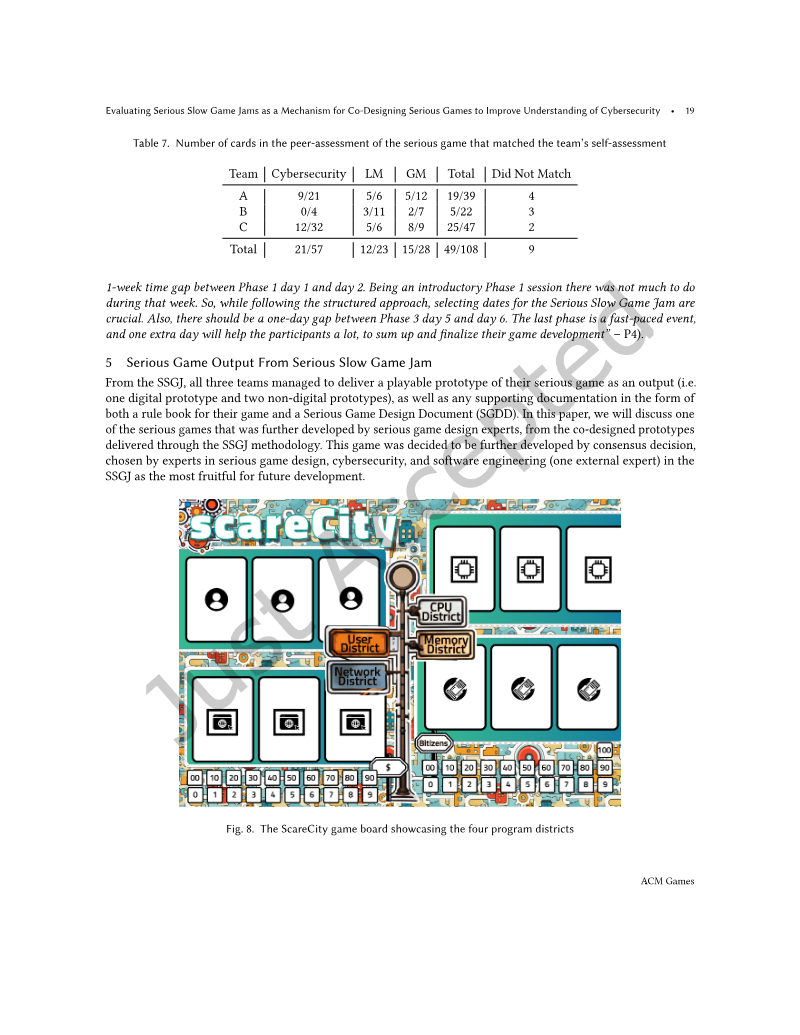

Evaluating Serious Slow Game Jams as a Mechanism for Co-Designing Serious Games to Improve Understanding of Cybersecurity
This paper presents a first evaluation of the Serious Slow Game Jam (SSGJ) methodology, a multi-week format for co-designing serious games to improve understanding of cybersecurity.
- Participant confidence in cybersecurity knowledge for code practices rose from 12.5% to 62.5% after the SSGJ.
- Confidence in knowledge of game design improved from 12.5% to 75%, a change the authors report as statistically significant.
- Three quarters of participants self-reported learning about the different types of vulnerabilities, attacks, and defenses.
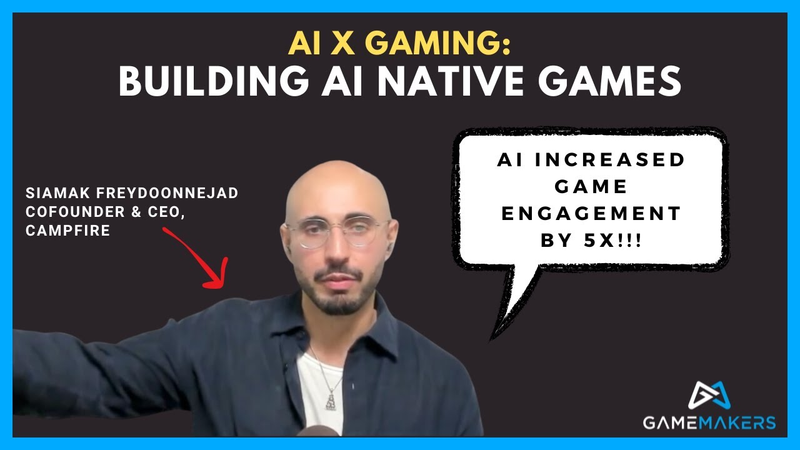
How AI Increased Game Engagement By 500%
The gaming industry is undergoing a fundamental shift toward AI-native development, where generative technology serves as the primary driver of player engagement rather than a peripheral feature.
- Campfire discovered that players spent five times longer interacting with AI companions than engaging with traditional game mechanics, a finding that shifted the company's focus toward AI-native gaming.
- The company developed Sprites.AI as a toolset to simplify AI agent creation, allowing developers to manage personality traits, memory, and conversational flows without needing deep expertise in complex AI building blocks like RAG or Chain of Thought.
- To address the stochastic nature of AI outputs, Campfire implemented a monitoring framework that qualitatively analyzes agent performance to ensure interactions remain engaging and fun for users.
Staying Strong in the Game with Jordan Smith | 358
The contemporary gaming industry is undergoing a profound period of instability, characterized by widespread layoffs and a systemic shift away from the collaborative, high-quality production standards that defined previous console generations.
- The gaming industry is experiencing systemic instability driven by a speculative investment culture that prioritizes short-term trends like AI and crypto over sustainable product development.
- Large corporations are fostering a risk-averse environment by relying on formulaic 'Hollywood-style' sequels and unsustainable financial models, which has led to widespread layoffs and the loss of senior talent.
- A significant disconnect exists between management and creative workforces, exacerbated by a lack of business acumen among founders who often attribute success to luck rather than intentional design.

Let's Review Your Games — Ep. 009
The primary objective of indie game development success lies in the alignment between a project’s core gameplay loop and its public-facing marketing assets.
- Marketability is a critical factor for game success; even a well-designed game will struggle to sell if the Steam page fails to clearly communicate the core hook or gameplay loop to potential players.
- Visual clarity is essential for immediate player understanding; for example, a game about delivering beer should visually represent that theme rather than relying on ambiguous sci-fi aesthetics that confuse the user.
- Effective Steam page copy should be concise and focus on the primary gameplay hooks, such as specific mechanics like hacking, evolving, or procedural generation, rather than using overly long or vague descriptions.
Writers
Games and companies
Games