Game Development reports and market data
Documents

The Professional Identity of Gameworkers Revisited: A Qualitative Inquiry on the Case Study of German Professionals
This qualitative study explores the professional identity of German gameworkers, a previously under-researched segment within Europe's second-largest game market.
- Germany was chosen as the case study because it is the second-largest European game market, and the study is set against industry surveys describing a male-dominated, high-stress environment marked by crunch and high turnover.
- Respondents identify strongly with both their profession and their teams, a bond driven chiefly by their interest in making and playing games.
- Most respondents entered the industry through amateur or hobbyist involvement and often moved across roles as they gained experience, with several studio heads having begun as programmers.

The Game Boys' Network: A Network Analysis of the German Digital Games Industry
This analysis of the German digital games industry employs social network analysis and expert interviews to map its organizational and personal networks, aiming to understand its structure and key actors.
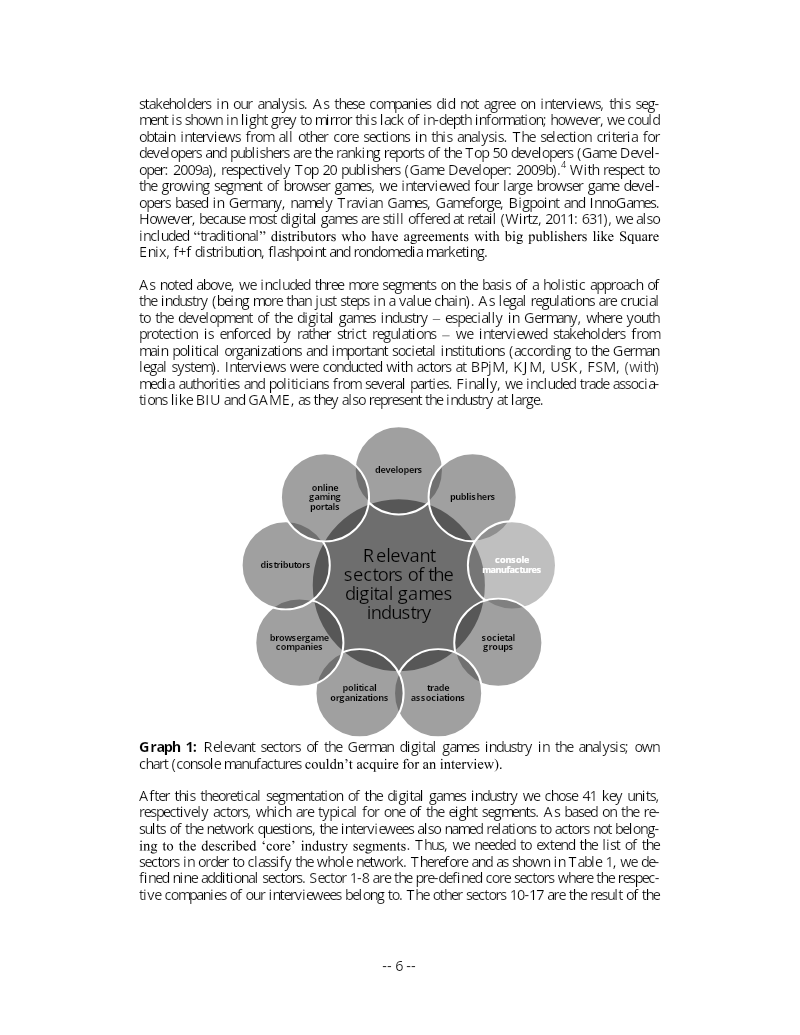
- The study is built on 41 guided expert interviews (37 with men, 4 with women) conducted in 2010, and argues that understanding the German digital games industry requires mapping both value-chain actors and political/societal stakeholders such as regulators USK and KJM and trade associations BIU and GAME.
- The contact network comprises 217 actors and 384 relations but is sparse, with an average actor having only about 1.8 connections.
- After filtering to 87 highly connected actors, trade associations emerge as the most central, with GAME ranking highest on in-degree and eigenvector centrality, while developers and distributors act as the principal business partners; the authors caution these rankings largely reflect the ego-based sampling design and should be read as trend indicators rather than definitive hierarchies.

The Aiming Game: Using a Game with Biofeedback for Training in Emotion Regulation
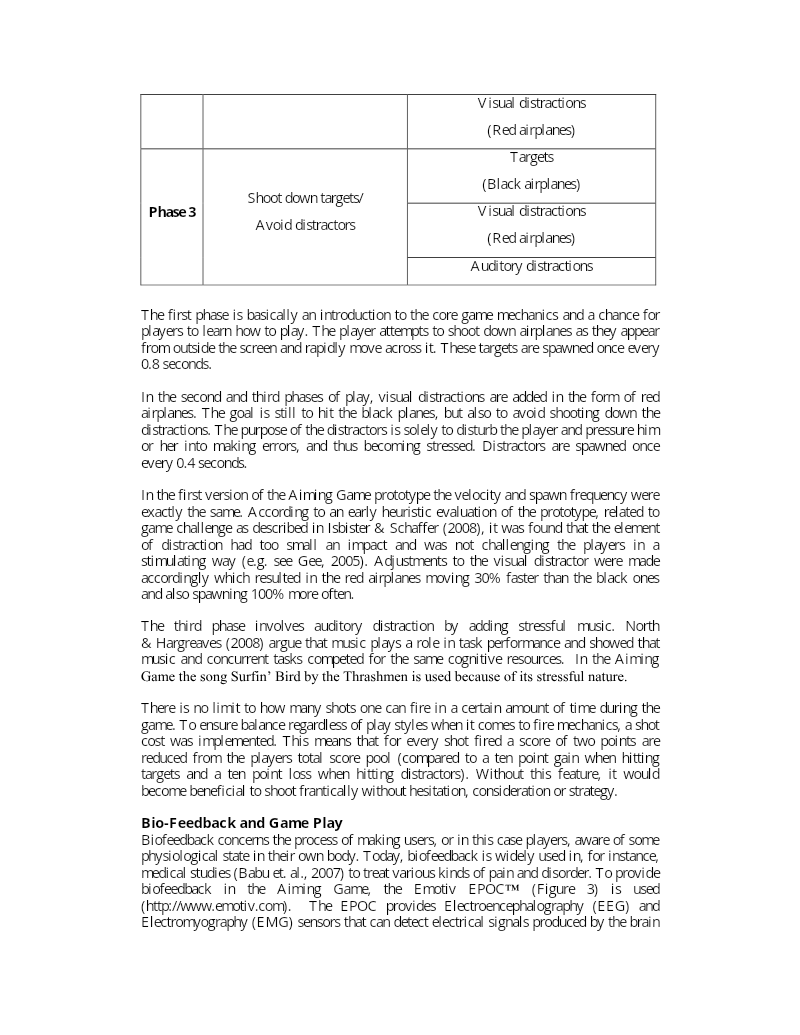
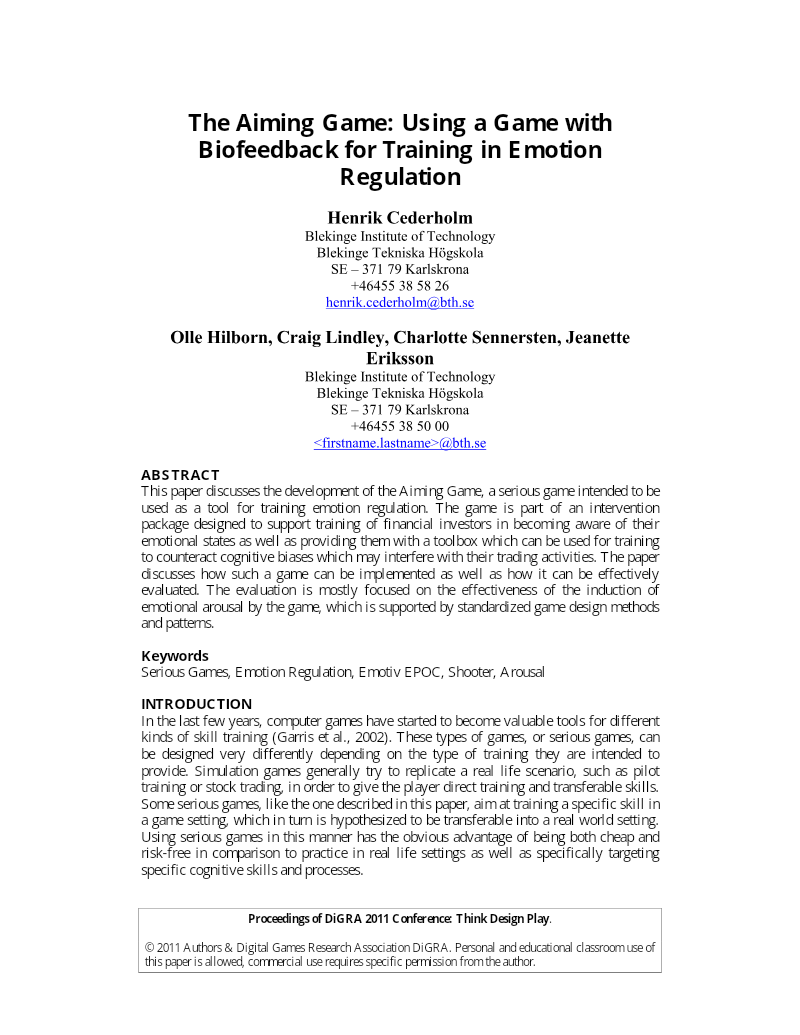
"The Aiming Game" is a serious game developed to train financial investors in emotion regulation, specifically targeting the awareness and control of emotional and physiological arousal to mitigate cognitive biases in trading.
- The Aiming Game is a Unity 2D shooter that uses EEG and EMG biofeedback from an Emotiv EPOC headset to train players to recognize and regulate emotional arousal, targeting financial investors; it adapts difficulty and visual distortions (aiming offset, target blur) to the player's arousal level and adds distractors to induce stress.
- The authors explicitly acknowledge that transfer of the regulation skills to real trading behavior has not yet been empirically demonstrated, so the core premise remains unvalidated.
- Evaluation via heuristic review and play testing with only six participants produced preliminary results; the reported affective measures (tension M = 4, low happiness M = 2) are not statistically meaningful at this sample size.



Grow-A-Game: A Tool for Values Conscious Design and Analysis of Digital Games
The "Grow-A-Game" card system is presented as a significant tool for integrating values-conscious design and analysis into the digital games industry.
- The Grow-A-Game paper presents a card-based tool from the Values at Play project that helps designers and analysts examine the moral, social, and political values embedded in digital games, using four card categories: values, verbs, games, and issues.
- Its central thesis is that games communicate values through both narrative and mechanics, and that deliberately attending to those values during design and analysis yields more coherent and impactful work.
- Case studies showed that participants using the value cards (such as compassion, generosity, humility, and empathy) produced games in which narrative and mechanics expressed values more consistently, though the evidence is qualitative and anecdotal rather than statistically measured.
Understanding the Contribution of Biometrics to Games User Research
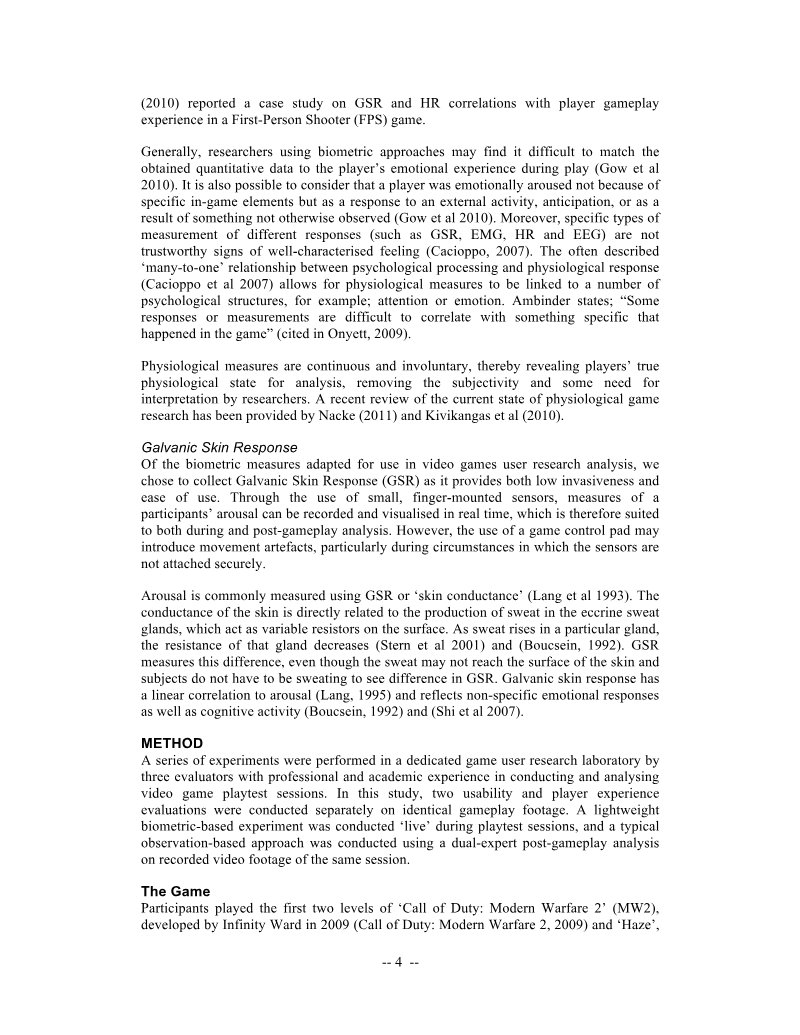
This document investigates the incremental value of incorporating biometric data, specifically Galvanic Skin Response (GSR), into video game user research compared to traditional observation methods.
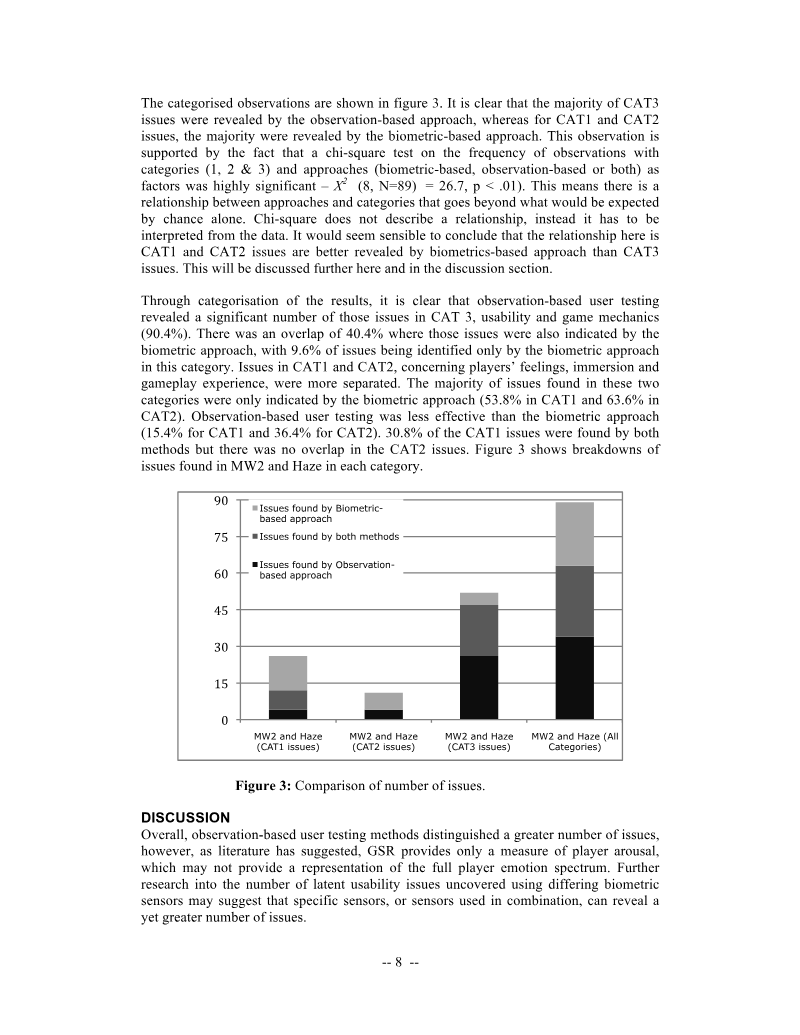
- Biometric methods (GSR combined with live event logging) surfaced issues that conventional observation missed, particularly around emotion, immersion, and gameplay experience, in a study of six casual gamers playing Call of Duty: Modern Warfare 2 and Haze.
- Of 89 identified issues, 29 were detected by both approaches, 34 only by observation, and 26 only by biometrics.
- Observation was substantially more effective for usability problems, a difference supported by a significant chi-square result (X²(8, N=89) = 26.7, p < .01).



CESA Game Development Technology Roadmap: 2010 Edition
The CESA Game Development Technology Roadmap: 2010 Edition outlines current and near-future technological trends impacting game development, serving as a guide for developers, industry professionals, researchers, and students.
- The industry is shifting toward increased automation, cloud integration, and cross-platform scalability to support device-agnostic gaming environments.
- Programming and visual arts workflows are transitioning from traditional C/C++ toward higher-level languages and the integration of real-time physics, global illumination, and procedural generation.
- Game design is increasingly utilizing data-driven insights, psychological modeling, and the standardization of motion-control interfaces.


Game Developer Index 2010: Sweden
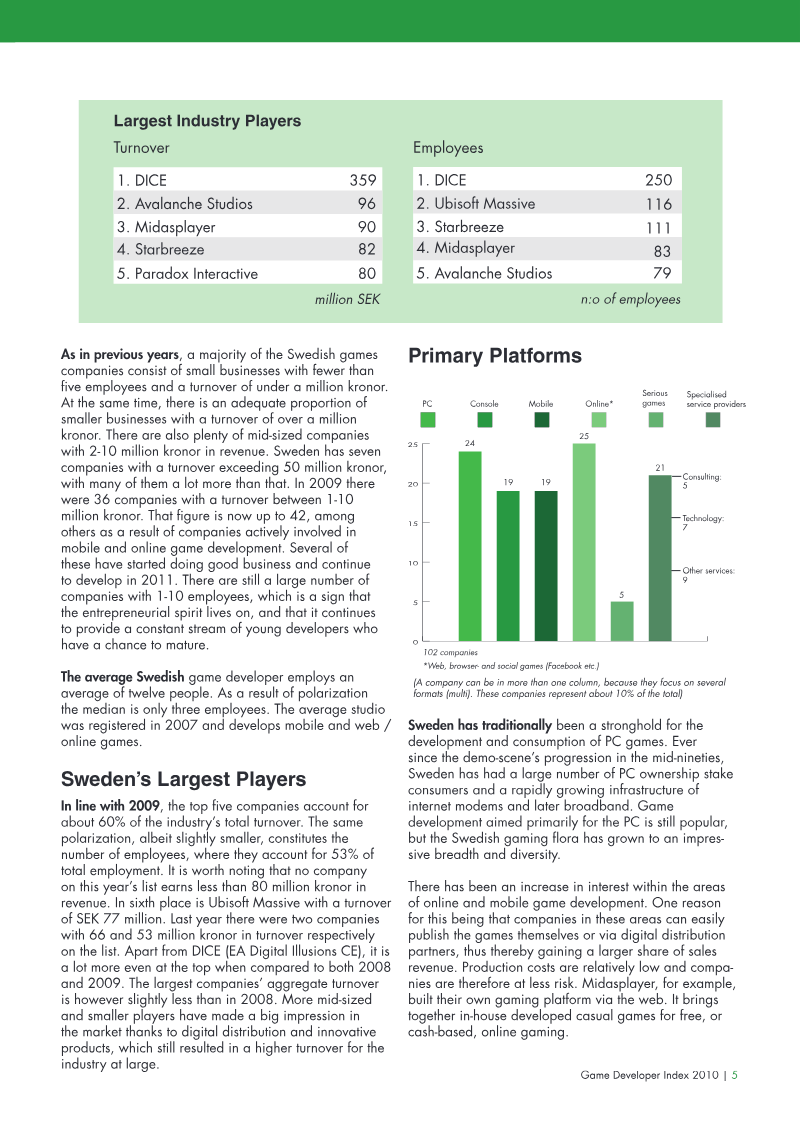
The Swedish game development industry experienced a period of robust growth in 2010, achieving a record turnover of 1181 million SEK, a 22% increase from the previous year, and marking its second consecutive year of positive overall results.
- The Swedish game industry reached a record turnover of 1.181 billion SEK in 2010, supported by a 9.2 percent increase in total employment.
- Market concentration remains high, with the five largest companies accounting for 60 percent of the industry's total revenue.
- The sector is successfully pivoting toward digital distribution and mobile platforms, utilizing diverse monetization strategies like free-to-play, freemium, and ad-funded models.
Born Digital / Grown Digital: Assessing the Future Competitiveness of the EU Video Games Software Industry
This report from the Joint Research Centre (JRC-IPTS) analyzes the video game software industry, focusing on online and mobile gaming as disruptive trends.
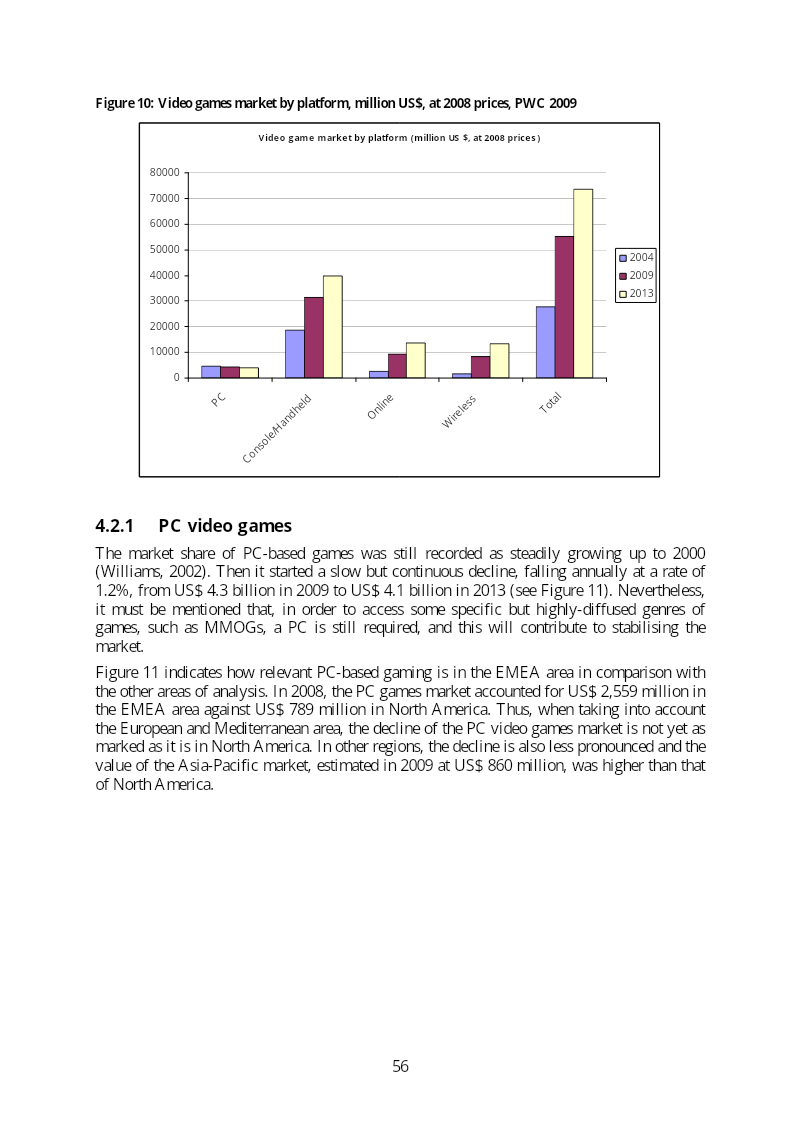
- The global video game market was estimated at approximately €45–50 billion in 2009 and is expected to grow four times faster than the overall media and entertainment market through 2013.
- In 2009, France, Germany, Italy, Spain and the UK accounted for US$15.2 billion, equivalent to nearly 30% of the global video games market.
- The European industry supplies a large share of world's middleware needs, with Danish firm Unity3d's software used in 10% to 20% of the top 100 games.
Analyzing Computer Game Narratives
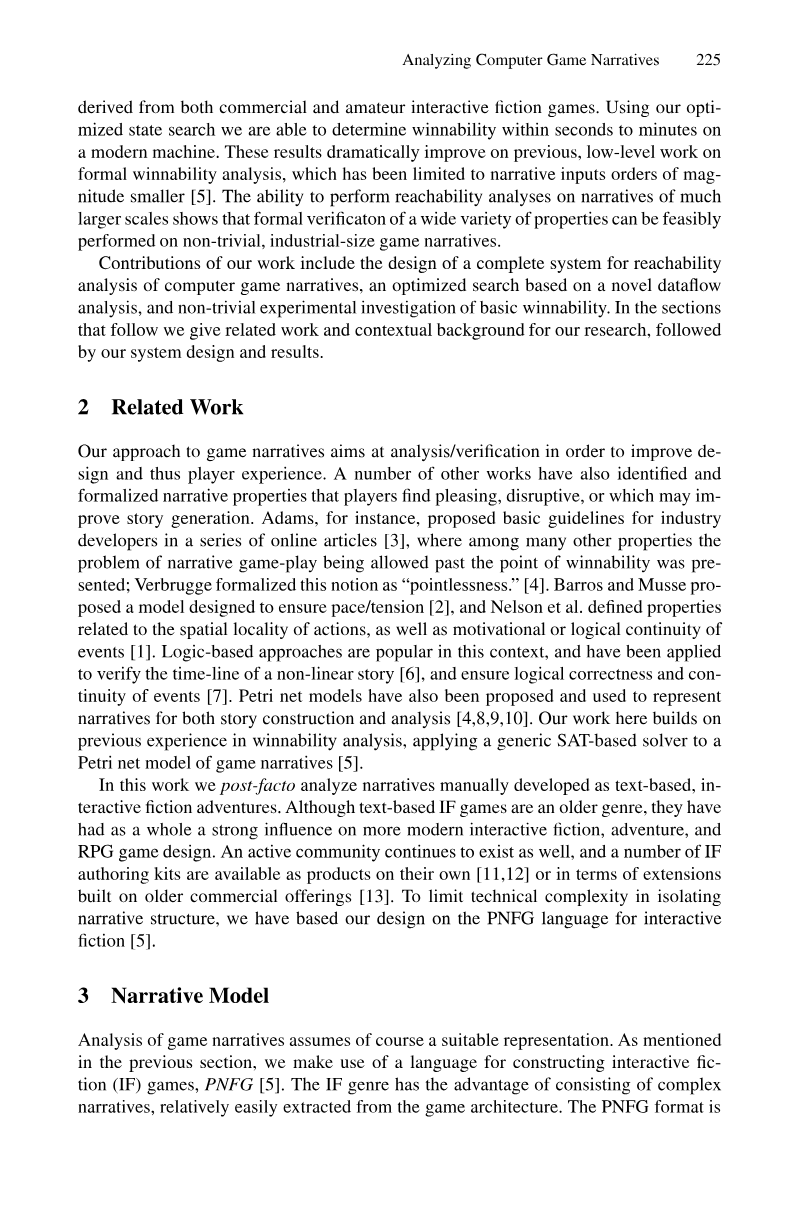
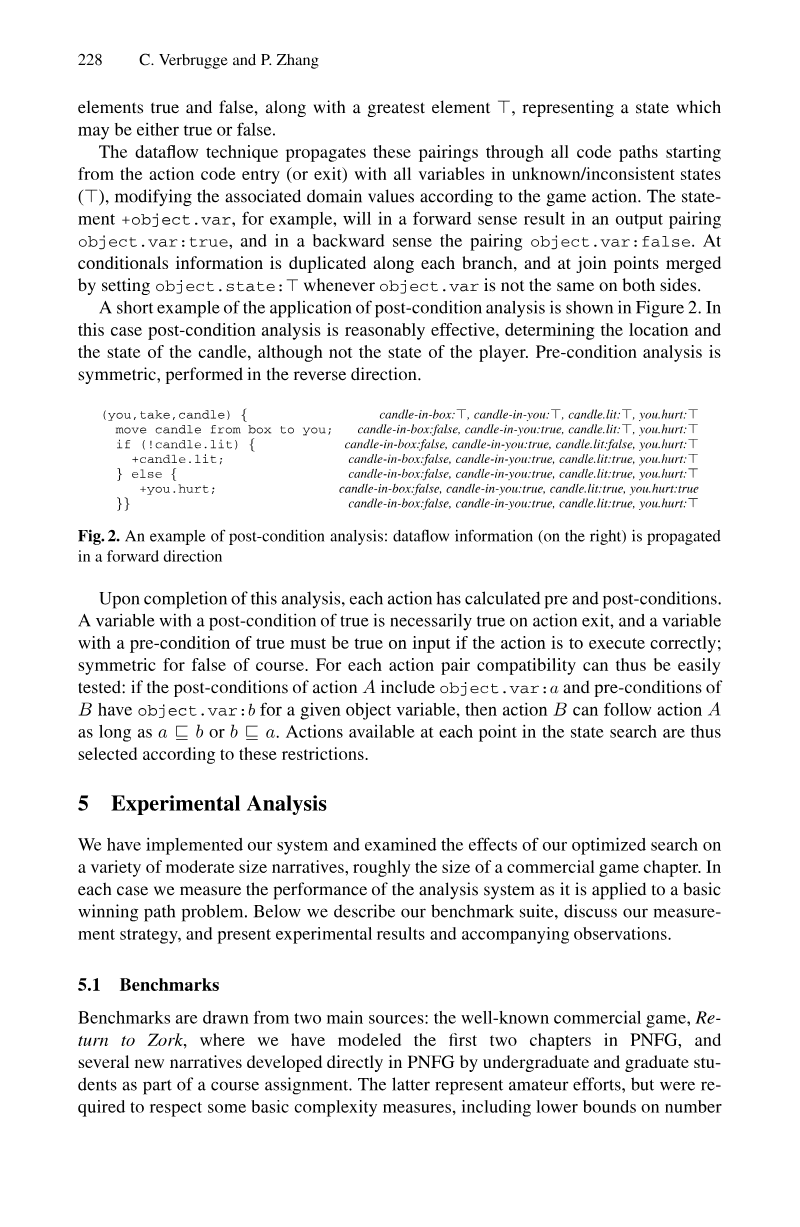
The paper by Clark Verbrugge and Peng Zhang of McGill University presents a formal reachability analysis system for interactive fiction (IF) game narratives, written in the PNFG language.
- The optimized search reduced average branching factor sharply on most benchmarks, from 122 to 10 on RTZ Chapter 2 and from 62 to 5 on MCHEVA.
- DPRYKH was the hardest benchmark for the optimized search because many player commands remained even after optimization.
- The authors observed that search time often decreased as maximum search depth increased, which runs counter to their initial expectation.

Analyzing the Parameters of Prey-Predator Models for Simulation Games
This paper, by Seongdong Kim, Christoph Hoffmann and Varun Ramachandran from Kaywon School of Art & Design and Purdue University, describes emergent behavior in a class of prey-predator simulation models used in simulation games.
- Carrying capacity in the base configuration is about 158, and it rises almost linearly with food growth rate before levelling off at a limit set by the food-growth-delay parameter.
- The four LV parameters for the base configuration were estimated as alpha = 0.075, beta = 0.00543, gamma = 0.0689, and delta = 0.0031.
- The authors propose beta as a competitive fitness metric, since a growth in beta indicates improving predator hunting skills and a decrease indicates prey better evading predation.
Rule-Based Camerawork Controller for Automatic Comic Generation from Game Log
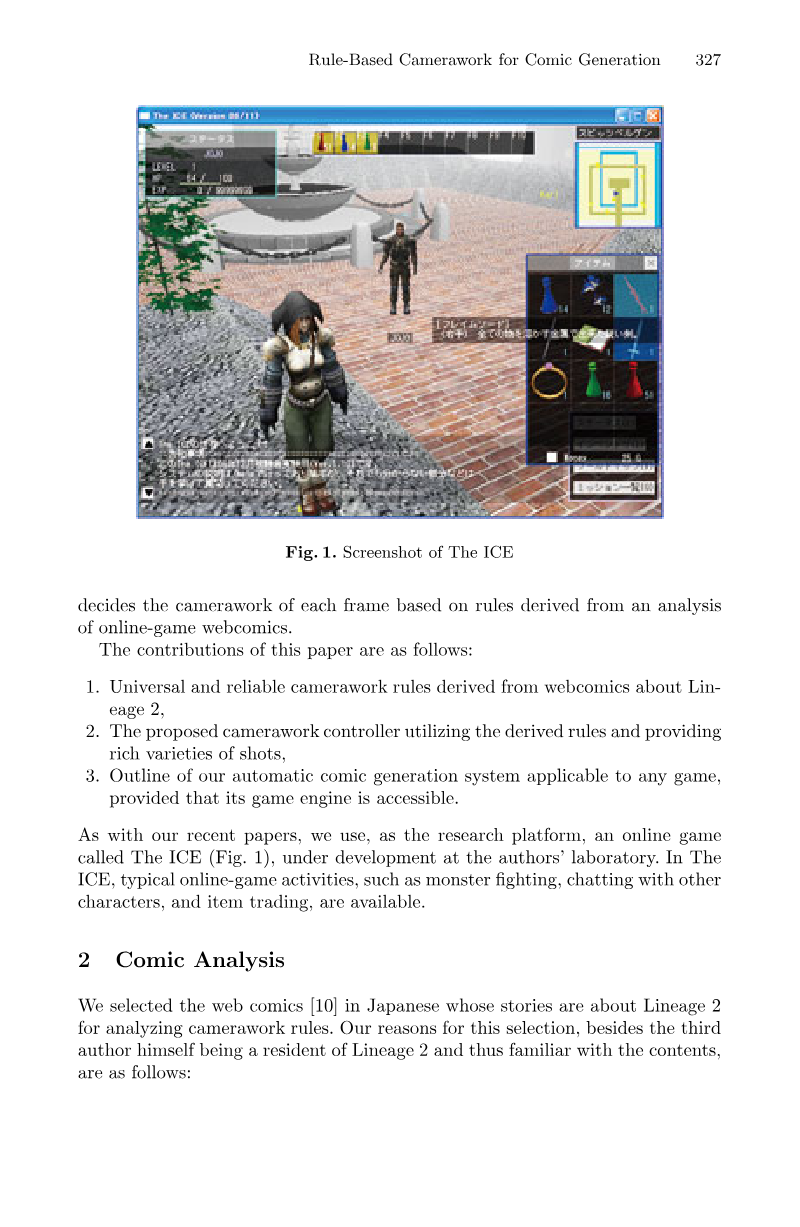
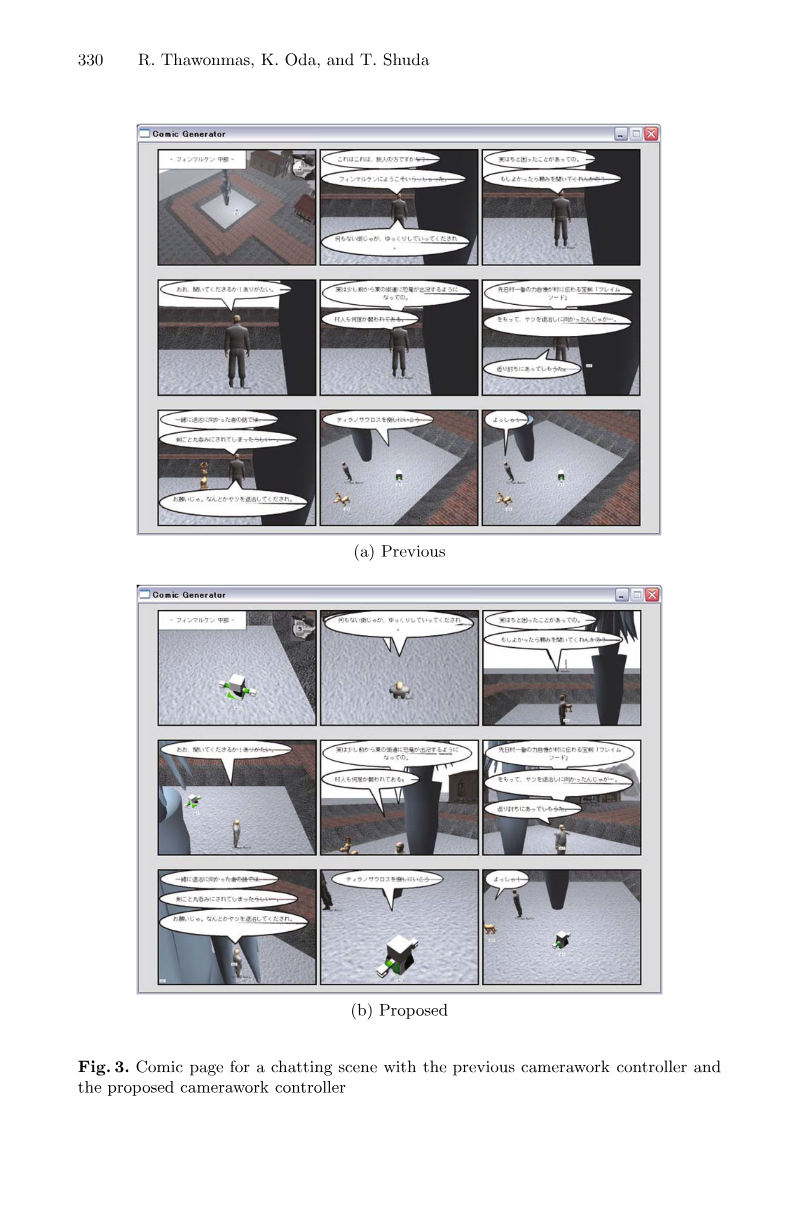
This paper, by Ruck Thawonmas, Ko Oda, and Tomonori Shuda of Ritsumeikan University's Intelligent Computer Entertainment Laboratory, proposes a rule-based camerawork controller for an automatic comic generation system that creates comics from game logs.
- Camerawork rules were derived from an analysis of Lineage 2 webcomics, with one rule per event type covering camera angle, camera position, and zoom position.
- Shot-type weights come from frequency counts in the analyzed comics, and the controller uses them in a roulette-wheel fashion to pick a shot type for each camera parameter.
- For fighting events, the camera-angle roulette wheel has four areas in the proportion 65:631:49:0 across Low Angle, Eye Level, High Angle, and Bird Eye shots.
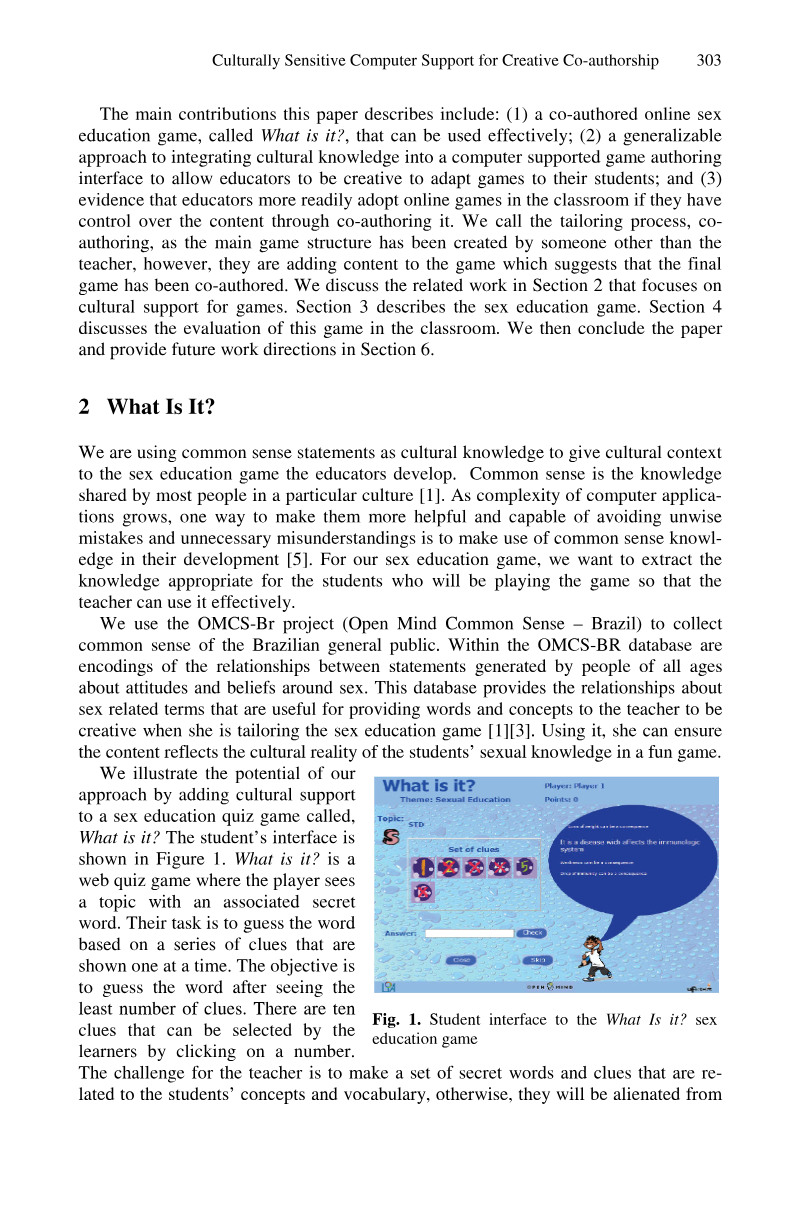


Culturally Sensitive Computer Support for Creative Co-authorship of a Sex Education Game
The authors describe a computer-supported game authoring system that lets educators co-author a web quiz game, "What is it?", for teaching sex education.
- The authors state that teachers' ability to co-author game content was considered beneficial by most teachers, allowing tailoring to different students.
- Almost all teachers used part of the software's clue suggestions to create their own clues, and the suggestions were generally accepted.
- Of five teachers in the questionnaire, four rated the game creation process as easy, while one teacher found it hard.
Writers
Games and companies
Games