Game Development reports and market data
Documents
Originality Factor in Fallout Music
Achieving originality in game music necessitates a strategic balance between accessible, familiar structures and experimental, unconventional textures.
- Composers should balance accessibility with experimentation by dedicating approximately 20% of the sonic palette to unique, avant-garde elements to maintain player engagement.
- The Fallout soundtrack achieves its distinct atmosphere by treating the game world as a parallel reality that diverged from the 1950s, prioritizing raw, primitive textures over complex music theory.
- Effective game scoring integrates environmental sound design by using custom-built libraries and non-traditional objects, such as oil jugs or foghorns, to make the music function as an extension of the physical space.

I'M. FREAKING. OUT.
The primary objective of this initiative is to maximize the visibility of the indie game Pinstripe by leveraging Steam’s internal broadcasting platform to secure a featured position on the storefront.
- Indie developers can leverage Steam’s internal broadcasting platform to trigger engagement algorithms and secure a featured position on the storefront's daily deal section.
- Concentrating high concurrent viewership directly on a Steam store page serves as a strategic lever to manipulate platform discoverability and extend the lifecycle of promotional events.
- The campaign strategy relies on migrating an existing audience away from external platforms like Twitch and YouTube to consolidate all engagement metrics within the Steam ecosystem.
5 lessons from making London the games capital of the world
The London Games Festival, a government-funded initiative, facilitates growth within the UK games industry by connecting developers with investors and providing professional development.
- The London Games Festival has generated an estimated 40 million pounds in business activity since 2016 by facilitating over 2,000 meetings for approximately 160 companies.
- Studios achieve greater long-term stability by building a consistent portfolio of products rather than relying on the pursuit of a single hit title.
- Developers should treat the investment process as a structured marketing campaign, utilizing peer review and professional mentorship to refine their pitches.
What do movie directors, motorcyclists and historians know about making games?
The game industry often suffers from an insular perspective, functioning like a closed ecosystem that limits creative potential by relying solely on internal references.
- Game studios should integrate external creative disciplines like film, literature, and art to break free from insular industry tropes and enhance the emotional depth of their products.
- Designers can improve narrative and thematic communication by adopting techniques from classic cinema and religious art, such as using lighting and composition to convey moral stakes rather than relying solely on binary win-loss mechanics.
- Developers should re-evaluate player engagement strategies by studying the meditative qualities of wellness applications, acknowledging that many users seek relaxation rather than competitive achievement.

How To Make 2D MELEE COMBAT (Unity Tutorial + Free Game Kit!)
Developing a 2D melee combat system in Unity relies on integrating character animation, artificial intelligence, and responsive game feel.
- Melee combat mechanics are best implemented using modular scripts and animation events, which trigger functional effects like particle emissions and screen shakes directly within the Unity animation timeline.
- Attack functionality is achieved by activating a child object with a polygon collider during the attack animation, which triggers hit registration and velocity application upon contact with enemy scripts.
- Cinemachine is utilized to initiate screen shake upon impact, creating a necessary feedback loop that enhances the perceived weight and satisfaction of combat.
Sources of finance for indie games developers
Securing financing for independent game development requires a strategic understanding of the diverse capital landscape, which encompasses six primary categories: equity, project-based funding, grants, debt, accelerators, and crowdfunding.
- Independent game studios must align their choice of funding—equity, project-based, grants, debt, accelerators, or crowdfunding—with their specific development stage and long-term growth objectives.
- Equity financing is a primary route for high-growth startups, frequently utilizing UK government-backed tax incentives like the Seed Enterprise Investment Scheme (SEIS) and the Enterprise Investment Scheme (EIS).
- Project-based funding, such as publisher agreements, provides capital for specific titles without requiring developers to surrender equity in the parent company.
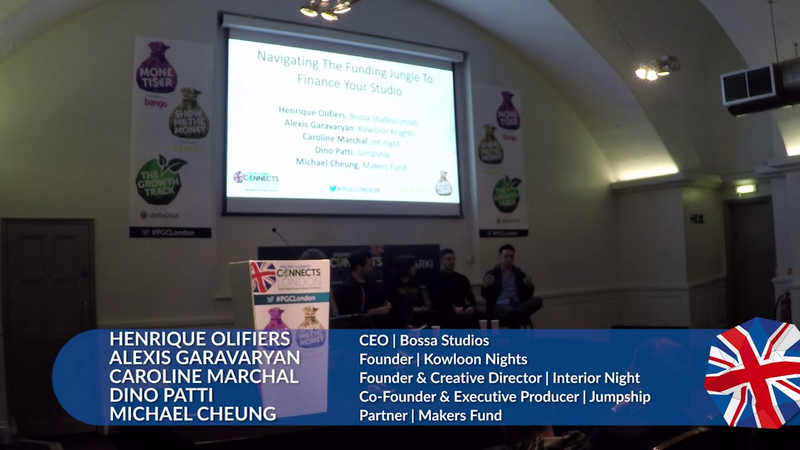
Navigating the funding jungle to finance your studio – Equity and project financing
Securing sustainable financing for game studios requires a strategic approach that prioritizes long-term alignment between creative vision and business objectives.
- Prioritize funding partners who provide industry-specific expertise, mentorship, and professional networks rather than treating capital as a mere commodity.
- Select a financing model—such as equity-based venture capital, project-specific funding, or publisher-led incubation—based on how it aligns with your studio’s long-term creative vision and need for operational independence.
- Initiate relationships with potential investors well before capital is required to build trust and avoid the unfavorable terms often associated with reactive, urgent deal-making.
Shadow Tactics Postmortem: Commandos with Ninja
The real-time tactics genre experienced a significant decline due to a shift toward cinematic, scripted gameplay that abandoned the player-driven complexity of classic titles like Commandos and Desperados.
- Shadow Tactics utilizes a 'Shadow Mode' mechanic that allows players to queue one action per character, enabling complex team-based maneuvers while maintaining the game's core challenge by limiting the number of simultaneous actions.
- The game design intentionally restricts gunplay by providing limited ammunition and high-noise profiles, positioning firearms as a 'joker' or emergency tool rather than a primary combat mechanic.
- Level design was optimized for a 'trial-and-error' player behavior, where guards are placed in close proximity to prevent long, tedious patrol loops that could disrupt the player's tactical setup process.
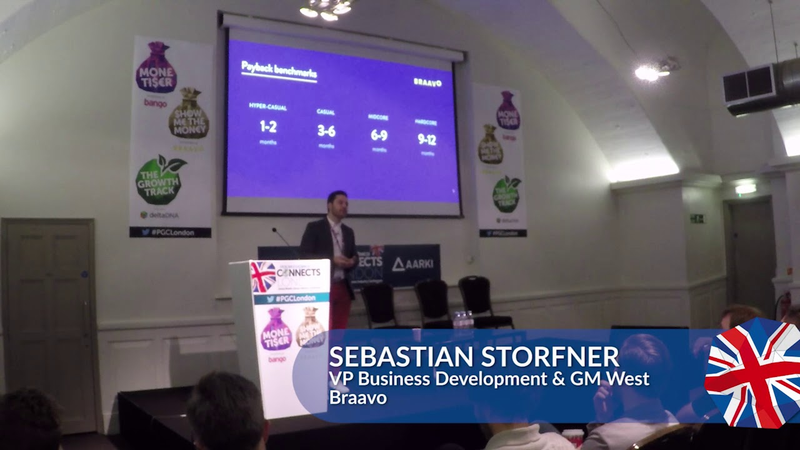
New fundraising strategies for games developers
Securing capital for mobile game development requires a strategic approach tailored to the specific lifecycle stage of a studio.
- Studios should transition from equity-based funding to debt financing once a title achieves positive unit economics, where the lifetime value of a user exceeds the customer acquisition cost.
- Debt financing serves as a non-dilutive tool that allows developers to scale user acquisition by leveraging receivables from app stores and ad networks as security.
- Venture capital is often the most expensive and time-consuming funding path, requiring founders to surrender equity and commit to high-pressure exit strategies.
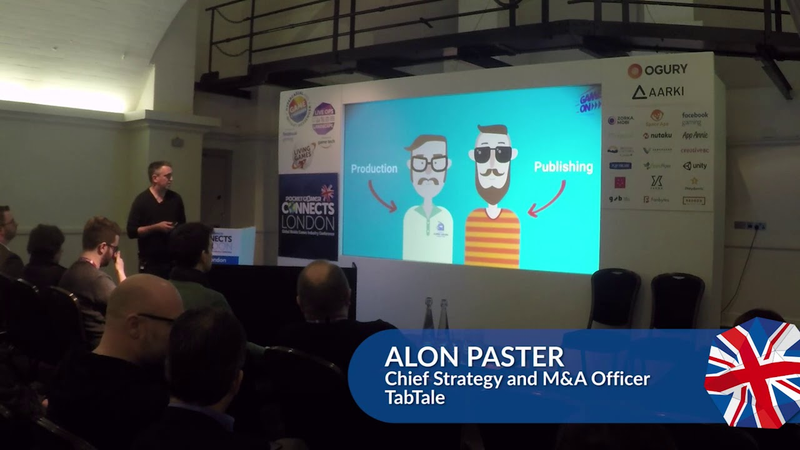
Why go hypercasual?
Hyper-casual gaming represents a highly lucrative and accessible sector of the mobile industry, characterized by simple, intuitive mechanics that require no explanation for the player.
- Hyper-casual games prioritize high-volume ad monetization over the traditional 'whale' model, targeting a massive user base to generate revenue.
- The 'fail fast' methodology dictates that prototypes must be built in under three months, with concepts abandoned if they fail to show strong metrics during soft launches of 2,000 to 5,000 users.
- Success depends on rigorous post-launch support and continuous content iteration, which can allow titles to maintain top-chart rankings for years despite the genre's reputation for short lifespans.
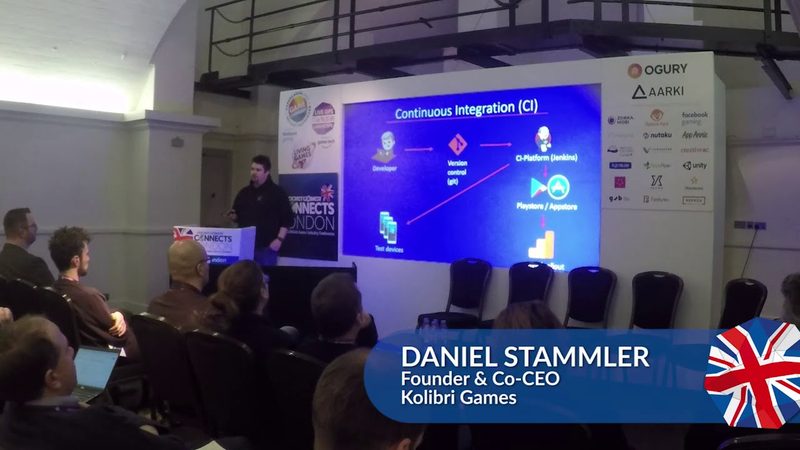
Kolibri Games on rapid development for idle games
Kolibri Games employs a rapid, lean development philosophy centered on the Minimum Viable Product (MVP) model to mitigate the high risks inherent in the hit-driven mobile gaming industry.
- Kolibri Games utilizes an eight-week development cycle to launch Minimum Viable Products (MVPs), allowing the studio to validate market viability before committing significant resources.
- The studio makes data-driven decisions to scale or abandon projects based on early performance indicators, specifically prioritizing day-one retention rates and organic download metrics.
- Development is executed by small, cross-functional teams that release weekly updates, treating titles like Idle Miner Tycoon and Idle Factory Tycoon as perpetual services rather than static products.
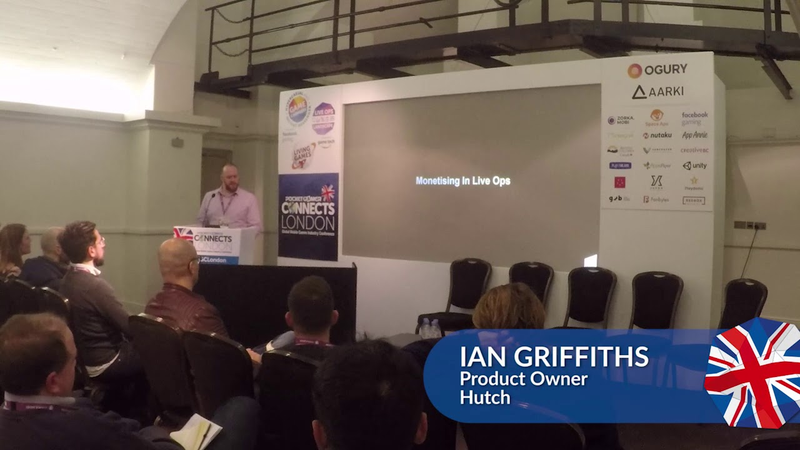
Hutch on monetising for live ops
The presentation outlines a strategic framework for monetizing live operations in mobile free-to-play games, specifically drawing from the experience of the London-based studio Hutch.
- Hutch increased average revenue per user (ARPU) by over 25% in Top Drives by implementing a system that triggers targeted starter pack offers every five player levels.
- Live Ops allows for continuous revenue growth beyond the launch month by building a base of hyper-engaged, long-term players who remain invested for years.
- Effective monetization in Live Ops relies on an expansive meta-game built on granular, extensible content that feeds directly into the core gameplay loop.
Writers
Games and companies
Games