Game Development reports and market data
Documents
Bendi game – Designing for kids
Designing digital experiences for children requires a nuanced approach that moves beyond treating them as a monolithic group.
- Effective design for children requires segmenting development into two-year increments to match specific cognitive, motor, and aesthetic capabilities.
- For the two-to-four-year-old cohort, prioritize visual communication over text and avoid complex animations or surprise elements that cause cognitive overload.
- Children aged four to six require simple, attainable goals and character-led guidance to maintain engagement, as they are highly prone to distraction.
The history of the UK’s mobile games industry
The United Kingdom’s mobile games industry has undergone a profound transformation, evolving from the restrictive technical limitations of early J2ME platforms to a vibrant ecosystem defined by the creative freedom of the smartphone era.
- The UK mobile games sector now accounts for 61 percent of all domestic gaming companies and employs a workforce of 46,000 professionals.
- The industry is currently transitioning from a focus on mass-market titles toward niche, character-driven projects designed to resonate with specific audiences.
- A primary strategic challenge for the UK industry is reconciling its legacy strengths in premium console and PC development with the data-driven, free-to-play monetization models prevalent in the US and Scandinavia.

What happens to the UK games industry after Brexit?
The UK games industry faces significant uncertainty regarding the long-term impacts of Brexit, with the primary challenge being a lack of clear policy direction from the government.
- The UK games industry faces significant investment and recruitment volatility due to a lack of clear government policy and ongoing political deadlock.
- Studios are increasingly establishing satellite offices within the European Union to mitigate risks related to data protection compliance and the loss of free movement.
- The industry is experiencing tangible operational friction, including the postponement of initial public offerings and increased difficulty in attracting highly skilled international talent.
Voodoo and MoPub deconstruct the hyper-casual phenomenon
The hyper-casual mobile gaming sector has undergone a significant transformation over the last decade, shifting from a market dominated by sporadic one-hit wonders to a mature, data-driven industry.
- The hyper-casual sector has transitioned from a market of sporadic hits to a mature, data-driven industry fueled by increased smartphone penetration and scalable user acquisition tools.
- Revenue growth in hyper-casual gaming relies on a cycle where high-volume ad spending drives user acquisition, which is then monetized through advertising-based models.
- Publishers like Voodoo optimize profitability by integrating user acquisition and monetization functions, allowing for rapid iteration based on cross-cutting performance data.

Top 5 Game Dev Mistakes! - (Game Jam Edition)
This analysis identifies the five most common design pitfalls observed during a recent game jam, where the author reviewed every submission to provide actionable feedback for developers working under strict time constraints.
- Lack of player feedback is the most critical issue, affecting 86% of submissions and causing frustration by failing to communicate the causes of damage or game-over states.
- Pacing issues, including inconsistent movement speeds and difficulty curves, disrupt the player's flow state in 67% of game jam entries.
- Suboptimal color schemes that utilize harsh or unrefined palettes negatively impact the aesthetic quality of 65% of games.
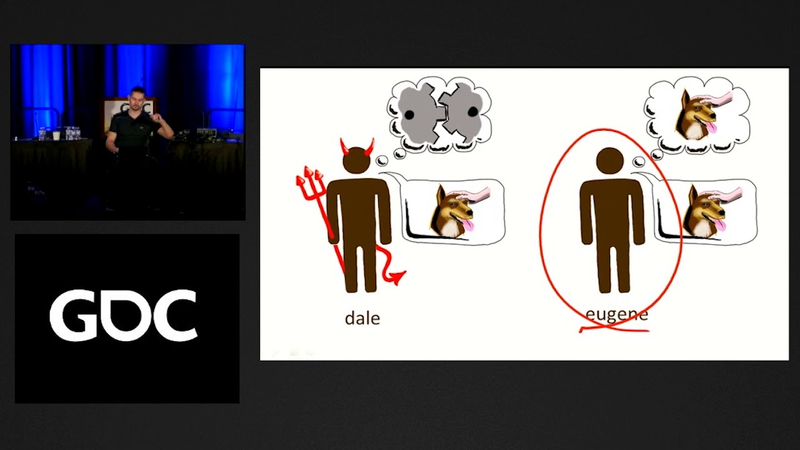
Concrete Practices to Be a Better Leader: Framing & Intention
Effective leadership is fundamentally a practice of intentional framing, where the context applied to communication dictates team dynamics and organizational outcomes.
- Leadership is an exercise in intentional framing, where the context a leader applies to communication directly dictates team dynamics and organizational outcomes.
- To resolve conflict, leaders should consciously frame team members as collaborative partners rather than adversaries, shifting the focus toward shared constraints instead of interpersonal friction.
- Professional relationships operate on a grid of closeness-distance and equality-hierarchy; leaders must actively steer interactions toward a peer-based dynamic to prevent conflict caused by misaligned perceptions.
The vitality of visual storytelling in games
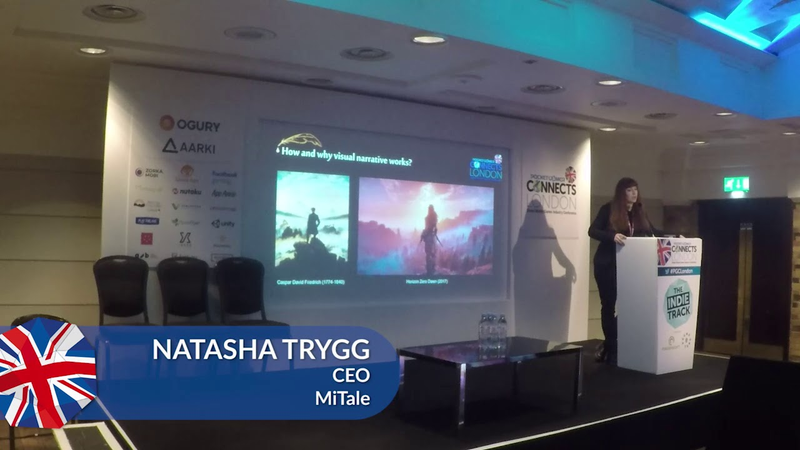
Visual storytelling serves as a foundational element in game design, functioning as a bridge between player fantasy and gameplay mechanics.
- Visual storytelling functions as a core design requirement that bridges player fantasy with gameplay mechanics, reducing reliance on text-heavy exposition.
- Developers use classical art principles like color theory, composition, and semiotics to intuitively guide player behavior and establish world consistency.
- Concept art serves as a critical, cost-effective tool for aligning development teams, solving technical constraints, and securing publisher interest early in the production cycle.
3 things that games developers need to know to safeguard their games
Safeguarding intellectual property is a critical concern for independent game developers, particularly when balancing limited resources against the risks of ownership disputes and unauthorized cloning.
- Copyright automatically protects the specific expression of creative work—such as code, character designs, and music—but does not cover underlying game mechanics or general concepts.
- Developers must secure written contracts for all employment and collaborative work to avoid ownership disputes, as publishers require proof of full rights before signing deals.
- Work created during office hours or using employer resources is typically owned by the employer, making clear contractual agreements essential for independent developers.
Nerial: From Reigns to Game of Thrones
Nerial’s development strategy for the Reigns series demonstrates how independent studios can achieve consistent commercial success in the premium mobile market by leveraging brand continuity, strategic partnerships, and cross-platform distribution.
- Nerial achieved over 3.4 million total sales by treating the Reigns series as a cohesive brand rather than a collection of isolated products.
- The studio maintains a lean development structure with teams of only two to three people to navigate the challenges of the premium mobile market.
- Partnering with Devolver Digital provided the industry credibility and infrastructure necessary to secure a high-profile collaboration with HBO for Reigns: Game of Thrones.

Inviting Player Creativity Through Game Mechanics
Integrating player creativity into game design shifts the user experience from passive consumption to active participation, significantly increasing long-term investment and satisfaction.
- Designers should replace total creative freedom with structured frameworks to prevent player intimidation and the 'blank canvas' effect.
- Implementing artificial constraints and specific tasks simplifies decision-making, which reduces performance anxiety and encourages experimentation.
- Integrating collaborative or competitive social mechanics shifts the focus from individual performance quality to the process of creation.
The Latin American games market overview 2019
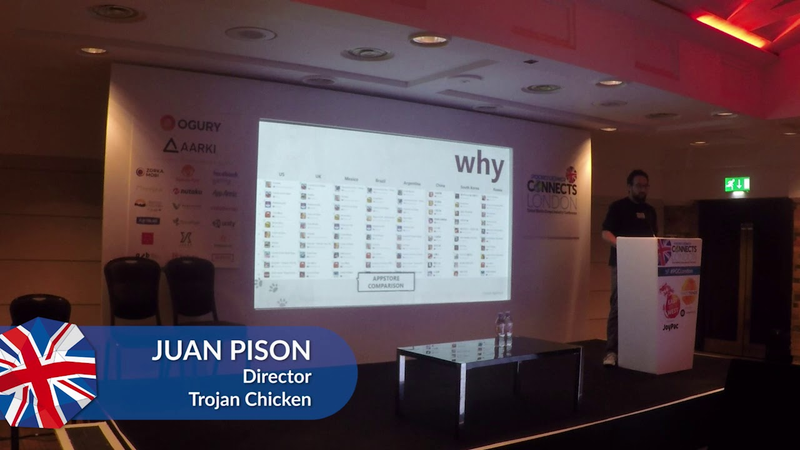
The Latin American games market represents a significant growth opportunity for global developers, characterized by a large, digitally connected population with a strong affinity for mobile gaming.
- The Latin American games market is dominated by five key hubs—Brazil, Mexico, Argentina, Colombia, and Chile—with Brazil serving as the largest individual market.
- Approximately two-thirds of the Latin American population has internet access, and more than half of those users are active gamers.
- Effective localization requires addressing linguistic nuances, specifically the differences between Latin American and European Spanish, as well as Brazilian and European Portuguese.

A Westerner's guide to the Japanese games market
The Japanese mobile gaming market represents a significant growth opportunity for Western developers, provided they approach the region with cultural sensitivity and a long-term strategic mindset.
- Success in the Japanese mobile market requires a local partner or team member to validate assumptions and navigate the industry, helping developers avoid the 'gaijin' trap.
- Western studios should prioritize their own authentic cultural identity rather than attempting to mimic Japanese anime aesthetics, as there is a specific market demand for non-Japanese media.
- Professional localization is mandatory, as poor translation quality directly correlates to a decrease in a game's perceived value and player immersion.
Writers
Games and companies
Games