1 free read left. Create a free account for unlimited reading + AI research.
Create free account
Hutch on monetising for live ops
Key insights
7 takeaways- 01Hutch increased average revenue per user (ARPU) by over 25% in Top Drives by implementing a system that triggers targeted starter pack offers every five player levels.
- 02Live Ops allows for continuous revenue growth beyond the launch month by building a base of hyper-engaged, long-term players who remain invested for years.
- 03Hutch utilizes a narrative-driven approach to Live Ops by linking multiple events (e.g., preliminary, main, and final) to increase player engagement and content success.
- 04Effective monetization in Live Ops relies on an expansive meta-game built on granular, extensible content that feeds directly into the core gameplay loop.
- 05Event-based monetization is most effective when it creates a synergistic loop between themed content, entry restrictions, energy mechanics, and time-limited, scarcity-driven offers.
- 06The ability to deploy events and offers on the fly without updating the game binary is essential for responding to player engagement data and maintaining a dynamic experience.
- 07To manage competitive balance in non-synchronous multiplayer, Hutch segments players into event shards of 100 to 500 users based on trophy counts.
Ask AI about this video
Transcript
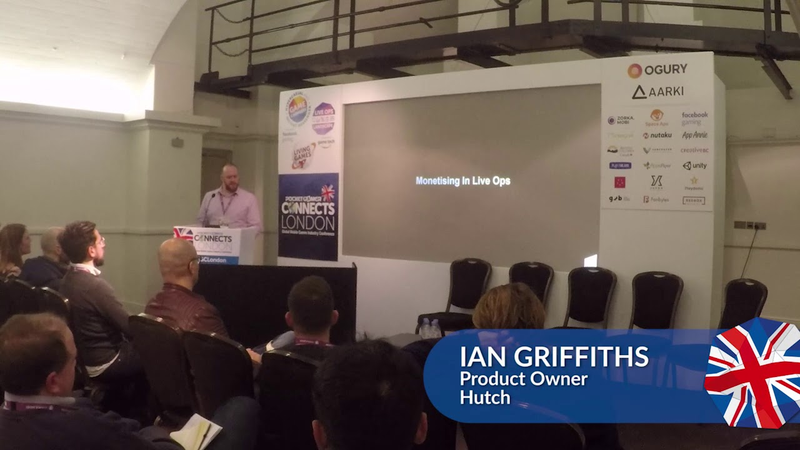
[Music] thanks so much for taking the time uh to be here today I'm going to be talking about monetizing live Ops uh specifically through the lens of Hutch games so a little bit about me my name is Ian Griffith I'm a product owner at Hutch I've been working in free-to-play for just over 10 years I've released 18 free-to-play titles including things like uh FIFA Superstars and the Sim social and my my most latest one is at touch which is top drives um and as far as I understand it they've been played by over half a billion people so that's a lot so who who is this talk aimed at uh primarily it's aimed at small to mediumsized Studios that are interested in IO development um you may already
know a lot of this stuff so you know but if you don't this this may just clarify some of Hutch is thinking around live Ops a little bit about Hutch we're a small studio in central London near Old Street so not far to walk about 75 people and we focus on mobile free-to-play racing games we started back in 2011 with a paid title which was called Smash Cops we followed it up shortly after with Smash Cops Heat which was a free-to-play game on the same sort of basis our first big success in 2014 was MMX racing which was the first time that we were able to uh scale up our user acquisition to make a more profitable game I joined uh very early on in the development of top drives as product owner so that was back in 2016 and since then top drives was the first game where we looked at building a sort of real live Ops framework and it's something that we've been building on since
then so just a little bit about top drives and explaining what that game is because it may be fairly Niche top drives is a car-based collectible card game we've got over a thousand cars in the game licensed from 45 different manufacturers and in the game we encourage players to build up a deck of cards and compete against others as well as play through their campaign in a in a range of diverse Performance challenges so this will be a little video that explains it if it works yeah it works have music [Music] like it's exciting a cards yeah cards look at those so the idea is that what you're doing is you've got these Performance challenges so it may be um a quarter mile race or it may be like an ice Hill challenge so you want to pick like the off-road car uh the 4x4 car with off-road tires maybe if you've got a mile Sprint you want the car with the fastest not to 100
um and players complete through those so what our live Ops I'm sure everybody's answered this question like a million times I'll give you hutches how we tend to think of live Ops and it's a bit of a sentence so we think of live Ops as the focus on the continuous operation and on the iteration of a game that is delivered as a service to an audience I'm not sure if that's a sentence is a sentence is a sentence but it's close uh so why do we use liveop so primarily it falls into a few areas first we can think of acquisition right so we're we're very much operating in a red ocean so there's considerable competition user acquisition is really quite high so what we want to do is maximize the lifetime value of our players by delivering an enjoyable and engaging experience and it's live Ops that allows us to adapt this for them in terms of retention you know it's one thing to get hold of a player but keeping them is quite another so we we use our live Ops in order to deliver an evolving and responsive
uh experience to them that that changes over time and keeps them engaged in the long term and then monetization Wise Wise obviously um liveops we're able to build a relationship with our players through our community and we can see how they're how they're engaging with the game and that allows us to know more about them and the better we understand our players and how they interact with the game the more meaningful and monetizable content we can create for them um you know so how how this works for Hut as a business so this is sort of our our our Revenue our gross bookings um by looking to build top drives and our other games as sort of five to 10 year franchises what we're really looking at is sort of utilizing that as stacking Revenue so we become more more and more profitable over time because these things just run for so long that we can stack them so you know in order to monetize liveops of course you need to design for liveops when you're making your game
um so we we tend to start by thinking you know what what is it that players want to buy what are they interested in so there are the tangible elements of monetization that is Meaningful uh gain content uh that might be like a car or something around the area there's purchasable progression so maybe they want to upgrade their car or or get through the game a bit quicker there are the intangible elements so players may want to buy their way into a certain status they may want to get the exclusive items in the game that are only available through monetizable elements perhaps you've built in that they need to pay in order to take part in competitive parts of the game and of course things like customization allow us to uh give players room to express themselves within the game and then the the elements that we have slightly more control over ourselves so scarcity which we we bring in sort of time limited offers uh things that can rely on that that scarce element there's the impatient so perhaps we put in appointment timers or they there's a set C amount of grind that they want to skip
by and then the the last element that we don't control so much but social proof maybe you've got a guild and everybody wants to become like the golden Guild so they all buy the golden stuff and you buy into that and it feels meaningful and important and there's a social element to that so you know in order to to monetize liveops we really need a game that supports uh many monetizer monetization options and of course when we look around the store and we look at the sheer amount of innovation that happens in the industry there are many forms of monetization that can be applied to just about any element of the game in my experience in order to maximize our monetization potential we really need an expansive metag game right so because um so something like top drives is quite Niche we may not get that many players through the door so we need an expansive metag game for them to buy into and we build an expansive metag game on granular content right so if if we just had like a small amount of content we may want to look at how we can break that up into chunks that
people can get over time or through purchasing and extensible systems so we we may have a currency and we want to build onto that so we can tack on other elements and all of that needs to feed into the core Loop and of course by having content and systems that feed into the core loop it's much more relevant and valuable to players because the the benefit is seen directly through gameplay so when I I I look at the sort of top drivve features and systems that we focused on at launch we had a single player campaign um actually shortly after launch we introduced the uh single player time limited challenges we had player versus player uh multiplayer elements events uh we had this expansive uh collection part of the game and we had quite a robust set of community features so we had uh in-game forums uh that players can talk to through talk to each other through as well as supporting a lot of the external uh socialization that players are engaging in and you know when we kind of look at this in terms of uh bartel's taxonomy
Richard Bartel sort of player types um we were thinking where do we really lean into with top drives so we've got our Killers which is the sort of competitive element of the game which obviously our PVP multiplayer leans into as I mentioned with our socializing for the socializers we've got our robust Community features for our explorers we've got quite an expansive single player campaign and then obviously where we're leaning most heavily into is is the achievers side of things so we've got that really expansive car collection we've got our single player campaign and the challenges around that so in in terms of content as I said granular content is important right so we've got over a thousand cars and in order to you know in order to have systems that lie on top of that we have Fusion systems and things so that we've got something to do with duplicates and having lots of different types they sit across seven Rarities uh about 70 or 80 we've held back as prize cards so we can basically they don't drop in the Gater system so we can choose where we we hand
those out because they're very very valuable to players um and we've always got a decent amount set back ready to go at any time and uh crucially important as well is that we have a balanced economy right so it's really important that that your economy is is extensible and allow can allow for enough additions and modifiers to gameplay uh that that players can buy into so obviously that leads us to the the main thing monetizing in live Ops in my experience you know monetizing live Ops the the first thing that we focus on in the game is delivering new content that is put through themed events and then supported with offers in terms of a framework we have that sort of new content or gameplay or systems or whatever it is that feeds into an event we have an entry restriction so we might say that you need a special type of car or you need some other thing to get into the game we
you may have an energy mechanic or a soft currency that you're required that you need in order to progress through the event um as you go through the event you're you're getting content that's relevant to it we also support this with our offers and then of course there's the there's the carrot and that's the sort of limited content you want to get to the end of the event so you can get the really special stuff uh so in terms of top drives we've got our events Carousel and we can support some large number of offers so here we've got like a 90s event coming up and a wet weather event coming up uh this was our one our Chevrolet based events so I talked about restrictions right so we've got our entry criteria here you need uh three Chevrolet where you can get through several days we've got this handy upsell there uh for the American dream pack and then the gameplay restriction being our sort of energy mechanic which is race tickets and you get five and we can set how quickly they regenerate and you buy
more so once you jump into an event we actually we just used to randomize just fetch you an opponent but we found that players don't really like sort of winning or losing 50/50 well 50% of the time and now what we do is we grab them three people above and three people below in the leaderboard and let them choose the kind of difficulty they want to get um and it's been very beneficial to them just another quick example of some of the races so you know they're competing quite a a considerable uh uh number of types of races we've got this huge system uh that can resolve all kinds of races between different cars uh so once they've done that they come back to the event screen they can see where they have changed on the leaderboard uh an event will run for three or five days and of course their final score will show will that will dictate what what kind of prize they get so this is where we're using that sort of limited uh that those prize cards and those
those that limited content we of course as as I said we support that with an office system so leading back into some of what drives players to purchase things well we had a Chevrolet thing it needed three Chevrolet here's a Chevrolet offer right everything's tying back into itself this is Meaningful because it's very relevant to the event uh it leans into the competition because it gives you a chance at a better deck uh we make it very clear um what it is that you're buying and and and the discount that's applied and then we've got those scarcity elements so we've got it's a Time limited offer that runs you know in sync with the event and we only allow you to buy a maximum of 10 of them so coming back to that framework how that looks with like a typical top drives event um so we've got we've got our new content some new races some new cars they're tying directly into an American Dream event we've got our restrictions to play through we've got ourg mechanic that is restricting you we've got your
earning content relevant to that event and then the office system are help pushing you through it and then we've got those limited prizes right everything ties back into each other so you know obviously where live Ops come in is that we can create these events and offers on the fly at any time any number of them without having to update the binary of the game right and it's fundamentally it's that that that means that we can build on what players like and engage with um and you know give them a more Dynamic and interesting experience so fundamentally events offers and content are synergistic uh they work best in the right balance and the right combination uh and of course the right Cadence which we find over time uh and it's live give us the tools to to benefit from all of this so you know once we've designed our live Ops and we figured out what we can do and how they work we want to optimize right so at launch you know we do internal testing we do soft launches in
different areas but even at launch when we go worldwide our our knowledge is limited and we rely on data analysis and player insights but also a lot of contact with the community and understanding how they engage with particularly the The Meta game and the end game and the more uh esoteric parts of the game uh that really helps us optimize in terms of cadence you know is figuring out the best Cadence for your game is absolutely crucial because uh you want you don't want to burn players out by having stuff that's just too heavy on the monetization you don't want to you don't want to leave money on the table by having stuff that's just too easy to engage with and not spend money on and you want to avoid all kinds of things like predictability um so you know where we started was just with sort of Three Special Events we we moved all the way up to seven it's been lots of tweaking and trying to find out where that lands one of the you know one of the things that we like to focus on is uh simple and effective iteration right so we introduce these things called Tri series events now there was no system in
the game supporting this right what we did is we sort of thematically tied them in a in a narrative we said these three events are linked right so we've got a preliminary a main event and then a final event and this was actually by far some of our most popular and you know uh and successful content so it's been a real benefit to just use these tools very quickly to understand and of of course communicate with players to understand what they what they enjoy and and work with uh another example uh we had a starter pack offer that was just under $10 uh it was a great deal lots of people picked up on it it was very very effective and we thought well why don't we replicate that sort of every five levels that a player goes up so we our system allows us to do that very very quickly and easily um so every five levels we had quite quite a good offer for them and for our new players that increase their average revenue the average revenue per user by over 25%
so you know what is the impact of this sort of expansive metagame and liveops well what you see here is a fairly typical kind of shark fin curve right our monthly active users we get a big spike at launch where we're supported by the stores we get some blips here and there where we sort of tweak our user acquisition and get more support here and there but fundamentally behind that the more interesting chart is on the right we're constantly growing this group of hyper engaged players of level 125 and above and they're really invested in the game and those are the ones who will probably be with us for two three four five years and continue to spend money on the game and in terms of Revenue what that impact is is that after our launch month with all of those sort of new users coming in is that every single month apart from a few have been more successful than our launch month because we're growing this this set of users and of course our end game takes a certain amount of time to get to and you know it's the live Ops and monetizing the events and things and and
looking at all kinds of player patterns and behaviors and uh adjusting to that that allows us to to benefit from it so in summary uh we design our games with monetizable systems in mind we use content and offers to sorry events and content to engage players and offers to help us monetize our future set and then we optimize over time to build on the sustainability of our games and I got two minutes left questions there a question AB testing do we do AB testing uh we do do AB testing yeah we have a range of uh tools uh in order to support AB testing we tend to do we I I found that we tend to do more uh um a wider range of AB testing during development because we can try really crazy things out right once you're in launch it's harder to do that particularly with a a smaller uh daily active user count it's not not quite simple yes so you have all these live op
events in your game how do you actually get notifi people the events are they AR open the so the question was we have live Ops in our game how do we notify players uh of new ones coming out um so we tend to do as much as we can through our uh in-game social channels but also our out of game forums which is where we tend to find the most active players uh engaged with the game we could we could definitely do more to to sort of support players outside of the game you know we do to be fair we do have uh notifications and things like that as well but we could definitely do more in that area yeah yes sorry in terms of players joining each other um okay so the way our events work is that we the we can choose how big a Shard of events how many people come in right so we actually have a a we grab a couple of servers around the world and we bundle people accordingly but we tend
to go with 100 200 or 500 players um that one that I showed earlier was 500 players and we basically just group them based on trophies because um so because all you're doing is is is picking a card and you're looking at kind of what their hand is and what your hand is there's no synchronous multiplayer so we don't need to worry about anything like lag or or that kind of thing [Music]
Summary
The presentation outlines a strategic framework for monetizing live operations in mobile free-to-play games, specifically drawing from the experience of the London-based studio Hutch. The core thesis posits that successful live operations require designing games with extensible, monetizable systems from the outset, allowing developers to iterate and stack revenue over long-term franchise lifecycles. By treating games as services, studios can maximize lifetime value through continuous content updates, responsive event structures, and data-driven optimization.
Key findings emphasize that effective monetization relies on a synergistic relationship between events, content, and offers. The studio utilizes granular content—such as a vast library of licensed cars—to fuel an expansive metagame that caters to different player types, including competitors, socializers, and achievers. By implementing time-limited events with specific entry restrictions, energy mechanics, and targeted offers, developers can create scarcity and urgency that drive player engagement and spending. Notably, the ability to deploy these events and offers without requiring binary updates allows for rapid, agile iteration based on real-time player feedback and performance data.
The methodology focuses on balancing player engagement with revenue generation to avoid burnout while ensuring profitability. Data-driven optimization, including A/B testing and the analysis of player behavior, is critical for refining event cadence and offer frequency. Evidence from the studio’s title, Top Drives, demonstrates that this approach can successfully grow a core base of hyper-engaged, long-term players. By focusing on this segment, the studio achieved consistent revenue growth that surpassed launch-month figures, proving that a well-managed live operations framework can transform a niche mobile title into a sustainable, multi-year franchise.