Inviting Player Creativity Through Game Mechanics
13 Feb 201931 min video
Transcript
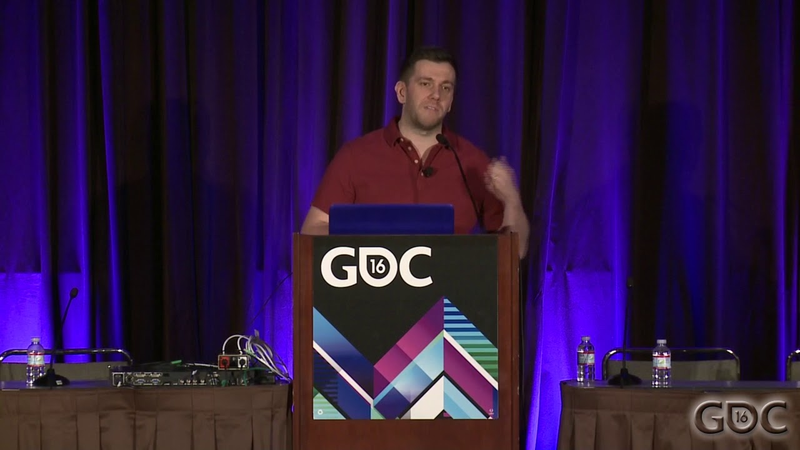
[Music] hello I'm Holly this is a window it's not a very good window we'll come back to the window in a few minutes so I'm Holly I'm half of a tiny company called Ma and Marco and we make games that usually have some sort of physical existence in the world and usually have some sort of invit to play a creativity so we do things like this which is a game called one easy step which happened outside King's College in London where where people were invited to make up their own games to play on these patterns that we' lay down on the ground they weren't quite games they were just patterns that that suggested games so you got the things we expected like uh groups of students playing with each other or like lecturers on the way to give a lecture who didn't want to see frivolous but
would sort of walk between things in a very methodical way but definitely not jump and not give away that they were playing or having fun and then we had things we didn't expect like a a guy on an hourlong business school standing out in there in the wind one day the wind billowing his jacket and we were watching from the windows on the sixth floor taking notes to see if the project had worked and as his phone call went on over the course of an hour he started pacing first within the the paths of the Maze and then balancing along the lines of the Maze and by the time he was 45 minutes into this clearly incredibly tedious phone call he was jumping from triangle to Triangle the jacket going b b BP behind him so we do things like that and and we do um silly little things like art deck which we made for uh no quarter in in New York last year which is a game
where you collaborate to make instructions for drawings and then you execute those drawings or like this for for children playing with an overhead projector and for children overhead projectors are now this amazing Hightech thing that they've never seen before they're excited and thrilled by something that they assume is entirely digital while their parents stand around getting nostalgic we also run a little festival called now play this where last year we focused in particular on games that had an element of of player creativity so we showed things like action painting Pro by Ian McClary and and inks by state of play and a load of different games where people were invited to write or compose or perform or otherwise create something within the course of the gaml itself and that's what I'm talking about today I'm talking about games where people are invited to create something as part of their core gameplay experience so so sometimes Charming
freear like nicod dis orops castles made of castles which is a fractal building game uh IOS games like state of play by inks where you're making a game of pinball where as you splatter the ball against the sides huge bursts of color come out and make a a pattern a record of how you've played and toah hair salon too where you give your clients haircuts and they're beautifully animated and whatever you do with their hair they are so delighted they make little noises of pleasure and delight and occasionally confusion but the confusion always resolves into this delighted face at the end whatever you do to their hair they love it things like media molecules dreams where the whole pictures that you can create anything you want or elegy for a dead world where you're invited to write a poem within the course of play and also things like diert and Pictionary and board games that get people making creatively and things like just add people which which is a
gorgeous instant architecture game where groups of people collaborate with these little nodules and sticks to make wireframes of buildings collaboratively even things like Exquisite corpse you know that paror game where you draw a bit of a picture and you leave some lines hanging off and you fold it over you give it to someone else they draw a bit more of it and then at the end you unfold it which is both a game that kids play in primary school and also a game that the artists from the 1920s onwards have genuinely played as a way to generate interesting work so everything in this sort of range of games that invite you to make something in the course of playing and I think the various techniques that you can use are very very transferable between digital and physical games here so over the course of the next however long I've got 25 minutes left I'm going to be talking about why we might want people to create things as
part of our games I'm going to talk about what stops people from wanting to create things both within games and generally and then I'm going to talk about some techniques that different games use to break through that reluctance to create and the way that the different techniques encourage different particular types of creativity but first why why would we even want to do this in the first place to start off with getting involved in making something with a game can increase your sense of investment within that game as a player this game here is a super lovely walking game where players generate a random walk that directs them around a building or around a park but before they start playing they have to fold the paper of the dice that they're using to generate that walk and they have to write an extra instruction on it themselves the designers could very easily have pre-folded these or got the dice printed in advance but having that process where your making the thing that you then use
in the course of the play makes people excited about it we know this with as a logic behind character creators right if you've made a thing and it feels personal to you then your investment in the game experience is greater and partly because of this getting people to create things in games is a really good way of encouraging them to share stuff and again we know this about people in general right if you're sharing a picture of a cake on Facebook the chances are it's a cake that you made yourself it's not a cake you just happen to be approximate to at some point if you have a baby on the lock screen of your phone might be a baby that you gave birth to yourself it's probably not a baby that someone else is Raising even if their baby is way cuter than your baby when we make a thing we feel like it says something about ourselves and it's things that say something about ourselves that we want to share with our friends and family creating something within a game can provide a change of tone it can give you a moment away from the hurry bury
hurly Bly of the game itself without taking you out of the game World it can give you a moment to do something funny or restful or without the stress of whatever it is that you're trying to accomplish a moment to pause and breathe but still remain within the game it can get people to create wonderful things and I guess I don't really need to explain why creating wonderful things is good right having wonderful things is nice let's have some more of them it can help players develop skill skills and understanding about how to make stuff which are then transferable outside of the game they can make people write things or draw things and learn about the tools and the scope of their skills and expand those slightly and finally they can just be really really good fun making stuff is is nice making stuff is satisfying and delightful we're mostly here because we're super lucky and get to make games and and not everyone gets to make stuff as part of their job but everyone has
the capacity to enjoy the process of making to feel satisfaction and delight at a thing that they have made and for a form games which trucks so much in satisfaction and Delight neglecting the possibility of making one of the main things that gives people those experiences just seem silly so there's a load of different reasons that you might want to get people creating with a game within a game but getting them to actually do it can be super ser difficult there's plenty of evidence that this is particularly the case for games rather than for any other form because for example games often provide people with these uh extrinsic rewards and there's plenty of research that shows that having an extrinsic reward for doing something creative will lower your motivation to continue doing that creative thing and also sometimes make the creative work that you do do worse and there's not that many games around that do this to use as models this is a quotation from uh guys ma in 2014 which
was an MA specifically looking at games that were used to encourage creativity and in the in introduction he's just like I had a look there basically aren't any this Ma has to be totally theoretical and I don't want to criticize the ma it was super interesting piece of work I recommend going and having a look at it if you're interested in this kind of thing but the fact that even someone who's interested enough in this topic to be writing an MA on it isn't necessarily aware of Prior work in this area mean we are kind of acting at a disadvantage but there's also things that aren't specific to games but are specific to getting people to create under any circumstances whatsoever so here we have this this drawing of a window again my friend Sarah Drew this drawing of a window when I made her sit down at a table and there was some graph paper and some marker pens and I said draw a window and because she's very obliging she did but it's not a very good window and she
didn't enjoy drawing it and altogether at the end of the process she was significantly less happy than before I made her draw a window and the reasons that she didn't like this were that she had she didn't know how to do it she didn't particularly know the characteristics of the marker pen that she was working with she didn't really have any background in visual art so being demanded that she draw a window out of nowhere is incredibly uninviting I would hated if someone jumped out and yelled Holly Holly write a poem now when I was going about my normal day it's because of a lack of confidence which is related to a lack of ability but it's not necessarily the same thing in fact people who have a little bit of ability in an area are sometimes way less confident because their expectations for themselves are higher and their fear that they'll look silly if they make something bad is greater so you have to address lack of ability and lack of confidence in your ability
separately and finally lack of motivation like I didn't tell Sarah that I would use this window in a talk or at least not until later I just said draw a window she had no idea why she was meant to be drawing a window why she might want to do that and what she would get from it and that's another thing that people often find themselves up against when asked to create why am I doing this why would I want to is someone going to laugh at me can I even do it what will I get out of it these three core worries lack of ability lack of confidence and lack of motivation and not all players will experience all of these lacks but someone will experience all of them and in order to successfully get people creating within your game you need to address all of them simultaneously so just to recap people often don't have the ability and the confidence and motivation to create things within a game but if they do if we can overcome it there are so many good reasons to get them doing it so for the rest of the talk I'm going to talk talk a little bit about different ways
that games in the past have encouraged player creativity how that tends to work what the different techniques are and the first one is by far the easiest you just give your players instructions you just tell them what to do and that might even be very very explicit instructions the simplest of all ways to get people creating you just tell them to do a thing and maybe you even score them on how well they've done it that might be recreating a picture might be singing a song might be doing a dance I'm really really really bad at singing like spectacularly bad at singing I have a range of four notes and whenever I open my mouth it's almost totally random which of those four notes is going to come out but I love sing star anyway because its instructions are so explicit and the thing that it's getting me to focus on is such a minimal part of singing It's try to get a correct note and then do it for the
right amount of time it doesn't care about my expression it doesn't care about any of the fancy sing words that I'm so bad at singing I don't even know what they are and people who are really good at singing sometimes find singstar really frustrating because it doesn't allow them that range of creative expression but for someone like me having these very very explicit instructions is reassuring it takes away the pressure it tells me what I'm meant to do and it gives me a way to figure out if I'm doing it right or not a lot of lot of dancing games do a really interesting thing where they find a way to give people that sort of support and comfort but also still allow for Creative expression so for example if you play Just Dance just using your phone as the thing then the game is only looking at what that one hand does it doesn't care what you do with your feet so people who want to be fancy and be more creatively expressive can and people who just want to focus on that one hand can do that Dance Dance Revolution back in the day is still my favorite dancing game of all time because it focuses on your feet and then
leaves people who want to be fancy want to spin around and wave their arms around to do that but people who need that reassurance and handholding can just focus on doing the right things so explicit instructions can level the playing field by focusing on a particular area rather than requiring everyone to be good at everything all at once and they can hold you safe and make it okay they can tell you what you're meant to do and you can just concentrate entirely on execution sometimes you get tension between the scoring systems and what would actually make for a good creative work and it can be difficult to leave space of creative expression but these things are really really useful another slightly subtler way to give people instructions is to not necessarily tell them what to do step by step but to give them a prompt you give people a blank canvas with a specific task but you don't tell them how to do that task so this this this is a this is a
different window and this is another drawing that Sarah did immediately afterwards when I pointed at a window in the corner of the flat and said draw this window and this is still not a masterpiece of Modern Art sure but it's a way more interesting drawing and also she had a nicer time doing it and at the end she felt confident that she had done roughly the correct thing because she could look at the window and look at the thing she had RW and go yeah yeah all right that's approximately correct elery for a dead world is really instructive here because I've been super open about their design process and how when they started off people who played just felt sad initially they presented people with these beautiful landscapes and then just said write a poem which made people feel bad about themselves and made people feel insecure and didn't result in any poems and so over the course of the design process they iterated on this and started off by giving people incredibly specific prompts that might just be filling in one sent or two or a single
word of a sentence and then over the course of the game as people's confidence grew became broader and broader about the things that they were being invited to do so if we look back at the three things that stop people creating sort of lack of ability and confidence and motivation a prompt can help with all of those it helps with ability by answering the question of what am I meant to do at all it helps with with confidence by handholding you a bit through it and also giving you an excuse if the thing isn't good right if you are told to do something and it's terrible and it's something you chose to do yourself you feel bad but if it's something the game has told you to do then you don't feel like it's your fault as much and finally it helps with Motivation by by sparking curiosity a well-chosen prompt can get people wanting to jump in and finish it it can motivate them if I say there was a young man from New York who wanted to learn how to and I just leave a space there then
your brain wants to fill it in talk walk what is it you want to pick the best thing for it it's this moment that's both easy to respond to and slightly intriguing so prompts do all of these things they make tasks less scary and they also encourage people to to feel like they're responding to the game rather than just responding to something inside themselves they can be difficult you can get something that's either too vague or too specific and you have to make sure you're allowing space for players to genuinely be expressive which you might need to build up over the course of the game but prompts are I think probably my very very favorite way to get people making stuff final type of instruction slightly vaguer one much more enigmatic and I think this one is generally underused this is where the game doesn't give you upfront instructions but instead responds to what you do in a way that makes you want to figure out what it wants once you makes you want to try to please it so this is Joy exhibition by strange think where you make these like spray paint gun paintings and they go up
and Aliens wander around and look at them and sometimes they'll stop in front of a picture and it might be totally random I think it probably is but as you play for the first 10 minutes you try to figure out what they want from a picture you go back try to make a new picture that they'll like more and present it to them pip and Bar's art game does the same thing you you basically P play Tetris to make a sculpture then you phone up the tiny cartoon curator who comes along and tells you if your sculpture is any good or not and I have no idea how the curator figures this out but trying to pleas them becomes the core of the game and you're driven to go back and do that again this is one of the more interesting windows that Sarah Drew and when she Drew this one I just sat nearby and made noises like ah as she Drew and I was again making them totally at random but she interpreted them enough
to try to drive her to do things and experiment with things that she otherwise wouldn't have she had the same amount of instructions as the first time I said draw a window but she also had me sitting there seeming to respond to it and that seeming response was a thing that drove her to explore different ways of making and different things that she could do in the desperate hope that I guess I would eventually let her stop drawing windows so instructions great but very upfront very very aimed at a particular sort of thing another thing that you can do is give your players an excuse this helps in particular with lack of confidence people are scared about making a thing that's bad well if you give them an excuse for why it's bad they don't have to be scared anymore so you can do this by increasing the difficulty for example and making it really really hard to make a good thing this is a window that Sarah Drew with her foot and it's terrible but of course it's terrible she was holding a mark pend between her toes and I think she
had more fun drawing this one than any other window and she didn't care that it was terrible and we know about this in building games for example which are constantly coming up with tornadoes and dinosaurs to get in the way of things that you're trying to make we know what with games like fake artist goes to New York where it's difficult because you're trying to draw something without giving away what the thing you're drawing is to to a spy within your ranks so difficulty relieves the pressure to make something good and makes you feel better about whatever it is that you do make if you make it so there's no chance of making something good then it can be a quite shallow game you'll only get people engaging with it for a relatively short amount of time but even that shallow engagement can be an enormous amount of fun another sort of excuse that you can give is limiting the control that players have over the output of their actions so the relationship between what they do and what the game does in response is maybe enigmatic or maybe you only get to make one decision every five or 10 seconds so you get something like become a great artist in just 10 seconds
where you're first presented with a ridiculously difficult demand to for example recreate a picture precisely so there's already difficulty acting as an excuse but then there's a really enigmatic relationship between what you do and what comes up you press a button on the keyboard and then something happens to your bright glitchy drawing which might transform it like unstoppably irreversibly and so what you start doing is not necessarily trying to do what the game tells you to do but exploring the possible space of things that you can make within this enigmatic toll you get music games like shikan and looks like music that do a similar thing which translates someone's physical drawings into sound and so what you do is explore the space of different noises that you can make and music games tend to do this quite a lot right you're not necessarily trying to make something from scratch and the relationship between what you do and what you get can be very very vague but you gradually feel it out and you're motivated to explore the space of possible things
that you can make so limiting the control that people have is really great for getting them to make something within a set of of Aesthetics that already exist and explore what's possible and make something that speaks to them it can be a risk that you end up with people making things that look the same so you have to make sure there's a really wide range of expression possible within it but if that's done then you know the sky a limit okay distracting your players so you give players a different non-creative task to do at the same time that they're doing the creative task this is very good for being funny this is a window that Sarah Drew while I also got her to say her times tables from 1 by one through to 10 by 10 and when she got to 10 x 10 she had to stop and I think this is of all of the windows my actual favorite because she was distracted from thinking too much about what she was doing and being worried about it because she was focusing on saying her 10 times tables instead this obviously isn't a game it's it's barely A Step Above bullying
but but if you get look at games that do this well what they tend to do is have something where the task that you're meant to do that is a distraction nonetheless feeds through into the creative thing that you're doing so bounden gives you a little shape that you've got to keep in a particular area on the phone between you and as you start moving in order to accomplish that without you even necessarily noticing what you're doing you start to dance because it's been choreographed to make you make these graceful movements while you're distracted Pictionary less beautiful than bounden but just as much fun you get the distraction of trying to communicate something and then you don't necessarily worry about what it is that you're doing and again the thing that you're doing as a distraction and the thing that you're doing that is a creative work are really tightly bound together and action painting Pro which is one of my very very favorite games of all time where you're a little figure jumping around trying to keep enough sort of hearts and dollars and light bulbs to continue
making your artwork as you jump around but you start picking up paint and leaving it an enormous tracks behind you and at the end of the game when you inevitably die you have an artwork that you've created and even if you start out trying to make a particular thing you never manage to do that you get distracted by the demands of the game and then at the end you look with new eyes at the thing that You' have made you can use your players against each other you can get them C collaborating and working on a creative task together which works really well because no one has sole responsibility for what they're doing so in this case Sarah and her girlfriend took turns to draw a line in the window one of them in dark red and one of them in bright red an Exquisite corpse works like this as well this this um collaborative art making game that I made a few years ago and this super lovely Thing by Scott Garner which is a a music game where you have to touch a star and the moon at the same time to make a particular note but the stars are so far away that you need
help from other people and once you start holding hands with people you no longer have soulle control over the tune and the music that you make as a result of it so you feel freed up to just experiment and mess around without feeling like you have to create a great tune right now so collaborating can get people feeling less responsible the risk is that they have a limited sense of ownership at the end and getting them to feel proud of the thing that they've made is is harder competition is another great one getting people directly opposed to each other I keep using Pictionary as an example because it uses quite a lot of these techniques really really skillfully uh you're not just distracted by having an aim of communication you're not just given a prompt of what to draw but you're also desperate to beat someone else and competition is possibly the best single way to overcome the question of why should I do this of motivation you're doing it because you don't want someone else to win you want to win if people are on board with the idea of games at all they're generally on board with the idea of doing
something in order to ensure a victory right again you can get this tension between the creative work and the quality of the creative work and the best thing that you need to do in order to win the game but it's still a super super powerful way to get people doing stuff and finally gifts and sharing so people working together and playing a game together making stuff for each other so this game where you're making music together and what you're doing is trying to support the person in their music or or back in the days of of draw something people weren't necessarily trying to make a bee to communicate be as quickly as possible they were doing these elaborate drawings to to cender people as gifts so in Social contexts where people like each other and already care about each other inviting thing people to make things for each other is really really powerful it can be intimidating because you need to make something for someone and they might hate it so you have to work really really hard at giving people confidence Ence but as a motivator it's
wonderful giving players a disguise you don't necessarily ask them to create as themselves you get them to take on a role they're not writing a song they're playing a character that's writing a song tabletop role playing games have done this for ages Right Live art does it a lot theater does it a lot this is a game where you run around with capes that make different noises and it's important that they're capes because capes make you feel like someone else you tell stories as your s and that's scary you tell stories as some sort of drunken 1700s Barren and it's less intimidating and finally you can help people make something within a game by making it easier for your players to create something good you can do that by smoothing out the edges of the things they make secretly create taking the thing that they have made and and making it better we made this game art deck that I mentioned before and we spent a long time experimenting with different
prompts to forgive people we spent a long time experimenting with different marker pens and crayons and different things that people could use but the single thing that we did that made the most difference to this game is we started at the end of the game putting a frame around it and that made it feel more like a thing and also it stopped people from being bad at drawing secretly because the main way that people are bad at drawing is they don't draw to the edge of the paper this is the main thing the art teachers yell at children for the first two years of high school draw to the edge of the paper fill the pages look confident if you have something sitting in the middle it doesn't seem confident it doesn't seem like a picture so we just framed it and cut off the inch around it after trying so many different game mechanics to get people to draw to the edge of the play edge of the paper and failing so you can be sneaky you can make their stuff better obviously it means that you're making decisions about what better is so really Innovative work can often get squashed down by that but if you're
happy with that then secret Improvement is great you can give people a constraint that stops them from doing something bad another thing that people often do badly when they're drawing is they do lots of little unconfident lines or they put in lots of peripheral detail that detract from the main thing so in this case I didn't let Sarah take her pen off the paper and the thing that she got at the end of her was I think more interesting sort of visually than most of the other things that she Drew so a constraint can make something sound harder to do so relieves the pressure but actually it makes it easier and it denies people access to bad decisions that they might otherwise make and finally practice right we make people good at stuff by making them genuinely good at them we make people more confident by getting them to do something until they genuinely know more about how to do it I want to be clear that I don't think that games that encourage player creativity should necessarily be aimed at making the uh uh focusing on the the quality of the creative work but if we're getting
someone to do something over and over again it would be silly to neglect the possibility that they might end up being actually better at it than when they started so to summarize these are all different techniques that we can use to get people creating stuff within games to get them experimenting and making and sharing with each other and with people outside the game there's particular stuff that we as game designers in particular need to watch out for like the tension between gameplay and creation or whether people get bored mechanically or creatively right there's two ways for them to get sick of your game but if we can do that then we've got this this area that is I think genuinely one of the richest and most exciting places to dig around in in games and try to find new things that we can get people to do and get them to play thank you
Auto-generated captions from YouTube — names and numbers may be misheard.
Key insights
Distilling the key insights…
Ask AI about this video
Cite this video
Citation
Generating citation…

















Comments