1 free read left. Create a free account for unlimited reading + AI research.
Create free account
Bendi game – Designing for kids
Key insights
7 takeaways- 01For the two-to-four-year-old cohort, prioritize visual communication over text and avoid complex animations or surprise elements that cause cognitive overload.
- 02Designers should shift from upfront instruction for younger children to post-failure feedback for users aged eight and older.
- 03Effective design for children requires segmenting development into two-year increments to match specific cognitive, motor, and aesthetic capabilities.
- 04Children aged four to six require simple, attainable goals and character-led guidance to maintain engagement, as they are highly prone to distraction.
- 05The six-to-eight-year-old group prefers structured, rule-based gameplay focused on task mastery, while children aged eight to twelve seek autonomy and complex decision-making.
- 06Developers must maintain transparency regarding data collection and advertisements for older children, who possess a higher awareness of digital privacy and content authenticity.
- 07Optimal engagement is achieved by designing at the edge of a child’s current capabilities to balance the need for challenge against the risk of frustration.
Ask AI about this video
Transcript
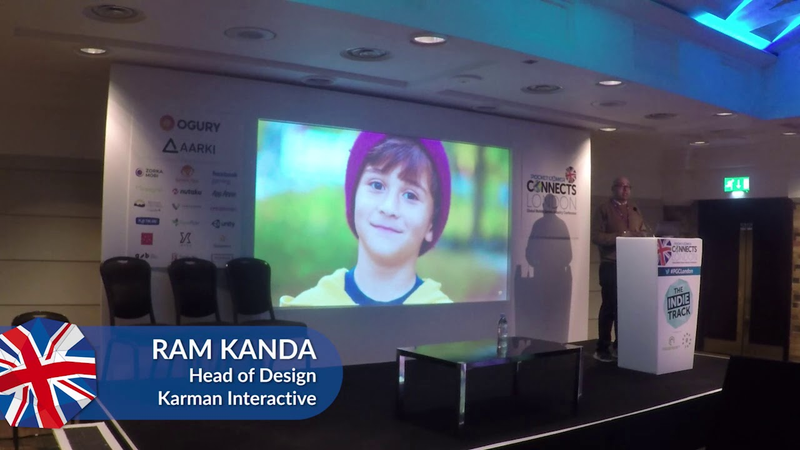
[Music] hello everyone thank you so much for coming as introduced on ROM Canada I'm partner and had a Harman interactive where a digital services company making apps games and websites for kids well actually for clients more broadly I'm doing my talk today very specifically about doing apps games and websites for children it's it's it's not a big focus of ours right now but for a big portion of my career that was actually the big focus I started my career on youth it's a kids focused marketing agency over in
Canada where I got to work on some super cool projects for some brands that I love I worked my way to being an art director and eventually the creative director there we worked on a lot on McDonald's Europe stuff so that was over here I also did things for WB kids DC Comics NASCAR NFL Kellogg's Hasbro and lots and lots of others as well but access to some of the best researchers and strategists that we could find when it came to kids stuff as well so I got to see things like a chart that correlated the number of balloons in a Quick Serve restaurant with the happiness of kids and it turned out the more balloons there the happier kids were that was an actual chart which I thought was kind of neat so surprise surprise more balloons happier kids then I moved to San Francisco to go work on some frames for a while so I won't go on this too much I worked on crime city and
modern war this is a little bit older of an audience and we're going to be talking about today and then I moved over here to go work at Mind Candy in London in five years these are the makers of moshi monsters some of you might be familiar eventually became art director there and also the lead of UI and UX so moshi monsters for those who aren't familiar it's online there's 90 million plus registered kids at its peak I also got to work on pop jam and moshling rescue and world of warriors so those are all great I personally love pop jam which is like a social network for kids it's now in the safekeeping of the kids strategy and marketing company super awesome they're doing amazing things with it now as well then I move interactive where I am now so we don't what we're not specifically
a kids company but we do have a lot of kids clients so that includes Disney and Mattel and say go mini at the very young end and then as we go a little bit older we have bendy as well which we worked on most recently and we're doing lots of work with them continuing to do work with them as well for the older teens and tweens so while that might be interesting for you it max really more useful if we kind of plot these things out a little bit so I very roughly kind of plotted them on an AIDS graph because what our kids write when we say kids you kind of have to put them into smaller age because when most people hear about designing for kids or that I design for kids they get this idea in their heads of a thirteen year old with a backwards cap maybe dabbing or something but it actually turns out there's a lot more to kids it turns out that this is not one
monolithic group these are kids with wildly different sensibilities aesthetics and most importantly capabilities so especially at the earlier ends of the spectrum eating so much right we have these little kids and they become bigger kids very very quickly and so when we're developing software and games for them we have to express their personas accurately and we have to be truthful with ourselves about what our target target audiences are so it's not really enough to say you know we're making something with the target audience between three and thirteen because what does that mean right you're talking about someone who can barely form a sentence and then at the other end of it this is someone who has all the baggage of a team a jar almost and they're kind of carrying that into all the experiences they're doing as well and that's kind of known to those of us who have kids I have two boys and there's a three year difference between them but you know that's a world apart when you're talking
about kids that young so we have to break out personas down into something more workable and then we start this negotiation between what the brand is that we're working with and what the mechanics of our game are and then who our Audion tube II a very deliberate and considered balancing act when you're actually making this stuff so I like to think of it into your increments starting at two years old now there's difference between kids and obviously every kid's unique but for the sake of actually making something workable you have to kind of squint and make out the broad outlines of what these trends are and what these two-year increments are and the sake of this talk I'm not going to focus on gender at all we're just talking about age really and so a lot of this comes from my own practical experience but there's also a paper written by Deborah Levin Gelman in 2014 about her kids and she did a great
job of sort of boiling this down into and into things that we can use so if you'll allow me I'm gonna sort of step through age by age sort of considerations that you might want to make at each of these so two to four year-olds I'll start with that at this age range the kids are firmly pre readers and that means communicating with images rather than written words and you guys probably already have that figured out but what kinds of Emmett write these kids are just starting to think abstractly but it's way too early to think that they're gonna sort of get the metaphors that we're kind of thinking of so while we might have icons and symbols in our designs and that might look nicer to us it actually might be more useful to for for kids this age to be able to see illustrations or photographs of what it is that they're going to be working on or what they're going to be looking at so with a simple shape might fit the
aesthetic more but you know we want to use illustrations and photographs so a picture of a YouTube like video or a screen is more appropriate than saying a little triangle button and and and them knowing means there's gonna be a video on the next page because you're very likely might not know that's what that means so kids this age also prefer to tend to prefer open-ended toy experiences and your sort of classic game play this outcome-focused game play that we have for for the older kids so if you think of sega Minnie's games if you've had a chance to experience those those are really really well done and we've you know again we've had a chance to work with them on that but you'll need to be wary when you're doing these things because we tend to overpack these types of experiences and we make everything beep and buzz and do all this sort of stuff but this age this age kids tend to
associate only a single function with an item or object so if you roll over something and it does something the kids are gonna think that was this whole purpose of what that was for right they're not gonna think that there was another reason why it was doing that and the popups and stuff for just to entertain them they're gonna think that's that's why you actually did it so this goes very much against the surprise and delight feelings that we sort of have and and and the things that we wanted them and we often assume that's the right approach but in her book bye-bye baby the author Susan Gregory Thomas she argued that the interest that the kids are seemingly having in all these things that are beeping and bobbing around it's out about kids confused kids trying to make sense of what they're seeing rather than actual engagement so you know just be wary of trying to pack too much in so what should we actually do we should limit the big navigation elements to
navigation for example so don't make them pop just have navigation elements be navigational you want to create a very clear visual visual distinction between items and design extras and because of this we'll want to make foreground elements much more detailed than the background elements all sort of obvious but how far do we need to go we for instance putting a white outline around all the interactable objects might be a little too on-the-nose for other age groups put fries perfect so two to four would be super you know show the stuff off as much as possible next up we have the four to six year olds their tastes are starting to get more sophisticated for use to sustain them so it's not enough just to sort of show them things that they need to click on they actually want a little bit more of a story going on as well so try and weave in a little bit more of a narrative these kids have wild imaginations they prefer to create on their own rather than follow step-by-step instructions so you want to
make rules for play and engagement as basic as possible and then allow a lot of room for inventions self-expression and storytelling also this intense curiosity about the world they're really interested in learning new ideas activities and skills and they may become frustrated when you know when when learning takes longer than they'd like and they also get sidetracked if you have them on anything that long you might notice this if you have kids of your own and you you're getting them dressed and they start just focusing on their socks for ten minutes or something because of all this you want to keep activities simple short and rewarding you want to set attainable goals for the tasks and activities that we create and we also want to create create context based help as well so kids have an easier time processing information so we want to provide feedback encouragement after milestones they're also developing increased memory function as well complex they can recall
complex sequences of events just by sort of hearing them so for instance you might want to say to them touch all the red stars and all the green apples as well and so we're kind of getting all this for them and are a little bit more engaged than if it was something too simple for them because they'll reject the simple stuff really quickly they think that's baby stuff really fast another thing mind is that four to six year old kids are becoming more empathetic so they're aware of other people's feelings and can relate rather than just thinking about themselves so they care when someone else is hurt and they want to share in their joy when they're happy I start introducing mpz characters to actually give guidance rather than just detached UI messages I'm gonna have a little owl character or something in the corner that's actually giving feedback that's what they'll love
next we have six to eight year olds so these kids in North America would be in grade one proper school has begun they're done kindergarten or nursery I guess as it would be here we stop to presume that they're pre reader a lot of them can read at this age but a lot of them can't so we have to sort of presume that way but at this point they've developed past the flightiness of the kindergartener they prefer upfront knowledge that to exploratory investigation they don't like guesswork so a lot of this is what they're learning at school yeah and so you know at school they have strict rules about the way things should be and that's what they expect with their experiences as well so they want every table shopfront and so they're more likely to they're less likely Explorer and they just want to ask what should I be doing here so you have to be very clear at the beginning of the experience what the point is and what the kids will be why
and then create super easy to follow rules for them they cannot focus and they like to master something completely before moving on and another thing to keep in mind is that they provide 2t to quality at this age so this is a good chance to put in the you know the little ramification strategies like awards badges and so on so all the little collectible things that you might have in there these kids aren't looking for a deep experience they just want to collect lots of stuff it was a good idea for a 68 year old aged 10 year olds so these kids like to be the experts they don't read instructions so what a difference from most a little bit younger they're done with getting the rules up front so you can see while we're dividing into these two year increments because they change so much so the eight ten year olds they want to be left alone to explore on their own so that's that's a whole different different and they can take into account
multiple aspects of a problem in order to solve it they like more complicated and challenging interfaces that require them to think and use post failure messaging to teach instead of upfront decisions so they'd rather just be left to daunt and then you can just tell them after if that was good or bad or not and that's the way they prefer to to kind of get it keep the level of complexity relatively high but not impossible to figure out these kids can also tell the difference in actual content and they'll hate you for it so just make sure that you draw a very clear division between where the ad is and what your fault is and so you can almost blame the advertiser in this case if it looks very separate and apart from what your experience is if you didn't they figured out that if they can fit about themselves online and no one will know probably so if you need to collect I stuff about their identity it's it's
not really a rely on for your own personal metrics because chances are the kids have made all this stuff up so you you you probably want to get parental opt in to get demographic info and that sort of thing if you do need that sort of thing and sorry 10 to 12 year olds so these kids can imagine the outcome of particular actions and decisions they think and deliberate before acting so take the guesswork out and provide opportunity for complex decision making but using simple designs that was that guy it's really hard to find pictures of kids that don't look really creepy by the way these kids can think creatively they like to build their own zin determine what the outcome should be so think about the story our interface is telling is it sequential are there multiple pathways because these kids love to do that and take different paths and and kind of find their own way and
they've started using mobile devices some of this research is a little bit older so yeah of course mobile first all the time mobile only is fine now at this point they see themselves less as generalists and more specialists so when you're creating stuff don't sort of just make the idea of how giving them an experience in general they've honed in on things they like and things that they're good at and what interests them so steer away from basic and general content on particular areas of interest such as art music science animals and so on so do you want to focus a little bit more with the experiences that are creating for them and so conclusion this is all a very cursory look at these micro cohorts it's not meant to be exhaustive but an illustration of just how much kids can change from year to year it's also a sampling of the kinds of research that are out there there's quite a bit that's out there for all of them what I love about this is that making
games in apps it's for kids and research couldn't be clearer right if we ride the edge of the kids capabilities so you always want to kind of push them a little bit not make things too easy for them because they get bored very easily but they'll actually became become more engaged and you're doing tend to tell parents that we're doing most of the time anyways we're making stuff educational right and we're kind of always riding to the edge of their capabilities so yeah they're not bored they're learning about themselves they're experimenting with the very idea of who they are and kids who are more engaged and it doesn't feel like work to them and we can rest easier that we're doing what's best for everybody so at each stage we want to nurture their new growth and what's great is that this is a win-win situation it's not just altruistic - freeing and kids made through design the keenly more engaged because they feel the experiences are tailored to them thank you thank you
[Music]
Summary
Designing digital experiences for children requires a nuanced approach that moves beyond treating them as a monolithic group. Because children undergo rapid developmental changes in cognitive ability, aesthetic preference, and motor skills, effective design must be segmented into specific age-based cohorts. By tailoring mechanics, UI, and UX to the distinct capabilities of two-year increments, developers can create more engaging, age-appropriate products that foster growth rather than confusion.
For children aged two to four, design should prioritize visual communication over text, utilizing clear, non-abstract imagery. At this stage, children often associate a single function with an object, so developers should avoid over-packing interfaces with distracting animations or "surprise" elements that may cause cognitive overload. As children progress to the four-to-six-year range, they begin to value narrative and creative freedom. Designers should implement simple, attainable goals and utilize empathetic, character-led guidance to keep these users engaged, as they are prone to distraction and require frequent, positive reinforcement.
The six-to-eight-year-old cohort shifts toward a preference for structured, rule-based gameplay, often seeking mastery of tasks before moving forward. Conversely, eight-to-ten-year-olds and ten-to-twelve-year-olds desire autonomy, complex decision-making, and specialized content. These older groups are capable of navigating challenging interfaces and prefer post-failure feedback over upfront instruction. Furthermore, developers must maintain transparency regarding advertisements and data collection, as older children are increasingly aware of digital privacy and content authenticity.
Ultimately, the most successful designs ride the edge of a child’s current capabilities, providing enough challenge to prevent boredom while remaining accessible enough to avoid frustration. By aligning software mechanics with the specific developmental milestones of each age group, developers can create experiences that are both commercially effective and developmentally beneficial.