Policy
Company
62 documents in the library are about Policy, from writers such as Nintendo, PCF Group and Interactive Games and Entertainment Association. Each has a summary and key insights with the page they come from.
Connections
The documents about Policy on the inner ring, the other games and companies they name on the outer one. Select a cover to see it up close and open it in a new tab; drag to move, pinch or Ctrl + scroll to zoom.
Documents about Policy

I Read Every Word of Steam’s AI Disclosure Policy So You Don’t Have To
This analysis examines the evolving landscape of AI disclosure requirements on the Steam storefront as of September 2026.
- Steam's AI disclosure policy requires developers to report any AI-generated content that reaches the player, while internal-only tools like coding assistants remain exempt.
- The prevalence of AI-disclosed games on Steam has surged to one in three new releases as of September 2026, up from one in ten in previous years.
- Market data indicates that AI-disclosed games capture only 10 to 27 percent of total sales, suggesting that supply is currently outpacing consumer demand for AI-integrated titles.
2026 Policy Platform: New Zealand
The 2026 Policy Platformer, a collaborative initiative between the New Zealand Game Developers Association and the Interactive Games and Entertainment Association, serves as a strategic roadmap for the New Zealand game development sector.
- The New Zealand game development sector has surpassed $1 billion in annual revenue, with 95% of this income generated through exports to the United States and Europe.
- The Game Development Sector Rebate (GDSR) delivers a high return on investment, generating $4.74 for every $1 of government funding provided.
- Industry productivity is exceptionally high, currently estimated at $706,000 in revenue per full-time equivalent employee.
February 2026's Top-Selling New Steam Games: An Analysis
This analysis evaluates the performance of new video game releases on Steam during February 2026, while providing broader context on industry trends, platform updates, and console market dynamics.
- Resident Evil Requiem generated $75 million in Steam revenue and sold 5 million units globally, with 1.5 million units sold on Steam in its first 36 hours.
- Mewgenics was the top-selling new Steam release in February 2026, reaching 1.7 million units sold.
- Nioh 3 ranked as the second-highest revenue generator among new Steam releases, trailing only Resident Evil Requiem.

TWiG #367: A Certain IPO, 2026's 1st Cozy Launch & When CEOs Get Sued
Corporate governance and strategic pivots define the current landscape of the interactive entertainment industry.
- Shareholders have initiated legal action against former Activision Blizzard CEO Bobby Kotick, alleging that the $69 billion acquisition process prioritized personal financial gain and legal protection over fiduciary duties.
- Adtech firm Liftoff has reached a $4 billion valuation via IPO, signaling a growing industry reliance on AI-driven user acquisition financing to maintain growth despite significant debt burdens.
- Major publishers like Krafton are shifting strategies toward operational efficiency by leveraging AI-integrated development and user-generated content to scale established intellectual property like PUBG.
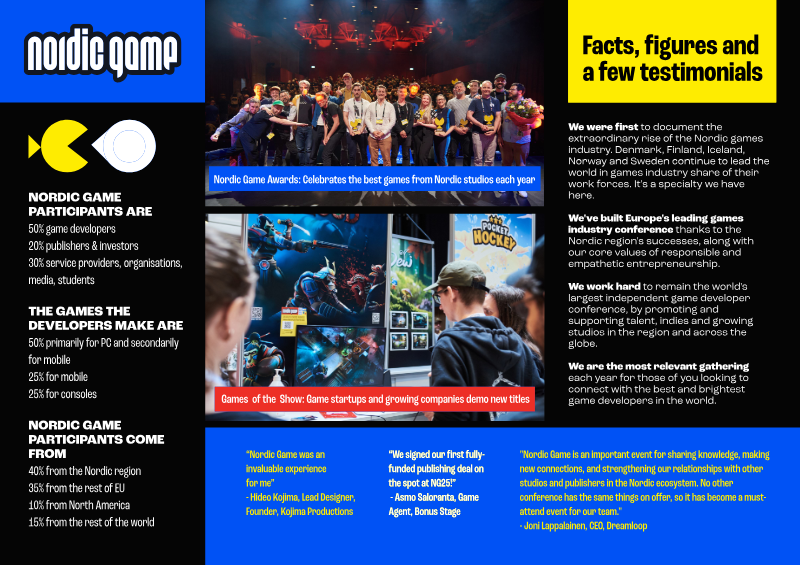
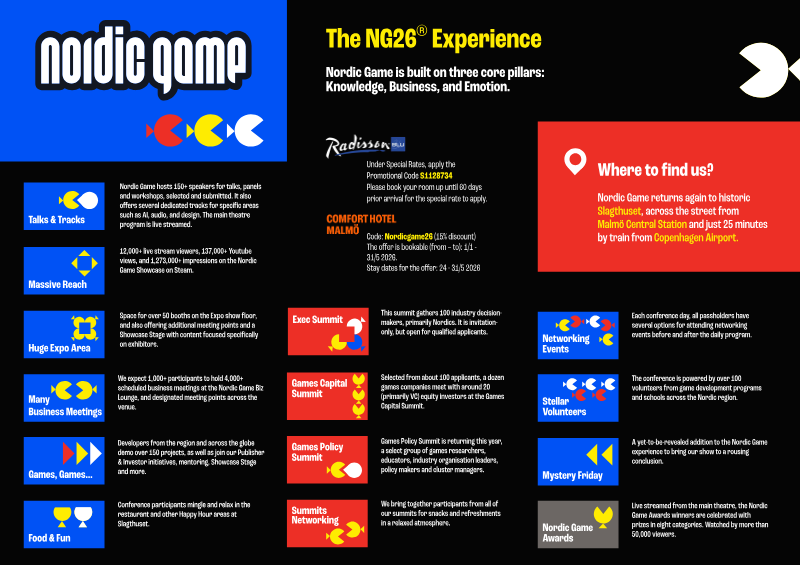
Nordic Game 2026: Participant Profiles and Platforms
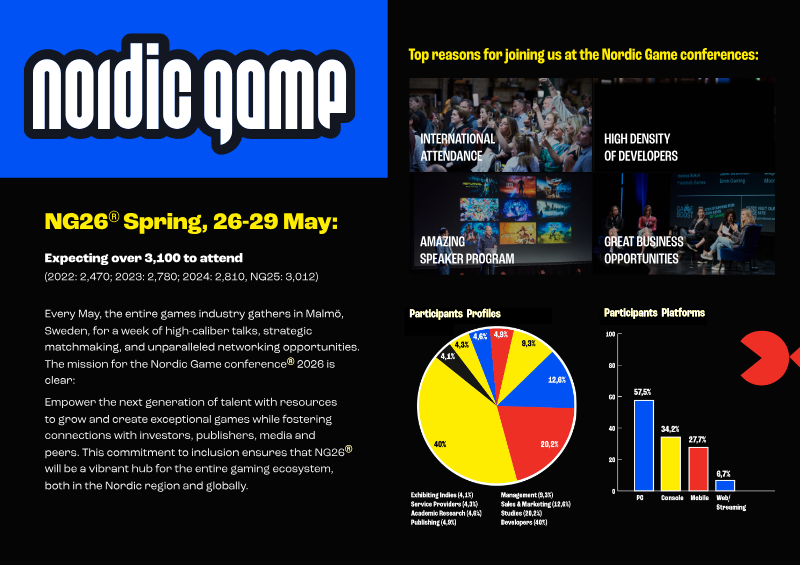
The Nordic Game 2026 conference, scheduled for May 26–29 in Malmö, Sweden, serves as a premier international hub for the global gaming ecosystem.
- PC development is the primary focus for 57.5% of Nordic Game 2026 participants, significantly outpacing console development at 34.2% and mobile gaming at 27.7%.
- Developers and artists constitute the largest attendee segment at 40%, followed by sales and marketing professionals at 12.6% and management at 9.3%.
- The event prioritizes business development by providing private meeting facilities that accommodate groups ranging from 4 to 50 people.
Annual Review: UK
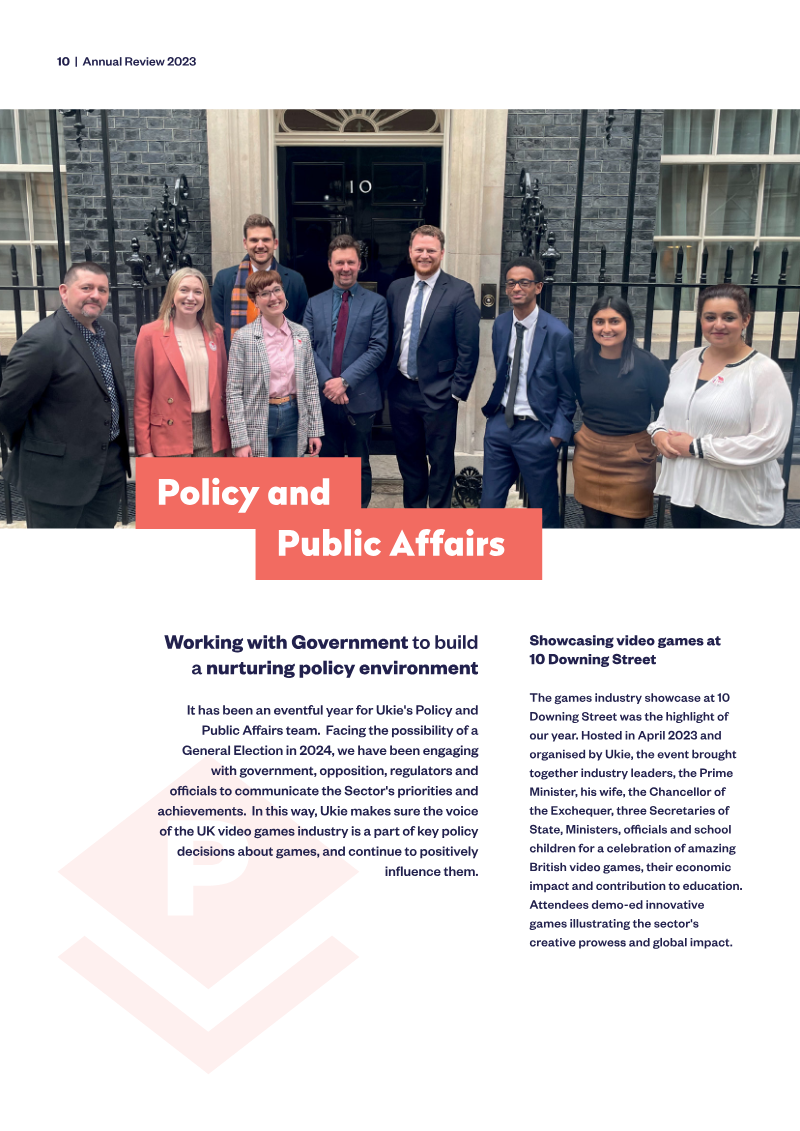
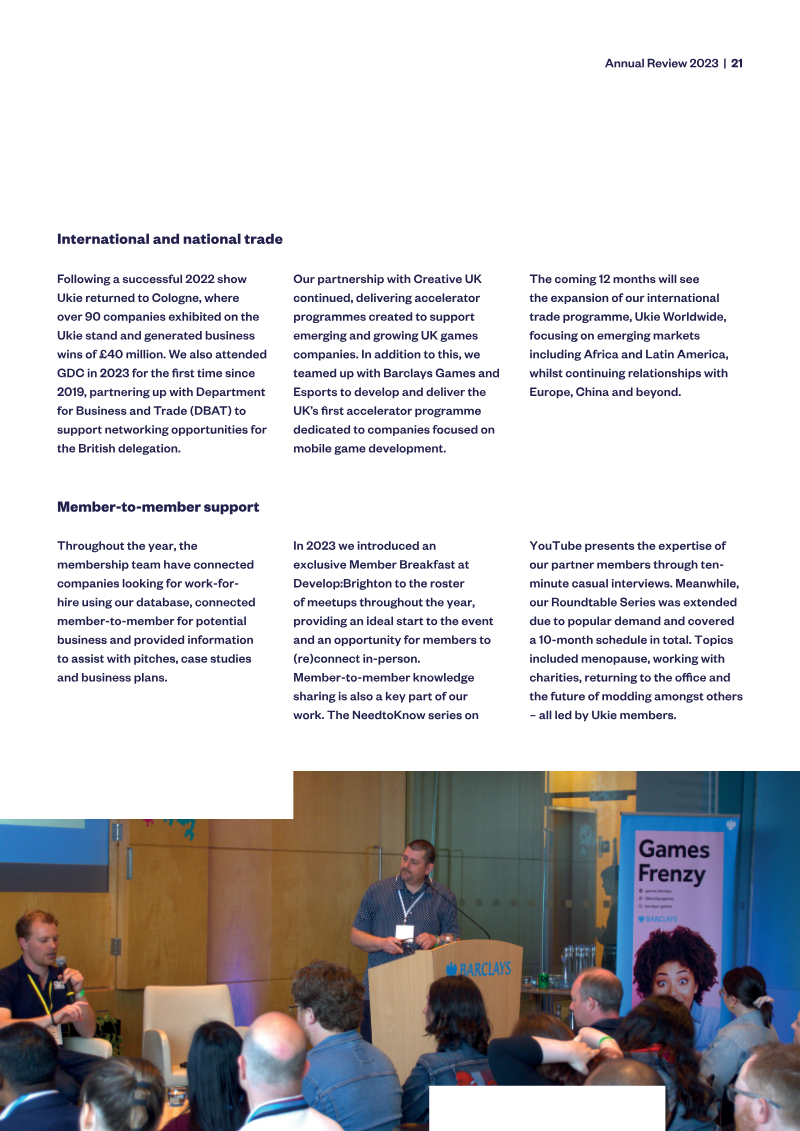
The United Kingdom games industry has solidified its status as the nation’s preeminent creative sector, achieving a valuation of £5.2 billion and a total consumer market value of £7 billion.
- The UK games industry has reached a valuation of £5.2 billion, with a total consumer market value of £7 billion.
- The sector is supported by a network of over 600 member organizations focused on maintaining global competitiveness.
- Industry policy has shifted from Video Games Tax Relief to the Video Games Expenditure Credit to improve financial effectiveness.
Africa Games Week 2025: Industry Summary
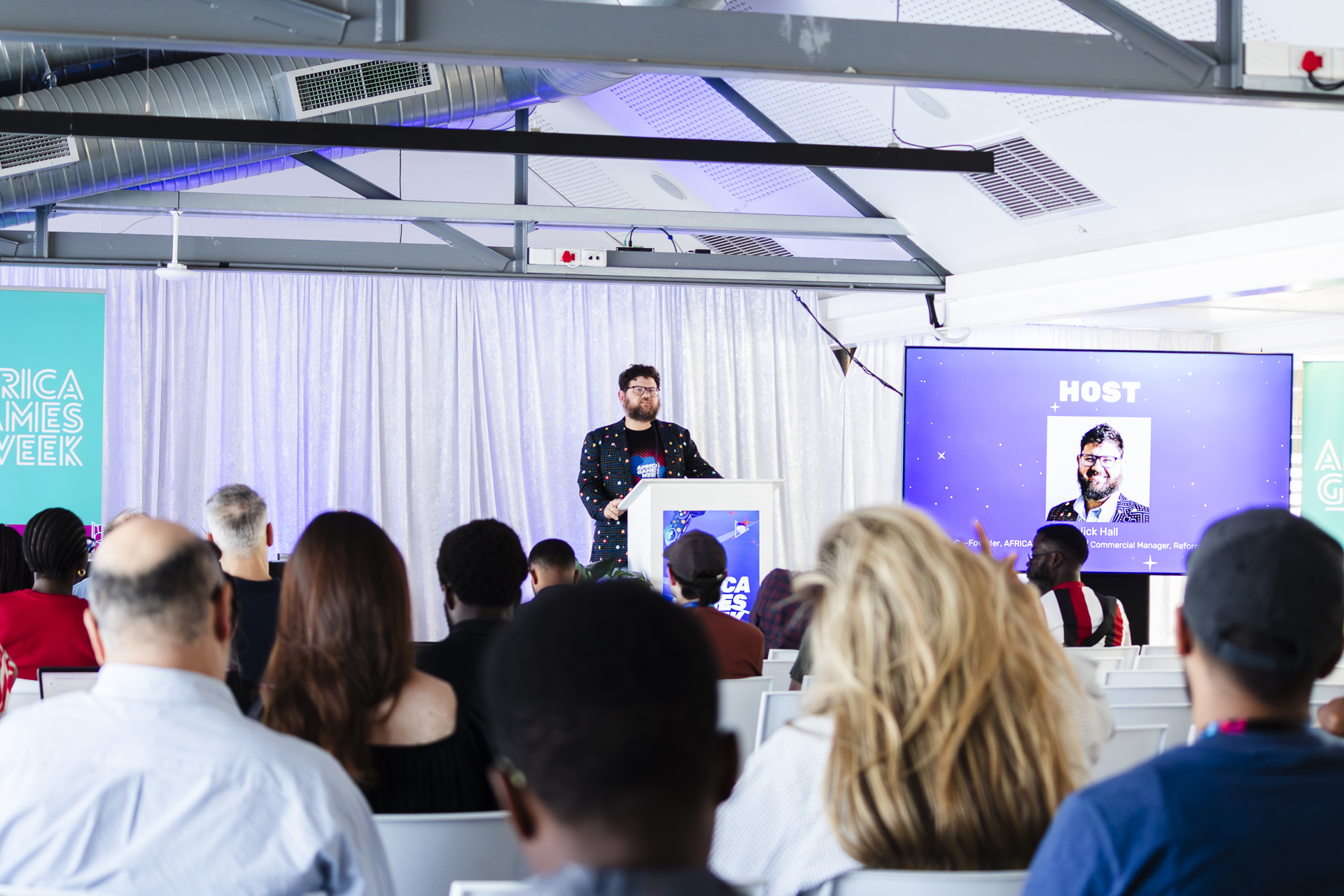
Africa Games Week 2025 served as a pivotal B2B event for the continent’s gaming sector, emphasizing commercial growth, international investment, and structural policy development.
- Africa Games Week (AGW) 2025 facilitated over 600 curated business meetings between 500 delegates, with the event attracting 1,500 visitors and 20 exhibitors to Cape Town.
- The South African government announced the creation of a new Gaming and Animation Advisory Committee to provide strategic policy and regulatory support to the Department of Communication and Digital Technologies.
- Supercell announced a new long-term investment fund specifically designed to support and nurture high-potential African creative studios.
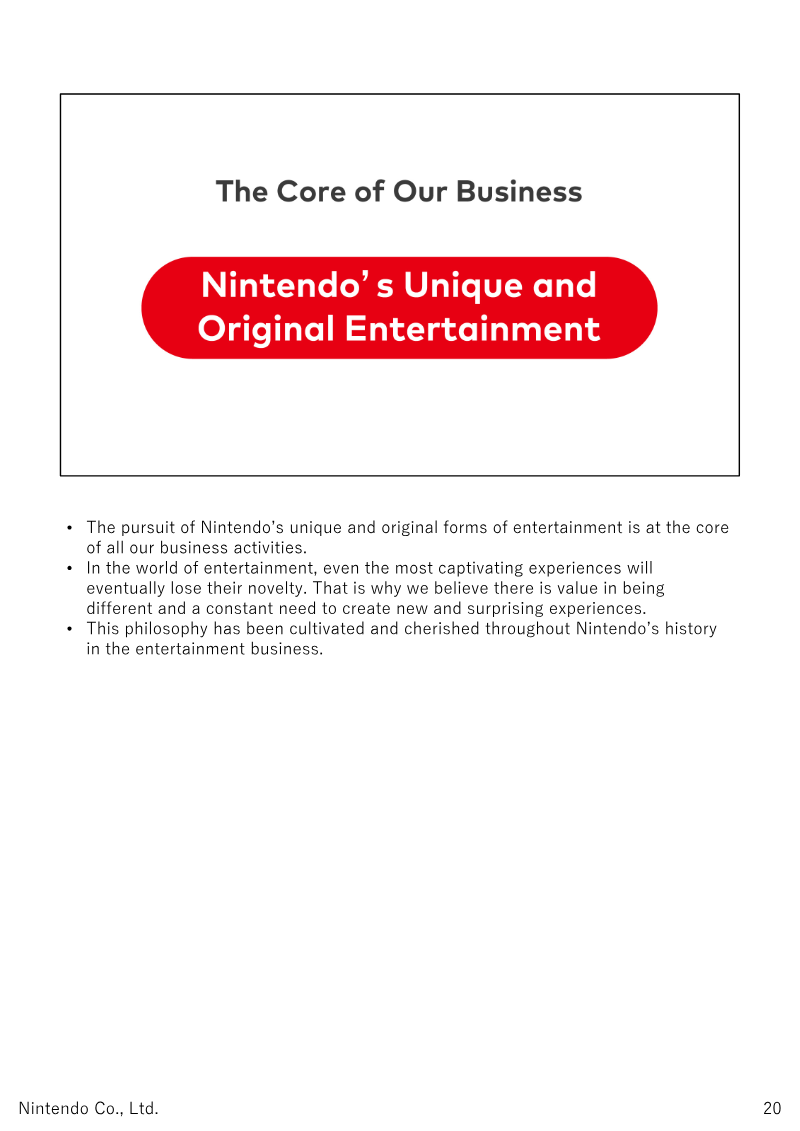
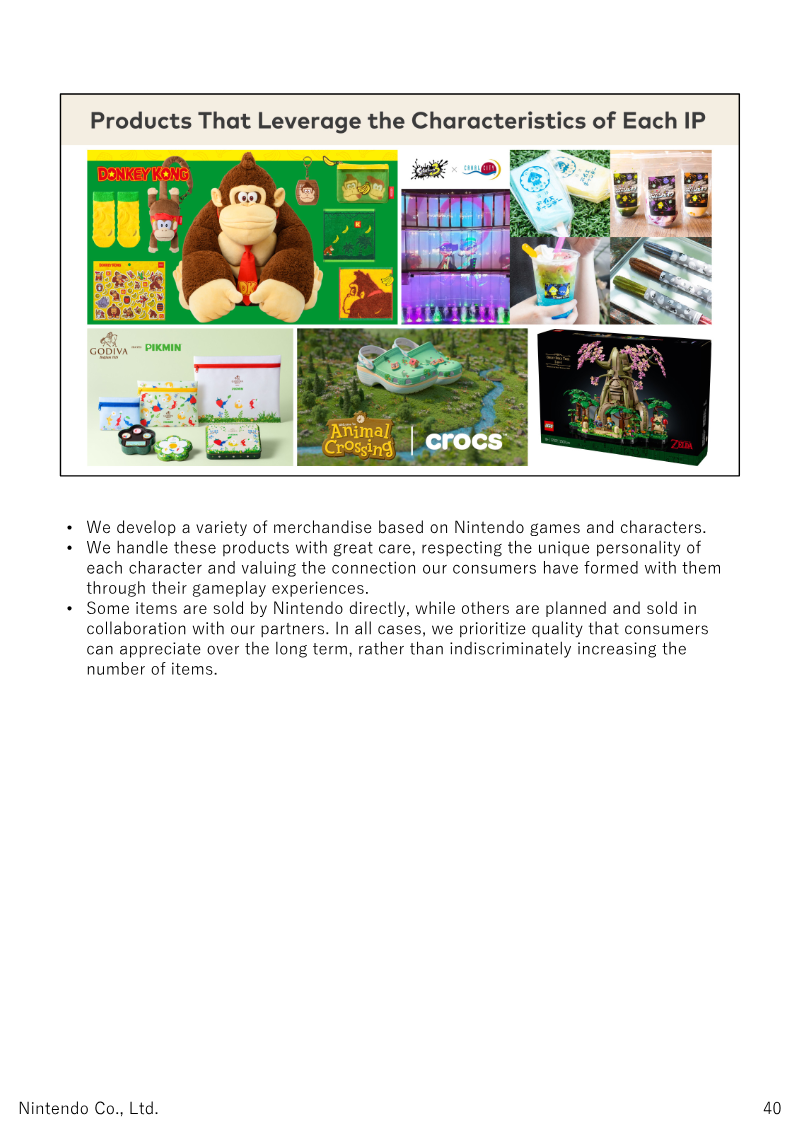
Nintendo Second Quarter Financial Results and Corporate Management Policy Briefing
Nintendo has entered a period of significant fiscal expansion, underscored by the highly successful launch of the Nintendo Switch 2.
- Nintendo’s net sales increased by 110.1% to 1,099.5 billion yen in the first half of fiscal year 2026, driven by the launch of the Nintendo Switch 2.
- The Nintendo Switch 2 sold 10.36 million units in its first four months, with 84% of the existing user base already transitioned to the new hardware.
- Nintendo has raised its full-year financial forecasts and increased annual dividends, supported by a new strategic shift to a 60% consolidated payout ratio.
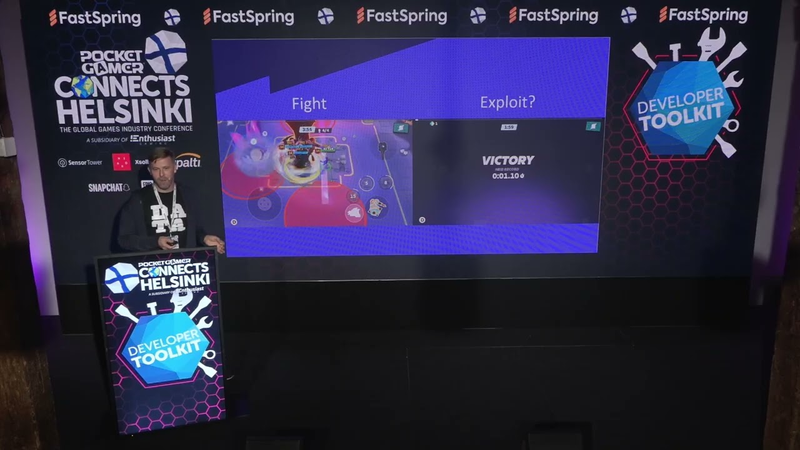
Session: Balancing Player Experience Without Players At Supercell: Case mo.co - Markus Ojala.
Supercell employs reinforcement learning (RL) to balance game mechanics for its multiplayer title, mo.co, specifically addressing the challenge of tuning game balance before a live player base exists.
- Supercell utilized reinforcement learning (RL) to balance the game mo.co during development, allowing designers to test items and gear combinations before the game had a live player base.
- The development team used a headless client integrated with C++ and Python to run approximately 1,000 parallel game simulations on a single GPU, enabling rapid iteration on balance changes every one to two weeks.
- Reinforcement learning agents were trained using Proximal Policy Optimization (PPO), where bots received incremental rewards for actions like staying alive, hitting monsters, and completing dungeons to learn optimal gameplay strategies.
Global Policy Regarding Human Rights and Modern Slavery
Take-Two Interactive Software establishes a comprehensive framework for maintaining ethical business practices and safeguarding human rights across its global operations as of October 2025.
- As of October 2025, Take-Two Interactive has implemented a global human rights framework to eliminate forced labor and human trafficking across all labels, including Rockstar Games, 2K, Private Division, and Zynga.
- The company enforces strict internal employment standards, including a minimum hiring age of 16 and mandatory annual reviews to ensure compensation meets or exceeds legal and market benchmarks.
- A mandatory Supplier Code requires all third-party partners, such as disc replicators and logistics providers in North America, Europe, and Japan, to certify they do not utilize child, prison, or slave labor.
Response to the Call for Evidence on the Action Plan against Cyberbullying
Video Games Europe submits a position in response to the European Commission’s call for evidence on an Action Plan against cyberbullying, arguing that the sector already implements a robust “safety-by-design” framework and that cyberbullying is comparatively rare within video-game environments.
- Video games are a minor source of online harm compared to social media, with only 12% of teens and 3% of adults identifying games as a source of recent harm, versus 70% and 63% for social media platforms.
- Bullying incidents in gaming are significantly lower than on social platforms, reported by 5% of teens and 1% of adults in gaming environments compared to 67% and 69% on social media.
- Data from the Insafe helpline in Q1 2025 attributes only 8% of reported online issues to gaming platforms, while 68% are linked to social media and 20% to messaging services.
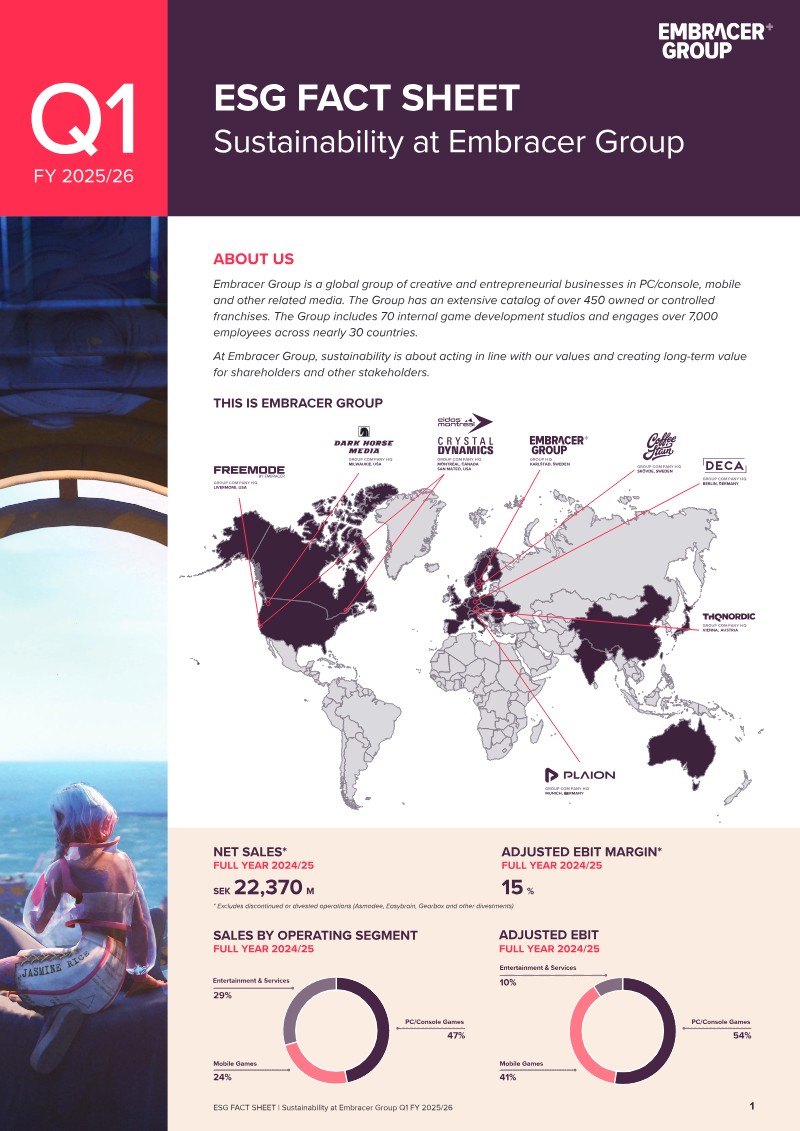
Sustainability at Embracer Group: ESG Fact Sheet
The Embracer Group’s sustainability framework centers on integrating environmental, social, and governance (ESG) principles into its global operations to drive long-term value for stakeholders.
- Embracer Group operates a global network of 70 internal game development studios with over 7,000 employees across nearly 30 countries.
- The company reported net sales of SEK 22,370 million for the 2024/25 fiscal year.
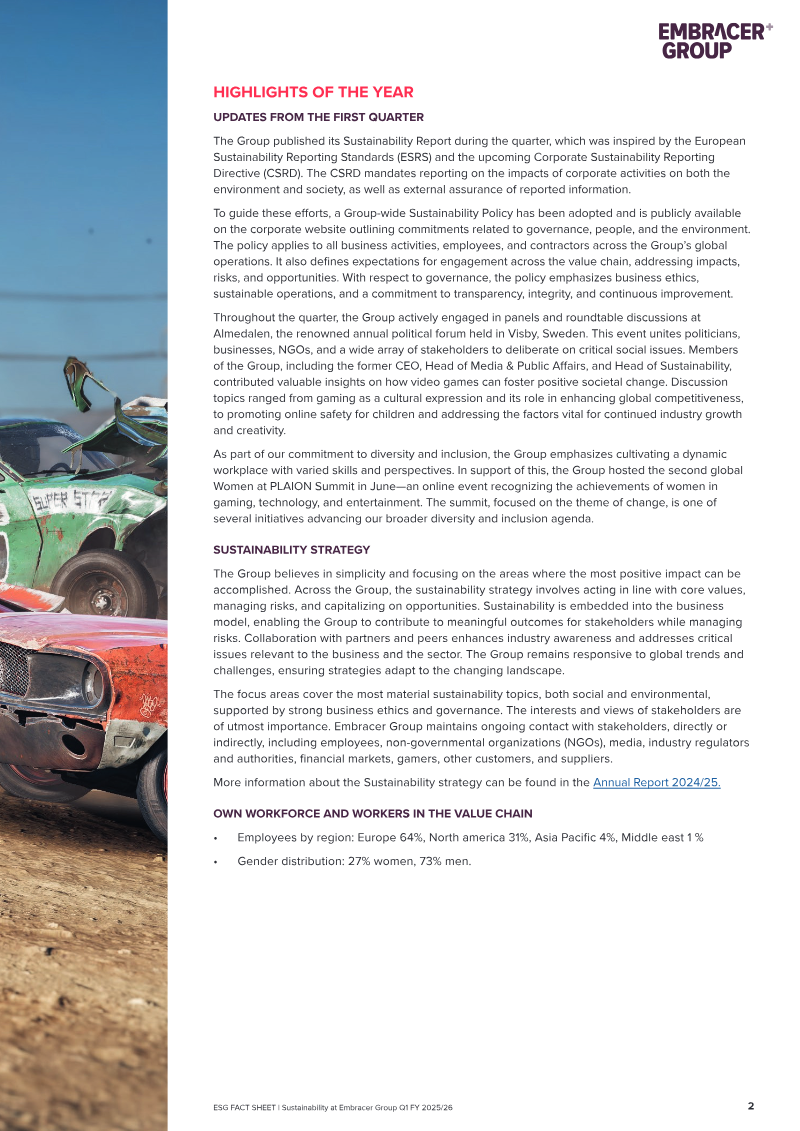
- The workforce is geographically concentrated with 64% based in Europe and 31% in North America.