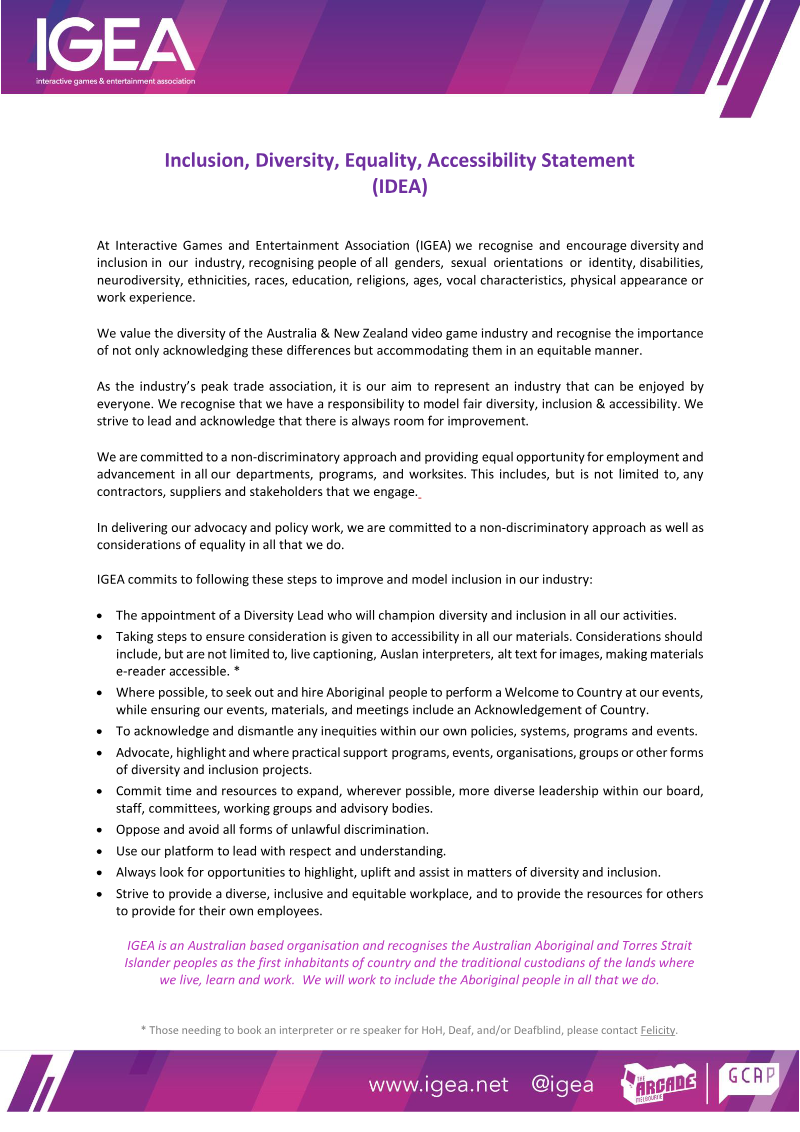
2026 Policy Platform: New Zealand
22 Jun 20261 page~3 min full read
Key insights
6 slides
Export reliance
95% of sector revenue is generated through exports.
The United States and Europe account for 95% of the industry's income.
Return on investment
GDSR generates $4.74 for every dollar of government investment.
The Game Development Sector Rebate delivers a high return on investment. The industry cites this efficacy to support long-term fiscal commitment.
Rebate return. The Game Development Sector Rebate generates $4.74 for every $1 of government funding provided.
Policy ask
Industry advocates for GDSR as a long-term fiscal commitment.
The sector wants the rebate established as a long-term commitment rather than a short-term incentive.
Industry recognition
Platform calls for formal recognition of game development as a distinct industry.
The industry seeks formal recognition within national data and funding frameworks. It also calls for refined immigration settings to secure specialized talent.
Growth initiatives
Strategic initiatives include STEAM integration and trade delegations.
The proposal emphasizes integrating computer science into STEAM education and strengthening intellectual property protections. It also calls for coordinated international trade delegations.
Election roadmap
Platform serves as a strategic roadmap ahead of the election.
The initiative informs political parties and government stakeholders of the industry's economic standing. It advocates for policy frameworks necessary to sustain long-term growth.
Strategic roadmap. The 2026 Policy Platformer serves as a strategic roadmap for the New Zealand game development sector.
1 / 6
Ask AI about this report