Digital Games
Company
Documents about Digital Games
Ownership of Craft Knowledge in "Live Transmission": Intangible Cultural Heritage, Digital Games and the Transmission of Technological Skills in Southwest China's Minority Communities
This paper examines the role of digital games in transmitting traditional craft skills and empowering minority communities in Southwest China, specifically focusing on Hunan province.
- The paper argues that left-behind children in rural minority villages are critical learners and inheritors of traditional craft knowledge, and that digital game-based learning can serve as a mediating method for their craft education.
- China's 'Live Transmission' (活态传承) policy, introduced in 2006, aims to revitalize the economic and cultural identity of traditional craft communities through industry development and digital intangible cultural heritage education.
- The authors contend that such policies have inadvertently undermined local craft holders' ownership of their knowledge, casting them as outsourced labor in craft industries and excluding them from digital education as presumed non-users of technology.
Fighting Against Return: A Taxonomy of Time Loops in Digital Games
This research outlines a foundational taxonomy for time loops in digital games, specifically focusing on instances where character rebirth occurs after a "game over" state.
- The report proposes a taxonomy of time loop configurations in digital games, focused on how characters are reborn after a game over, and argues that loops are a foundational structure of play.
- It links Juul's 'failure-improvement cycle' to narrative cases where the character forgets previous deaths while the player remembers, and introduces the term 'Meta-Loop' for loops that extend from mechanical repetition into narrative progression.
- The author argues that the implementation of loops is inseparable from the navigable spaces players traverse.
Planting World Seeds: Procedural Content Generation, Labour and Conceptual Art in Digital Games
The document "Planting World Seeds: Procedural Content Generation, Labour and Conceptual Art in Digital Games" analyzes the distinct forms of Procedural Content Generation (PCG) in digital games, differentiating between "Runtime PCG" and "Development PCG" to explore their implications for automation, aesthetics, and labor…
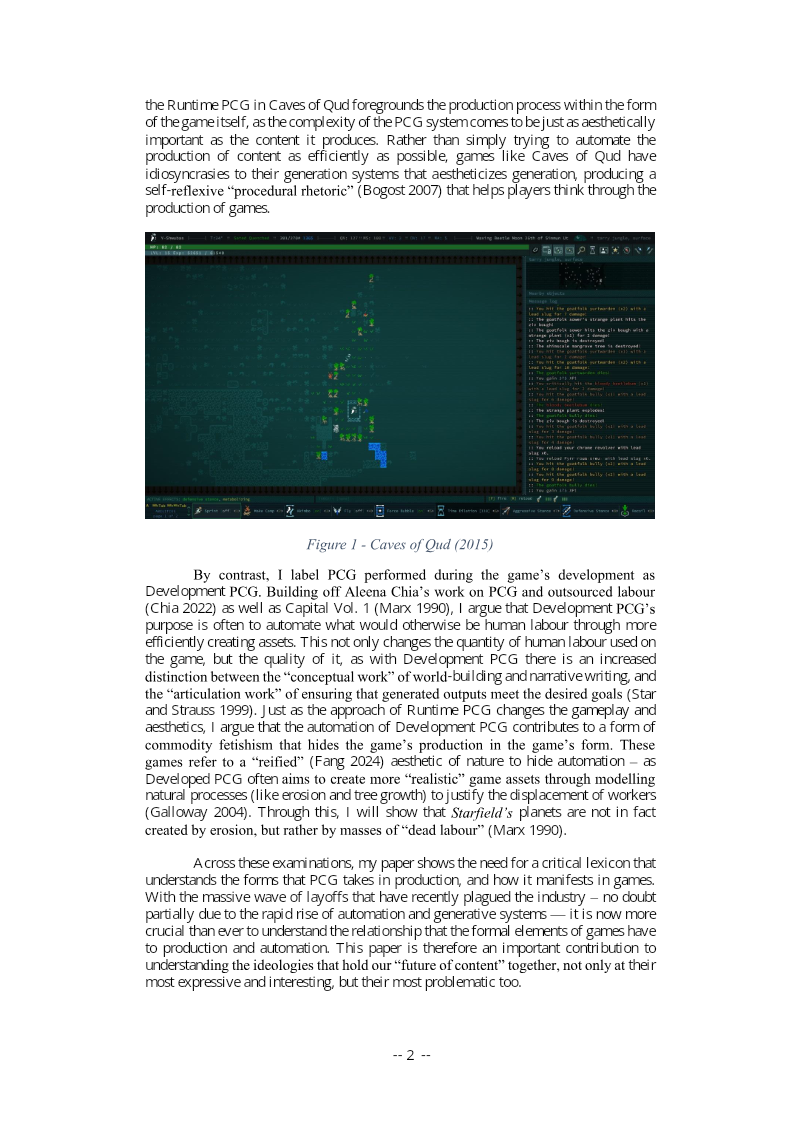
- The paper argues that 'procedural content generation' conflates two distinct forms: Runtime PCG, where worlds are generated during play and foreground the production process, and Development PCG, where assets are generated during production and never directly seen by players.
- The central claim is that Development PCG primarily automates human labour, separating conceptual world-building from the articulation work needed to make generated outputs meet production goals.
- Drawing on Marx and scholarship on automation and outsourced labour, the author contends that Development PCG often adopts a 'reified' aesthetic of nature, modelling erosion and tree growth so generated assets appear realistic and thereby concealing the labour involved.
Uncanny Homecoming: The Temporality of Dwelling and Return in Digital Games
The document explores the concept of "uncanny homecoming" in digital games, focusing on how different temporalities shape player experiences of in-game home places.
- The paper argues that the feeling of returning to a game home that no longer feels like home can be understood through the concept of the uncanny, drawing on Royle's 'unhomely at the heart of hearth and home' and a Derrida-inspired hauntological framework.
- Its central contribution is a taxonomy of five kinds of uncanny homecoming: narrative, progression, negated, abandoned, and nostalgic homecoming.
- Progression homecoming occurs when a player revisits a previously inhabited place, such as Candlekeep in Baldur's Gate or Kokiri Forest in Ocarina of Time, and finds it changed, a disjuncture grounded in the player's alterbiography.
Communicative Artificial Intelligence for Nonplayer Characters in Digital Games: Mapping the Field
This document maps the current state of communicative artificial intelligence (AI) for non-player characters (NPCs) in digital games, arguing for increased critical and theoretical research in this emerging field.
- The paper's central thesis is that LLM-driven NPC dialogue may fundamentally change how players communicate with gameworlds, so it deserves scrutiny through established frameworks like the philosophy of fiction rather than being treated as a detached technology.
- Drawing on Hepp et al.'s definition of communicative AI (automation for communication, embeddedness in digital infrastructures, entanglement with human practices) and Barad's concept of entanglement, the author argues such systems cannot be understood apart from the human communication data used to train them.
- The analysis centers on Van de Mosselaer and Gualeni's 'implied designer' concept, warning that AI-generated dialogue could erode players' sense of intentionality and make a gameworld feel less alive.
Gamecity Hamburg Supports Six New Digital Games with Prototype Funding
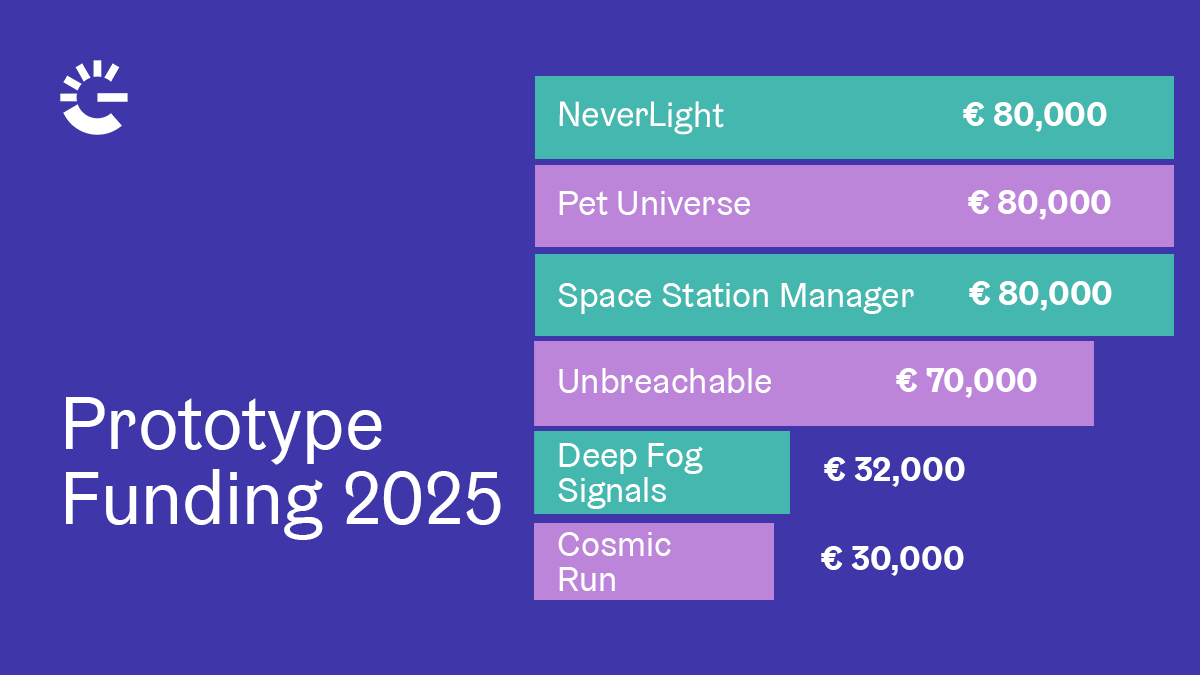
Gamecity Hamburg, an initiative of Hamburg Kreativ Gesellschaft, has announced the recipients of its latest Prototype Funding round, supporting six digital game projects with non-repayable grants totaling up to 80,000 euros each.
- Gamecity Hamburg has awarded non-repayable prototype funding grants of up to 80,000 euros each to six digital game projects in its latest 2025 round.
- The five identified recipients include Tivola Games (80,000 euros for 'Pet Universe'), gameXcite (80,000 euros for 'Space Station Manager'), Buckfish (70,000 euros for 'Unbreachable'), Symmetry Break Studio (32,000 euros for 'Deep Fog Signals'), and Zinktank Labs (30,000 euros for 'Cosmic Run').
- Since the inception of the Prototype Funding program in 2020, Gamecity Hamburg has supported the development of 37 individual game prototypes.
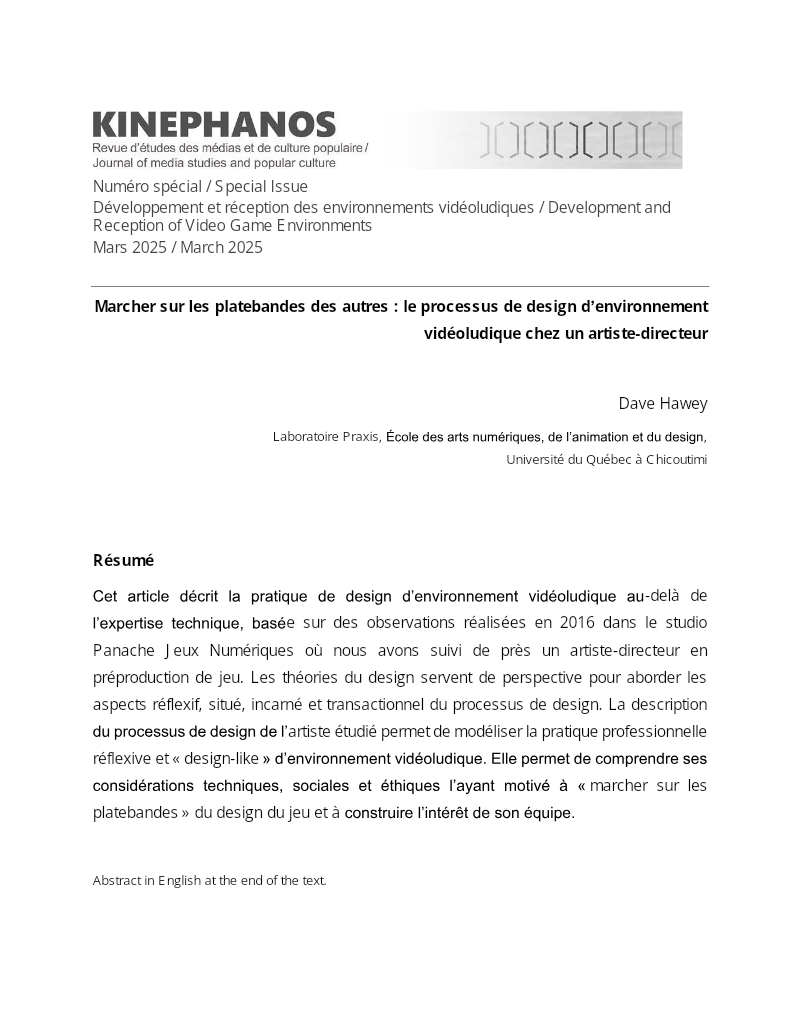
Marcher sur les platebandes des autres: Le processus de design d'environnement vidéoludique
Environment design in the video game industry transcends mere technical execution, functioning instead as a complex, reflexive, and situated practice.
- Environment artists at Panache Digital Games function as integral design practitioners who actively shape core gameplay mechanics rather than merely executing technical tasks.
- The design process is a social and collaborative endeavor that requires constant negotiation between aesthetic vision, technical constraints, and multidisciplinary team requirements.
- Rapid prototyping serves as a critical tool for artists to translate abstract concepts into playable assets, effectively bridging the gap between initial design intent and final implementation.

Toys Transcending
Major toymakers are building digital play strategies as consumer habits shift online and US-China tariff threats put pressure on physical product margins.
- Major toy manufacturers are shifting from physical-only products to digital gaming to secure long-term revenue and mitigate economic pressures like rising costs and trade tariffs.
- Hasbro’s Wizards of the Coast and Digital Games segment generated $1.1 billion in revenue with a high operating margin of 41.8%.
- Bandai Namco’s Network Entertainment segment now accounts for approximately 27% of its $6.4 billion total annual revenue, demonstrating successful cross-medium synergy.
Relationship Investigation between Time Investment and Language Learning Based on Digital Games
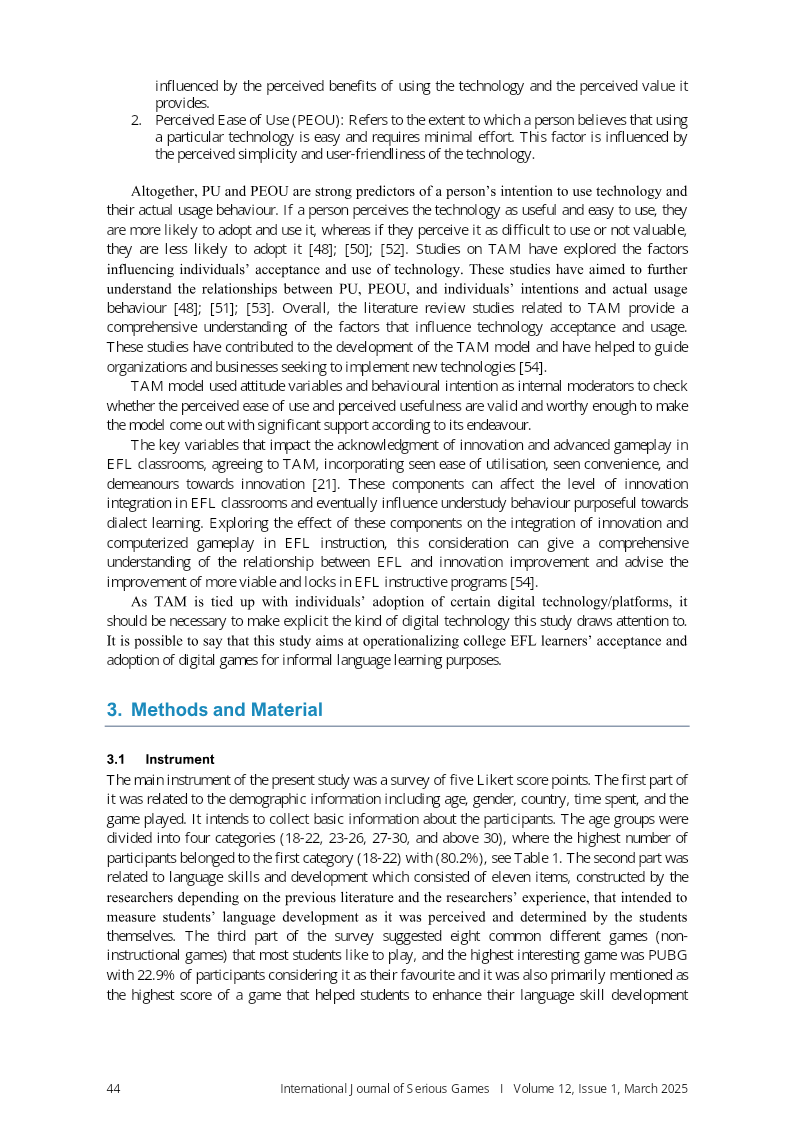
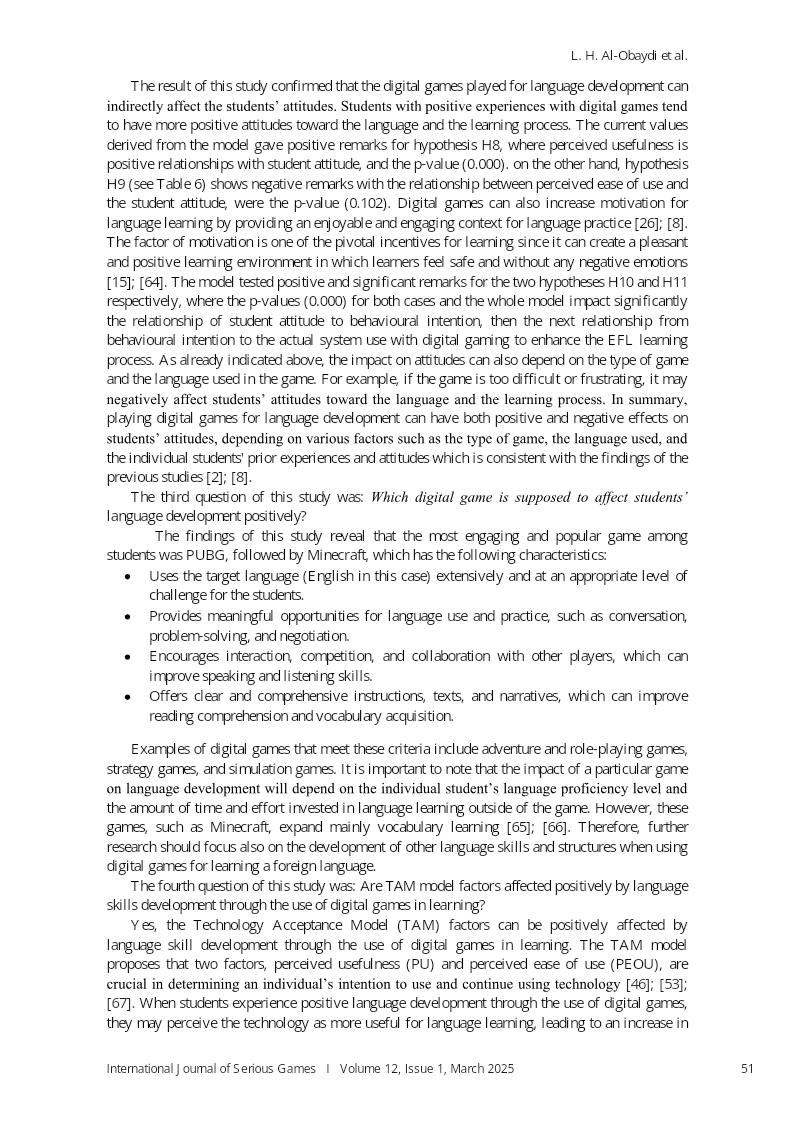
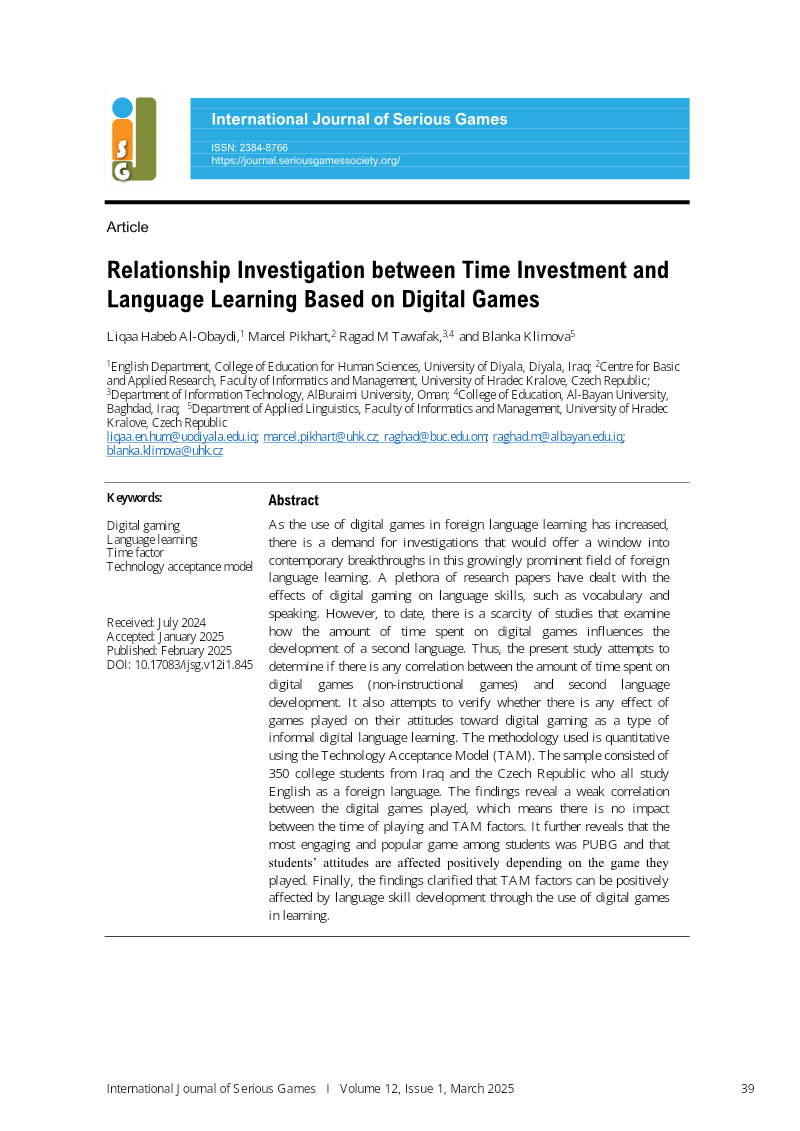
Digital games serve as effective, informal tools for second language acquisition, though their educational value is determined by qualitative factors rather than the sheer duration of engagement.
- Total time spent gaming does not correlate significantly with second language acquisition, indicating that duration is a poor metric for measuring educational progress.
- The effectiveness of game-based learning is driven by qualitative factors, specifically the learner's perceived usefulness of the platform and the game's interactive, narrative-rich mechanics.
- Research involving 350 university students in Iraq and the Czech Republic confirms that meaningful interaction and specific game design are more critical to language development than frequency of play.
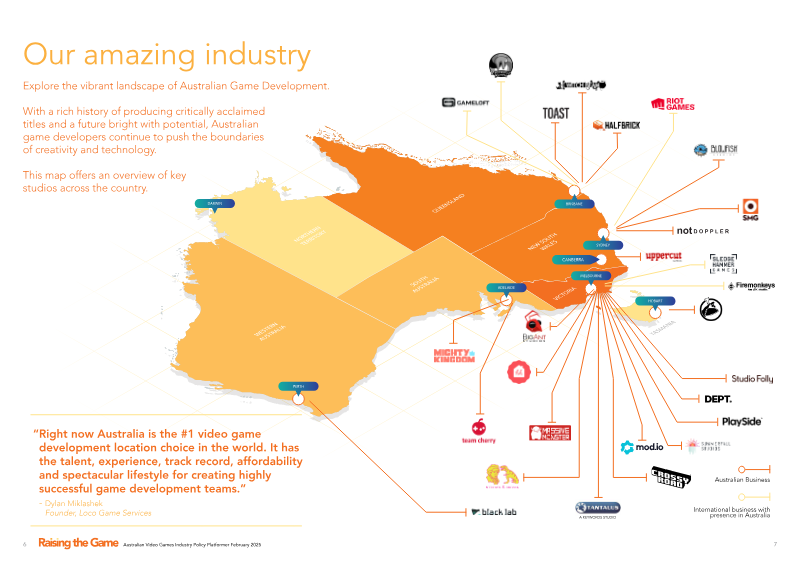
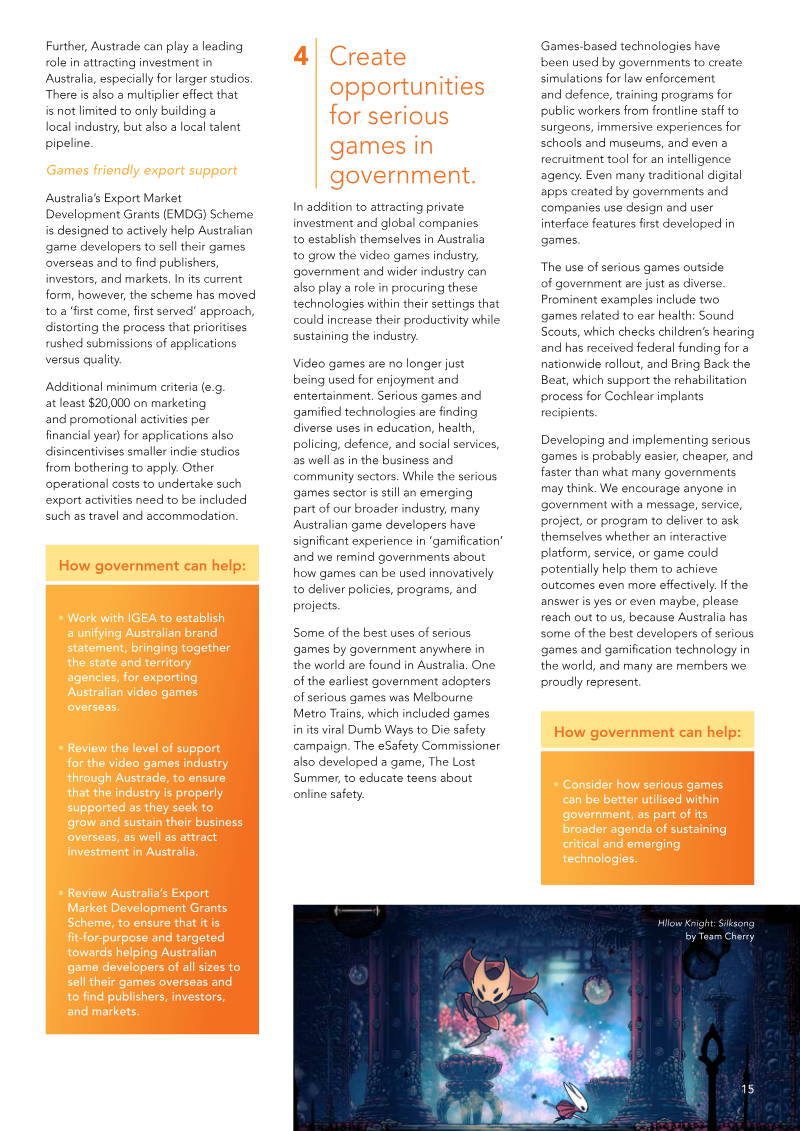

Australian Video Games Industry Policy Platform: February 2025
Australia's video games industry is positioned for growth but remains small relative to both domestic demand and international peers.
- The Australian video games industry aims to reach a $1 billion valuation by 2030, building on its 2024 fiscal year performance of $339.1 million in revenue.
- The sector currently supports 2,465 full-time positions, with 93 percent of its revenue generated from international markets.
- Over 50 percent of Australian game studios anticipate continued income growth, signaling strong potential for expansion into a global powerhouse.

How Do You Make a Head of State Care About Video Games Policy?
The document examines strategies for elevating video game policy on a head of state's agenda, using the Irish Digital Games Tax Credit as a primary case study.
- The video games industry must reframe its policy objectives as low-cost, high-reward economic opportunities, specifically emphasizing job creation, foreign direct investment, and sustainable growth to align with broader government priorities.
- Adopting the lobbying strategies of the film industry is the most effective path to securing critical fiscal support, such as digital games tax credits.
- Industry stakeholders should move away from general advocacy and instead present precise, evidence-based solutions that identify and resolve specific regulatory bottlenecks.
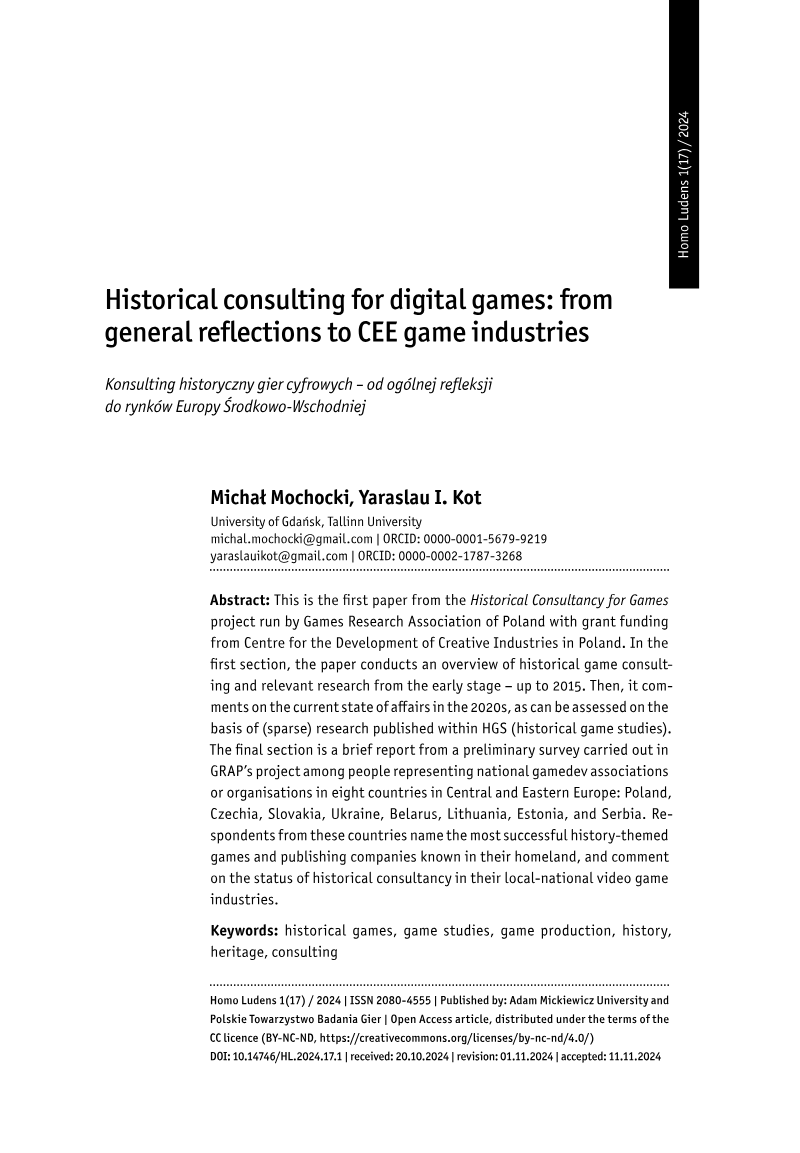
Historical Consulting for Digital Games: From General Reflections to CEE Game Industries
Historical consulting for digital games, the practice of engaging historians and other subject experts to inform game development, has moved from an informal and often decorative role toward a more established professional field.
- Historical consulting for digital games has evolved from an informal, often decorative role, especially in the 2010s when it was frequently used for marketing value, into a more established professional field by the 2020s, with consultants more visible in credits and academic-industry partnerships growing.
- Prominent examples such as Ubisoft's Assassin's Creed series and Warhorse Studios' Kingdom Come: Deliverance show expert involvement becoming a central selling point, though the overall job market for historical consultants remains modest.
- Case studies of Warhorse Studios, Wargaming, Creative Assembly, Ubisoft Montpellier, and Charles Games found that academic historians are the most common consultants, while Wargaming favors military-technical specialists.