
gamevironments
Open-access journal from the University of Bremen on video games, religion and culture, with articles, interviews and research reports.
Documents
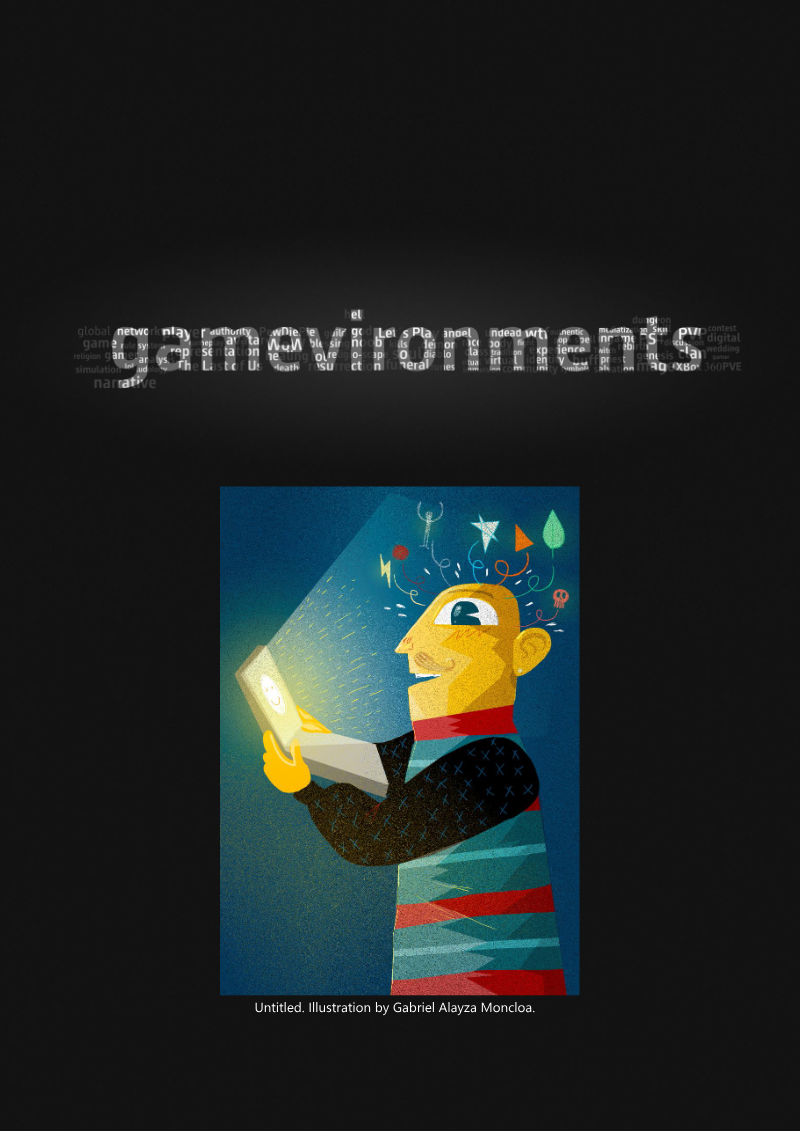
Revisiting Teaching and Games: Mapping Out Ecosystems of Learning
Seventh-day Adventist games from the 1930s through 2021 show a consistent commitment to a text-centered model of religious education.

Inaudible Systems, Sonic Users: Sound Interfaces and the Design of Audibility Layouts in Digital Games
Luersen's 2021 article, "Inaudible Systems, Sonic Users," argues that sound design in digital games functions as a sonic user interface and deserves the same critical attention that visual interfaces have long received.

Interview with Stella Wisdom, Digital Curator at the British Library
The British Library's engagement with video games and emerging digital formats traces back to a 2012 preservation symposium, where digital curator Stella Wisdom and colleagues conceived the Off the Map student game-making competition.

Feminist Gamer Social Identities
Winters and Williams' 2021 study examines how women who identify as both gamers and feminists build and sustain these two identities despite perceived hostility within gaming communities and the industry.

Interview with Marcus Carter on Children's Play and Games Studies Discourse
In this interview, Dr. Marcus Carter, Senior Lecturer in Digital Cultures at the University of Sydney and co-director of the Socio-Tech Futures Lab, discusses his research on children's play and his critique of how gaming, particularly gaming addiction, is framed in mainstream media.

Holy Ocarina! Exploring Religion in/of/through The Legend of Zelda Series
Holy Ocarina! examines The Legend of Zelda series through a religious-studies lens, asking how religion appears within the games' fictional world, how real-world religious traditions have shaped the series, and how fan communities mirror religious practice.

Ghosts, Spooks, and Martyrs: Historical Hauntings in Tom Clancy's Ghost Recon Wildlands
Megan Ward's article examines Ubisoft's 2017 military shooter Tom Clancy's Ghost Recon Wildlands as a case study in how interactive media shapes historical memory.

New Earth: Fantasy Pantheon Inspired by Afro-Brazilian Religion
Eliane Bettocchi's research report presents "New Earth," a fantasy role-playing game setting whose pantheon and faith systems draw on Afro-Brazilian religions, particularly Candomblé, Umbanda, and Tambor de Mina.

History Games for Boys? Gender, Genre and the Self-Perceived Impact of Historical Games on Undergraduate Historians
This study examines how historical video games shape the interest in and understanding of history among undergraduate history students, with particular attention to whether the perceived impact of games differs by player gender and game genre.
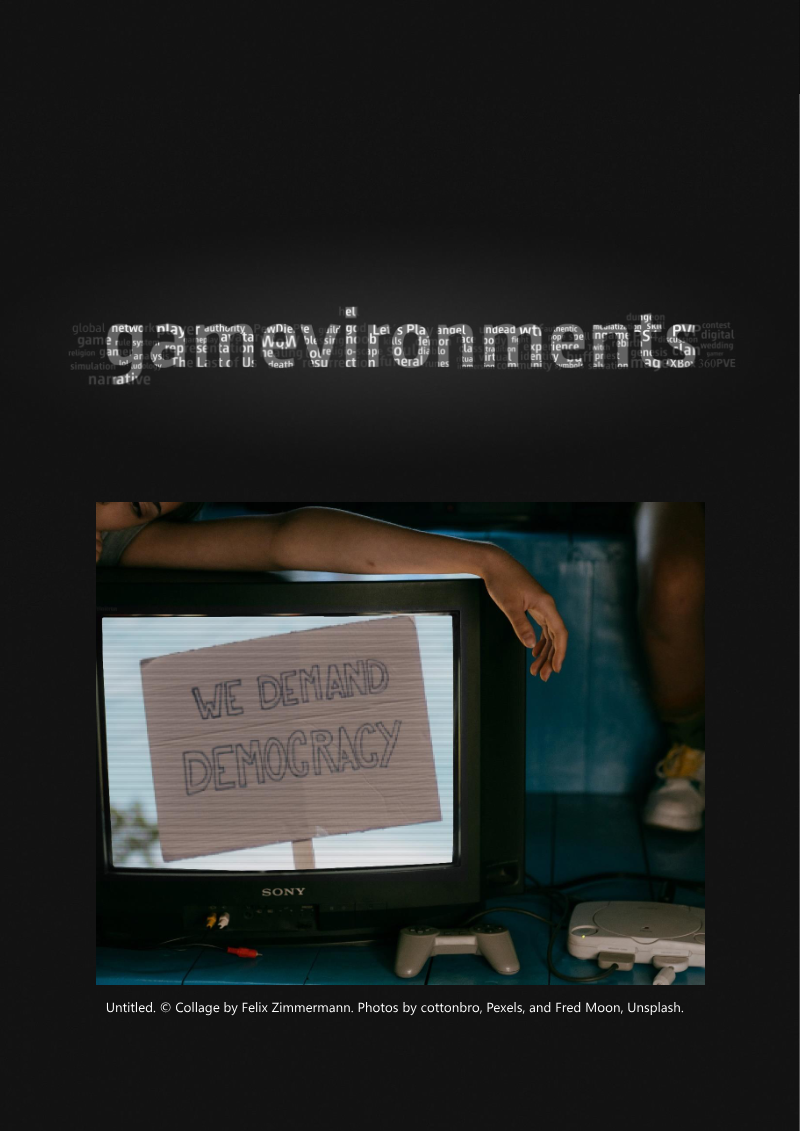
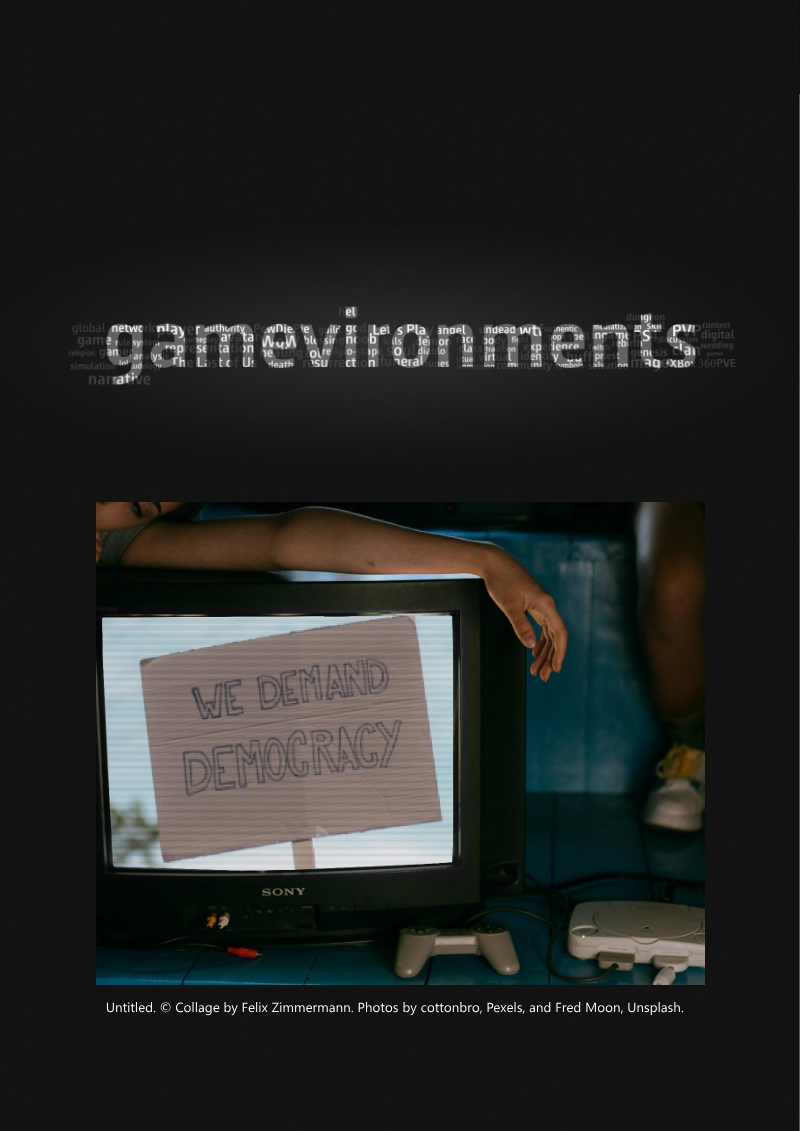
Democracy Dies Playfully: (Anti-)Democratic Ideas in and Around Video Games
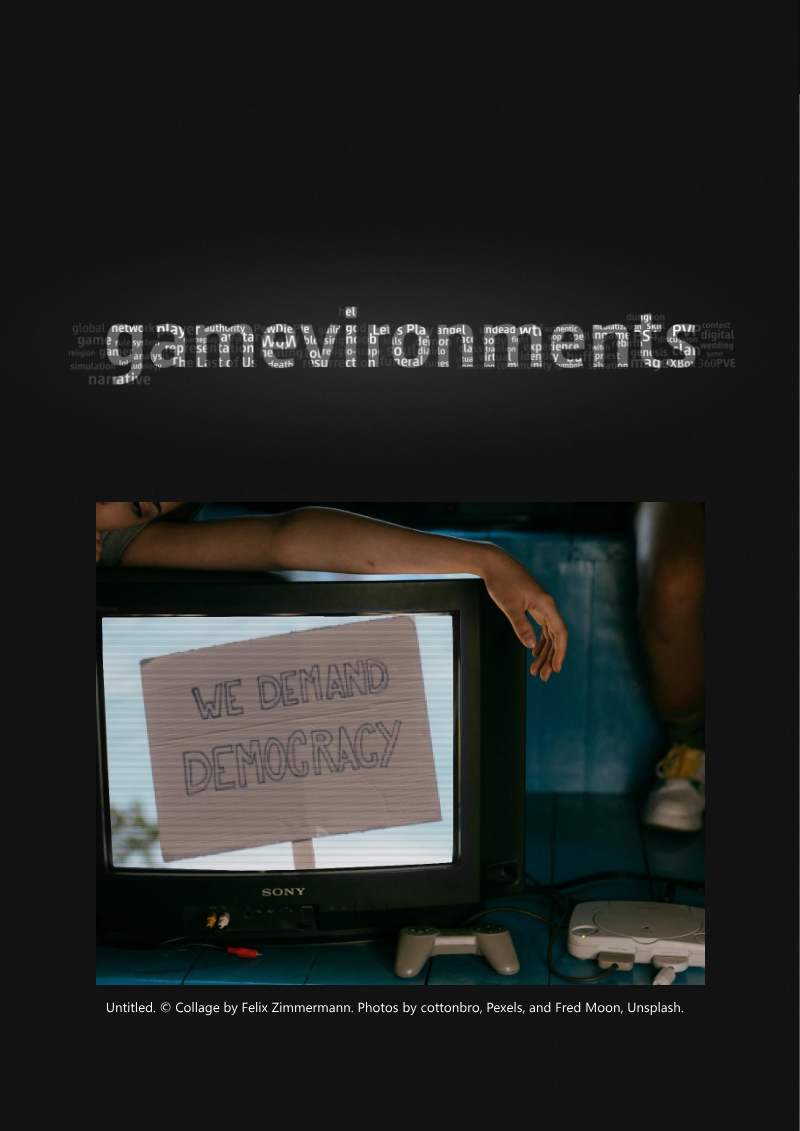
This collection examines democracy, politics, and ideology in and around video games, with particular attention to Global South contexts.
- The central case study is the #TodosContraPLS383 Twitter backlash against Brazil's Senate Bill 383 (2017), which proposed regulating esports, with analysis of 180 coded tweets around the November 2019 public hearings.
- Anti-regulation discourse dominated the coded tweets, with the most frequent narrative (38 occurrences) portraying the State as incompetent and hostile to market actors, while players, teams, and companies argued the bill would add bureaucracy and taxes and was drafted without their input.
- An accompanying online poll reportedly showed 87.1% of roughly 49,000 votes opposing the bill, though the reported 438,125% increase is implausible and should be treated with caution.
Democracy Dies Playfully: (Anti-)Democratic Ideas in and Around Video Games
Projekt CH+ examines whether the mechanics that make video games engaging can help citizens navigate elections, and it situates this question within broader concerns about declining political participation.
- Swiss voter turnout has stayed below 50 percent since 1979, and non-voters are often described as content but disinterested, feeling incompetent, or socially isolated.
- The report argues that democratic participation lacks the clear goals, immediate personal feedback, and controllable choices that make video games compelling, while political communication tends to be slow, bureaucratic, and unemotional.
- The project built a playful prototype voting-support app with candidate swiping, ranking, and dynamic list creation, tested for the 2019 Swiss federal election and in a canton-wide trial in Uri in March 2020.
Democracy Dies Playfully: (Anti-)Democratic Ideas in and Around Video Games
Lars Dolkemeyer's analysis of Frostpunk (2018) examines how construction simulations shape the political subjectivity of players, using the game as a case study for the tension between autocratic management and shared responsibility.
- Frostpunk (2018) is analysed as a case study in how construction simulations shape players' political subjectivity, specifically the tension between autocratic management and shared responsibility.
- The author argues that Frostpunk reconfigures the autocratic logic of predecessors like Tropico, which abstract territory, economy, and population into objects of absolute, deterritorialized power, by using coldness aesthetics, a temporal structure with no final victory or defeat, and a community that acts as a collective agent.
- The player becomes simultaneously autocrat and ruled, and the game is better understood as a "management of demise" than as adaptation or conquest.