Digital Games
Company
Documents about Digital Games

Irish Games Fund 2026
The Irish Games Fund 2026 announcement, published by IMIRT in September 2026, sets out the rules and timetable for the Development Fund, the first of three funding strands under the Irish Games Fund, which is delivered through the Screen Ireland Digital Games Portfolio.
- The Irish Games Fund 2026, managed by Screen Ireland's Digital Games Portfolio, offers three funding strands for game creators: a Development Fund, a Prototype Fund, and a new Release Fund.
- The Development Fund, the first to launch, provides up to €50,000 to a maximum of four teams for established projects moving towards production and commercial release.
- Eligible applicants for the Development Fund must be registered Irish game studios operating for at least one year, have filed accounts, and the studio or core team must have previously released a commercial project, focusing on original IP.
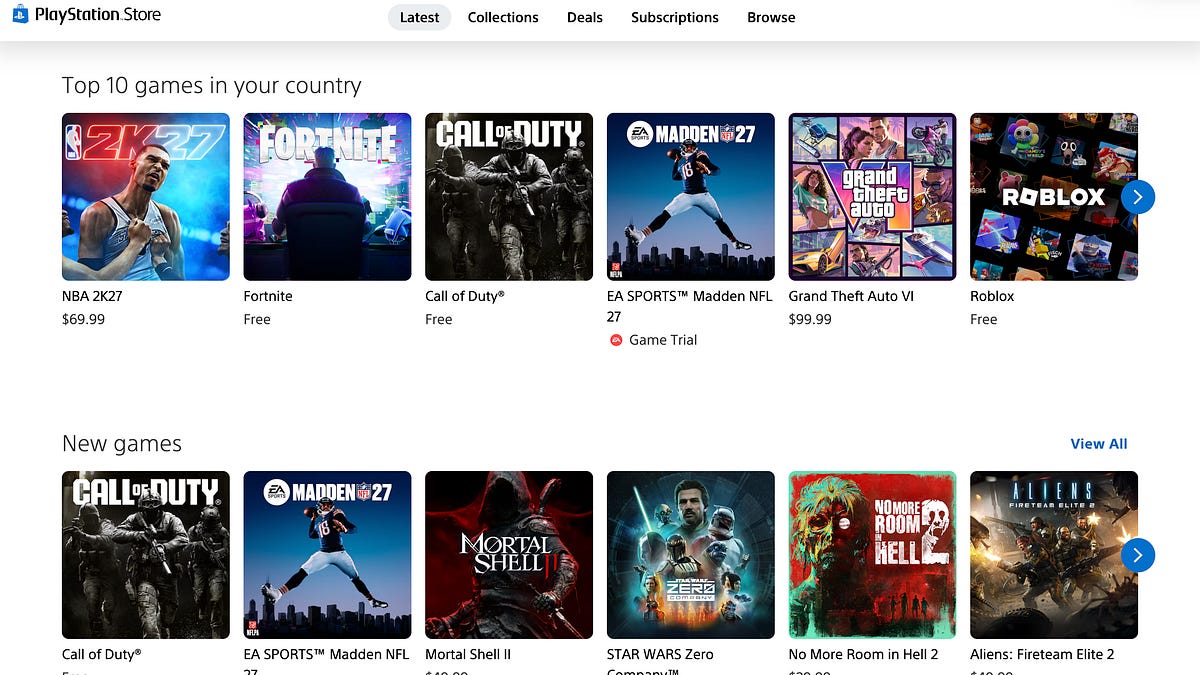
Facing Lawsuit, Sony Argues Digital Games Ownership
Sony is defending itself against a proposed class action lawsuit in California's Northern District Court by arguing that its current PlayStation Store disclosures are already clear enough that "reasonable consumers would not be misled" into believing they own the digital games they buy.
- Sony is defending a class-action lawsuit in California’s Northern District Court over whether its digital storefront adequately informs consumers that purchases are limited licenses rather than permanent ownership.
- The litigation centers on a 2025 California law that mandates clear and conspicuous warnings for digital transactions, which plaintiffs claim Sony failed to provide.
- In an August 2026 court filing, Sony argued that its existing checkout process, which links to its Terms of Service and Software Product Licensing Agreement, provides sufficient notice to a reasonable consumer.

Germany’s Gaming for Democracy Push: VGIM Daily, 28/08/2026
Germany's Foundation for Digital Games Culture, created by the country's games industry and the Bundestag, has launched Gaming for Democracy, an initiative to strengthen democratic values in gaming communities.
- The Foundation for Digital Games Culture has launched the 'Gaming for Democracy' initiative to counter extremist influence in gaming spaces ahead of the 2029 German general election.
- A core component of the project is a Community Support Network that provides resources and best practices for over 100 community moderators to foster inclusive environments.
- Research from the Bertelsmann Foundation indicates that frequent gamers exhibit higher levels of political engagement than the general population, justifying the focus on gaming as a 'third place' for civic discourse.
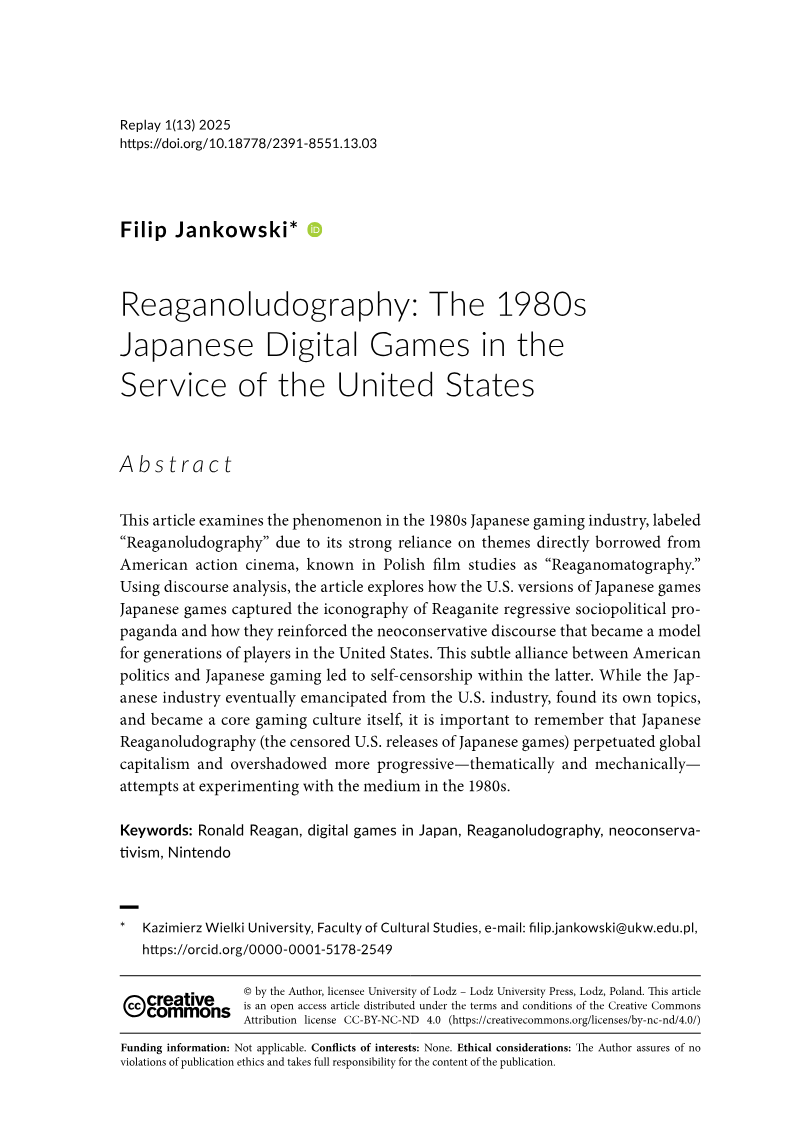
Reaganoludography: The 1980s Japanese Digital Games in the Service of the United States
Reaganoludography defines the strategic alignment of 1980s Japanese video games with the neoconservative cultural agenda of the United States.
- During the 1980s, Japanese game developers adapted their content to align with American neoconservative values to successfully export products to the U.S. market following the 1982 industry crash.
- The term 'Reaganoludography' describes how Japanese games were modified or selected to mirror the themes of 1980s American action cinema, such as the hyper-masculine, one-man-army tropes found in films like Rambo.
- Nintendo of America enforced strict censorship policies on imported titles, including a 'No Religion' mandate that prohibited symbols related to religious, nationalistic, or ethnic groups.
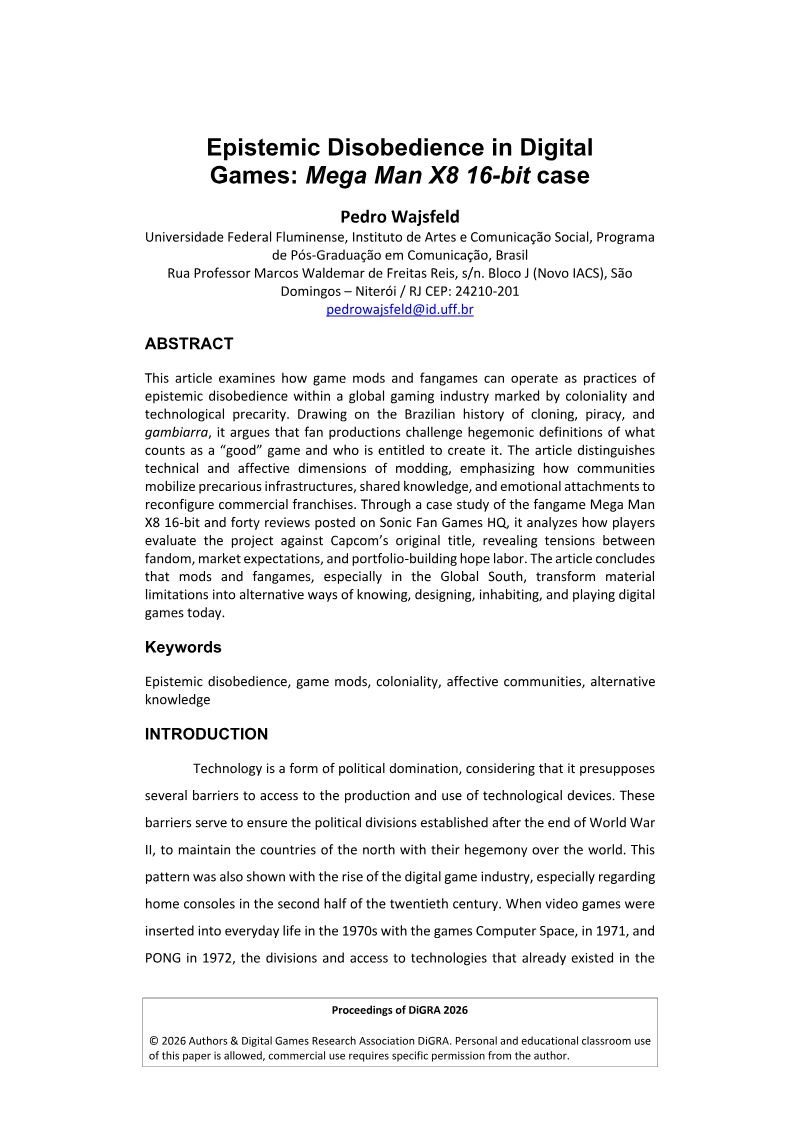
Epistemic Disobedience in Digital Games: Mega Man X8 16-bit Case
The analysis explores how fan-made digital games and modifications, particularly within the Global South, embody "epistemic disobedience" against the hegemonic structures of the global gaming industry.
- The paper frames fan modifications and fangames, such as a 16-bit demake of Mega Man X8, as "epistemic disobedience": creative resistance to the industry's narrow definition of the "ideal gamer" and its profit-driven standards of value.
- Drawing on Walter Mignolo's decolonial theory and Brazil's history of market reserve policies, console cloning, piracy, and gambiarra (creative improvisation under scarce resources), the author treats fan works as both technical and affective achievements.
- The reception analysis examines roughly 40 player reviews of the Mega Man X8 fangame hosted on Sonic Fan Games HQ, which averaged 4.33 stars, with players praising its fluid gameplay and expressing nostalgia.
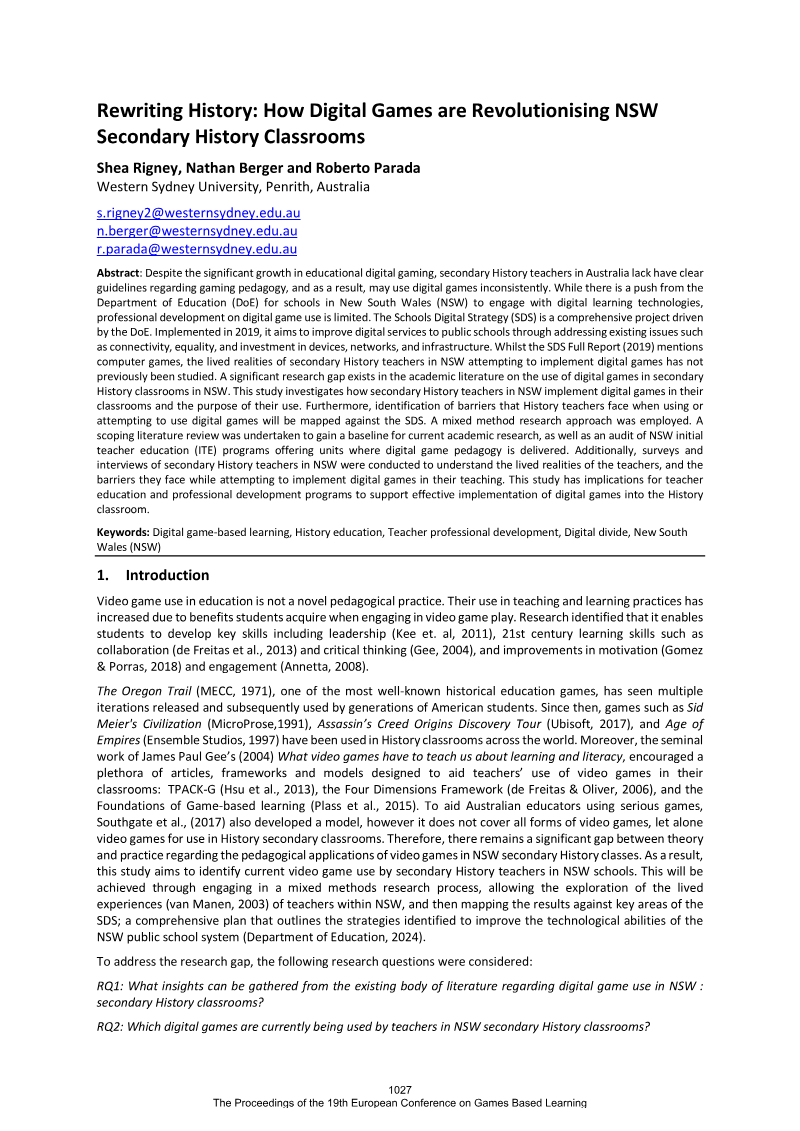
Rewriting History: How Digital Games Are Revolutionising NSW Secondary History Classrooms
The document, "Rewriting History: How Digital Games Are Revolutionising NSW Secondary History Classrooms," investigates the integration of digital games into secondary History education within New South Wales.
- Digital games are already widespread in NSW secondary History classrooms: every one of the 18 surveyed History and Geography teachers had used them at some point, with Kahoot!, Blooket, and Minecraft among the platforms named.
- The main barriers to adoption are structural rather than motivational, with device access, especially inequity under bring-your-own-device (BYOD) arrangements, cited most often, followed by insufficient professional development and low teacher confidence.
- Most respondents did not see student interest as a barrier, suggesting the challenge lies in provision and support rather than learner reception.
Character-Driven Storytelling Design for Digital Games: A Scoping Review
This scoping review examines the design principles and research landscape of character-driven storytelling in digital games.
- Research output on character-driven game narratives grew significantly between 2015 and 2024, with the United States producing 21 studies compared to only 3 in the 2003–2012 period.
- Character believability relies on consistent actions, motivations, and reactions; sudden shifts in morality or uncharacteristic decisions break player immersion and weaken narrative impact.
- Visual design, animation, and emotional expression—including verbal and non-verbal cues like facial movements and posture—must align with a character's narrative role to maintain credibility.
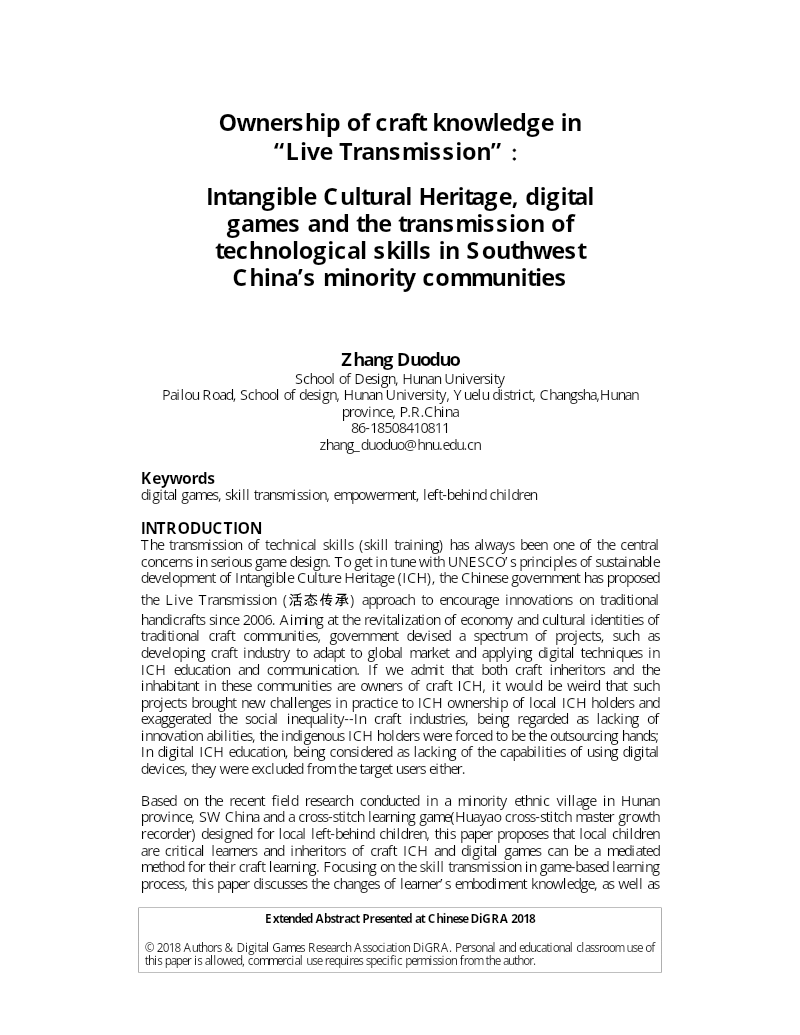
Ownership of Craft Knowledge in "Live Transmission": Intangible Cultural Heritage, Digital Games and the Transmission of Technological Skills in Southwest China's Minority Communities
This paper examines the role of digital games in transmitting traditional craft skills and empowering minority communities in Southwest China, specifically focusing on Hunan province.
- The paper argues that left-behind children in rural minority villages are critical learners and inheritors of traditional craft knowledge, and that digital game-based learning can serve as a mediating method for their craft education.
- China's 'Live Transmission' (活态传承) policy, introduced in 2006, aims to revitalize the economic and cultural identity of traditional craft communities through industry development and digital intangible cultural heritage education.
- The authors contend that such policies have inadvertently undermined local craft holders' ownership of their knowledge, casting them as outsourced labor in craft industries and excluding them from digital education as presumed non-users of technology.
Gamecity Hamburg Supports Six New Digital Games with Prototype Funding
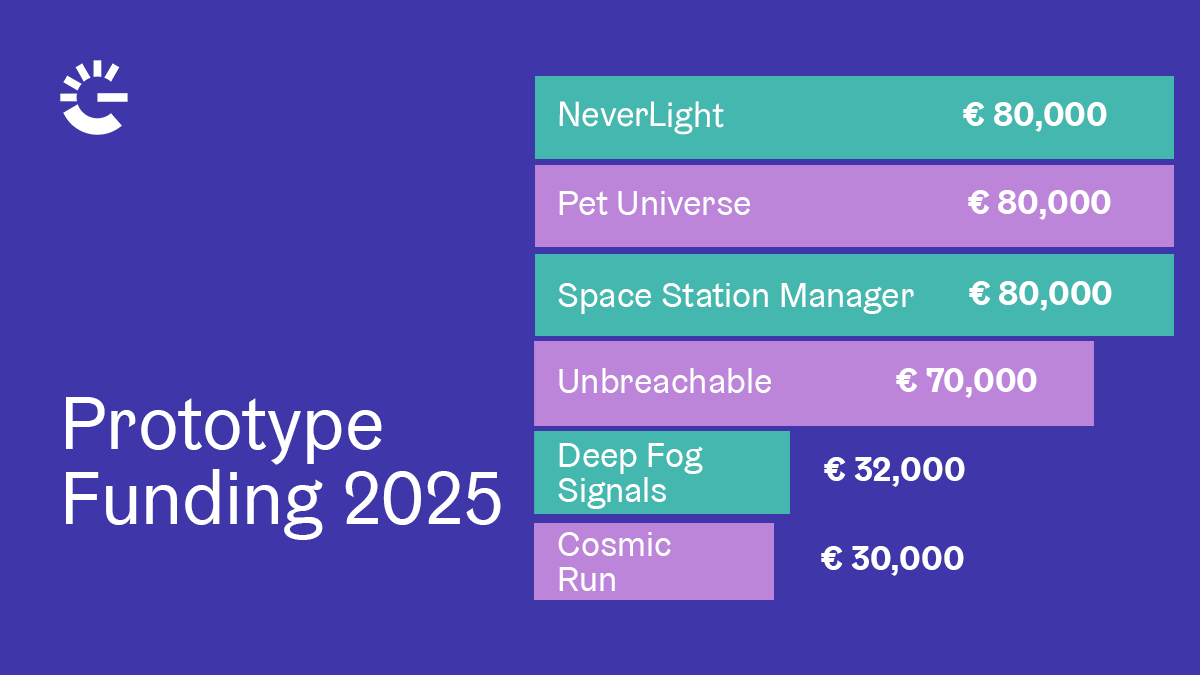
Gamecity Hamburg, an initiative of Hamburg Kreativ Gesellschaft, has announced the recipients of its latest Prototype Funding round, supporting six digital game projects with non-repayable grants totaling up to 80,000 euros each.
- Gamecity Hamburg has awarded non-repayable prototype funding grants of up to 80,000 euros each to six digital game projects in its latest 2025 round.
- The five identified recipients include Tivola Games (80,000 euros for 'Pet Universe'), gameXcite (80,000 euros for 'Space Station Manager'), Buckfish (70,000 euros for 'Unbreachable'), Symmetry Break Studio (32,000 euros for 'Deep Fog Signals'), and Zinktank Labs (30,000 euros for 'Cosmic Run').
- Since the inception of the Prototype Funding program in 2020, Gamecity Hamburg has supported the development of 37 individual game prototypes.

Toys Transcending
Major toymakers are building digital play strategies as consumer habits shift online and US-China tariff threats put pressure on physical product margins.
- Major toy manufacturers are shifting from physical-only products to digital gaming to secure long-term revenue and mitigate economic pressures like rising costs and trade tariffs.
- Hasbro’s Wizards of the Coast and Digital Games segment generated $1.1 billion in revenue with a high operating margin of 41.8%.
- Bandai Namco’s Network Entertainment segment now accounts for approximately 27% of its $6.4 billion total annual revenue, demonstrating successful cross-medium synergy.

How Do You Make a Head of State Care About Video Games Policy?
The document examines strategies for elevating video game policy on a head of state's agenda, using the Irish Digital Games Tax Credit as a primary case study.
- The video games industry must reframe its policy objectives as low-cost, high-reward economic opportunities, specifically emphasizing job creation, foreign direct investment, and sustainable growth to align with broader government priorities.
- Adopting the lobbying strategies of the film industry is the most effective path to securing critical fiscal support, such as digital games tax credits.
- Industry stakeholders should move away from general advocacy and instead present precise, evidence-based solutions that identify and resolve specific regulatory bottlenecks.
Australian Video Game Development Industry Stays Steady, Generating $339.1 Million for the Economy
The Australian video game development industry maintained a steady economic contribution in FY2024, generating AUD$339.1 million in reported revenue, a slight decrease from AUD$345.5 million in FY2023.
- The Australian video game development industry generated AUD$339.1 million in revenue in FY2024, a slight decrease from AUD$345.5 million in 2023, but is considered steady given global challenges.
- 93% of the revenue generated by Australian game studios comes from overseas sources, indicating strong international demand for Australian-made games.
- Full-time employment in the Australian video game industry remained stable at 2,465 across 137 surveyed studios in FY2024, with 61% of studios planning to hire in 2025.