Game Studies reports and market data
402 game industry reports, presentations and talks about game studies from writers such as DiGRA, International Journal of Serious Games and International Journal of Role-Playing, newest from 2026. Every document has a summary and key insights with the page they come from.
Documents
Playful Pedagogy: Student Perceptions of Academic Skill Development Through Board Games
This study examines how university students perceive a co-curricular board game café hosted by an Academic Skills Centre at a Canadian university, with a focus on participation patterns, perceived academic skill development, and interest in future game-based learning workshops.
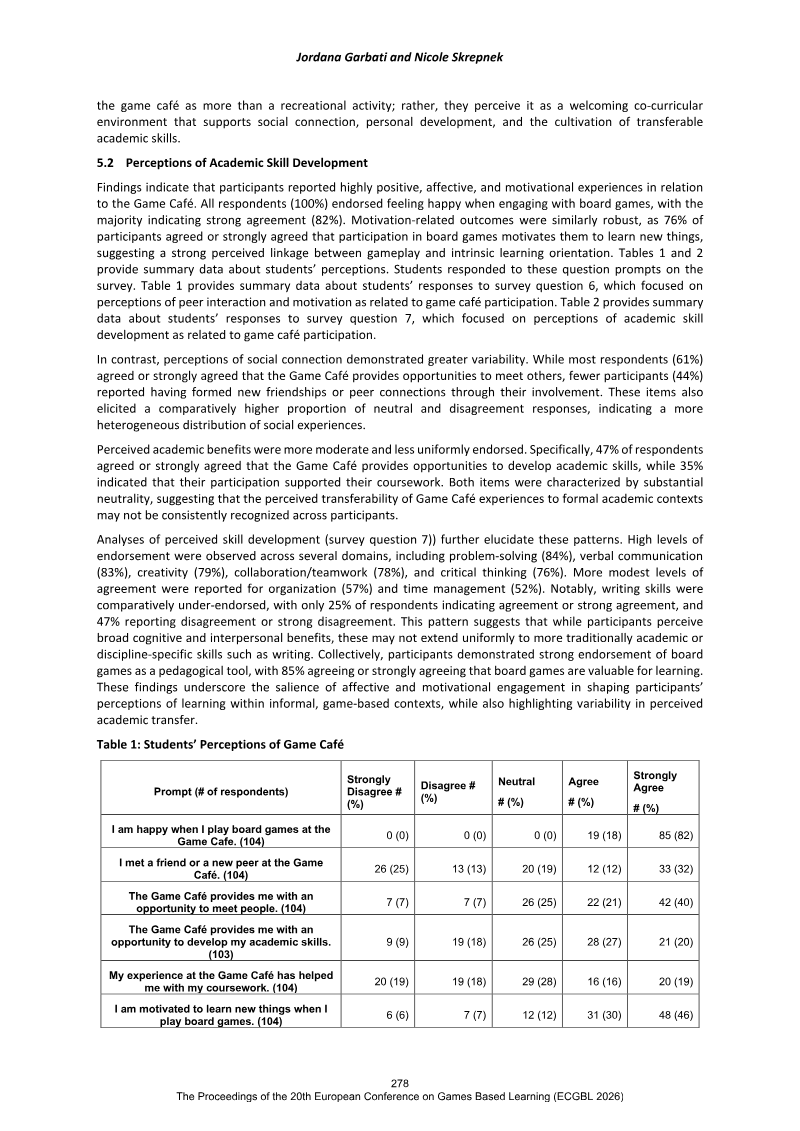
- All 104 surveyed students reported happiness during board game sessions, and 76% agreed that board games motivate them to learn, making affective and motivational responses the study's strongest findings.
- Students perceived the strongest skill development in problem solving (84%), verbal communication (83%), creativity (79%), collaboration (78%), and critical thinking (76%).
- Perceived transfer of gained skills to coursework was modest at 35%, and writing skills were endorsed by only 25% of respondents.



An Early-Stage Feasibility and Usability Pilot for an Immersive Serious Game to Support English Spelling and Semantic Skills
This early-stage feasibility pilot examined whether an AI-assisted virtual reality serious game could support adult English spelling and semantic skills, with the broader aim of addressing persistent literacy challenges.
- The pilot found that spelling errors fell from a pre-test mean of 3.86 to a post-test mean of 3.07, a medium effect (Cohen's d = 0.514), but the change was not statistically significant (p = 0.077).
- Completion time also decreased with a medium effect (Cohen's d = 0.447), yet this too was not statistically significant (p = 0.118).
- Self-reported gains were high, with 75% of participants reporting improved spelling and 87.5% reporting semantic benefits, though subjective measures carry their own limitations.
Defeat Means Friendship: Does Competitive Play Prepare Children for Cooperation?
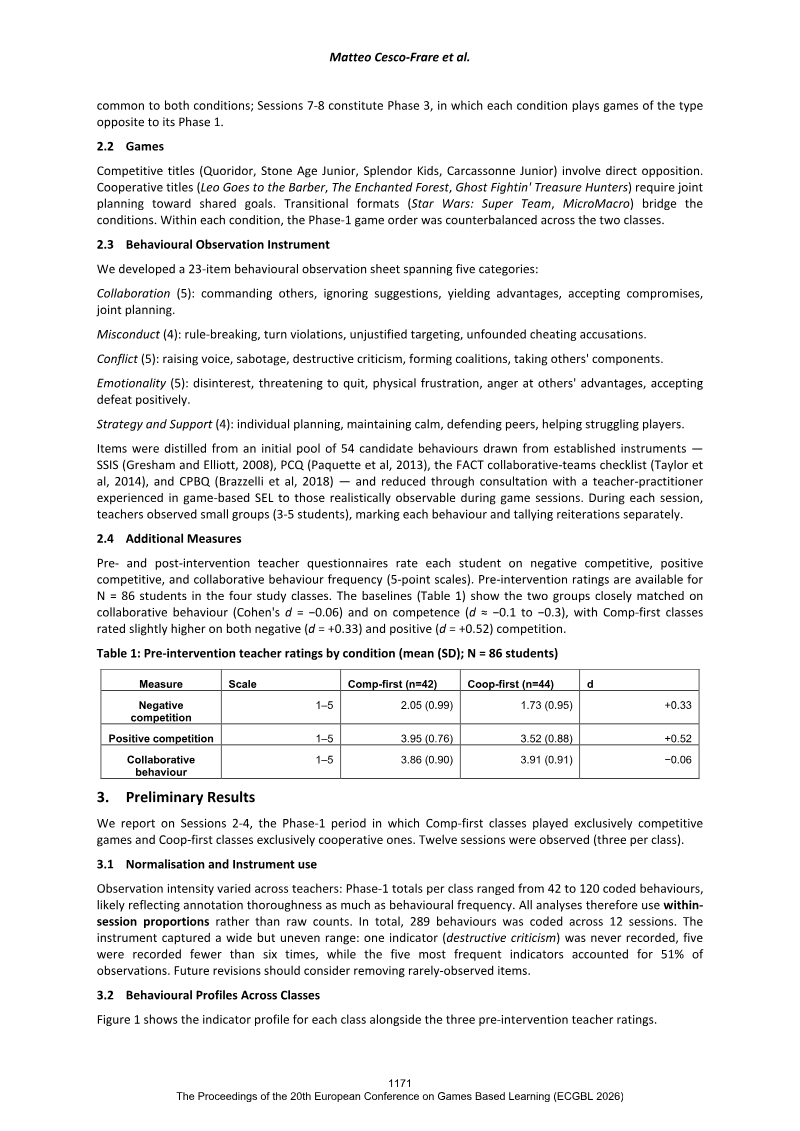
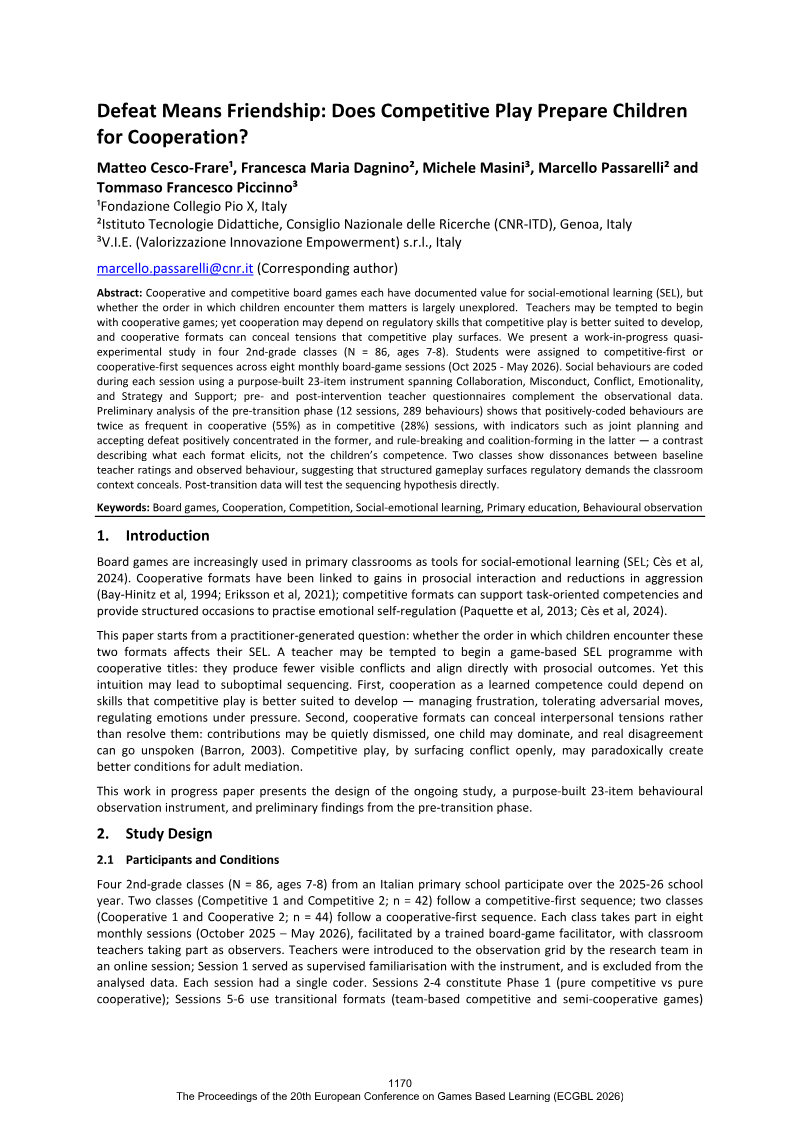
This work-in-progress quasi-experimental study asks whether the order in which children encounter competitive and cooperative board games affects their social-emotional learning.
- The study examines whether playing competitive versus cooperative board games in a set order affects social-emotional learning in 86 seven- to eight-year-olds across four second-grade classes in an Italian primary school, with eight monthly sessions from October 2025 to May 2026.
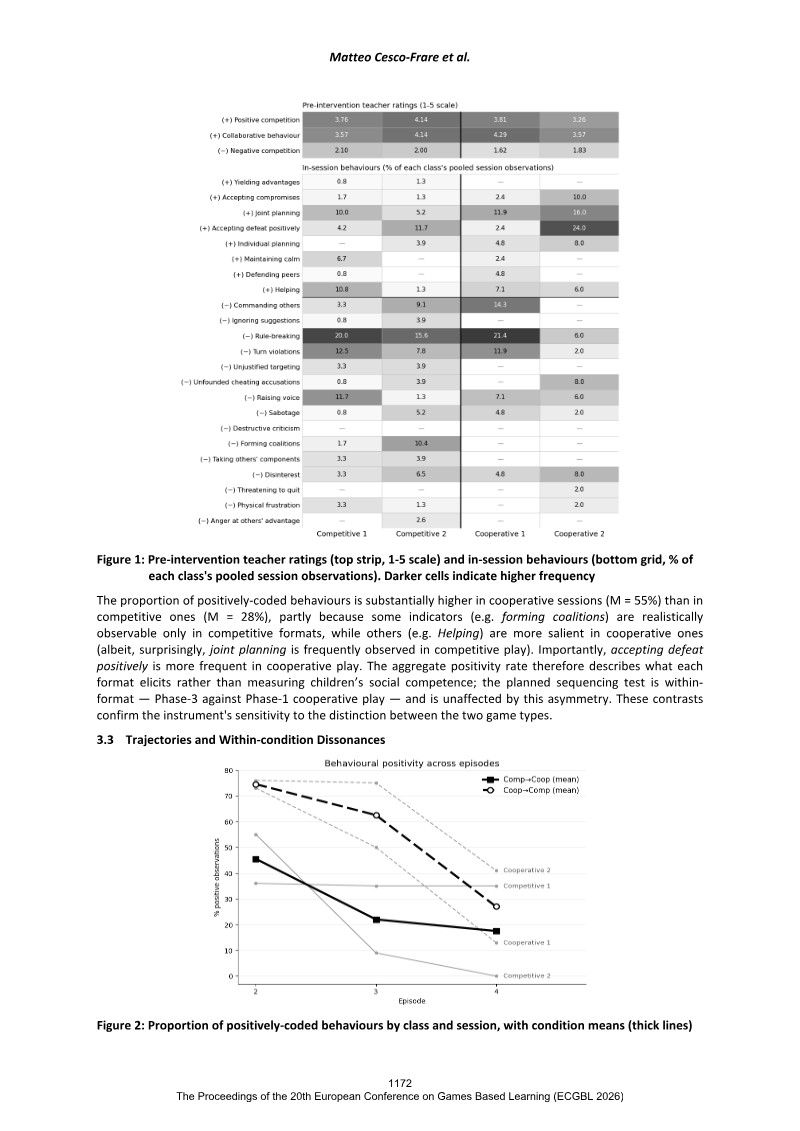
- In preliminary analysis of 12 sessions and 289 coded behaviours, positively coded behaviours made up 55% of cooperative sessions versus 28% of competitive ones, a contrast the authors attribute to what each game format elicits rather than to children's social competence.
- The core hypothesis is that competitive play may build regulatory skills such as frustration management and tolerance of adversarial moves that later support cooperation, but this sequencing effect remains untested until the final data phase.
Gamification Elements and Their Relationship with Creative Motivation in Higher Education: Uzbekistan
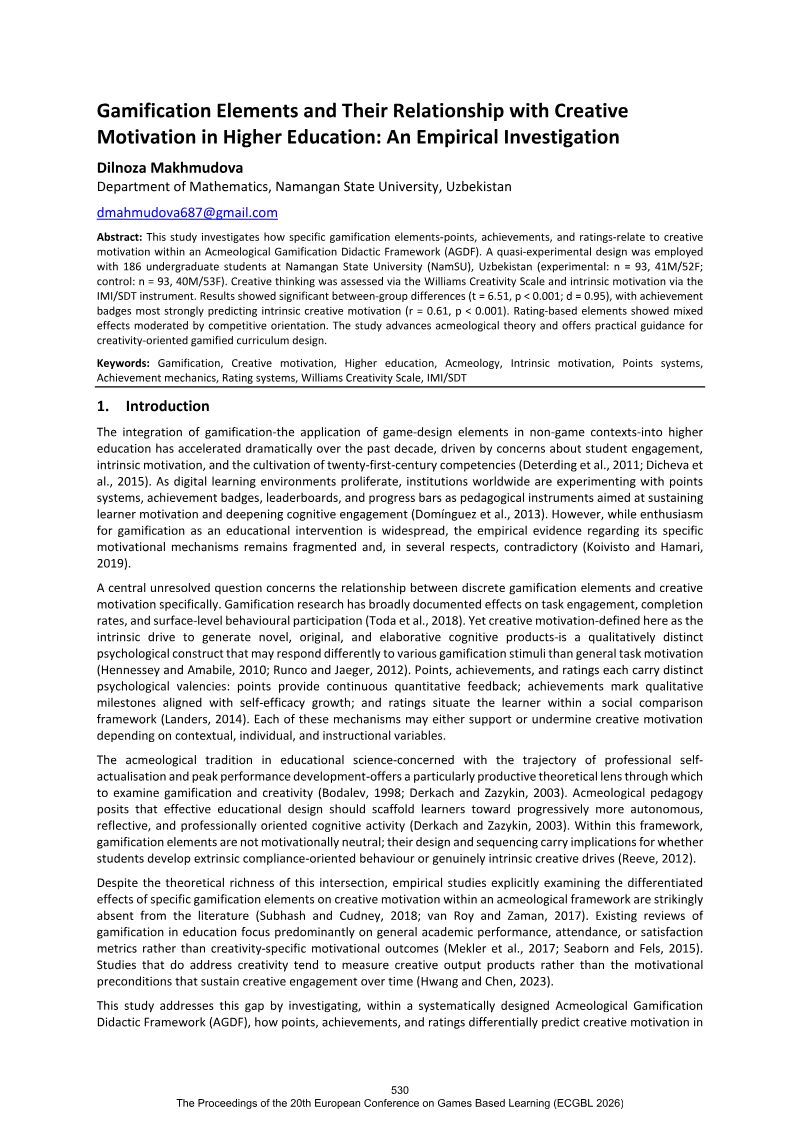
This study examines whether an acmeologically designed gamification framework, incorporating points, achievement badges, and rating systems, can enhance creative thinking and intrinsic creative motivation among higher education students.
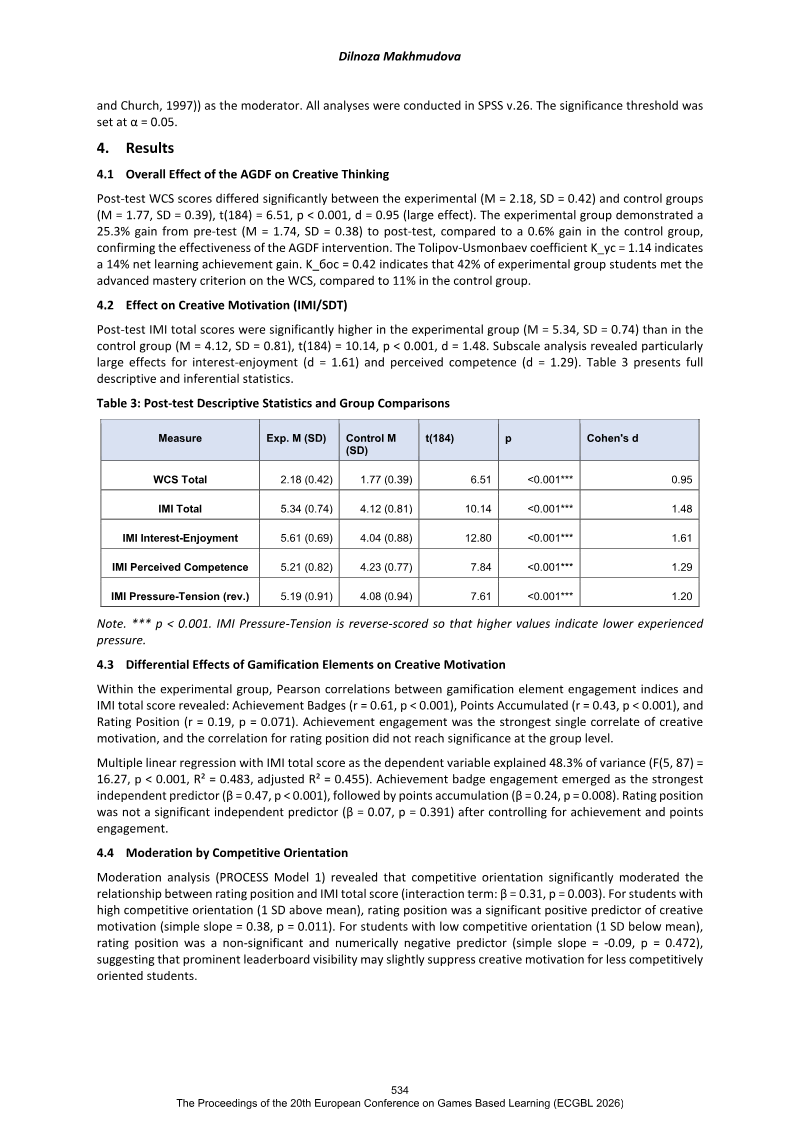
- Gamified instruction produced large gains over standard instruction in a quasi-experimental study of 186 students at Namangan State University: creative thinking (Williams Creativity Scale, d = 0.95) and intrinsic creative motivation (Intrinsic Motivation Inventory, d = 1.48).
- Achievement badges were the strongest predictor of intrinsic creative motivation (β = 0.47) among the gamification elements tested.
- Points had a smaller positive effect on motivation, which the authors attribute to a creativity-bonus design rather than points as such.



Challenges of Simulations and Serious Games Embedded in Emergency Preparedness Platforms
This study examines the difficulties of embedding simulations and serious games (SSGs) into emergency preparedness (EP) training within university settings, focusing on the B-prepared ecosystem, a set of four open platforms (VR-prepared, IM-prepared, Disastropedia, and RU-prepared).
- Integrating simulations and serious games into formal university education is harder than developing them, because institutional constraints and distinct educational competencies determine whether integration succeeds.
- The main barriers to course integration were rigid curricula, predefined learning outcomes, limited teacher capacity, and incompatible learning management systems, though integration was still feasible overall.
- Usability scores (System Usability Scale) varied widely, at 56% in one context and 86% in another, and the differences appear to stem from access routes rather than inherent qualities of the games.
Playing the Climate Future: Evaluating Climate-adaptation Games for Higher Education
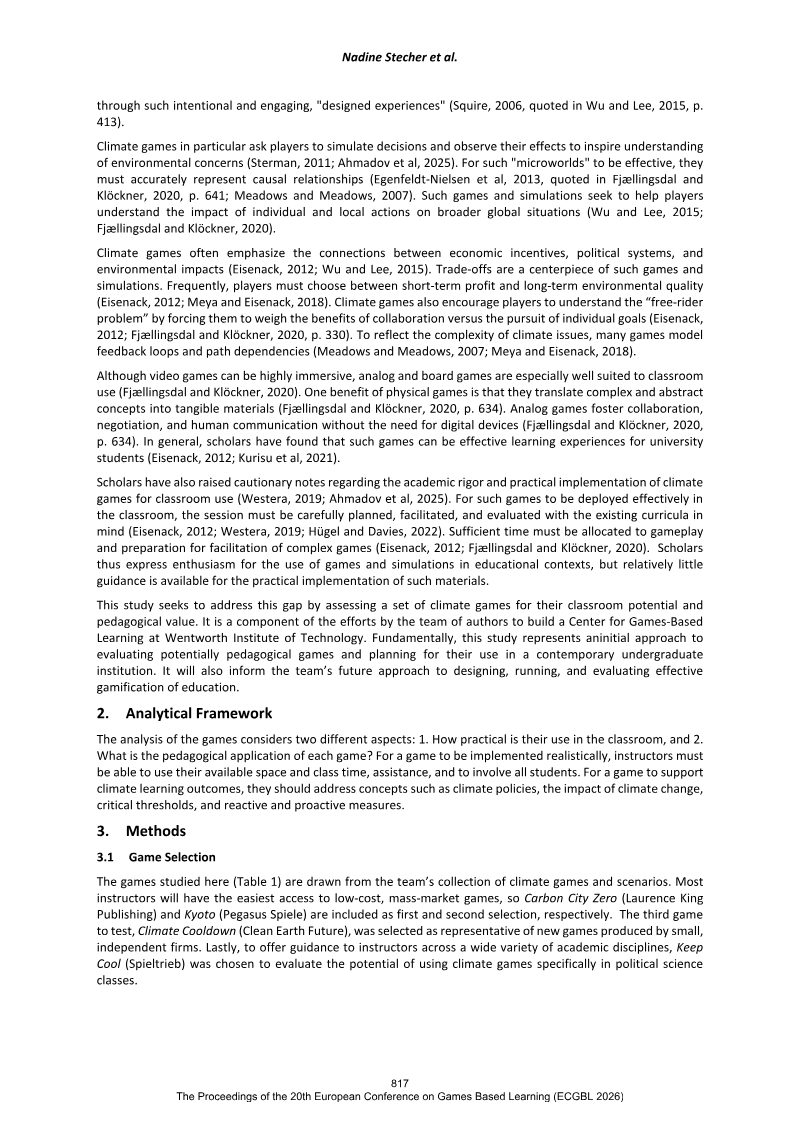
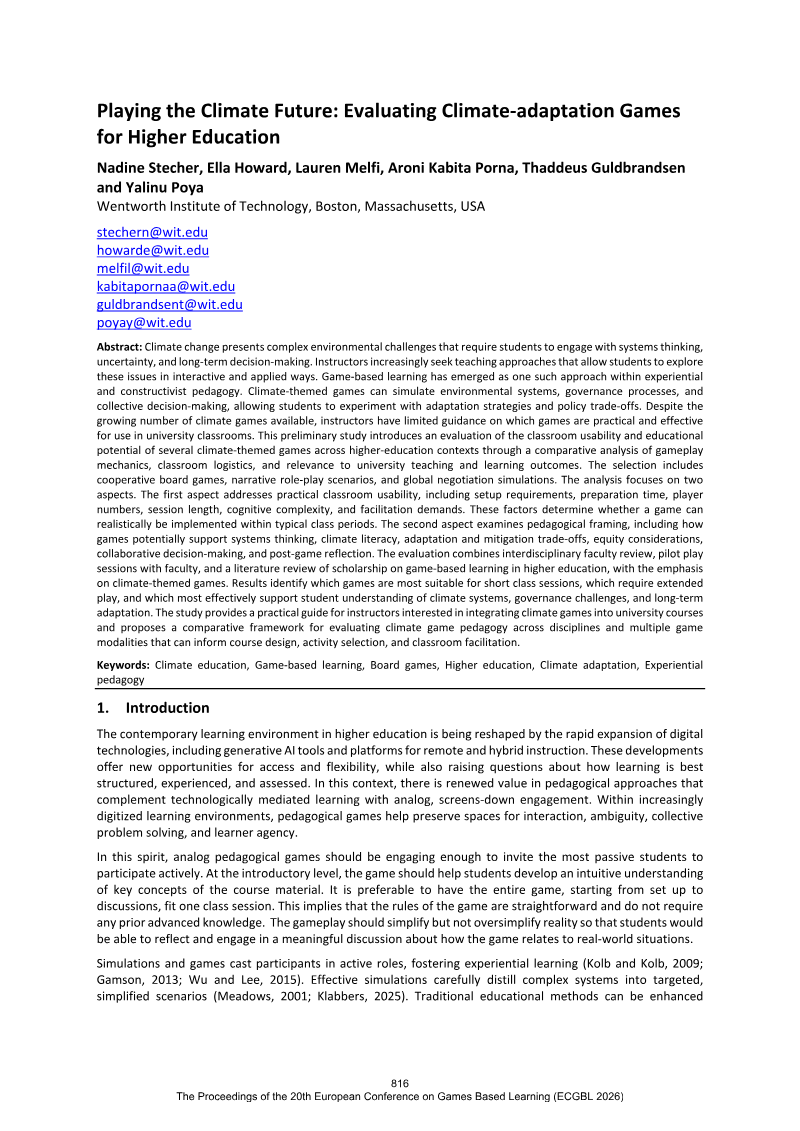
This preliminary study evaluates four climate-themed board and simulation games for use in university classrooms, with the aim of giving instructors practical guidance on which games can realistically fit into a course and what pedagogical value each offers.
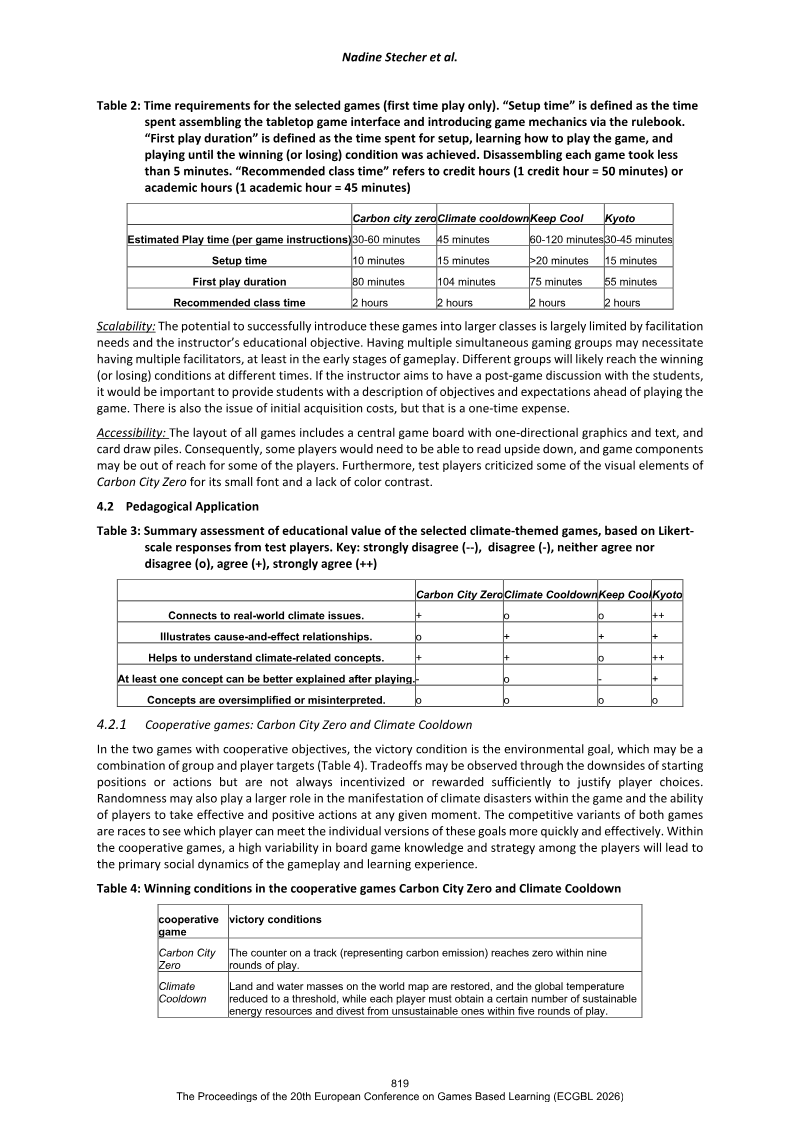
- The study evaluated four climate-themed games for university classrooms: Carbon City Zero, Climate Cooldown, Keep Cool, and Kyoto, covering two cooperative and two competitive titles.
- Every game ran well beyond estimated play times during first sessions, and the authors recommend allotting a full two-hour class period for any of them.
- Kyoto was judged the most immediately classroom-ready and best suited to governance and interdisciplinary courses, while Keep Cool offered strong political-economy insights but required careful debriefing.
Designing Educational Games as a Learning Experience for Pre-service Mathematics Teachers: Slovakia
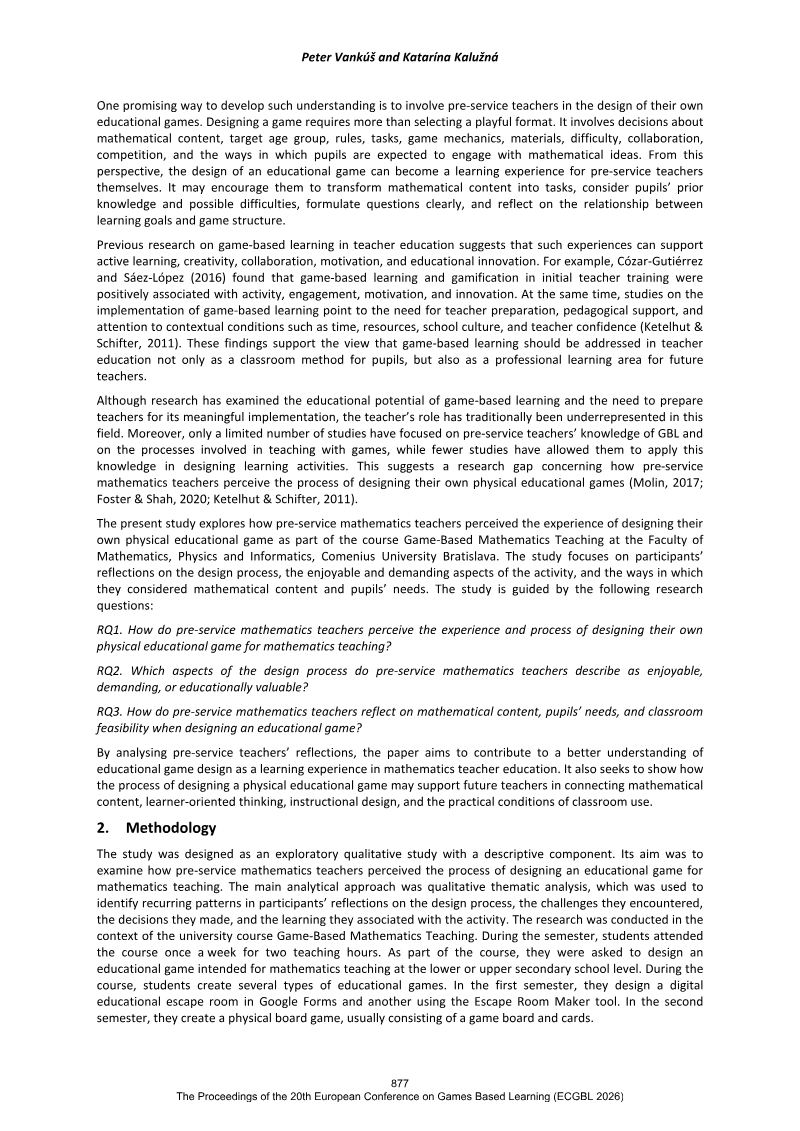
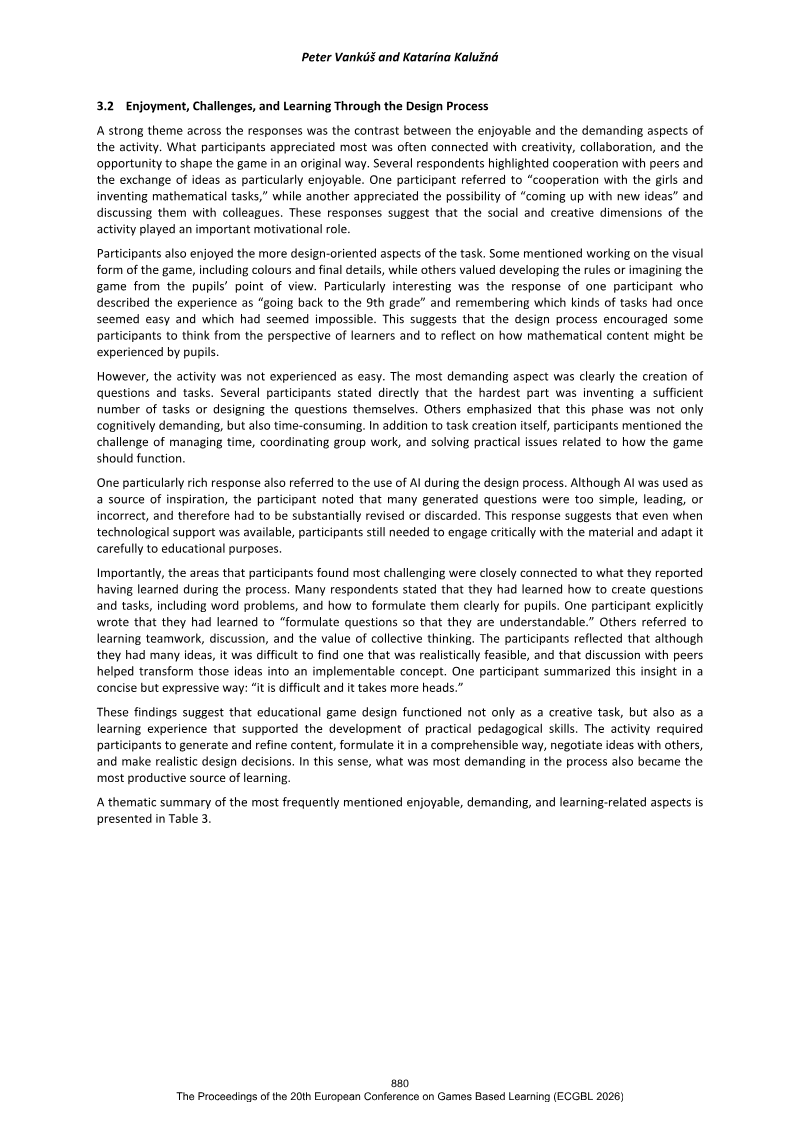
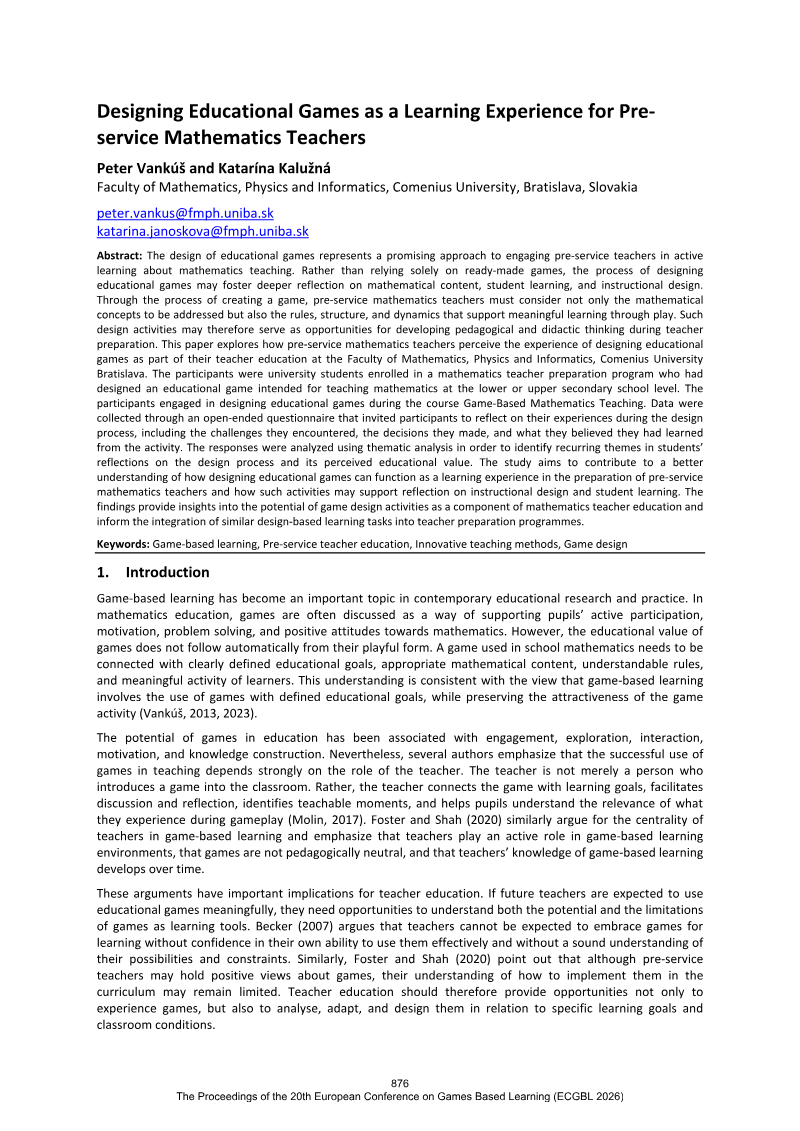
A study of 13 pre-service mathematics teachers at Comenius University Bratislava examines whether designing educational games can serve as a meaningful learning experience for future teachers.
- A study of 13 pre-service mathematics teachers at Comenius University Bratislava found that designing educational games was perceived as a positive, enjoyable, multi-stage process involving creativity, collaboration, and planning, though the evidence rests on self-reported perceptions rather than observed classroom outcomes.
- The authors conclude that educational game design can contribute to developing pedagogical content knowledge among pre-service mathematics teachers, but the small single-institution sample and open-ended format limit generalizability.
- Game design mainly changed how mathematics was presented rather than what was taught: 67 percent of participants kept their original mathematical topic unchanged.



Who Owns Gaming?: Analyzing Gambling's Semantic Displacement in Philippine Cultural Policy
This paper argues that in Philippine statutory and policy discourse, the word "gaming" has been legally appropriated by gambling, so that digital game developers are structurally excluded from policy recognition.
- The paper argues that in Philippine policy, the word "gaming" has been legally appropriated by gambling, structurally excluding digital game developers from policy recognition, a phenomenon the author calls "semantic displacement" and attributes to institutional defaults rather than deliberate targeting.
- The foundational assumption that gaming and gambling are independent categories requiring separate frameworks was never established in the Philippines, so the core challenge is building conceptual infrastructure rather than policing a border between two industries.
- Analysis of 28 Philippine government legal instruments from 1907 to 2025 identifies four definitional tracks for "game" (gambling, professional sports, school sports, and a proposed folk-heritage framework), and none accommodates digital games.
Gambling-like Mechanics in Video Games: A Challenging Regulatory Framework
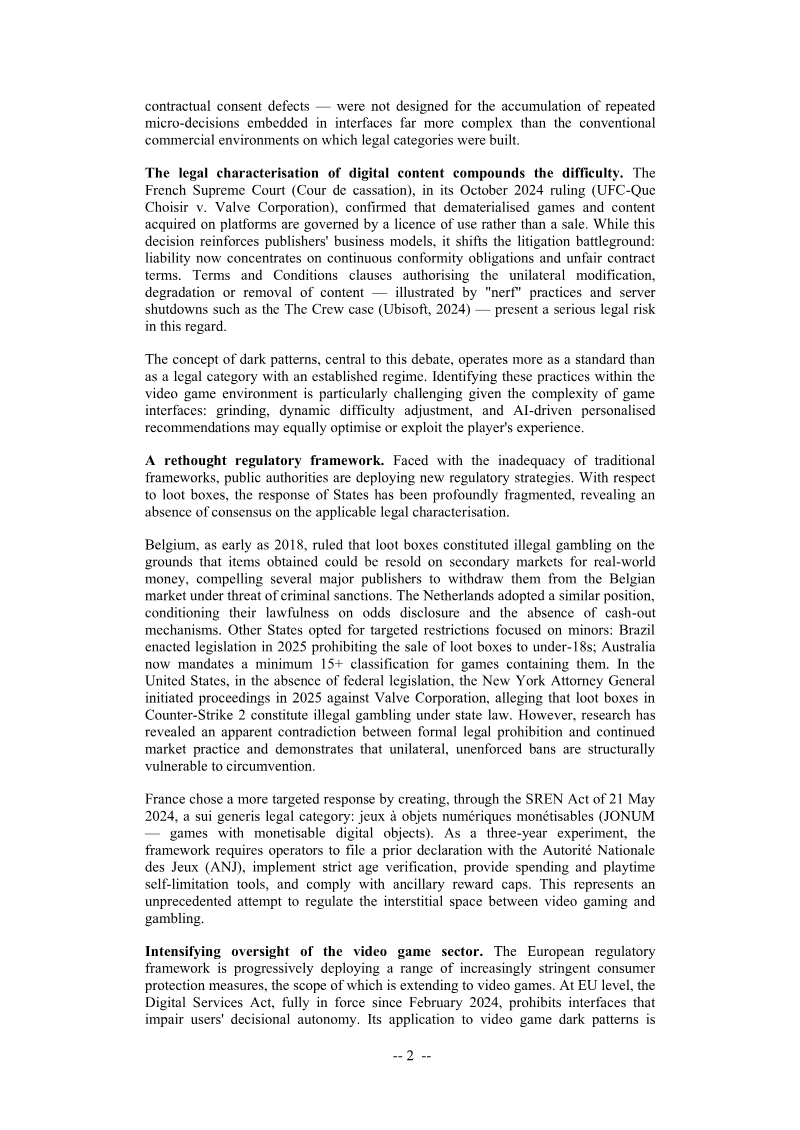
This paper examines the regulatory treatment of gambling-like mechanics in video games, arguing that existing legal frameworks, designed for conventional commercial environments, are poorly suited to the repeated micro-decisions and personalised interfaces that characterise modern game monetisation.
- Existing gambling laws, built for conventional commercial settings, are poorly suited to the repeated micro-decisions and personalised interfaces of modern game monetisation, leaving mechanics such as loot boxes, battle passes, and daily login rewards in a structural grey area outside legal definitions of gambling.
- A 2024 French Supreme Court ruling confirmed that digital games are licensed rather than sold, shifting litigation toward continuous conformity obligations and unfair contract terms.
- National responses to loot boxes diverge sharply: Belgium classified them as illegal gambling in 2018, the Netherlands conditioned lawfulness on odds disclosure and no cash-out mechanisms, and Brazil and Australia adopted age-based restrictions.



Digital Resilience, Health, and Harms: The Digital Convergence
This paper, a conference abstract from the Gam(bl)ing Conference 2026, argues that the growing convergence of digital technologies, gaming, gambling, social media, dating, and shopping applications, has created harms that existing research, typically divided by device or activity, does not adequately capture.
- The paper argues that growing convergence of gaming, gambling, social media, dating, and shopping apps creates harms that research divided by device or activity fails to capture.
- Its central proposal is 'digital resilience', a framework extending beyond digital literacy to cover user behaviour, health, harms, and the support networks around users such as family and health professionals.
- Drawing on prior work with lived-experience participants, the author notes that in-game purchases and round-the-clock gambling access can complicate recovery, and that difficulties with one technology can transfer to others.



Beyond Play: Towards a Non-Gaming-Centric Gaming Research
This article proposes a multi-level framework for understanding game streamers as intermediaries who connect three domains: the self (micro level), where streamers' identities, motivations, and affective labour are shaped by biography and platform dependency; the community (meso level), where audience co-construction…
- The article proposes a three-level framework for game streamers as intermediaries: the self (micro: identity, motivation, affective labour), the community (meso: audience co-construction, third-place dynamics, shared norms), and the platformised industry (macro: gatekeeping, platform infrastructural power, regulatory fragmentation).
- The authors argue that prior research studied streaming through separate lenses such as identity, audience, or platformisation, and that intermediation should instead be understood as a continuous process arising from interactions across all three levels.
- Precarity and monetisation pressures recur across all three levels, with on-stream promotion of loot boxes cited as an example of audience engagement and platform economics becoming entangled.



Disco Elysium: Existential Reflection within Crisis
This paper examines Disco Elysium, the Estonian role-playing game developed by ZA/UM and released in 2019, as a case study in how digital games can facilitate existential reflection on crisis, agency, failure, and identity.
- The paper uses Disco Elysium (ZA/UM, Estonia, 2019) as a case study of how games can prompt existential reflection on crisis, agency, failure, and identity, and argues this design intent is substantively realized in player engagement.
- The methodology combines a critical playthrough, textual analysis, thematic analysis of six developer interview transcripts, and 100 posts and 904 comments from the r/DiscoElysium subreddit.
- Developer interviews yielded four core design priorities: social and political context, emotions, freedom, and mistakes and ownership.