Digital Games
Company
Documents about Digital Games
German Games Industry: 2025
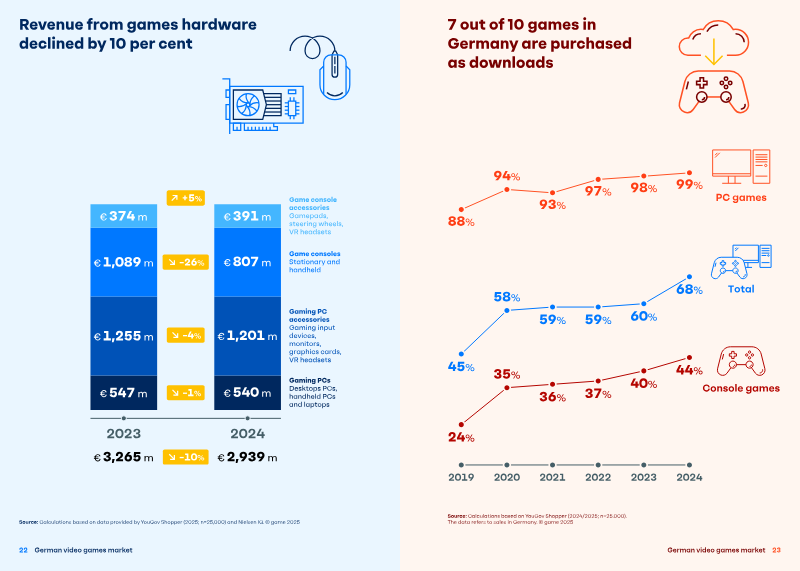
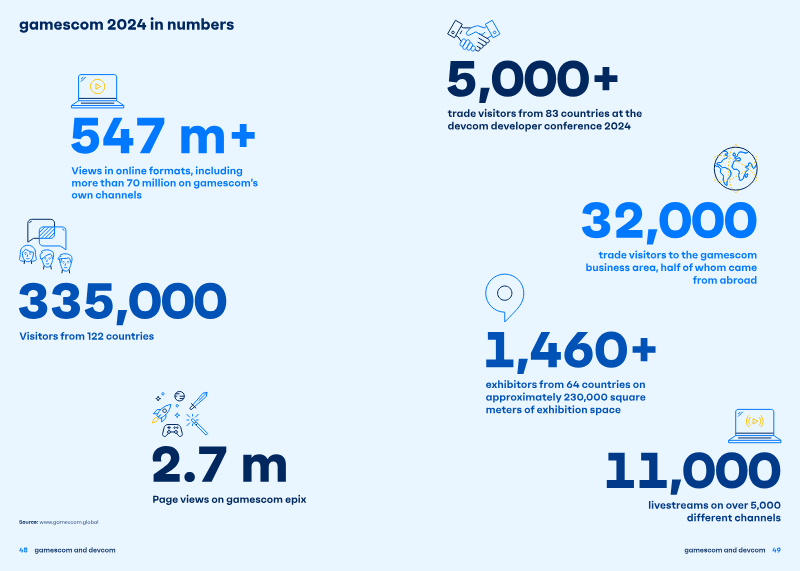
Germany's games industry went through a difficult 2024.
- The German games market contracted by 6% in 2024, resulting in total revenue of €9.4 billion and the first recorded decline in industry employment and active companies.
- Federal funding is set to increase to €125 million annually by 2026, supported by new competitive tax incentives designed to improve Germany's international market standing.
- Germany remains Europe's largest games market and the fifth largest globally, supported by a robust player base of 37.5 million people with an average age of 39.5.
Australian Video Game Development Industry Stays Steady, Generating $339.1 Million for the Economy
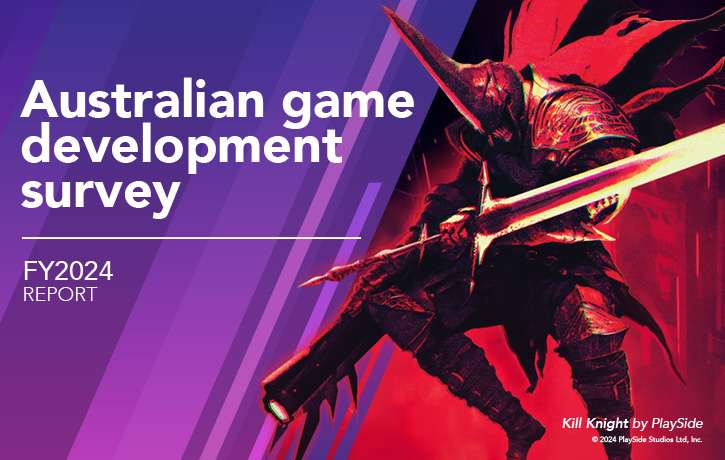
The Australian video game development industry maintained a steady economic contribution in FY2024, generating AUD$339.1 million in reported revenue, a slight decrease from AUD$345.5 million in FY2023.
- The Australian video game development industry generated AUD$339.1 million in revenue in FY2024, a slight decrease from AUD$345.5 million in 2023, but is considered steady given global challenges.
- 93% of the revenue generated by Australian game studios comes from overseas sources, indicating strong international demand for Australian-made games.
- Full-time employment in the Australian video game industry remained stable at 2,465 across 137 surveyed studios in FY2024, with 61% of studios planning to hire in 2025.
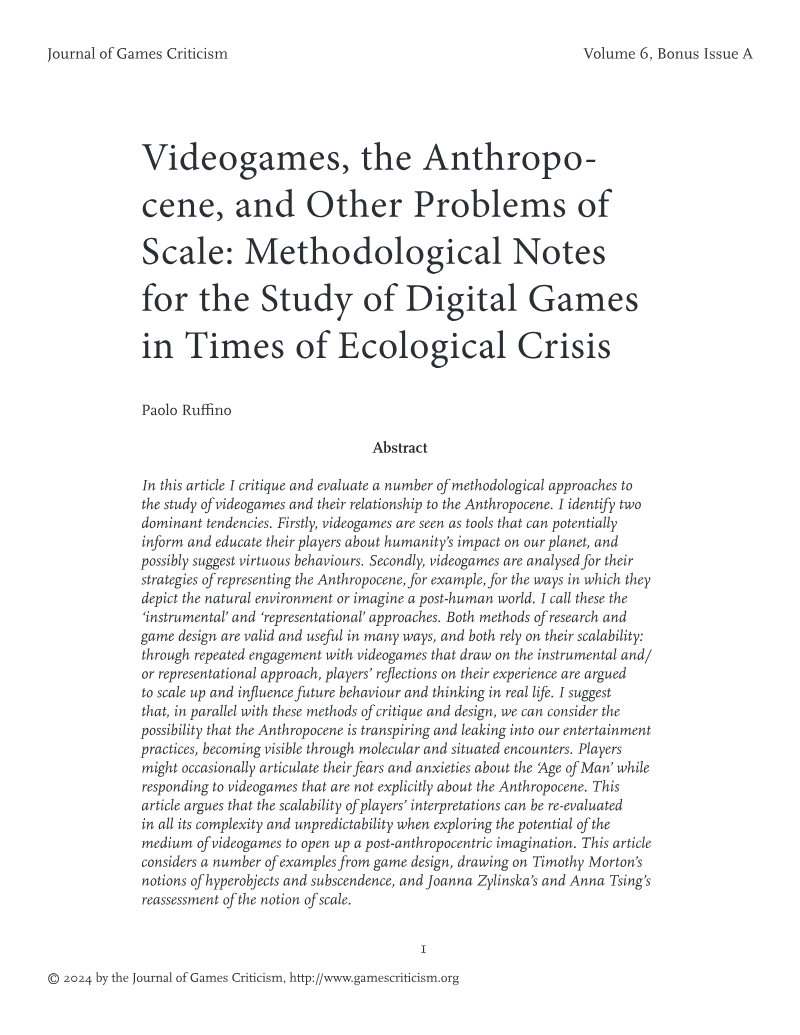
Videogames, the Anthropocene, and Other Problems of Scale: Methodological Notes for the Study of Digital Games in Times of Ecological Crisis
The study of digital games within the context of the Anthropocene requires a fundamental shift in methodology, moving away from traditional frameworks that treat games as either educational instruments for behavioral change or representational tools for depicting ecological collapse.
- Current research methodologies that treat games as educational tools or representational media for climate change fail because they incorrectly assume that in-game messaging scales predictably into real-world environmental action.
- Scholars should shift focus from broad, data-driven analyses toward 'molecular encounters,' which prioritize the micro-level, non-strategic interactions between players and digital systems.
- The Anthropocene should be studied as an underlying condition that shapes the nature of digital play rather than as a subject for explicit environmental representation.
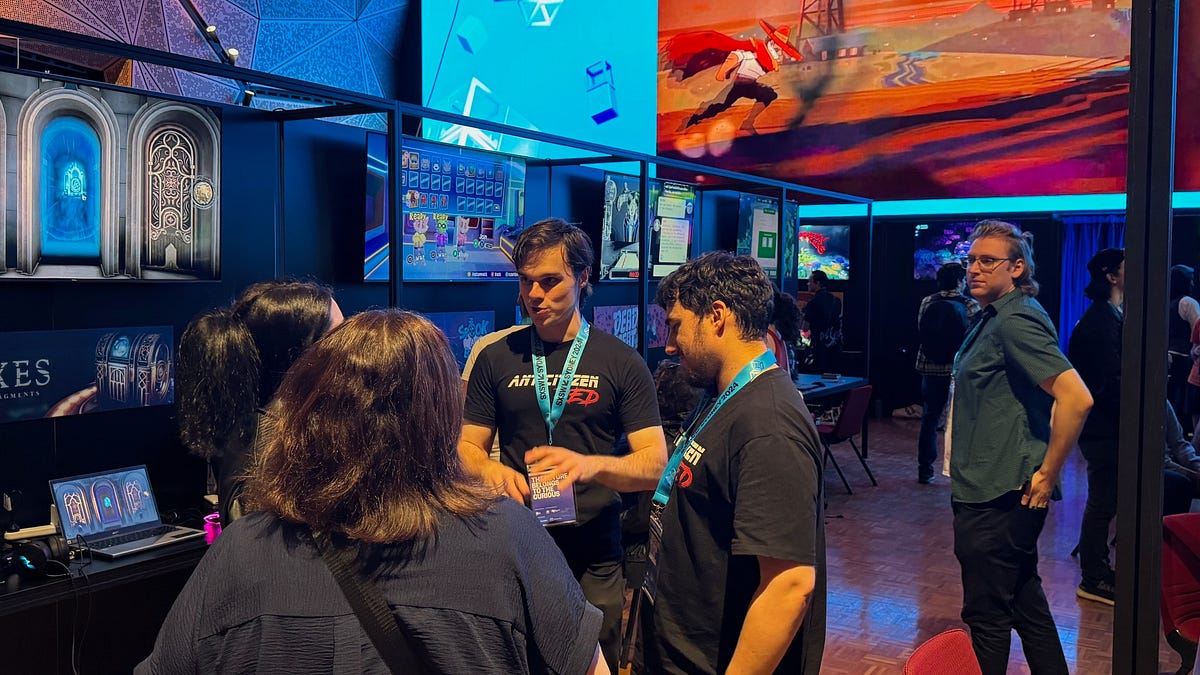
SXSW Sydney: Three Things I Learned from This Year's Festival
This document summarizes key observations from the SXSW Sydney festival, focusing on the Australian video games industry and broader trends.
- The New South Wales games industry faces significant instability due to a 2023 government attempt to withdraw $190 million in screen industry funding.
- Australian developers lack a robust professional services infrastructure, specifically in banking, legal, and corporate advisory sectors, which hinders access to specialized financial products.
- Twitch is strategically pivoting away from its 'games-only' brand identity to compete directly with short-form platforms like TikTok for broader audience engagement.

Press Start: Games Start-up Scholarship for German Developers
Germany's federal government is launching the "Press Start: Games start-up Scholarship," a funding program designed to help game developers establish their own studios.
- The German government is investing 8 million euros into the 'Press Start' scholarship to support up to 130 emerging video game studios.
- Selected participants will receive a monthly stipend exceeding 2,750 euros alongside an 18-month program of professional coaching and workshops.
- The initiative is open to entrepreneurs who have established a studio within the last 18 months or intend to launch one in the near future.
Avant-Garde Is Dead? On Arrière-Garde and Digital Games
The scholarly inquiry into the evolution of digital game aesthetics challenges the traditional assumption that the avant-garde remains the primary driver of innovation within the medium.
- The academic article 'Avant-Garde is Dead? On Arrière-Garde and Digital Games' was published in the journal Games and Culture by authors Aleksandra Prokopek and Agata Waszkiewicz.
- The research explores the conceptual shift from avant-garde to arrière-garde movements within the context of digital gaming.
- The study specifically examines the rise of 'cozy games' and 'bedtime digital games' as emerging categories in the industry.
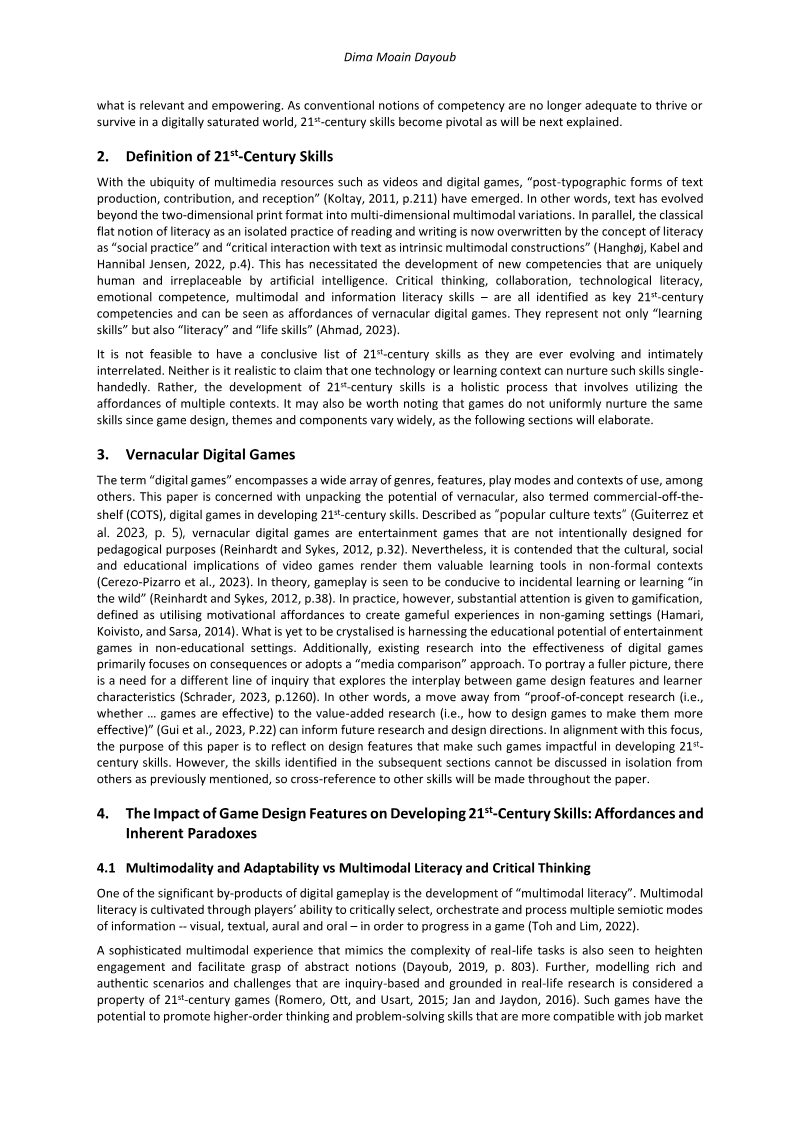
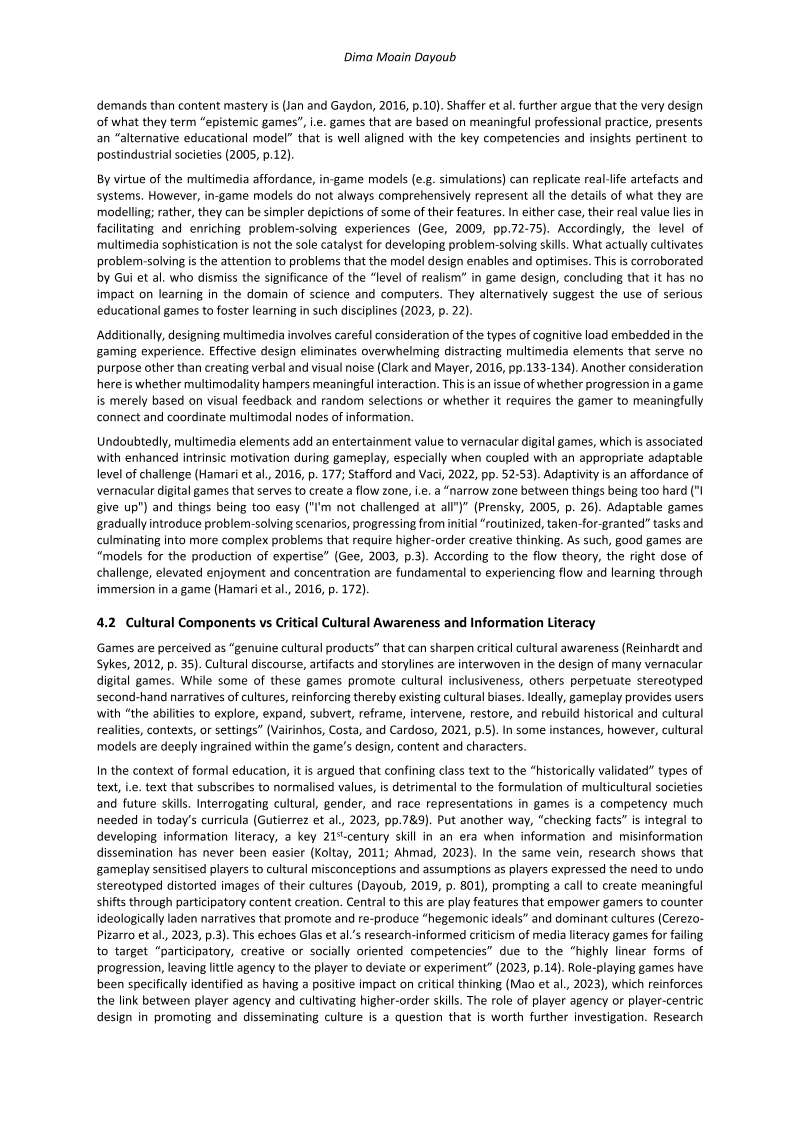
Exploring the Affordances of Vernacular Digital Games in Developing 21st-Century Skills
This paper argues that the boundary between formal and non-formal learning should be bridged rather than dismissed, and it proposes shifting the focus from gamification, which adds game elements to non-game contexts, toward adding an educational layer to entertainment games that were never designed for pedagogy.
- The paper argues for adding an educational layer to entertainment games not designed for pedagogy, rather than gamification, which adds game elements to non-game contexts.
- Vernacular digital games are presented as capable of cultivating 21st-century competencies such as critical thinking, collaboration, multimodal and information literacy, emotional competence, and technology literacy, but no single game or context can develop them alone, so a holistic combination of learning environments is needed.
- Design features shape outcomes: multimodality supports literacy but excessive or purposeless multimedia can impose cognitive load, while adaptivity sustains flow by balancing challenge and skill.

Fun and Functional: Using Non-Digital Games to Promote Maths Engagement in Pre-service Teachers
The study "Fun and Functional: Using Non-Digital Games to Promote Maths Engagement in Pre-service Teachers" explores the efficacy of integrating non-digital games into university mathematics courses to enhance engagement among pre-service teachers.
- Eight non-digital games, some in multiple versions, were trialled across sixteen class sessions with 44 first-year pre-service primary teachers at the University of Aveiro in Portugal, using a mixed case study design.
- Students responded very favourably: none disliked the games, 98 percent expressed some degree of liking, and mean agreement exceeded 4 on a 5-point scale that games made learning more interactive, engaging, and motivating.
- Garden Animals and Maths Monopoly were the most preferred activities among participants.
Game Studies Scrimmage
The document is a panel proposal submitted to DiGRA, the Digital Games Research Association, for an experimental session titled "Game Studies Scrimmage."
- The document is a DiGRA panel proposal for an experimental session called "Game Studies Scrimmage," in which scholars play an unfamiliar game and give ten-minute analytical talks, aiming to test analytical agility and foster collaborative enjoyment.
- A randomly selected game would be chosen two to three weeks before the annual meeting in Guadalajara and must be completable within about 24 hours.
- A Discord server would be opened so researchers worldwide can participate, stream, and comment on the session.
Big Brother Meets Joystick: Ethical Perspectives on Surveillance Imagery in Digital Games
This paper examines how surveillance is depicted in digital games and evaluates those depictions from an ethical and epistemological standpoint.
- Games shape players' imaginaries of surveillance, and their depictions, both visual and mechanical, can either normalize questionable monitoring practices or make distributed surveillance visible and open to critical reflection.
- The authors propose a two-dimensional framework for analyzing surveillance in games: visual aesthetics (e.g., eye-in-the-sky cameras, scan lines and glitches, blue/green overlays and binary code) and ludic, rule-based embedding.
- Many games, including some ostensibly critical of surveillance, reward players for hacking cameras or data mining in consequence-free minigames, which can create a false sense of empowerment.
Newsgames as a Case Study for the Value and Challenges of Archiving Digital Games
This analysis explores the value and challenges of archiving digital newsgames, drawing insights from a research team's archive of 101 newsgames.
- Newsgames are shaped by low budgets and a perceived disposability akin to print news, making them especially vulnerable to loss.
- Only 27% of the 101-game collection was identified as allowing contemporary public play as of 2023, a rate the authors find troubling given their ties to established news and academic institutions.
- The academic record suffers from selection bias: free, web-playable, widely distributed newsgames are far more likely to be documented in scholarship, while paid, platform-specific, or locally confined titles are often omitted.
Intentional and Accidental Tropes of Polish Heritage in Sienkiewicz-Themed Digital Games
This paper investigates the intentional and accidental incorporation of Polish national heritage tropes in digital games based on the works of Henryk Sienkiewicz, particularly his "Trilogy."
- The paper analyses how Polish national heritage is embedded in digital games adapted from Henryk Sienkiewicz's historical novels, combining Umberto Eco's tripartite model of intentionality with Stuart Hall's encoding-decoding framework.
- Its central questions are which national-heritage elements developers deliberately implement, which elements Polish-affiliated players feel must be explained to international audiences, and which tropes are treated as transparent or too obvious to mention.
- The corpus comprises four games tied to Sienkiewicz's Trilogy, set in the seventeenth-century Polish-Lithuanian Commonwealth: The Witcher 3: Hearts of Stone, Hellish Quart, Mount & Blade: With Fire & Sword, and the ironic 8-bit mini-game With Fire and Sword: Spiders within Observer.