1 free read left. Create a free account for unlimited reading + AI research.
Create free accountWhitepaperGames Research Association of Poland
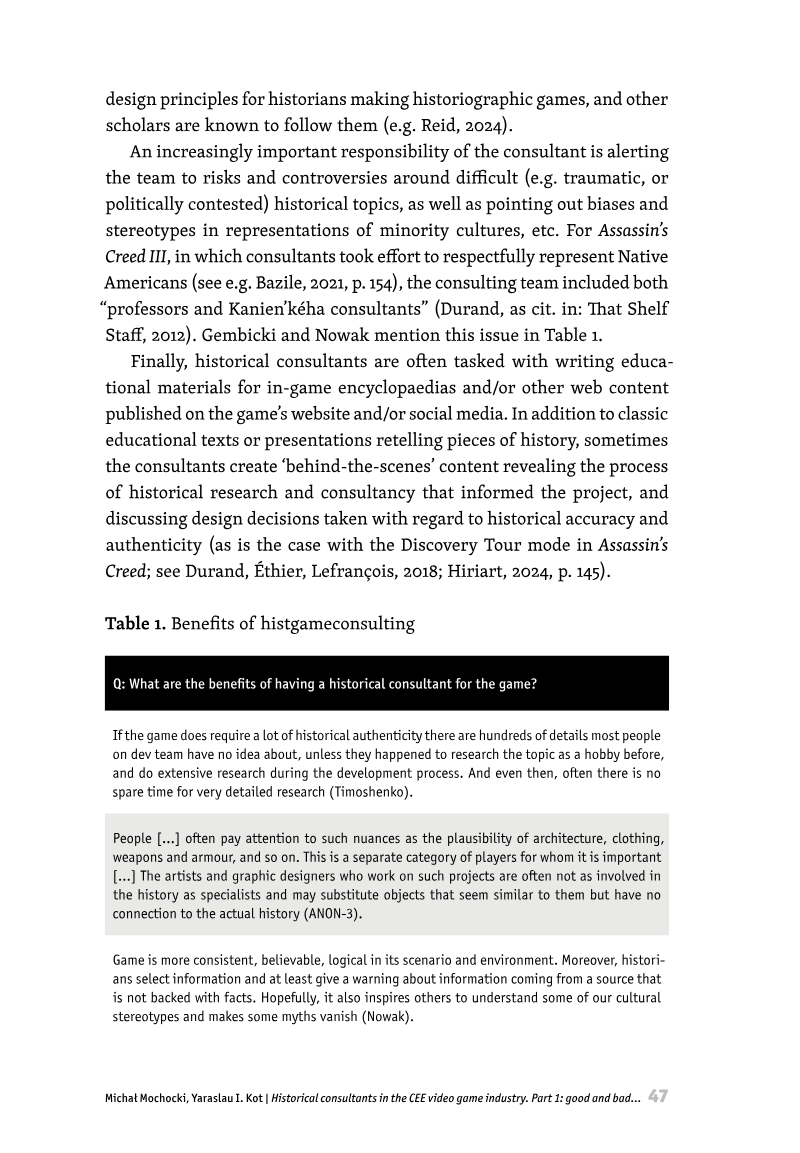
Ubisoft's Assassin's Creed series and Warhorse Studios' Kingdom Come: Deliverance are cited as prominent examples.
Historical consulting for digital games, the practice of engaging historians and other subject experts to inform game development, has moved from an informal and often decorative role toward a more established professional field. The document traces this trajectory from early scholarly reflection in historical game studies through the 2010s, when the practice was frequently used for marketing value rather than substantive input, to the 2020s, when consultants have become more visible in credits, academic-industry partnerships have grown, and public funding has increasingly supported history- and heritage-themed games. Prominent examples such as Ubisoft's Assassin's Creed series and Warhorse Studios' Kingdom Come: Deliverance illustrate how expert involvement can become a central selling point, though the overall job market for consultants remains modest.
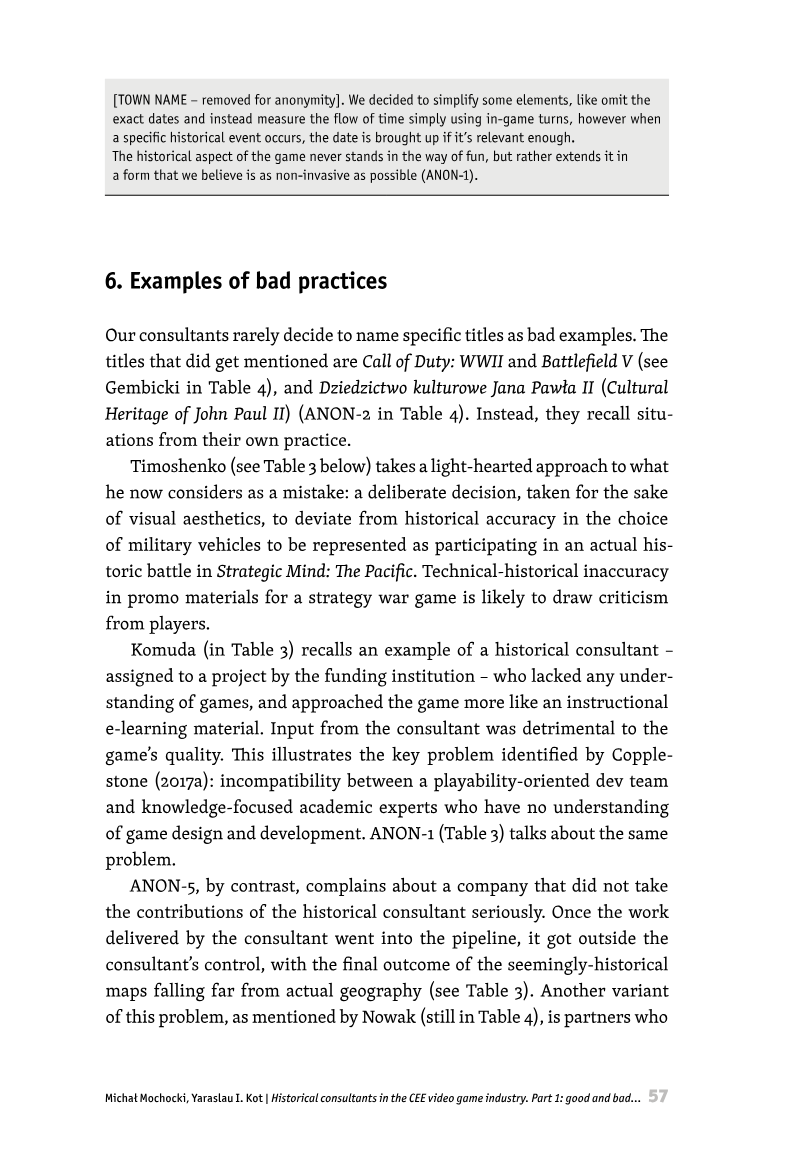
Case studies of studios including Warhorse Studios, Wargaming, Creative Assembly, Ubisoft Montpellier, and Charles Games show that academic historians are the most common consultants, with Wargaming favoring military-technical specialists. A preliminary survey of national game developer associations across Central and Eastern European countries identified academic experts as the most frequently cited consultants, with self-educated enthusiasts, living witnesses, and history teachers appearing in some countries. Only Ukrainian, Lithuanian, and Serbian respondents described historical consulting as established locally. Studios in the region were found to use the full range of hiring models, from in-house staff and temporary external hires to institutional partnerships or no outside consultants at all.
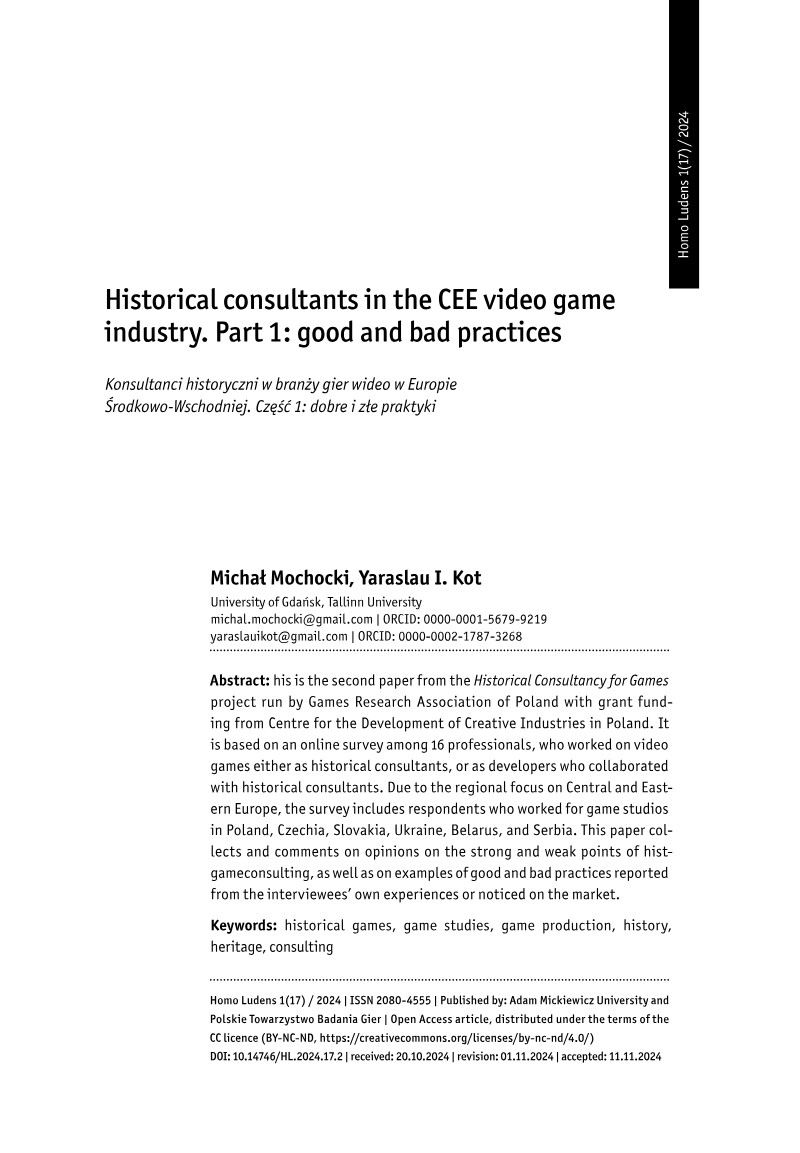
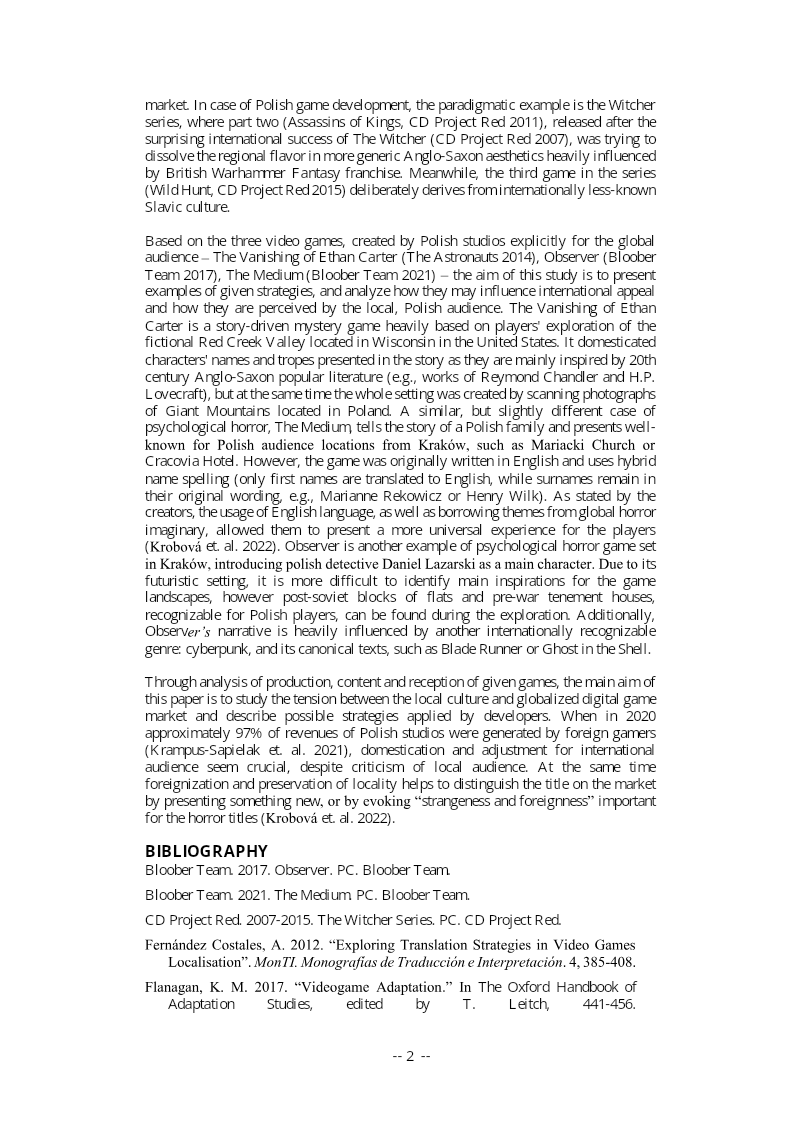
The survey's scope is limited: it covered only studios that had already used consulting, so its findings likely overstate the prevalence of the practice across the region. It was conducted by the Polish Society for Game Research and funded by the Centre for Creative Industries Development, and it targeted representatives of national game-development organizations in eight countries: Poland, Czechia, Slovakia, Ukraine, Belarus, Lithuania, Estonia, and Serbia. The research is positioned within Historical Games Studies, where published work on this subject remains limited, and it serves as a foundation for further inquiry into practices, competences, and formal education for historical game consultants in Central and Eastern Europe.
University of Copenhagen · 2026