Key insights
5 slides
Context
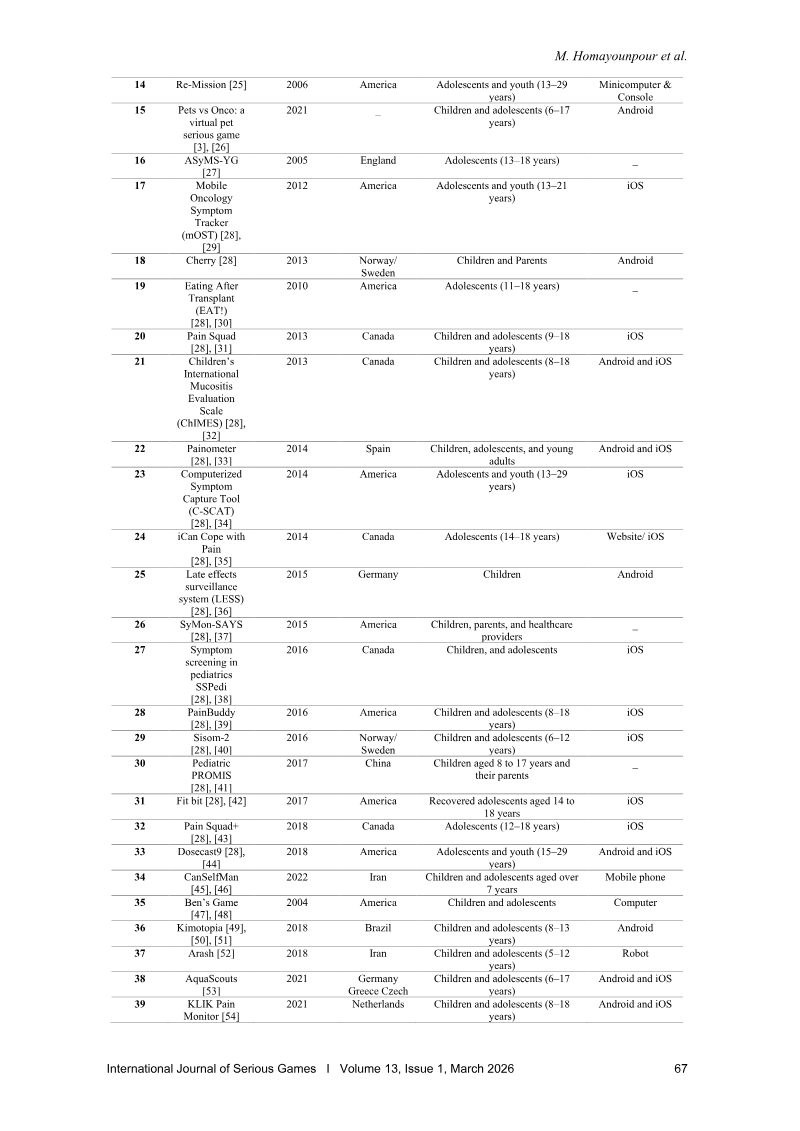
Digital games are effective, informal tools for second language acquisition.
They serve as a complementary resource to formal instruction.
1 / 5
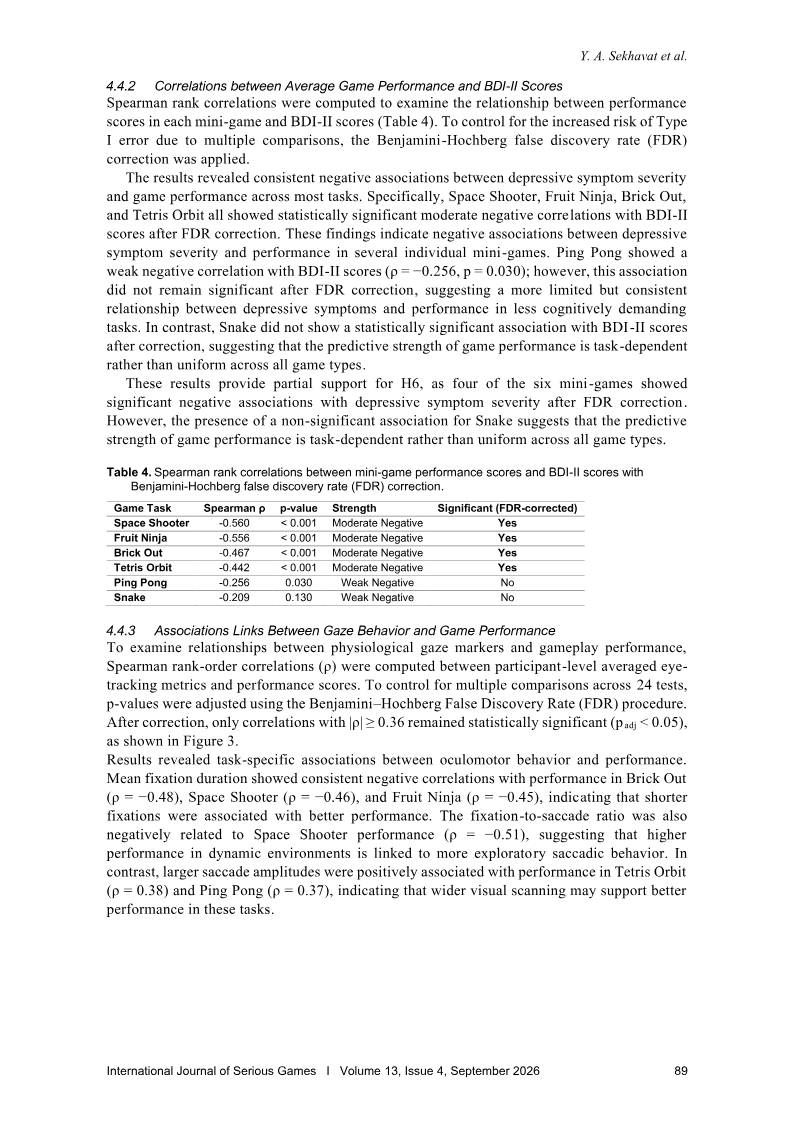
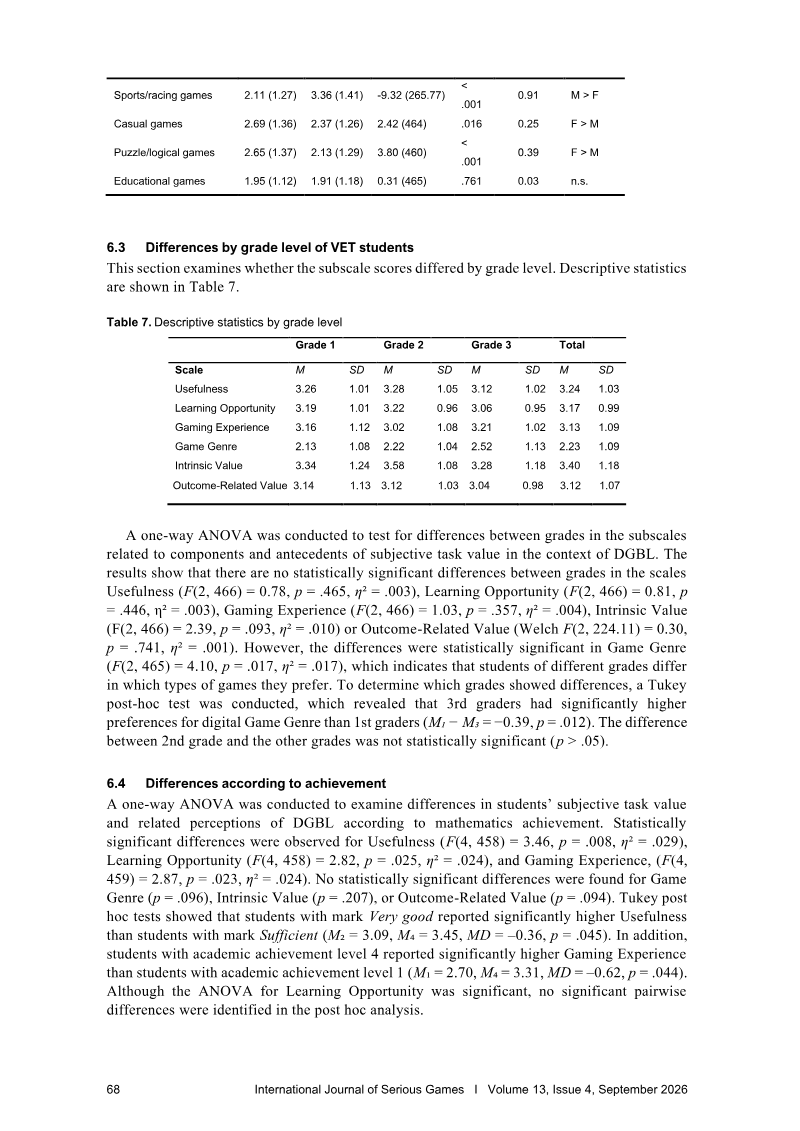
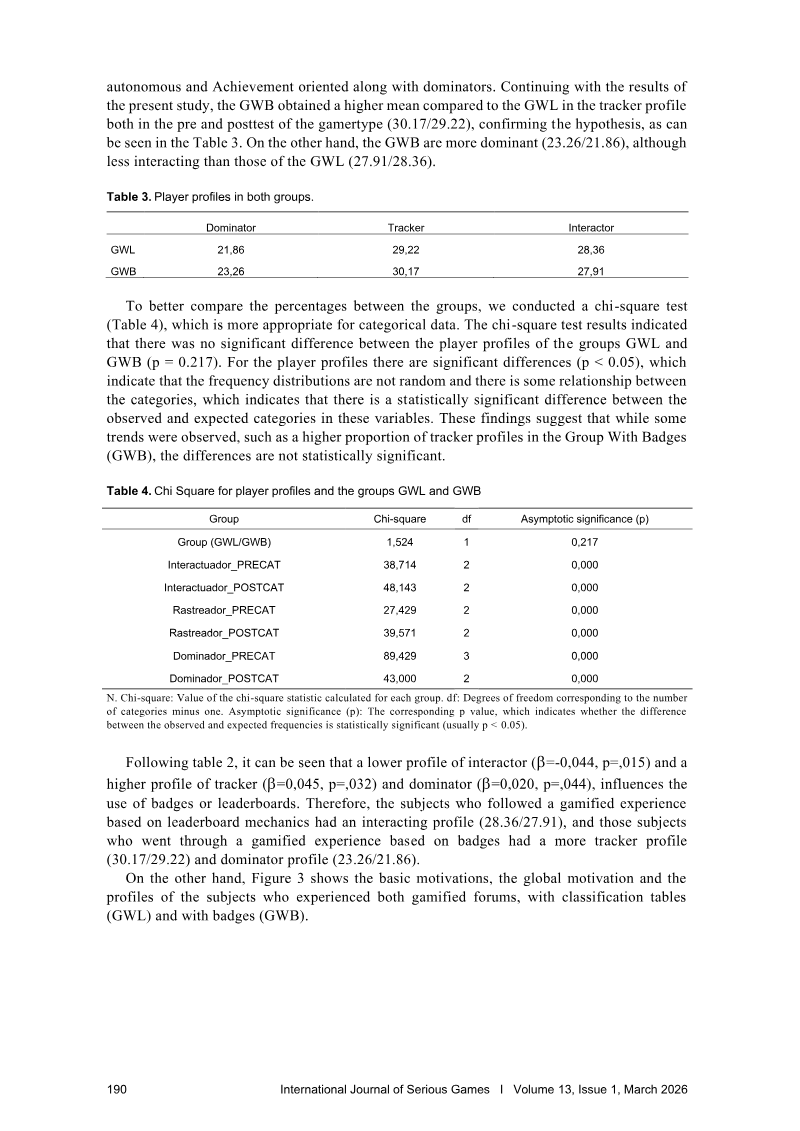
- 01Total time spent gaming does not correlate significantly with second language acquisition, indicating that duration is a poor metric for measuring educational progress.See it on page 5
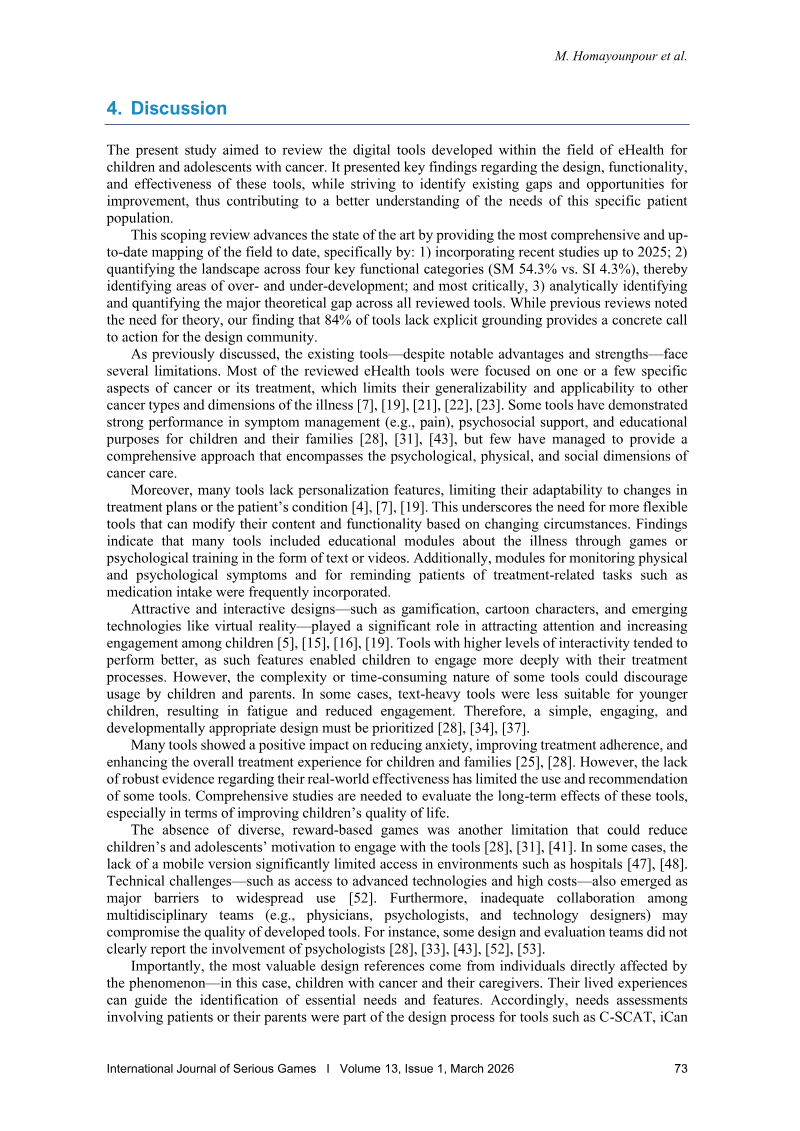
- 02The effectiveness of game-based learning is driven by qualitative factors, specifically the learner's perceived usefulness of the platform and the game's interactive, narrative-rich mechanics.See it on page 4
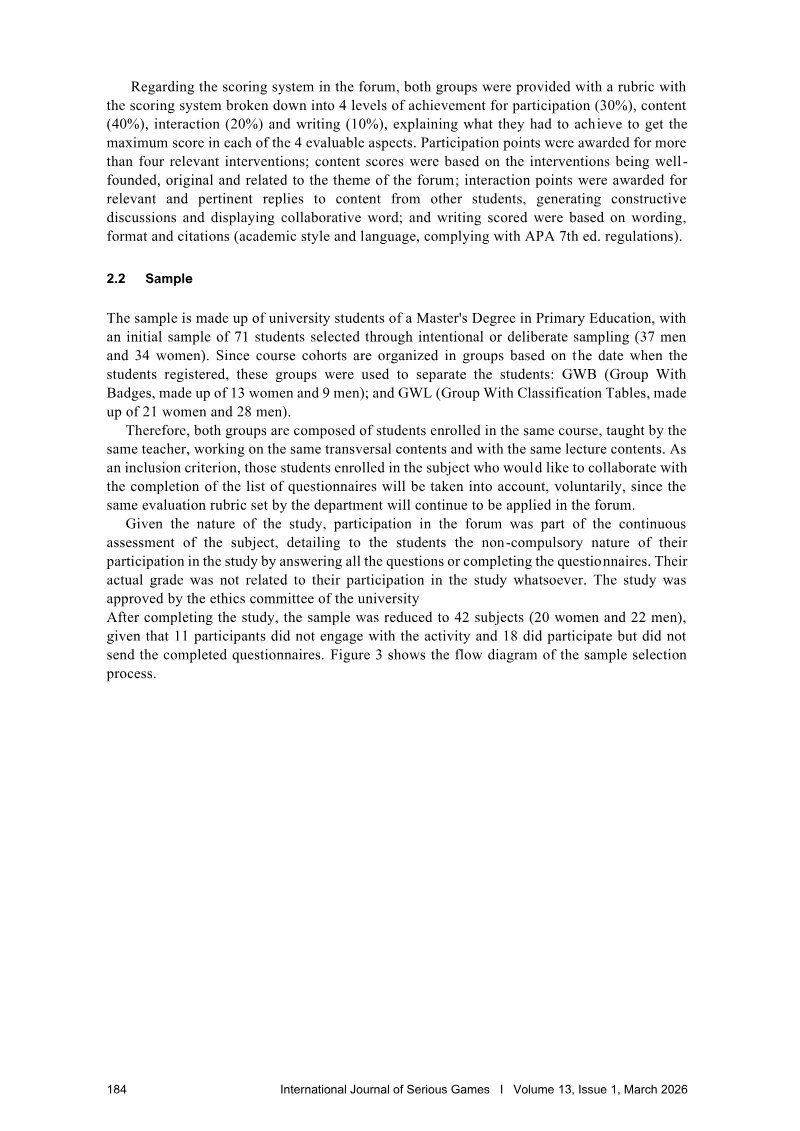
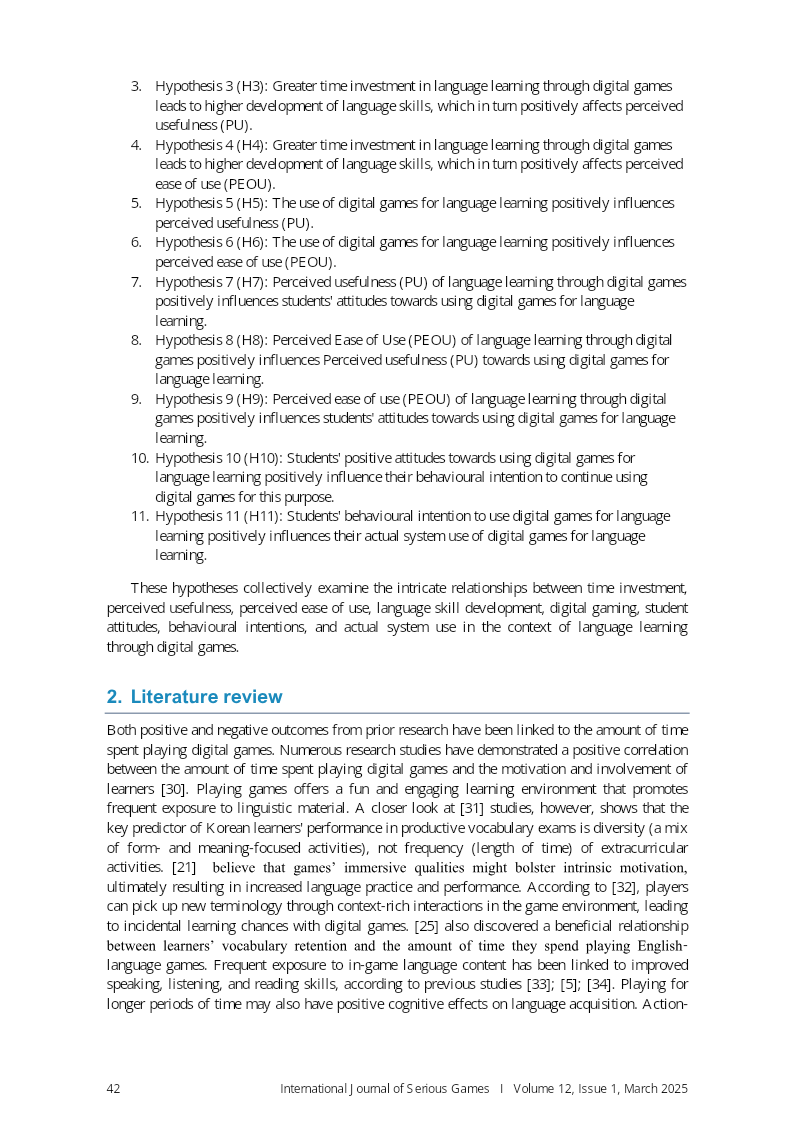
- 03Research involving 350 university students in Iraq and the Czech Republic confirms that meaningful interaction and specific game design are more critical to language development than frequency of play.See it on page 3
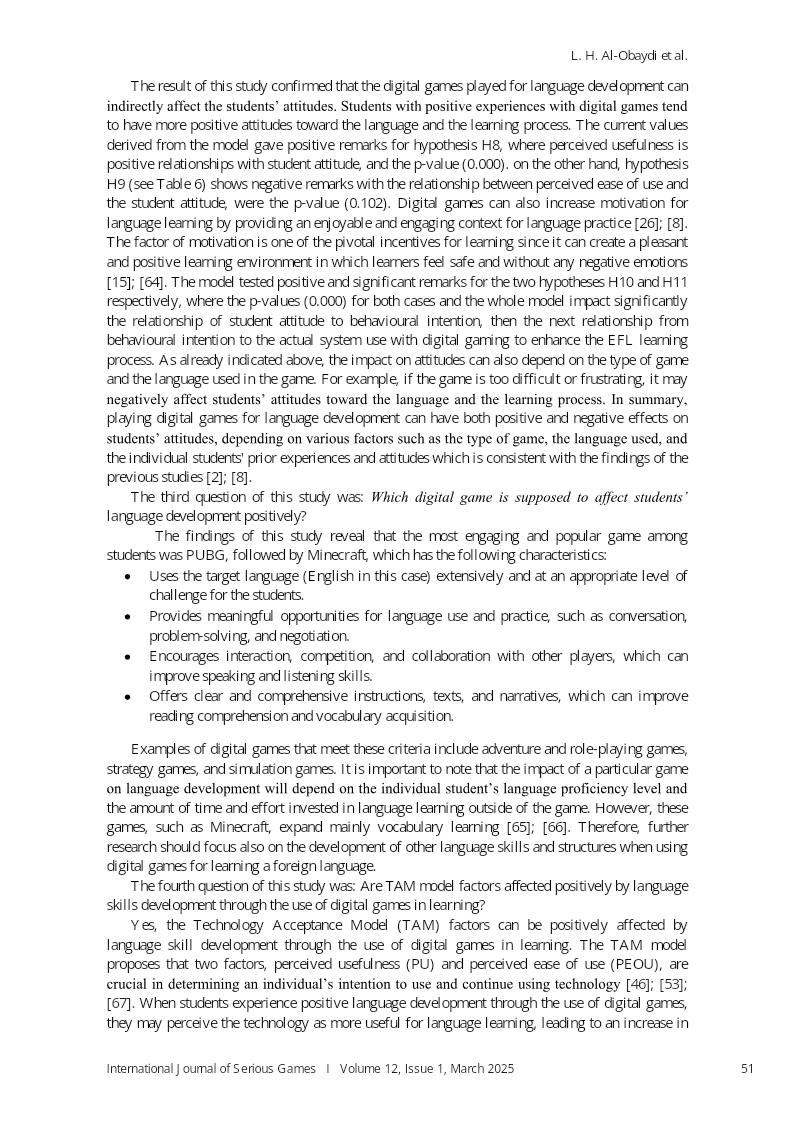
- 04Titles such as PUBG and Minecraft are highlighted as effective examples of environments that facilitate language learning through their interactive and narrative-driven structures.See it on page 13
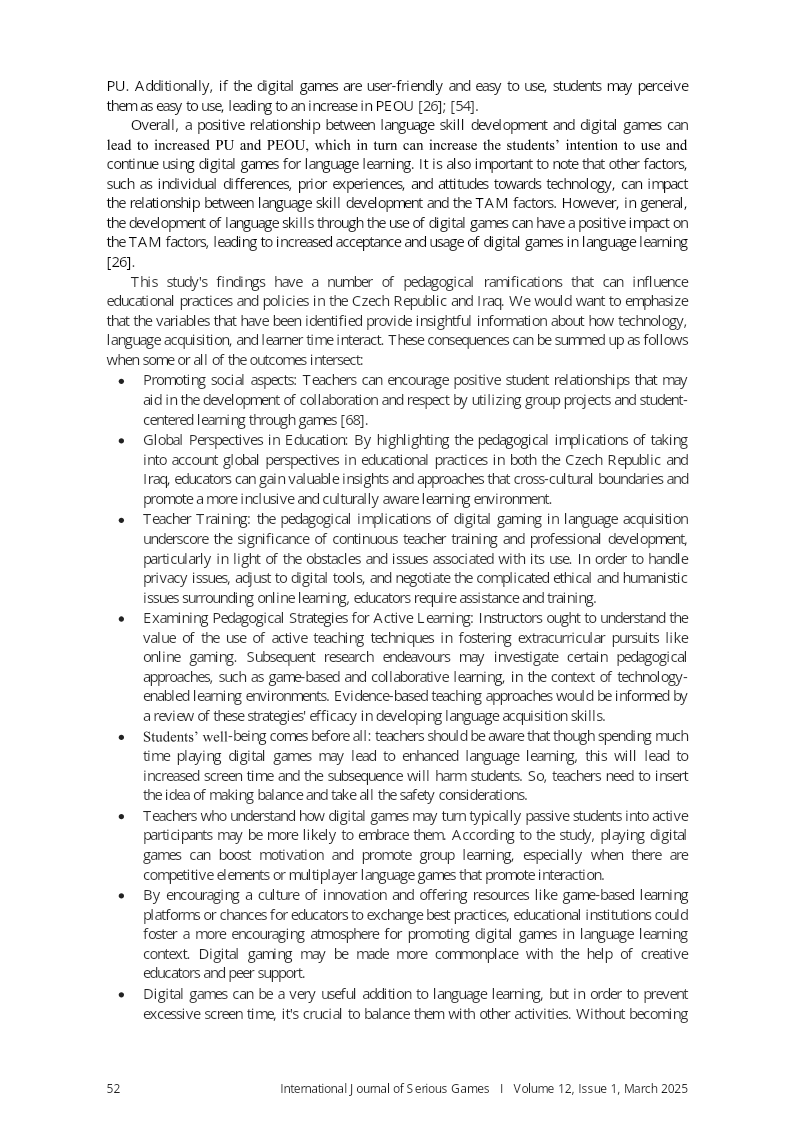
- 05Digital games should be utilized as a complementary resource integrated into formal pedagogical strategies rather than a standalone substitute for traditional instruction.See it on page 14
- 06Successful implementation of game-based learning requires institutional oversight to balance linguistic benefits against potential risks like social isolation or excessive gaming habits.See it on page 15
Ask AI about this report
Summary
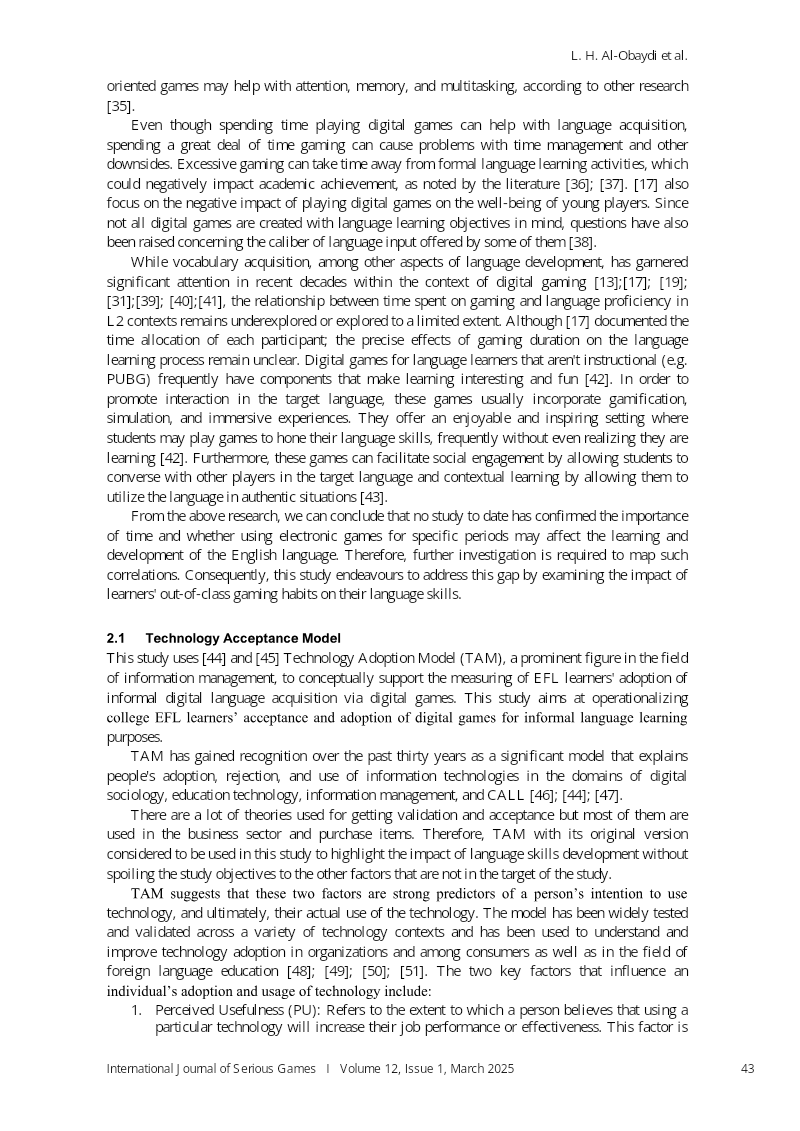
Digital games serve as effective, informal tools for second language acquisition, though their educational value is determined by qualitative factors rather than the sheer duration of engagement. Research conducted among 350 university students across Iraq and the Czech Republic demonstrates that while digital games facilitate language development, the total time invested in gaming does not correlate significantly with linguistic progress. Instead, the perceived usefulness and ease of use of these platforms are primarily driven by the learner’s actual language skill development and the specific nature of the games themselves, such as the interactive and narrative-rich environments found in titles like PUBG and Minecraft.
The Technology Acceptance Model provides the framework for understanding these dynamics, revealing that student attitudes toward gaming as an educational medium are influenced more by meaningful interaction than by the frequency of play. Because the effectiveness of game-based learning relies heavily on student motivation and the specific mechanics of the software, gaming should be viewed as a complementary resource rather than a substitute for formal instruction. The findings suggest that educators must move beyond simple metrics of time spent and instead focus on integrating games through balanced pedagogical strategies.
Ultimately, the successful implementation of digital games in language education requires careful oversight to maximize linguistic benefits while mitigating potential risks such as social isolation or excessive gaming habits. Future efforts should prioritize teacher training and the development of structured environments that leverage the interactivity of digital games to support formal learning objectives. By shifting the focus from time investment to the quality of engagement, institutions can better harness the potential of digital platforms to enhance language proficiency in diverse academic settings.