1 free read left. Create a free account for unlimited reading + AI research.
Create free accountWhitepaper DiGRA
1 free read left. Create a free account for unlimited reading + AI research.
Create free accountWhitepaperDiGRA
The paper separates Runtime PCG, generated during play, from Development PCG, generated during production. Players never directly see the latter.
This paper by Finn Dawson examines procedural content generation (PCG) in digital games, arguing that the term conflates two distinct production forms with different labour arrangements and aesthetic consequences. The author separates "Runtime PCG," where worlds are generated as the player launches or plays the game, from "Development PCG," where generated assets are created during production and never directly witnessed by players. Drawing on Sol LeWitt's conceptual art essay and a close analysis of Caves of Qud, the paper contends that Runtime PCG foregrounds the process of production within the game's form, turning generation systems into a self-reflexive procedural rhetoric.
The central claim is that Development PCG functions primarily as a means of automating human labour, separating conceptual world-building from the articulation work of ensuring generated outputs meet production goals. Building on Marx and recent scholarship on automation and outsourced labour, the author argues that Development PCG often adopts a "reified" aesthetic of nature, modelling processes such as erosion and tree growth to present generated assets as realistic. This framing is said to conceal the labour involved, with Starfield's planets offered as a case in which apparently natural landscapes are instead the product of accumulated "dead labour."
The paper's scope is theoretical and interpretive rather than quantitative. It draws its examples from a set of well-known titles, including Dwarf Fortress, No Man's Sky, Minecraft, Far Cry 5, and Starfield, and it situates them within debates in game studies, art history, and labour theory. No survey data or sample is presented. The paper's stated significance lies in providing a critical vocabulary for understanding how automation and generative systems shape both the aesthetics and the labour conditions of games, particularly amid recent industry layoffs.
 Far CryGame · Crytek Frankfurt · 2004 · 93 documents
 StarfieldGame · Bethesda Game Studios · 2023 · 64 documents
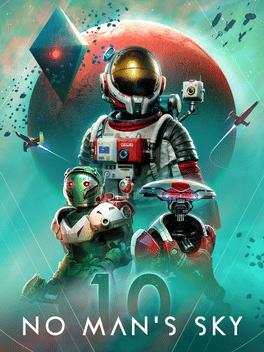 No Man's SkyGame · Hello Games · 2016 · 37 documents
 Far Cry 5Game · Ubisoft Montreal · 2018 · 10 documents
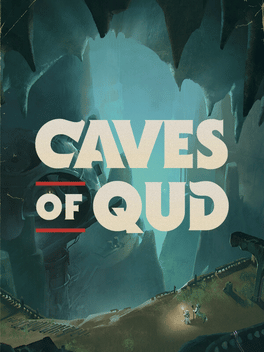 Caves of QudGame · Freehold Games · 2024 · 6 documents
Each row is a game or company this document names, each column a document, oldest first. A mark means that document names it. Select a row to see those documents.
DiGRA · 2026
Thomas Brush · 2026