1 free read left. Create a free account for unlimited reading + AI research.
Create free accountWhitepaper DiGRA
1 free read left. Create a free account for unlimited reading + AI research.
Create free accountWhitepaperDiGRA
The author argues this shift warrants scrutiny through established frameworks such as the philosophy of fiction, rather than being treated as a detached technology.
This paper maps the emerging intersection of communicative artificial intelligence and nonplayer character (NPC) dialogue in digital games, arguing that the field has received far less critical and theoretical attention than the technical and design challenges it poses. Its central thesis is that large language model-driven NPC dialogue may represent a fundamental change in how players communicate with gameworlds, and therefore warrants scrutiny through established frameworks such as the philosophy of fiction, rather than being treated as a novel, detached technology.
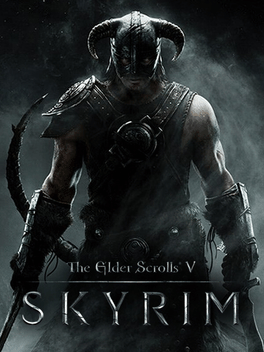
The author draws on Hepp et al.'s definition of communicative AI, which emphasizes automation for communication, embeddedness in digital infrastructures, and entanglement with human practices, and on Barad's notion of entanglement to argue that such systems cannot be understood apart from the human communication data on which they are trained. The paper surveys three representative use cases: Façade, an early experiment in natural language interactive drama; Mantella, a Skyrim mod that adds AI-driven NPC conversation to an existing game; and Inworld Origins and AI Dungeon, which place generative NPCs at the core of their design. The survey is illustrative rather than systematic, and it draws its evidence from a limited set of scholarly and industry sources.
The analysis centers on Van de Mosselaer and Gualeni's concept of the implied designer, which holds that players make sense of games by inferring the intentions behind their construction. The paper suggests that AI-generated dialogue could either erode this sense of intentionality, undermining the feeling that a gameworld is alive, or be reconceptualized through the metaphors of puppet and actor, in which the intentions of human designers persist within the restrictions, affordances, and guardrails of the model. The author concludes that such theoretical work is urgent, given industry interest from companies such as Ubisoft, and calls for further interdisciplinary research on how playing games shapes and is shaped by communicative AI.
DiGRA · 2026
The Game Business · 2025