Digital Games
Company
Documents about Digital Games
Of Discs, Boxes and Cartridges: The Material Life of Digital Games
Toivonen and Sotamaa's 2011 DiGRA study examines why some gamers continue to favor physical game copies even as digital distribution expands.
- Physical game copies carry meanings that digital distribution does not easily replace: players value the tactile presence and reliable sense of ownership that physical media provide.
- Respondents associated downloads with service closures, revoked access, and dependence on internet connectivity, while physical copies offered a sense of permanence.
- Digital distribution accounted for under 10 percent of game sales at the time, and the authors judge it unlikely to eliminate physical copies quickly.
The Player Engagement Process: An Exploration of Continuation Desire in Digital Games
This study empirically investigates player engagement in digital games, focusing on the desire to continue playing.
- The study defines engagement as a distinct construct from motivation and enjoyment, centered on 'continuation desire,' the drive that keeps players returning to a game over time.
- Its OA3 framework (Objectives, Activities, Accomplishments, Affect) models engagement as a cyclical process in which positive affect sustains continued play.
- In a coded sample of 310 statements from 131 participants, accomplishment was the most cited engagement driver at 36%, followed by experiencing the story (18%), socializing (10%), sensing (9%), positive affect (8%), and exploration (7%).
The Game Boys' Network: A Network Analysis of the German Digital Games Industry
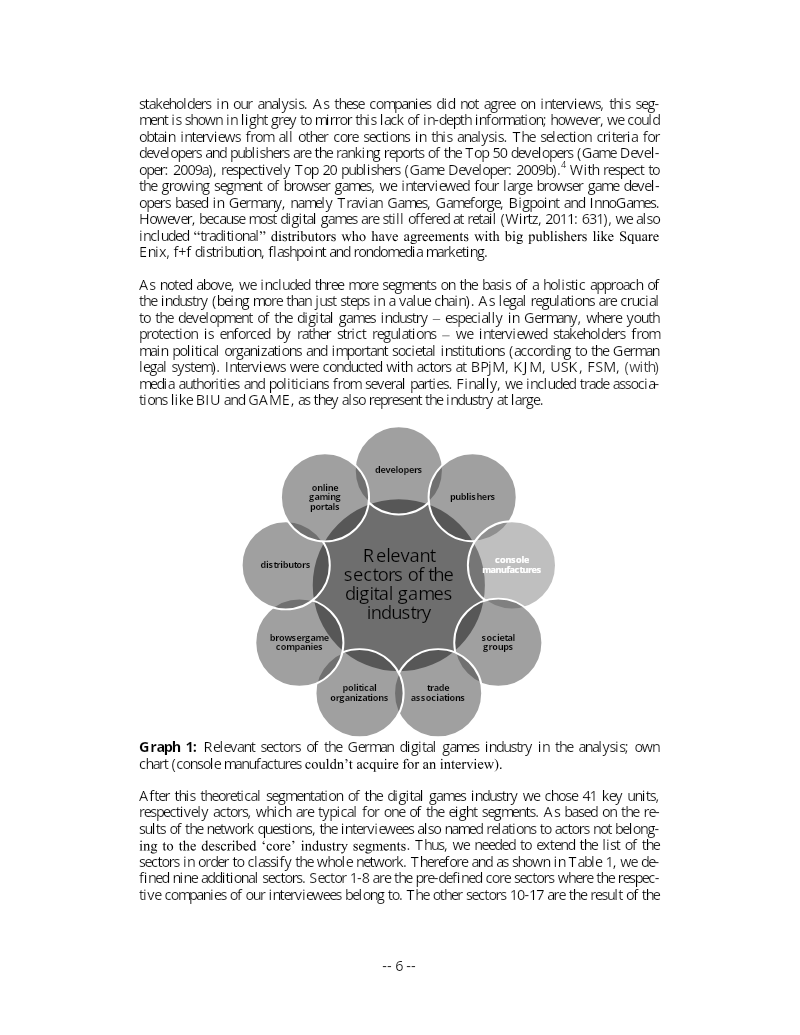
This analysis of the German digital games industry employs social network analysis and expert interviews to map its organizational and personal networks, aiming to understand its structure and key actors.
- The study is built on 41 guided expert interviews (37 with men, 4 with women) conducted in 2010, and argues that understanding the German digital games industry requires mapping both value-chain actors and political/societal stakeholders such as regulators USK and KJM and trade associations BIU and GAME.
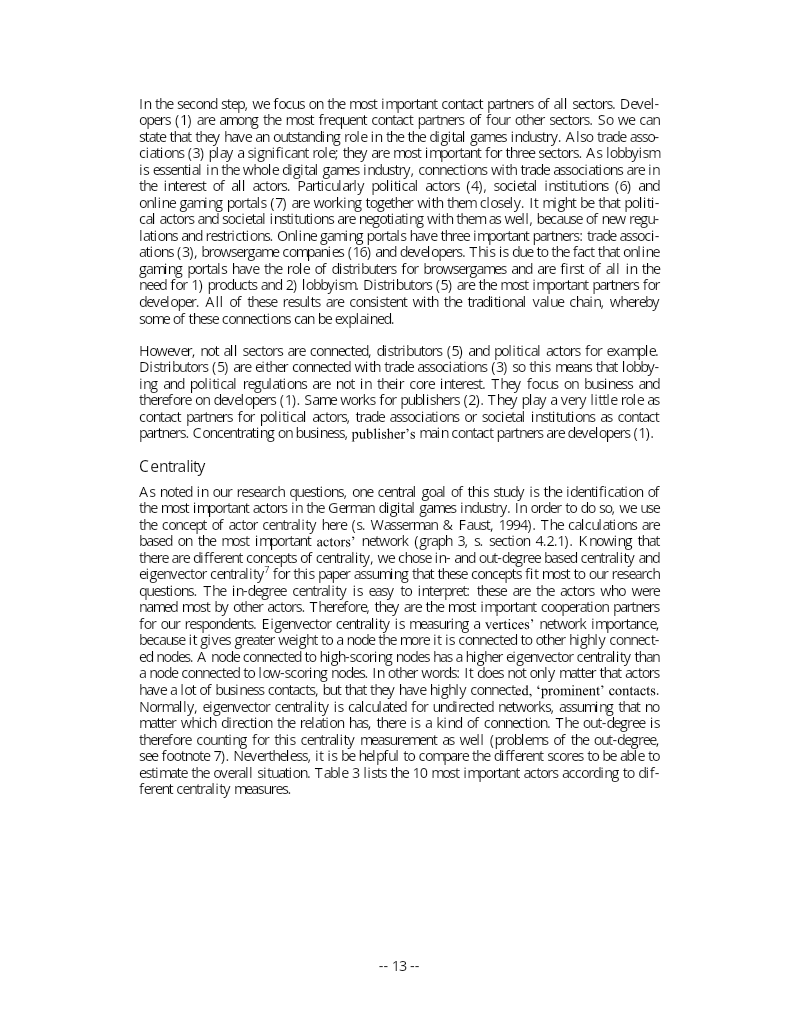
- The contact network comprises 217 actors and 384 relations but is sparse, with an average actor having only about 1.8 connections.
- After filtering to 87 highly connected actors, trade associations emerge as the most central, with GAME ranking highest on in-degree and eigenvector centrality, while developers and distributors act as the principal business partners; the authors caution these rankings largely reflect the ego-based sampling design and should be read as trend indicators rather than definitive hierarchies.


Grow-A-Game: A Tool for Values Conscious Design and Analysis of Digital Games
The "Grow-A-Game" card system is presented as a significant tool for integrating values-conscious design and analysis into the digital games industry.
- The Grow-A-Game paper presents a card-based tool from the Values at Play project that helps designers and analysts examine the moral, social, and political values embedded in digital games, using four card categories: values, verbs, games, and issues.
- Its central thesis is that games communicate values through both narrative and mechanics, and that deliberately attending to those values during design and analysis yields more coherent and impactful work.
- Case studies showed that participants using the value cards (such as compassion, generosity, humility, and empathy) produced games in which narrative and mechanics expressed values more consistently, though the evidence is qualitative and anecdotal rather than statistically measured.

"He Could Be a Bunny Rabbit for All I Care": Exploring Identification in Digital Games
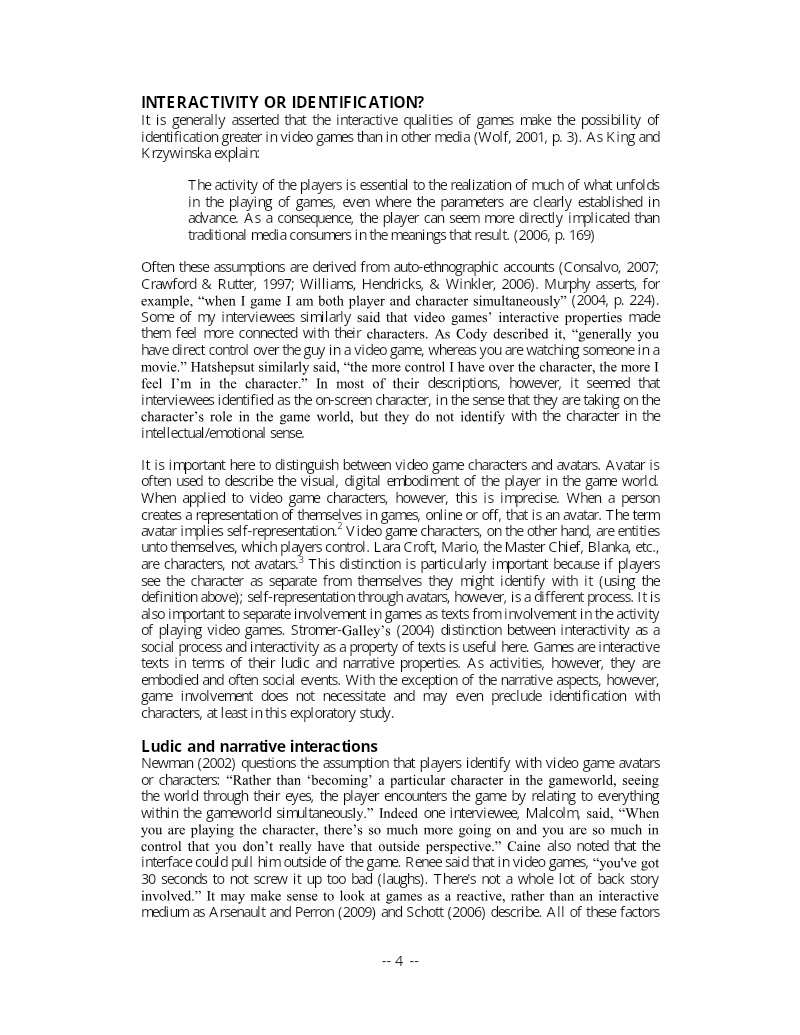
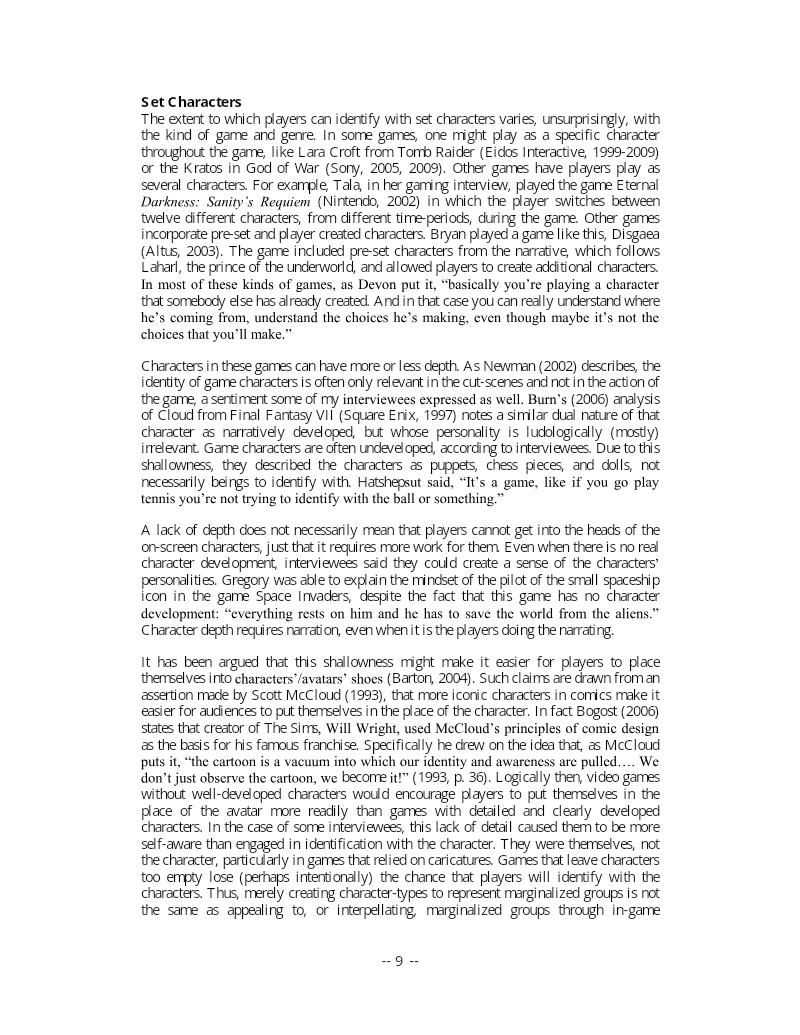
The document, titled ""He Could Be a Bunny Rabbit for All I Care": Exploring Identification in Digital Games," investigates the complex dynamics of player identification with in-game characters, particularly those from marginalized groups.
- Challenging the common assumption, the study finds that player-character identity-matching does not reliably drive identification: interviews with 27 players from marginalized groups (plus their partners) showed identification was inconsistent and often absent, with interviewees split roughly evenly on whether they connected with their characters.
- Interactivity tends to make players self-reflexive, directing attention toward their own actions, bodies, and social contexts rather than the perspective of the character they control.
- Identification depends on narrative depth, a game's ludic and interactive properties, game type, and the social or physical context of play; abstract avatars and weak narratives limit it, while strong storytelling can draw players into even non-humanoid characters.
Playing with One's Self: Notions of Subjectivity and Agency in Digital Games
Alec Charles argues that the sense of agency in digital games is largely an illusion, and that games function as instruments through which capital, military, and state interests construct and position their players.
- Charles argues that digital games create an illusion of player agency that functions as ideological interpellation, drawing on Althusser to explain how games shape player subjectivity through reactive, preset choices.
- The essay contends that the boundary between material history and its electronic mediation has largely collapsed, so the virtual is increasingly treated as the primary 'real' version of events, illustrated by the Gulf War, 9/11, and the America's Army recruitment tools.
- Using Barthes and the concept of the 'faux-scriptible' text, the author concludes that multiplayer games fragment authorship into parallel, solipsistic experiences rather than realizing Barthes's ideal of the reader as producer.

How Are Digital Games Used in Schools?: Complete Results of the Study
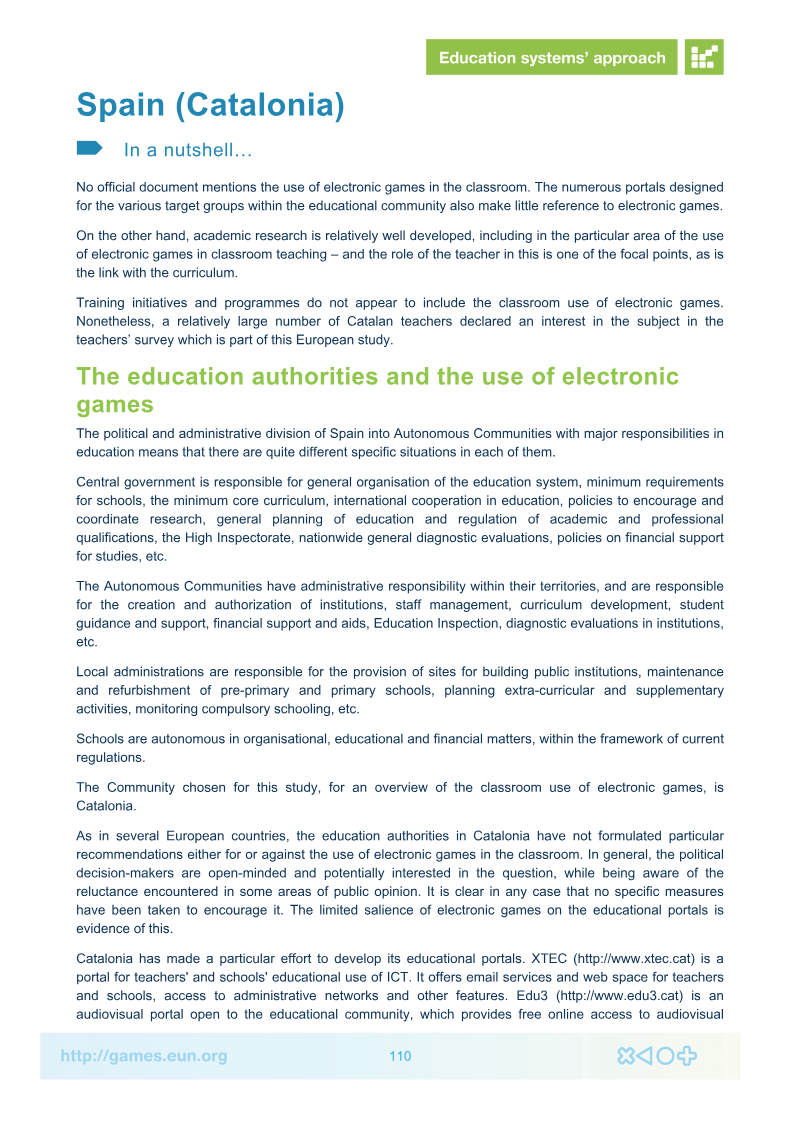
This study, published in May 2009, comprehensively investigates the use of digital games in schools across eight European countries, surveying over 500 teachers and interviewing more than 30 decision-makers and experts.
- Successful game-based learning depends on the pedagogical framework and teacher facilitation rather than the specific game title used.
- Digital games improve academic performance in core subjects like mathematics, language, and history when aligned with curriculum goals.
- Students show a preference for the high-quality design of commercial off-the-shelf games over purpose-built educational software, highlighting a need for better industry-education collaboration.

Reproducing the Machine
Mia Consalvo's 2009 editorial reflects on the first decade of game studies as an academic field and argues that its success has come with the unexamined construction of disciplinary structures that deserve critical scrutiny.
- Consalvo's editorial traces the institutional growth of game studies from the founding of the Digital Games Research Association in 2002 through the proliferation of journals, presses, degree programs, and conferences over roughly its first decade.
- The author argues the field has gained legitimacy, but the quality-assurance structures that enabled this (peer-reviewed venues, conventions) have also produced hierarchies and routines that may be going unexamined.
- Establishing peer-reviewed venues and international conferences helped legitimize games as a serious object of inquiry, and efforts to move beyond the psychology-dominated focus on game effects broadened the field's questions and methods.
Textual Analysis, Digital Games, Zombies
The document "Textual Analysis, Digital Games, Zombies" proposes a methodology for analyzing meaning in digital games, specifically applying it to the horror-survival game Resident Evil 4.
- The paper argues that textual analysis suits digital game studies because meaning emerges through situated play rather than residing fixed within the game, so interpretation depends on the analytical lens and reading context rather than a single dominant meaning.
- The proposed framework draws on Barthes' structural and lexia-based methods and on Bennett and Woollacott's concepts of intertextuality and "reading formations," and is tested on an early section of the 2005-era survival-horror game Resident Evil 4.
- The framework is also intended to resolve classification puzzles, such as whether the game's villagers, who are infected humans rather than true undead, belong in the zombie category at all.
Where Have All the Games Gone? Explorations on the Cultural Significance of Digital Games and Preservation
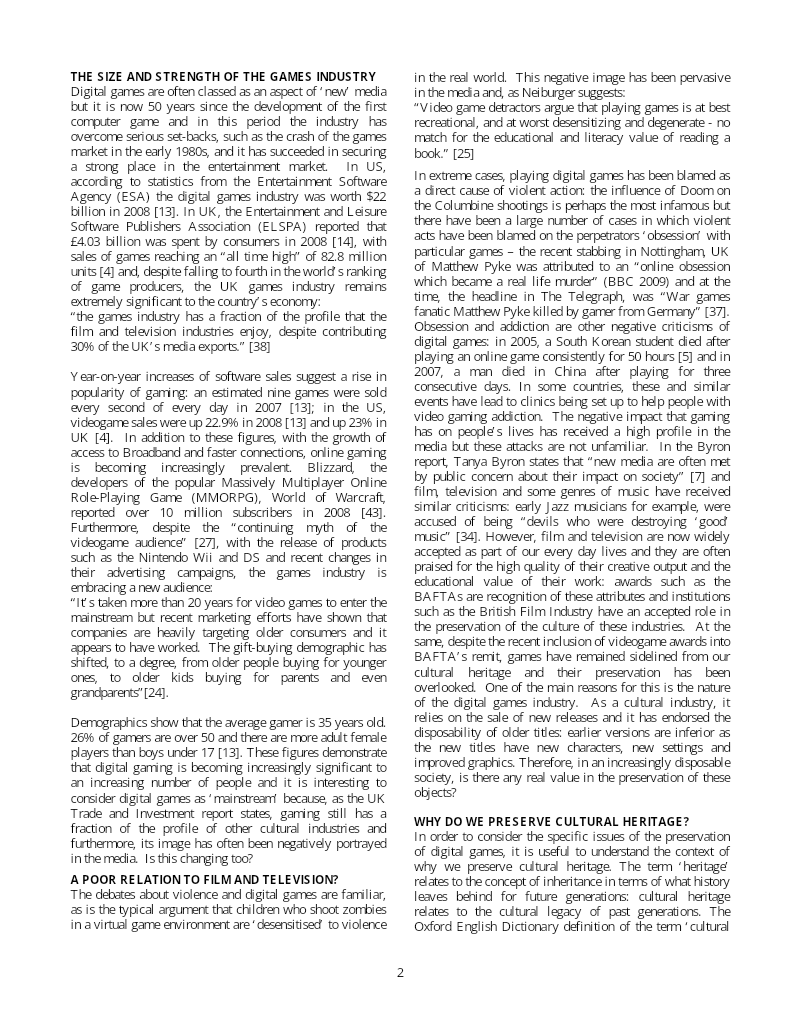
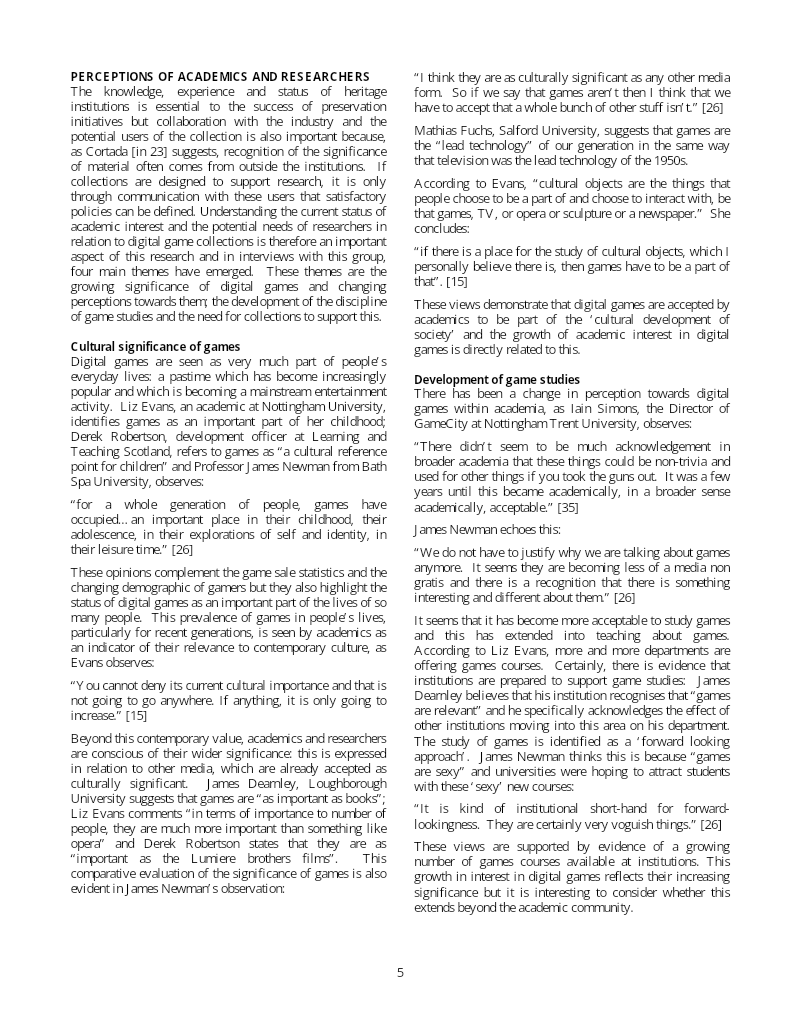
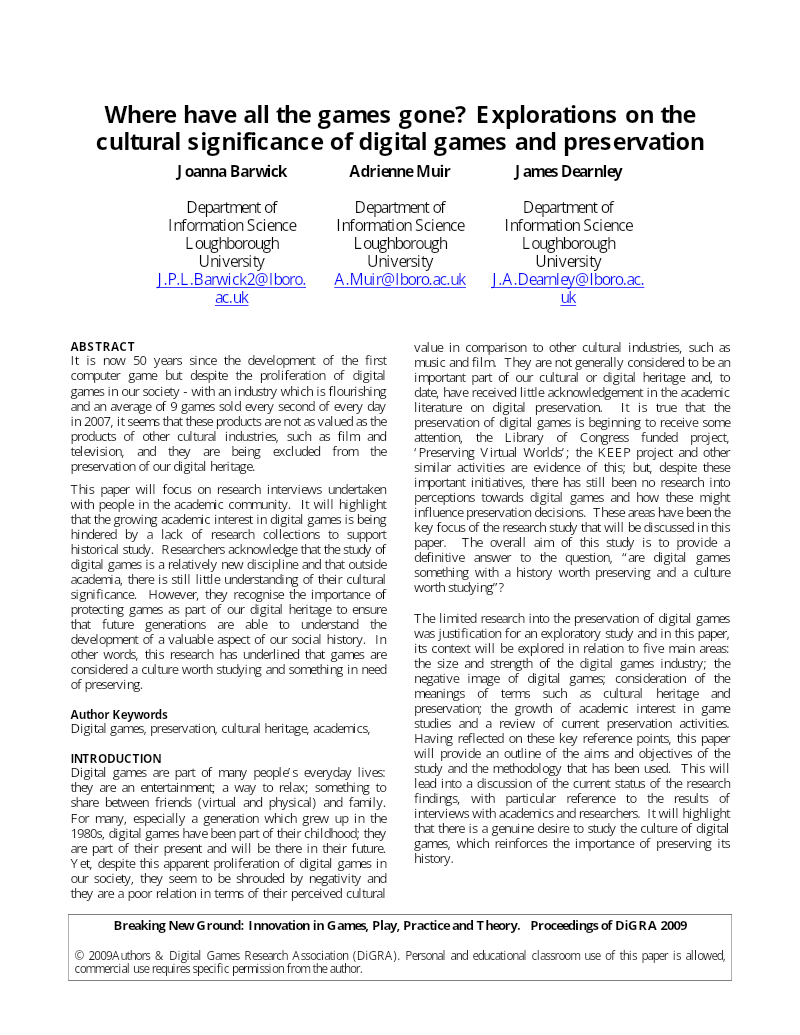
Barwick, Muir, and Dearnley's paper, presented at DiGRA 2009, contends that digital games are undervalued as cultural artifacts relative to film and television and remain largely absent from digital heritage preservation.
- The authors argue digital games are undervalued as cultural artifacts and largely absent from digital heritage preservation, despite the sector's commercial scale: $22 billion in US sales in 2008 and £4.03 billion in UK consumer spending.
- The neglect is attributed to an industry culture oriented toward disposability and a persistent negative public image of games.
- Material from the 1970s and 1980s, the formative era of the medium, is disappearing without systematic archiving, which the authors present as an urgent reason for immediate preservation.
Collusion: Mapping the Interplay Between Paid and Unpaid Labourers in the Digital Games Industry
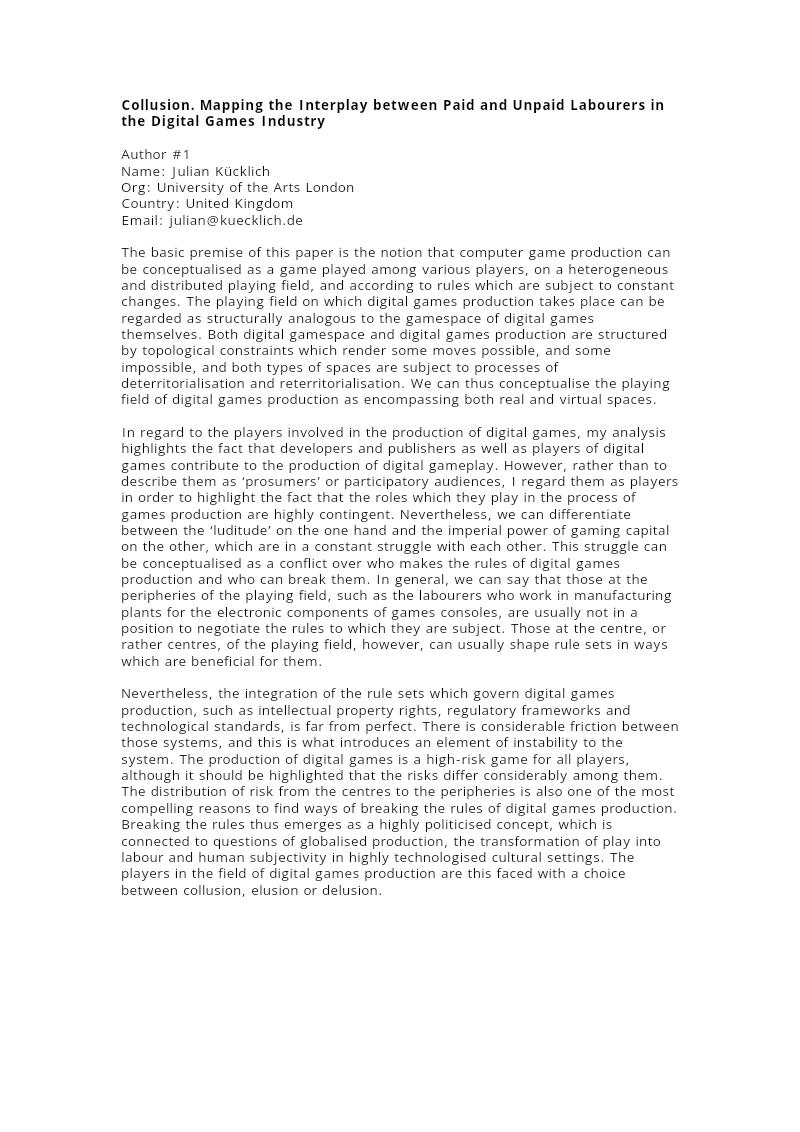
The document, "Collusion: Mapping the Interplay Between Paid and Unpaid Labourers in the Digital Games Industry," proposes a conceptual framework for understanding digital game production as a dynamic "game" played by various actors on a heterogeneous and distributed field.
- Digital game production is framed as a game in itself, played among heterogeneous actors across both real and virtual spaces, with developers, publishers, and players treated as contingent players rather than passive prosumers or audiences.
- The central conflict is a struggle between 'luditude' and the imperial power of gaming capital over who writes the rules of games production and who is able to break them.
- Power over rule-setting is unevenly distributed: peripheral actors, such as workers in manufacturing plants building games console components, have little capacity to negotiate the rules governing them, while central actors can shape rule sets to their advantage.
Levels of Complexity: Cultural Diversity, Politics and Digital Games
The paper examines the applicability of cultural diversity concepts, traditionally rooted in national media policy, to the digital games sector.
- The paper argues that cultural diversity, a concept rooted in traditional media and national cultural policy, must be rethought for digital games shaped by global production networks, transnational audiences, and user-generated content.
- European policymakers increasingly treat digital games as a cultural industry deserving public support, but the author contends that existing national policy frameworks are poorly matched to how games are produced and consumed.
- Support mechanisms cited include the French tax credit system and dedicated schemes in the United Kingdom, Germany, and Scandinavia, while Canada, South Korea, and China are noted as competitive pressures on European game industries.