Foundations of Digital Games (FDG)
The International Conference on the Foundations of Digital Games, run by the Society for the Advancement of the Science of Digital Games and published by ACM. It covers game design, game AI, games education and game studies.
Documents

Towards Custom Quest Tutorials: Identifying and Addressing Players' Cognitive and Performative Struggles in Games
This research aims to improve player engagement by developing a machine learning model capable of detecting and addressing cognitive and performative struggles in real-time.

A Design Toolkit of Ludic Contentious Politics: The Case of Protest in Videogames
Mainstream game design frequently relies on policing narratives that frame protesters as irrational actors or criminal threats, reinforcing a systemic bias within digital environments.
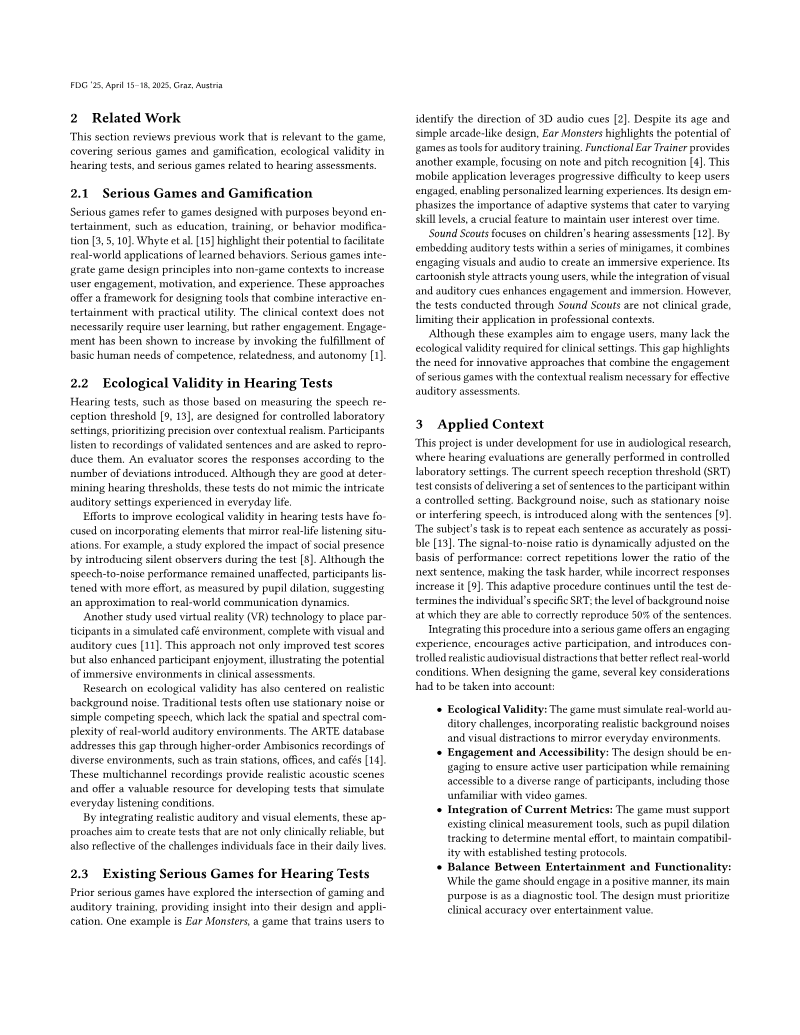
Serious Gaming Meets Audiology: Developing a Video Game for Auditory Testing
The primary objective of this research is to enhance the ecological validity of clinical hearing assessments by integrating them into a serious game environment.
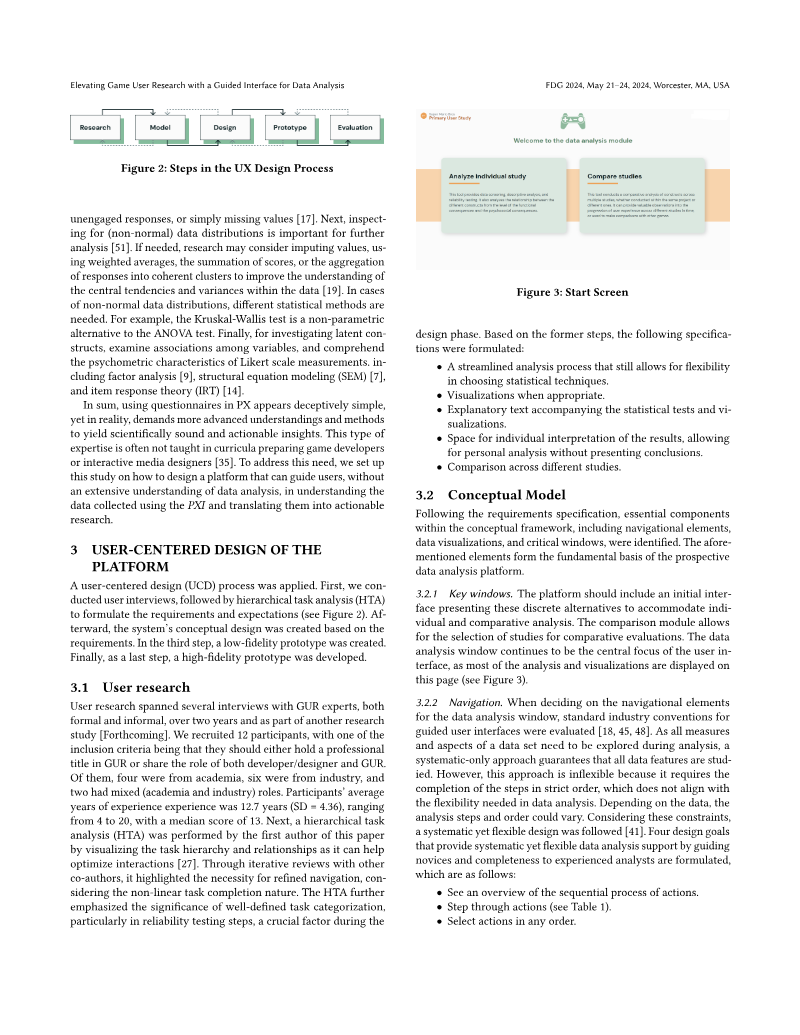
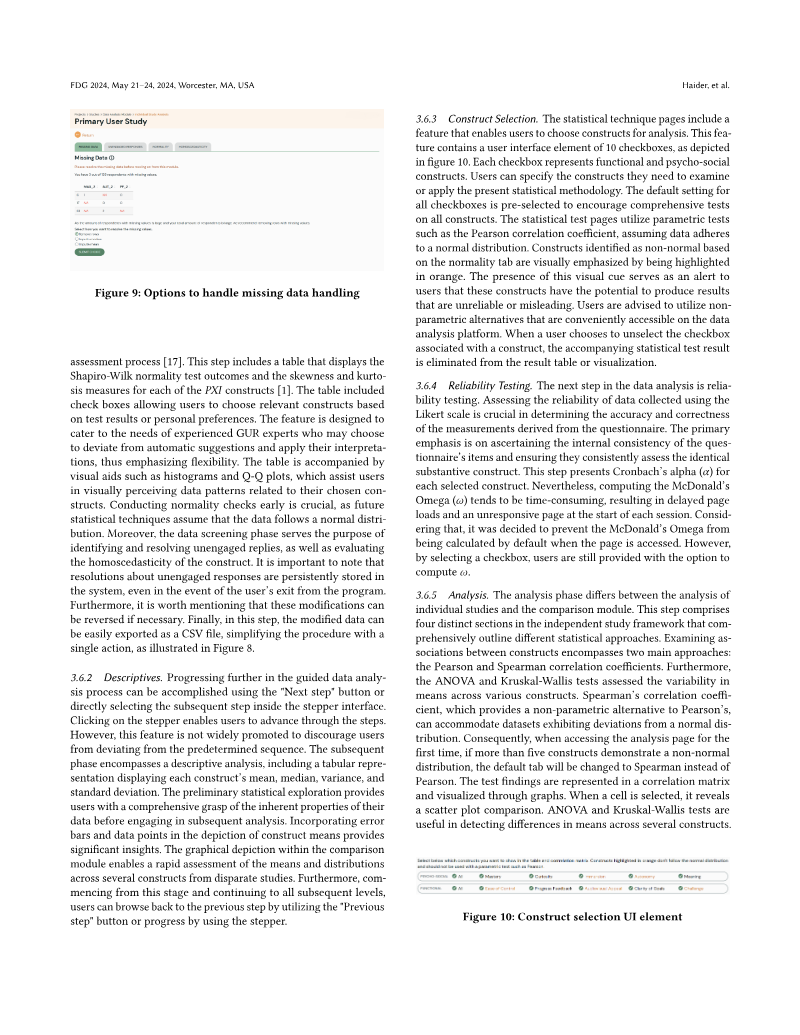
Elevating Game User Research with a Guided Interface for Data Analysis
The game user research field faces a persistent challenge in bridging the gap between complex statistical analysis and the practical needs of development teams.
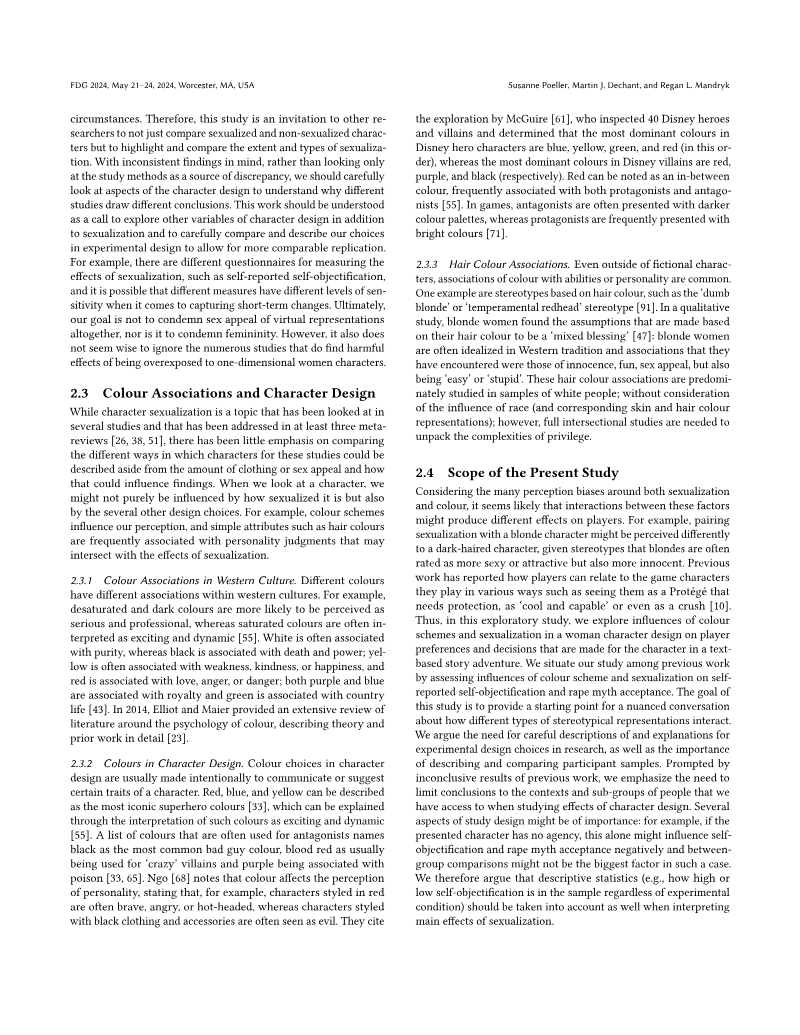
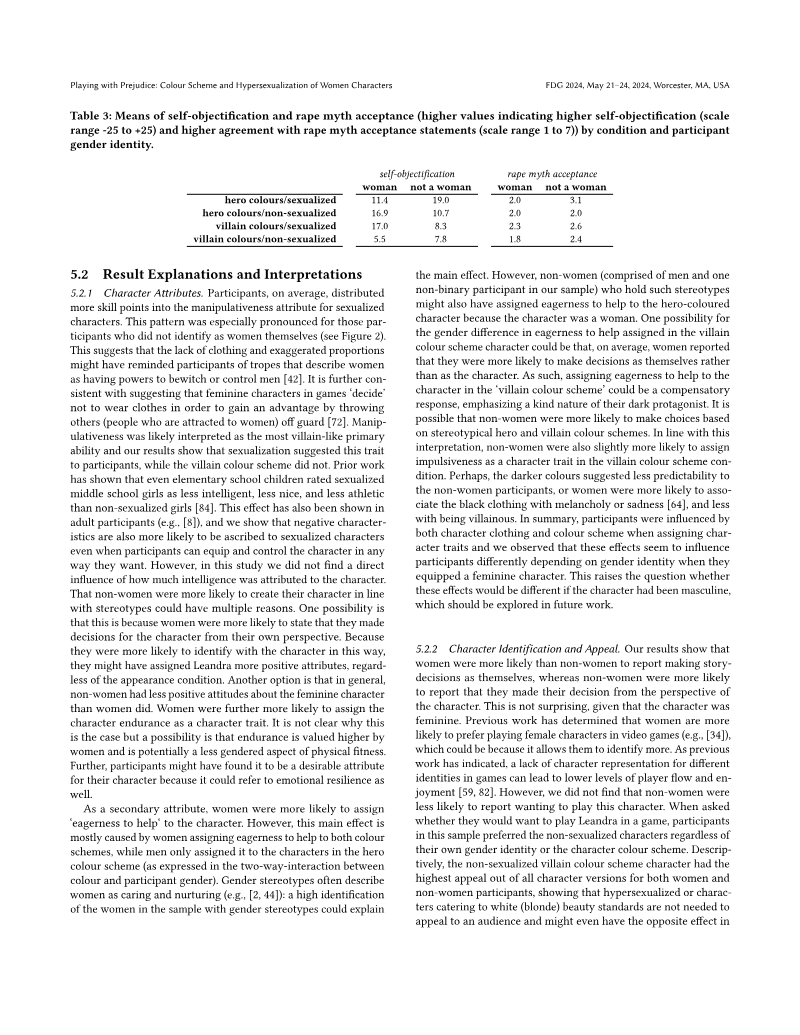
Playing with Prejudice: Do Colour Scheme and Hypersexualization of Women In Games Influence Player Decisions, Perceptions, and Avatar Appeal?
Hypersexualized character design in video games serves as a significant driver of negative social attitudes and distorted player perceptions.
- Hypersexualized character designs do not increase player appeal and are consistently associated with negative personality traits like manipulativeness.
- Exposure to hypersexualized gaming imagery correlates with increased self-objectification among players and a higher acceptance of rape myths.
- Across all demographic groups, players demonstrate a clear preference for non-sexualized, realistic character models over sexualized designs.
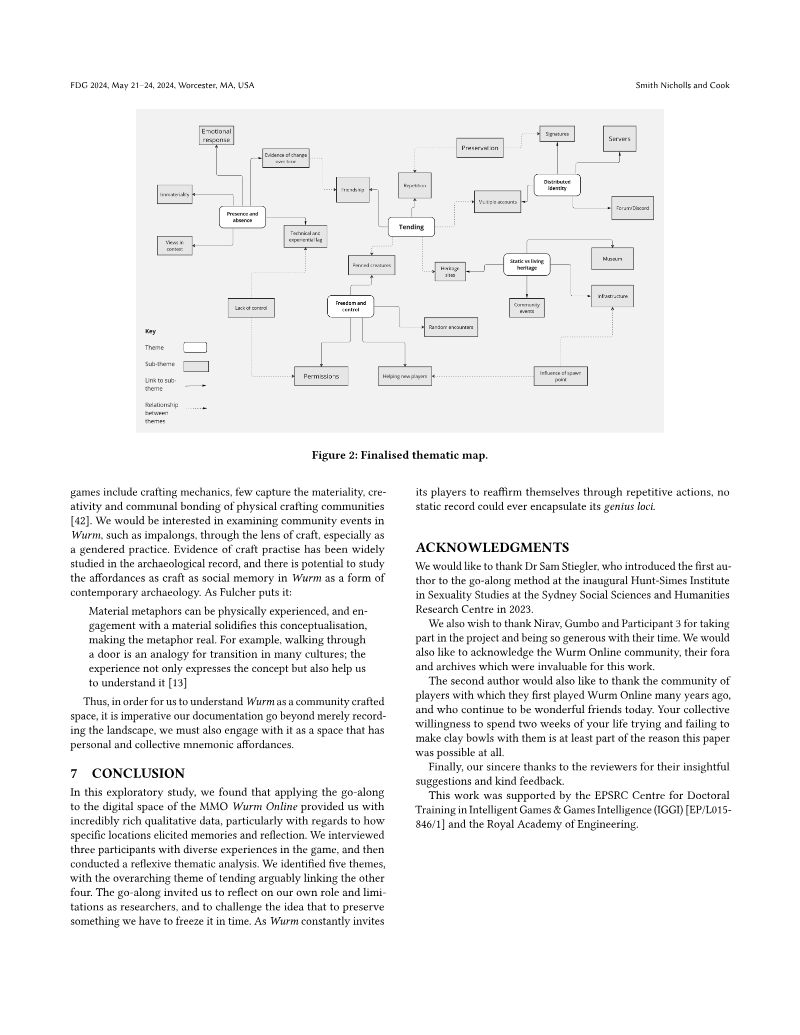
How To Save A World: The Go-Along Interview as Game Preservation Methodology in Wurm Online
Preserving the history of Massively Multiplayer Online games requires moving beyond the mere maintenance of server software to capture the subjective, lived experiences of the player community.
- Effective MMO preservation requires documenting the subjective, lived experiences of players rather than solely maintaining server software or code.
- The 'go-along interview'—a method where researchers traverse digital spaces alongside participants—is a highly effective tool for capturing the intangible heritage of virtual worlds.
- In sandbox environments like Wurm Online, player agency and social reputation are the primary drivers of historical significance.
Multiplayer Tension in the Wild: A Hearthstone Case
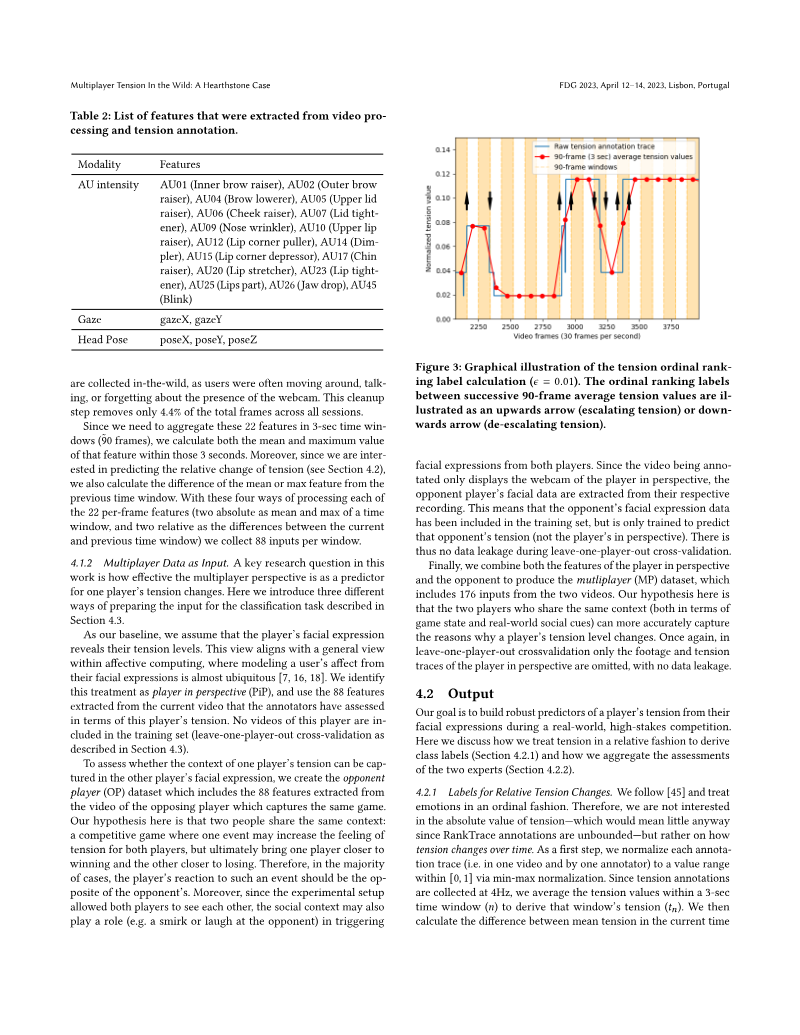
Competitive gaming environments generate complex affective states that are difficult to quantify outside of controlled laboratory settings.
Designing for Playfulness in Human-AI Authoring Tools
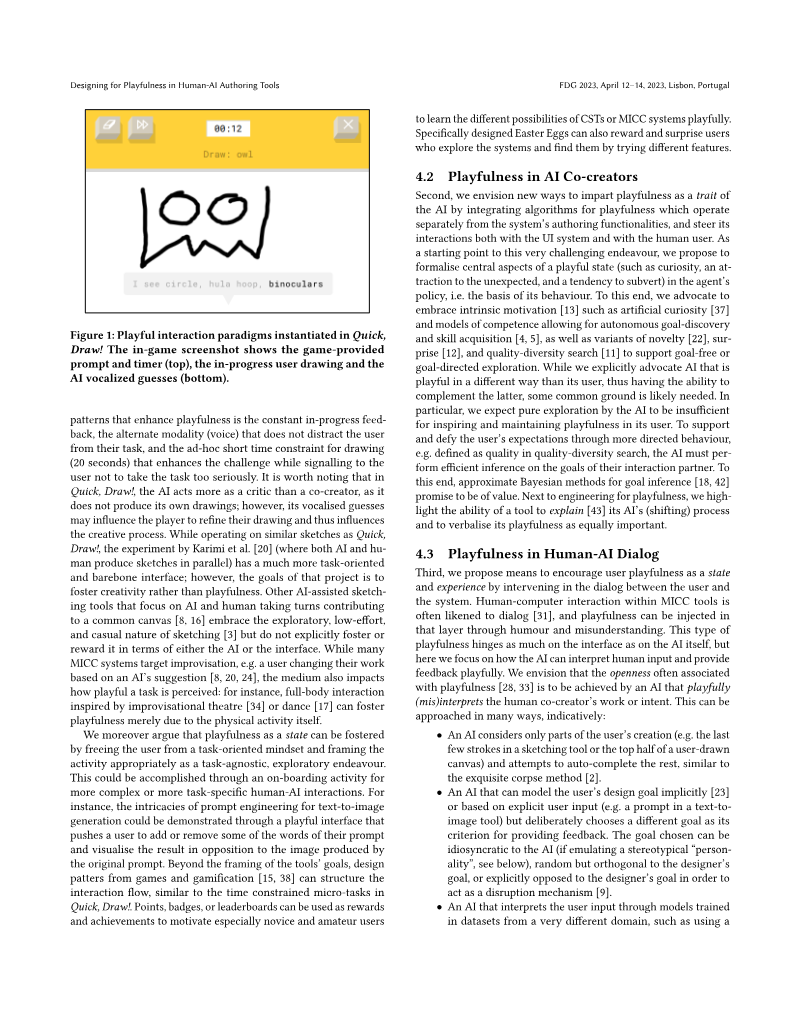
The primary purpose of this analysis is to advocate for the integration of playfulness into the design of human-AI authoring tools, including Creativity Support Tools (CSTs) and Mixed-Initiative Co-Creativity (MICC) systems.

Re-trainable Procedural Level Generation via Machine Learning (RT-PLGML) as Game Mechanic
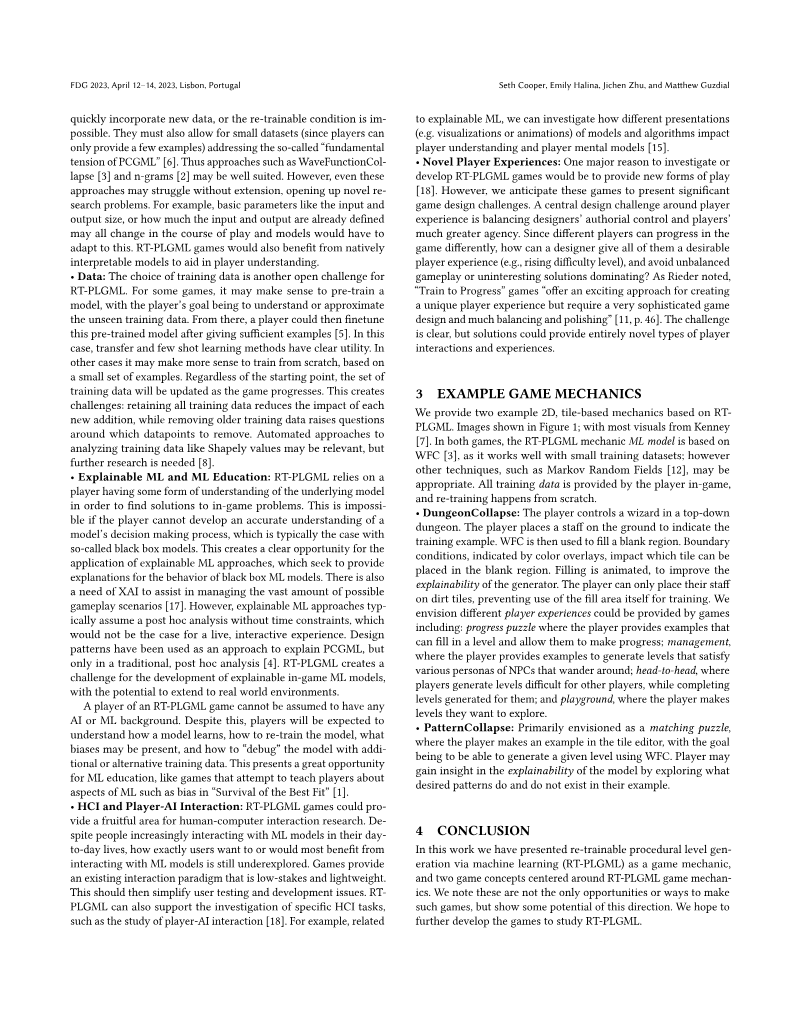
Re-trainable Procedural Level Generation via Machine Learning (RT-PLGML) introduces a novel game design paradigm where players actively train and refine procedural generation models as a core mechanic.
Introducing QRogue: Teaching Quantum Computing Using a Rogue-like Game Concept
QRogue is an educational game designed to teach the mathematical foundations of quantum computing to computer science students.
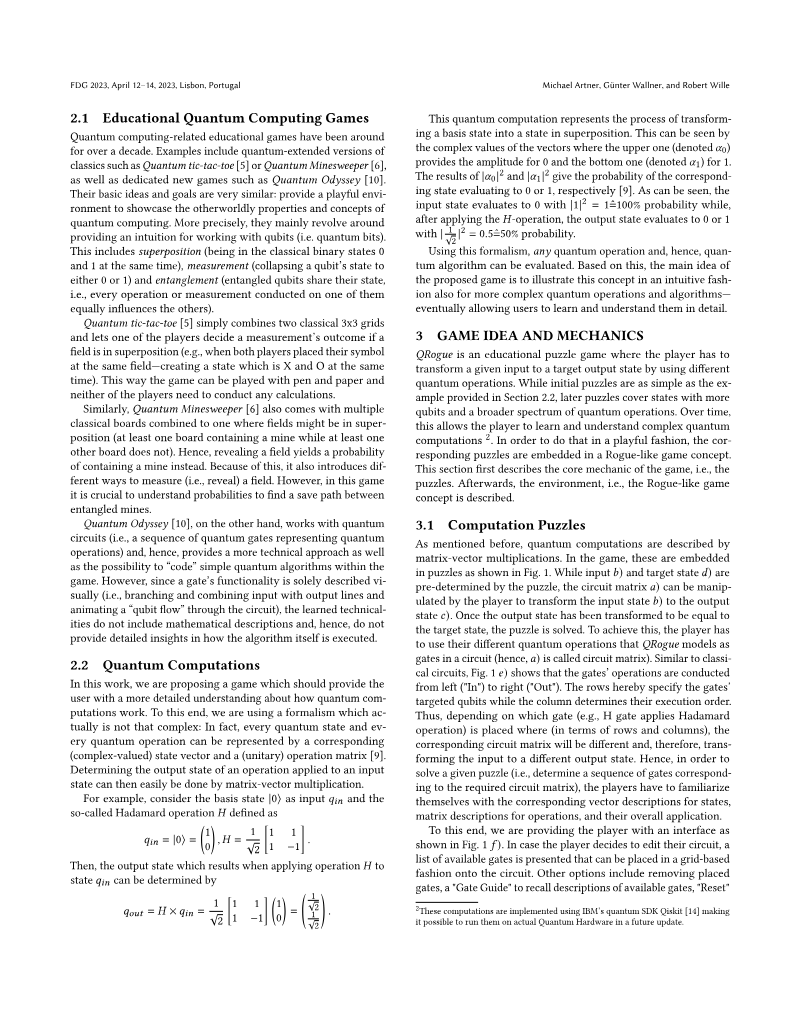
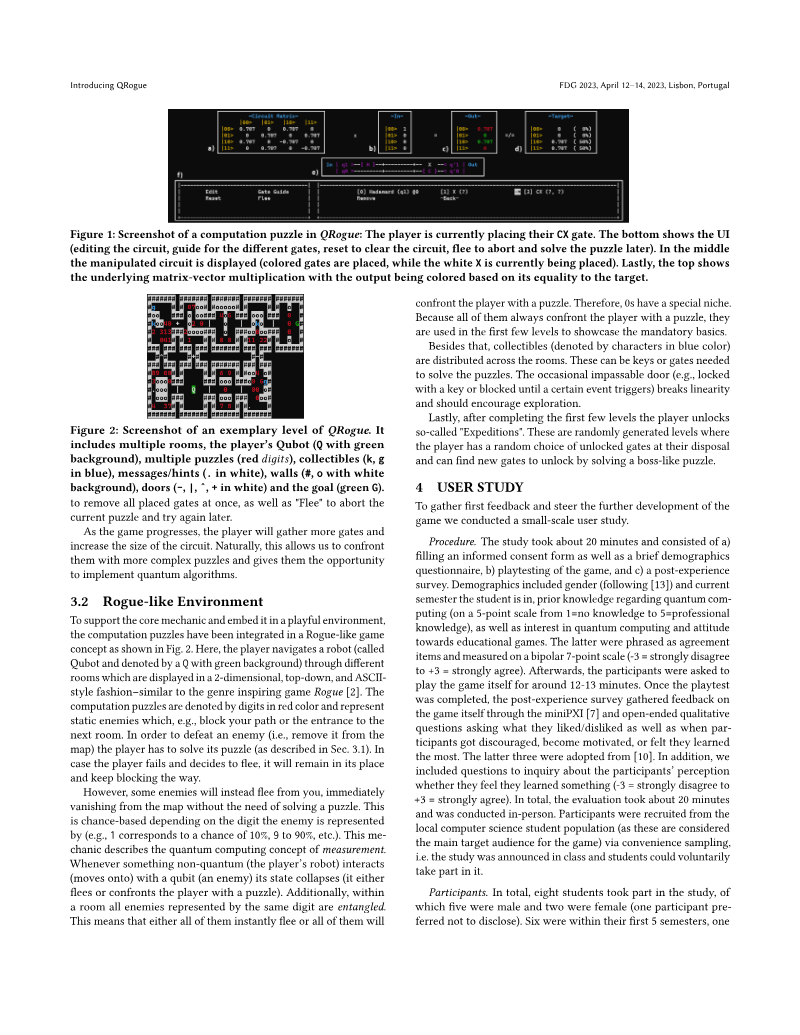
- QRogue uses a Rogue-like game structure to teach computer science students the mathematical foundations of quantum computing, including matrix-vector multiplication and circuit manipulation.
- A user study of eight computer science students revealed that while the game's visual style and immersion were well-received, the current learning curve is too steep for effective education.
- Six out of eight participants reported feeling discouraged during the 12–13 minute gameplay sessions due to a lack of foundational explanations regarding the underlying matrix mathematics.
Modifying a Game to Study the Impact of Hostile Environments on Foraging Behavior
This pilot study evaluates the efficacy of a modified 3D video game, Shinobi Valley, as a research tool for examining the impact of hostile environments on human foraging behavior.
- A pilot study using the 3D game 'Shinobi Valley' with 18 adult participants confirmed that introducing predatory NPCs significantly increases self-reported stress levels compared to non-hostile environments.
- Despite elevated stress levels, the hostile environment failed to produce measurable behavioral shifts, as item collection rates and timing remained consistent across both test conditions.
- The study utilized a within-subject design to track in-game metrics, including player location, distance traveled, and item collection frequency, alongside subjective stress and spatial presence surveys.
The Challenge of Evaluating Player Experience in Tabletop Role-Playing Games
Tabletop role-playing games have experienced significant growth, yet they currently lack a standardized, formal methodology for evaluating player experience.
Do you work at Foundations of Digital Games (FDG)? Get a free report of how these documents are read and cited here.