1 free read left. Create a free account for unlimited reading + AI research.
Create free accountWhitepaper DiGRA
1 free read left. Create a free account for unlimited reading + AI research.
Create free accountWhitepaperDiGRA
In 310 coded statements from 131 participants, accomplishment was the most cited driver, followed by experiencing the story at 18 percent.
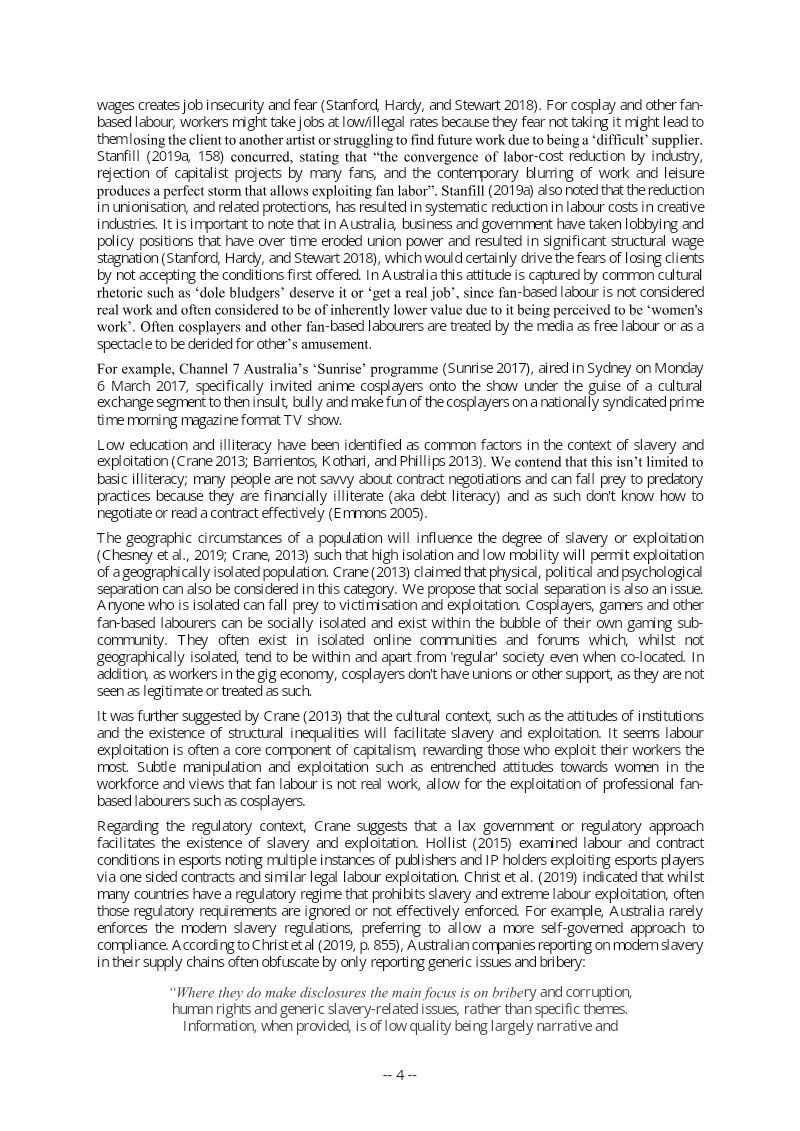
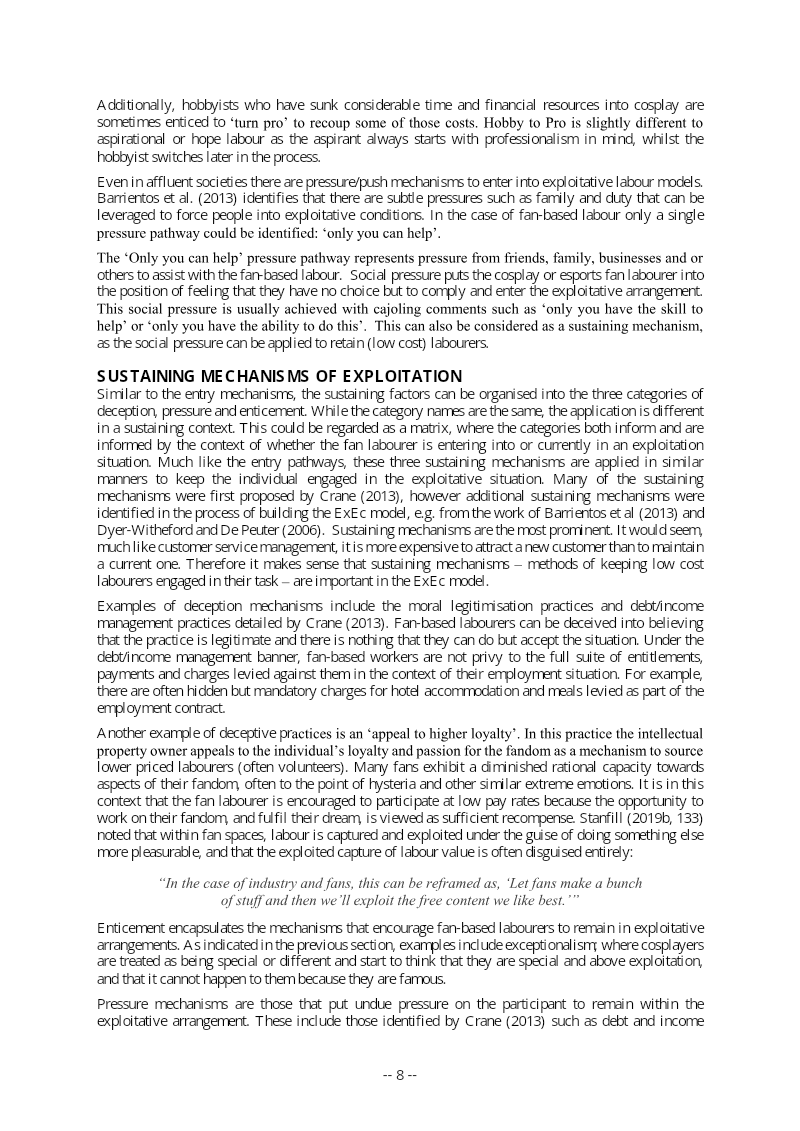
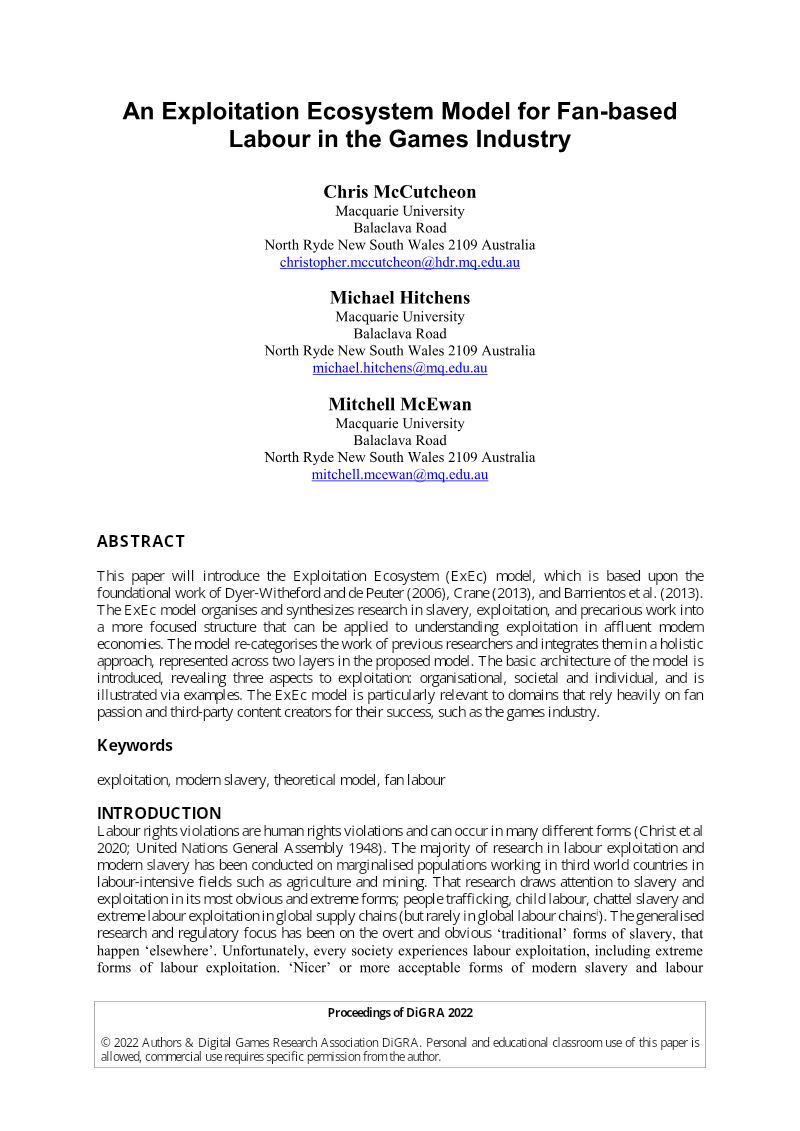
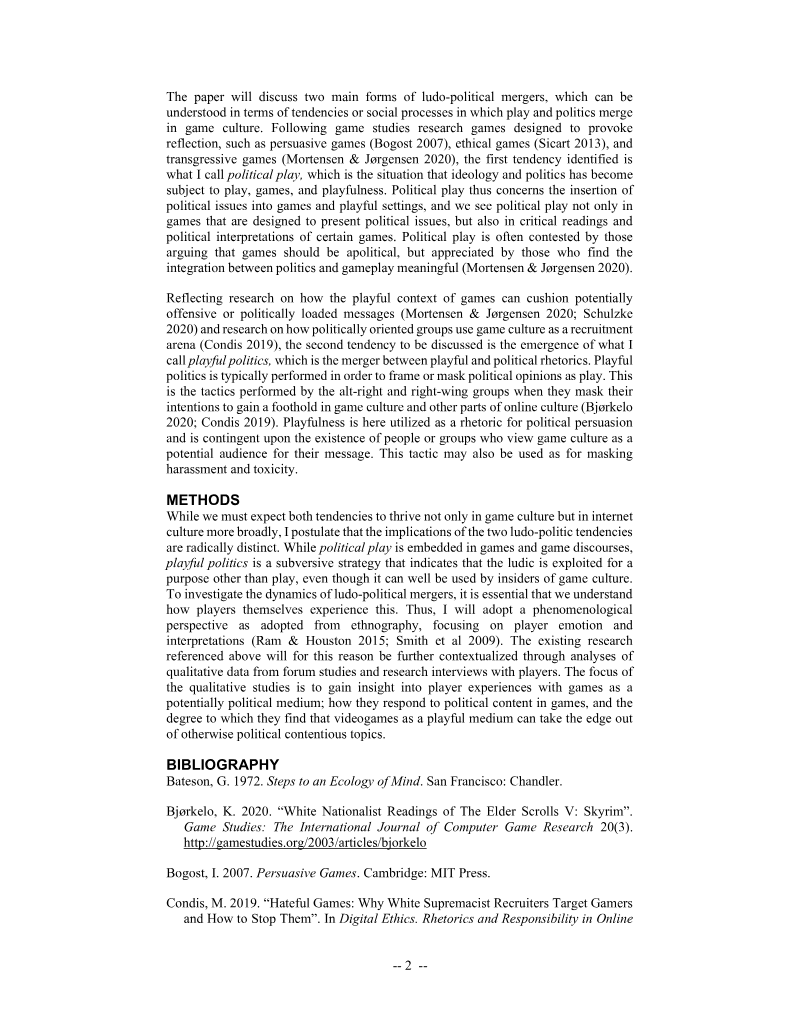
This study argues that player engagement is a distinct construct from motivation and enjoyment, defined by "continuation desire," the drive that keeps players returning to a game over time. Rather than testing a fixed hypothesis, it builds a process-oriented framework inductively using grounded theory. The work draws on qualitative open-ended survey responses from several respondent pools, including media technology students and online game-forum users, and situates its findings within an established literature on flow, immersion, presence, and game enjoyment.
The central contribution is the Objectives, Activities, Accomplishments, and Affect (OA3) framework, which conceptualizes engagement as a cyclical process. Players pursue intrinsic or extrinsic objectives, perform activities to reach them, and experience accomplishment and affect along the way, with positive affect sustaining continued play. In a sample of 131 participants who produced 310 coded statements, accomplishment was the most frequently cited driver at 36 percent, followed by experiencing the story at 18 percent, socializing at 10 percent, positive affect at 8 percent, sensing at 9 percent, and exploration at 7 percent. Disengagement was linked to unbalanced difficulty, repetition, and poor interface design.
The sample is notably narrow: respondents were predominantly male, averaging about 23.5 years of age and roughly nine hours of play per week, with 95 percent reporting a regular desire to keep playing. The author acknowledges that findings may not generalize beyond these groups and that open-ended coding is vulnerable to researcher bias. The findings are therefore presented as qualitative and exploratory, with quantitative validation identified as future work.
DiGRA · 2022
DiGRA · 2022
DiGRA · 2022
DiGRA · 2022
DiGRA · 2022



DiGRA · 2022
DiGRA · 2022
DiGRA · 2022
DiGRA · 2022
DiGRA · 2022
DiGRA · 2022
DiGRA · 2022