2015
Company
Documents about 2015

New Media Ecosystems: Amazon and the Advancing Game Economy
This analysis examines Amazon's strategic integration into the game economy and its broader impact on media ecosystems.
- Amazon's 2015 acquisition of the CryEngine codebase (rebranded as Lumberyard) and its 2016 purchase of the Twitch streaming platform, combined with Amazon Web Services, form an integrated ecosystem linking game developers and players.
- The paper positions Amazon as a media company whose influence spans e-commerce, middleware, and consumer hardware, and argues that game engines are becoming foundational to commerce, artificial intelligence, and everyday interfaces.
- Amazon reportedly uses game spaces as testing grounds for new interaction models, linking its Alexa voice service and connected devices to engine-driven infrastructure and crowdsourcing research through its developer and streaming communities.
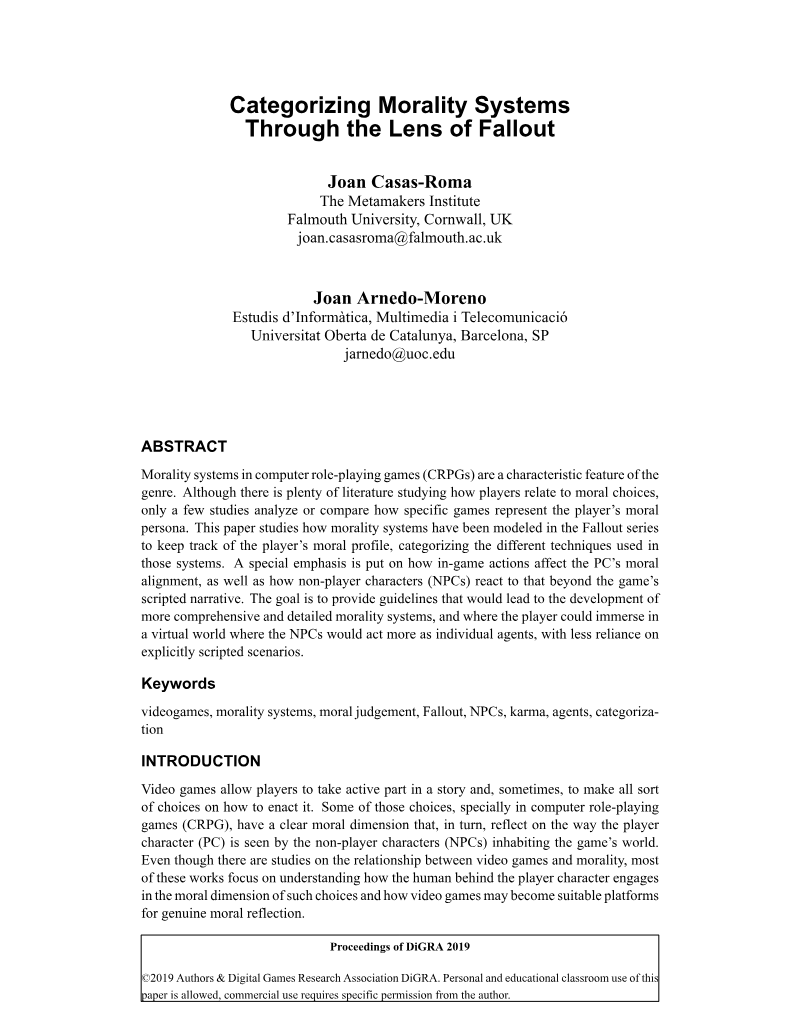
Categorizing Morality Systems Through the Lens of Fallout
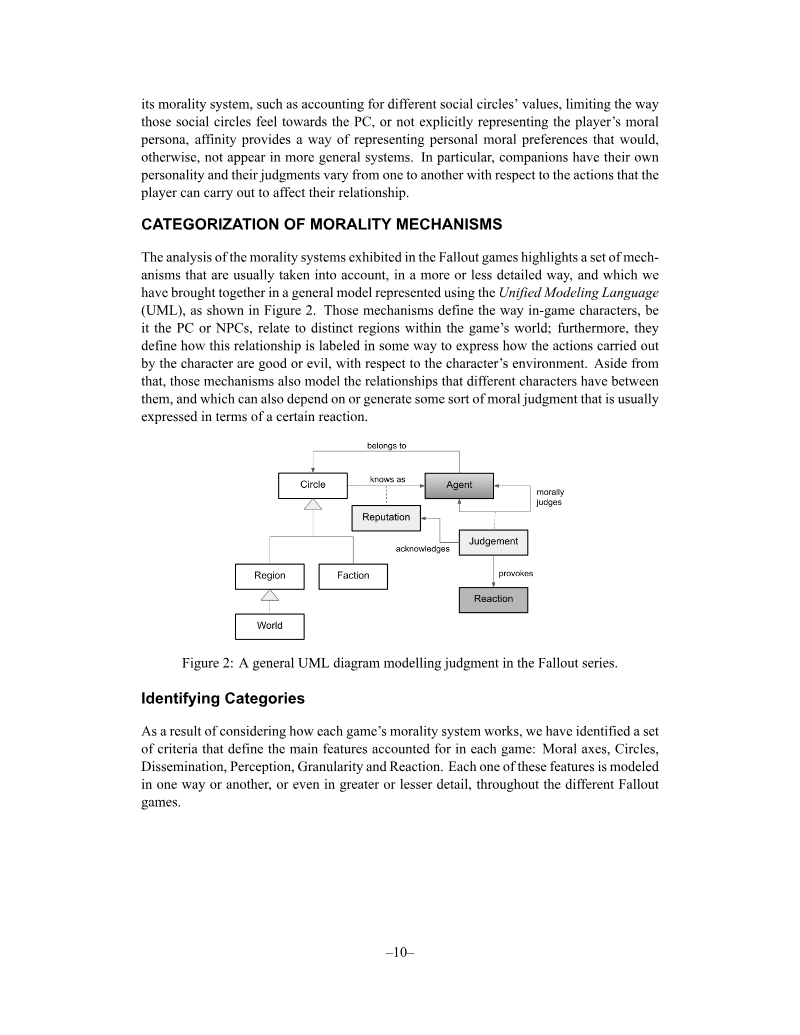
The paper examines how morality systems in the canonical Fallout CRPG series track a player character's moral persona, focusing on how in-game actions shift moral alignment and how non-player characters respond to that alignment.
- The paper analyzes how the five canonical Fallout CRPGs (1997, 1998, 2005, 2010, 2015) model moral weight, excluding spin-offs and Fallout 76 because it lacks NPCs, shifting focus from prior player-experience scholarship to the games' own mechanics.
- The authors argue that Fallout: New Vegas has the most comprehensive morality system in the series because it tracks good and evil on separate axes, so deeds do not cancel each other out.
- New Vegas tracks Fame and Infamy per faction and town, reflecting that different social circles hold different values, a design that the authors identify as the most nuanced in the series.
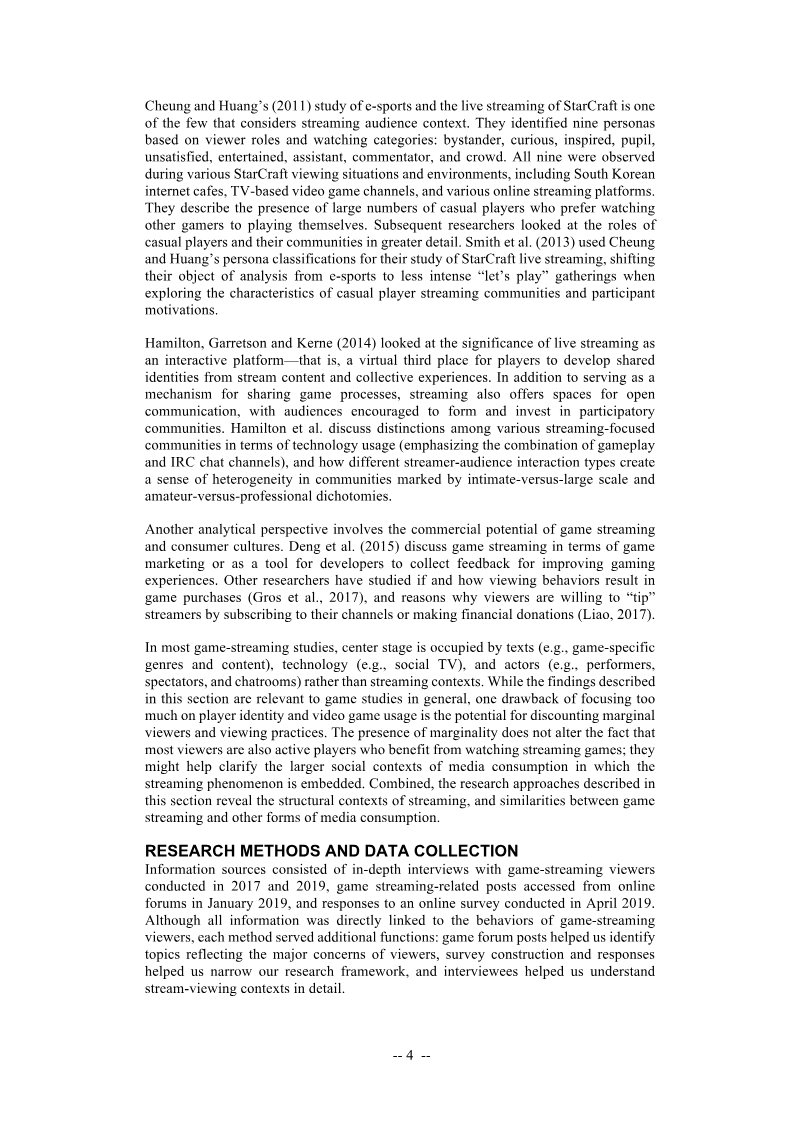
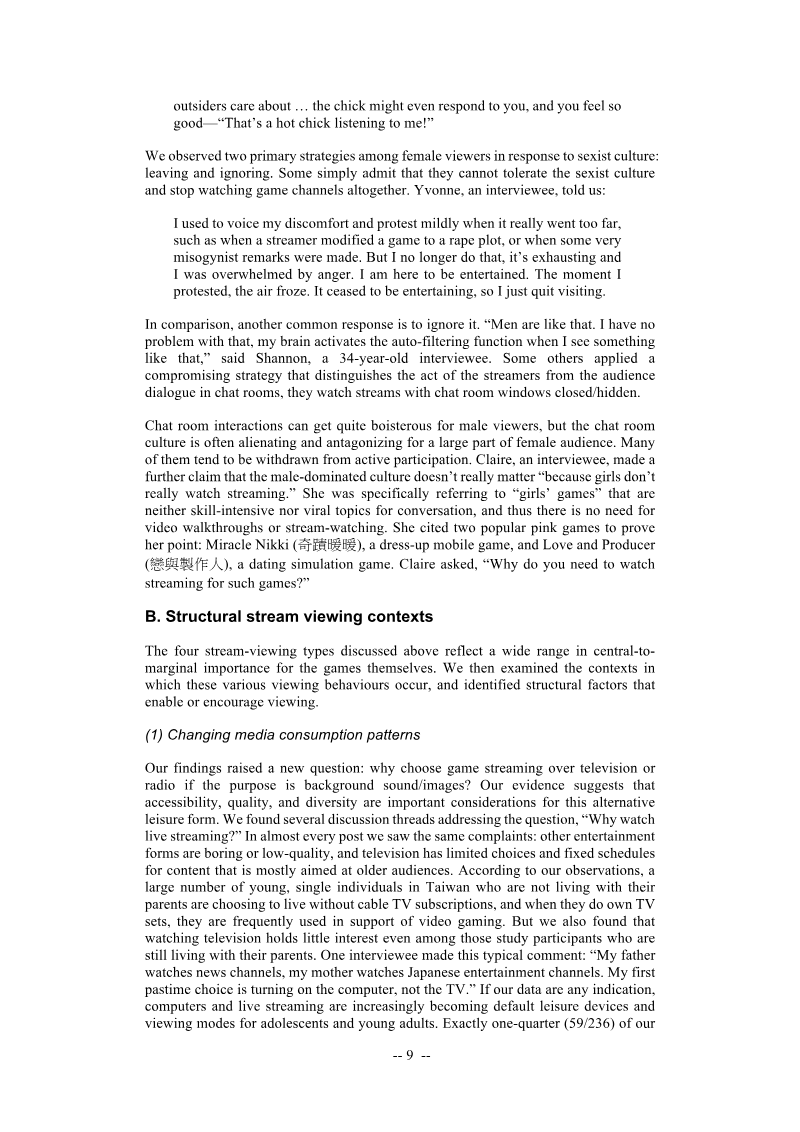
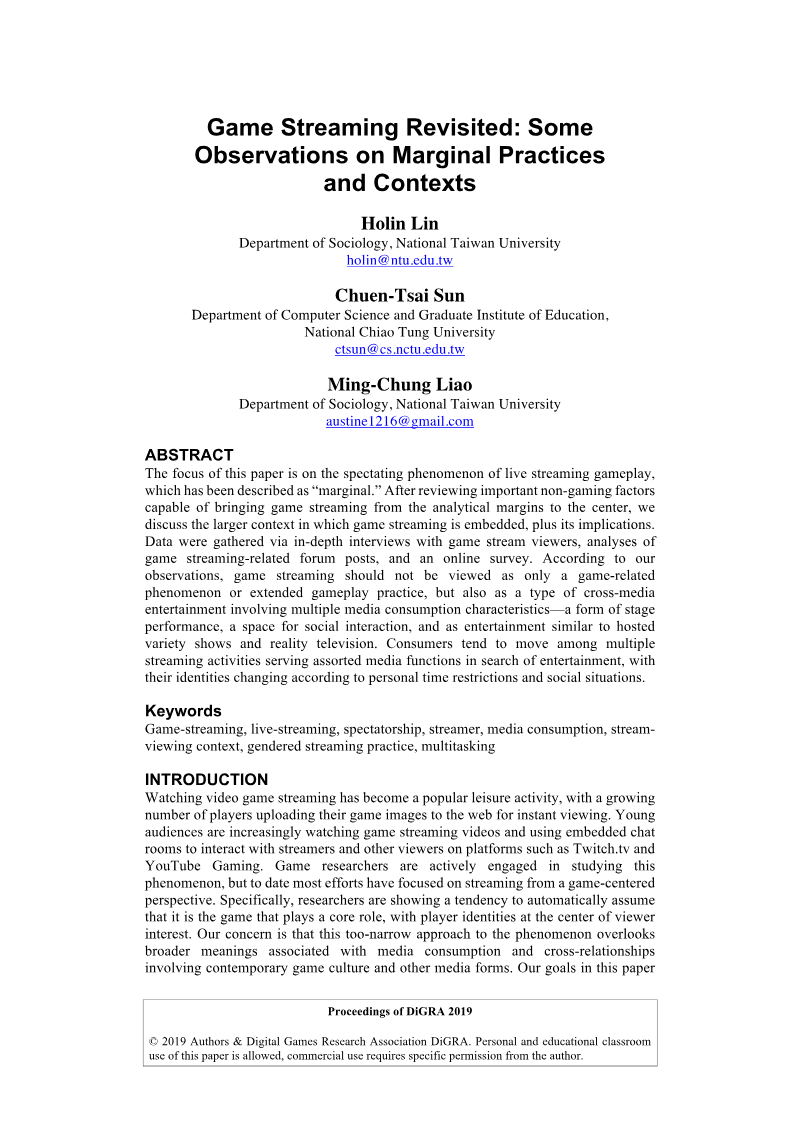
Game Streaming Revisited: Some Observations on Marginal Practices and Contexts
Game streaming, this study argues, should be understood not only as an extension of gameplay but as a form of cross-media entertainment, comparable to stage performance, social interaction spaces, and reality or variety programming.
- Game streaming is framed as cross-media entertainment comparable to stage performance, social interaction spaces, and reality or variety programming, rather than merely an extension of gameplay.
- The study identifies four viewer types: play-centered viewers, fan-based viewers, vicarious audience players who experience games through others, and background media users.
- Background multitasking and social companionship are the principal motivations for many viewers, and roughly one quarter of survey respondents said watching live streams had become a habit.
The Imbalanced State of Free-to-Play Game Research: A Literature Review
Kati Alha's literature review, presented at DiGRA 2019, maps the research landscape of free-to-play games and argues that the field is heavily skewed toward behavioral-economic optimization.
- The review's Scopus search identified 92 documents, with Computer Science accounting for 43.8% and quantitative methods dominating (44 of 64 method-classified studies), while North American and European bias is strong.
- Research volume on free-to-play games rose sharply around 2014 to 2015, coinciding with the model's commercial success on mobile platforms.
- Research concentrates on player churn and in-app purchasing, with about 1% of users generating roughly 85% of revenue (Voigt and Hinz, 2016) and advertising showing weak effects on retention (Burns et al., 2016).
Character-Driven Narrative Engine: Storytelling System for Building Interactive Narrative Experiences
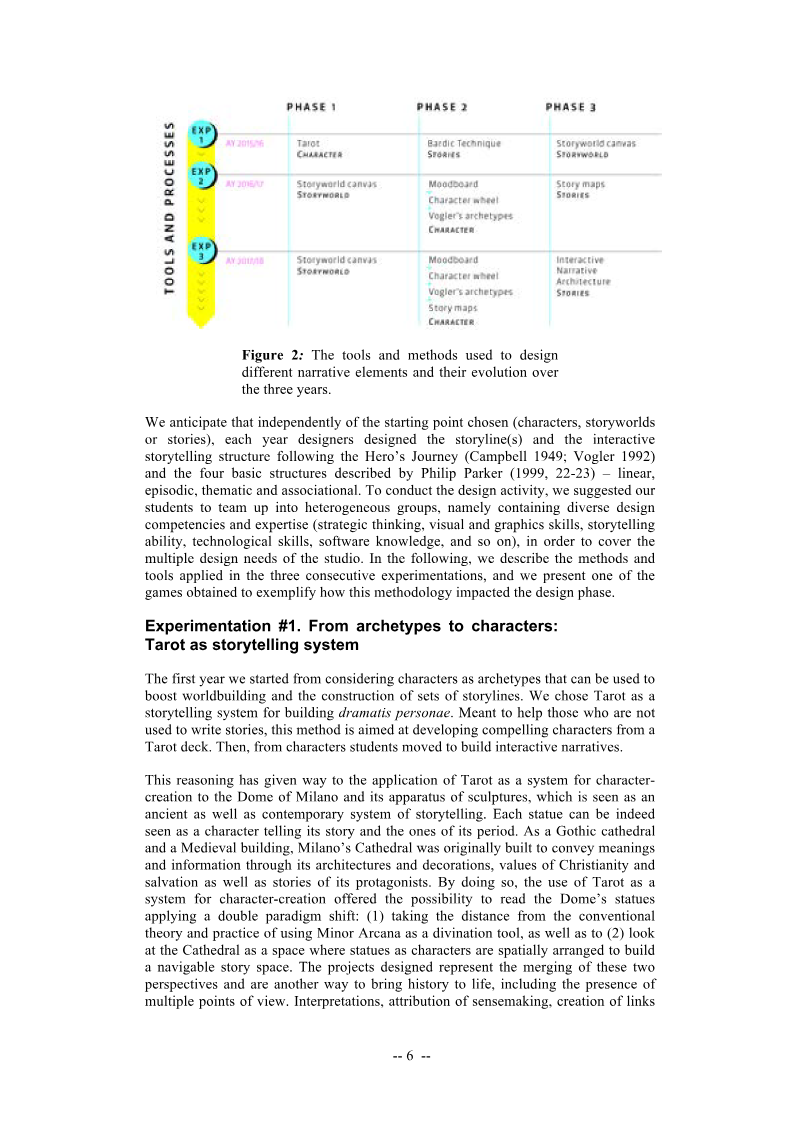
This document presents a practice-based research program conducted at Politecnico di Milano between 2015 and 2017, with a fourth edition in progress, in which roughly 150 MSc design students developed interactive, character-driven narratives.
- The research program at Politecnico di Milano (2015–2017, with a fourth edition in progress) involved roughly 150 MSc design students developing interactive, character-driven narratives, with findings drawn from qualitative ethnographic observation rather than quantitative audience measurement.
- Standard character-development tools such as Vogler's archetypes, the Storyworld Canvas, and the Character Wheel helped build characters but proved insufficient for designing interactive narrative structures, prompting the authors to move beyond them.
- Beginning from existing literary sources, such as Calvino's Invisible Cities, improved the completeness and consistency of storyworlds compared with starting from Tarot-archetype characters, which students found hard to make credible.

2019 Global Games Market Report
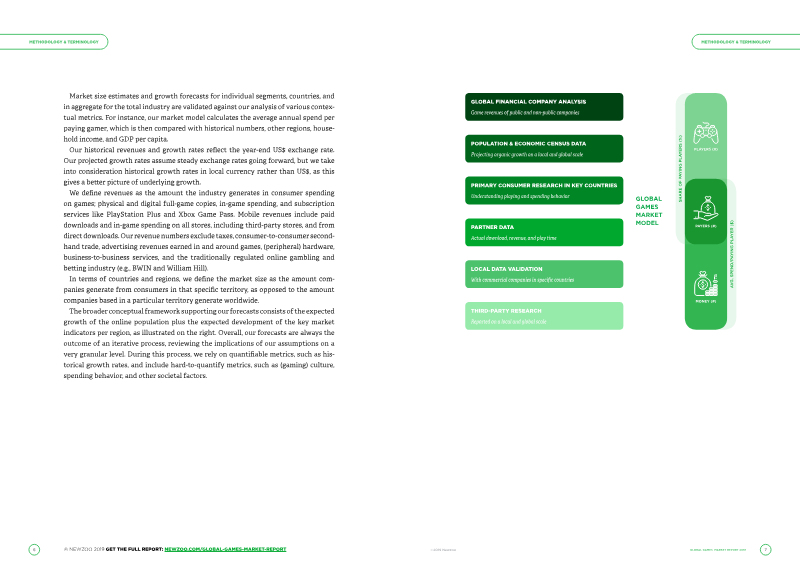
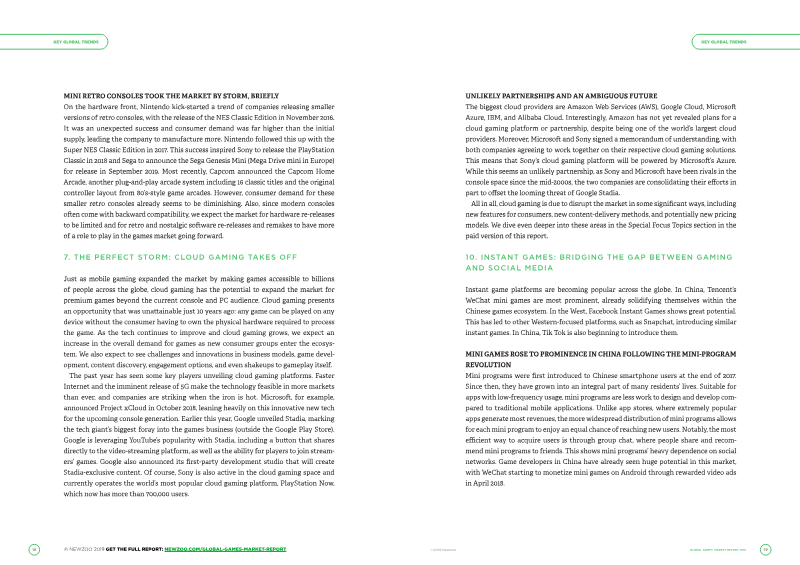
The 2019 Global Games Market Report provides a comprehensive analysis and forecast for the global interactive entertainment industry, projecting total revenues of $152.1 billion for 2019, representing a 9.6% year-on-year increase.
- The global games market is projected to reach $152.1 billion in 2019, a 9.6% year-on-year increase, with a forecasted valuation of $196 billion by 2022.
- Mobile gaming remains the primary industry driver, consistently accounting for nearly half of all global revenue.
- The United States is expected to surpass China as the top individual country for gaming revenue, supported by strong performance in the console sector.
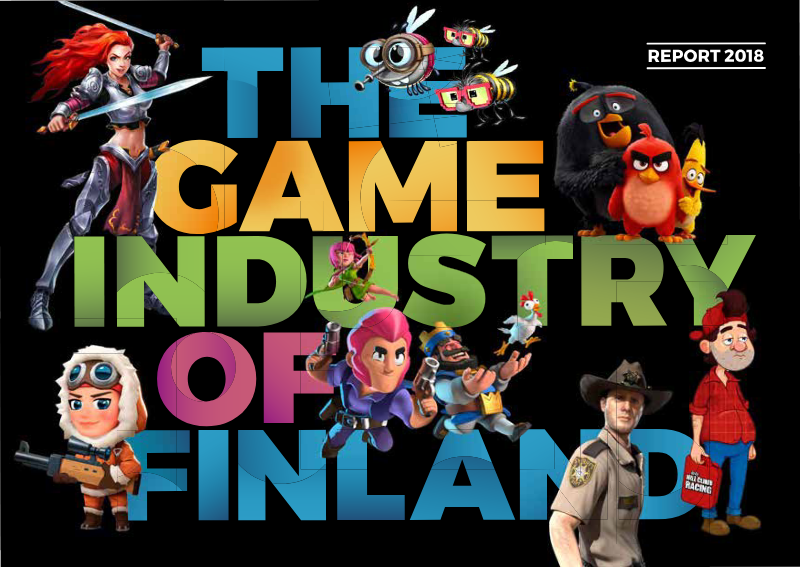
Finnish Game Industry Report 2018
The 2018 Finnish Game Industry Report, produced by Neogames from interviews with 140 companies, assesses an industry that has moved from explosive growth to a period of stabilization.
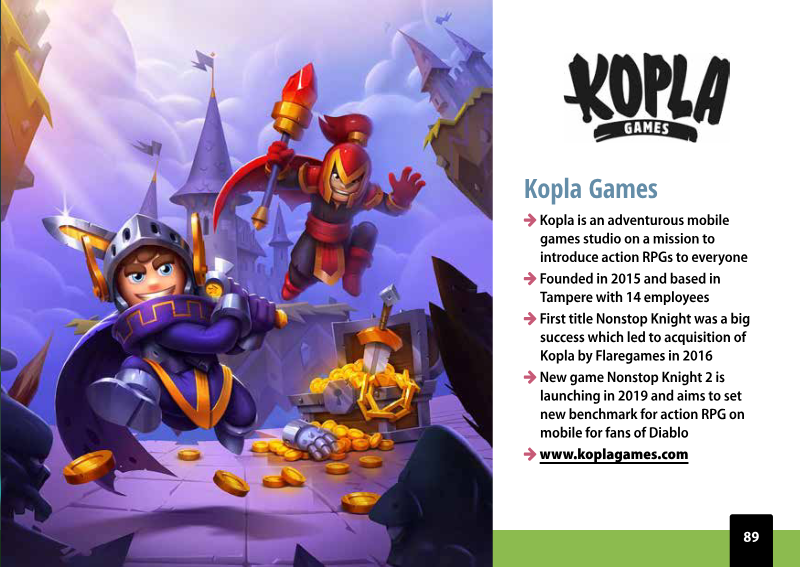
- The Finnish game industry has a strong history of significant international investments and acquisitions, including Softbank acquiring 51% of Supercell (2012-2014) and Tencent acquiring 80% of Supercell (2016), alongside numerous game studio acquisitions.
- Helsinki is a global leader in mobile game development, hosting over 80 companies, 1,600 employees (28% non-Finnish), and generating a 2018 turnover of 1.7 billion EUR, with 98.4% from exports.
- Finnish developers are rapidly adopting Nintendo (Switch) as a target platform, with its popularity growing from 4% in 2016 to 20% in 2018; chat games also emerged as a new focus (5% in 2018).


Czech Video Game Industry: PC, Console and Mobile Game Developers in Czech Republic 2019
The Czech video game industry is a mature, export-driven sector that has outgrown the public support it receives.
- The Czech video game industry, despite lacking government support, is a significant part of the digital economy, with Czech companies comprising roughly 10% of all game companies in Central and Eastern Europe and generating twice the revenue of the Czech film industry.
- In 2018, 31 games were created in the Czech Republic, contributing to a total of 136 games released by Czech studios between 2015 and 2018; PC and console game development (67%) dominates, though over half of studios also focus on mobile platforms (61%).
- The industry faces a major obstacle in the lack of skilled developers, with almost 1,500 individuals working in game development in 2018 (83% male), and over 60% of Czech game development companies experiencing labor shortages.
Roblox Q3 2018 Mobile Revenue Analysis
Roblox demonstrated significant financial momentum during the third quarter of 2018, achieving $92 million in mobile revenue across the Apple App Store and Google Play.
- In Q3 2018, Roblox generated $92 million in mobile revenue, marking an 87% year-over-year increase.
- The U.S. market is the primary revenue driver, accounting for 67% of total mobile earnings, followed by the U.K. at 10%.
- Roblox's cumulative mobile revenue across the App Store and Google Play reached approximately $486 million by the end of Q3 2018.
Roblox Revenue Hit $92 Million Last Quarter on Mobile
Roblox demonstrated significant financial momentum in the third quarter of 2018, generating $92 million in worldwide mobile revenue.
- Roblox generated $92 million in mobile revenue during Q3 2018, representing an 87% year-over-year increase.
- The platform has achieved consistent quarterly year-over-year revenue growth since Q3 2015, reaching a total lifetime mobile gross of $486 million.
- Q3 2018 mobile revenue grew approximately 8% ($6.5 million) compared to the previous quarter (Q2 2018).
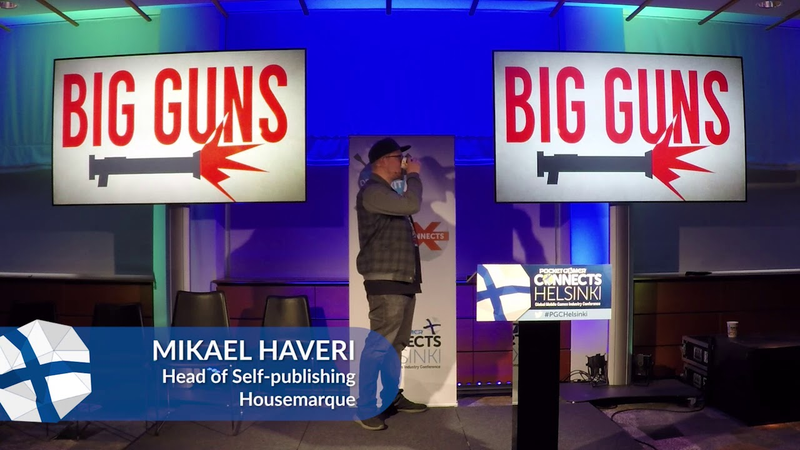
Housemarque on battle royale with cheese
Housemarque’s development of the title Stormdivers represents a strategic pivot from the studio’s traditional arcade-focused heritage toward the competitive battle royale genre.
- Housemarque is pivoting from its arcade-focused heritage to the battle royale genre with the development of Stormdivers, a project initiated in 2015.
- The studio aims to differentiate Stormdivers in a saturated market by replacing static map design with dynamic, randomized environmental events like tornadoes and volcanic eruptions.
- Core gameplay mechanics prioritize high-intensity action, utilizing class-based movement systems such as jetpacks and gliders to emphasize verticality.
Agon und Ares: Der Krieg und die Spiele
This review by Bernd-Peter Lange assesses Ernst Strouhal's edited volume "Agon und Ares.
- Ernst Strouhal's edited volume "Agon und Ares. Der Krieg und die Spiele" (Campus Verlag, 2016) collects essays from a 2015 symposium at the Internationales Forschungszentrum Kulturwissenschaft in Vienna, examining war-themed games across cultures and centuries.
- The collection's theoretical frame draws on Huizinga's view of play as a source of culture and Roger Caillois's typology, with particular attention to agonistic games and the cultural history of board games, which Strouhal identifies as a neglected field.
- Strouhal's central claim is that chess and war are not deeply congruent: chess pursues planning, while war is contingency management, though several essays show that chess structures and military metaphors still shaped game design.