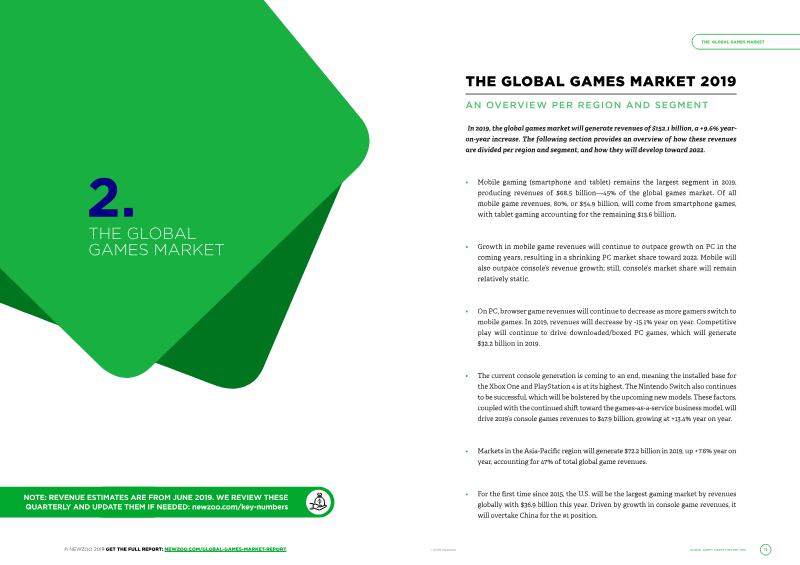
This represents a 9.6% year-on-year increase. The market is forecasted to reach $196 billion by 2022.
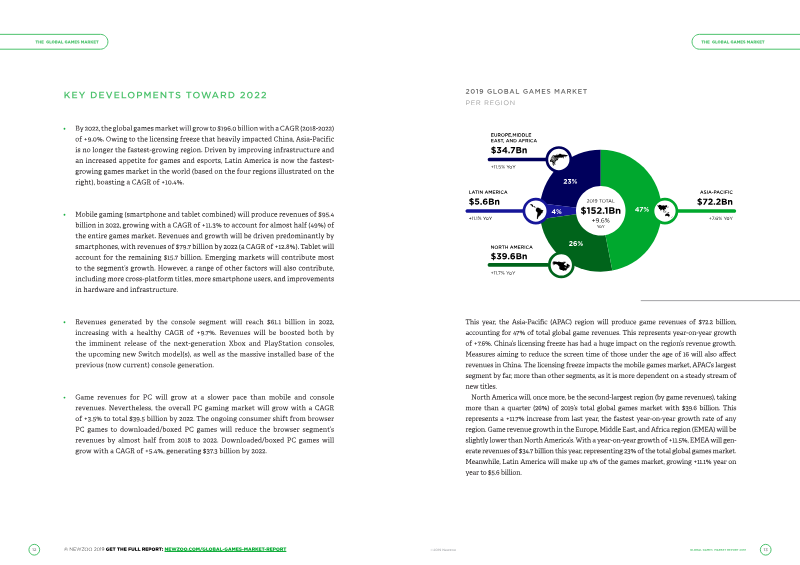
Mobile gaming remains the primary industry driver.
Page 9 of the reportThis shift is supported by strong performance in the console sector. The U.S. is poised to become the top individual country for gaming revenue.
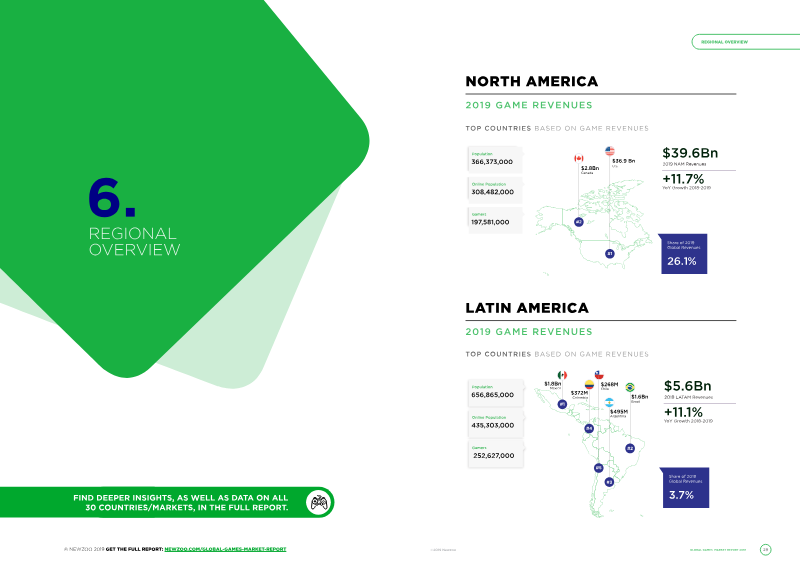
The region is showing strong growth in the gaming market.
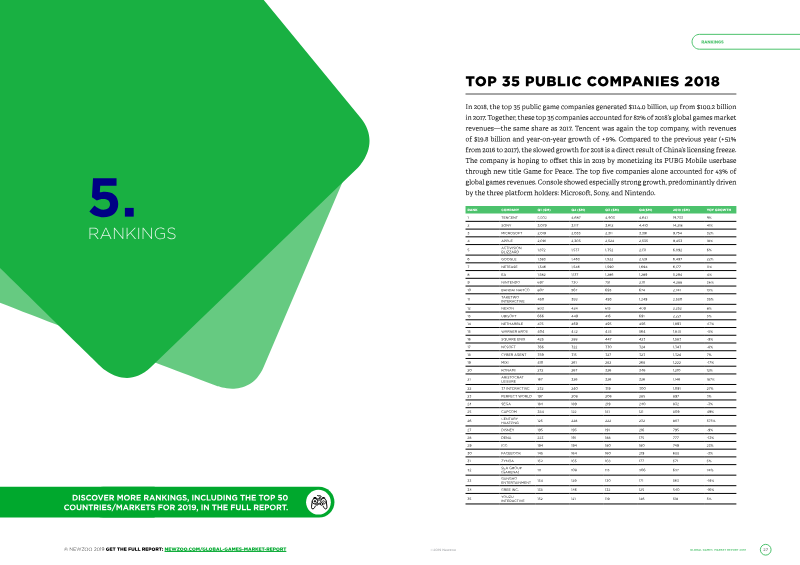
Financial power within the gaming sector is highly concentrated.
These include games-as-a-service models, social-centric experiences, and the integration of cloud gaming.
The global games market is experiencing robust expansion, with total revenues projected to reach $152.1 billion in 2019, representing a 9.6% year-on-year increase. This growth trajectory suggests a long-term valuation of $196 billion by 2022. Mobile gaming serves as the primary engine of this industry, consistently accounting for nearly half of all global revenue. While the Asia-Pacific region maintains its status as the largest geographic market, the United States is poised to overtake China as the leading individual country for gaming revenue, bolstered by significant strength in the console sector. Meanwhile, Latin America is emerging as the fastest-growing region, signaling a broader diversification of the global player base.
Industry evolution is increasingly defined by the games-as-a-service model and a transition toward social-centric experiences. Platforms facilitating instant, social-integrated gameplay are driving higher retention rates, while the rise of cloud gaming and high-quality remakes of classic titles are reshaping consumer engagement strategies. The financial health of the sector remains concentrated among major players, as the top 35 public game companies generated $114 billion in 2018. Despite regulatory headwinds in specific territories, the industry continues to prioritize deep consumer insights to navigate these shifts.
To better capture the nuances of this changing landscape, a new gamer segmentation framework categorizes consumers into eight distinct personas based on their hardware ownership, viewing habits, and playing behaviors. This analytical approach reflects a broader industry shift toward understanding the multifaceted nature of modern players. By synthesizing macroeconomic data with primary consumer research, these findings underscore a market that is not only growing in total value but is also becoming more sophisticated in how it monetizes and retains its global audience.