2015
Company
Documents about 2015
A Statistics-Based Approach to Picking a Game Setting That Best Matches Your Chosen Genre 2020
This research provides a statistical analysis of mobile game settings and their correlation with genre performance, aiming to guide developers in making informed design choices that optimize target audience reach and cost per install.
- The Real Life setting is the most effective for market reach in the West, accounting for 31% of all analyzed games and 42% of cumulative downloads due to its high accessibility and minimal tutoring requirements.
- Fantasy and Oriental Fantasy settings dominate revenue charts in Tier-1 East markets (China, Japan, Korea, Taiwan), while Real Life settings are primarily driving growth in the hypercasual sector.
- Complex settings like Fantasy are statistically correlated with high-grossing, sophisticated genres such as RPGs and 4X strategy games.

Zynga vs. Supercell: The Quest to Be the World’s Most Valuable Mobile Gaming Company
This analysis evaluates the divergent strategic trajectories of Zynga and Supercell, two prominent mobile gaming publishers, to determine their long-term viability and potential for market leadership.
- Supercell’s long-term strategy focuses on innovation and creating 'forever franchises' through decentralized, autonomous teams, while Zynga relies on a strategy of aggressive M&A and the optimization of live operations.
- Zynga’s growth has been driven by a series of accretive acquisitions, including the acquisition of Peak Games, which would vault them from 8th to 4th place among top mobile game publishers by Q1 2020 revenue.
- Supercell has experienced a decline in revenue and profitability in recent years, leading to speculation that its 2016 valuation of $10.2 billion may have significantly decreased, potentially evidenced by a 2019 Tencent stake acquisition at a lower valuation.
Report on App Categories
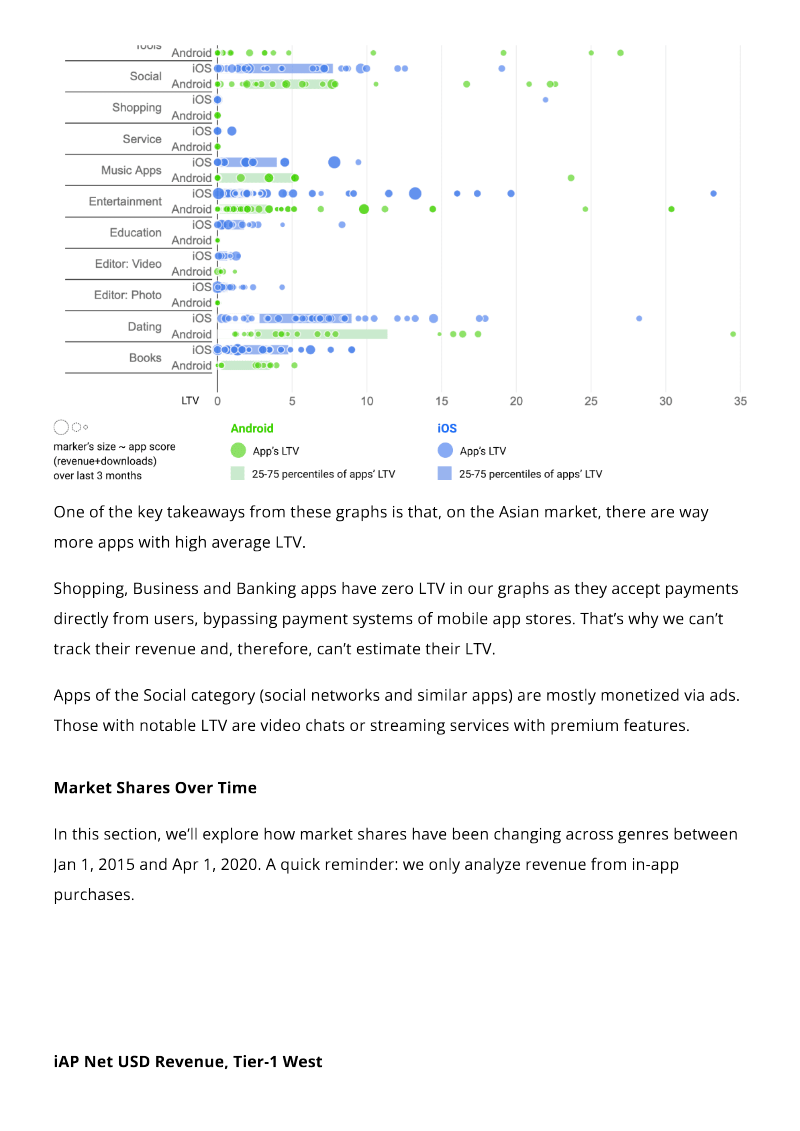
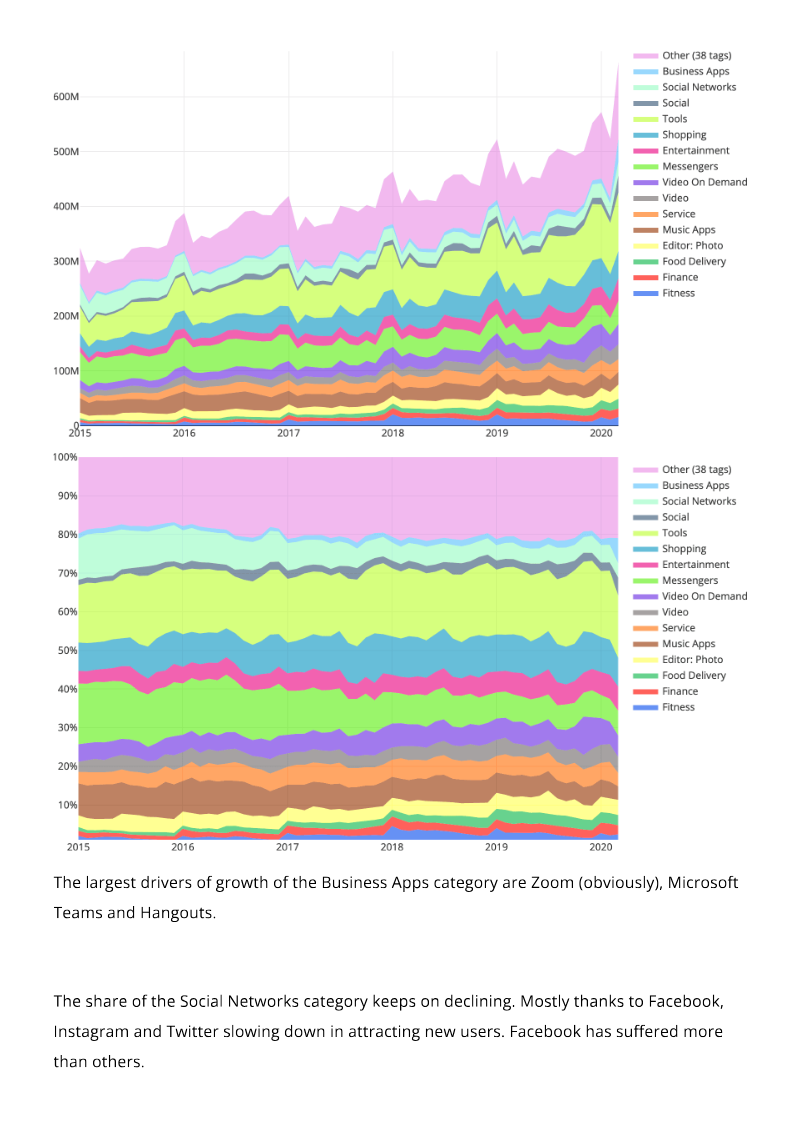
This research provides a comprehensive analysis of the non-gaming mobile application market, focusing on shifting market shares, revenue performance, and lifetime value (LTV) across various categories.
- Video apps, led by YouTube, Twitch, and BIGO LIVE, represent the highest growth category in Western markets as of early 2020.
- Video-on-demand services account for 20% of total in-app purchase revenue in Eastern markets.
- Asian markets demonstrate a higher density of apps with high average lifetime value (LTV) compared to Western markets.
How One New Image Increased Sales 20-Fold
The primary purpose of this analysis is to demonstrate the critical impact of Steam capsule art on game discoverability and conversion rates.
- The developers of Imagine Earth saw daily sales increase 20-fold after replacing their original Steam capsule art with a more professional design in June 2015.
- Steam users frequently use capsule art as a primary filter, often hovering over attractive images to view tooltips before deciding whether to click through to a store page.
- Professional capsule art typically costs between $500 and $1,000 USD and is a critical investment that can prevent a high-quality game from being perceived as a low-effort hobby project.
CD Projekt 2019 Annual Financial Results
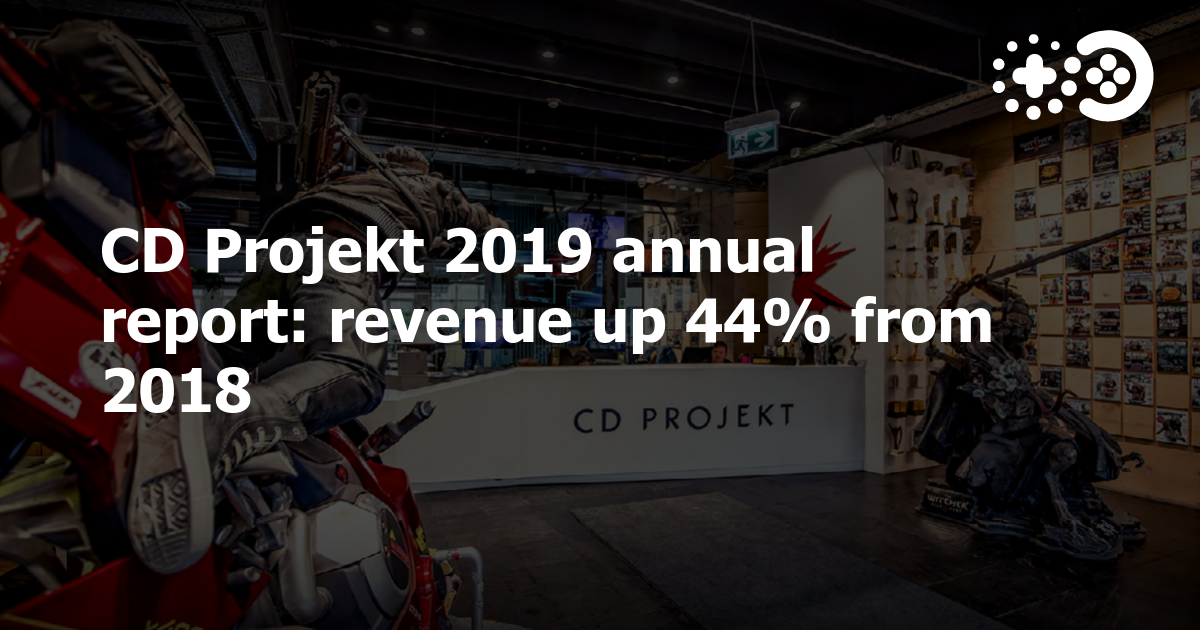
The 2019 annual financial results for CD Projekt demonstrate a period of significant growth, characterized by a 44% increase in revenue to zł521 million ($124.9 million) and a 66% rise in profit to zł175 million ($41.9 million).
- In 2019, CD Projekt reported a 44% year-over-year revenue increase to zł521m ($124.9m) and a 66% profit increase to zł175m ($41.9m).
- The Witcher 3: Wild Hunt sold over 6.5 million copies in 2019, its strongest performance since its 2015 launch, driven by the Netflix adaptation.
- Analysts from DM BOŚ project that the upcoming The Witcher 3 expansion, 'Songs of the Past,' could generate approximately $187.9 million (700 million PLN) in its first 12 months.

The Hidden Levers of Game Discovery: Supply and Demand
The primary thesis of this analysis is that video game discoverability is increasingly dictated by a fundamental mismatch between supply and demand.
- The number of games on Steam grew from 5,000 in 2015 to over 60,000 by 2022, creating a supply-side saturation that outpaces the 62% growth in daily active users since 2019.
- The market has shifted to a 'no-reset' environment where evergreen hits and Games as a Service (GaaS) titles capture long-term player attention, making it increasingly difficult for new releases to gain traction.
- While Unity reported a 93% increase in game creation between 2020 and 2021, the market has transitioned to a 'hit-driven' curve where the majority of indie titles struggle to recoup costs compared to previous years.
Next Steps for Futureplay - Where in the Market are we Going Next and Why?
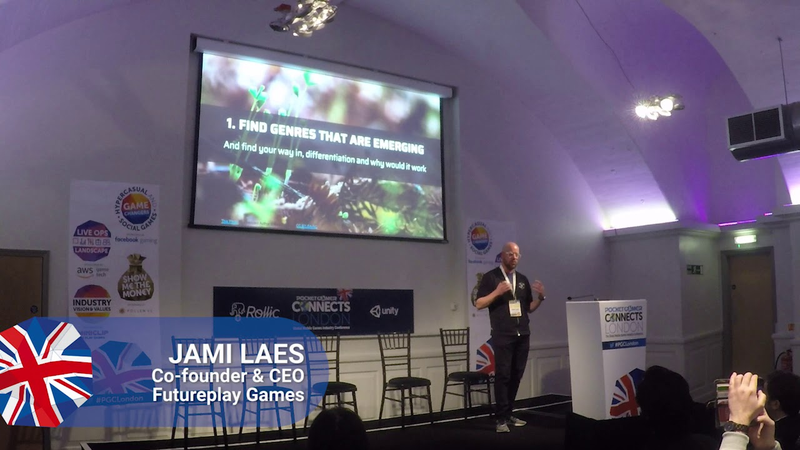
Futureplay Games, a Finnish studio founded in 2015, utilizes a strategic, iterative approach to game development that prioritizes organizational agility and market-driven pivots.
- Futureplay Games utilizes a 'Minimum Awesome Product' strategy, which focuses on scoping projects to essential, high-impact features to rapidly test market viability rather than pursuing traditional, feature-heavy development cycles.
- The studio has generated $30 million in lifetime revenue since its founding in 2015, maintaining a lean team of approximately 35 employees.
- Futureplay manages risk and creative momentum by shifting genres every few years, successfully pivoting from idle games to the battle royale market with the 2018 launch of Battlelands Royale.



Fact Book 2020
BANDAI NAMCO Holdings' Fact Book 2020 is a reference compendium on the Group's fiscal 2020.3 performance, its market context, its CSR and ESG progress, and its corporate history from the founding of BANDAI (1950) and NAMCO (1955) through March 2020.
- Bandai Namco reported consolidated net sales of ¥723.99 billion in 2020, a slight decrease from the previous year's ¥732.35 billion.
- The Network Entertainment segment is the company's primary revenue driver, accounting for 42.3% of total sales, followed by Toys & Hobby at 32.7% and Real Entertainment at 11.8%.
- The Japanese market remains the firm's core focus, generating approximately 80% of the group's total external revenue.

Rainbow Six Siege Hits New All-Time Concurrent Peak Players Record on Steam
Rainbow Six Siege achieved a significant milestone in February 2020, reaching a new all-time concurrent player record on the Steam platform.
- Rainbow Six Siege reached a new all-time concurrent player record of 178,419 on Steam as of February 23, 2020.
- The record-breaking player count for Rainbow Six Siege was achieved prior to the release of the 'Operation Void Edge' season, which was active on test servers at the time.
- The Steam concurrent player figures for Rainbow Six Siege do not account for the additional player base accessing the game through the Uplay platform.
Top Game Genres by Revenues and Downloads
This analysis examines the performance of mobile game genres by evaluating the 1,000 most downloaded and 1,000 highest-grossing titles over a 30-day period.
- The Asian mobile market (Tier-1 East) exhibits significantly higher average Lifetime Value (LTV) across game genres compared to Western markets, with top-performing titles like Fate/Grand Order reaching an LTV of $430.
- High-LTV genres are typically characterized by high production costs, requiring substantial content, complex mechanics, and premium technical quality, making them difficult to enter without significant investment.
- Tencent dominates the Tier-1 East market, with its title Honor of Kings accounting for 95% of the MOBA genre's performance and generating approximately $5 billion in revenue on iOS in China alone.
Clash of Clans Grossed $727 Million in 2019
Supercell’s mobile strategy title, Clash of Clans, experienced a significant financial resurgence in 2019, generating $727 million in global revenue.
- Clash of Clans generated $727 million in global revenue in 2019, marking a 27% increase over the $572 million earned in 2018.
- The 2019 performance represents the first year-over-year revenue growth for the title since 2015.
- The introduction of the $4.99 monthly 'Gold Pass' in April 2019 was the primary driver for the revenue turnaround.
Unreal Engine and the Epic Ecosystem
The Epic Games ecosystem centers on the philosophy that the company’s success is intrinsically linked to the success of its developers.
- Unreal Engine operates on a royalty-based business model where developers pay a 5% fee only after their projects achieve commercial success, following a shift to free access in 2015.
- The Epic Games Store supports the ecosystem by charging a reduced 12% commission, while the Unreal Marketplace provides a revenue stream for creators through a catalog of over 9,000 products.
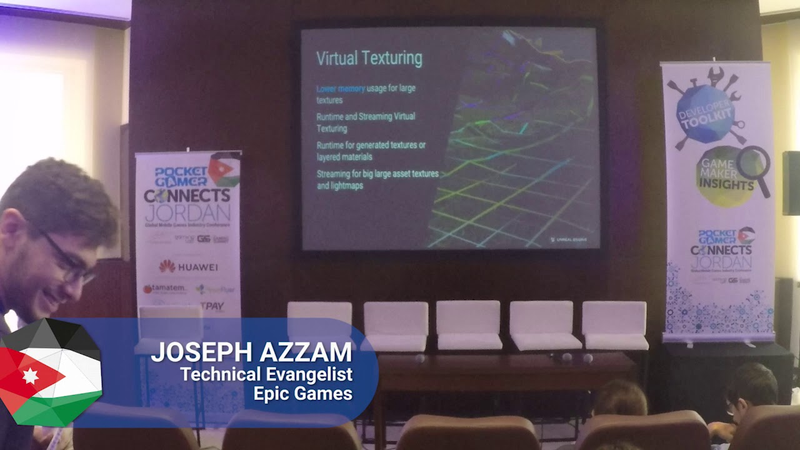
- Epic Games uses Fortnite as a live testing ground to develop and refine engine features like the Chaos physics engine, real-time ray tracing, and virtual texturing.