ArticleAppMagic
A Statistics-Based Approach to Picking a Game Setting That Best Matches Your Chosen Genre 2020
1 Jul 202012 pages~13 min full read
Key insights
4 slides
Western Market Reach
The Real Life setting is most effective for market reach in the West.
This setting accounts for 31% of all analyzed games and 42% of cumulative downloads. Its high accessibility requires minimal user tutoring.

Genre Correlation
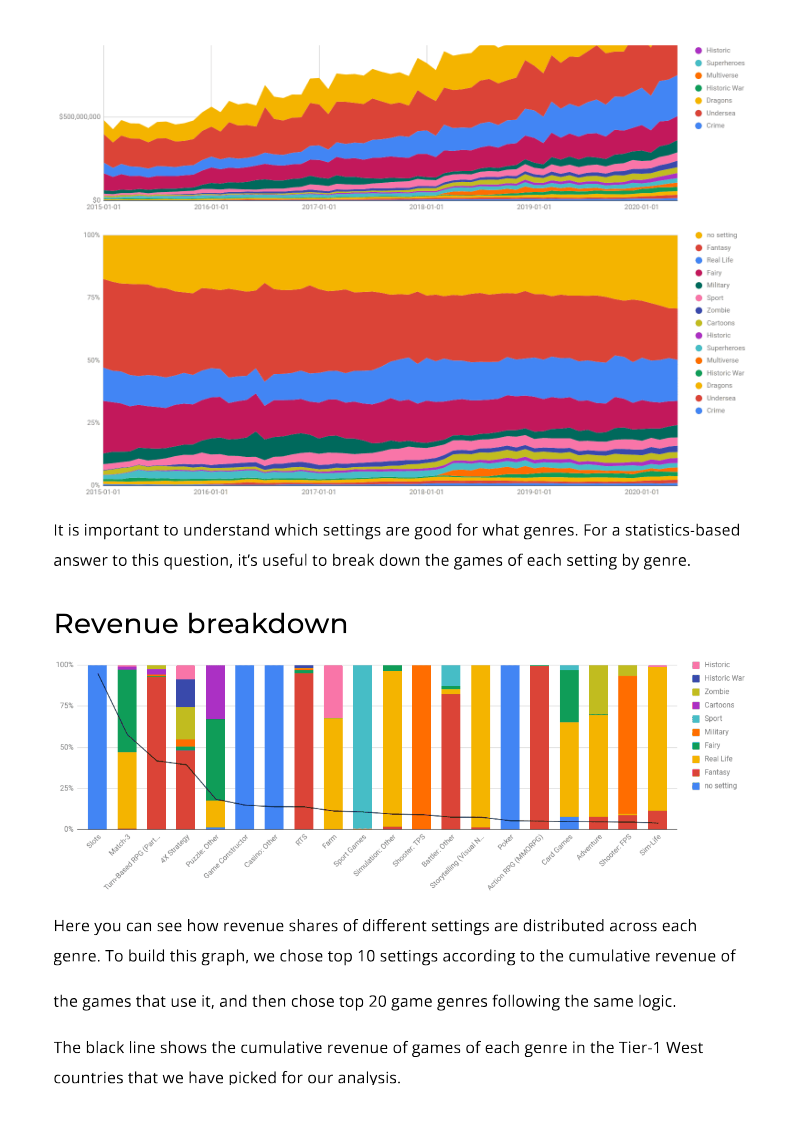
Complex settings like Fantasy correlate with high-grossing, sophisticated genres.
These genres include RPGs and 4X strategy games.
Niche Challenges
Niche settings face significant market barriers, regardless of production quality.
Settings such as Sci-fi, Cyberpunk, and Steampunk consistently result in lower traffic and higher user acquisition costs.
Like trying to sell a very specific type of art to a broad audience, niche settings appeal to fewer people.
Commercial Success Factor
Commercial viability is primarily determined by the synergy between genre and setting.
Unconventional pairings frequently struggle to gain market traction, even with high-quality execution.
1 / 4
Ask AI about this report