Homo Ludens
Publishes academic articles and reports on video games, in Polish and English. Topics include game psychology, player aggression and addiction, the uncanny valley, game spaces, game law and Polish RPG fandom.
Documents
Ksenofobiczna Gra w Japonię: Przykład Ekstremalny Międzykulturowej Narracji Niedbałej
This Polish-language article by Arkadiusz Jabłoński, published in Homo Ludens in 2019, argues that certain popular accounts of Japan constitute what the author calls "careless narratives" (narracje niedbałe), a parasitic subgenre that presents imaginative, non-verifiable interpretations as expert knowledge.
- Jabłoński's 2019 Homo Ludens article argues that popular Polish accounts of Japan can be 'careless narratives' that present imaginative, unverifiable interpretations as expert knowledge, using Eric Berne's Parent-Adult-Child model to explain how such texts assert predetermined theses.
- The central case study is Karolina Bednarz's book 'Kwiaty w pudełku' (Flowers in a Box), which the author reads as claiming that women in Japan are universally oppressed, a generalization he judges unsupported.
- The critique identifies recurring flaws: selective or distorted facts, omission of male-side social pressures, extending individual examples to an entire society, and misleading translations of Japanese idioms.
Perma-dying Worlds and the Limit of Eternal Return in Digital Games
This article examines how certain digital and tabletop games limit the player's ability to return after death, in contrast to the more common mechanics of save-and-reload that enable endless resurrection and repetition.
- Permadeath and permapermadeath mechanics turn repetition from a route to mastery into a source of emotional weight, because choices become permanent and the player's control over outcomes diminishes.
- The article draws on Nietzsche's eternal return, Freud's repetition-compulsion, and Jesper Juul's account of failure to frame why limiting return after death changes the meaning of play.
- This War of Mine offers no saving within a playthrough, so early choices remain memorable even though the game can be replayed.
OneBookShelf Community Content Programs and the Polish RPG Fandom
Marek Golonka's article asks why Polish authors are nearly absent from OneBookShelf community content programs, such as Dungeon Masters Guild, which let fans publish supplements for tabletop RPGs without a formal publisher license.
- As of December 2018, only three Polish contributors were active in OneBookShelf community content programs such as Dungeon Masters Guild, and only one, Jan Sielicki, had published multiple titles.
- The paper's central argument is that the long absence of professionally published RPGs in Poland, combined with a persistently small commercial market, intensified fan prosumption while limiting fans' chances to acquire skills for professional or semi-professional publishing.
- Several factors are cited for weak Polish participation: Dungeons & Dragons holds a weaker position in Poland than in the English-speaking market, its first successful Polish release came late, and the community prefers printed books and local publishers are reluctant to release PDFs.
Inny świat, inny twórca. AnotherWorld Érica Chahiego jako przypowieść o Twarzy
This article reads Éric Chahi's 1991 video game Another World as a self-reflective artistic statement that engages with Emmanuel Lévinas's philosophy of dialogue, particularly his concepts of separation, atheism, and the Face.
- The article reads Éric Chahi's 1991 game Another World as a self-reflective artistic statement engaging Emmanuel Lévinas's philosophy of dialogue, especially the concepts of separation, atheism, and the Face, rather than as mere entertainment.
- Another World dramatizes the tension between isolation and openness to the Other, with programming functioning both as a means of withdrawal and as a route toward encounter.
- Chahi is framed as a 'digital artisan' working in late-1980s and early-1990s French game development, a period when the cult of the individual author was losing ground.
Creation of the Fictional World in The Witcher 3: Wild Hunt
CD Projekt Red's The Witcher 3: Wild Hunt is examined as a deliberately constructed, self-contained fictional world rather than a mere backdrop for gameplay.
- The Witcher 3's world was built almost entirely from scratch by CD Projekt Red, since Andrzej Sapkowski's source books offer sparse spatial detail, and no part of the environment is auto-generated.
- The game is presented as an independent fictional ontological construct, with its topography, architecture, human and non-human activity, and location information working together to form a self-contained world rather than a mere gameplay backdrop.
- The invented setting is grounded in real-world geography and climate: Velen evokes Central Europe, Skellige recalls Scandinavia, and Toussaint resembles Southern France.
The Value Experience of the Emotional Immersion in Games
This paper offers a phenomenological and conceptual analysis of emotional immersion in games, grounded in Max Scheler's account of emotions as experiences of values.
- The paper argues that emotional engagement with games involves value experiences in two forms: an "emotional illusion," where players temporarily set aside their everyday value hierarchy while staying aware of reality, and a more problematic "emotional delusion" (or "emotional lying"), where emotions drive choices that contradict the player's own values.
- Immersion can produce delusions such as powergaming, aesthetic delusion, and ethical or pragmatic economism, in which players sacrifice more important values for less significant in-game outcomes.
- Drawing on Weber's instrumental versus value-rational action and game-theoretic reasoning, the author concludes that such choices are instrumentally rational within a single game but value-irrational when viewed across a player's overall value system.
How Not to Translate Games into Russian: An Analysis of the Localisation of the Game Książę i Tchórz from Polish into Russian
This study examines translation errors in the linguistic localisation of video games, using the Polish point-and-click adventure Książę i Tchórz (Metropolis, 1998) and its 1999 Russian version, produced by an amateur Russian localisation group, as a case study.
- Game localisation is treated as a distinct translation genre that combines audiovisual, software and transcreative practices, going beyond the narrower task of translating a game's text.
- The study proposes a classification of translation errors, distinguishing linguistic, translational, and technical categories such as typographical mistakes, subtitle-to-voice mismatches and inappropriate font choices.
- The 1999 Russian version of the Polish adventure game Książę i Tchórz (Metropolis, 1998), made by an amateur group, was built on the German text rather than the original Polish, a strategy the author calls flawed.
Orientalism-Based Accounts on Japan and Anti-Information Game: Case Study
Arkadiusz Jabłoński's article examines Polish popular texts about Japan that he classifies as "careless narrations" (relacje niedbałe), arguing that they function as a form of anti-information game shaped by orientalist stereotypes.
- The article classifies Polish popular texts about Japan as "careless narrations" (relacje niedbałe), treating them as an anti-information game shaped by orientalist stereotypes, distinct from expert and non-expert intercultural genres.
- The empirical core is a deliberately qualitative analysis of five Polish texts about Japan published over several decades, from a 1961 travelogue to a 2016 popular book, checked against verifiable facts on Tokyo's addressing system, the Lolita subculture, and the history of geisha and Yoshiwara.
- Joanna Bator's works are found to contain fabrications, overgeneralizations, and pseudo-scholarly claims that mislead readers, while Beata Pawlikowska's playful, simplistic style is judged less deceptive in intent though still unreliable.
Immersion Level and Bot Player Identification in a Multiplayer Online Game: The World of Warships Case Study
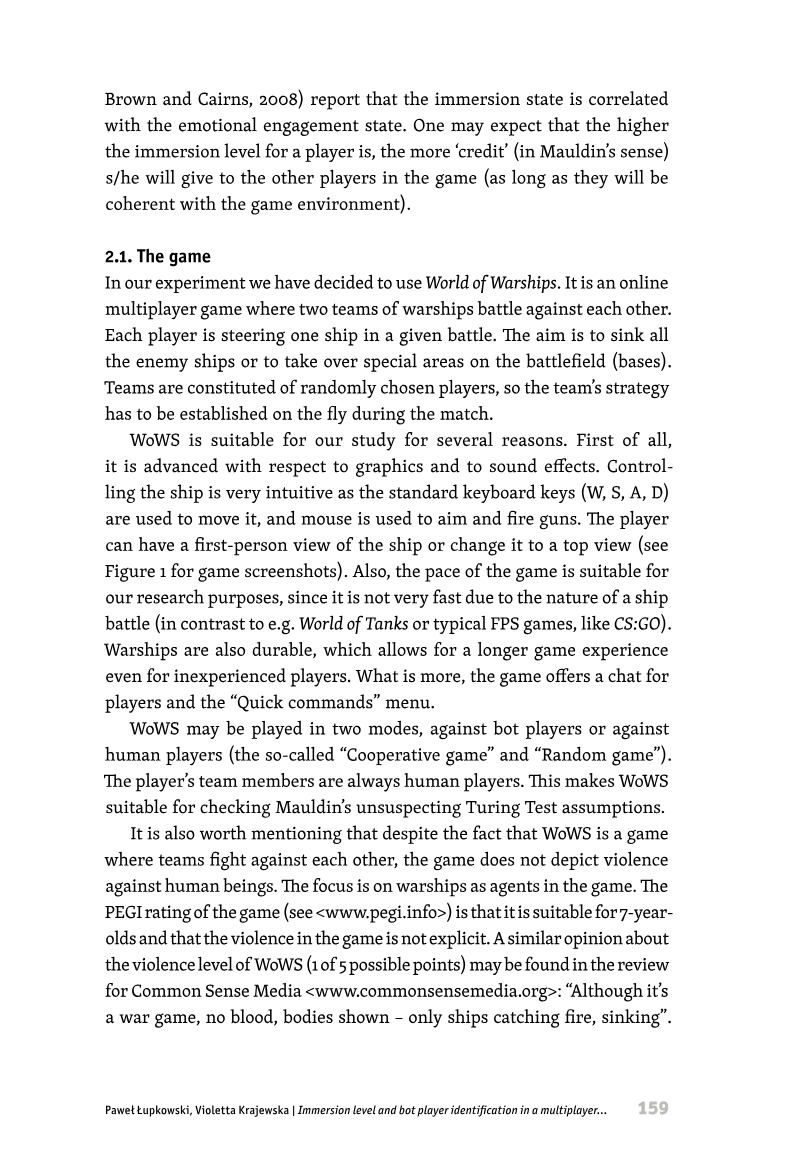
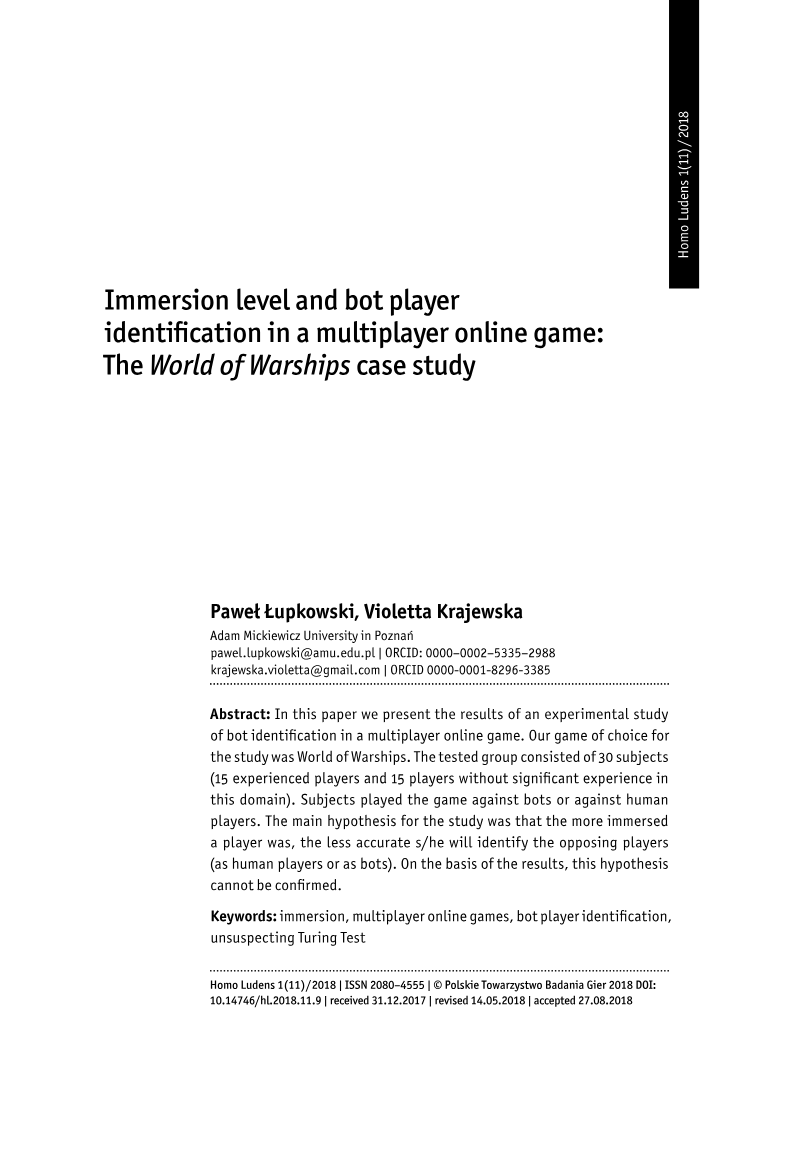
This study investigates whether a player's level of immersion in a multiplayer online game affects their ability to distinguish human opponents from bots, using World of Warships as the setting.
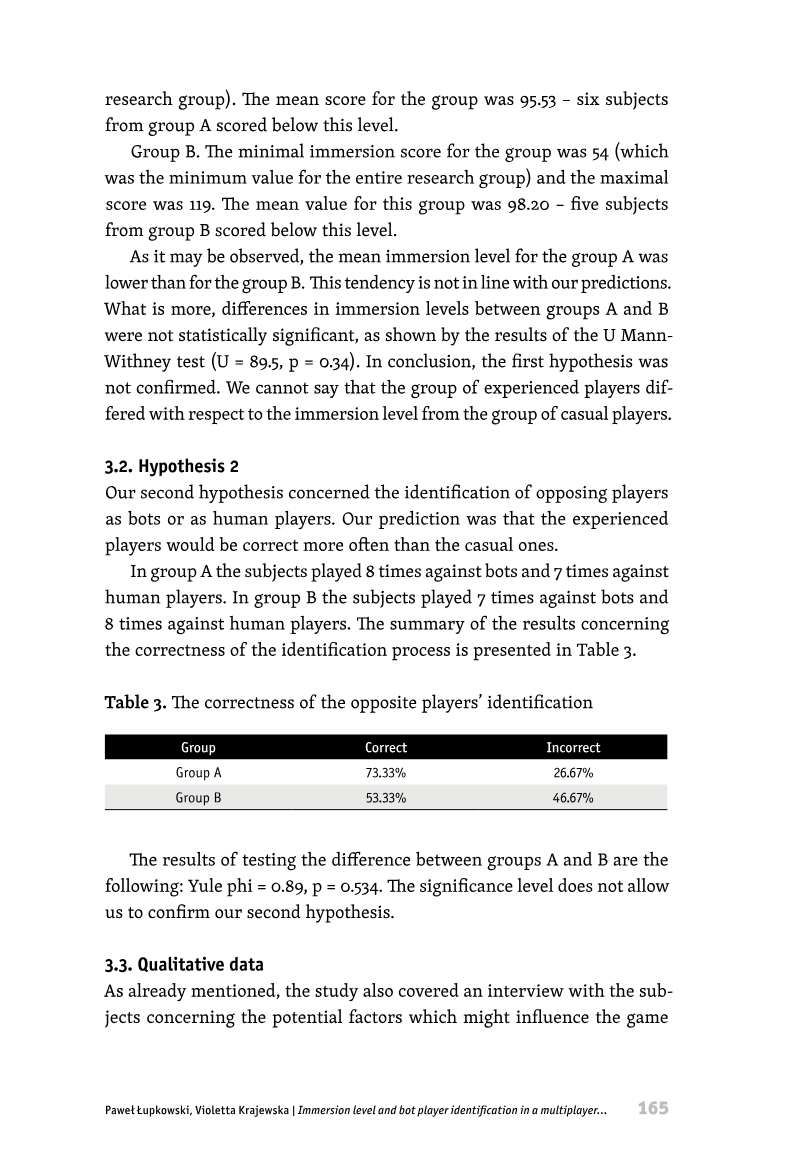
- The central hypothesis was not supported: higher immersion did not reduce players' accuracy at identifying bot opponents in World of Warships, with no significant group difference in identification accuracy (p = 0.534).
- Immersion scores were high overall (mean 96.87, SD = 15.61) and showed no significant difference between experienced (M = 95.53) and casual players (M = 98.20; Mann-Whitney U = 89.5, p = 0.34).
- Descriptively, experienced players identified human versus bot opponents correctly more often than novices (73.33% versus 53.33%), a trend in the predicted direction that was not statistically reliable.
Video Games Research from the Perspective of Media Education: Analysis and Recommendations
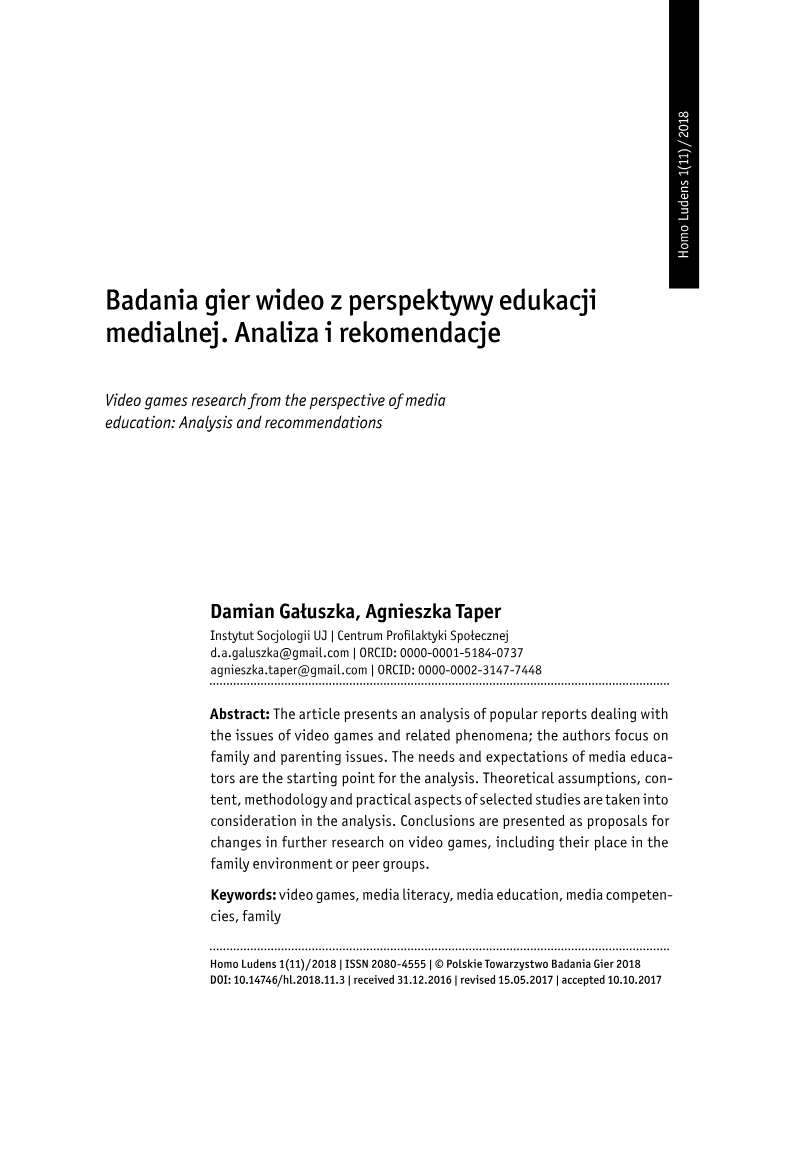
A 2018 Polish media education study by Gałuszka and Taper examines how popular reports on video games address family life, with particular attention to parenting, joint play, purchasing, ratings, equipment, parental attitudes, and playing time.
- The 2018 Polish media education study by Gałuszka and Taper reviewed 24 documents from 12 publications in Polish and English, coding them into more than 420 codes across 15 categories, and concluded that the research base on the family dimension of gaming is too fragmented and methodologically inconsistent to be reliable.
- Major Polish digital competency frameworks give video games only marginal attention, while parental monitoring is the most frequently addressed family topic, appearing in 18 of the reviewed documents.
- Estimates of parental co-play conflict sharply: one Polish study reports 25% of parents play with their children, while another reports 46% playing alone or with a child, a gap the authors attribute mainly to incompatible methodologies, samples, and timeframes.
Similar but Not the Same: Application of EEG Frontal Alpha Asymmetry to Game Research
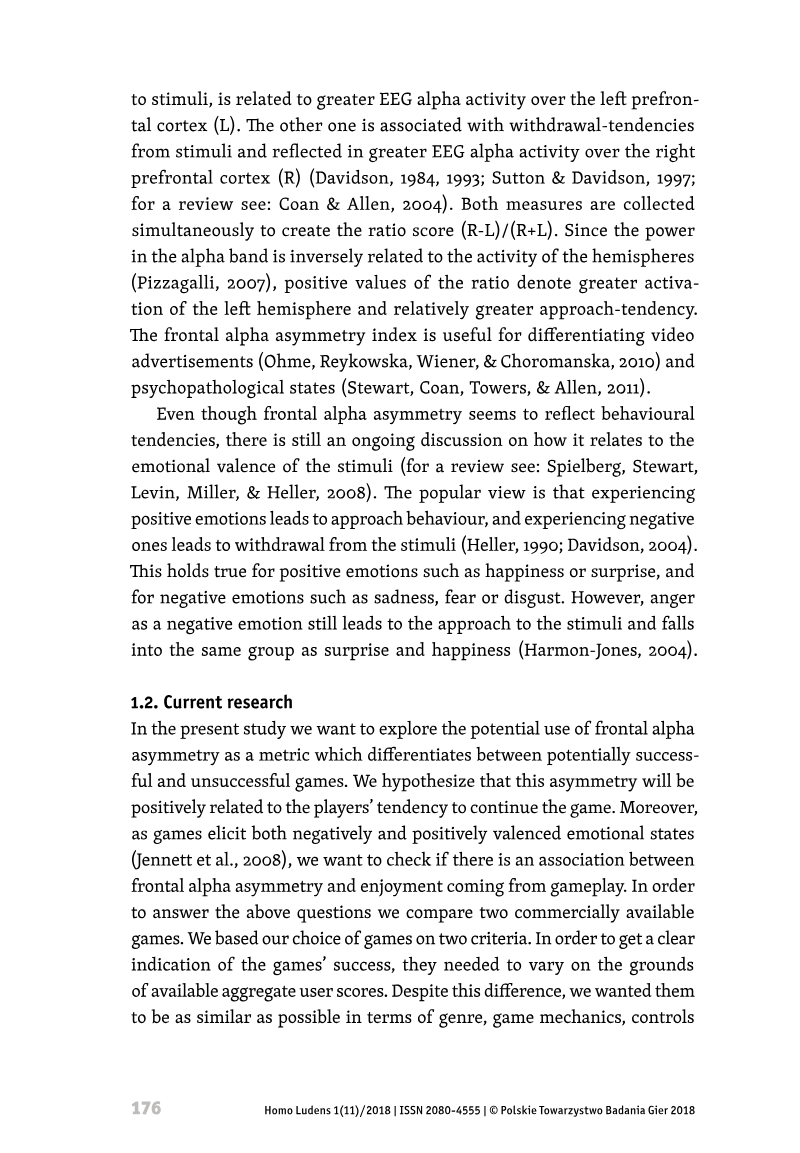
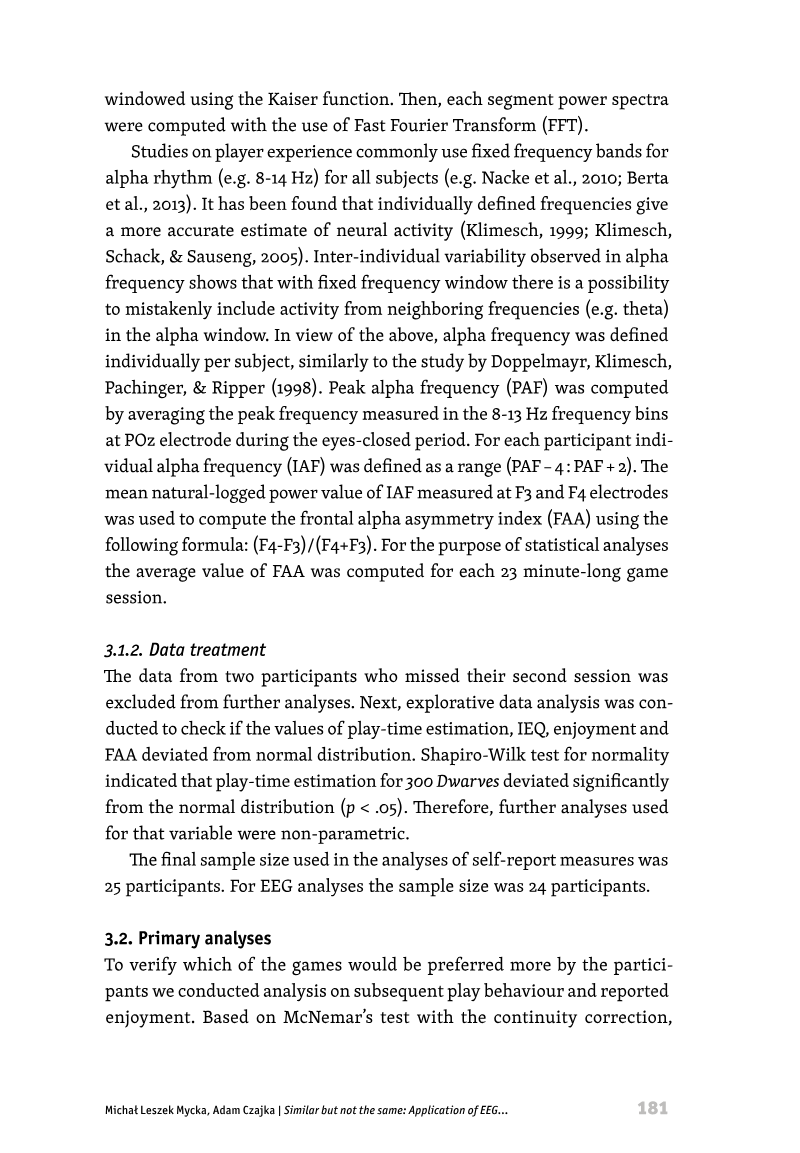
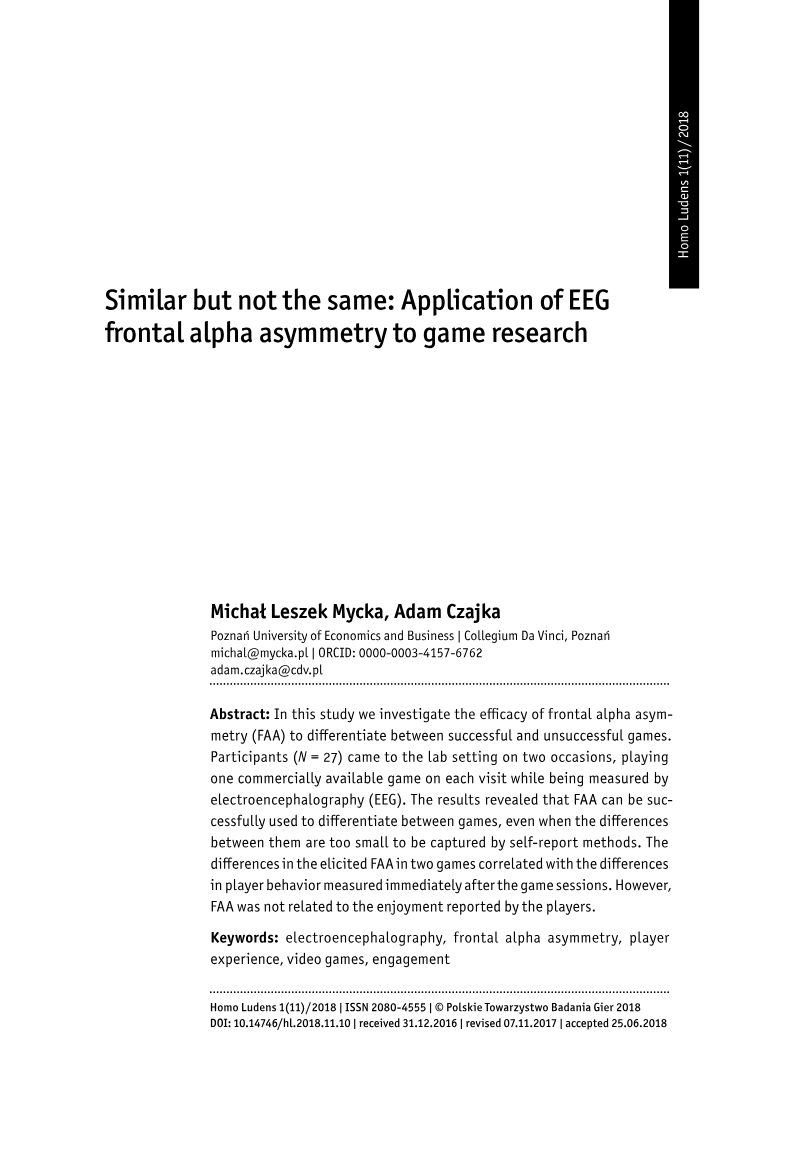
This study examines whether frontal alpha asymmetry (FAA), an EEG-derived index of approach and withdrawal motivation, can distinguish between a commercially successful and an unsuccessful video game.
- A study of 27 male participants (24–25 analysed) found that frontal alpha asymmetry (FAA), an EEG index of approach/withdrawal motivation, was significantly higher for a commercially successful tower-defense game than for a less successful one with similar mechanics and controls.
- The more successful game was more likely to be voluntarily continued during a free-choice period and was rated as more enjoyable, while immersion scores and playtime estimates did not differ between the two games.
- Differences in FAA between the two games correlated moderately with differences in subsequent play behaviour, explaining about 21% of its variance.
Gamification of Education: Exploration of Student Attitudes
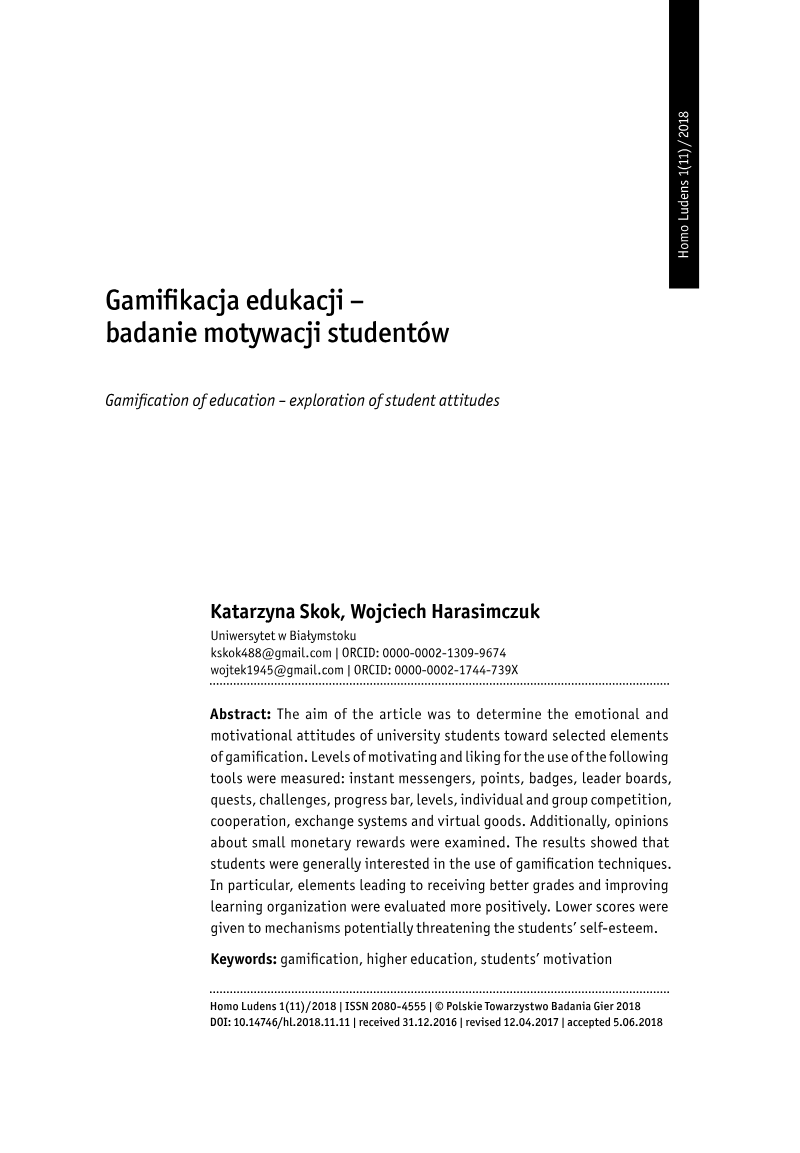
A 2018 study by Skok and Harasimczuk, conducted with university students in Białystok, Poland, examines how learners perceive gamification in higher education.
- A 2018 survey of 127 university students in Białystok, Poland (predominantly female, aged 19 to 29) found that most tested gamification elements were perceived as significantly more motivating than not.
- Points, levels, progress bars, and cooperation were rated most favorably, while rankings, individual competition, and small monetary rewards were consistently rated least motivating.
- Leaderboards were the only element more often described as demotivating than motivating, likely because they introduce public comparison that can threaten self-esteem.
Reports about Homo Ludens
6 documents by other writers name Homo Ludens in the title or summary.
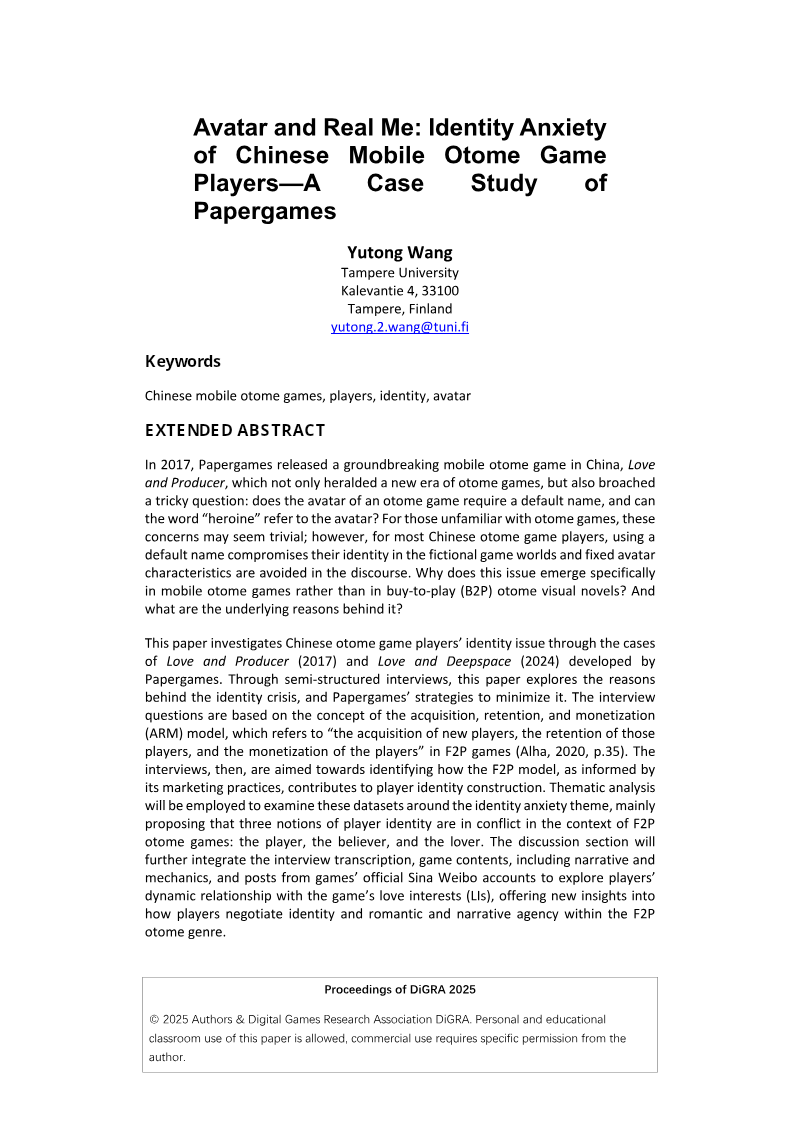
Avatar and Real Me: Identity Anxiety of Chinese Mobile Otome Game Players: A Case Study of Papergames
This paper examines identity anxiety among Chinese players of free-to-play mobile otome games, using Papergames' Love and Producer (2017) and Love and Deepspace (2024) as case studies.
- The paper argues that existing otome game scholarship, which treats avatars as stable and players as closely identifying with them, fails to explain mobile players, who often reject or feel unease toward their avatar's presence in the two-dimensional game world.
- Within free-to-play otome games, the paper proposes that three identities, the player, the believer, and the lover, come into conflict, and it distinguishes mobile otome games from buy-to-play otome visual novels in how player identity is constructed.
- The study uses semi-structured interviews with thematic analysis organized around the acquisition, retention, and monetization model, supplemented by game narrative and mechanics and official Sina Weibo posts from the developers; the interview sample size is not specified in the extended abstract.
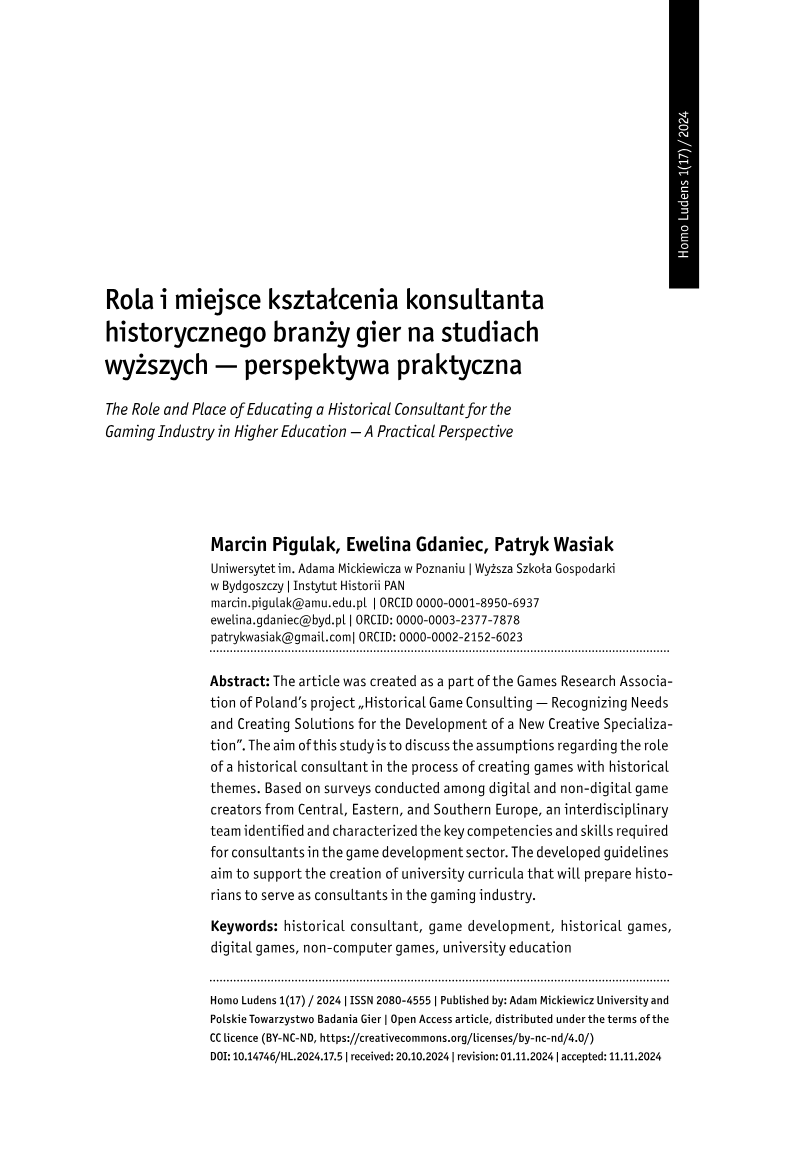
The Role and Place of Educating a Historical Consultant for the Gaming Industry in Higher Education: A Practical Perspective
This study, authored by Marcin Pigulak, Ewelina Gdaniec, and Patryk Wasiak and published in Homo Ludens in 2024, examines the emerging role of historical consultants in the game industry and argues that universities should deliberately prepare historians for this work.
- Historical games increasingly shape public perceptions of the past, so the authors argue universities should deliberately train historians to work as game consultants.
- Survey respondents across Central, Eastern, and Southern Europe, with a focus on Poland, said consultants add value by ensuring authenticity, enhancing immersion and reputation, and saving development time.
- Polish game development is dominated by small studios: in 2023, 316 of 494 Polish firms had teams under 25 people, which leaves consultant responsibilities varied and often ill-defined.

Playing A|part Together in Animal Crossing: New Horizons During the COVID-19 Pandemic
This study examines how Animal Crossing: New Horizons functioned as a social space for players during the COVID-19 lockdowns of 2020.
- The study combines a collective autoethnography by eleven Quebec-based researchers with a computer-assisted analysis of 47,643 English-language, pandemic-related tweets posted between March and June 2020 about Animal Crossing: New Horizons.
- Players framed the game primarily as a place to maintain friendships, with "friend" and "hang" at the center of the main lexical network of pandemic-related tweets.
- A subset of 16,626 "date"-related tweets showed the game was frequently used for virtual dates, though many were sarcastic or involved non-player characters rather than genuine romantic partners.


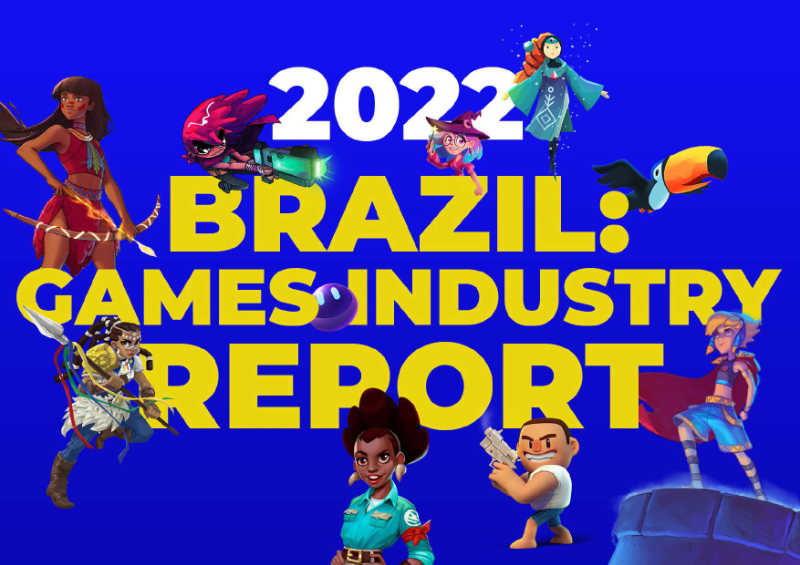
Brazil Games Industry Report 2022
Brazil's games industry has grown rapidly and is maturing, though it remains highly concentrated and constrained by funding, tax, and talent problems.
- Brazil is the 12th largest games market globally and the leader in Latin America, generating approximately USD 2.3 billion in 2021.
- The industry has experienced rapid expansion, with a 102% increase in active studios since 2018 and a 336% revenue increase in USD since 2015.
- The sector is shifting toward original intellectual property, with 93% of companies now focusing on proprietary IP rather than a pure service-provider model.
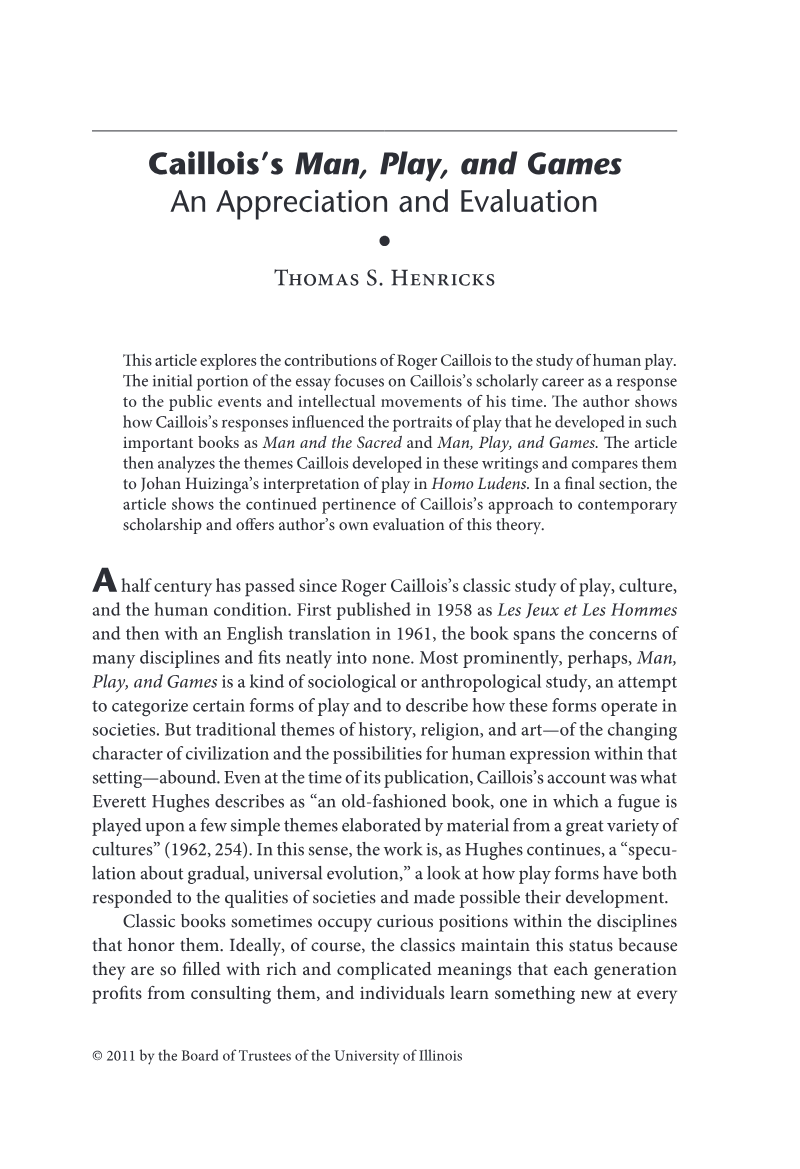
Caillois's Man, Play, and Games: An Appreciation and Evaluation
Thomas Henricks's appreciation of Roger Caillois's Man, Play, and Games (1958) revisits a book best known for its typology of play and its response to Johan Huizinga's Homo Ludens, while drawing attention to its less examined concern with the corruption of play in modern society.
- Caillois argues that Huizinga wrongly equated play with the sacred: play is defined by free, self-controlled engagement, whereas ritual imposes obligation and submission to a higher force.
- Caillois proposes a fourfold typology of play, agôn (competition), alea (chance), mimicry (simulation), and ilinx (vertigo), arranged on a continuum between improvisational paidia and rule-bound ludus, a distinction that remains foundational in game studies.
- Caillois contends that unchecked play impulses can degenerate into obsession, greed, or self-delusion, and treats the decline of fair play in a profit-driven, cynical society as a central concern.
Describing Games: An Interaction-Centric Structural Framework
Björk and Holopainen's "Describing Games: An Interaction-Centric Structural Framework" proposes a vocabulary for describing games that serves as a bridge between abstract game theory and the practical needs of game designers.
- The framework's core contribution is a shared terminology for describing game structure and player interaction, rather than empirical findings.
- Björk and Holopainen argue that existing models from game theory and play theory are either too abstract to guide design or too narrow to apply broadly, and position their interaction-centric structure as a complement to game design patterns.
- The framework organizes game components into four categories: holistic, bounding, temporal, and objective, with each core concept situated in one of them.