1 free read left. Create a free account for unlimited reading + AI research.
Create free accountArticle DiGRA
1 free read left. Create a free account for unlimited reading + AI research.
Create free accountArticleDiGRA
Distilling the key insights…
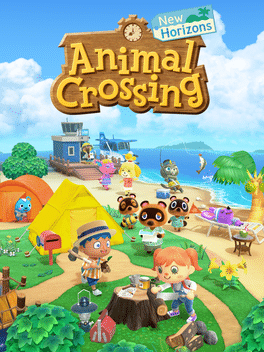
This study examines how Animal Crossing: New Horizons functioned as a social space for players during the COVID-19 lockdowns of 2020. Its central argument is that the game met players' need for sociability and emotional connection when physical contact was restricted, while its limited verbal communication tools pushed players toward creative workarounds. The research combines a collective autoethnography by eleven Quebec-based researchers with a computer-assisted analysis of English-language tweets posted between March and June 2020, placing the work at the intersection of game studies and pandemic-era social behavior.
The textual analysis is the study's principal empirical contribution. Among 47,643 pandemic-related tweets, the words "friend" and "hang" occupied the center of the main lexical network, indicating that players primarily framed the game as a place to maintain friendships. A subset of 16,626 "date"-related tweets revealed that the game was frequently used for virtual dates, though many of these were sarcastic or involved non-player characters rather than genuine romantic partners. Players relied on external platforms such as Discord and WhatsApp to supplement the game's restricted chat functions, and they appropriated in-game actions like chasing with an axe or swatting with a net to develop a playful, non-verbal vocabulary of affection and humor.
The authors conclude that the game's sociability was real but complementary rather than substitutive: online play enriched connection during lockdown without replacing face-to-face contact. The paper is grounded in the scholarship of play and sociability, drawing on theorists such as McGonigal, Suits, and Simmel, and it was produced by the Homo Ludens research group at Université du Québec à Montréal.
Each row is a game or company this document names, each column a document, oldest first. A mark means that document names it. Select a row to see those documents.
DiGRA · 2022
DiGRA · 2022
DiGRA · 2022
DiGRA · 2022
DiGRA · 2022
DiGRA · 2022
DiGRA · 2022
DiGRA · 2022
DiGRA · 2022
DiGRA · 2022
DiGRA · 2022
DiGRA · 2022
DiGRA · 2010