1 free read left. Create a free account for unlimited reading + AI research.
Create free accountWhitepaperHomo Ludens
Participants played both games across two laboratory visits while EEG was recorded from nine channels using a wireless headset.
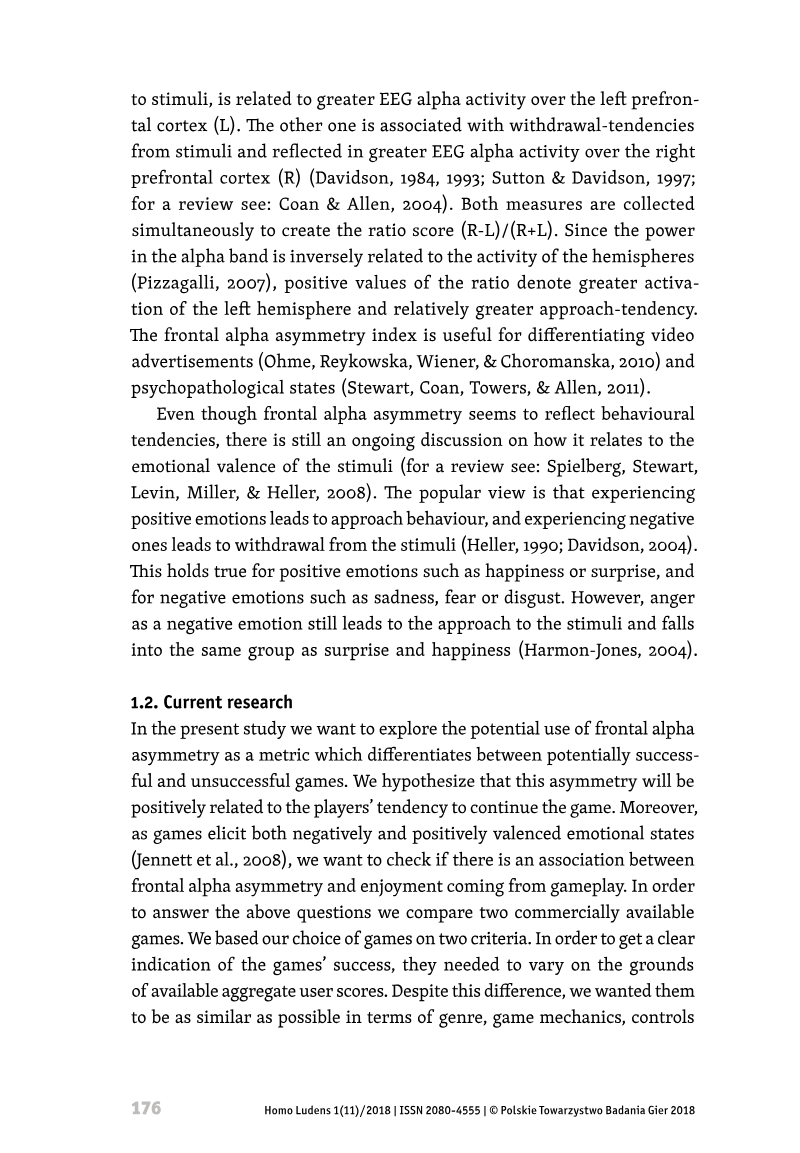
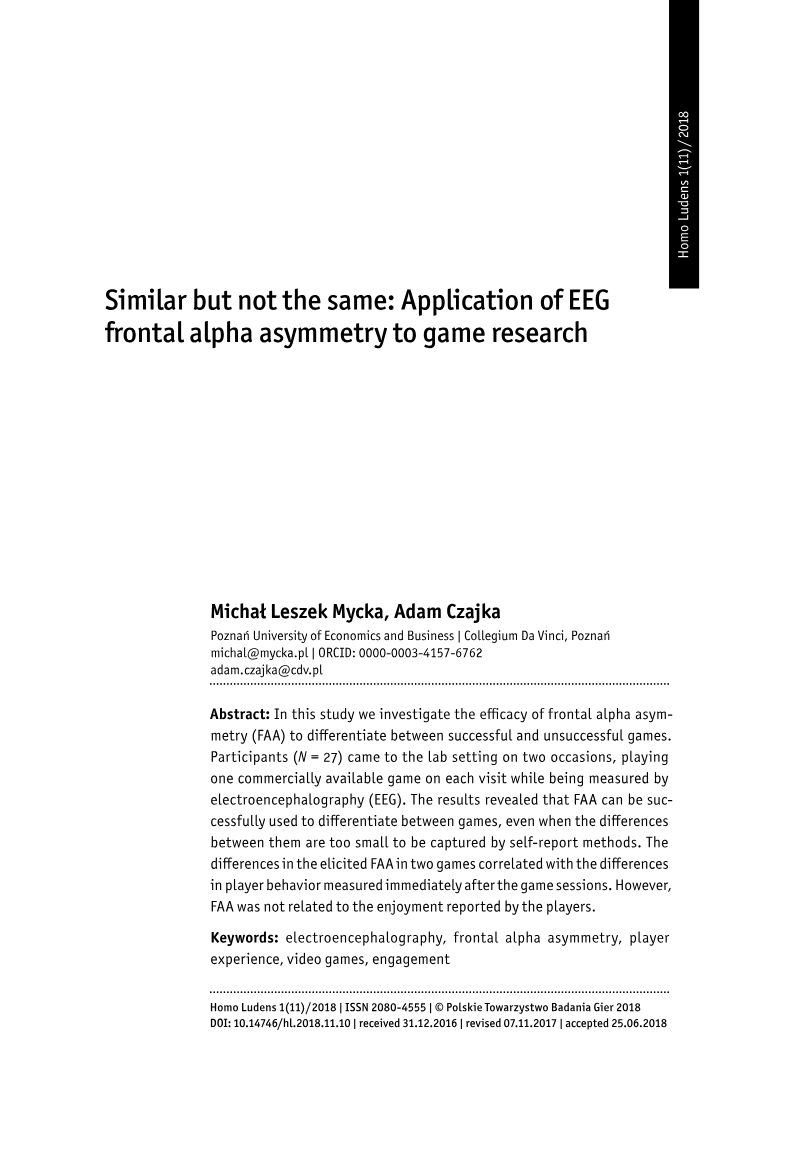
This study examines whether frontal alpha asymmetry (FAA), an EEG-derived index of approach and withdrawal motivation, can distinguish between a commercially successful and an unsuccessful video game. The authors position the work within the growing interest in neurophysiological methods for pre-testing player reactions, arguing that EEG offers objective, continuous measurement that may detect differences too subtle for self-report instruments. The central hypothesis was that FAA would track players' tendency to continue playing and their enjoyment of gameplay.
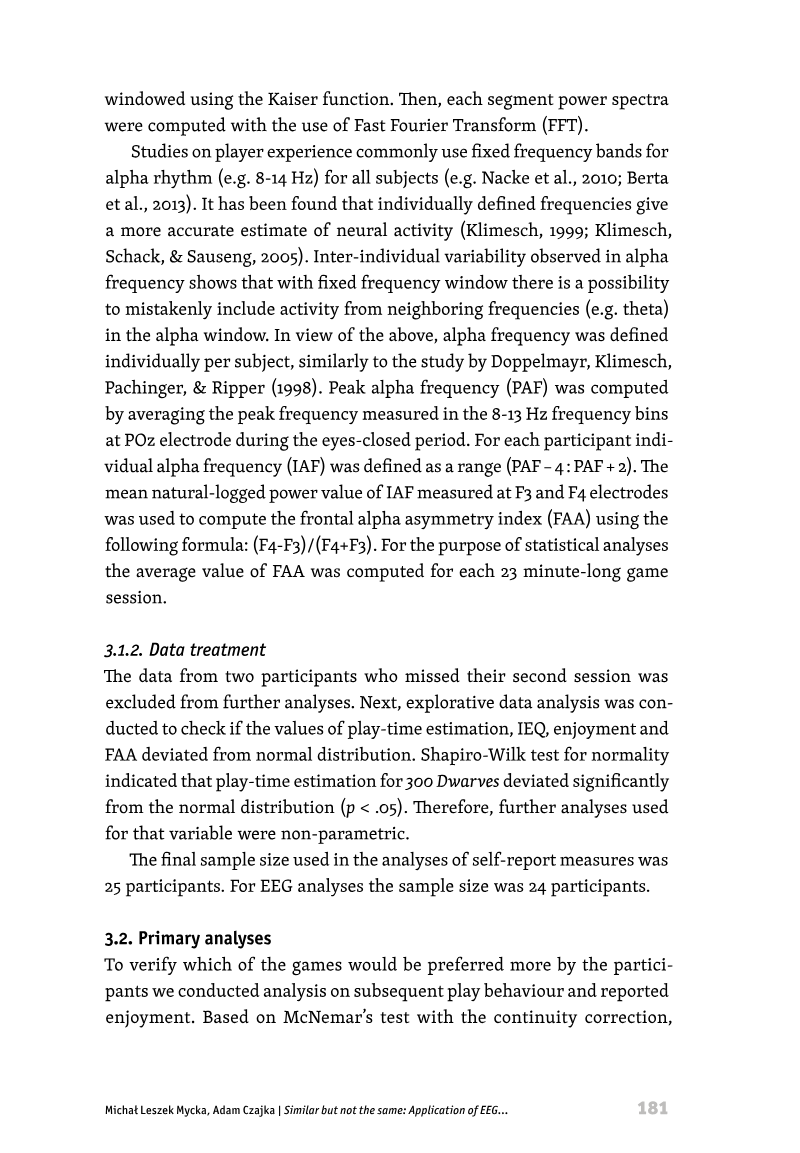
The experiment compared two tower-defense PC games with similar mechanics, controls, and fantasy settings but markedly different user ratings on a major digital distribution platform. Twenty-seven male participants aged 20 to 39 played each game for 23 minutes during two laboratory visits, with EEG recorded from nine channels using a wireless headset. FAA was calculated from individually defined alpha frequency bands at frontal electrodes. Participants also completed an immersion questionnaire, estimated their playtime, rated enjoyment, and chose whether to continue playing, read a magazine, or use a phone during a free-choice period. Analyses were based on 24 to 25 participants after exclusions.
The more successful game elicited significantly higher FAA values and was more likely to be continued voluntarily and rated as more enjoyable, while immersion scores and time estimates did not differ. Differences in FAA between the games correlated moderately with differences in subsequent play behaviour, explaining about 21 percent of its variance, but showed no relationship with reported enjoyment. The authors conclude that FAA reflects motivational approach tendencies rather than emotional valence, and that it may serve as a useful, though not conclusive, indicator of game success and player behaviour, with further research needed on long-term behaviour and other genres.
Homo Ludens · 2025
Homo Ludens · 2025


Homo Ludens · 2025
Homo Ludens · 2025
Homo Ludens · 2024

Homo Ludens · 2024
Homo Ludens · 2024
Homo Ludens · 2024
Homo Ludens · 2024
Homo Ludens · 2024
Homo Ludens · 2024
Homo Ludens · 2024
DiGRA · 2026






Comments