1 free read left. Create a free account for unlimited reading + AI research.
Create free accountArticleHomo Ludens
Sapkowski's source books offer sparse spatial detail. No part of the game's environment is auto-generated.
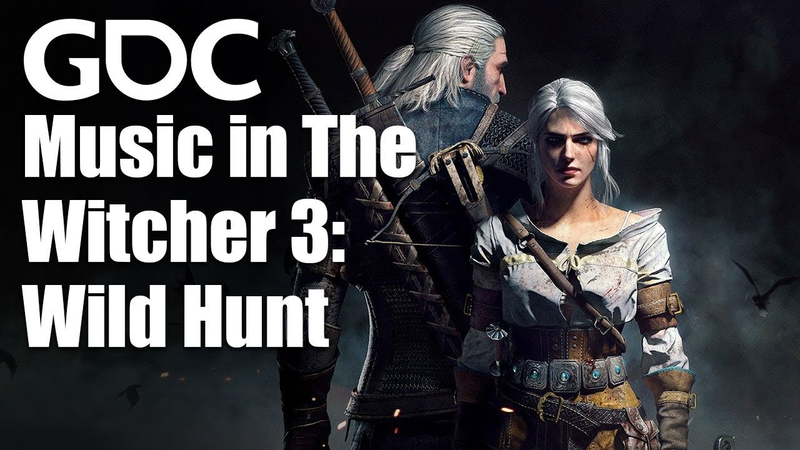
CD Projekt Red's The Witcher 3: Wild Hunt is examined as a deliberately constructed, self-contained fictional world rather than a mere backdrop for gameplay. The central argument holds that the game's methods for imitating topography, architecture, human and non-human activity, and location information together form an independent fictional ontological construct. Because Andrzej Sapkowski's source books offer sparse spatial detail and rely heavily on dialogue for worldbuilding, the developers had to build nearly all of the game's environment from scratch, with no portion auto-generated. The resulting semi-open world, spanning several regions linked by fast travel, is shown to capture the atmosphere of the original books.
The analysis draws heavily on real-world geography and climate to ground this invented setting. Velen evokes Central Europe, Skellige recalls Scandinavia, and Toussaint resembles Southern France. The discussion also applies Adams' framework of secondary architectural functions, including familiarity, allusion, novelty, surrealism, atmosphere, and comedy, to explain how these regions produce emotional and interpretive effects beyond their practical role in play. Dense populations of non-player characters, in-world notes and journal entries, and ecologically consistent monster placement are presented as the main mechanisms that generate the impression of a living, multi-layered world.
The assessment is balanced, acknowledging technical shortcomings such as repetitive NPC models and unrealistic enemy behavior. The conclusion is that the game's world-building extends well beyond supporting mechanics, though much of this richness is optional and largely unrewarded by the game's systems. The work also notes that while in-game lore summaries make the title accessible to newcomers, full narrative comprehension still depends partly on familiarity with the wider franchise. The scope is confined to the base game and its two expansions within the Witcher series.
Homo Ludens · 2019
DiGRA · 2026