1 free read left. Create a free account for unlimited reading + AI research.
Create free accountArticle American Journal of Play
1 free read left. Create a free account for unlimited reading + AI research.
Create free accountArticleAmerican Journal of Play
Play is defined by free, self-controlled engagement, whereas ritual imposes obligation and submission to a higher force.
Thomas Henricks's appreciation of Roger Caillois's Man, Play, and Games (1958) revisits a book best known for its typology of play and its response to Johan Huizinga's Homo Ludens, while drawing attention to its less examined concern with the corruption of play in modern society. Caillois's thinking, shaped by interwar surrealism, the Collège de Sociologie, Durkheimian ideas of the sacred, and later work at UNESCO and his call for a "diagonal science" linking the sciences and humanities, provides the intellectual context for the book's arguments. The account situates the work within Caillois's life and seeks to refine his contribution rather than simply repeat its familiar claims.
Caillois's central critique is that Huizinga focused on the external forms of play and mistakenly equated it with the sacred. For Caillois, play is defined by the free, self-controlled engagement of players, whereas ritual imposes obligation and submission to a higher force. Broadening the definition to include material and chance elements, he proposes a fourfold typology of agôn (competition), alea (chance), mimicry (simulation), and ilinx (vertigo), arranged along a continuum between the improvisational freedom of paidia and the disciplined rule-bound structure of ludus. Caillois argues that play's basic impulses, when unchecked by convention and rules, can degenerate into obsession, greed, or self-delusion, and he treats the decline of fair play in a profit-driven, cynical world as a central concern.
Henricks's evaluation credits the book with a durable and influential framework, including the paidia/ludus distinction that remains foundational in game studies. Critics such as Ehrmann and Motte, however, argue that play is embedded in society rather than isolated from it, and that Caillois's emphasis on formalized play sits uneasily with his critique of modern civilization. Henricks also identifies gaps: Caillois does not explain when and why rules become institutionalized, neglects the supporting beliefs and organizations that surround games, and draws his categories too rigidly, given that modern activities such as sports and video games blend several play modes at once. Despite these shortcomings, the typology and the distinction between sacred-oriented, embedded societies and assertive, individualist modern ones remain useful tools for analyzing the challenges and satisfactions games provide.
American Journal of Play · 2025
American Journal of Play · 2025
American Journal of Play · 2024
American Journal of Play · 2024
American Journal of Play · 2024
American Journal of Play · 2023
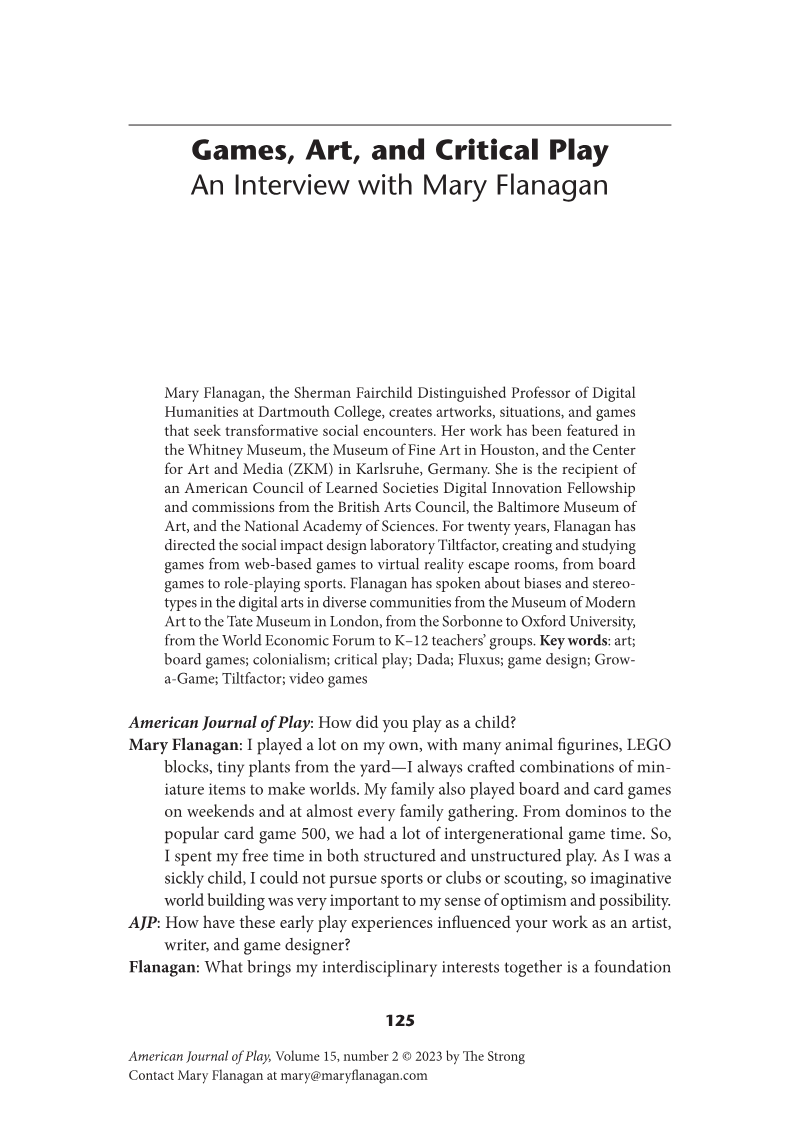
American Journal of Play · 2022
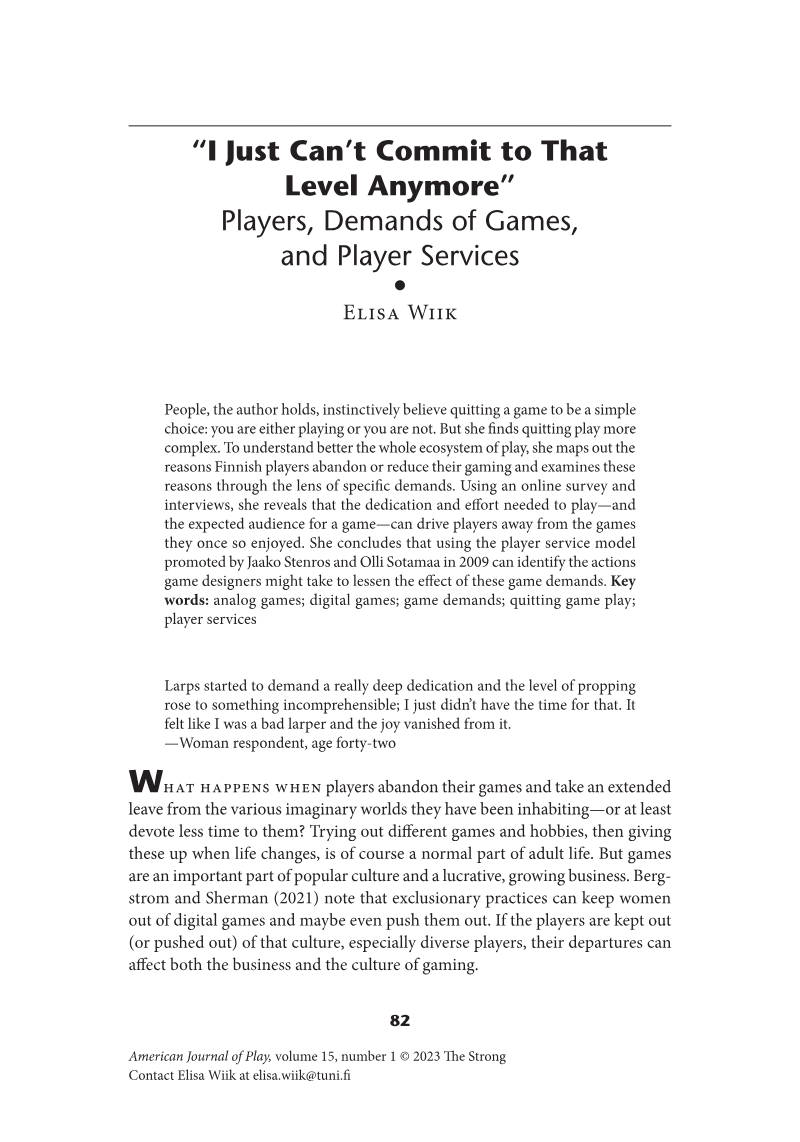
American Journal of Play · 2022
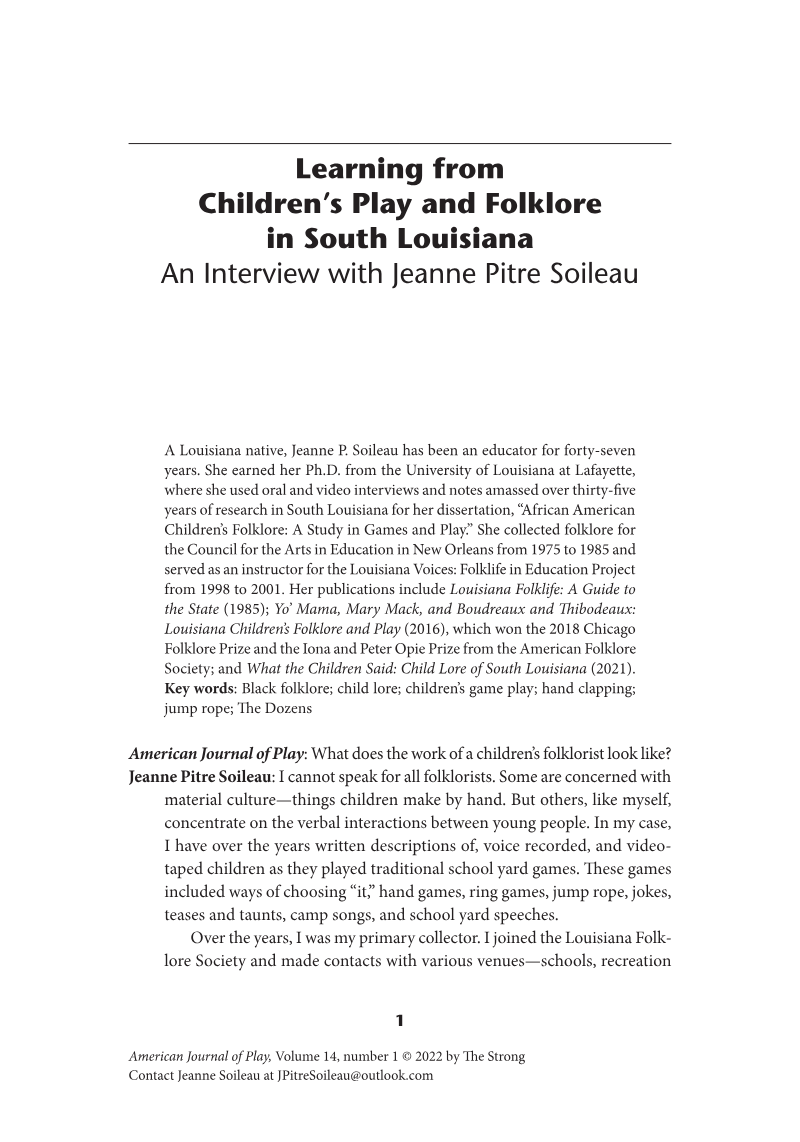
American Journal of Play · 2021
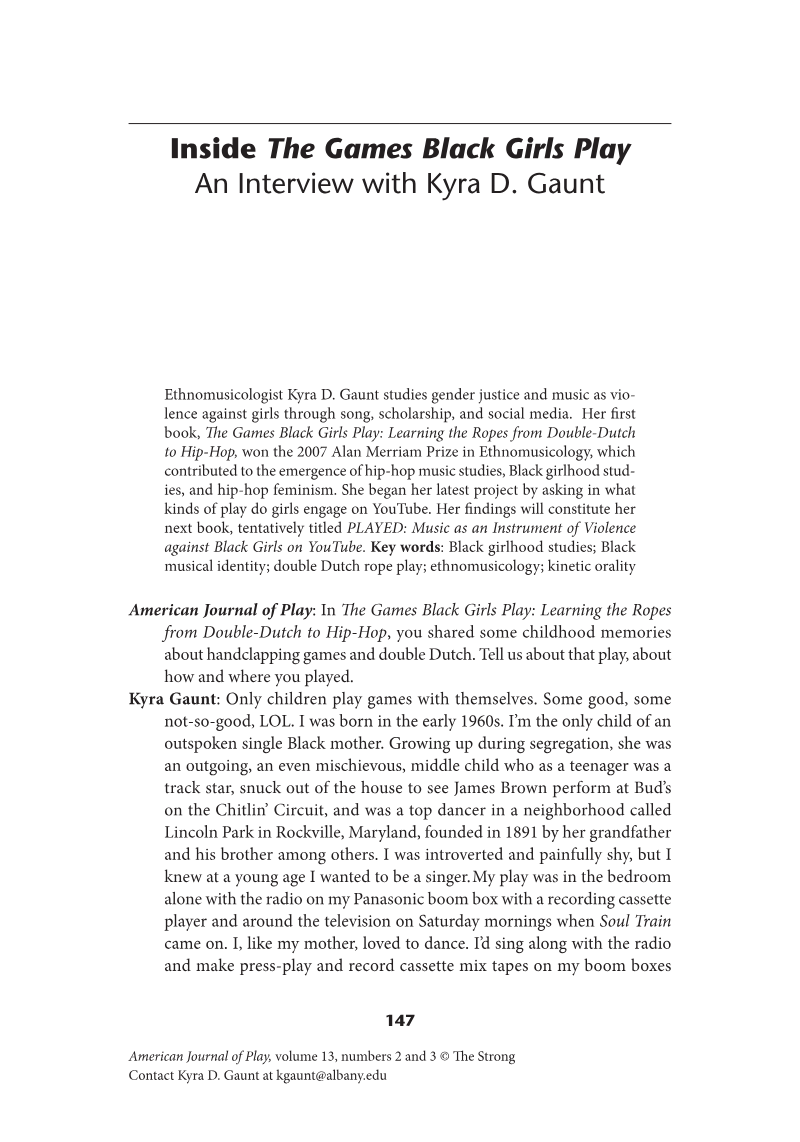
American Journal of Play · 2020
American Journal of Play · 2020
American Journal of Play · 2019