Homo Ludens
Publishes academic articles and reports on video games, in Polish and English. Topics include game psychology, player aggression and addiction, the uncanny valley, game spaces, game law and Polish RPG fandom.
Documents
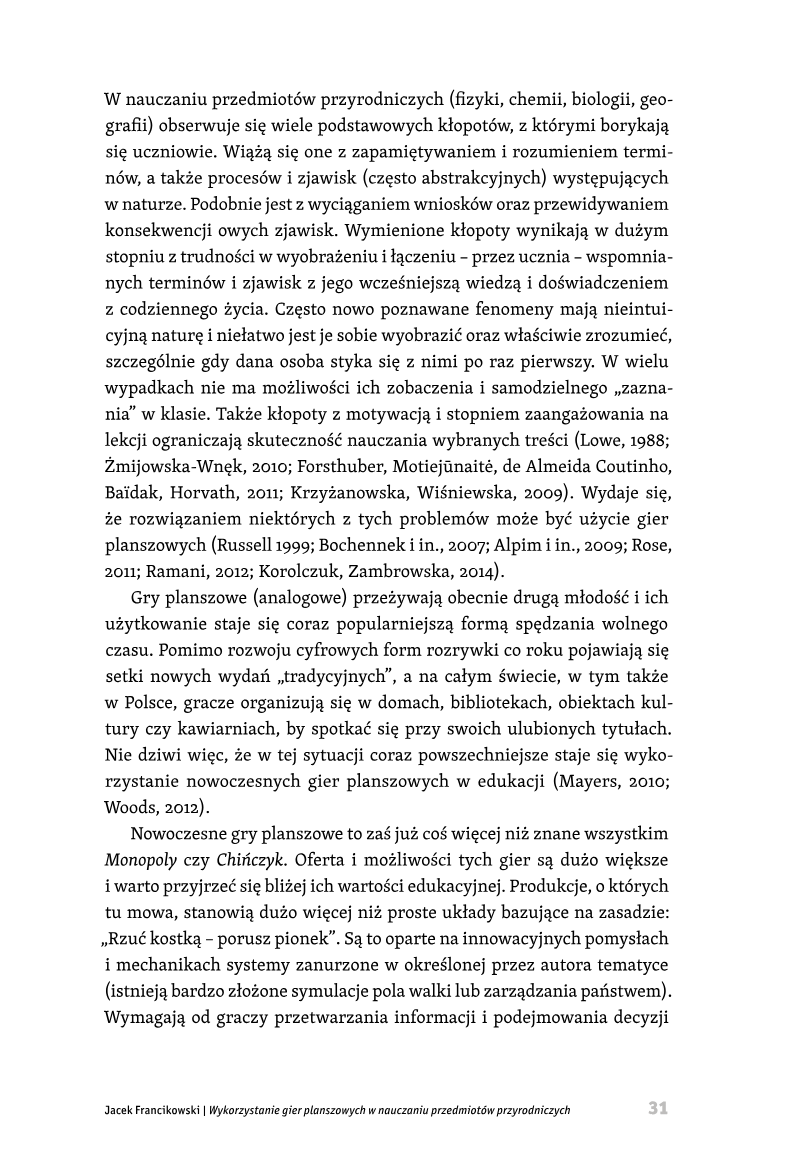
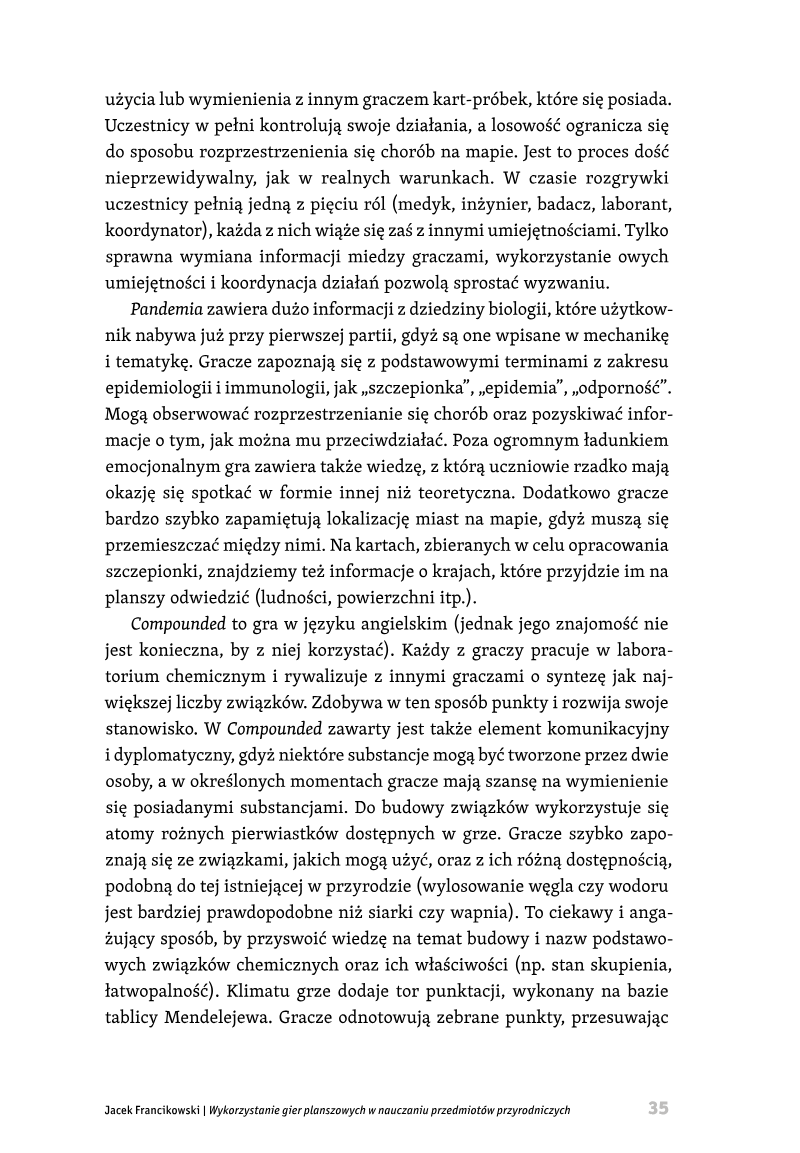
Board Games for Natural Science Education
This paper, written in Polish by Jacek Francikowski of the University of Silesia in Katowice and published in Homo Ludens (2018), argues that modern board games can serve as valuable educational tools for natural sciences such as physics, chemistry, biology, and earth science.
- Board games can teach natural sciences by embedding subject knowledge in game mechanics and themes, letting students encounter abstract phenomena through repeated active play rather than passive instruction.
- The paper argues that gameplay mirrors the scientific method, as players observe a modeled system, form hypotheses, and test them against outcomes.
- Because play is procedural and allows mistakes to be made and corrected, the author contends it supports deeper information processing than lecture-based learning.
Reflections of Practitioners: Students Participating in School LARPs in 1999-2017 and Their Transformations in Socio-Cultural Context
This study, authored by Jerzy Zygmunt Szeja and Augustyn Surdyk of the Games Research Association of Poland, examines how school-based live-action role-playing games (LARPs) evolved over nearly two decades in Łochów, Poland.
- The study tracks 27 theatrical school LARPs held at a general secondary school in Łochów, Poland, between 1999 and 2017, examining changes across seven dimensions including ease of introduction, voluntary participation, hate speech, and moral choices.
- Introducing LARP into schools became easier over time, plausibly because fantasy conventions grew familiar through films and computer role-playing games, while securing participation became harder amid better transport and competing home and mall entertainment.
- No clear rise in hate speech during the games was found, suggesting that greater online visibility may explain perceptions that hate speech had increased.
Reports about Homo Ludens
6 documents by other writers name Homo Ludens in the title or summary.
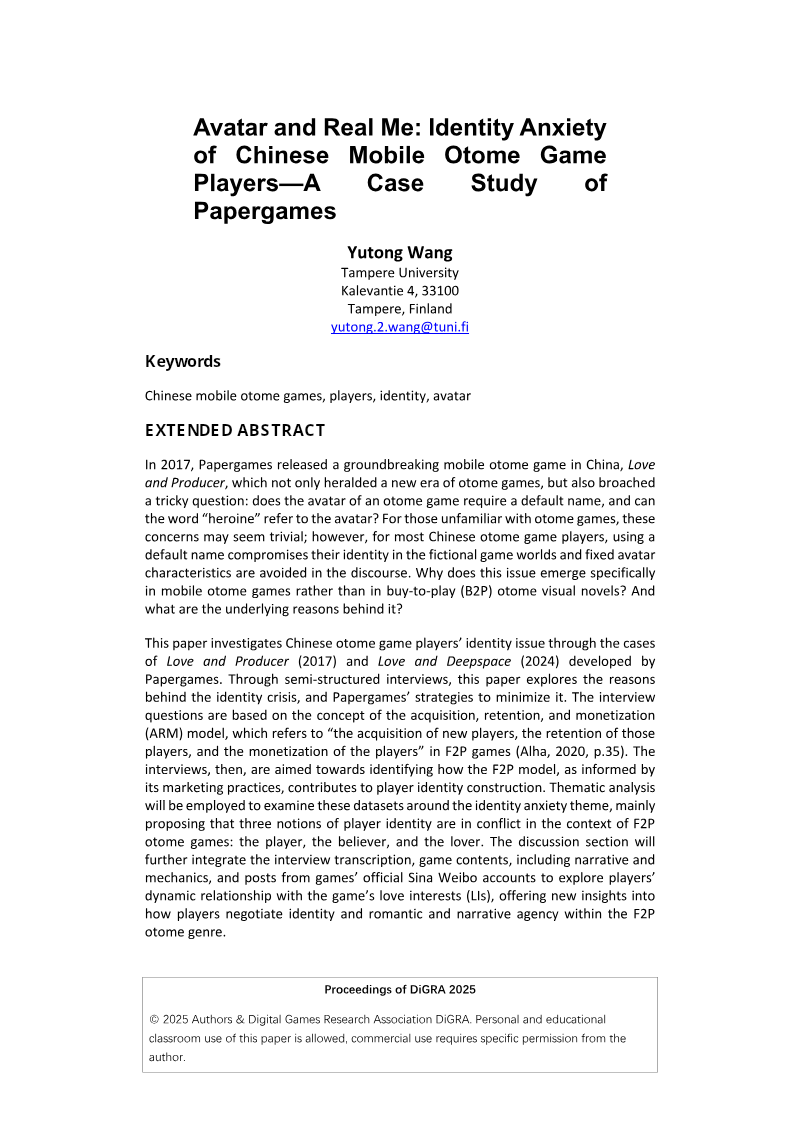
Avatar and Real Me: Identity Anxiety of Chinese Mobile Otome Game Players: A Case Study of Papergames
This paper examines identity anxiety among Chinese players of free-to-play mobile otome games, using Papergames' Love and Producer (2017) and Love and Deepspace (2024) as case studies.
- The paper argues that existing otome game scholarship, which treats avatars as stable and players as closely identifying with them, fails to explain mobile players, who often reject or feel unease toward their avatar's presence in the two-dimensional game world.
- Within free-to-play otome games, the paper proposes that three identities, the player, the believer, and the lover, come into conflict, and it distinguishes mobile otome games from buy-to-play otome visual novels in how player identity is constructed.
- The study uses semi-structured interviews with thematic analysis organized around the acquisition, retention, and monetization model, supplemented by game narrative and mechanics and official Sina Weibo posts from the developers; the interview sample size is not specified in the extended abstract.
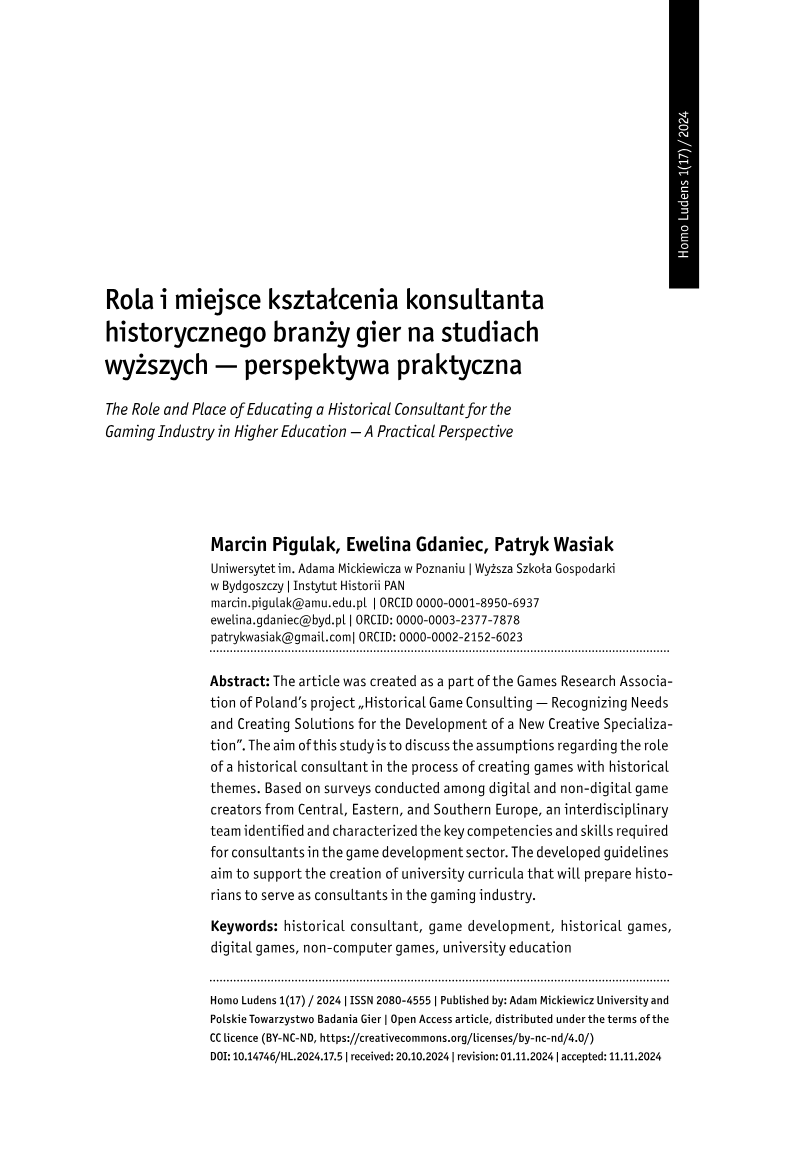
The Role and Place of Educating a Historical Consultant for the Gaming Industry in Higher Education: A Practical Perspective
This study, authored by Marcin Pigulak, Ewelina Gdaniec, and Patryk Wasiak and published in Homo Ludens in 2024, examines the emerging role of historical consultants in the game industry and argues that universities should deliberately prepare historians for this work.
- Historical games increasingly shape public perceptions of the past, so the authors argue universities should deliberately train historians to work as game consultants.
- Survey respondents across Central, Eastern, and Southern Europe, with a focus on Poland, said consultants add value by ensuring authenticity, enhancing immersion and reputation, and saving development time.
- Polish game development is dominated by small studios: in 2023, 316 of 494 Polish firms had teams under 25 people, which leaves consultant responsibilities varied and often ill-defined.

Playing A|part Together in Animal Crossing: New Horizons During the COVID-19 Pandemic
This study examines how Animal Crossing: New Horizons functioned as a social space for players during the COVID-19 lockdowns of 2020.
- The study combines a collective autoethnography by eleven Quebec-based researchers with a computer-assisted analysis of 47,643 English-language, pandemic-related tweets posted between March and June 2020 about Animal Crossing: New Horizons.
- Players framed the game primarily as a place to maintain friendships, with "friend" and "hang" at the center of the main lexical network of pandemic-related tweets.
- A subset of 16,626 "date"-related tweets showed the game was frequently used for virtual dates, though many were sarcastic or involved non-player characters rather than genuine romantic partners.


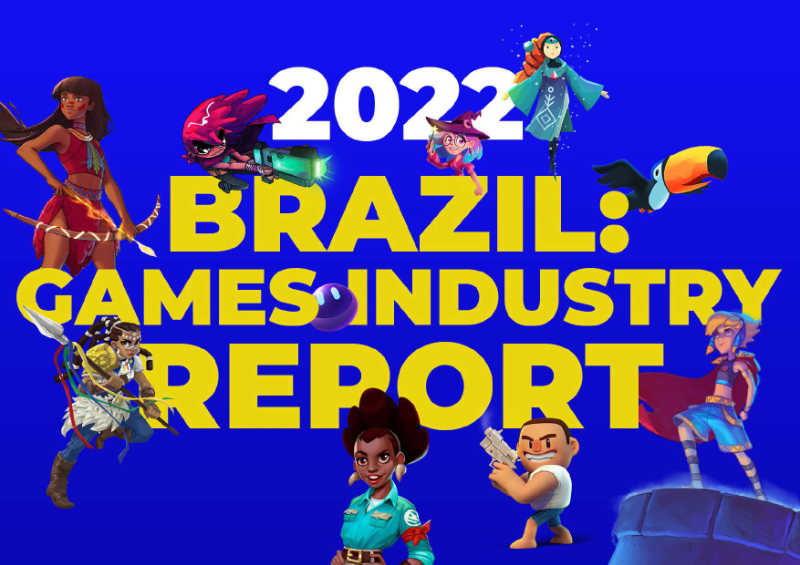
Brazil Games Industry Report 2022
Brazil's games industry has grown rapidly and is maturing, though it remains highly concentrated and constrained by funding, tax, and talent problems.
- Brazil is the 12th largest games market globally and the leader in Latin America, generating approximately USD 2.3 billion in 2021.
- The industry has experienced rapid expansion, with a 102% increase in active studios since 2018 and a 336% revenue increase in USD since 2015.
- The sector is shifting toward original intellectual property, with 93% of companies now focusing on proprietary IP rather than a pure service-provider model.
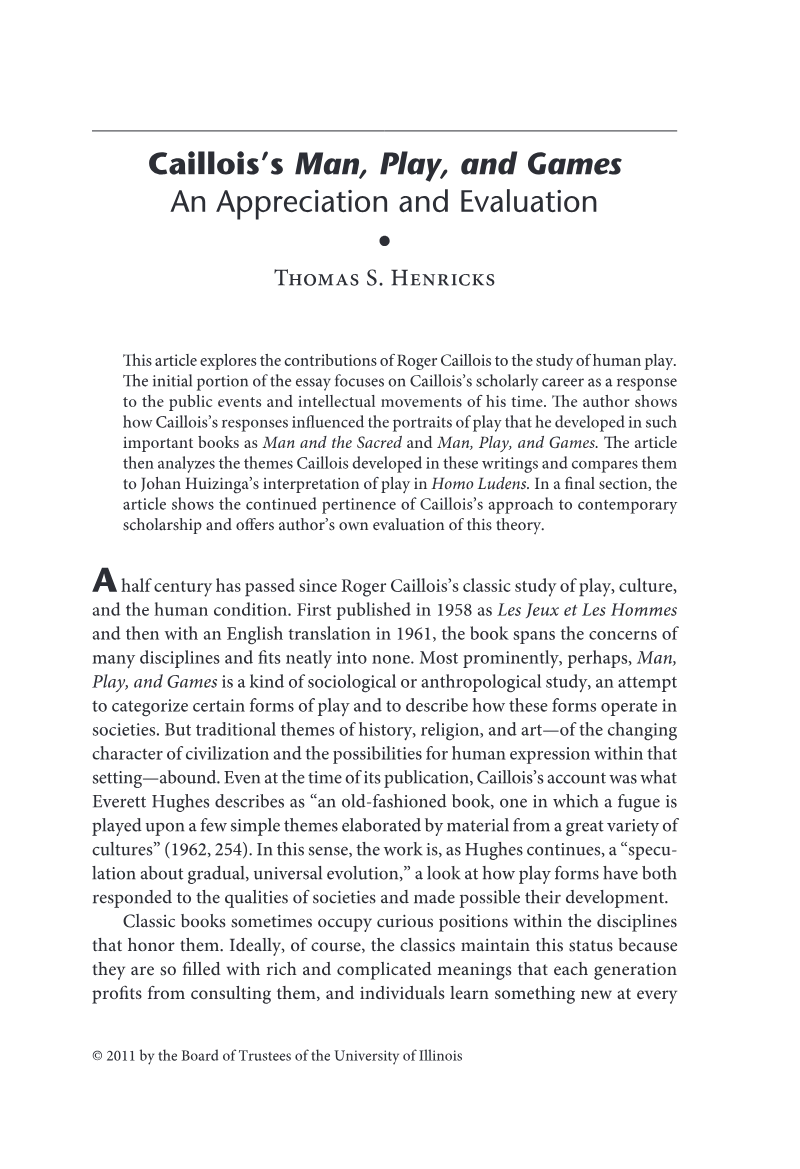
Caillois's Man, Play, and Games: An Appreciation and Evaluation
Thomas Henricks's appreciation of Roger Caillois's Man, Play, and Games (1958) revisits a book best known for its typology of play and its response to Johan Huizinga's Homo Ludens, while drawing attention to its less examined concern with the corruption of play in modern society.
- Caillois argues that Huizinga wrongly equated play with the sacred: play is defined by free, self-controlled engagement, whereas ritual imposes obligation and submission to a higher force.
- Caillois proposes a fourfold typology of play, agôn (competition), alea (chance), mimicry (simulation), and ilinx (vertigo), arranged on a continuum between improvisational paidia and rule-bound ludus, a distinction that remains foundational in game studies.
- Caillois contends that unchecked play impulses can degenerate into obsession, greed, or self-delusion, and treats the decline of fair play in a profit-driven, cynical society as a central concern.
Describing Games: An Interaction-Centric Structural Framework
Björk and Holopainen's "Describing Games: An Interaction-Centric Structural Framework" proposes a vocabulary for describing games that serves as a bridge between abstract game theory and the practical needs of game designers.
- The framework's core contribution is a shared terminology for describing game structure and player interaction, rather than empirical findings.
- Björk and Holopainen argue that existing models from game theory and play theory are either too abstract to guide design or too narrow to apply broadly, and position their interaction-centric structure as a complement to game design patterns.
- The framework organizes game components into four categories: holistic, bounding, temporal, and objective, with each core concept situated in one of them.