Mobile reports and market data
Documents
Ad Strategy in the Age of Consolidation #ELEVATEYOURGAME - PG.Biz Fireside Chat
Modern mobile gaming success relies on a sophisticated, data-driven approach to ad monetization that treats internal studios as collaborative partners rather than mere subordinates.
- Maximize ARPDAU by aligning ad supply and demand through a structured funnel focusing on eligibility, surfacing, and engagement.
- Utilize a diversified portfolio of titles to leverage cross-promotion and first-party data, treating internal studios as collaborative partners rather than subordinates.
- Implement a phased ad integration strategy starting with low-friction rewarded video before introducing interstitial formats to non-converting users.

Market Snapshot: Q1 2021 US, China & Japan
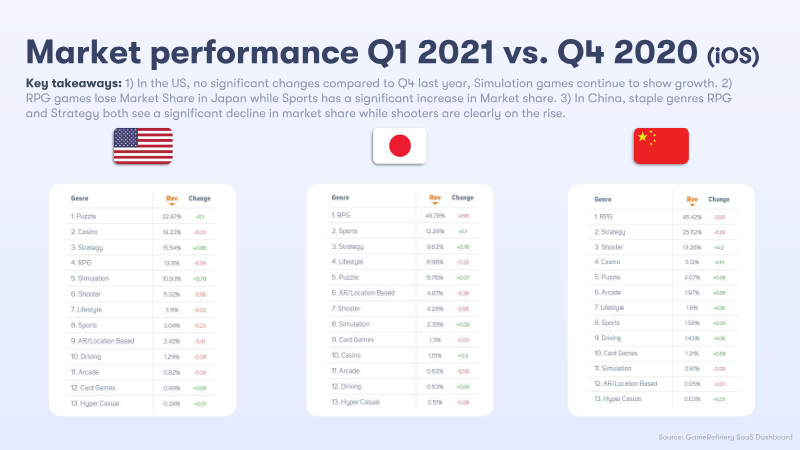
GameRefinery's Q1 2021 mobile market snapshot compares iOS performance in the US, Japan and China against Q4 2020, covering genre share, publisher rankings, soft-launch titles, trending features and player motivations.
- In Q1 2021, mobile gaming genre preferences diverged globally: US markets favored simulation games, Japan saw a shift from RPGs to sports titles led by Cygames’ Uma Musume Pretty Derby, and China moved toward shooter games.
- Roblox Corporation established itself as the top-grossing publisher in the US market during Q1 2021.
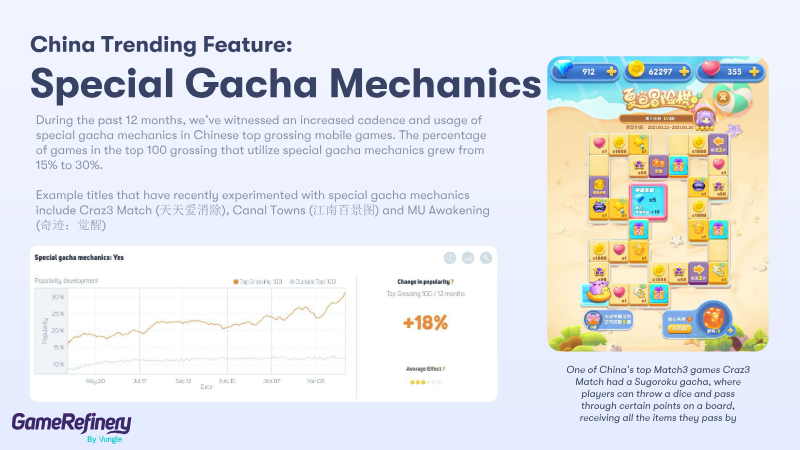
- Monetization strategies varied by region, with collectible albums appearing in over 70% of top-grossing US games, battle passes in over 25% of top-grossing Japanese titles, and special gacha mechanics in 30% of top-grossing Chinese games.

A.I., Creativity & Gamestorming | PocketGamer.Biz RoundTable
Artificial intelligence is fundamentally reshaping the game development lifecycle, transitioning the industry from manual, rule-based programming toward data-driven, real-time creative processes.
- AI is shifting game development from manual, rule-based programming to data-driven, real-time creative processes, significantly reducing development costs and time-to-market.
- Generative AI tools are democratizing production by allowing smaller teams to create high-quality content previously restricted to large-scale, well-funded studios.
- The industry is transitioning toward viewing AI as a job enhancer that offloads repetitive technical burdens, such as 3D asset generation and NPC behavior simulation, to prioritize high-level innovation.

Narrative Nuances on Free-to-Play Mobile Games
Successful narrative design in the free-to-play mobile sector hinges on prioritizing emotional resonance over the mere transmission of lore.
- Prioritize emotional resonance and character-driven storytelling over lore-heavy exposition to drive long-term player retention.
- Implement a sitcom-style narrative structure featuring unresolvable dilemmas and frequent, small-scale arcs to maintain engagement in fast-paced mobile environments.
- Use the 'triangle technique' to integrate player input into NPC interactions, grounding choices in character relationships to foster a sense of personal expression.
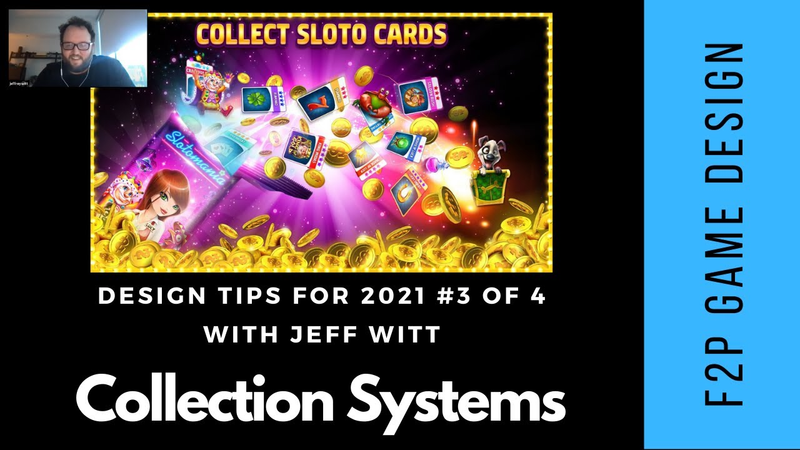
F2P Design Tips for 2021, Collections FTW (3 of 4) Ft. Jeff Witt
Collections represent a highly versatile and effective design feature for free-to-play games, capable of integration across diverse genres ranging from RPGs and strategy titles to social casino and farming games.
- Collections function as a versatile, low-risk engagement tool that provides short-term, achievable milestones to break the monotony of core gameplay loops across genres like RPGs, strategy, and casual games.
- Designers should integrate collection systems early in the development cycle rather than as post-launch additions to ensure they effectively bolster player retention and provide consistent objectives.
- To maximize effectiveness, developers must tie the acquisition of collection pieces to specific, thematic in-game actions, which helps educate players on progression while providing secondary goals.

Game Biz #1: Game Industry M&A [EA, Zynga, Glu, and More]
The gaming industry is currently undergoing a period of aggressive consolidation, characterized by a strategic shift toward vertical integration and the pursuit of mobile market dominance.
- Major publishers like Electronic Arts are acquiring mobile-focused entities such as Glu Mobile to address dormant mobile portfolios and satisfy investor growth demands.
- The deprecation of IDFA (Identifier for Advertisers) is forcing companies to internalize ad tech and user acquisition data to maintain control in a constrained privacy landscape.
- Industry M&A strategy is split between Zynga’s centralized, synergistic model and Embracer Group’s decentralized approach, with analysts questioning the long-term viability of the latter without centralized support.
Superstar Session: Hypercasual Games Under the Microscope: What Happened in 2020?
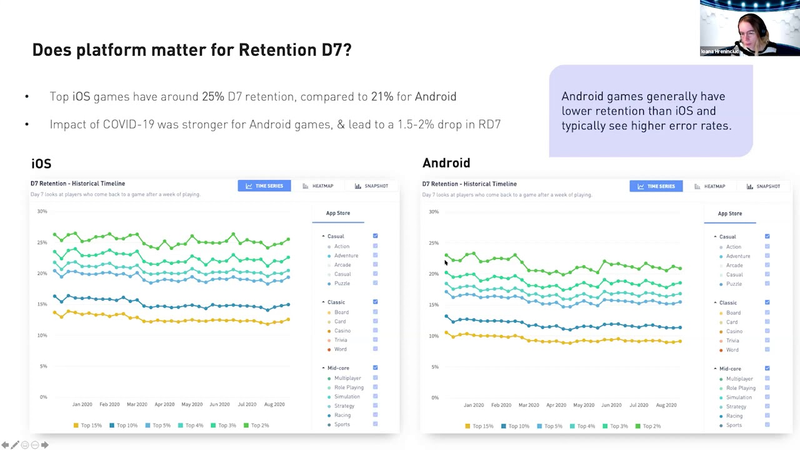
This analysis of 2020 mobile gaming trends, presented by GameAnalytics, examines the impact of global lockdowns on industry performance across major platforms and regions.
- The 2020 global lockdowns disrupted traditional seasonal patterns, leading to sustained increases in mobile gaming playtime and engagement throughout the first half of the year.
- Analysis of over two billion monthly players and 100,000 games shows that Android users exhibit higher session counts and longer playtime, while iOS users demonstrate superior day-seven retention and stability.
- Developers should move beyond single-metric evaluations by prioritizing Lifetime Value (LTV) and integrating ad revenue data to accurately assess the health and profitability of their titles.
Evolving Emotional Storytelling in thatgamecompany's Sky
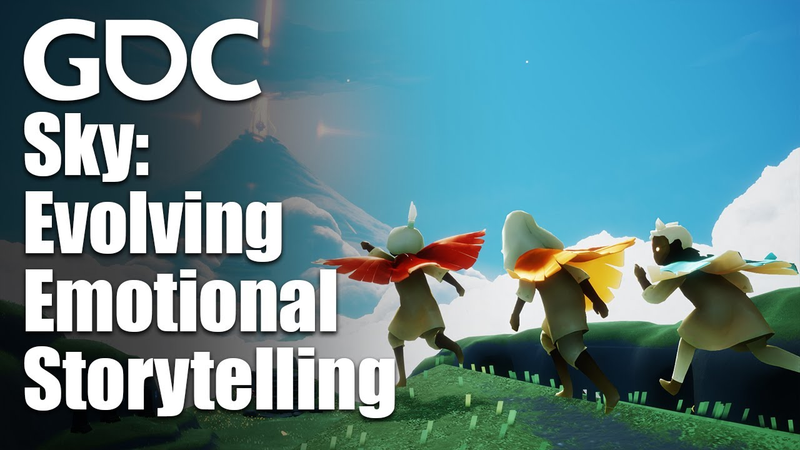
Sky: Children of the Light represents a fundamental shift in game design, moving away from traditional conflict-driven narratives toward an emotion-first framework that prioritizes social connection and altruism.
- thatgamecompany shifted the traditional hero’s journey to an emotion-first framework in Sky: Children of the Light, replacing conflict-driven mechanics with altruism and social connection.
- The game utilizes a candle mechanic to facilitate gifting and cooperation, intentionally replacing transactional progression with systems that reward collaborative behavior.
- Designers successfully iterated on social mechanics by pivoting away from forced progression after early beta feedback identified friendship systems as unclear or overly greedy.

Designing Games for Female Audiences | Renata Caldani, Maryna Iaremenko, & Joana Marques
The female gaming demographic represents a significant and rapidly expanding segment of the global market, currently comprising over 50 percent of mobile players across a broad age range of 10 to 65.
- Women now represent over 50 percent of the global mobile gaming market, spanning a broad age range from 10 to 65.
- Female players are increasingly moving away from simplistic casual titles in favor of mid-core and hardcore gaming experiences, such as Genshin Impact and Minecraft.
- To effectively capture this demographic, developers must abandon gendered marketing tropes and one-size-fits-all design philosophies in favor of data-driven, inclusive strategies.
F2P Design Tips for 2021, Embrace System Deprecation (2 of 4) Ft. Jeff Witt
For developers managing long-running free-to-play games, the strategy of system deprecation is essential for maintaining economic health and player engagement.
- Developers of long-running free-to-play games should use system deprecation to reset economic balance when veteran players accumulate resource stockpiles that render original progression systems ineffective.
- Instead of inflating costs or adding incremental tiers, developers should introduce entirely new currencies or inputs to regain control over the game economy and reset player expectations.
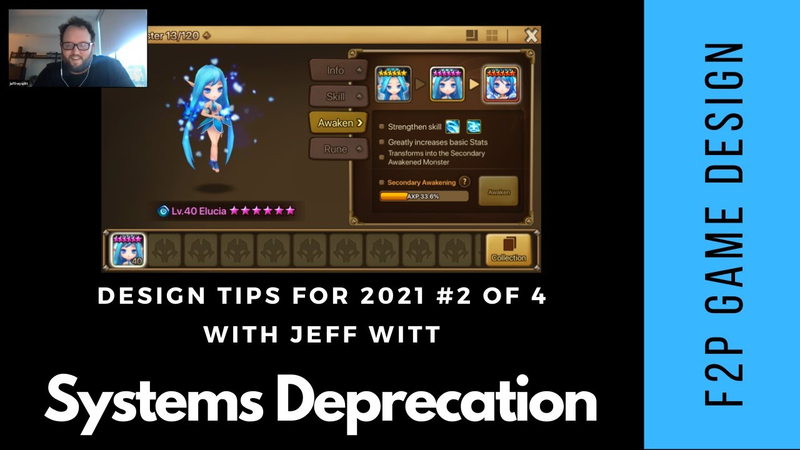
- The mobile title Summoners War successfully implemented this strategy by introducing a 'second awakening' system that required new energy and boss-fight materials, bypassing the obsolete resources held by long-term players.
Optimizing Graphics for Low-end Mobile Devices | Tommy Krul
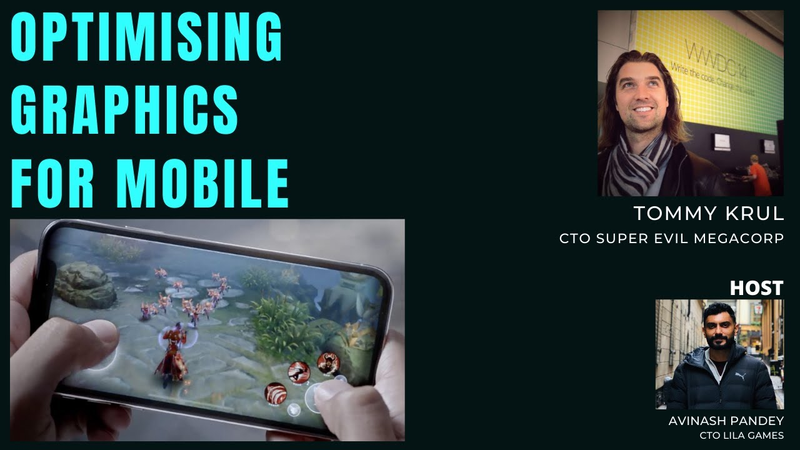
Mobile game development requires a sophisticated approach to performance optimization due to extreme hardware fragmentation, regional device variations, and the unpredictable impact of thermal throttling.
- Optimize for low-end mobile hardware by categorizing devices based on specific GPU and CPU combinations rather than relying on generic performance metrics.
- Maintain visual fidelity across fragmented hardware by implementing dynamic performance scaling, automated shader levels of detail, and adjustable post-processing effects.
- Utilize proprietary engines to build performance into the architectural design from the start, avoiding the need for late-stage fixes and reducing technical debt.
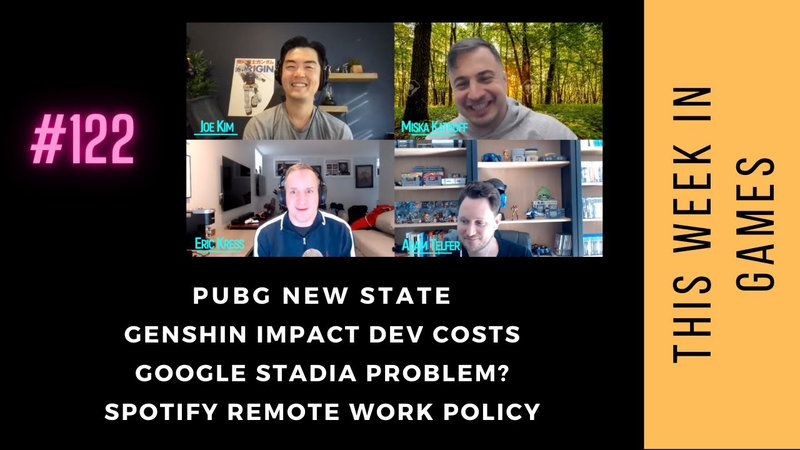
TWIG 122: PUBG New State, Genshin Impact Dev Costs, Google Stadia Problem, Spotify Remote Work
The gaming industry is currently undergoing a significant strategic recalibration, characterized by a retreat from forced live-service models toward more sustainable, premium-focused development.
- Modern AAA gaming dominance requires massive capital, exemplified by Genshin Impact’s $100 million initial development cost and $200 million in annual maintenance.
- Major publishers are shifting away from forced live-service models toward sustainable, premium-focused development to mitigate the financial risks of project failures.
- The gaming market is experiencing extreme saturation, creating high barriers to entry that favor established studios with significant capital reserves over mid-sized competitors.
Writers
Games and companies
Games